The 180 Degree Rule


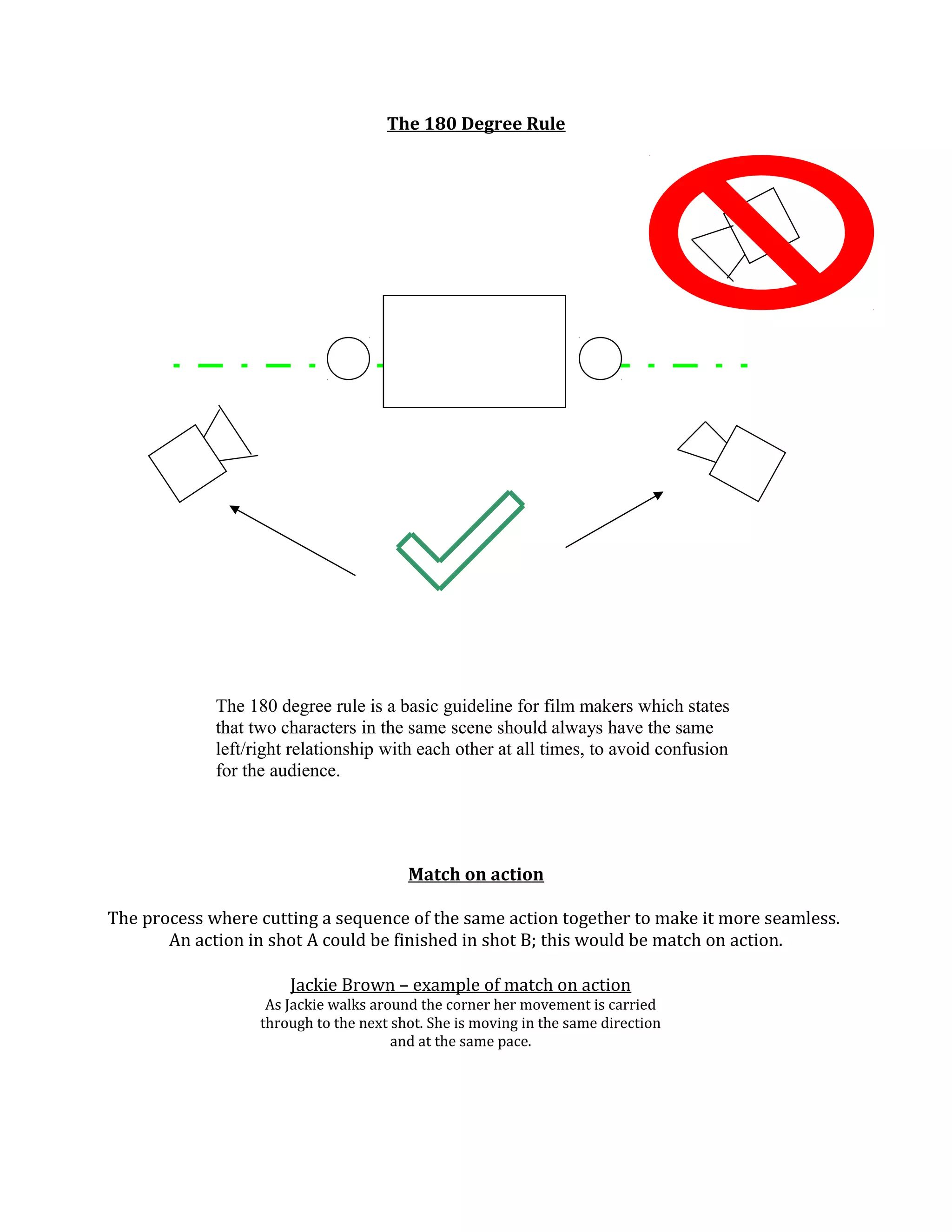
             The 180 degree rule is a basic guideline for film makers which states
             that two characters in the same scene should always have the same
             left/right relationship with each other at all times, to avoid confusion
             for the audience.


                                         Match on action

The process where cutting a sequence of the same action together to make it more seamless.
       An action in shot A could be finished in shot B; this would be match on action.

                       Jackie Brown – example of match on action
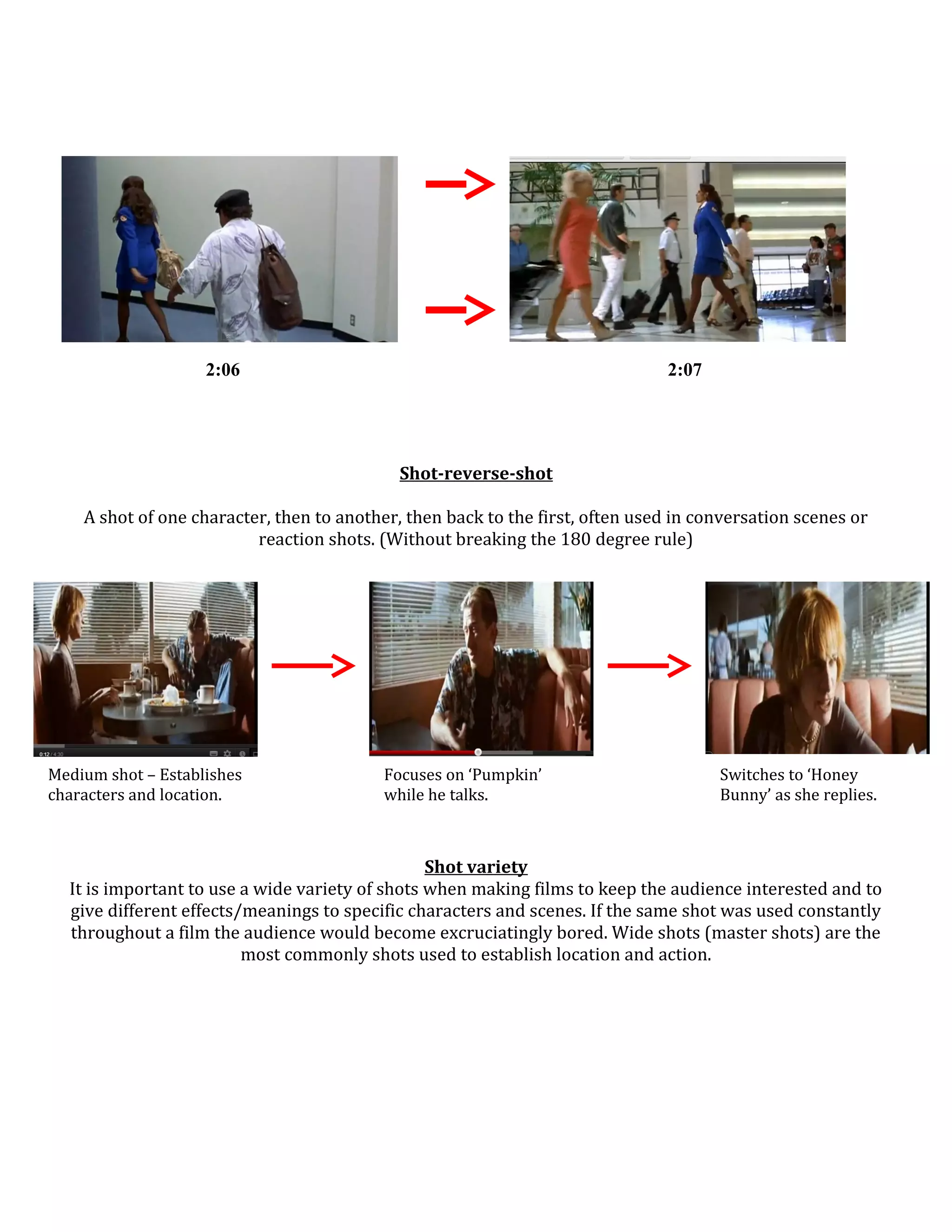
                    As Jackie walks around the corner her movement is carried
                   through to the next shot. She is moving in the same direction
                                       and at the same pace.
2:06                                                       2:07


                                             Shot-reverse-shot

    A shot of one character, then to another, then back to the first, often used in conversation scenes or
                          reaction shots. (Without breaking the 180 degree rule)


Medium shot – Establishes                  Focuses on ‘Pumpkin’                       Switches to ‘Honey
characters and location.                   while he talks.                            Bunny’ as she replies.


                                                 Shot variety
  It is important to use a wide variety of shots when making films to keep the audience interested and to
  give different effects/meanings to specific characters and scenes. If the same shot was used constantly
  throughout a film the audience would become excruciatingly bored. Wide shots (master shots) are the
                         most commonly shots used to establish location and action.

Continuity Rules

  • 1.
    The 180 DegreeRule The 180 degree rule is a basic guideline for film makers which states that two characters in the same scene should always have the same left/right relationship with each other at all times, to avoid confusion for the audience. Match on action The process where cutting a sequence of the same action together to make it more seamless. An action in shot A could be finished in shot B; this would be match on action. Jackie Brown – example of match on action As Jackie walks around the corner her movement is carried through to the next shot. She is moving in the same direction and at the same pace.
  • 2.
    2:06 2:07 Shot-reverse-shot A shot of one character, then to another, then back to the first, often used in conversation scenes or reaction shots. (Without breaking the 180 degree rule) Medium shot – Establishes Focuses on ‘Pumpkin’ Switches to ‘Honey characters and location. while he talks. Bunny’ as she replies. Shot variety It is important to use a wide variety of shots when making films to keep the audience interested and to give different effects/meanings to specific characters and scenes. If the same shot was used constantly throughout a film the audience would become excruciatingly bored. Wide shots (master shots) are the most commonly shots used to establish location and action.