Wegener
1880-1930
earthobservatory.nasa.gov
Alfred Wegener first proposed the
theory of continental drift.
 Continental drift was Wegener’s theory
that all continents had once been joined
together in a single landmass and have
drifted apart since.
 Wegener named this supercontinent
Pangaea.
 Wegener’s theory was rejected by
scientists because he could not explain
what force pushes or pulls continents.
Continental drift video clip
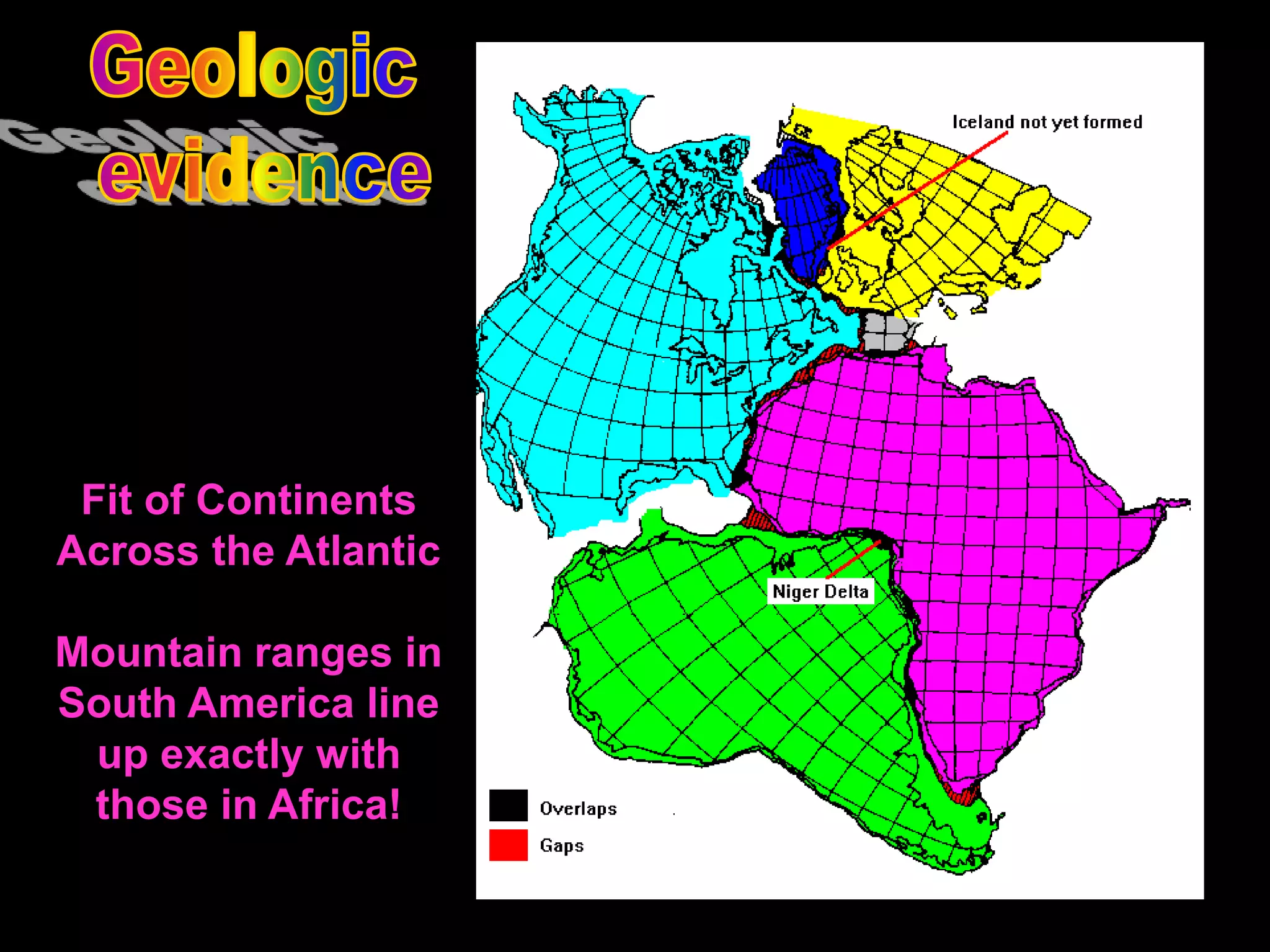
Fit of Continents
Across the Atlantic
Mountain ranges in
South America line
up exactly with
those in Africa!
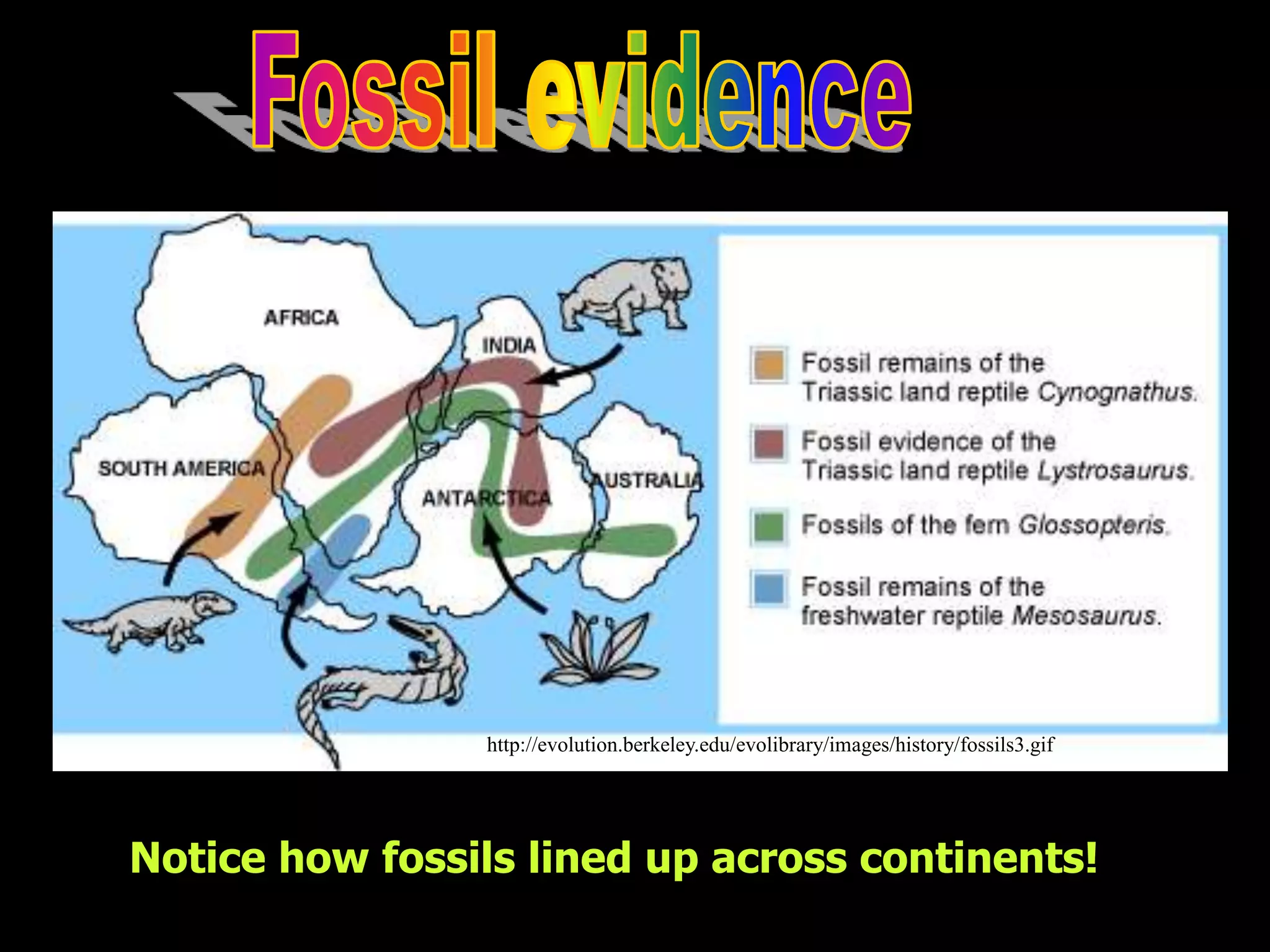
Notice how fossils lined up across continents!
http://evolution.berkeley.edu/evolibrary/images/history/fossils3.gif
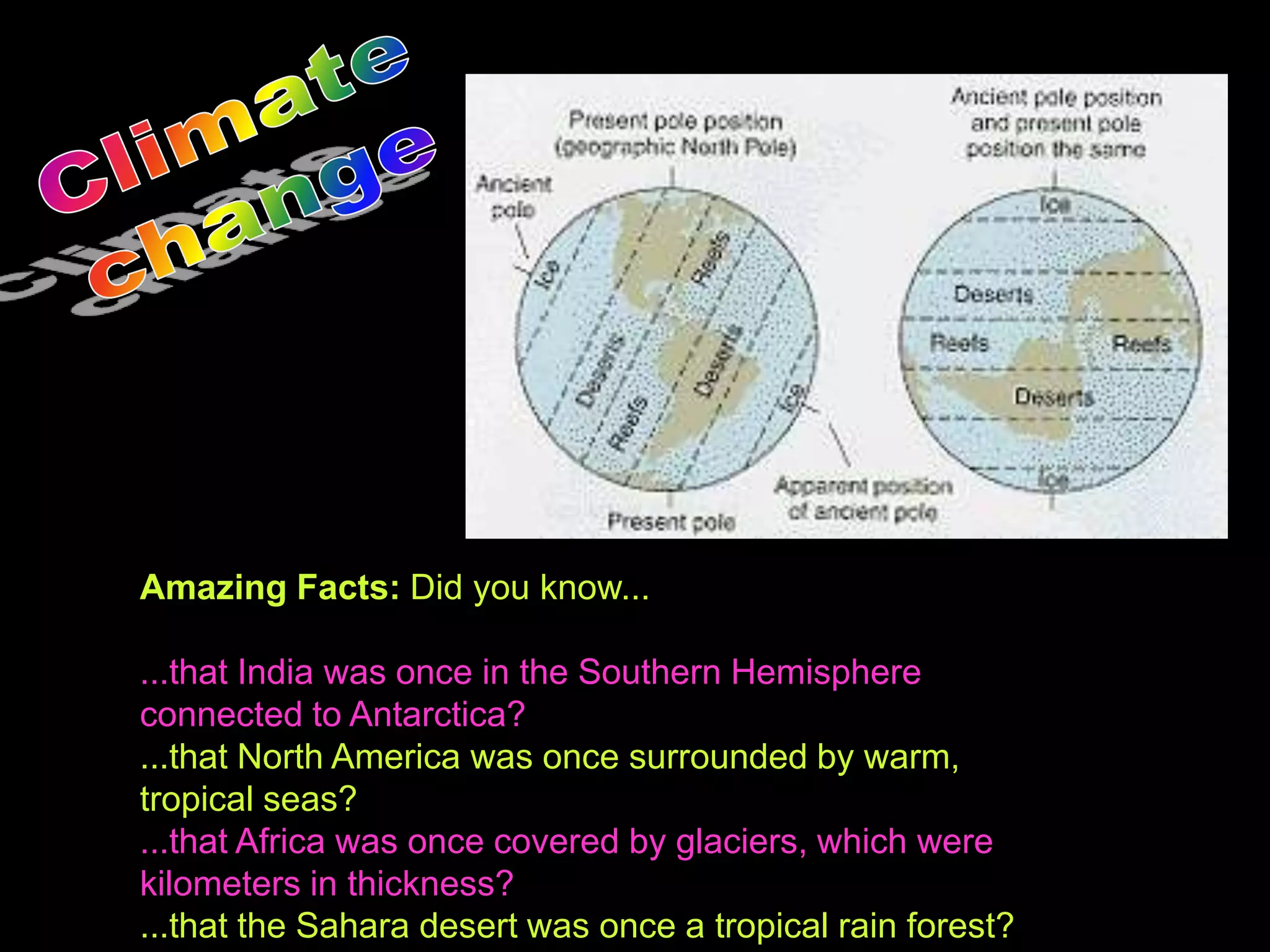
Amazing Facts: Did you know...
...that India was once in the Southern Hemisphere
connected to Antarctica?
...that North America was once surrounded by warm,
tropical seas?
...that Africa was once covered by glaciers, which were
kilometers in thickness?
...that the Sahara desert was once a tropical rain forest?
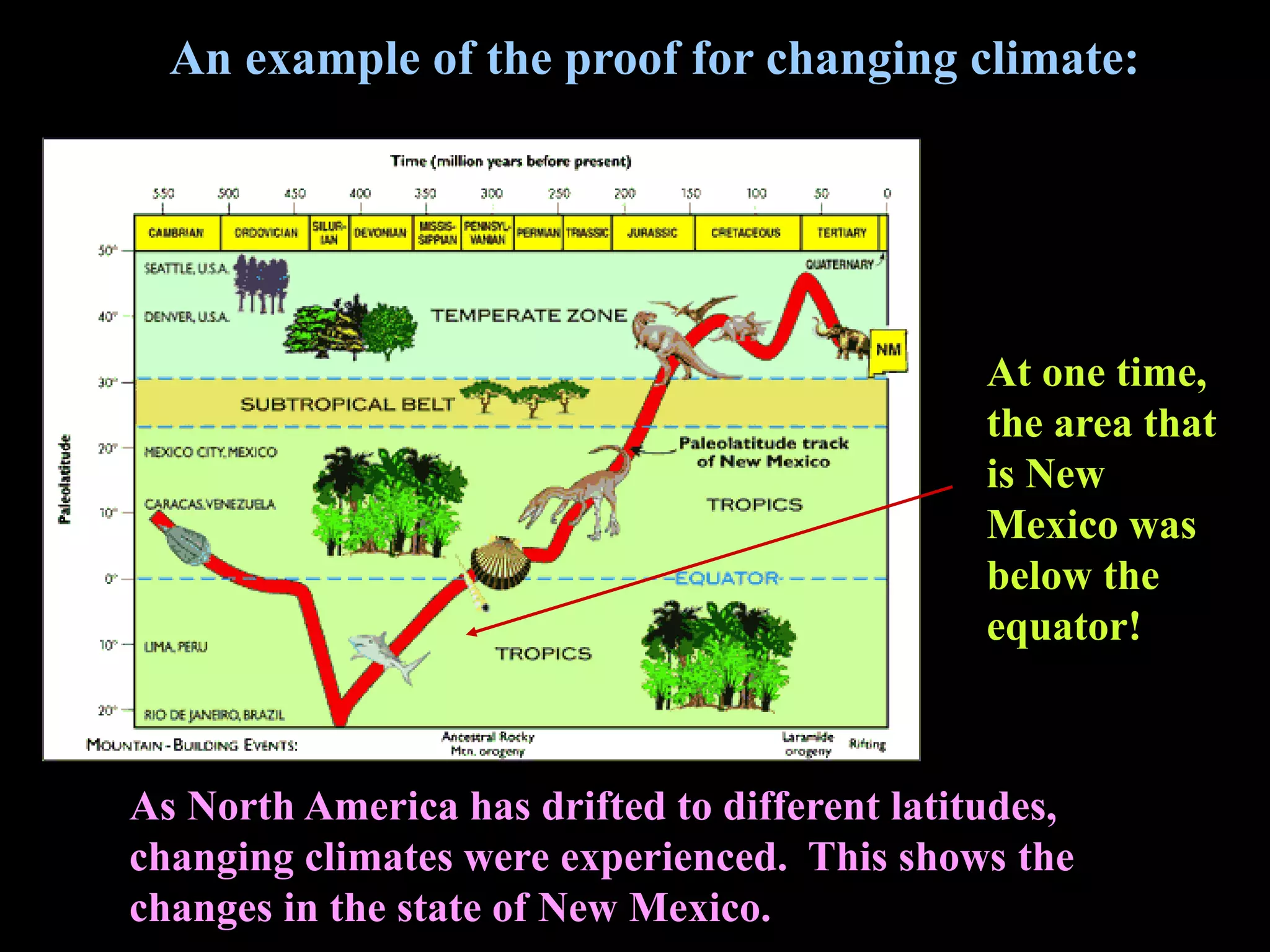
As North America has drifted to different latitudes,
changing climates were experienced. This shows the
changes in the state of New Mexico.
An example of the proof for changing climate:
At one time,
the area that
is New
Mexico was
below the
equator!
He could not find the force that was
causing the continents to drift.
Because of this, he could not convince
anyone that continents could move.
He died in Greenland on an expedition.
At the time of his death, no one believed
his hypothesis!
Technology developed during the 1940’s
changed all that!
Discovery of Sea-Floor Spreading
Sea floor spreading video clip
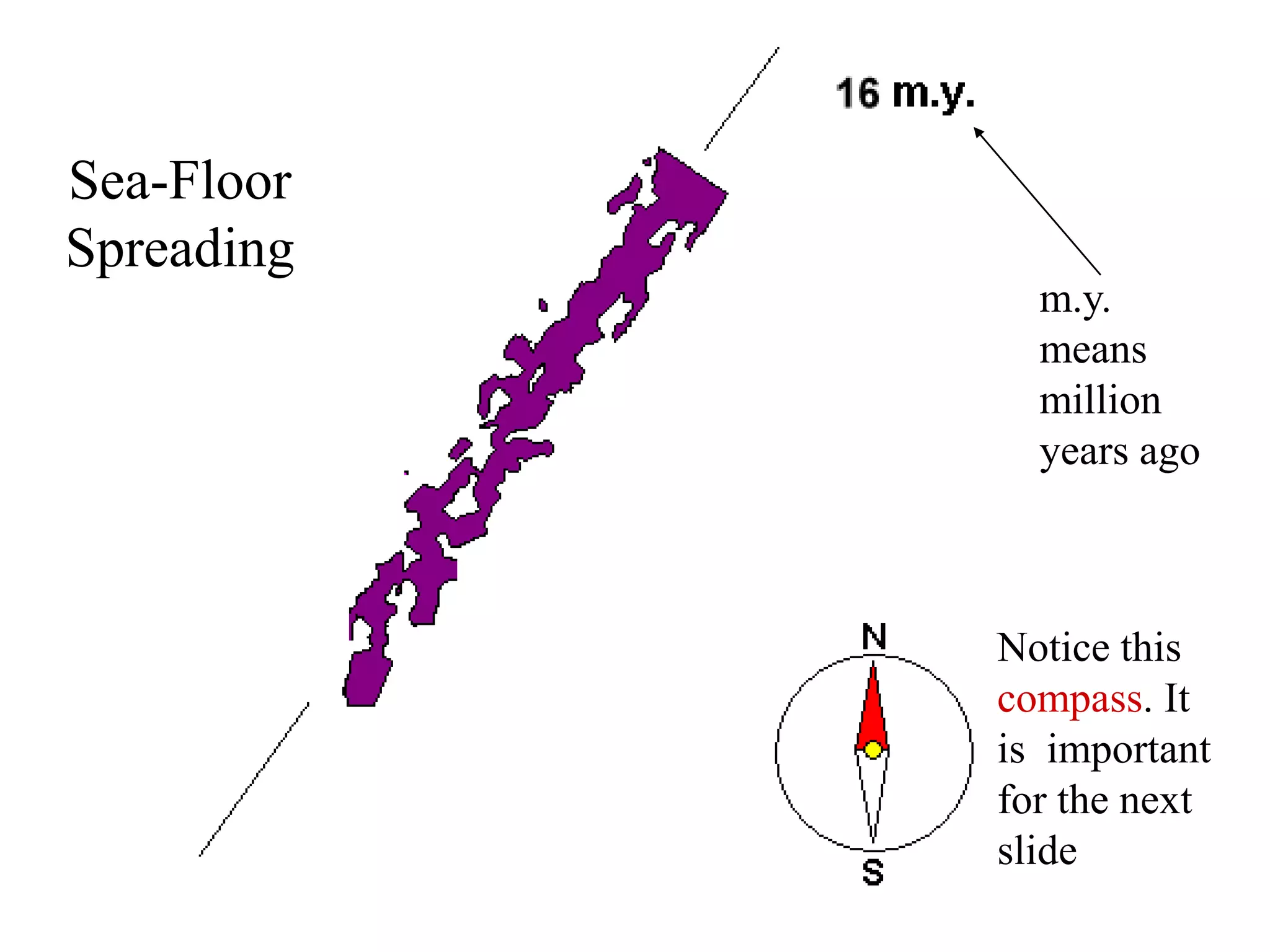
Sea-Floor
Spreading
m.y.
means
million
years ago
Notice this
compass. It
is important
for the next
slide
As the sea floor spreads, the lava cools according to the
magnetic poles at the time. The rocks on the ocean
floor have proved that the earth’s magnetic field
sometimes reverses. The inner core flips and so the
north pole moves to the southern hemisphere! The
earthh itself does not flip.
http://platetectonics.pwnet.org/img/blocks.gif
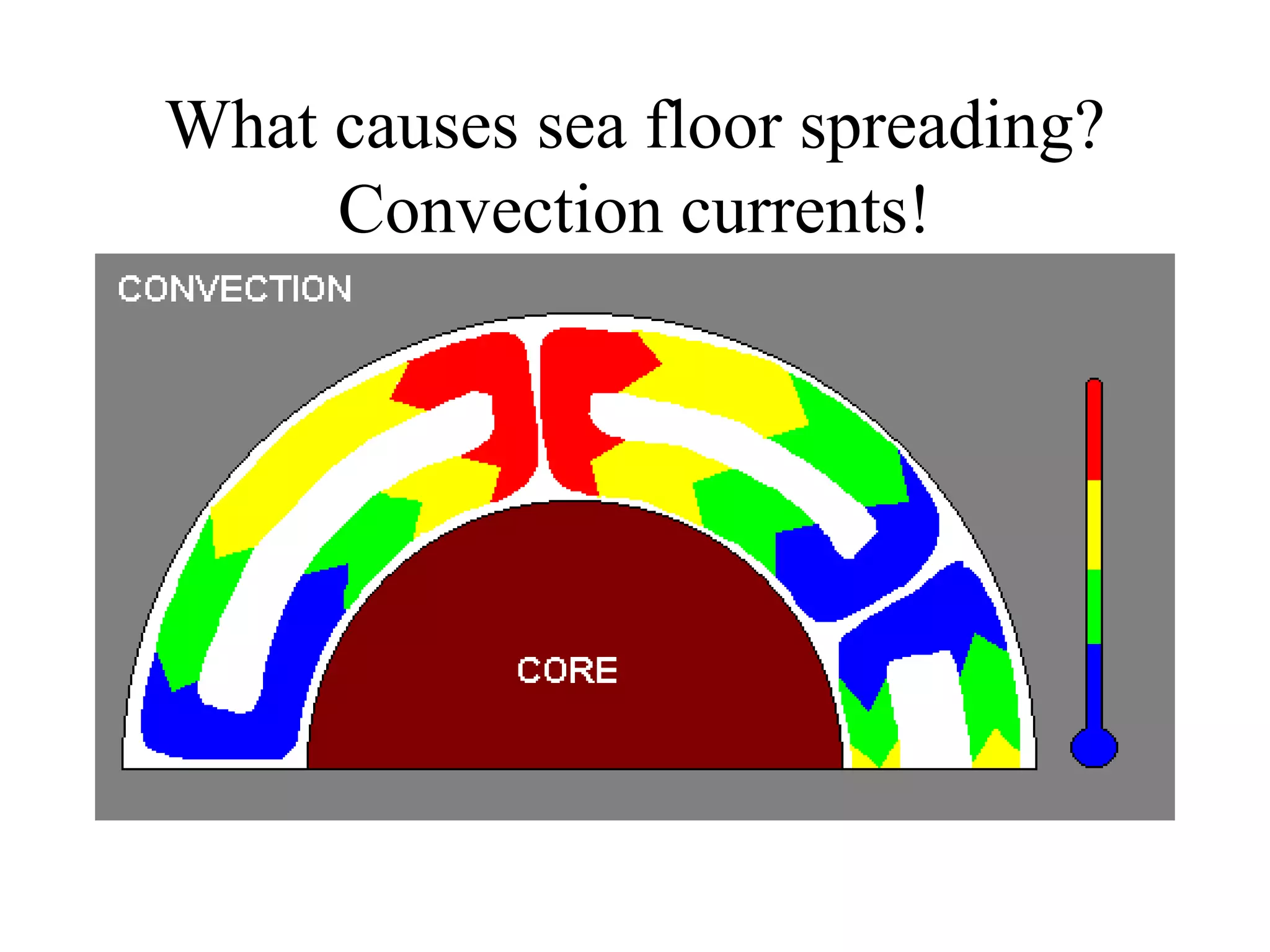
What causes sea floor spreading?
Convection currents!
Click here for a hyperlink to an animation of convection
Be sure to click the play button!
Animation of sea floor spreading
Can you explain this diagram!?
The place where two plates move
apart or diverge is called a divergent
boundary.
This is a model of sea floor spreading at a divergent
boundary called a mid ocean ridge.
Did you know that the Earth’s longest mountain range is
underwater and is called the mid-ocean ridge?
: www.ocean.udel.edu
The Mid-Ocean Ridge system, shown above snaking its way
between the continents, is more than 56,000 kilometers (35,000 mi)
long. It circles the earth like the stitching on a baseball!
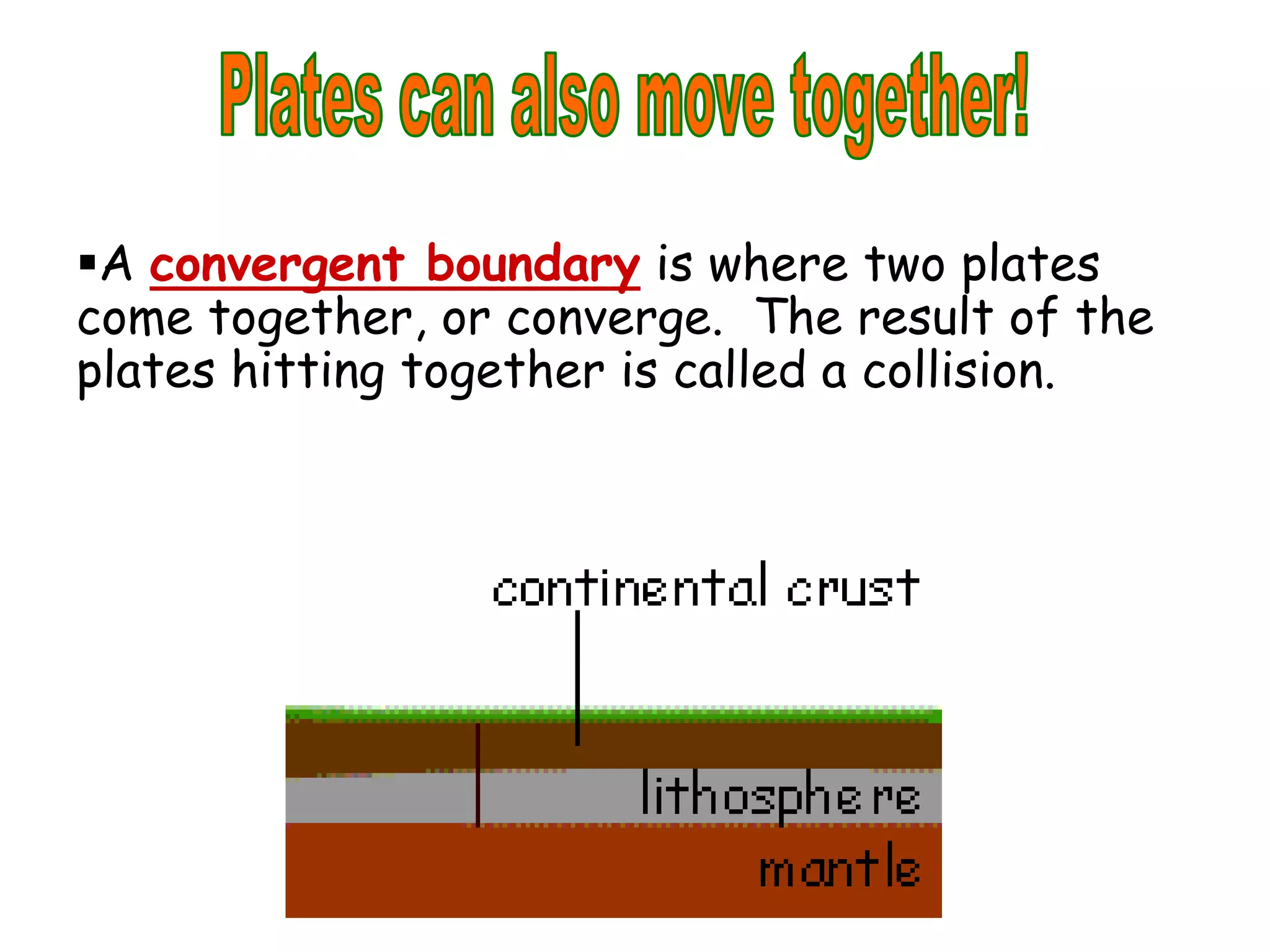
A convergent boundary is where two plates
come together, or converge. The result of the
plates hitting together is called a collision.
A transform boundary is a place where
two plates slip past each other, moving in
opposite directions.
Oceanic crust to oceanic
from: http://www.geo.lsa.umich.edu/~crlb/COURSES/270
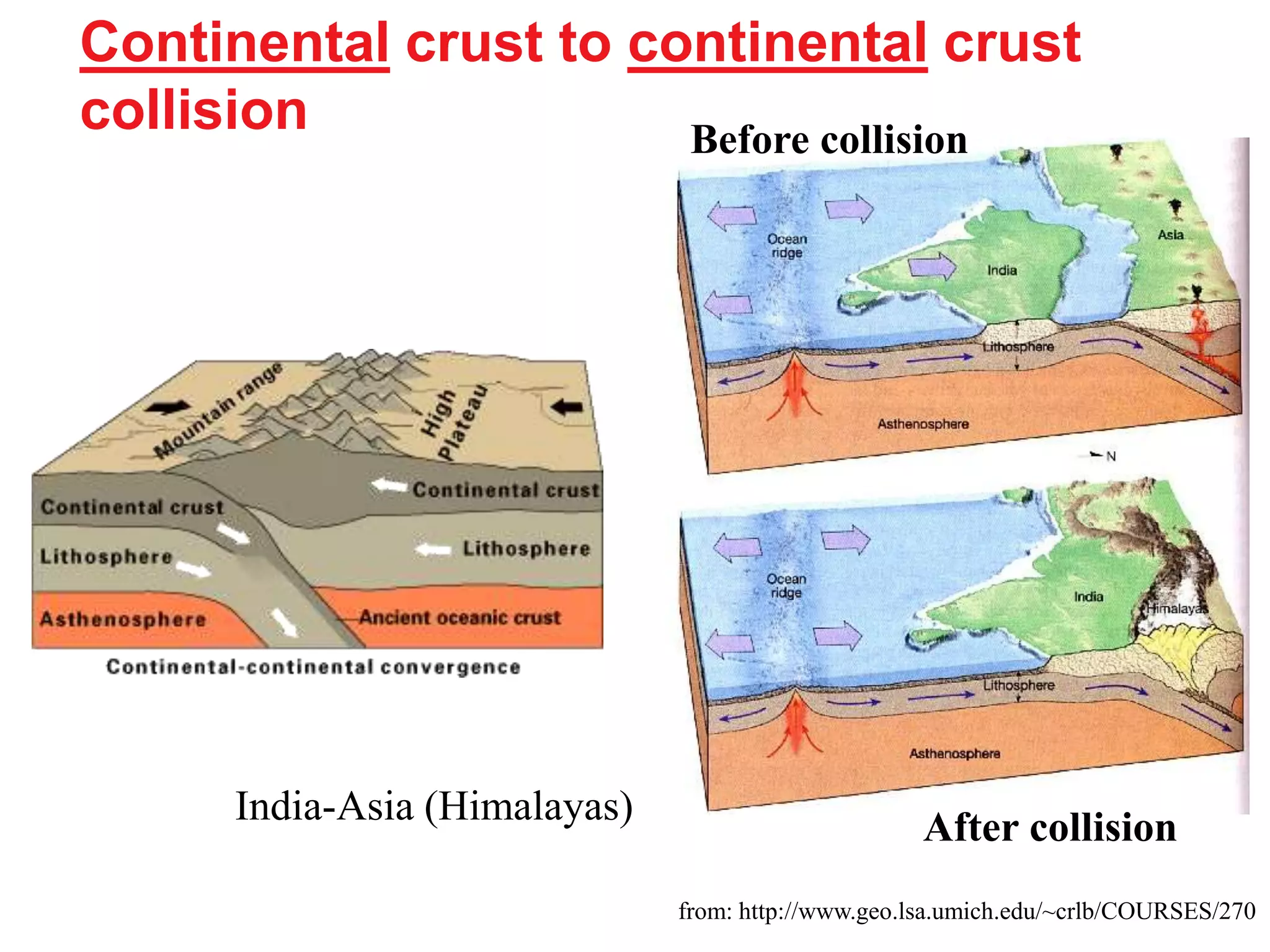
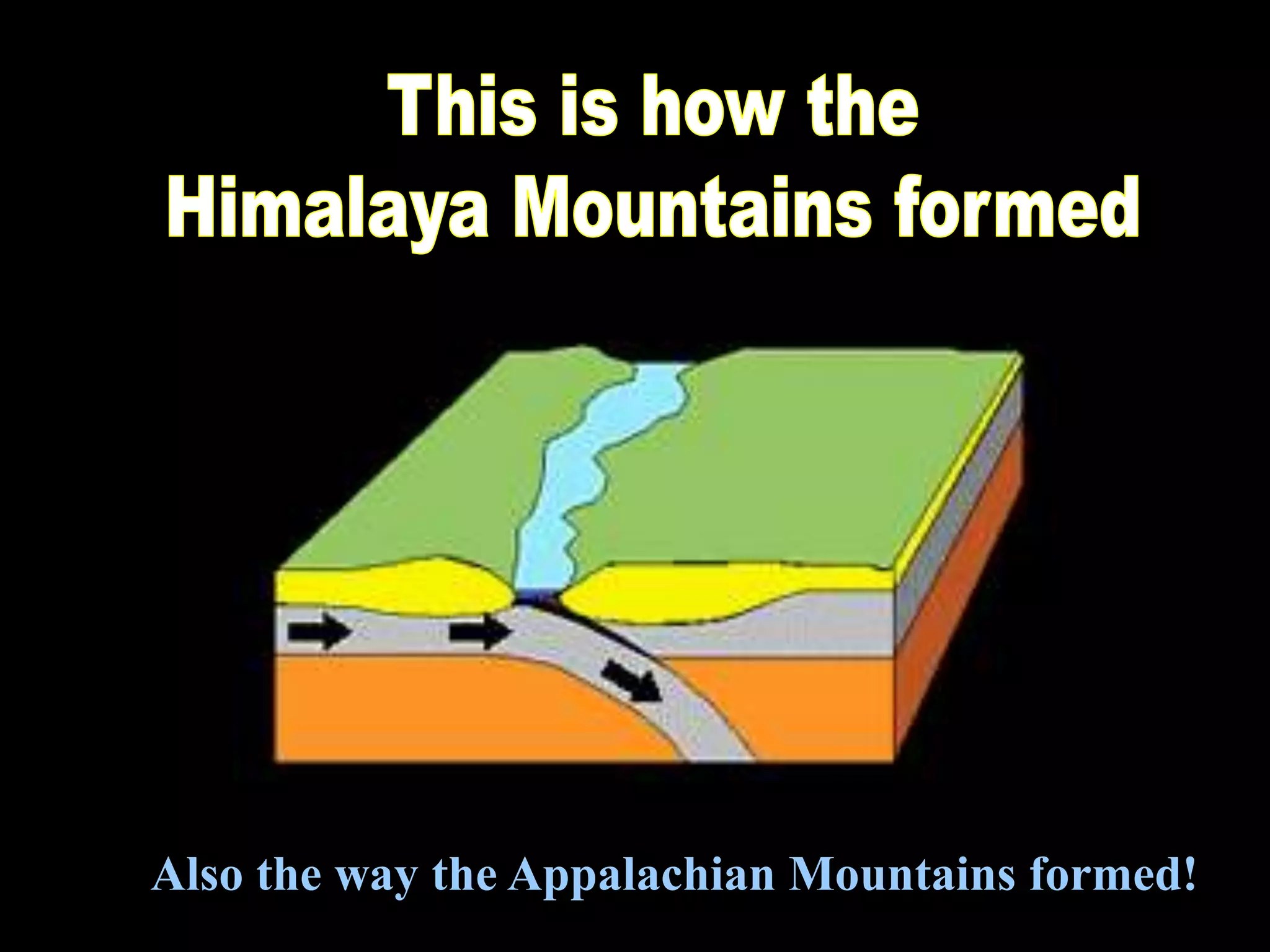
Continental crust to continental crust
collision
India-Asia (Himalayas)
Before collision
After collision
Also the way the Appalachian Mountains formed!
Because one plate gets pushed under
another, it is called subduction. This
is where volcanoes form!
Oceanic crust
colliding with
oceanic crust
Oceanic crust colliding
with continental crust
all from: http://www.geo.lsa.umich.edu/~crlb/COURSES/270
The process by
which the ocean
floor sinks
beneath a deep-
ocean trench
and back into
the mantle is
called
Plate tectonics video clip
Here is an great link for seeing where each type of
boundary is located.
Click here for a great hyperlink! Make sure you
click on each type of boundary in the key!
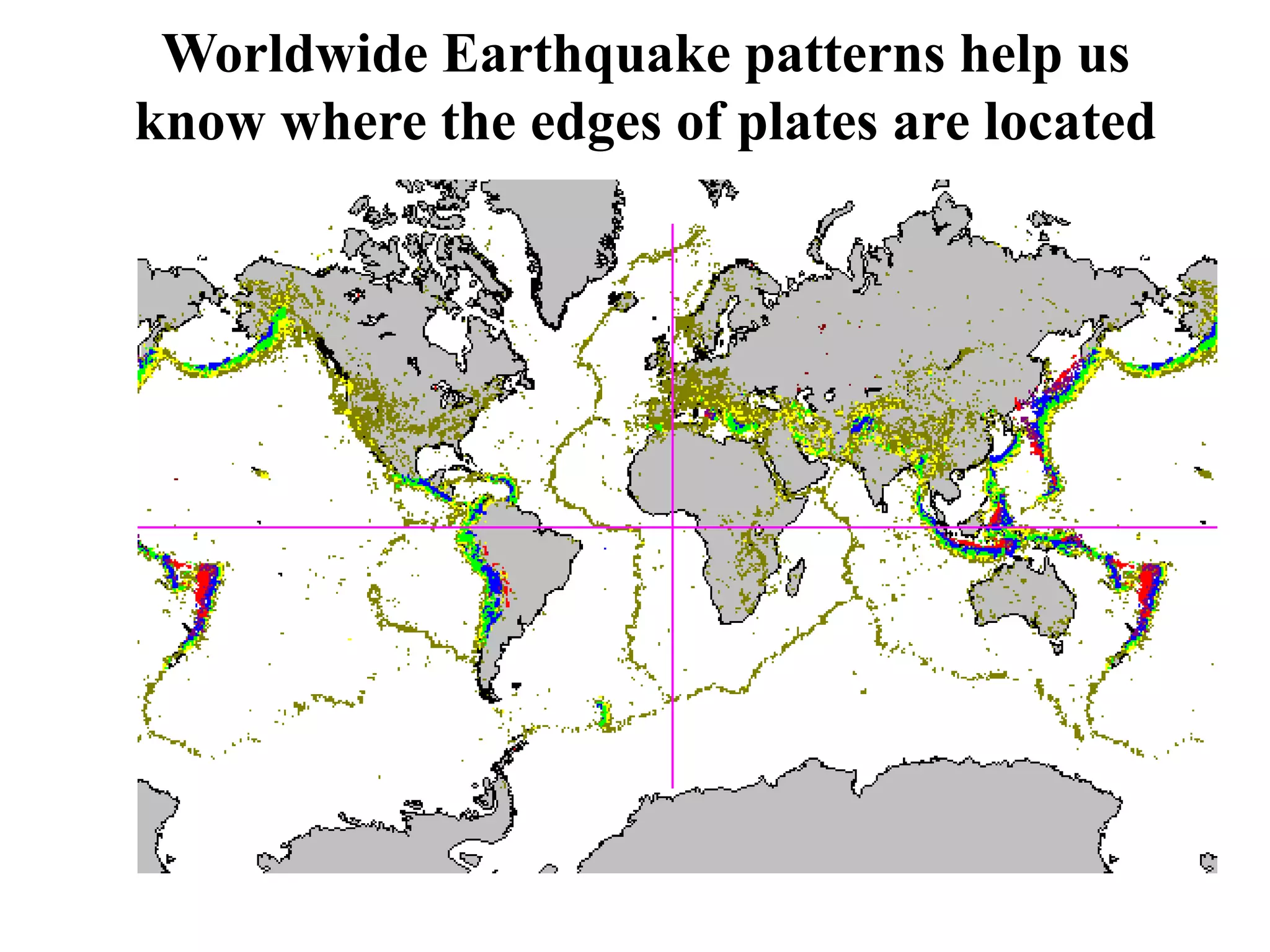
Worldwide Earthquake patterns help us
know where the edges of plates are located
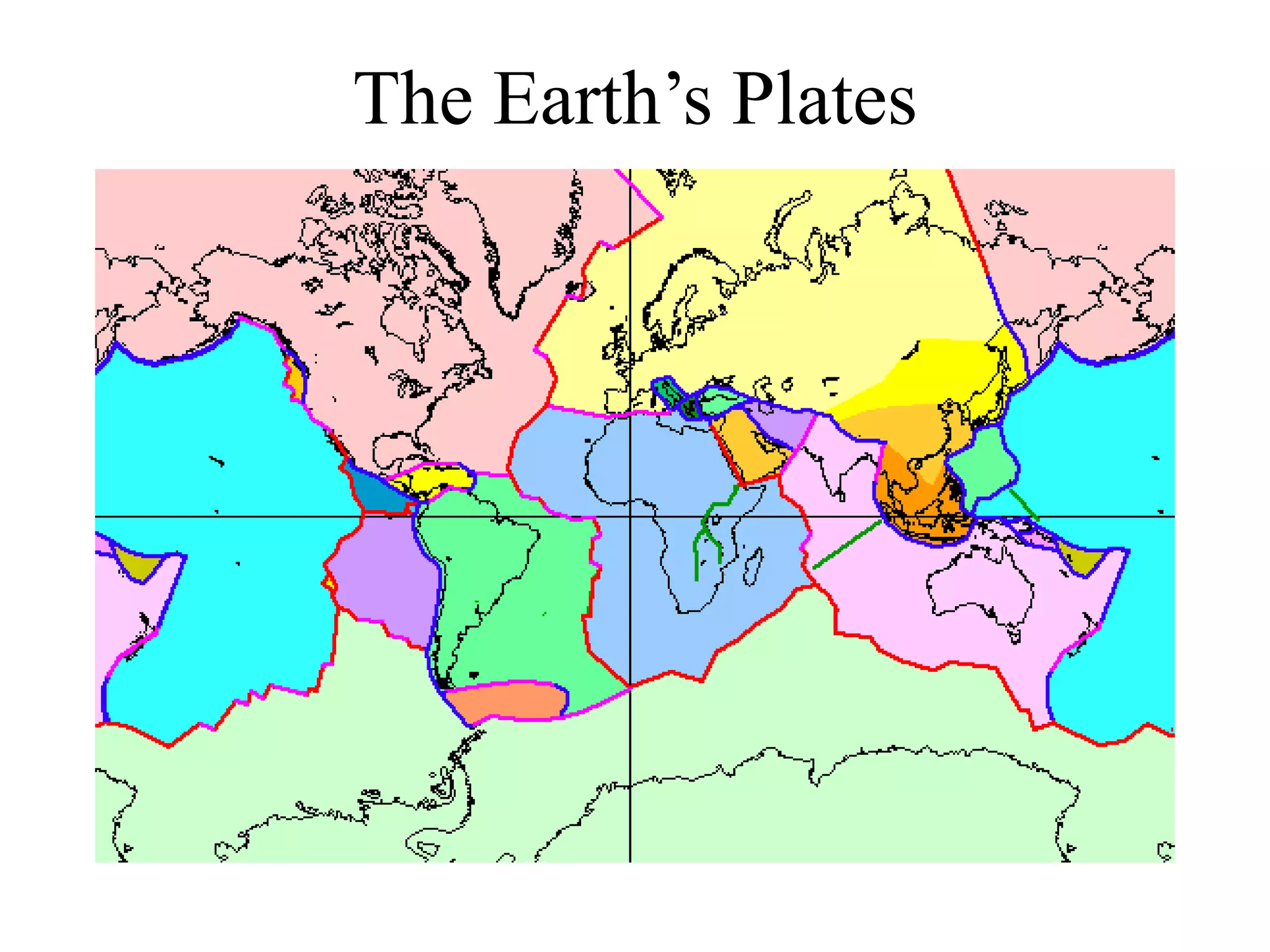
The Earth’s Plates
Here you see
the two slides
together.
What do you
see?
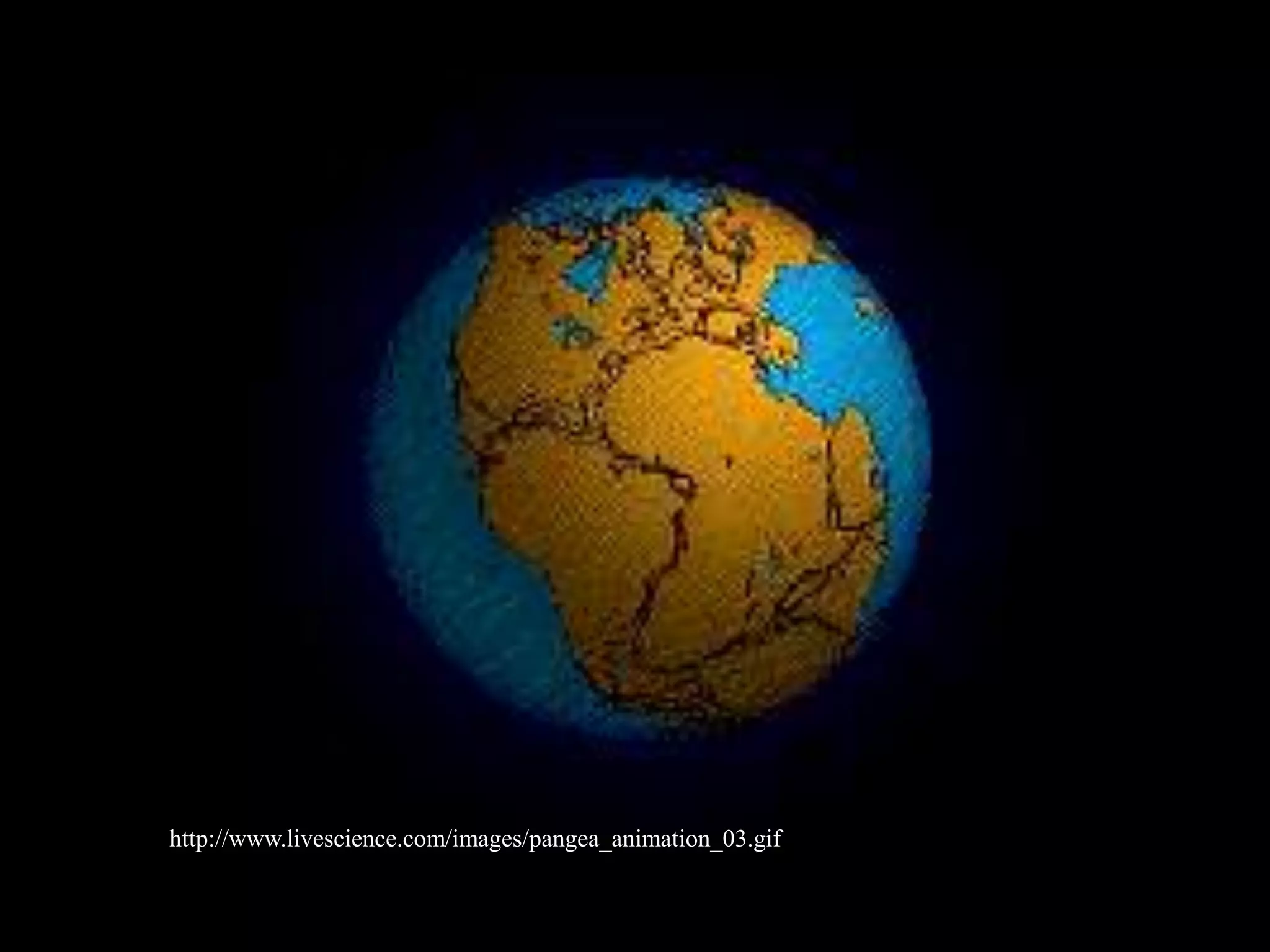
http://www.livescience.com/images/pangea_animation_03.gif

Continental drift and plate tectonics.ppt

  • 2.
  • 3.
     Continental driftwas Wegener’s theory that all continents had once been joined together in a single landmass and have drifted apart since.  Wegener named this supercontinent Pangaea.  Wegener’s theory was rejected by scientists because he could not explain what force pushes or pulls continents. Continental drift video clip
  • 5.
    Fit of Continents Acrossthe Atlantic Mountain ranges in South America line up exactly with those in Africa!
  • 6.
    Notice how fossilslined up across continents! http://evolution.berkeley.edu/evolibrary/images/history/fossils3.gif
  • 7.
    Amazing Facts: Didyou know... ...that India was once in the Southern Hemisphere connected to Antarctica? ...that North America was once surrounded by warm, tropical seas? ...that Africa was once covered by glaciers, which were kilometers in thickness? ...that the Sahara desert was once a tropical rain forest?
  • 8.
    As North Americahas drifted to different latitudes, changing climates were experienced. This shows the changes in the state of New Mexico. An example of the proof for changing climate: At one time, the area that is New Mexico was below the equator!
  • 9.
    He could notfind the force that was causing the continents to drift. Because of this, he could not convince anyone that continents could move. He died in Greenland on an expedition. At the time of his death, no one believed his hypothesis! Technology developed during the 1940’s changed all that!
  • 10.
    Discovery of Sea-FloorSpreading Sea floor spreading video clip
  • 11.
  • 12.
    As the seafloor spreads, the lava cools according to the magnetic poles at the time. The rocks on the ocean floor have proved that the earth’s magnetic field sometimes reverses. The inner core flips and so the north pole moves to the southern hemisphere! The earthh itself does not flip. http://platetectonics.pwnet.org/img/blocks.gif
  • 13.
    What causes seafloor spreading? Convection currents!
  • 14.
    Click here fora hyperlink to an animation of convection Be sure to click the play button!
  • 15.
    Animation of seafloor spreading Can you explain this diagram!?
  • 16.
    The place wheretwo plates move apart or diverge is called a divergent boundary.
  • 17.
    This is amodel of sea floor spreading at a divergent boundary called a mid ocean ridge.
  • 18.
    Did you knowthat the Earth’s longest mountain range is underwater and is called the mid-ocean ridge? : www.ocean.udel.edu The Mid-Ocean Ridge system, shown above snaking its way between the continents, is more than 56,000 kilometers (35,000 mi) long. It circles the earth like the stitching on a baseball!
  • 19.
    A convergent boundaryis where two plates come together, or converge. The result of the plates hitting together is called a collision.
  • 20.
    A transform boundaryis a place where two plates slip past each other, moving in opposite directions.
  • 21.
  • 22.
    from: http://www.geo.lsa.umich.edu/~crlb/COURSES/270 Continental crustto continental crust collision India-Asia (Himalayas) Before collision After collision
  • 23.
    Also the waythe Appalachian Mountains formed!
  • 24.
    Because one plategets pushed under another, it is called subduction. This is where volcanoes form! Oceanic crust colliding with oceanic crust Oceanic crust colliding with continental crust all from: http://www.geo.lsa.umich.edu/~crlb/COURSES/270
  • 25.
    The process by whichthe ocean floor sinks beneath a deep- ocean trench and back into the mantle is called
  • 26.
    Plate tectonics videoclip Here is an great link for seeing where each type of boundary is located. Click here for a great hyperlink! Make sure you click on each type of boundary in the key!
  • 27.
    Worldwide Earthquake patternshelp us know where the edges of plates are located
  • 28.
  • 29.
    Here you see thetwo slides together. What do you see?
  • 30.