
Consumer Behavior Case Study: Tudor Fashions Submitted By: Group 2 Aditya Zutshi (09BM8005),  Ambuj Agarwal (09BM8007), Nidhi Bansal (09BM8028), Shweta Jain (09BM8031),  Amit Sarangal (09BM8082) & Shilpa Gautam (09BM8085)
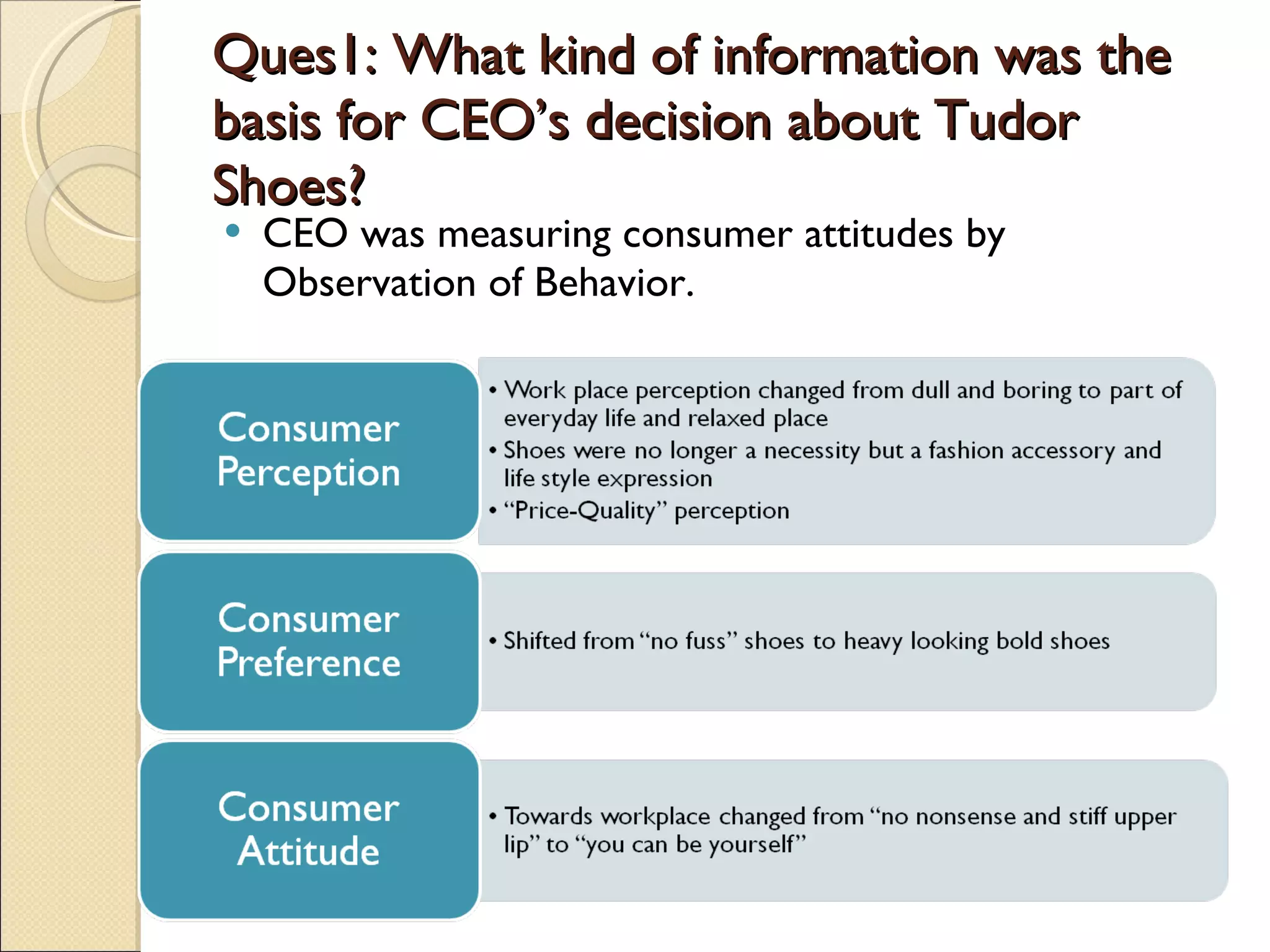
Ques1: What kind of information was the basis for CEO’s decision about Tudor Shoes? CEO was measuring consumer attitudes by Observation of Behavior.
Results Above changes resulted in change in consumption pattern of product i.e. Tudor shoes CEO related this change in consumer behavior with declining sales over past 2 yrs Decided to move from “high quality – affordable price” to “high price – high quality” image Though Observation method is usually used to supplement other research methods like (qualitative investigations: focus group, depth interviews, TAT & Attitude Scale)
Ques 2:Analyse the pros and cons of Prashant’s decision about Tudor Shoes Pros Able to recognize changing consumer attitude, perception and preference Identified the need of changing product range in consensus with all departmental heads Realized that they need to keep pace with the changing trends for future growth
Cons Lost the existing segment – middle class Created confusion among customer about the brand image Drastic price changes were not accepted by customers Lost the competitive advantage of selling good quality affordable range shoes  Marketing communication strategy was missing Tried to enter into new market without proper repositioning efforts POD wrt premium brands was missing  For premium shoes other brands were recalled, not Tudor This all resulted into further decrease in market share
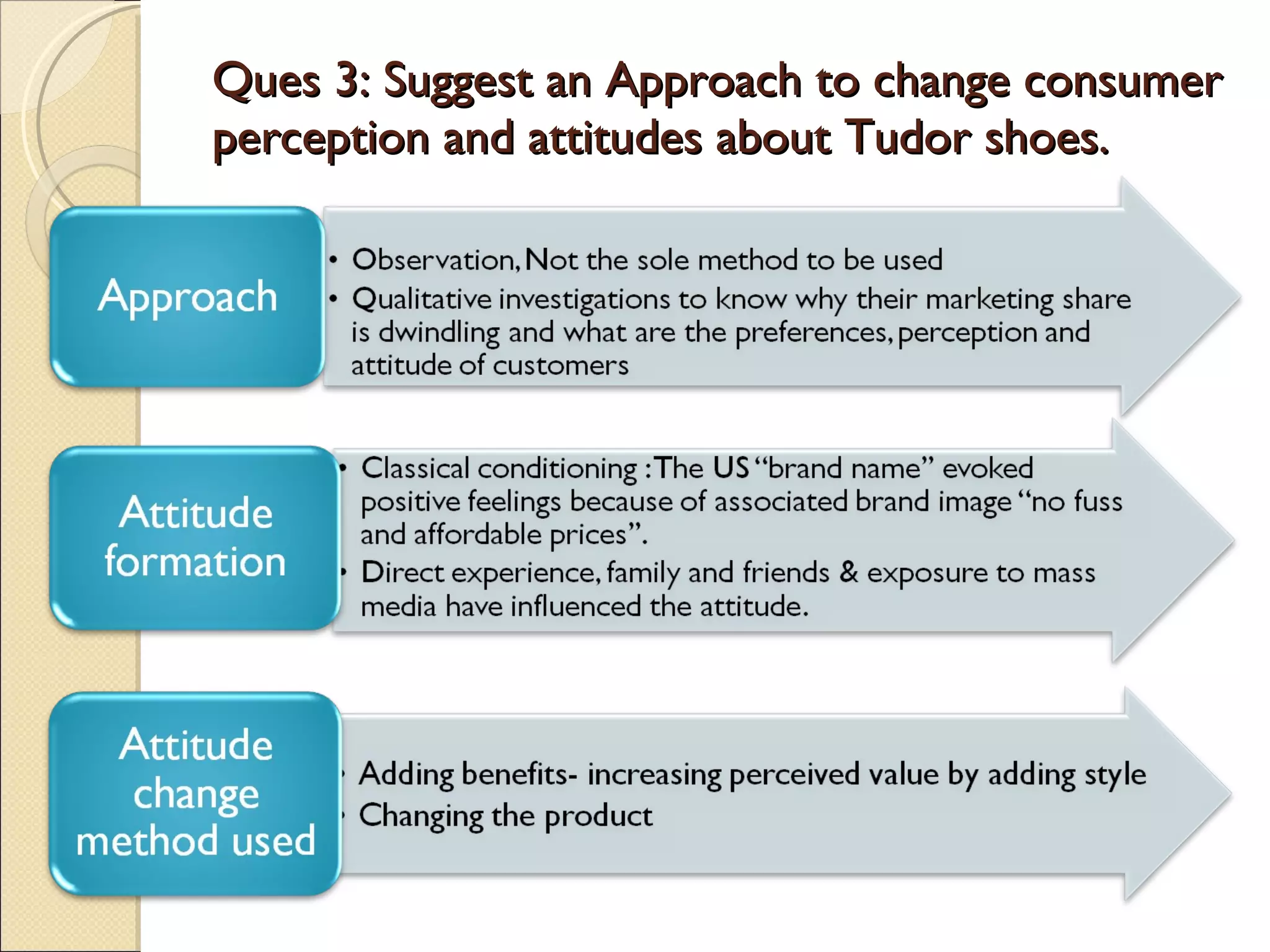
Ques 3: Suggest an Approach to change consumer perception and attitudes about Tudor shoes.
Proposed Approach To Change Perception Inputs to the perception process i.e. the stimuli – Vision & Hearing through marketing communication The design changes should be such that it crosses the differential threshold but at the same time the price point should not vary to such a large extent. They can launch new sub brand for high end premium shoes  To Change Attitude Change the criteria for evaluation  Earlier they evaluated on basis of affordable prices and no fuss – elegant shoes for office.
Changing basic motivational function :  Emphasis on “Value-expressive” function Will help consumers illustrate their personality & lifestyle to be in trend with what others are wearing. Ego defensive function To support self concept and be part of the latest trend of bold shoes Changing brand belief (as part of altering components of the multi-attribute model)
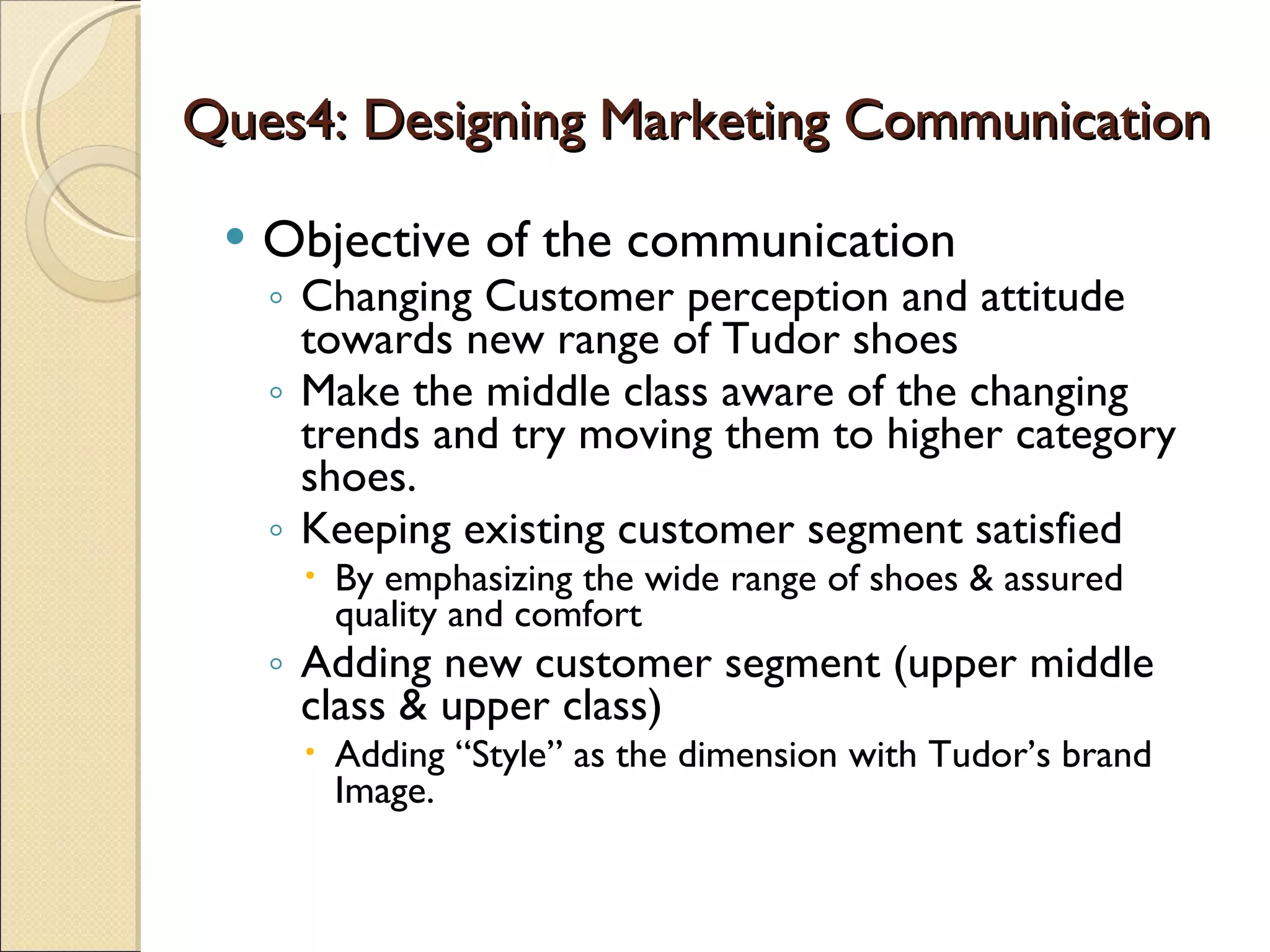
Ques4: Designing Marketing Communication Objective of the communication Changing Customer perception and attitude towards new range of Tudor shoes  Make the middle class aware of the changing trends and try moving them to higher category shoes. Keeping existing customer segment satisfied By emphasizing the wide range of shoes & assured quality and comfort Adding new customer segment (upper middle class & upper class)  Adding “Style” as the dimension with Tudor’s brand Image.
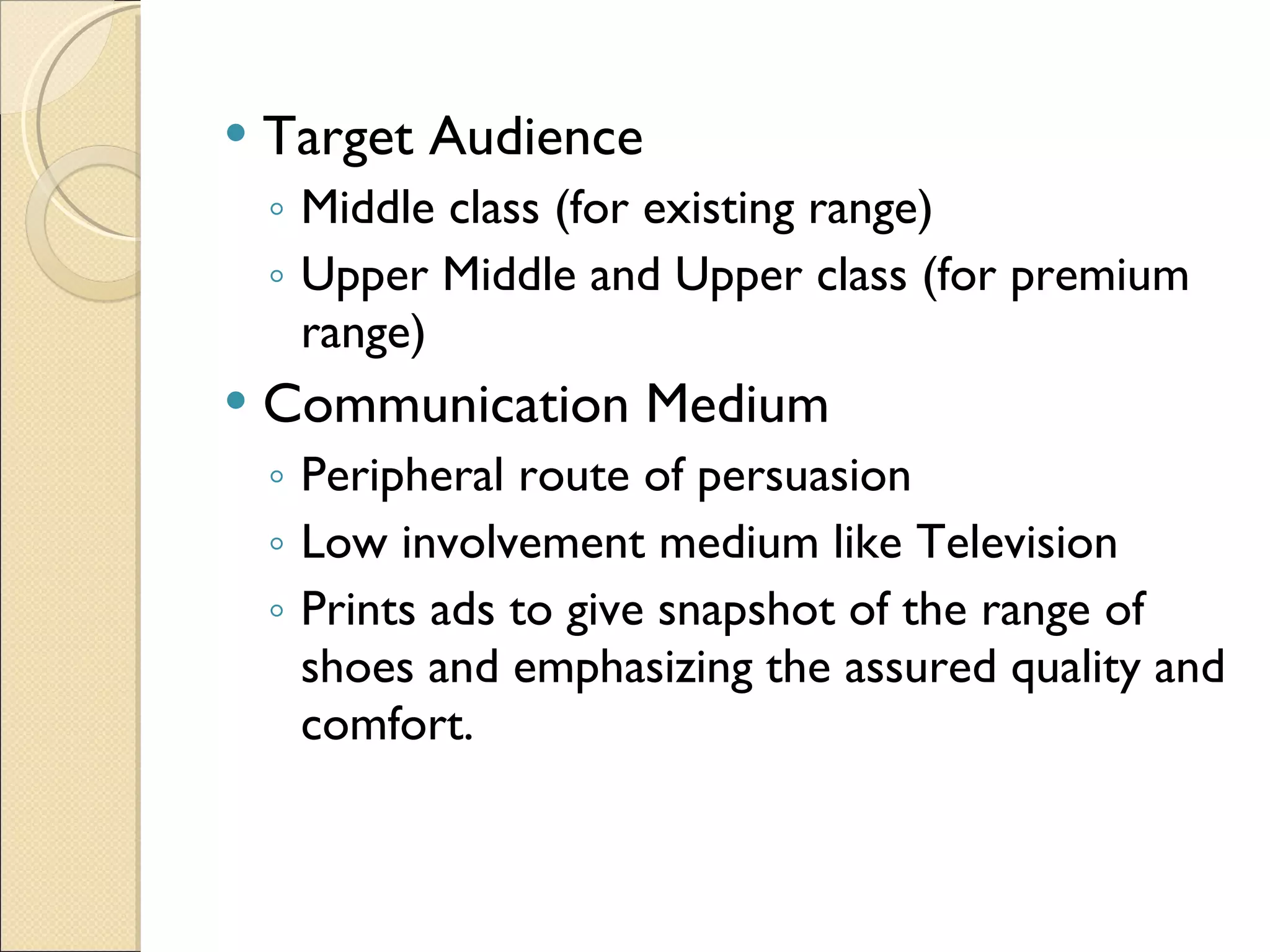
Target Audience Middle class (for existing range) Upper Middle and Upper class (for premium range)  Communication Medium Peripheral route of persuasion Low involvement medium like Television Prints ads to give snapshot of the range of shoes and emphasizing the assured quality and comfort.
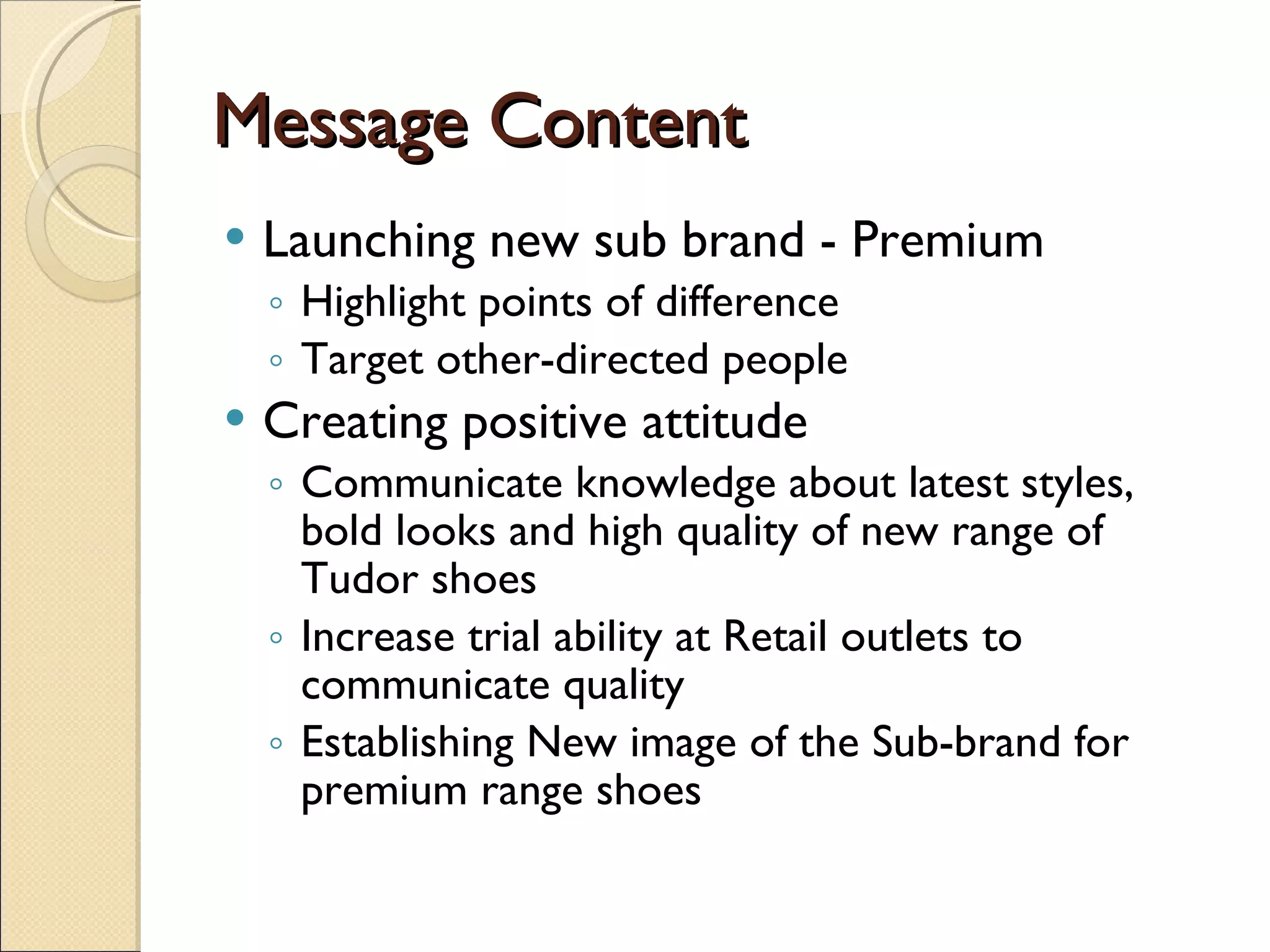
Message Content Launching new sub brand - Premium  Highlight points of difference Target other-directed people Creating positive attitude  Communicate knowledge about latest styles, bold looks and high quality of new range of Tudor shoes Increase trial ability at Retail outlets to communicate quality Establishing New image of the Sub-brand for premium range shoes
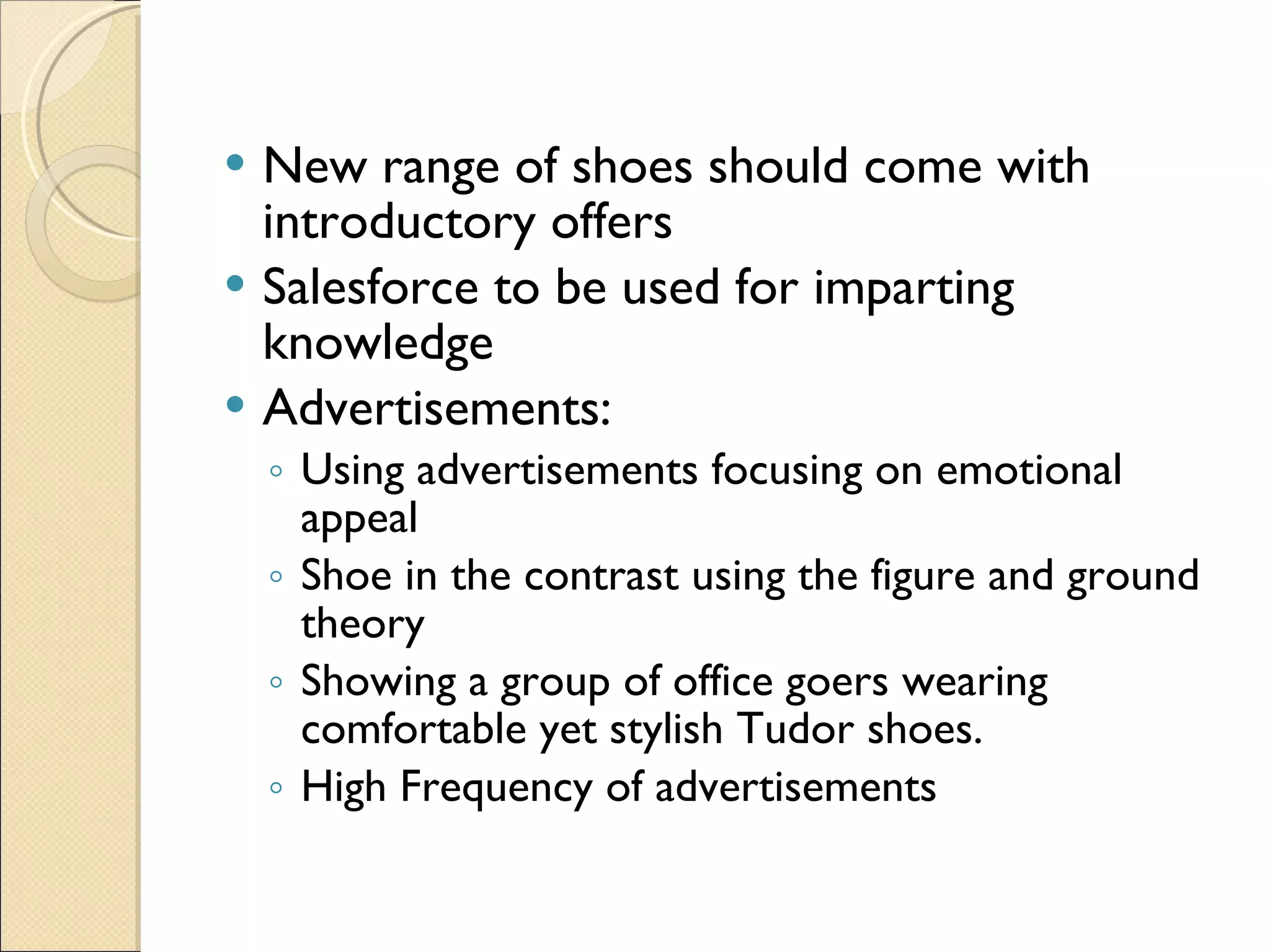
New range of shoes should come with introductory offers Salesforce to be used for imparting knowledge Advertisements: Using advertisements focusing on emotional appeal Shoe in the contrast using the figure and ground theory Showing a group of office goers wearing comfortable yet stylish Tudor shoes. High Frequency of advertisements
 

Consumer behavior case study : Tudor Fashion

  • 1.
    Consumer Behavior CaseStudy: Tudor Fashions Submitted By: Group 2 Aditya Zutshi (09BM8005), Ambuj Agarwal (09BM8007), Nidhi Bansal (09BM8028), Shweta Jain (09BM8031), Amit Sarangal (09BM8082) & Shilpa Gautam (09BM8085)
  • 2.
    Ques1: What kindof information was the basis for CEO’s decision about Tudor Shoes? CEO was measuring consumer attitudes by Observation of Behavior.
  • 3.
    Results Above changesresulted in change in consumption pattern of product i.e. Tudor shoes CEO related this change in consumer behavior with declining sales over past 2 yrs Decided to move from “high quality – affordable price” to “high price – high quality” image Though Observation method is usually used to supplement other research methods like (qualitative investigations: focus group, depth interviews, TAT & Attitude Scale)
  • 4.
    Ques 2:Analyse thepros and cons of Prashant’s decision about Tudor Shoes Pros Able to recognize changing consumer attitude, perception and preference Identified the need of changing product range in consensus with all departmental heads Realized that they need to keep pace with the changing trends for future growth
  • 5.
    Cons Lost theexisting segment – middle class Created confusion among customer about the brand image Drastic price changes were not accepted by customers Lost the competitive advantage of selling good quality affordable range shoes Marketing communication strategy was missing Tried to enter into new market without proper repositioning efforts POD wrt premium brands was missing For premium shoes other brands were recalled, not Tudor This all resulted into further decrease in market share
  • 6.
    Ques 3: Suggestan Approach to change consumer perception and attitudes about Tudor shoes.
  • 7.
    Proposed Approach ToChange Perception Inputs to the perception process i.e. the stimuli – Vision & Hearing through marketing communication The design changes should be such that it crosses the differential threshold but at the same time the price point should not vary to such a large extent. They can launch new sub brand for high end premium shoes To Change Attitude Change the criteria for evaluation Earlier they evaluated on basis of affordable prices and no fuss – elegant shoes for office.
  • 8.
    Changing basic motivationalfunction : Emphasis on “Value-expressive” function Will help consumers illustrate their personality & lifestyle to be in trend with what others are wearing. Ego defensive function To support self concept and be part of the latest trend of bold shoes Changing brand belief (as part of altering components of the multi-attribute model)
  • 9.
    Ques4: Designing MarketingCommunication Objective of the communication Changing Customer perception and attitude towards new range of Tudor shoes Make the middle class aware of the changing trends and try moving them to higher category shoes. Keeping existing customer segment satisfied By emphasizing the wide range of shoes & assured quality and comfort Adding new customer segment (upper middle class & upper class) Adding “Style” as the dimension with Tudor’s brand Image.
  • 10.
    Target Audience Middleclass (for existing range) Upper Middle and Upper class (for premium range) Communication Medium Peripheral route of persuasion Low involvement medium like Television Prints ads to give snapshot of the range of shoes and emphasizing the assured quality and comfort.
  • 11.
    Message Content Launchingnew sub brand - Premium Highlight points of difference Target other-directed people Creating positive attitude Communicate knowledge about latest styles, bold looks and high quality of new range of Tudor shoes Increase trial ability at Retail outlets to communicate quality Establishing New image of the Sub-brand for premium range shoes
  • 12.
    New range ofshoes should come with introductory offers Salesforce to be used for imparting knowledge Advertisements: Using advertisements focusing on emotional appeal Shoe in the contrast using the figure and ground theory Showing a group of office goers wearing comfortable yet stylish Tudor shoes. High Frequency of advertisements
  • 13.