Managing FX Risk The Mecklai Approach CONFIDENTIAL © Mecklai Financial Services Limited 2010. No part of this document can be circulated or reproduced in any form without prior approval of Mecklai Financial Services Limited
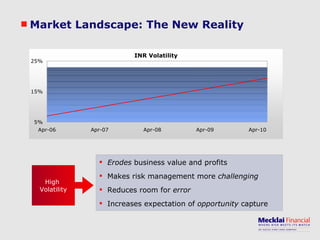
Market Landscape: The New Reality Erodes  business value and profits Makes risk management more  challenging Reduces room for  error  Increases expectation of  opportunity  capture High  Volatility
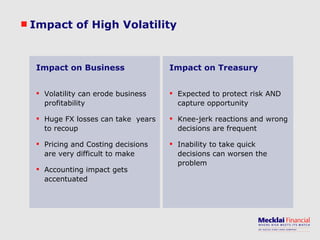
Impact of High Volatility Impact on Business Volatility can erode business profitability Huge FX losses can take  years to recoup Pricing and Costing decisions are very difficult to make Accounting impact gets accentuated Impact on Treasury Expected to protect risk AND capture opportunity Knee-jerk reactions and wrong decisions are frequent Inability to take quick decisions can worsen the problem
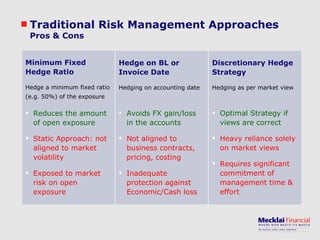
Traditional Risk Management Approaches Pros & Cons Reduces the amount of open exposure Static Approach: not aligned to market volatility Exposed to market risk on open exposure Avoids FX gain/loss in the accounts Not aligned to business contracts, pricing, costing Inadequate protection against Economic/Cash loss Optimal Strategy if views are correct Heavy reliance solely on market views Requires significant commitment of management time & effort Minimum Fixed Hedge Ratio Hedge a minimum fixed ratio (e.g. 50%) of the exposure Hedge on BL or Invoice Date Hedging on accounting date Discretionary Hedge Strategy Hedging as per market view
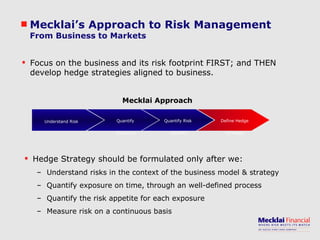
Mecklai’s Approach to Risk Management From Business to Markets Focus on the business and its risk footprint FIRST; and THEN develop hedge strategies aligned to business. Understand Risk Quantify Risk  Appetite Define Hedge Strategy Hedge Strategy should be formulated only after we: Understand risks in the context of the business model & strategy Quantify exposure on time, through an well-defined process Quantify the risk appetite for each exposure Measure risk on a continuous basis Mecklai Approach Quantify Exposure
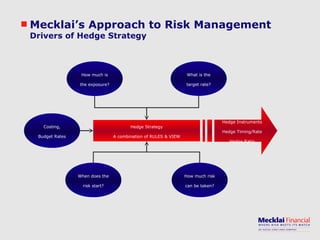
Mecklai’s Approach to Risk Management Drivers of Hedge Strategy Hedge Strategy A combination of RULES & VIEW How much is the exposure? How much risk can be taken? When does the risk start? What is the target rate? Hedge Instruments Hedge Timing/Rate Hedge Ratio Costing, Budget Rates
Putting it to Practice
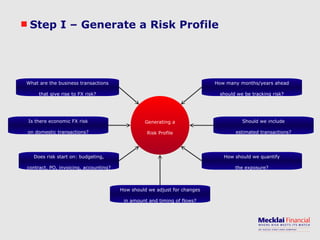
Step I – Generate a Risk Profile Generating a Risk Profile What are the business transactions that give rise to FX risk? How many months/years ahead should we be tracking risk? Is there economic FX risk on domestic transactions? Does risk start on: budgeting, contract, PO, invoicing, accounting? Should we include estimated transactions? How should we quantify the exposure? How should we adjust for changes in amount and timing of flows?
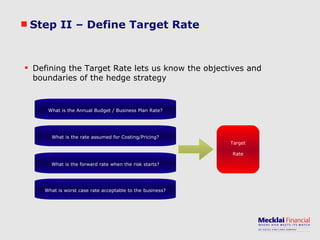
Step II – Define Target Rate Defining the Target Rate lets us know the objectives and boundaries of the hedge strategy What is the Annual Budget / Business Plan Rate? What is the rate assumed for Costing/Pricing? What is the forward rate when the risk starts? What is worst case rate acceptable to the business? Target Rate
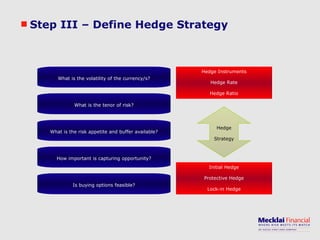
Step III – Define Hedge Strategy Initial Hedge Protective Hedge Lock-in Hedge What is the volatility of the currency/s? What is the tenor of risk? What is the risk appetite and buffer available? How important is capturing opportunity? Is buying options feasible? Hedge Instruments Hedge Rate Hedge Ratio Hedge Strategy
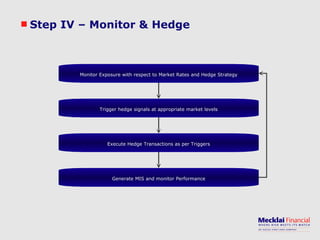
Step IV – Monitor & Hedge Monitor Exposure with respect to Market Rates and Hedge Strategy Trigger hedge signals at appropriate market levels Execute Hedge Transactions as per Triggers Generate MIS and monitor Performance
Implementation Methodology
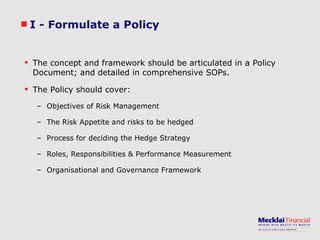
I - Formulate a Policy The concept and framework should be articulated in a Policy Document; and detailed in comprehensive SOPs. The Policy should cover: Objectives of Risk Management The Risk Appetite and risks to be hedged Process for deciding the Hedge Strategy Roles, Responsibilities & Performance Measurement Organisational and Governance Framework
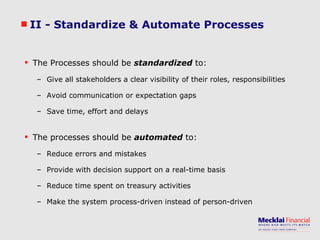
II - Standardize & Automate Processes The Processes should be  standardized  to: Give all stakeholders a clear visibility of their roles, responsibilities Avoid communication or expectation gaps Save time, effort and delays The processes should be  automated  to: Reduce errors and mistakes Provide with decision support on a real-time basis Reduce time spent on treasury activities Make the system process-driven instead of person-driven
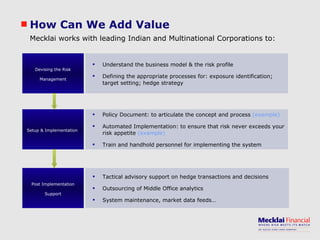
How Can We Add Value Mecklai works with leading Indian and Multinational Corporations to: Devising the Risk Management Understand the business model & the risk profile Defining the appropriate processes for: exposure identification; target setting; hedge strategy Setup & Implementation  Policy Document: to articulate the concept and process  (example) Automated Implementation: to ensure that risk never exceeds your risk appetite  (example) Train and handhold personnel for implementing the system Post Implementation Support Tactical advisory support on hedge transactions and decisions Outsourcing of Middle Office analytics System maintenance, market data feeds…
Let’s Talk
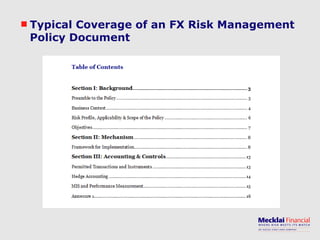
Typical Coverage of an FX Risk Management Policy Document
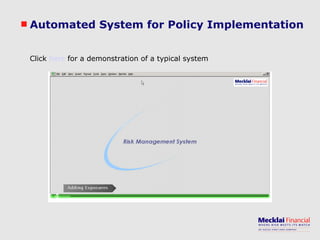
Automated System for Policy Implementation Click  here  for a demonstration of a typical system

Consulting Approach

  • 1.
    Managing FX RiskThe Mecklai Approach CONFIDENTIAL © Mecklai Financial Services Limited 2010. No part of this document can be circulated or reproduced in any form without prior approval of Mecklai Financial Services Limited
  • 2.
    Market Landscape: TheNew Reality Erodes business value and profits Makes risk management more challenging Reduces room for error Increases expectation of opportunity capture High Volatility
  • 3.
    Impact of HighVolatility Impact on Business Volatility can erode business profitability Huge FX losses can take years to recoup Pricing and Costing decisions are very difficult to make Accounting impact gets accentuated Impact on Treasury Expected to protect risk AND capture opportunity Knee-jerk reactions and wrong decisions are frequent Inability to take quick decisions can worsen the problem
  • 4.
    Traditional Risk ManagementApproaches Pros & Cons Reduces the amount of open exposure Static Approach: not aligned to market volatility Exposed to market risk on open exposure Avoids FX gain/loss in the accounts Not aligned to business contracts, pricing, costing Inadequate protection against Economic/Cash loss Optimal Strategy if views are correct Heavy reliance solely on market views Requires significant commitment of management time & effort Minimum Fixed Hedge Ratio Hedge a minimum fixed ratio (e.g. 50%) of the exposure Hedge on BL or Invoice Date Hedging on accounting date Discretionary Hedge Strategy Hedging as per market view
  • 5.
    Mecklai’s Approach toRisk Management From Business to Markets Focus on the business and its risk footprint FIRST; and THEN develop hedge strategies aligned to business. Understand Risk Quantify Risk Appetite Define Hedge Strategy Hedge Strategy should be formulated only after we: Understand risks in the context of the business model & strategy Quantify exposure on time, through an well-defined process Quantify the risk appetite for each exposure Measure risk on a continuous basis Mecklai Approach Quantify Exposure
  • 6.
    Mecklai’s Approach toRisk Management Drivers of Hedge Strategy Hedge Strategy A combination of RULES & VIEW How much is the exposure? How much risk can be taken? When does the risk start? What is the target rate? Hedge Instruments Hedge Timing/Rate Hedge Ratio Costing, Budget Rates
  • 7.
    Putting it toPractice
  • 8.
    Step I –Generate a Risk Profile Generating a Risk Profile What are the business transactions that give rise to FX risk? How many months/years ahead should we be tracking risk? Is there economic FX risk on domestic transactions? Does risk start on: budgeting, contract, PO, invoicing, accounting? Should we include estimated transactions? How should we quantify the exposure? How should we adjust for changes in amount and timing of flows?
  • 9.
    Step II –Define Target Rate Defining the Target Rate lets us know the objectives and boundaries of the hedge strategy What is the Annual Budget / Business Plan Rate? What is the rate assumed for Costing/Pricing? What is the forward rate when the risk starts? What is worst case rate acceptable to the business? Target Rate
  • 10.
    Step III –Define Hedge Strategy Initial Hedge Protective Hedge Lock-in Hedge What is the volatility of the currency/s? What is the tenor of risk? What is the risk appetite and buffer available? How important is capturing opportunity? Is buying options feasible? Hedge Instruments Hedge Rate Hedge Ratio Hedge Strategy
  • 11.
    Step IV –Monitor & Hedge Monitor Exposure with respect to Market Rates and Hedge Strategy Trigger hedge signals at appropriate market levels Execute Hedge Transactions as per Triggers Generate MIS and monitor Performance
  • 12.
  • 13.
    I - Formulatea Policy The concept and framework should be articulated in a Policy Document; and detailed in comprehensive SOPs. The Policy should cover: Objectives of Risk Management The Risk Appetite and risks to be hedged Process for deciding the Hedge Strategy Roles, Responsibilities & Performance Measurement Organisational and Governance Framework
  • 14.
    II - Standardize& Automate Processes The Processes should be standardized to: Give all stakeholders a clear visibility of their roles, responsibilities Avoid communication or expectation gaps Save time, effort and delays The processes should be automated to: Reduce errors and mistakes Provide with decision support on a real-time basis Reduce time spent on treasury activities Make the system process-driven instead of person-driven
  • 15.
    How Can WeAdd Value Mecklai works with leading Indian and Multinational Corporations to: Devising the Risk Management Understand the business model & the risk profile Defining the appropriate processes for: exposure identification; target setting; hedge strategy Setup & Implementation Policy Document: to articulate the concept and process (example) Automated Implementation: to ensure that risk never exceeds your risk appetite (example) Train and handhold personnel for implementing the system Post Implementation Support Tactical advisory support on hedge transactions and decisions Outsourcing of Middle Office analytics System maintenance, market data feeds…
  • 16.
  • 17.
    Typical Coverage ofan FX Risk Management Policy Document
  • 18.
    Automated System forPolicy Implementation Click here for a demonstration of a typical system