Educational Philosophy:
Constructivism
CREATED BY: NICHOLAS CAMACHO
Menu

Constructivist Theory Overview
     Important People
      In the Classroom
      In My Classroom
         (Click one of the titles
           to find out more!)
Menu

Constructivist Theory Overview
     Important People
      In the Classroom
      In My Classroom
         (Click one of the titles
           to find out more!)
Menu

Constructivist Theory Overview
     Important People
      In the Classroom
      In My Classroom
         (Click one of the titles
           to find out more!)
Menu

Constructivist Theory Overview
     Important People
      In the Classroom
      In My Classroom
         (Click one of the titles
           to find out more!)
Menu

Constructivist Theory Overview
     Important People
      In the Classroom
      In My Classroom
         (Click one of the titles
           to find out more!)
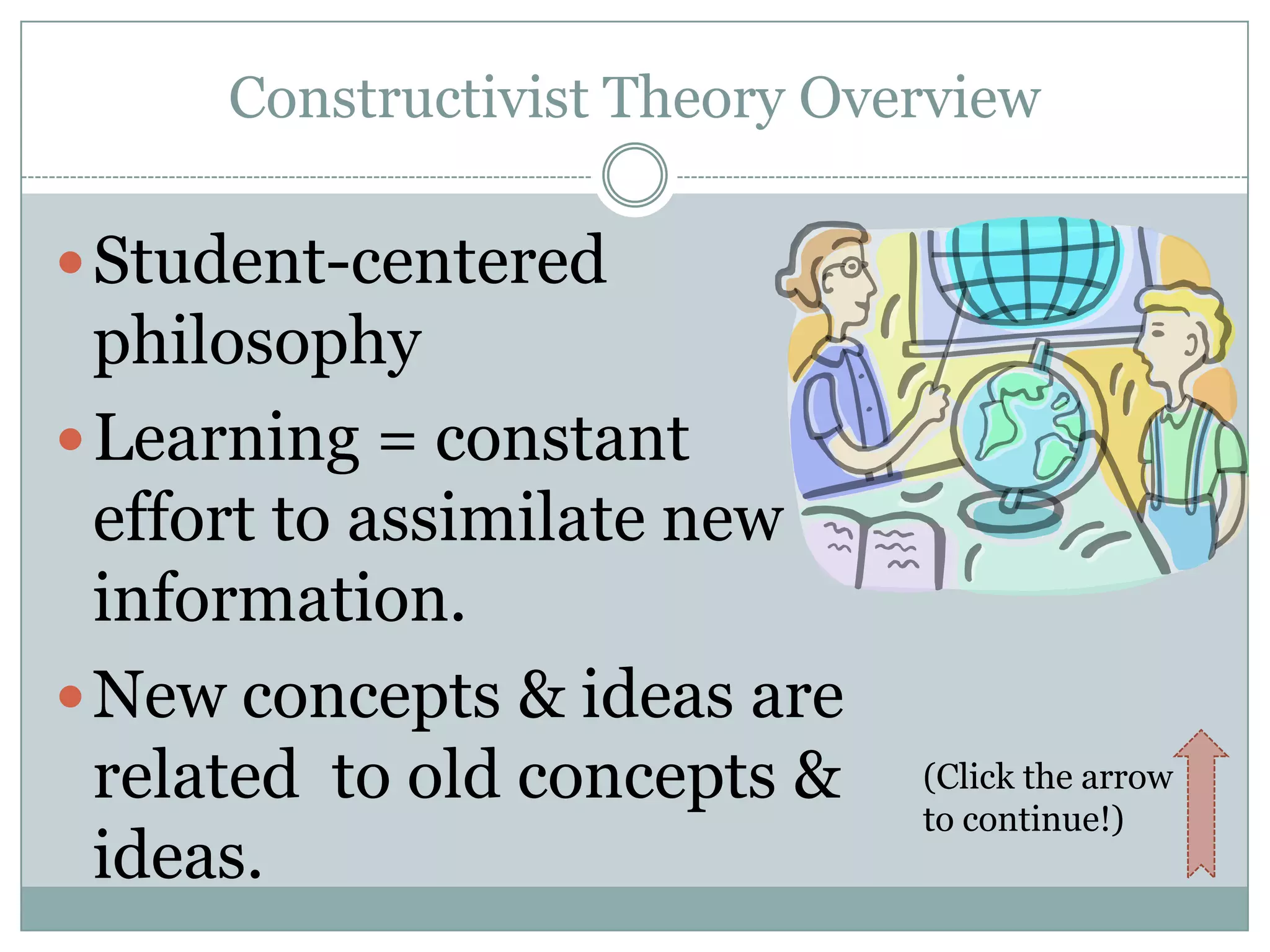
Constructivist Theory Overview

 Student-centered
  philosophy
 Learning = constant
  effort to assimilate new
  information.
 New concepts & ideas are
  related to old concepts &   (Click the arrow
                              to continue!)
  ideas.
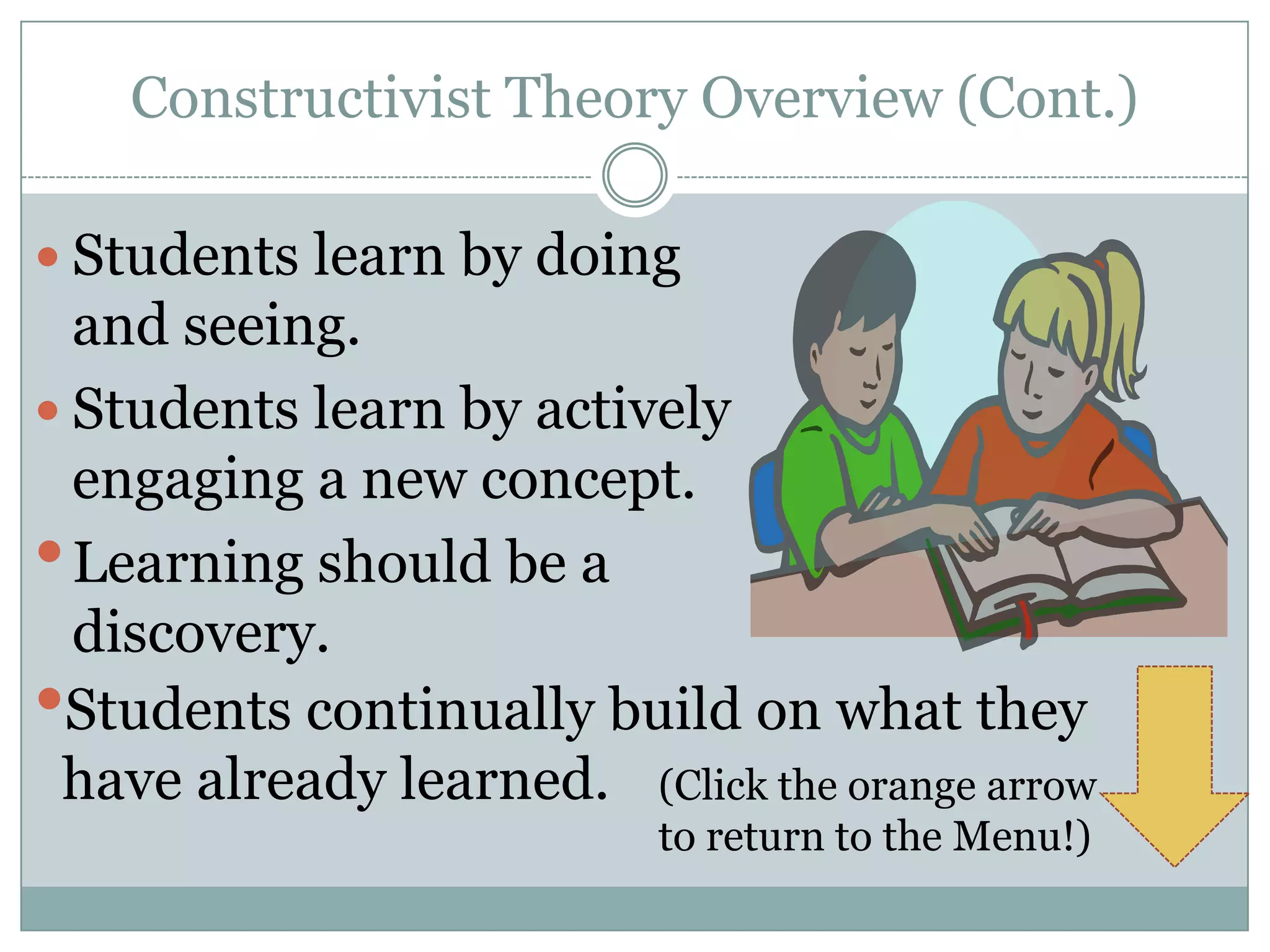
Constructivist Theory Overview (Cont.)

 Students learn by doing
  and seeing.
 Students learn by actively
  engaging a new concept.
• Learning should be a
  discovery.
•Students continually build on what they
 have already learned. (Click the orange arrow
                           to return to the Menu!)
Important People

 John Dewey
  Viewed learning as student-directed with a
  teacher serving as a guide for resources.
 Jerome Bruner
  Learnersare participatory learners; they are
  engaged in the learning process.
 Lev Vygotsky
  Learning
          is influenced by cognitive/social
  development
                       (Click the arrow to continue!)
(Return
to Menu)
            Important People (Cont.)

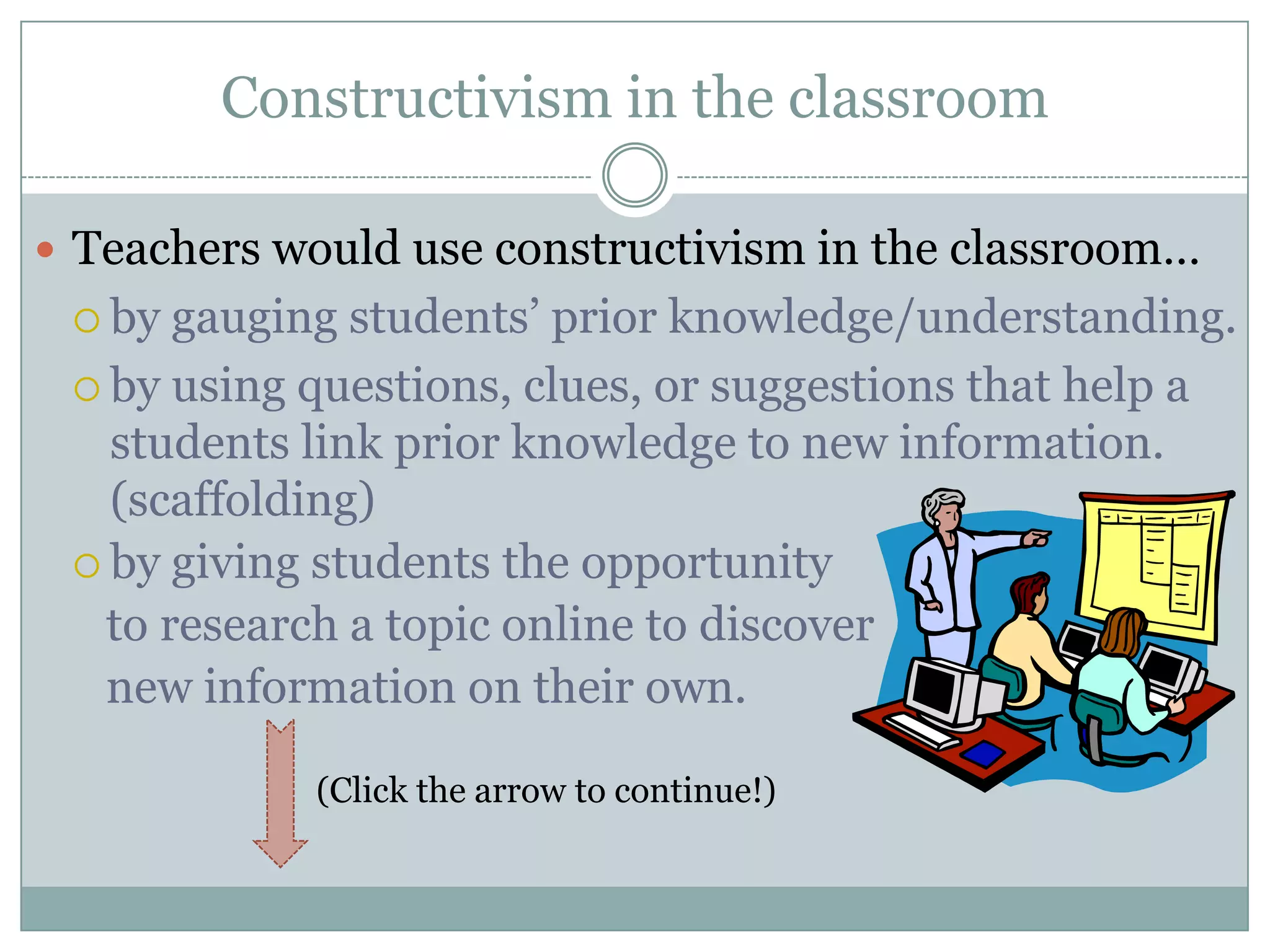
              Jean Piaget (1896-1980)
                Placed great importance on the
                     education of children.
                  “The greatest pioneer of the
               constructivist theory of knowing.”
                  Defined 4 Cognitive Stages:
             Sensorimotor, Preoperational, Concret
               e Operational, Formal Operational
            Said each new stage is created through
              assimilating new info. with old info.
Constructivism in the classroom

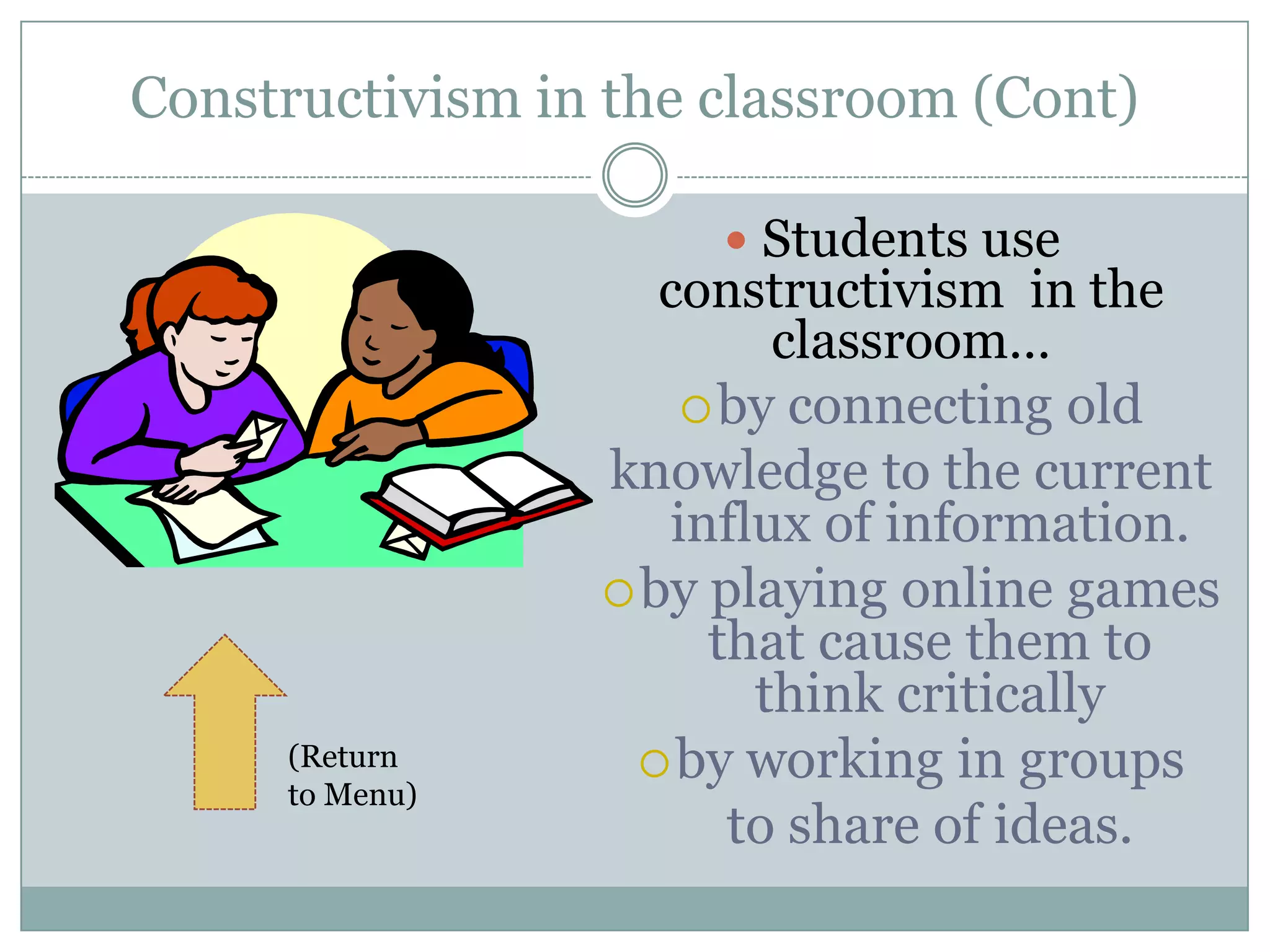
 Teachers would use constructivism in the classroom…
  by  gauging students’ prior knowledge/understanding.
  by using questions, clues, or suggestions that help a
   students link prior knowledge to new information.
   (scaffolding)
  by giving students the opportunity
   to research a topic online to discover
   new information on their own.

            (Click the arrow to continue!)
Constructivism in the classroom (Cont)

                       Students use
                    constructivism in the
                         classroom…
                      by connecting old
                 knowledge to the current
                    influx of information.
                  by playing online games
                      that cause them to
                        think critically
     (Return       by working in groups
     to Menu)
                       to share of ideas.
Constructivism In My Classroom

 Constructivism will play a major
  role in my classroom.
 Current knowledge will be assessed
  to set foundation for teaching.
 Students will interact with the
  lesson using remote-to-Smart Board
  connection.
     (Click the arrow to continue!)
In My Classroom (Cont.)

 As a math teacher, I will continually build upon
  previous lessons as I teach.
 Students will be able to work in
  groups to discuss new concepts.
 My students will teach themselves
  some areas of math that we cover.
 My students will assimilate new ideas as
   I use scaffolding to bridge two similar concepts.
                     (Return
                     to Menu)

Constructivism

  • 1.
  • 2.
    Menu Constructivist Theory Overview Important People In the Classroom In My Classroom (Click one of the titles to find out more!)
  • 3.
    Menu Constructivist Theory Overview Important People In the Classroom In My Classroom (Click one of the titles to find out more!)
  • 4.
    Menu Constructivist Theory Overview Important People In the Classroom In My Classroom (Click one of the titles to find out more!)
  • 5.
    Menu Constructivist Theory Overview Important People In the Classroom In My Classroom (Click one of the titles to find out more!)
  • 6.
    Menu Constructivist Theory Overview Important People In the Classroom In My Classroom (Click one of the titles to find out more!)
  • 7.
    Constructivist Theory Overview Student-centered philosophy  Learning = constant effort to assimilate new information.  New concepts & ideas are related to old concepts & (Click the arrow to continue!) ideas.
  • 8.
    Constructivist Theory Overview(Cont.)  Students learn by doing and seeing.  Students learn by actively engaging a new concept. • Learning should be a discovery. •Students continually build on what they have already learned. (Click the orange arrow to return to the Menu!)
  • 9.
    Important People  JohnDewey  Viewed learning as student-directed with a teacher serving as a guide for resources.  Jerome Bruner  Learnersare participatory learners; they are engaged in the learning process.  Lev Vygotsky  Learning is influenced by cognitive/social development (Click the arrow to continue!)
  • 10.
    (Return to Menu) Important People (Cont.)  Jean Piaget (1896-1980)  Placed great importance on the education of children.  “The greatest pioneer of the constructivist theory of knowing.”  Defined 4 Cognitive Stages: Sensorimotor, Preoperational, Concret e Operational, Formal Operational  Said each new stage is created through assimilating new info. with old info.
  • 11.
    Constructivism in theclassroom  Teachers would use constructivism in the classroom…  by gauging students’ prior knowledge/understanding.  by using questions, clues, or suggestions that help a students link prior knowledge to new information. (scaffolding)  by giving students the opportunity to research a topic online to discover new information on their own. (Click the arrow to continue!)
  • 12.
    Constructivism in theclassroom (Cont)  Students use constructivism in the classroom…  by connecting old knowledge to the current influx of information.  by playing online games that cause them to think critically (Return  by working in groups to Menu) to share of ideas.
  • 13.
    Constructivism In MyClassroom  Constructivism will play a major role in my classroom.  Current knowledge will be assessed to set foundation for teaching.  Students will interact with the lesson using remote-to-Smart Board connection. (Click the arrow to continue!)
  • 14.
    In My Classroom(Cont.)  As a math teacher, I will continually build upon previous lessons as I teach.  Students will be able to work in groups to discuss new concepts.  My students will teach themselves some areas of math that we cover.  My students will assimilate new ideas as I use scaffolding to bridge two similar concepts. (Return to Menu)