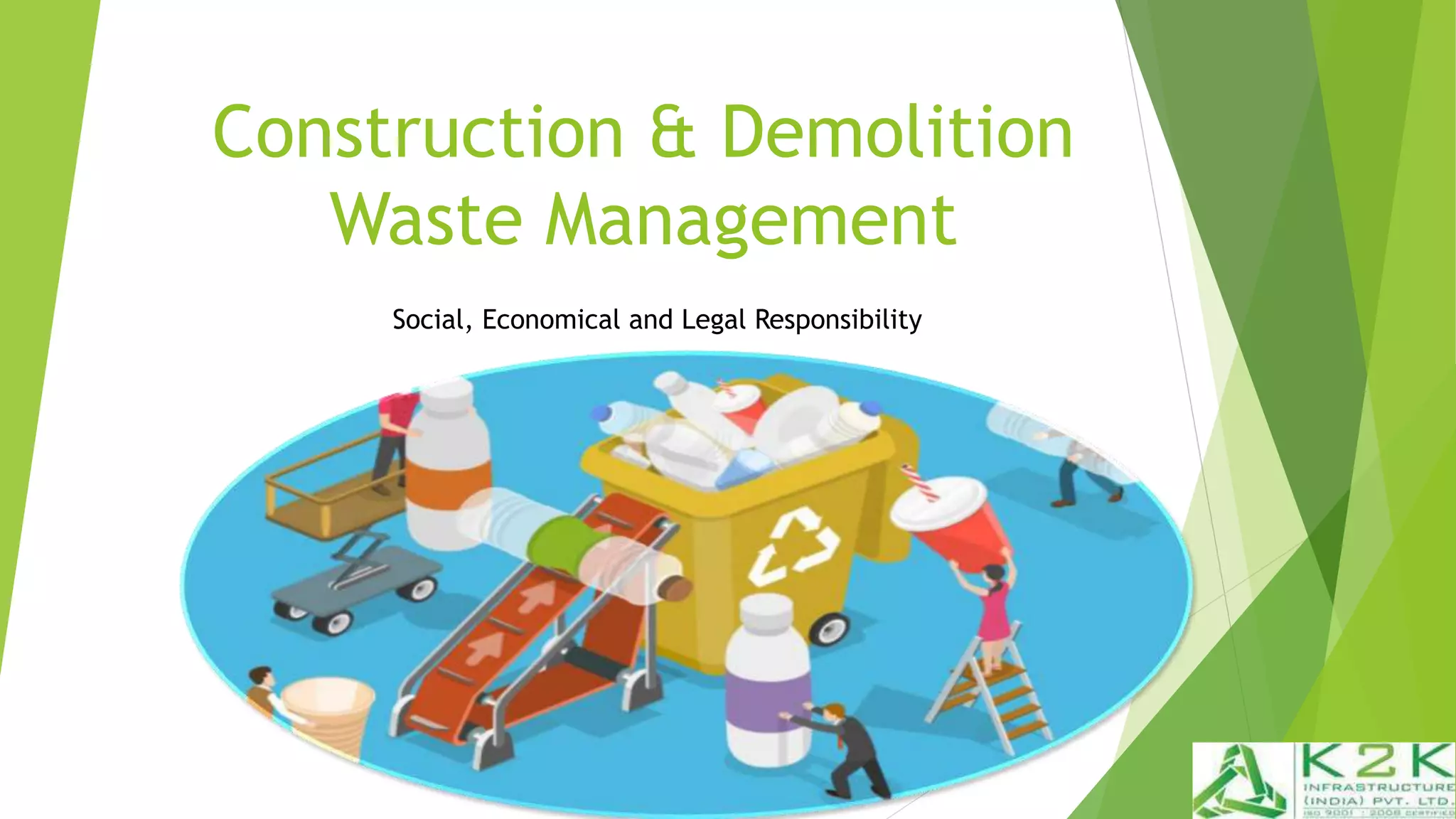
Construction & Demolition
Waste Management
Social, Economical and Legal Responsibility
Overview C&D Waste:
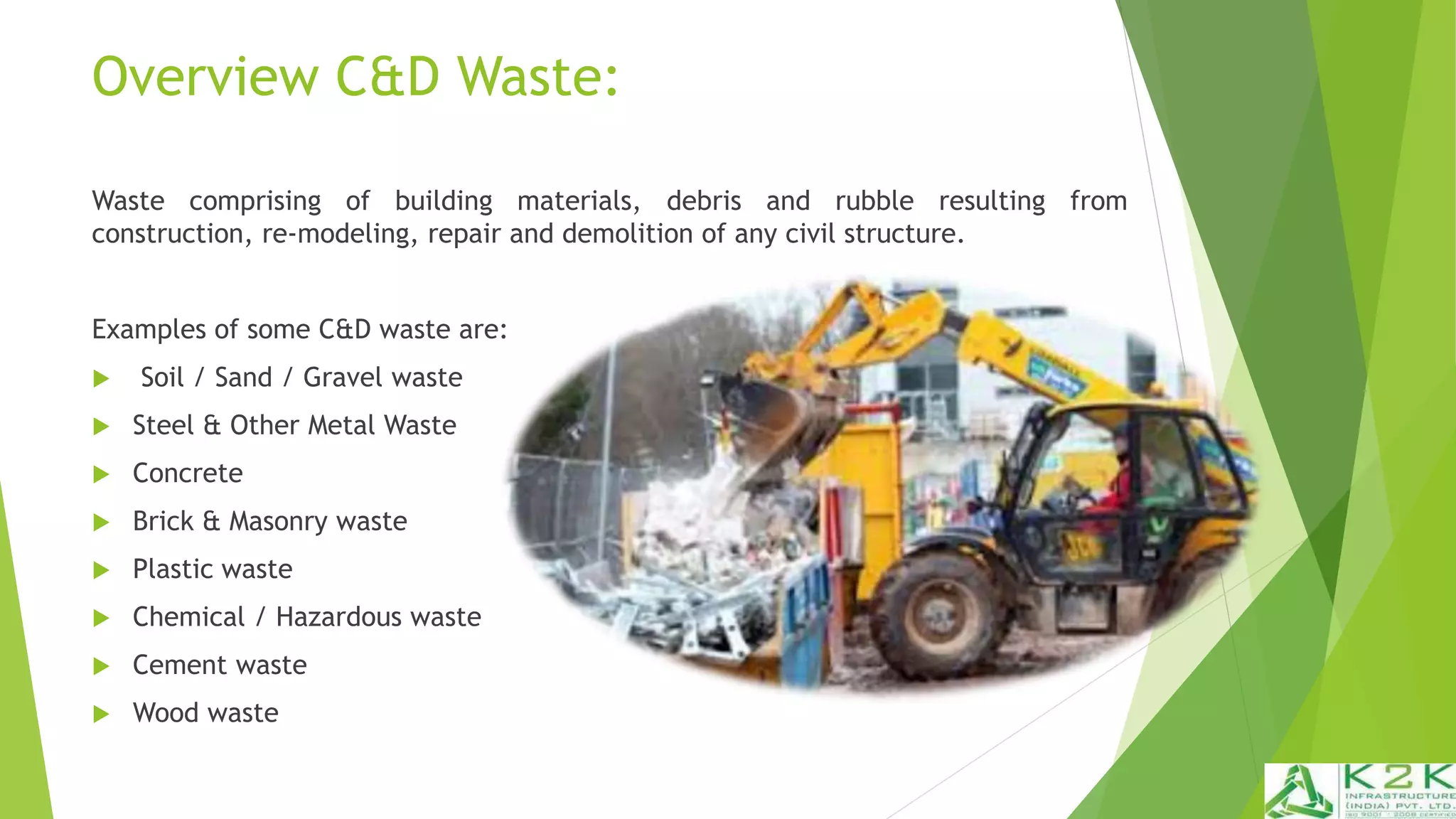
Waste comprising of building materials, debris and rubble resulting from
construction, re-modeling, repair and demolition of any civil structure.
Examples of some C&D waste are:
 Soil / Sand / Gravel waste
 Steel & Other Metal Waste
 Concrete
 Brick & Masonry waste
 Plastic waste
 Chemical / Hazardous waste
 Cement waste
 Wood waste
Overview of C&D Waste:
0%
10%
20%
30%
40%
50%
60%
New Construction Renovation Demolition
Residential Non Residential Total
Overview of C&D Waste:
36%
31%
23%
5%
2% 2% 1%
0%
5%
10%
15%
20%
25%
30%
35%
40%
Soil / Sand /
Gravel
Brick & Masonry Concrete Metals Wood Bitumen Others
WASTE GENERATION AS PER MATERIAL
Why Waste Management?
According to Vikaspedia, 350 million tones of C&D
waste is generated annually in India.
 Legal Responsibility.
 Impact on Sustainability.
 Impact on Budget.
 Effects on Health, Safety and Environment.
 Shortage of Landfill & Hazardous Waste Capacity.
 It is a Basic Good Management.
Construction &
Demolition Waste
management Rule 2016
Benefits:
 Landfill disposal can be minimized.
 Less impact on Environment and human health.
 Reduces air, water and land pollution.
 Waste handling cost can be reduced.
 Improves in environment sustainability.
 Avoiding penalties and fines from authorities.
Waste Management Hierarchy:
 Prevention
 Minimization
 Reuse
 Recycling
 Recovery – Utilization including Co-Processing
 Safe Disposal
Prevention
Reduction / Minimization
Reuse
Recycling
Recovery
Safe
Disposal
Highest
Priority
Lowest
Priority
Site Waste Management Plan:
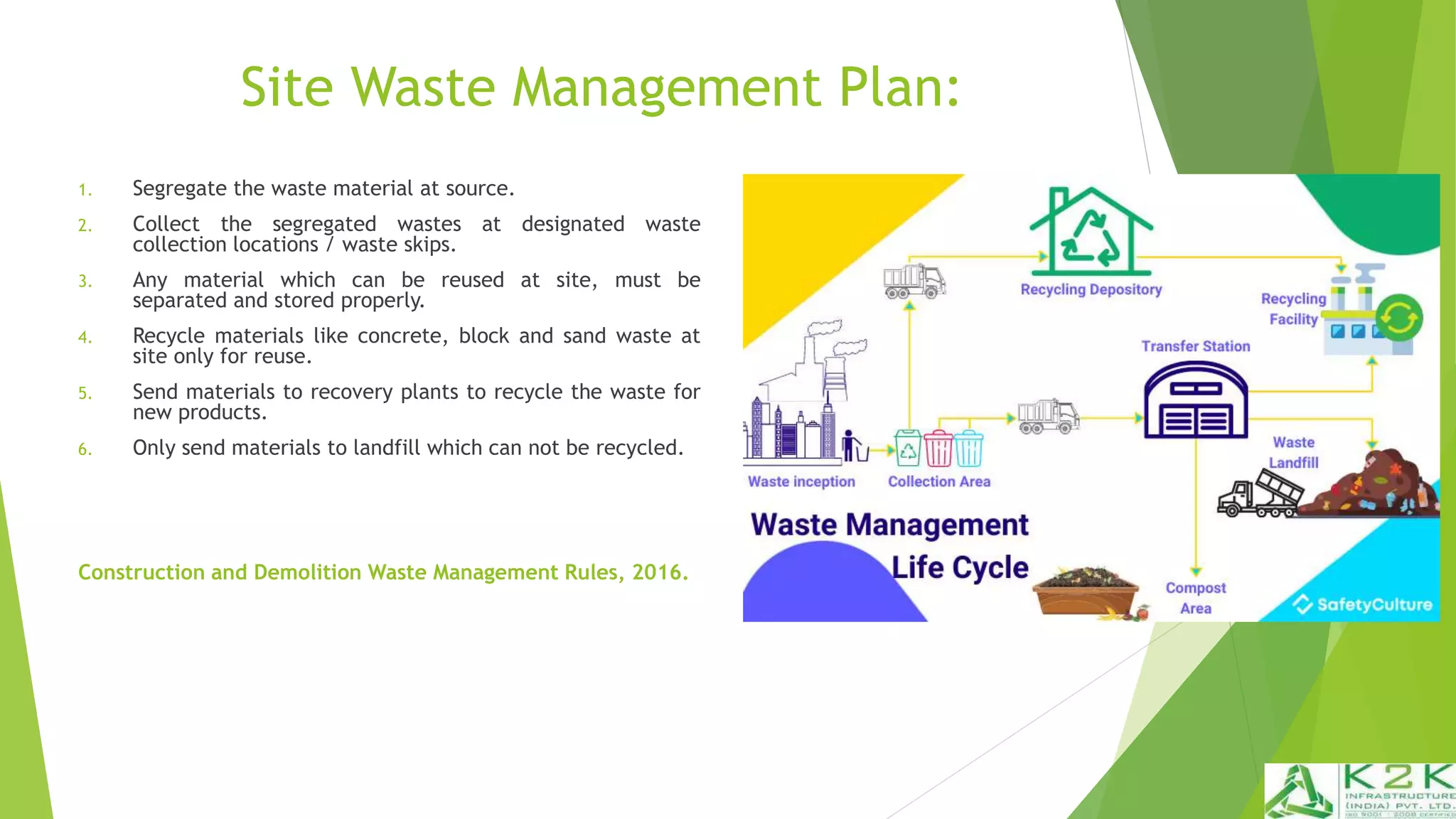
1. Segregate the waste material at source.
2. Collect the segregated wastes at designated waste
collection locations / waste skips.
3. Any material which can be reused at site, must be
separated and stored properly.
4. Recycle materials like concrete, block and sand waste at
site only for reuse.
5. Send materials to recovery plants to recycle the waste for
new products.
6. Only send materials to landfill which can not be recycled.
Construction and Demolition Waste Management Rules, 2016.
Thank You For Your Time!
Play your role in minimizing waste generation.
A small initiative at individual level will
impact in a big way collectively.

Construction Waste Management.pptx

  • 1.
    Construction & Demolition WasteManagement Social, Economical and Legal Responsibility
  • 2.
    Overview C&D Waste: Wastecomprising of building materials, debris and rubble resulting from construction, re-modeling, repair and demolition of any civil structure. Examples of some C&D waste are:  Soil / Sand / Gravel waste  Steel & Other Metal Waste  Concrete  Brick & Masonry waste  Plastic waste  Chemical / Hazardous waste  Cement waste  Wood waste
  • 3.
    Overview of C&DWaste: 0% 10% 20% 30% 40% 50% 60% New Construction Renovation Demolition Residential Non Residential Total
  • 4.
    Overview of C&DWaste: 36% 31% 23% 5% 2% 2% 1% 0% 5% 10% 15% 20% 25% 30% 35% 40% Soil / Sand / Gravel Brick & Masonry Concrete Metals Wood Bitumen Others WASTE GENERATION AS PER MATERIAL
  • 5.
    Why Waste Management? Accordingto Vikaspedia, 350 million tones of C&D waste is generated annually in India.  Legal Responsibility.  Impact on Sustainability.  Impact on Budget.  Effects on Health, Safety and Environment.  Shortage of Landfill & Hazardous Waste Capacity.  It is a Basic Good Management. Construction & Demolition Waste management Rule 2016
  • 6.
    Benefits:  Landfill disposalcan be minimized.  Less impact on Environment and human health.  Reduces air, water and land pollution.  Waste handling cost can be reduced.  Improves in environment sustainability.  Avoiding penalties and fines from authorities.
  • 7.
    Waste Management Hierarchy: Prevention  Minimization  Reuse  Recycling  Recovery – Utilization including Co-Processing  Safe Disposal Prevention Reduction / Minimization Reuse Recycling Recovery Safe Disposal Highest Priority Lowest Priority
  • 8.
    Site Waste ManagementPlan: 1. Segregate the waste material at source. 2. Collect the segregated wastes at designated waste collection locations / waste skips. 3. Any material which can be reused at site, must be separated and stored properly. 4. Recycle materials like concrete, block and sand waste at site only for reuse. 5. Send materials to recovery plants to recycle the waste for new products. 6. Only send materials to landfill which can not be recycled. Construction and Demolition Waste Management Rules, 2016.
  • 9.
    Thank You ForYour Time! Play your role in minimizing waste generation. A small initiative at individual level will impact in a big way collectively.