CONGENITAL ADRENAL
HYPERPLASIA
Rachel K. Lescher, MD
Pediatric Endocrinology and Diabetes
Alaska Native Medical Center
OBJECTIVES
 Understand the physiology of the adrenal gland
and the hypothalamic-pituitary-adrenal axis
 Understand the pathophysiology that leads to
congenital adrenal hyperplasia and its associated
phenotypes
 Recognize how to diagnose CAH
 Know the usual management of CAH
 Recognize and treat adrenal crisis and
understand how it can be prevented
 Be aware of long term complications and
outcomes in people with CAH
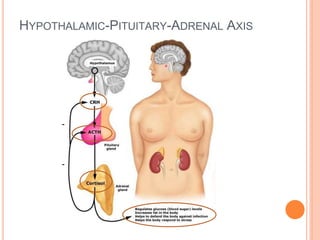
HYPOTHALAMIC-PITUITARY-ADRENAL AXIS
-
-
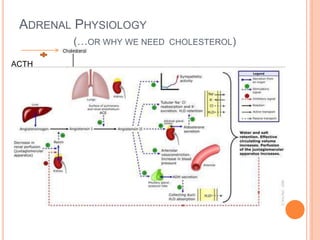
ADRENAL PHYSIOLOGY
(…OR WHY WE NEED CHOLESTEROL)
ACTH
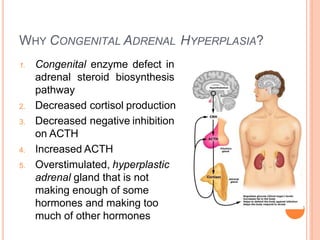
WHY CONGENITAL ADRENAL HYPERPLASIA?
1. Congenital enzyme defect in
adrenal steroid biosynthesis
pathway
2. Decreased cortisol production
3. Decreased negative inhibition
on ACTH
4. Increased ACTH
5. Overstimulated, hyperplastic
adrenal gland that is not
making enough of some
hormones and making too
much of other hormones
CATEGORIZING CAH
 Classic versus Nonclassic
 Salt-wasting versus non-salt-wasting (aka simple
virilizing)
 Partial, aka late-onset, aka nonclassic
 Categorize based on enzyme defect
 21-hydroxylase, 11-hydroxylase, 3βHSD, P450SCC,
StAR, etc.
 Complete vs. partial/attenuated enzyme deficiency
 No wonder it’s confusing!!
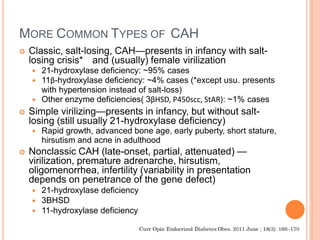
MORE COMMON TYPES OF CAH
 Classic, salt-losing, CAH—presents in infancy with salt-
losing crisis* and (usually) female virilization
 21-hydroxylase deficiency: ~95% cases
 11β-hydroxylase deficiency: ~4% cases (*except usu. presents
with hypertension instead of salt-loss)
 Other enzyme deficiencies( 3βHSD, P450scc, StAR): ~1% cases
 Simple virilizing—presents in infancy, but without salt-
losing (still usually 21-hydroxylase deficiency)
 Rapid growth, advanced bone age, early puberty, short stature,
hirsutism and acne in adulthood
 Nonclassic CAH (late-onset, partial, attenuated) —
virilization, premature adrenarche, hirsutism,
oligomenorrhea, infertility (variability in presentation
depends on penetrance of the gene defect)
 21-hydroxylase deficiency
 3BHSD
 11-hydroxylase deficiency
PATHOPHYSIOLOGY IN 21-OH DEF CAH
 Autosomal recessive gene mutation in CYP21A1
(encodes P450c21  21-hydroxylase); Chr 6p21.3
 More than 100 mutations are known
 Genotype-phenotype correlations
 A  G change in 2nd intron of CYP21 gene (ablates
enzyme activity): most common mutation (~50%) in
classic, salt-wasting 21-hydroxylase deficiency CAH
 Nonconservative amino acid substitution in exon 4
(Ile172Asn): associated with simple virilizing classic
CAH (preserves approx 1-2% of enzyme function)
 Point mutation in exon 7 (Val281Leu) of CYP21:
most common muation in nonclassic 21-hydroxylase
deficiency CAH (preserves 20-50% enzyme function)
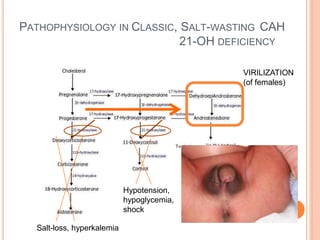
PATHOPHYSIOLOGY IN CLASSIC, SALT-WASTING CAH
21-OH DEFICIENCY
VIRILIZATION
(of females)
Hypotension,
hypoglycemia,
shock
Salt-loss, hyperkalemia
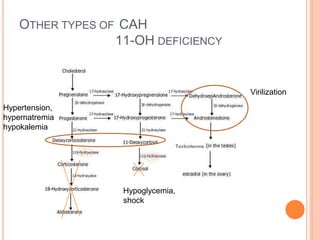
OTHER TYPES OF CAH
11-OH DEFICIENCY
Hypertension,
hypernatremia
hypokalemia
Hypoglycemia,
shock
Virilization
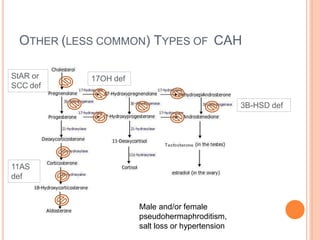
OTHER (LESS COMMON) TYPES OF CAH
Male and/or female
pseudohermaphroditism,
salt loss or hypertension
3B-HSD def
17OH def
StAR or
SCC def
11AS
def
INCIDENCE OF CAH
 Incidence of Classic, salt-wasting CAH: 1/15,000
 Incidence of simple virilizing CAH: 1/50,000
 Incidence of Nonclassic CAH: 1/1000
 In Alaska
 Most common is 21-hydroxylase deficiency
 Incidence 3 times higher in AK than in US and 13
times higher in Yup’ik than in AK
 2.5 (AK) vs. 0.83 (USA) per 10,000 births
 33.3 per 10,000 births among Yup’ik population
NEWBORN SCREEN
 Measures 17OHP on dried blood spot on filter paper
 Need to do after 24 hrs old because 17OHP is high
in cord blood and falls to normal newborn levels after
12-24 hours (ideally between 48 and 72 hours)
 Too early newborn screen, severe stress, prematurity
can all have persistently elevated 17OHP and false
positive NB screen
 False negative NB screen occasionally in infants with
simple virilizing form or in mothers treated w/
glucocorticoids
NEWBORN SCREEN
 Cost-effective: cost per life year = $20,000
 Outcomes of screening: decreased incidence of
adrenal crisis, fewer incorrect sex assignments,
lower infant mortality (esp boys), avoidance of
precocious puberty
 Electrolytes may not become abnormal until 1-2
weeks of life so newborn screen for CAH saves
lives
Horm Res 2007;68(suppl 5):90–92
NEWBORN SCREEN FOR CAH IN ALASKA
 1st screen @ 24-72 hrs and 2nd screen @ 2 wks
 Sensitivity: ~100 % (no known cases of salt-
wasting or simple-virilizing CAH have been
missed)
 Rarer types of CAH that may not have elevated
17OHP (> 5%) would not be detected
 Specificity: 94.9% of the infants identified as
normal do not have CAH
 The other 5.1 % are false positives caused by the
sample being taken at < 24 hours of age or the infant
being in the NICU
 2nd screen helps to decrease the number of false
positive tests
PRENATAL DIAGNOSIS OF CAH
 Prenatal Diagnosis (+ family history)
 CVS or Amniocentesis and analysis of fetal amniocyte DNA
for CYP21A2 gene mutation
 **Cell-free fetal DNA from maternal plasma – dx as early as
6 wks using targeted massively parallel sequencing to
analyze the genomic region around the CYP21A2 gene
• Khattab et al. Endocr Dev. 2016
 Prenatal dexamethasone to prevent female virilization
–decreases exposure of the female with CAH to the
elevated androgens in utero
 Dexamethasone not bound in maternal circulation to binding
proteins and not inactivated by fetal 11BHSD
 Dose: 20 mcg/kg/day of pregnancy weight
 Only useful in females who are + for CAH
 A couple with a child with CAH who are both heterozygotes have a ¼ chance of
having another child with CAH and ½ chance of having a girl (1/4 x 1/2 = 1/8)
PRENATAL TREATMENT OF CAH
 Controversial
 Treatment must be started around 7-8 wks but
cannot do diagnostic studies and karyotype till at
least 10-12 weeks (or later if CVS/amnio refused),
so treating 7/8 fetuses unnecessarily
 Maternal complications possible in ~10%
 Cushing’s sy, excess wt gain, HTN
 Fetal complications possible
 low bw, low placental wt, small OFC, cleft palate,
adrenal hypoplasia, thymic hypoplasia, hepatomegaly,
impaired glucose tolerance
 Success rate is ~80-85% in appropriately-treated
infants
 Optimal antenatal dosing regimens need to be
defined with standardized tx and f/u protocol
 Adequate informed consent is necessary
DIAGNOSIS OF CAH
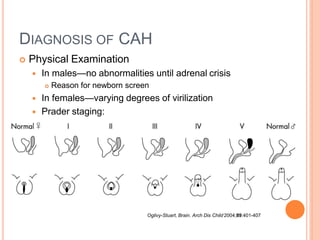
 Physical Examination
 In males—no abnormalities until adrenal crisis
 Reason for newborn screen
 In females—varying degrees of virilization
 Prader staging:
Oglivy-Stuart, Brain. Arch Dis Child 2004;89:401-407
PHYSICAL EXAM – LATE ONSET CAH
 Prepubertal: premature adrenarche (pubic hair,
growth acceleration, acne, body odor prior to age
6/7/8 in girls or before age 9 in boys); advanced
bone age
 Adolescents: excessive androgens/virilization in a
girl  hirsutism, severe acne,
oligomenorrhea/amenorrhea
 Adults (females): excessive virilization; infertility
DIAGNOSIS OF CAH
 Serum 17OHP (high)
 Serum androstenedione (high)
 Other labs
 Elevated PRA differentiate salt-wasting from simple
virilizing CAH
 Basic Metabolic Panel—Na, K, Bicarb, Glucose
 Cortisol—low or inappropriately ―normal‖w/ stress
DIAGNOSIS OF CAH--LATE ONSET CAH
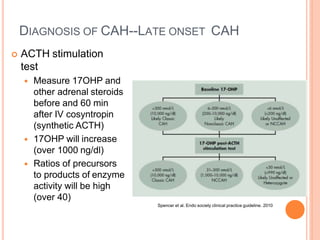
 ACTH stimulation
test
 Measure 17OHP and
other adrenal steroids
before and 60 min
after IV cosyntropin
(synthetic ACTH)
 17OHP will increase
(over 1000 ng/dl)
 Ratios of precursors
to products of enzyme
activity will be high
(over 40)
Spencer et al. Endo society clinical practice guideline. 2010
MEDICAL MANAGEMENT
 Classic/Salt-wasting CAH
 Hydrocortisone 10-15mg/m2/day (usu 3 times/day)
 Hydrocortisone tabs, crushed (not suspension)
 Fludrocortisone 0.05-0.3 mg/day (1-2 times/day)
 Infants have more renal resistance to aldosterone so usually
need higher doses of fludrocortisone than older children and
adults
 Salt supplements (1-3 g/day or 17-51 mEq/day)
 Usually only infants need this
 Older children are better able to respond to fludrocortisone
and are better able to supplement diet with salt if needed
MEDICAL MANAGEMENT
 Classic, Salt-wasting CAH
 Monitor:
growth, weight gain, blood pressure
periodically electrolytes, 17OHP, androstenedione,
renin, +/- testosterone, bone age (starting at 2 y.o.)
Labs monitored every 3 months during infancy and
every 4-12 months after that
Monitor males for adrenal rest tumors (exam,US)
Avoid complete adrenal suppression (iatrogenic
Cushing’s)
MEDICAL MANAGEMENT
 Simple virilizing CAH
 Hydrocortisone 10-15mg/m2/day
 Monitor:
 Growth, weight gain
 Virilization in girls—hirsutism, acne, menstrual regularity
 17OHP, androstenedione, renin, +/- testosterone
 Bone age
 Nonclassic/late-onset CAH, treatment only if
advanced bone age and poor height prediction,
hirsutism, severe acne, menstrual irregularities,
testicular masses, or infertility
 Hydrocortisone 10-15 mg/m2/day
MEDICAL MANAGEMENT
 Hydrocortisone tabs three times per day preferred
during infancy and childhood
 Hydrocortisone suspension not recommended
 Once nearing the end of linear growth, prednisone or
prednisolone or dexamethasone can be used
 Hydrocortisoone 15-25mg/day in 2-3 daily doses
 Prednisone 5-7.5 mg/day in 2 daily doses
 Prednisolone susp 4-6mg/day in 2 daily doses
 Dexamethasone (tab/susp) 0.25-0.5mg/day in 1 daily dose
 Fludrocortisone 0.05-0.2mg/day in 1 daily dose
STRESS DOSING
 Stress dose for febrile illness, GI illness with
dehydration, unable to take oral feedings, after
trauma, before surgery with general anesthesia
 +/- stress dose for endurance sports
 No stress dose for emotional stress (typically)
 Try to mimic normal physiological response to
stress with extra hydrocortisone
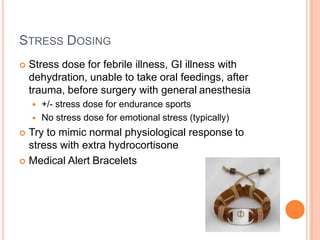
 Medical Alert Bracelets
STRESS DOSING
 Stress dose is 30-50mg/m2/day hydrocortisone
equivalent
 Usually—double or triple dose if ill (fever,
vomiting, lethargy) or if trauma
 Continue stress dosing for 24hrs after back to baseline
 If severely ill, unable to take PO, give Solu Cortef 30-
50mg/m2 IM or Dexamethasone 1.5-2mg/m2 IM and
seek immediate medical care
 For anesthesia: begin double/triple dose the night
before procedure, 30-50mg/m2 IV or IM on call to
the OR prior to anesthesia, continue stress dosing
for 24 hours after procedure
ADRENAL CRISIS MANAGEMENT
 Loading dose hydrocortisone IV or IM 50mg/m2
x1, then 50mg/m2 /day divided q6hrs
 <3 y.o.: 25mg bolus followed by 25-30mg/day
 3-12 y.o.: 50mg bolus followed by 50-60 mg/day
 >12 y.o.: 100mg bolus followed by 100mg/day
 Normal Saline bolus 20ml/kg IV, then D5NS or
D10NS at 1.5 x maintenance
 Monitor electrolytes, glucose, BP
 Determine precipitating factors (missed
medications, no stress dosing for illness)
SURGICAL MANAGEMENT
 Surgical Goals
 Genital appearance compatible with gender
 What should gender be??? Not always clear….
 Unobstructed urinary emptying without incontinence or
infections
 Good adult sexual and reproductive function
 Recommended time for surgery in a female (if needed)
with female gender of rearing is 2-6 months old
 Technically easier than at later stages
 Somewhat controversial
 Surgery may not be needed if minimal clitoromegaly or if
decision is to raise as male
 At puberty, gynecological exam under anesthesia is
recommended
 Revision vaginoplasty, clitoroplasty or other surgery
often needed at adolescence
PSYCHOLOGICAL MANAGEMENT
 Gender assignment questions
 Females with CAH may show behavioral
masculinization
 Gender role behavior > sexual orientation > gender
identity
 Natural history: most women with CAH who
were reared as female agree with that
assignment, but not all
 90% of females identify as female but no data in
those who are fully virilized (beyond Prader 3)
TRANSITION TO ADULTHOOD
 Gradual transition from pediatric to adult
providers
 Gynecologic/Urologic consultation, genetic counseling
 Adults are treated to avoid sx of adrenocorticoid
insufficiency; hirsutism, voice changes, and
infertility in women; testicular tumors in men
 Avoid overtreatment: Cushings, hypertension
 Annual physical exam and hormone measurements
(17OHP, androstenedione, renin, +/- aldosterone),
 Blood pressure monitoring
 Longer acting glucocorticoids can be used
CAH AND PREGNANCY
 Frequently impaired fertility: consult with
reproductive endocrinologist or fertility specialist if
needed
 Up to 30% males have infertility
 Related to adrenal rest testicular tumors
 Up to 90% females have infertility
CAH AND PREGNANCY
 During pregnancy, continue pre-pregnancy doses of
glucocorticoid and fludrocortisone and adjust based on
symptoms of GC insuffficiency
 Hydrocortisone or prednisolone; dexamethasone not
recommended during pregnancy (is not inactivated by the
fetus and suppresses fetal adrenal gland)
 Stress dose during labor and delivery
 Increased risk of gestational diabetes
 No evidence of virilization of female offspring (without
CAH) despite high testosterone levels in the mothers.
 Why??
 Placental aromatase converts androgenic hormones to
estrogens before they reach the fetus
 High levels of maternal SHBG and androgen antagonism by
progesterone restrict transplacental passage of testosterone
LONG TERM OUTCOMES
 Growth
 Adult height averages 1-2 standard deviations below
the mean for target height
 Between a rock and a hard place: too much hydrocortisone
stunts growth, not enough allows rapid, early growth
acceleration and epiphyseal closure
 Bone
 Possible reduced bone density
 Metabolic
 Obesity, insulin resistance, dyslipidemia, HTN
 Reduced short term memory, possibly reducing
spatial perception and quantitative skills
 Possibly related to elevated glucocorticoids or
repeated alterations in fluid and electrolyte balance
LONG TERM OUTCOMES
 Reproductive function
 Females:
 Average age of menarche is late compared to peers
 Findings similar to PCOS, metabolic syndrome
 Fertility in about 80% of women with simple virilizing and
60% of women with salt-wasting CAH
 Impaired sexual function
 Males:
 Testicular adrenal rest tumors (limited data, 27% males in
one study had TARTs) can decrease fertility
CONCLUSIONS
 Congenital Adrenal Hyperplasia
 typically 21-hydroxylase deficiency
 Diagnosis based on elevated 17OHP
 Management based on replacing glucocorticoids
and mineralocorticoids and suppressing ACTH
 Surgery for significantly affected females often in
first 2-6 months of life
 Questions remain regarding gender assignment,
sexual function, and sexual orientation in females
w/ CAH
QUESTIONS???
Thank you!
Rachel K. Lescher, MD
907-230-7424 (cell)
rlescher@scf.cc

Congenital_Adrenal_Hyperplasia.pptx

  • 1.
    CONGENITAL ADRENAL HYPERPLASIA Rachel K.Lescher, MD Pediatric Endocrinology and Diabetes Alaska Native Medical Center
  • 2.
    OBJECTIVES  Understand thephysiology of the adrenal gland and the hypothalamic-pituitary-adrenal axis  Understand the pathophysiology that leads to congenital adrenal hyperplasia and its associated phenotypes  Recognize how to diagnose CAH  Know the usual management of CAH  Recognize and treat adrenal crisis and understand how it can be prevented  Be aware of long term complications and outcomes in people with CAH
  • 3.
  • 4.
    ADRENAL PHYSIOLOGY (…OR WHYWE NEED CHOLESTEROL) ACTH
  • 5.
    WHY CONGENITAL ADRENALHYPERPLASIA? 1. Congenital enzyme defect in adrenal steroid biosynthesis pathway 2. Decreased cortisol production 3. Decreased negative inhibition on ACTH 4. Increased ACTH 5. Overstimulated, hyperplastic adrenal gland that is not making enough of some hormones and making too much of other hormones
  • 6.
    CATEGORIZING CAH  Classicversus Nonclassic  Salt-wasting versus non-salt-wasting (aka simple virilizing)  Partial, aka late-onset, aka nonclassic  Categorize based on enzyme defect  21-hydroxylase, 11-hydroxylase, 3βHSD, P450SCC, StAR, etc.  Complete vs. partial/attenuated enzyme deficiency  No wonder it’s confusing!!
  • 7.
    MORE COMMON TYPESOF CAH  Classic, salt-losing, CAH—presents in infancy with salt- losing crisis* and (usually) female virilization  21-hydroxylase deficiency: ~95% cases  11β-hydroxylase deficiency: ~4% cases (*except usu. presents with hypertension instead of salt-loss)  Other enzyme deficiencies( 3βHSD, P450scc, StAR): ~1% cases  Simple virilizing—presents in infancy, but without salt- losing (still usually 21-hydroxylase deficiency)  Rapid growth, advanced bone age, early puberty, short stature, hirsutism and acne in adulthood  Nonclassic CAH (late-onset, partial, attenuated) — virilization, premature adrenarche, hirsutism, oligomenorrhea, infertility (variability in presentation depends on penetrance of the gene defect)  21-hydroxylase deficiency  3BHSD  11-hydroxylase deficiency
  • 8.
    PATHOPHYSIOLOGY IN 21-OHDEF CAH  Autosomal recessive gene mutation in CYP21A1 (encodes P450c21  21-hydroxylase); Chr 6p21.3  More than 100 mutations are known  Genotype-phenotype correlations  A  G change in 2nd intron of CYP21 gene (ablates enzyme activity): most common mutation (~50%) in classic, salt-wasting 21-hydroxylase deficiency CAH  Nonconservative amino acid substitution in exon 4 (Ile172Asn): associated with simple virilizing classic CAH (preserves approx 1-2% of enzyme function)  Point mutation in exon 7 (Val281Leu) of CYP21: most common muation in nonclassic 21-hydroxylase deficiency CAH (preserves 20-50% enzyme function)
  • 9.
    PATHOPHYSIOLOGY IN CLASSIC,SALT-WASTING CAH 21-OH DEFICIENCY VIRILIZATION (of females) Hypotension, hypoglycemia, shock Salt-loss, hyperkalemia
  • 10.
    OTHER TYPES OFCAH 11-OH DEFICIENCY Hypertension, hypernatremia hypokalemia Hypoglycemia, shock Virilization
  • 11.
    OTHER (LESS COMMON)TYPES OF CAH Male and/or female pseudohermaphroditism, salt loss or hypertension 3B-HSD def 17OH def StAR or SCC def 11AS def
  • 12.
    INCIDENCE OF CAH Incidence of Classic, salt-wasting CAH: 1/15,000  Incidence of simple virilizing CAH: 1/50,000  Incidence of Nonclassic CAH: 1/1000  In Alaska  Most common is 21-hydroxylase deficiency  Incidence 3 times higher in AK than in US and 13 times higher in Yup’ik than in AK  2.5 (AK) vs. 0.83 (USA) per 10,000 births  33.3 per 10,000 births among Yup’ik population
  • 13.
    NEWBORN SCREEN  Measures17OHP on dried blood spot on filter paper  Need to do after 24 hrs old because 17OHP is high in cord blood and falls to normal newborn levels after 12-24 hours (ideally between 48 and 72 hours)  Too early newborn screen, severe stress, prematurity can all have persistently elevated 17OHP and false positive NB screen  False negative NB screen occasionally in infants with simple virilizing form or in mothers treated w/ glucocorticoids
  • 14.
    NEWBORN SCREEN  Cost-effective:cost per life year = $20,000  Outcomes of screening: decreased incidence of adrenal crisis, fewer incorrect sex assignments, lower infant mortality (esp boys), avoidance of precocious puberty  Electrolytes may not become abnormal until 1-2 weeks of life so newborn screen for CAH saves lives Horm Res 2007;68(suppl 5):90–92
  • 15.
    NEWBORN SCREEN FORCAH IN ALASKA  1st screen @ 24-72 hrs and 2nd screen @ 2 wks  Sensitivity: ~100 % (no known cases of salt- wasting or simple-virilizing CAH have been missed)  Rarer types of CAH that may not have elevated 17OHP (> 5%) would not be detected  Specificity: 94.9% of the infants identified as normal do not have CAH  The other 5.1 % are false positives caused by the sample being taken at < 24 hours of age or the infant being in the NICU  2nd screen helps to decrease the number of false positive tests
  • 16.
    PRENATAL DIAGNOSIS OFCAH  Prenatal Diagnosis (+ family history)  CVS or Amniocentesis and analysis of fetal amniocyte DNA for CYP21A2 gene mutation  **Cell-free fetal DNA from maternal plasma – dx as early as 6 wks using targeted massively parallel sequencing to analyze the genomic region around the CYP21A2 gene • Khattab et al. Endocr Dev. 2016  Prenatal dexamethasone to prevent female virilization –decreases exposure of the female with CAH to the elevated androgens in utero  Dexamethasone not bound in maternal circulation to binding proteins and not inactivated by fetal 11BHSD  Dose: 20 mcg/kg/day of pregnancy weight  Only useful in females who are + for CAH  A couple with a child with CAH who are both heterozygotes have a ¼ chance of having another child with CAH and ½ chance of having a girl (1/4 x 1/2 = 1/8)
  • 17.
    PRENATAL TREATMENT OFCAH  Controversial  Treatment must be started around 7-8 wks but cannot do diagnostic studies and karyotype till at least 10-12 weeks (or later if CVS/amnio refused), so treating 7/8 fetuses unnecessarily  Maternal complications possible in ~10%  Cushing’s sy, excess wt gain, HTN  Fetal complications possible  low bw, low placental wt, small OFC, cleft palate, adrenal hypoplasia, thymic hypoplasia, hepatomegaly, impaired glucose tolerance  Success rate is ~80-85% in appropriately-treated infants  Optimal antenatal dosing regimens need to be defined with standardized tx and f/u protocol  Adequate informed consent is necessary
  • 18.
    DIAGNOSIS OF CAH Physical Examination  In males—no abnormalities until adrenal crisis  Reason for newborn screen  In females—varying degrees of virilization  Prader staging: Oglivy-Stuart, Brain. Arch Dis Child 2004;89:401-407
  • 19.
    PHYSICAL EXAM –LATE ONSET CAH  Prepubertal: premature adrenarche (pubic hair, growth acceleration, acne, body odor prior to age 6/7/8 in girls or before age 9 in boys); advanced bone age  Adolescents: excessive androgens/virilization in a girl  hirsutism, severe acne, oligomenorrhea/amenorrhea  Adults (females): excessive virilization; infertility
  • 20.
    DIAGNOSIS OF CAH Serum 17OHP (high)  Serum androstenedione (high)  Other labs  Elevated PRA differentiate salt-wasting from simple virilizing CAH  Basic Metabolic Panel—Na, K, Bicarb, Glucose  Cortisol—low or inappropriately ―normal‖w/ stress
  • 21.
    DIAGNOSIS OF CAH--LATEONSET CAH  ACTH stimulation test  Measure 17OHP and other adrenal steroids before and 60 min after IV cosyntropin (synthetic ACTH)  17OHP will increase (over 1000 ng/dl)  Ratios of precursors to products of enzyme activity will be high (over 40) Spencer et al. Endo society clinical practice guideline. 2010
  • 22.
    MEDICAL MANAGEMENT  Classic/Salt-wastingCAH  Hydrocortisone 10-15mg/m2/day (usu 3 times/day)  Hydrocortisone tabs, crushed (not suspension)  Fludrocortisone 0.05-0.3 mg/day (1-2 times/day)  Infants have more renal resistance to aldosterone so usually need higher doses of fludrocortisone than older children and adults  Salt supplements (1-3 g/day or 17-51 mEq/day)  Usually only infants need this  Older children are better able to respond to fludrocortisone and are better able to supplement diet with salt if needed
  • 23.
    MEDICAL MANAGEMENT  Classic,Salt-wasting CAH  Monitor: growth, weight gain, blood pressure periodically electrolytes, 17OHP, androstenedione, renin, +/- testosterone, bone age (starting at 2 y.o.) Labs monitored every 3 months during infancy and every 4-12 months after that Monitor males for adrenal rest tumors (exam,US) Avoid complete adrenal suppression (iatrogenic Cushing’s)
  • 24.
    MEDICAL MANAGEMENT  Simplevirilizing CAH  Hydrocortisone 10-15mg/m2/day  Monitor:  Growth, weight gain  Virilization in girls—hirsutism, acne, menstrual regularity  17OHP, androstenedione, renin, +/- testosterone  Bone age  Nonclassic/late-onset CAH, treatment only if advanced bone age and poor height prediction, hirsutism, severe acne, menstrual irregularities, testicular masses, or infertility  Hydrocortisone 10-15 mg/m2/day
  • 25.
    MEDICAL MANAGEMENT  Hydrocortisonetabs three times per day preferred during infancy and childhood  Hydrocortisone suspension not recommended  Once nearing the end of linear growth, prednisone or prednisolone or dexamethasone can be used  Hydrocortisoone 15-25mg/day in 2-3 daily doses  Prednisone 5-7.5 mg/day in 2 daily doses  Prednisolone susp 4-6mg/day in 2 daily doses  Dexamethasone (tab/susp) 0.25-0.5mg/day in 1 daily dose  Fludrocortisone 0.05-0.2mg/day in 1 daily dose
  • 26.
    STRESS DOSING  Stressdose for febrile illness, GI illness with dehydration, unable to take oral feedings, after trauma, before surgery with general anesthesia  +/- stress dose for endurance sports  No stress dose for emotional stress (typically)  Try to mimic normal physiological response to stress with extra hydrocortisone  Medical Alert Bracelets
  • 27.
    STRESS DOSING  Stressdose is 30-50mg/m2/day hydrocortisone equivalent  Usually—double or triple dose if ill (fever, vomiting, lethargy) or if trauma  Continue stress dosing for 24hrs after back to baseline  If severely ill, unable to take PO, give Solu Cortef 30- 50mg/m2 IM or Dexamethasone 1.5-2mg/m2 IM and seek immediate medical care  For anesthesia: begin double/triple dose the night before procedure, 30-50mg/m2 IV or IM on call to the OR prior to anesthesia, continue stress dosing for 24 hours after procedure
  • 28.
    ADRENAL CRISIS MANAGEMENT Loading dose hydrocortisone IV or IM 50mg/m2 x1, then 50mg/m2 /day divided q6hrs  <3 y.o.: 25mg bolus followed by 25-30mg/day  3-12 y.o.: 50mg bolus followed by 50-60 mg/day  >12 y.o.: 100mg bolus followed by 100mg/day  Normal Saline bolus 20ml/kg IV, then D5NS or D10NS at 1.5 x maintenance  Monitor electrolytes, glucose, BP  Determine precipitating factors (missed medications, no stress dosing for illness)
  • 29.
    SURGICAL MANAGEMENT  SurgicalGoals  Genital appearance compatible with gender  What should gender be??? Not always clear….  Unobstructed urinary emptying without incontinence or infections  Good adult sexual and reproductive function  Recommended time for surgery in a female (if needed) with female gender of rearing is 2-6 months old  Technically easier than at later stages  Somewhat controversial  Surgery may not be needed if minimal clitoromegaly or if decision is to raise as male  At puberty, gynecological exam under anesthesia is recommended  Revision vaginoplasty, clitoroplasty or other surgery often needed at adolescence
  • 30.
    PSYCHOLOGICAL MANAGEMENT  Genderassignment questions  Females with CAH may show behavioral masculinization  Gender role behavior > sexual orientation > gender identity  Natural history: most women with CAH who were reared as female agree with that assignment, but not all  90% of females identify as female but no data in those who are fully virilized (beyond Prader 3)
  • 31.
    TRANSITION TO ADULTHOOD Gradual transition from pediatric to adult providers  Gynecologic/Urologic consultation, genetic counseling  Adults are treated to avoid sx of adrenocorticoid insufficiency; hirsutism, voice changes, and infertility in women; testicular tumors in men  Avoid overtreatment: Cushings, hypertension  Annual physical exam and hormone measurements (17OHP, androstenedione, renin, +/- aldosterone),  Blood pressure monitoring  Longer acting glucocorticoids can be used
  • 32.
    CAH AND PREGNANCY Frequently impaired fertility: consult with reproductive endocrinologist or fertility specialist if needed  Up to 30% males have infertility  Related to adrenal rest testicular tumors  Up to 90% females have infertility
  • 33.
    CAH AND PREGNANCY During pregnancy, continue pre-pregnancy doses of glucocorticoid and fludrocortisone and adjust based on symptoms of GC insuffficiency  Hydrocortisone or prednisolone; dexamethasone not recommended during pregnancy (is not inactivated by the fetus and suppresses fetal adrenal gland)  Stress dose during labor and delivery  Increased risk of gestational diabetes  No evidence of virilization of female offspring (without CAH) despite high testosterone levels in the mothers.  Why??  Placental aromatase converts androgenic hormones to estrogens before they reach the fetus  High levels of maternal SHBG and androgen antagonism by progesterone restrict transplacental passage of testosterone
  • 34.
    LONG TERM OUTCOMES Growth  Adult height averages 1-2 standard deviations below the mean for target height  Between a rock and a hard place: too much hydrocortisone stunts growth, not enough allows rapid, early growth acceleration and epiphyseal closure  Bone  Possible reduced bone density  Metabolic  Obesity, insulin resistance, dyslipidemia, HTN  Reduced short term memory, possibly reducing spatial perception and quantitative skills  Possibly related to elevated glucocorticoids or repeated alterations in fluid and electrolyte balance
  • 35.
    LONG TERM OUTCOMES Reproductive function  Females:  Average age of menarche is late compared to peers  Findings similar to PCOS, metabolic syndrome  Fertility in about 80% of women with simple virilizing and 60% of women with salt-wasting CAH  Impaired sexual function  Males:  Testicular adrenal rest tumors (limited data, 27% males in one study had TARTs) can decrease fertility
  • 36.
    CONCLUSIONS  Congenital AdrenalHyperplasia  typically 21-hydroxylase deficiency  Diagnosis based on elevated 17OHP  Management based on replacing glucocorticoids and mineralocorticoids and suppressing ACTH  Surgery for significantly affected females often in first 2-6 months of life  Questions remain regarding gender assignment, sexual function, and sexual orientation in females w/ CAH
  • 37.
    QUESTIONS??? Thank you! Rachel K.Lescher, MD 907-230-7424 (cell) rlescher@scf.cc