

Alice Felton
     MHA 690
Health Care Capstone
 Dr. Sherry Grover
  January 31, 2013
Patient Confidentiality
                    & Privacy
     Because of all the new advances in technology
  which includes:
 EMR’s or Electronic Medical Records, Tele-health and the
  Internet, this has all helped to open the doors to
  unintentional or potential breaches in our patients
  confidential/private information about their health.
 In order for health care providers to build a trusting
  relationship with their patients they are serving then
  protection of their confidentiality and privacy becomes
  essential to achieving this goal.
 .
Patient Confidentiality
               & Privacy, contd
In order to achieve patient care quality it will usually
  require direct communication of pertinent
  information between health systems and/or health
  care professionals.

Health care professionals and nursing staff who will be
  working regularly with their patients along with their
  medical records that should be kept Confidential
  should be able to comply with the development of any
  standards, laws and policies that are in place to protect
  their patient’s privacy (HIPAA) and the Confidentiality
  of their information/health records.
Confidentiality is a right given to a person to have personal medical
information that is identifiable to be kept private. Patient
confidentiality is defined as medical and personal information when
given to a healthcare provider will not be disclosed without their
permission to others unless they have given permission for a release.
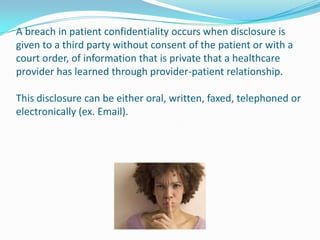
A breach in patient confidentiality occurs when disclosure is
given to a third party without consent of the patient or with a
court order, of information that is private that a healthcare
provider has learned through provider-patient relationship.

This disclosure can be either oral, written, faxed, telephoned or
electronically (ex. Email).
What is HIPAA’s role in Patient
               Confidentiality

  HIPAA’s role in patient confidentiality because it is a passage of
federal regulations because it was needed to ensure protection and
  privacy of data and personal information in an environment of
electronic medical records (emr’s) and third party insurance payers


 HIPAA (Health Insurance Portability & Accountability Act of 1996
requires all organizations and professionals to guard the privacy of
                    their customers and patients
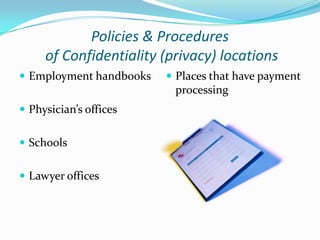
Policies & Procedures
     of Confidentiality (privacy) locations
 Employment handbooks    Places that have payment
                          processing
 Physician’s offices


 Schools


 Lawyer offices
•Always respect your patient’s right to privacy
•Disclosure and using of your patient’s health information
should be limited.
•Patient should have the right to access their own
 health information
•Patient should receive written, information that is easy to
understand when notified of how their health records
Patient Confidentiality
References
 AMA.org. (2013) Nursing World (Privacy & Confidentiality. Retrieved
  from website
  http://www.nursingworld.org/MainMenuCategories/Policy-
  Advocacy/Positions-and-
  Resolutions/ANAPositionStatements/Position-Statements-
  Alphabetically/PrivacyandConfidentiality.html?css=print.

 Surgeryencyclopedia.com (2013). Patient Confidentiality. Retrieved
  from website http://www.surgeryencyclopedia.com/Pa-St/Patient-
  Confidentiality.htm.
 AMA-assn.org., (2013). Patient Confidentiality. Retrieved from website
  http://www.ama-assn.org/ama/pub/physician-resources/legal-
  topics/patient-physician-relationship-topics/patient-
  confidentiality.page.

Patient confidentiality 2

  • 1.
    Alice Felton MHA 690 Health Care Capstone Dr. Sherry Grover January 31, 2013
  • 2.
    Patient Confidentiality & Privacy  Because of all the new advances in technology which includes:  EMR’s or Electronic Medical Records, Tele-health and the Internet, this has all helped to open the doors to unintentional or potential breaches in our patients confidential/private information about their health.  In order for health care providers to build a trusting relationship with their patients they are serving then protection of their confidentiality and privacy becomes essential to achieving this goal.  .
  • 3.
    Patient Confidentiality & Privacy, contd In order to achieve patient care quality it will usually require direct communication of pertinent information between health systems and/or health care professionals. Health care professionals and nursing staff who will be working regularly with their patients along with their medical records that should be kept Confidential should be able to comply with the development of any standards, laws and policies that are in place to protect their patient’s privacy (HIPAA) and the Confidentiality of their information/health records.
  • 4.
    Confidentiality is aright given to a person to have personal medical information that is identifiable to be kept private. Patient confidentiality is defined as medical and personal information when given to a healthcare provider will not be disclosed without their permission to others unless they have given permission for a release.
  • 5.
    A breach inpatient confidentiality occurs when disclosure is given to a third party without consent of the patient or with a court order, of information that is private that a healthcare provider has learned through provider-patient relationship. This disclosure can be either oral, written, faxed, telephoned or electronically (ex. Email).
  • 6.
    What is HIPAA’srole in Patient Confidentiality HIPAA’s role in patient confidentiality because it is a passage of federal regulations because it was needed to ensure protection and privacy of data and personal information in an environment of electronic medical records (emr’s) and third party insurance payers HIPAA (Health Insurance Portability & Accountability Act of 1996 requires all organizations and professionals to guard the privacy of their customers and patients
  • 7.
    Policies & Procedures of Confidentiality (privacy) locations  Employment handbooks  Places that have payment processing  Physician’s offices  Schools  Lawyer offices
  • 8.
    •Always respect yourpatient’s right to privacy •Disclosure and using of your patient’s health information should be limited. •Patient should have the right to access their own health information •Patient should receive written, information that is easy to understand when notified of how their health records
  • 9.
  • 10.
    References  AMA.org. (2013)Nursing World (Privacy & Confidentiality. Retrieved from website http://www.nursingworld.org/MainMenuCategories/Policy- Advocacy/Positions-and- Resolutions/ANAPositionStatements/Position-Statements- Alphabetically/PrivacyandConfidentiality.html?css=print.  Surgeryencyclopedia.com (2013). Patient Confidentiality. Retrieved from website http://www.surgeryencyclopedia.com/Pa-St/Patient- Confidentiality.htm.  AMA-assn.org., (2013). Patient Confidentiality. Retrieved from website http://www.ama-assn.org/ama/pub/physician-resources/legal- topics/patient-physician-relationship-topics/patient- confidentiality.page.