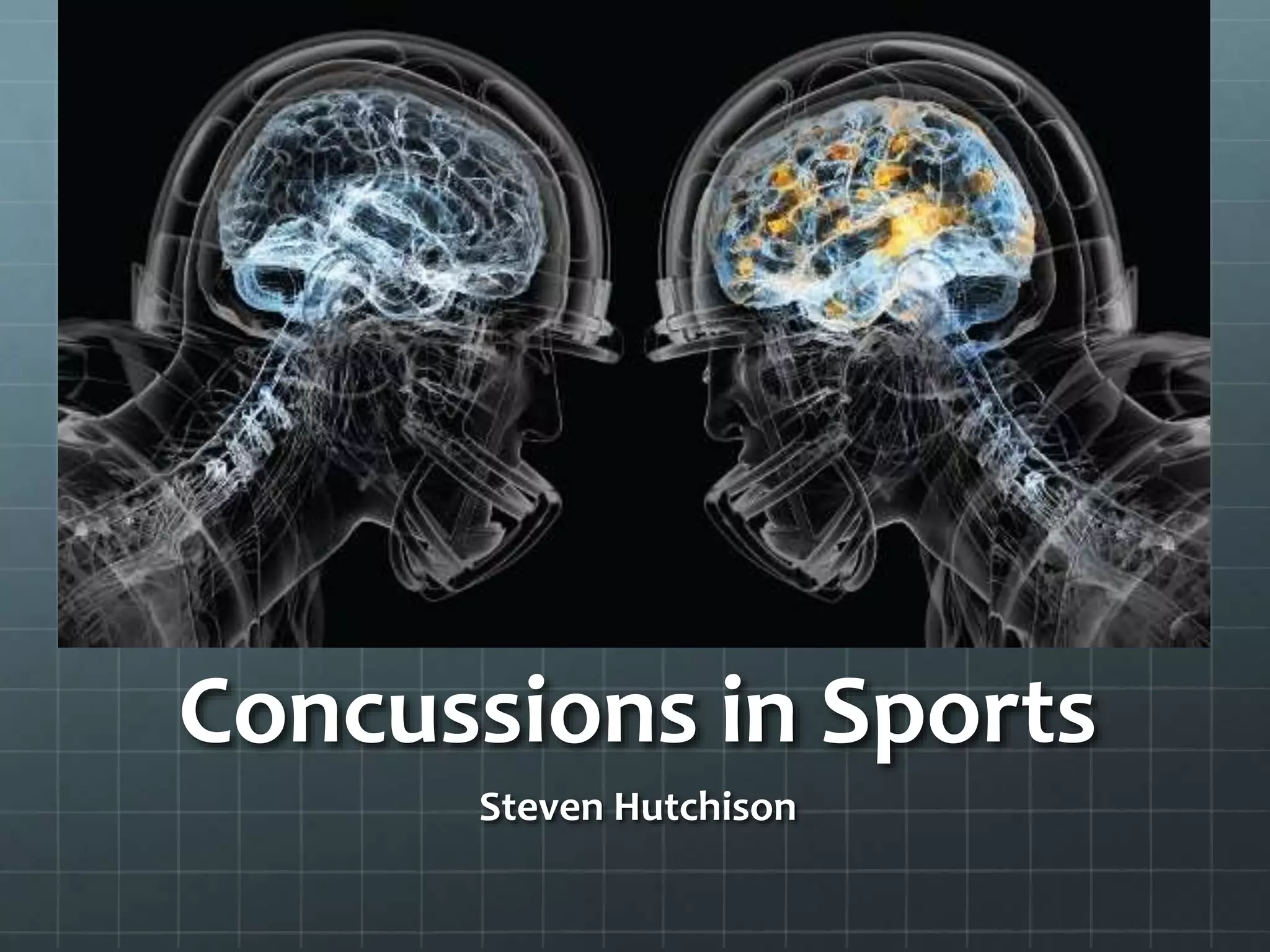
Concussions in Sports
Steven Hutchison
Introduction
What is a Concussion?
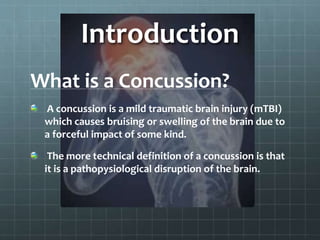
A concussion is a mild traumatic brain injury (mTBI)
which causes bruising or swelling of the brain due to
a forceful impact of some kind.
The more technical definition of a concussion is that
it is a pathopysiological disruption of the brain.
Symptoms
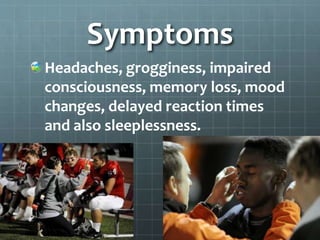
Headaches, grogginess, impaired
consciousness, memory loss, mood
changes, delayed reaction times
and also sleeplessness.
Research
The National Football League (NFL) and
the National Collegiate Athletic
Association (NCAA) are two examples
of massive organizations that are
spending time and money to fully
research the short and long term
effects that concussions can have on
athletes.
Research
Rule Change (NCAA)
“No player shall target and initiate
contact against an opponent with the
crown of his helmet.”
• This specific rule is referring to American Football,
and was found in the article, Advancements in
Concussion Prevention, Diagnosis, and Treatment.
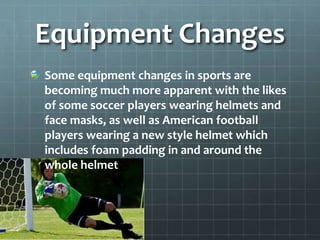
Equipment Changes
Some equipment changes in sports are
becoming much more apparent with the likes
of some soccer players wearing helmets and
face masks, as well as American football
players wearing a new style helmet which
includes foam padding in and around the
whole helmet
Equipment Changes
New Football Helmets-
According to the article Advancements in
Concussion Prevention, Diagnosis, and
Treatment, “since production began with the
new style helmet, there has been a ten
percent decrease in the amount of
concussions received by the American football
athletes each year.”
Concussions Within
Sports
A regular Concussion usually takes 7-10 days
to heal but it is often longer for athletes as
they require much rest for recovery
With regards to sport it is said that a
concussion must be “managed in a
multidisciplinary manner by healthcare
providers with experience in sports related
concussion” (Advancements in Concussion
Prevention, Diagnosis and Treatment).
Treatment for
Concussions
It is now an NCAA rule that all athletes must take the
computer-based assessment before taking part in their
sports season. The main reason for this is that it gives
athletic trainers a “baseline” to go off of when
someone actually gets a concussion.
After around 7-10 days post concussion, the athlete will
take the test again to figure out how far away he/she is
from the level they achieved before the concussion. If
they have similar scores this is often taken as a sign that
the injured athlete is ready to begin competing again.
Most importantly- REST!!!
Conclusion
Athletes, coaches, athletic trainers and sporting organizations all
must be extremely wary of the damage concussions can do to
athletes within sports. The most important thing for these
people to do is to research and find out what they need to know
in order to keep their athletes fit and healthy physically and
mentally.
The fact of the matter is that if the athlete, trainer or coach does
not acknowledge concussions quick enough, they can lead to
athletes living a shorter or lesser quality of life.
Works Cited
Advancements in Concussion Prevention, Diagnosis, and Treatment.
(2014). Sport Journal, 1.Article- Advancements
in Concussion Prevention, Diagnosis, and Treatment.
Advancements in Concussion Prevention, Diagnosis, and Treatment.
(2014). Sport Journal, 1.Article- Computer-Based Assessment
of Sports-Related Concussion.
By, R. F. (1998, Aug 12). LaFontaine leaves hockey reluctantly. New
York Times (1923-Current File) Retrieved from
http://search.proquest.com/docview/110025378?accountid=12104
Arti le- The difficult concussion patient: what is the best approach to
investigation and management of persistent (>10 days)
postconcussive symptoms?
Schatz, P., & Zillmer, E. A. (2003). Computer-Based Assessment of
Sports-Related Concussion. Applied Neuropsychology, 10(1), 42-47.

Concussions in Sports

  • 1.
  • 2.
    Introduction What is aConcussion? A concussion is a mild traumatic brain injury (mTBI) which causes bruising or swelling of the brain due to a forceful impact of some kind. The more technical definition of a concussion is that it is a pathopysiological disruption of the brain.
  • 3.
    Symptoms Headaches, grogginess, impaired consciousness,memory loss, mood changes, delayed reaction times and also sleeplessness.
  • 4.
    Research The National FootballLeague (NFL) and the National Collegiate Athletic Association (NCAA) are two examples of massive organizations that are spending time and money to fully research the short and long term effects that concussions can have on athletes.
  • 5.
    Research Rule Change (NCAA) “Noplayer shall target and initiate contact against an opponent with the crown of his helmet.” • This specific rule is referring to American Football, and was found in the article, Advancements in Concussion Prevention, Diagnosis, and Treatment.
  • 6.
    Equipment Changes Some equipmentchanges in sports are becoming much more apparent with the likes of some soccer players wearing helmets and face masks, as well as American football players wearing a new style helmet which includes foam padding in and around the whole helmet
  • 7.
    Equipment Changes New FootballHelmets- According to the article Advancements in Concussion Prevention, Diagnosis, and Treatment, “since production began with the new style helmet, there has been a ten percent decrease in the amount of concussions received by the American football athletes each year.”
  • 8.
    Concussions Within Sports A regularConcussion usually takes 7-10 days to heal but it is often longer for athletes as they require much rest for recovery With regards to sport it is said that a concussion must be “managed in a multidisciplinary manner by healthcare providers with experience in sports related concussion” (Advancements in Concussion Prevention, Diagnosis and Treatment).
  • 9.
    Treatment for Concussions It isnow an NCAA rule that all athletes must take the computer-based assessment before taking part in their sports season. The main reason for this is that it gives athletic trainers a “baseline” to go off of when someone actually gets a concussion. After around 7-10 days post concussion, the athlete will take the test again to figure out how far away he/she is from the level they achieved before the concussion. If they have similar scores this is often taken as a sign that the injured athlete is ready to begin competing again. Most importantly- REST!!!
  • 10.
    Conclusion Athletes, coaches, athletictrainers and sporting organizations all must be extremely wary of the damage concussions can do to athletes within sports. The most important thing for these people to do is to research and find out what they need to know in order to keep their athletes fit and healthy physically and mentally. The fact of the matter is that if the athlete, trainer or coach does not acknowledge concussions quick enough, they can lead to athletes living a shorter or lesser quality of life.
  • 11.
    Works Cited Advancements inConcussion Prevention, Diagnosis, and Treatment. (2014). Sport Journal, 1.Article- Advancements in Concussion Prevention, Diagnosis, and Treatment. Advancements in Concussion Prevention, Diagnosis, and Treatment. (2014). Sport Journal, 1.Article- Computer-Based Assessment of Sports-Related Concussion. By, R. F. (1998, Aug 12). LaFontaine leaves hockey reluctantly. New York Times (1923-Current File) Retrieved from http://search.proquest.com/docview/110025378?accountid=12104 Arti le- The difficult concussion patient: what is the best approach to investigation and management of persistent (>10 days) postconcussive symptoms? Schatz, P., & Zillmer, E. A. (2003). Computer-Based Assessment of Sports-Related Concussion. Applied Neuropsychology, 10(1), 42-47.