Today’s lesson
CONCENTRATION AND
MEMORY TECHNIQUES
Plan
 Warm-up
 Introduction
 Practice interpreting a video file
 Practice more with peers
 Assigning homework: pair up for next class
 Self practice: note strengths and weaknesses
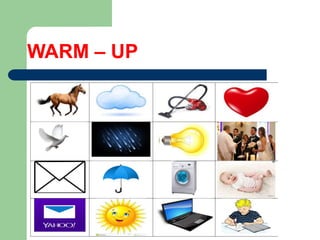
WARM – UP
Introduction
MEMORY ... Everyone has their own capacity of
memorizing.
 2 types of memory: short-term memory and long-
term memory
 What kind of memory is used? 99% of short-term
memory due to:
- Time limit
- Max 7 random objects at the same time
- 15-20 seconds of information is retained until it fades
away.
Rules to train short-term memory
 1. Concentration
- “frozen-eye” practice
- “volume-down” practice
 2. Association: requires imagination
upon resemblance or contrast
 3. Repetition: necessary to reinforce and
create paths in memory
 4. Other suggestions
- Use green-yellow cards to learn vocabulary
- The day before interpreting, do not use
electronic devices a lot
- Takes notes: names, numbers, …
Rules to train short-term memory
 5. Dealing with speaker arrange some rules
before start
- How the speaker should speak: speed,
clarity, length, …
- How the interpreter should interrupt
 Clear, visible, audible signals
 Right when the speaker pauses for breath
 Be smart when choosing position to stand/sit
Rules to train short-term memory
Interpret a video file
Q & A

Concentration and memory techniques

  • 1.
  • 2.
    Plan  Warm-up  Introduction Practice interpreting a video file  Practice more with peers  Assigning homework: pair up for next class  Self practice: note strengths and weaknesses
  • 3.
  • 5.
    Introduction MEMORY ... Everyonehas their own capacity of memorizing.  2 types of memory: short-term memory and long- term memory  What kind of memory is used? 99% of short-term memory due to: - Time limit - Max 7 random objects at the same time - 15-20 seconds of information is retained until it fades away.
  • 6.
    Rules to trainshort-term memory  1. Concentration - “frozen-eye” practice - “volume-down” practice  2. Association: requires imagination upon resemblance or contrast  3. Repetition: necessary to reinforce and create paths in memory
  • 7.
     4. Othersuggestions - Use green-yellow cards to learn vocabulary - The day before interpreting, do not use electronic devices a lot - Takes notes: names, numbers, … Rules to train short-term memory
  • 8.
     5. Dealingwith speaker arrange some rules before start - How the speaker should speak: speed, clarity, length, … - How the interpreter should interrupt  Clear, visible, audible signals  Right when the speaker pauses for breath  Be smart when choosing position to stand/sit Rules to train short-term memory
  • 9.
  • 10.