BASIC COMPUTER
OPERATION
OUTLINE
 Computer Hardware
 Operating systems
 Terms
 Disk capacities
 Viruses
 Applications and Documents
 Installation/reinstallation
 Internet Applications
Computer Hardware
 Case
 Power switch
 Reset switch
 Hard drive
 Floppy
 CD/DVD
 Serial ports
 Parallel port
 USB port
 Keyboard/mouse
 Network card
 Modem
 Sound card
 Video card
 RAM
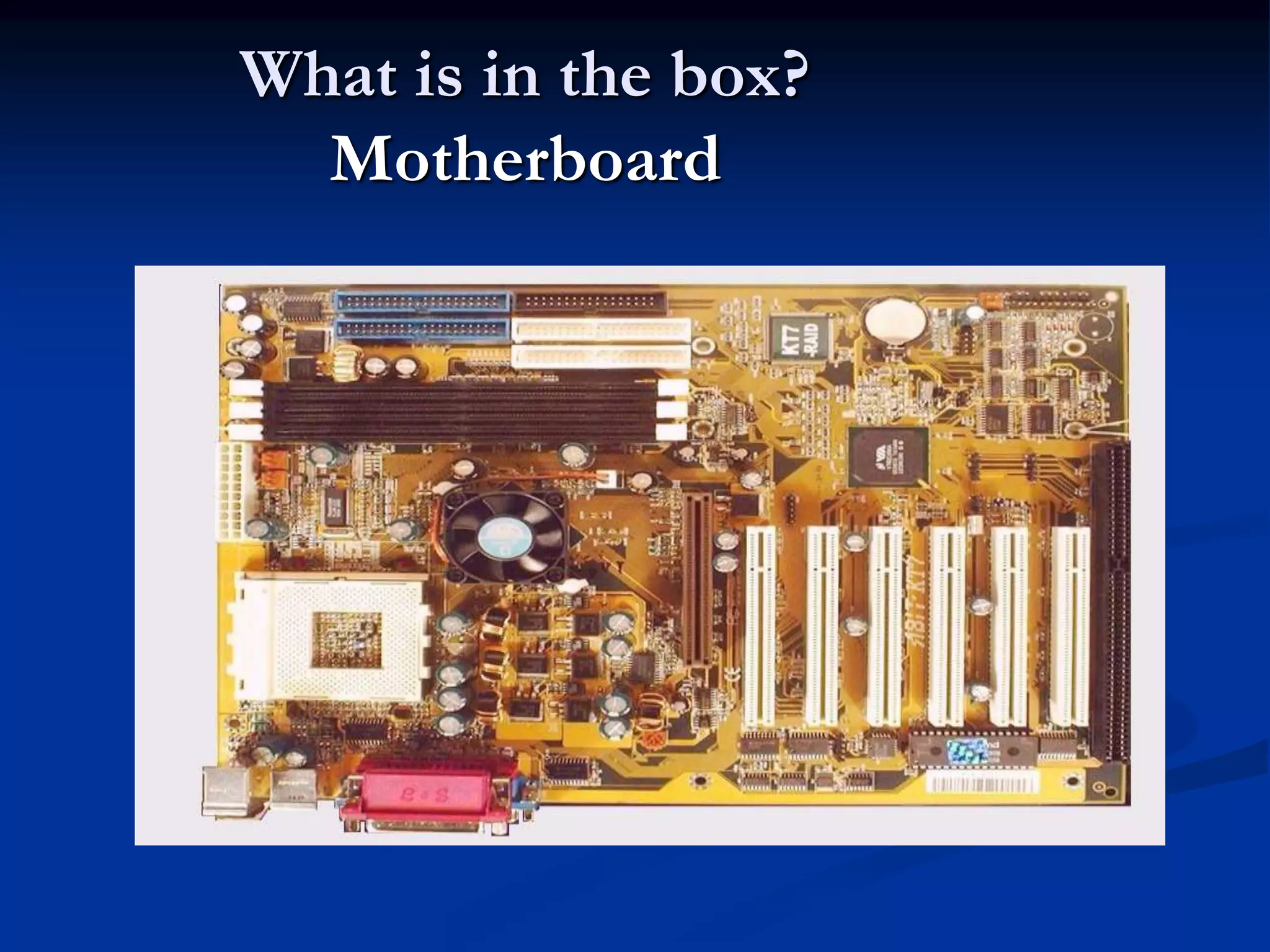
 Motherboard
 Fan
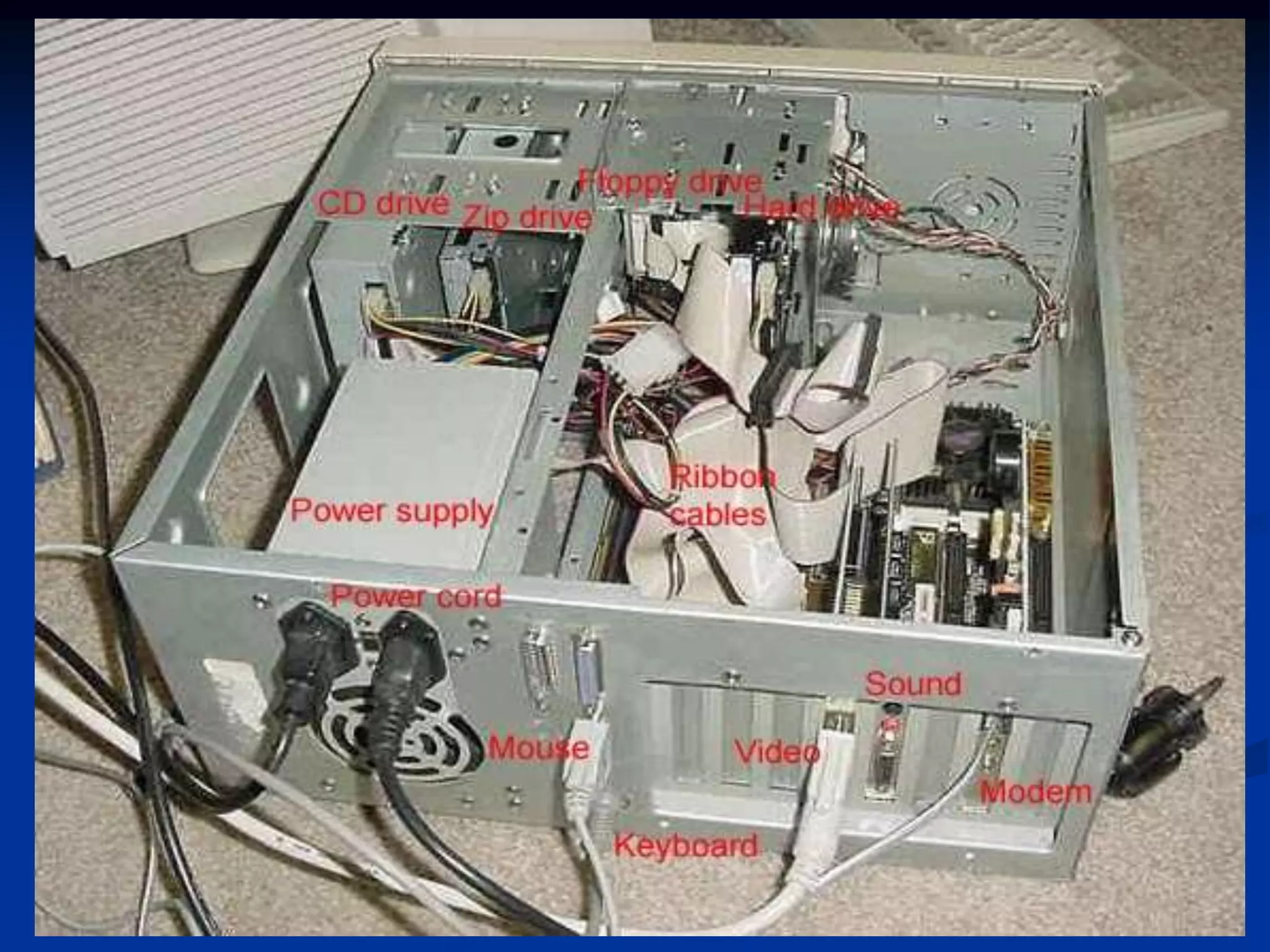
 Cables
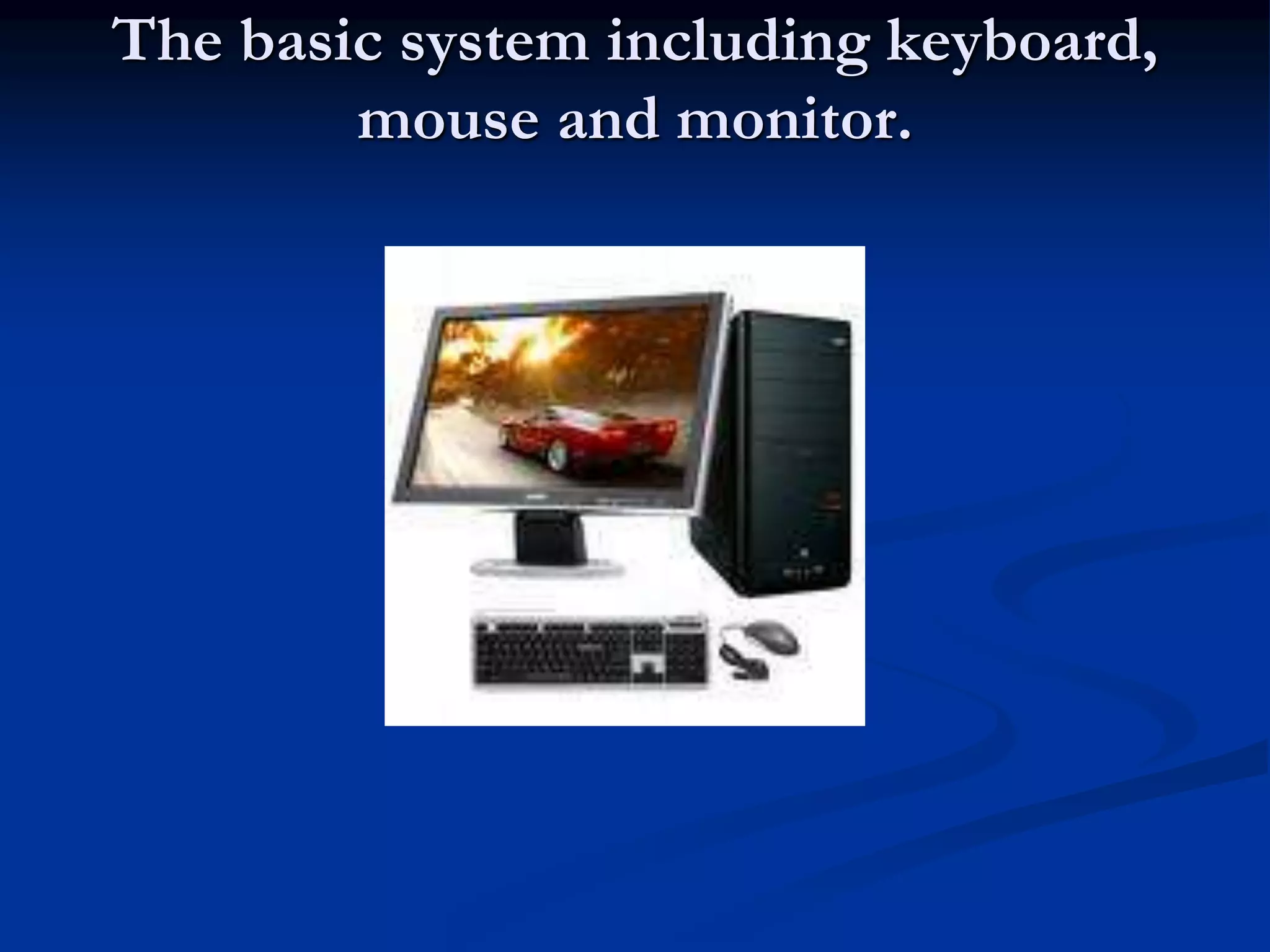
The basic system including keyboard,
mouse and monitor.
What is in the box?
Motherboard
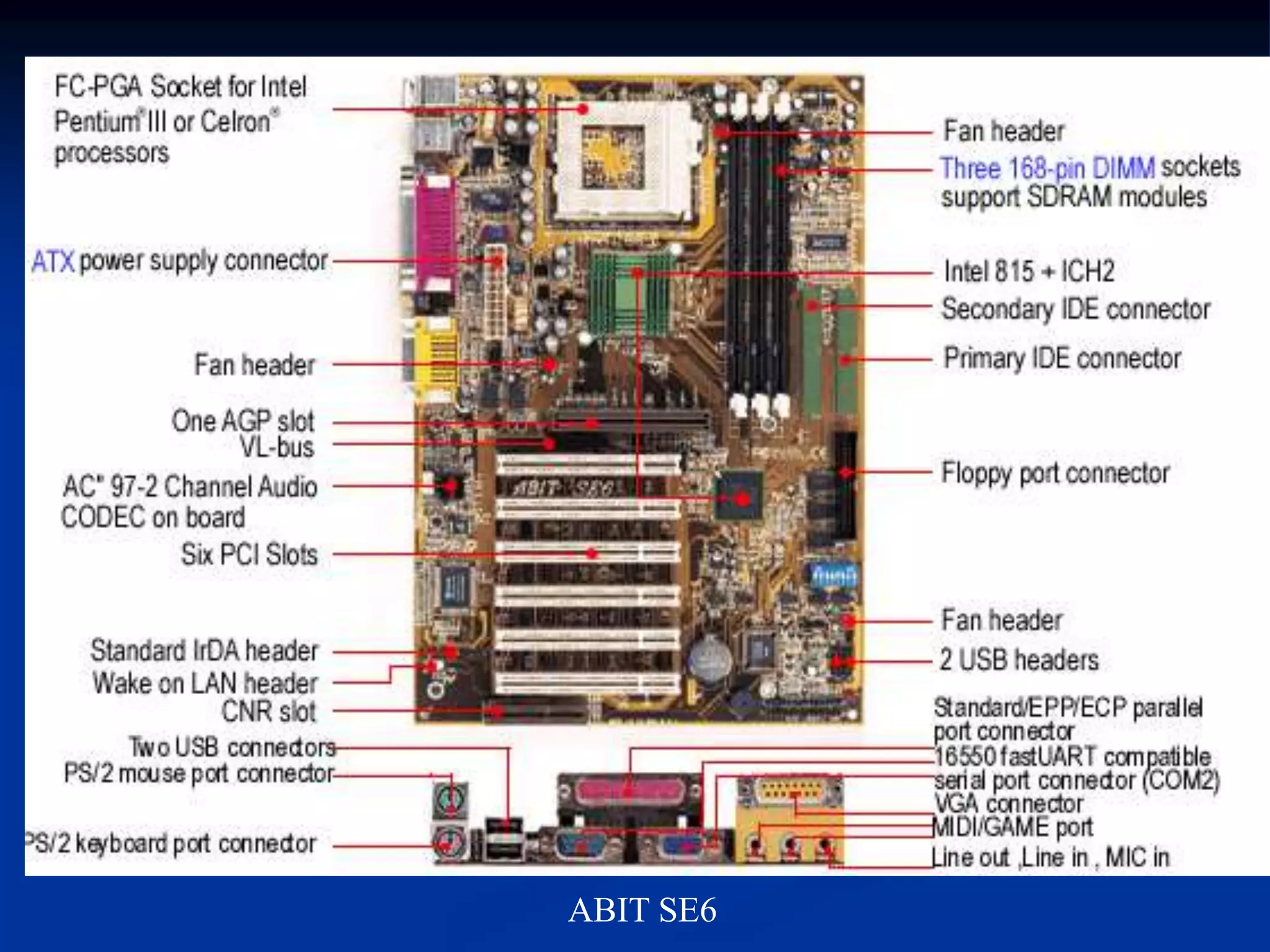
Typical parts of a motherboard.
ABIT SE6
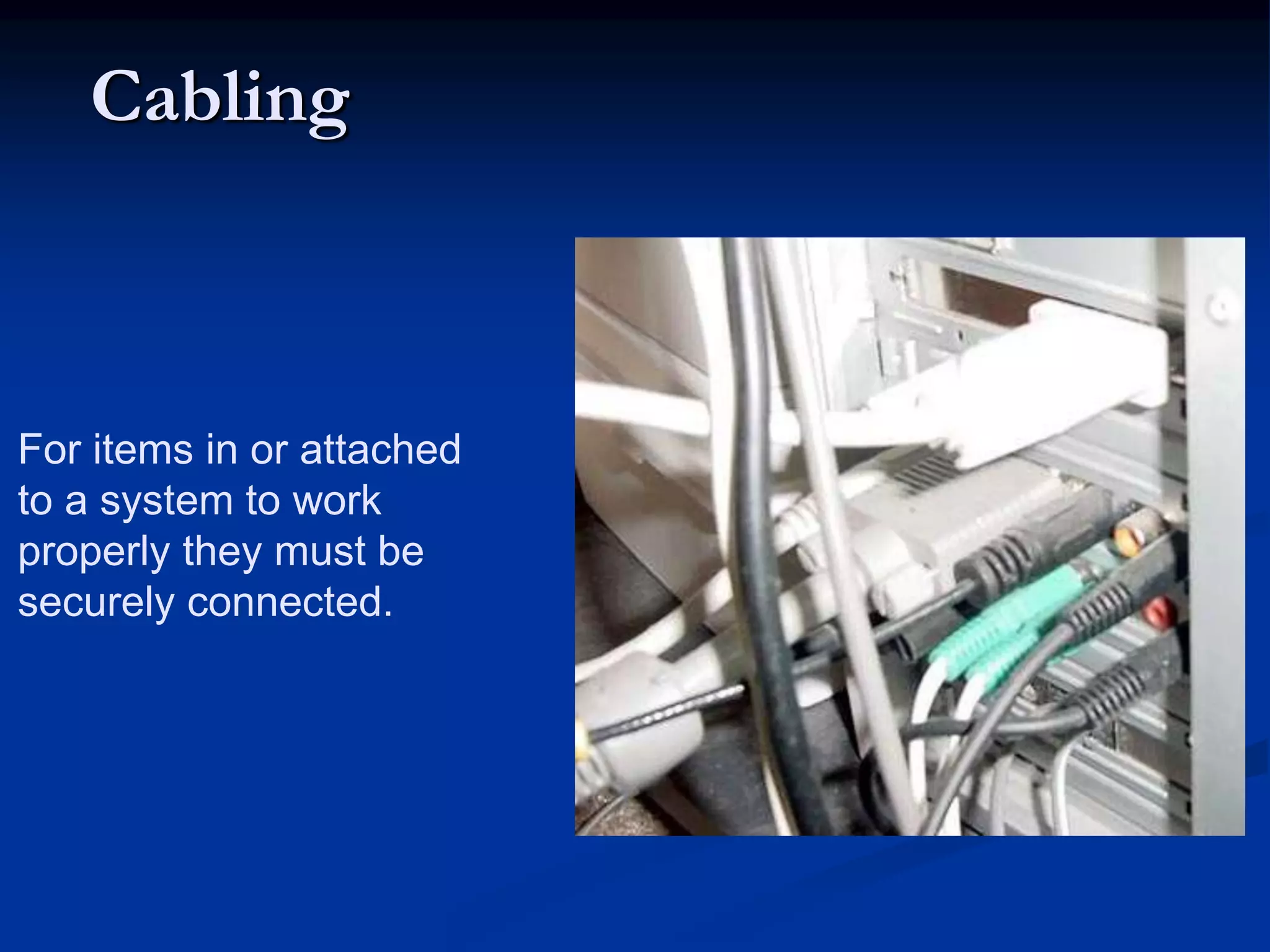
Cabling
For items in or attached
to a system to work
properly they must be
securely connected.
Operating systems
 All computer systems have an operating system.
Currently, there are three dominate typical user
operating systems.
 Macintosh OS,
 Microsoft Windows OS,
 Linux.
Terms
 A: Floppy disk C: Local disk D: Local disk (partition)
 RAM = Random Access Memory. The thinking space available to a computer to
use while performing operations. The space is emptied out when the computer is
turned off.
 DIRECTORY = An organizational structure on disks to file management easier.
Directories also become a local region for the computer to hunt for other files
related to the current file.
 DOCUMENT = A file created using an application. The file is only useful using
the application that created it or a similar application that can convert it.
 APPLICATION = A program that allows a computer to perform a certain
function.
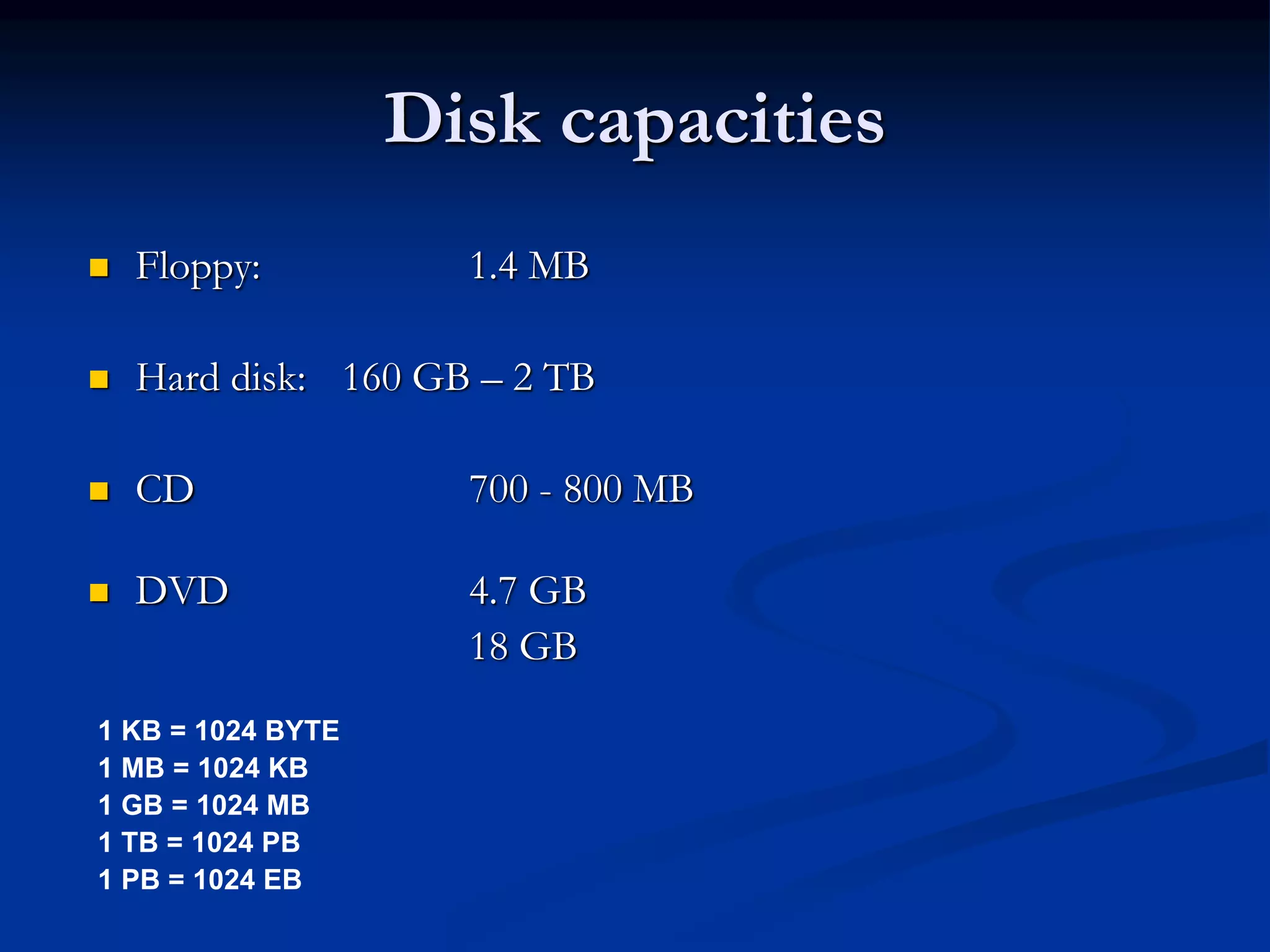
Disk capacities
 Floppy: 1.4 MB
 Hard disk: 160 GB – 2 TB
 CD 700 - 800 MB
 DVD 4.7 GB
18 GB
1 KB = 1024 BYTE
1 MB = 1024 KB
1 GB = 1024 MB
1 TB = 1024 PB
1 PB = 1024 EB
CDs, DVDs Backup
Identify and use icons,
windows, menus
 Point, click, double-click, drag & drop
 Minimize and maximize a window
 Use pull-down menus
 Select, open, and move an icon
 Select, open, move, and close a window
 Resize a window
 Scroll a window
 Activate and de-activate a window
 Start an application and create a document
Name, save, retrieve, revise a
document
 Name a document (!)
 Save a document
 Retrieve a document from floppy disk
 Retrieve a document from hard disk
 Re-name a document
 Edit and re-save a document
 Print a document
 Create and name folders
 Save, open, and place documents inside folders
Applications
 Open and work with more than one application
at a time
 To switch between them for Windows: click on the
application at the "TASKBAR" down on the screen
 Alt &TAB button
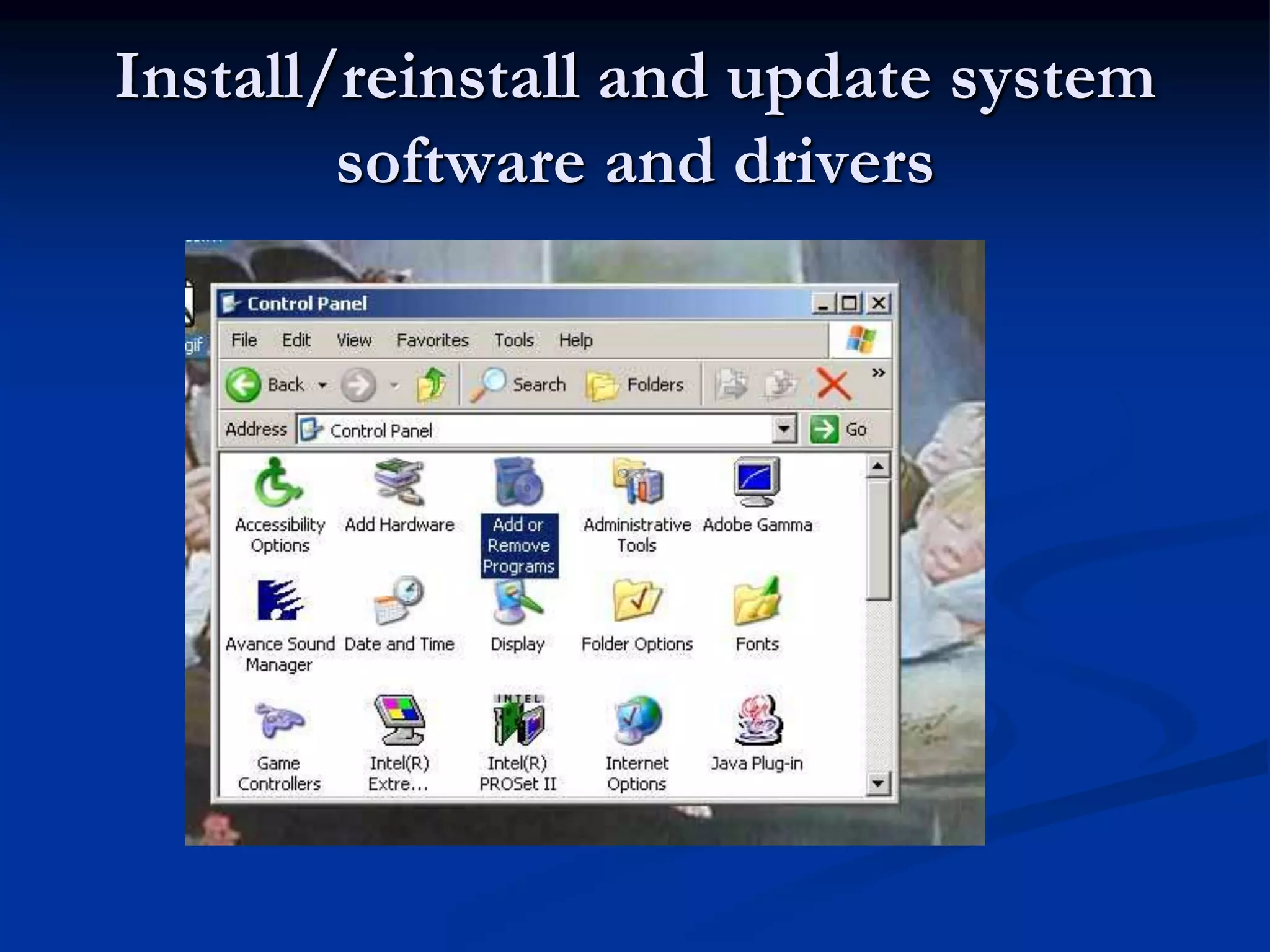
Install/reinstall and update system
software and drivers
Internet Applications
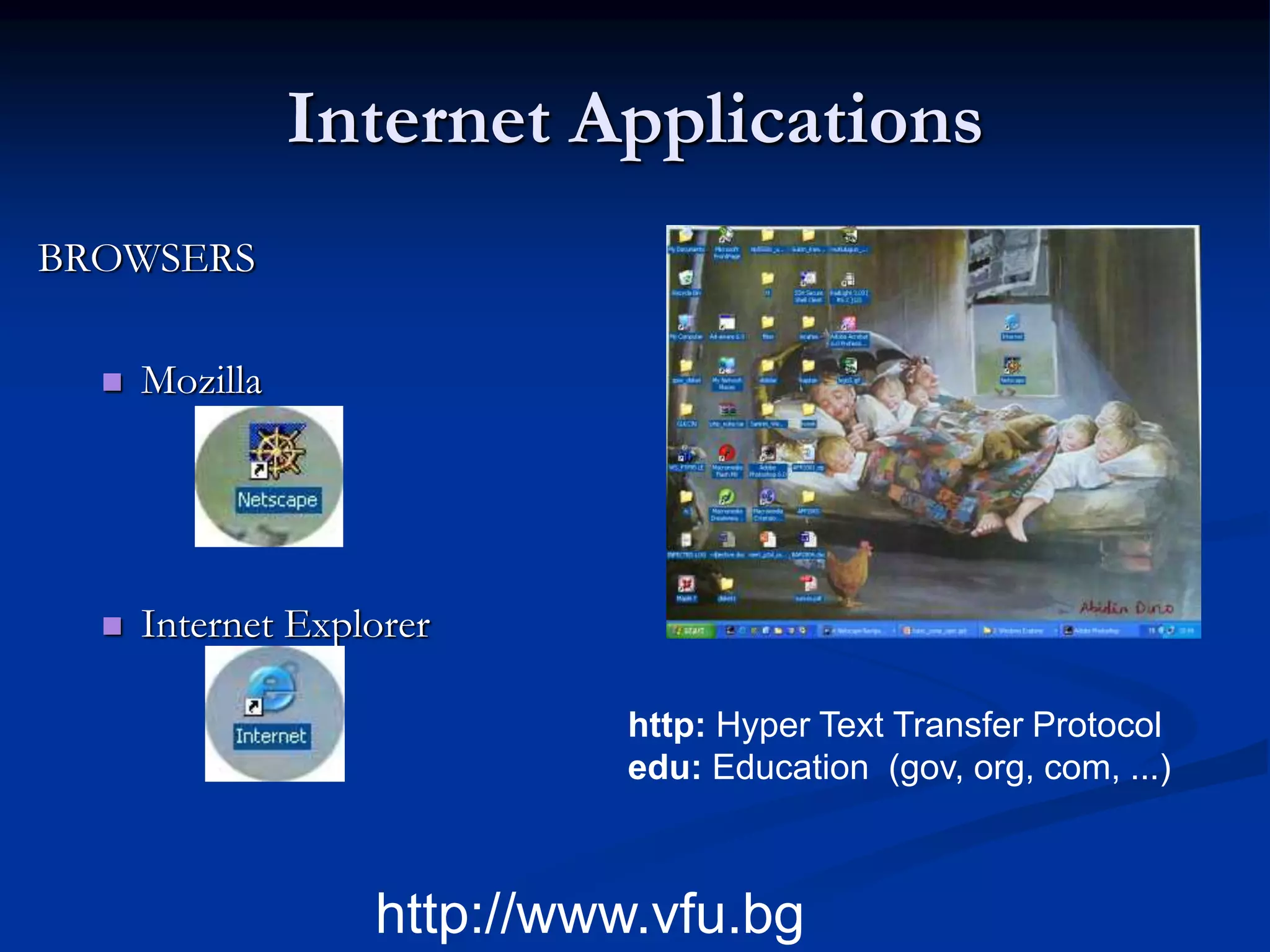
BROWSERS
 Mozilla
 Internet Explorer
http://www.vfu.bg
http: Hyper Text Transfer Protocol
edu: Education (gov, org, com, ...)
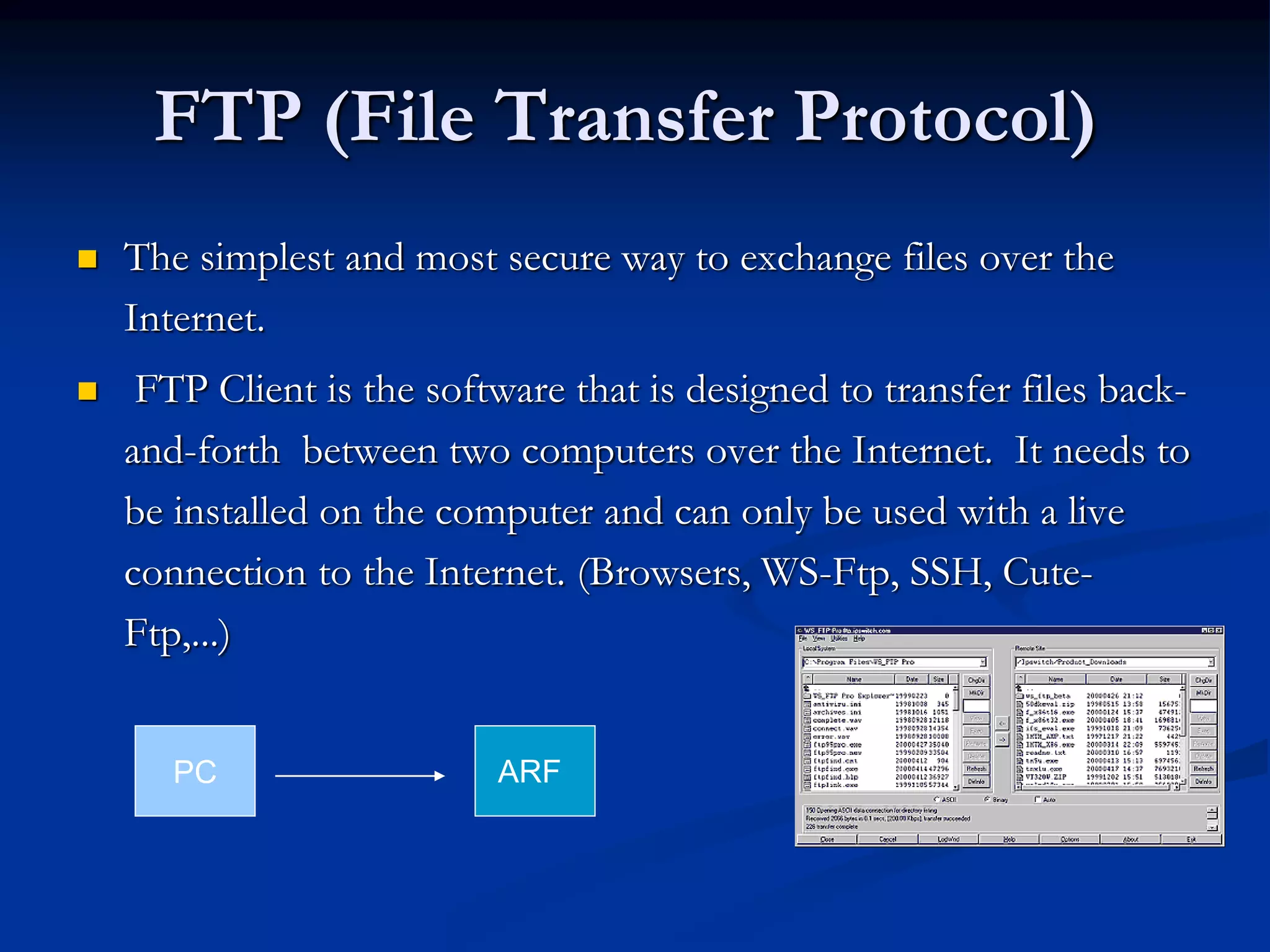
FTP (File Transfer Protocol)
 The simplest and most secure way to exchange files over the
Internet.
 FTP Client is the software that is designed to transfer files back-
and-forth between two computers over the Internet. It needs to
be installed on the computer and can only be used with a live
connection to the Internet. (Browsers, WS-Ftp, SSH, Cute-
Ftp,...)
PC ARF
Viruses
 Viruses are programs that reproduce themselves into the files of your computer
 Anti-virus software and automatic update
 Mcafee Virus Scan
Configuration of Automatic Mcafee Virus Update via FTP
http://www.math.metu.edu.tr/department/doc/virus/virus_update.html
 Current security patches applied to operating system and applications.
 Do not open any unexpected attachments that are e-mailed to you. (Particularly
“.exe” files.)
REFERENCES
 Computer Fundamentals for Teachers , Major Competencies
 Basic Computer Operation and Troubleshooting

computers.ppt

  • 1.
  • 2.
    OUTLINE  Computer Hardware Operating systems  Terms  Disk capacities  Viruses  Applications and Documents  Installation/reinstallation  Internet Applications
  • 3.
    Computer Hardware  Case Power switch  Reset switch  Hard drive  Floppy  CD/DVD  Serial ports  Parallel port  USB port  Keyboard/mouse  Network card  Modem  Sound card  Video card  RAM  Motherboard  Fan  Cables
  • 4.
    The basic systemincluding keyboard, mouse and monitor.
  • 5.
    What is inthe box? Motherboard
  • 7.
    Typical parts ofa motherboard. ABIT SE6
  • 8.
    Cabling For items inor attached to a system to work properly they must be securely connected.
  • 9.
    Operating systems  Allcomputer systems have an operating system. Currently, there are three dominate typical user operating systems.  Macintosh OS,  Microsoft Windows OS,  Linux.
  • 10.
    Terms  A: Floppydisk C: Local disk D: Local disk (partition)  RAM = Random Access Memory. The thinking space available to a computer to use while performing operations. The space is emptied out when the computer is turned off.  DIRECTORY = An organizational structure on disks to file management easier. Directories also become a local region for the computer to hunt for other files related to the current file.  DOCUMENT = A file created using an application. The file is only useful using the application that created it or a similar application that can convert it.  APPLICATION = A program that allows a computer to perform a certain function.
  • 11.
    Disk capacities  Floppy:1.4 MB  Hard disk: 160 GB – 2 TB  CD 700 - 800 MB  DVD 4.7 GB 18 GB 1 KB = 1024 BYTE 1 MB = 1024 KB 1 GB = 1024 MB 1 TB = 1024 PB 1 PB = 1024 EB
  • 12.
  • 13.
    Identify and useicons, windows, menus  Point, click, double-click, drag & drop  Minimize and maximize a window  Use pull-down menus  Select, open, and move an icon  Select, open, move, and close a window  Resize a window  Scroll a window  Activate and de-activate a window  Start an application and create a document
  • 14.
    Name, save, retrieve,revise a document  Name a document (!)  Save a document  Retrieve a document from floppy disk  Retrieve a document from hard disk  Re-name a document  Edit and re-save a document  Print a document  Create and name folders  Save, open, and place documents inside folders
  • 15.
    Applications  Open andwork with more than one application at a time  To switch between them for Windows: click on the application at the "TASKBAR" down on the screen  Alt &TAB button
  • 16.
    Install/reinstall and updatesystem software and drivers
  • 17.
    Internet Applications BROWSERS  Mozilla Internet Explorer http://www.vfu.bg http: Hyper Text Transfer Protocol edu: Education (gov, org, com, ...)
  • 18.
    FTP (File TransferProtocol)  The simplest and most secure way to exchange files over the Internet.  FTP Client is the software that is designed to transfer files back- and-forth between two computers over the Internet. It needs to be installed on the computer and can only be used with a live connection to the Internet. (Browsers, WS-Ftp, SSH, Cute- Ftp,...) PC ARF
  • 19.
    Viruses  Viruses areprograms that reproduce themselves into the files of your computer  Anti-virus software and automatic update  Mcafee Virus Scan Configuration of Automatic Mcafee Virus Update via FTP http://www.math.metu.edu.tr/department/doc/virus/virus_update.html  Current security patches applied to operating system and applications.  Do not open any unexpected attachments that are e-mailed to you. (Particularly “.exe” files.)
  • 20.
    REFERENCES  Computer Fundamentalsfor Teachers , Major Competencies  Basic Computer Operation and Troubleshooting