

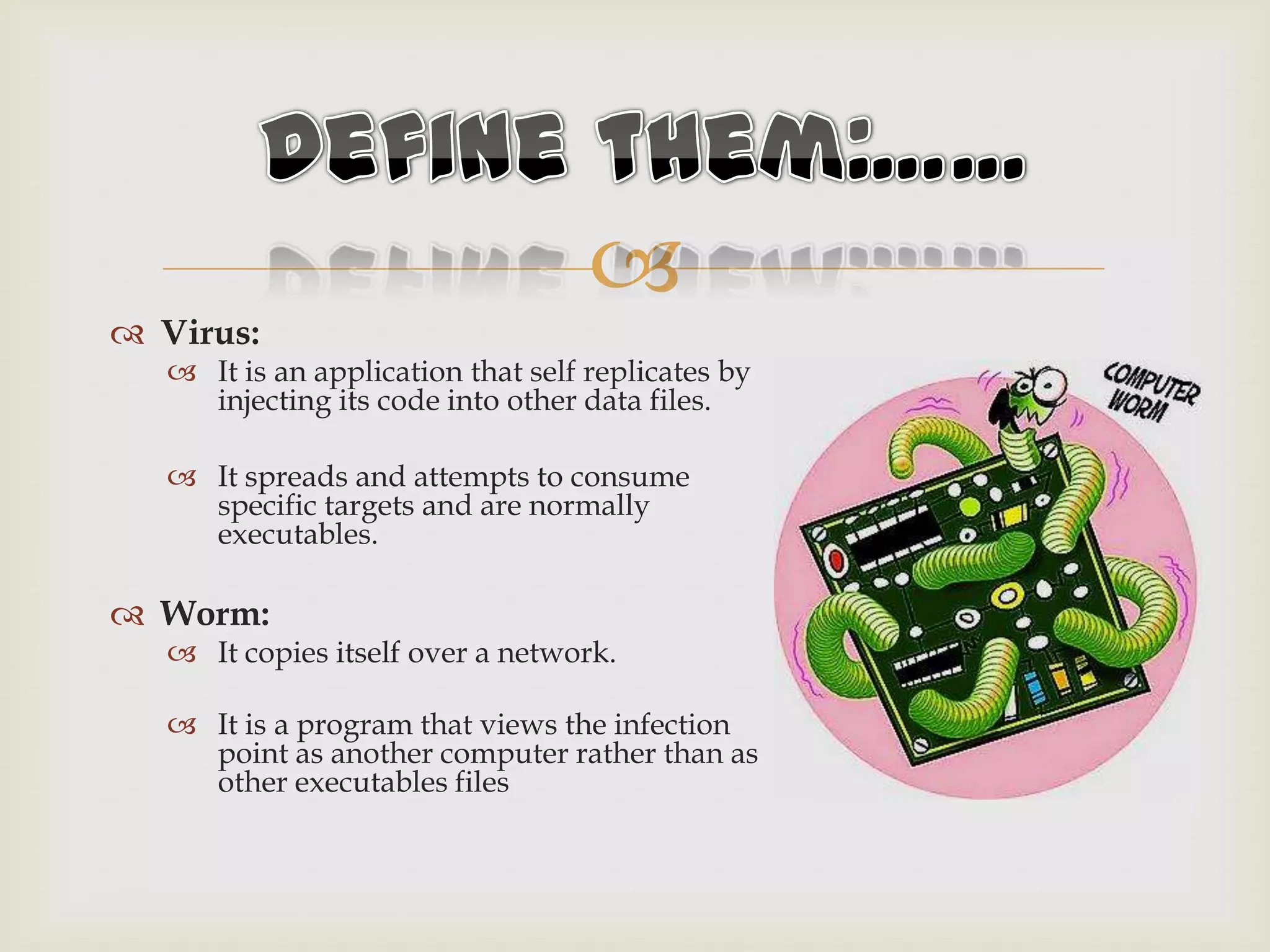
 Virus:
 It is an application that self replicates by
injecting its code into other data files.
 It spreads and attempts to consume
specific targets and are normally
executables.
 Worm:
 It copies itself over a network.
 It is a program that views the infection
point as another computer rather than as
other executables files

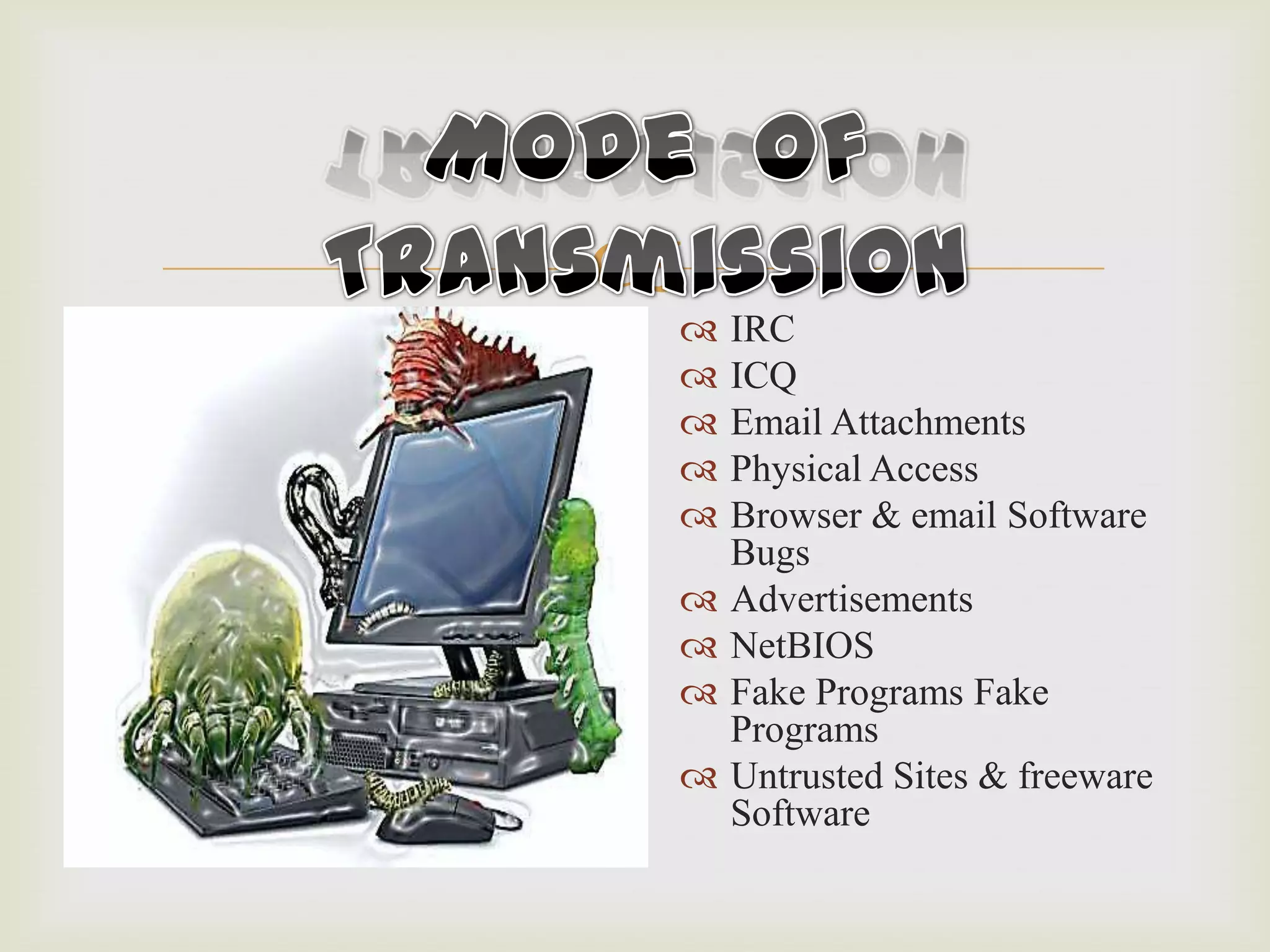
 IRC
 ICQ
 Email Attachments
 Physical Access
 Browser & email Software
Bugs
 Advertisements
 NetBIOS
 Fake Programs Fake
Programs
 Untrusted Sites & freeware
Software

 Your computer can be infected even if files are just
copied
 Can be memory or non-memory resident
 Can be a stealth virus
 Viruses can carry other viruses
 Can make the system never show outward signs
 Can stay on the computer even if the computer is
formatted.

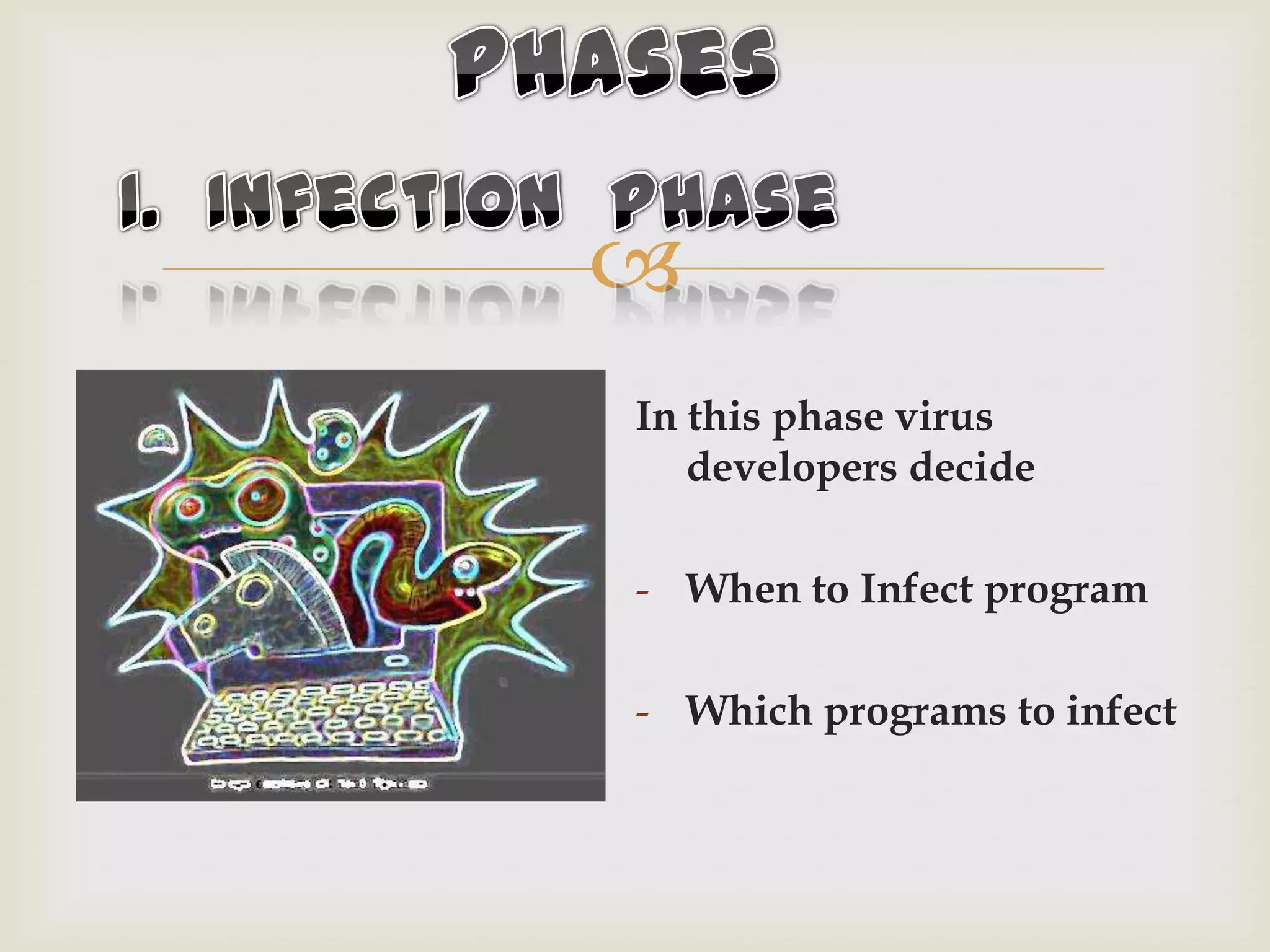
In this phase virus
developers decide
- When to Infect program
- Which programs to infect
 Some viruses infect the computer as soon as virus
file installed in computer.
 Some viruses infect computer at specific date, time
or particular event.
 TSR viruses loaded into memory & later infect the
PCs.
Continued…..

In this phase Virus will:
- Delete files.
- Replicate itself to another PCs.
- Corrupt targets only

3.
5.
2.
1.
4.
6.

 Macro Virus –
 Spreads & Infects database files.
 File Virus –
 Infects Executables.
 Source Code Virus –
 Affects & Damage source code.
 Network Virus –
 Spreads via network elements & protocols.

 Boot Virus –
 Infects boot sectors & records.
 Shell Virus –
 Virus Code forms shell around target host’s genuine program
& host it as sub routine.
 Terminate & Stay Resident Virus –
 Remains permanently in the memory during the work session
even after target host is executed & terminated.
Continued…..

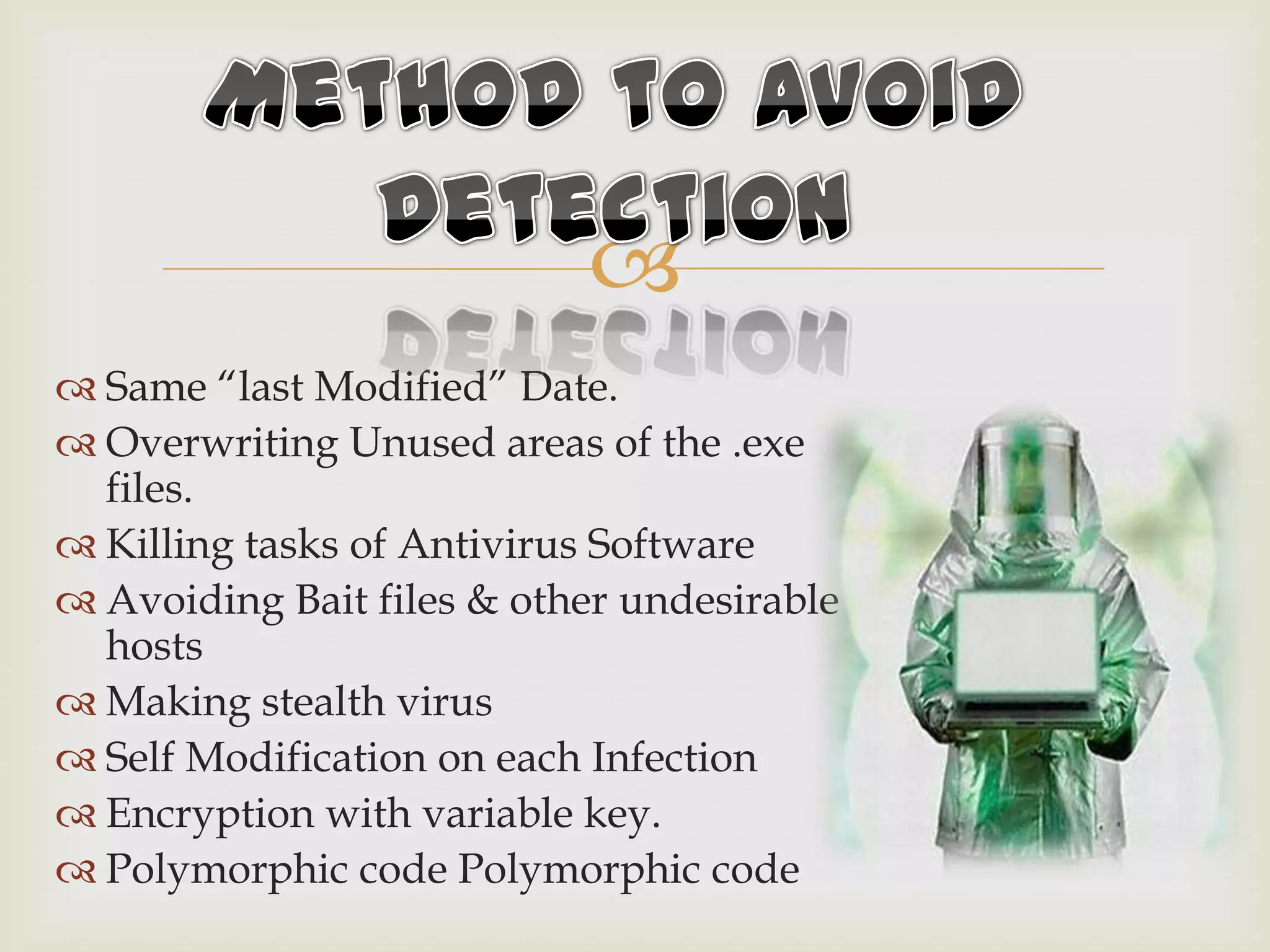
 Same “last Modified” Date.
 Overwriting Unused areas of the .exe
files.
 Killing tasks of Antivirus Software
 Avoiding Bait files & other undesirable
hosts
 Making stealth virus
 Self Modification on each Infection
 Encryption with variable key.
 Polymorphic code Polymorphic code

 Same “last Modified” Date.
 In order to avoid detection by users, some
viruses employ different kinds of
deception.
 Some old viruses, especially on the MS-
DOS platform, make sure that the "last
modified" date of a host file stays the
same when the file is infected by the virus.
 This approach sometimes fool anti-virus
s/w

 Bait files (or goat files) are files that are
specially created by anti-virus
software, or by anti-virus professionals
themselves, to be infected by a virus.
 Many anti-virus programs perform an
integrity check of their own code.
 Infecting such programs will therefore
increase the likelihood that the virus is
detected.
 Anti-virus professionals can use bait
files to take a sample of a virus

Virus and worms analysis

  • 1.
  • 2.
      Virus:  Itis an application that self replicates by injecting its code into other data files.  It spreads and attempts to consume specific targets and are normally executables.  Worm:  It copies itself over a network.  It is a program that views the infection point as another computer rather than as other executables files
  • 3.
      IRC  ICQ Email Attachments  Physical Access  Browser & email Software Bugs  Advertisements  NetBIOS  Fake Programs Fake Programs  Untrusted Sites & freeware Software
  • 4.
      Your computercan be infected even if files are just copied  Can be memory or non-memory resident  Can be a stealth virus  Viruses can carry other viruses  Can make the system never show outward signs  Can stay on the computer even if the computer is formatted.
  • 5.
     In this phasevirus developers decide - When to Infect program - Which programs to infect
  • 6.
     Some virusesinfect the computer as soon as virus file installed in computer.  Some viruses infect computer at specific date, time or particular event.  TSR viruses loaded into memory & later infect the PCs. Continued…..
  • 7.
     In this phaseVirus will: - Delete files. - Replicate itself to another PCs. - Corrupt targets only
  • 8.
  • 9.
      Macro Virus–  Spreads & Infects database files.  File Virus –  Infects Executables.  Source Code Virus –  Affects & Damage source code.  Network Virus –  Spreads via network elements & protocols.
  • 10.
      Boot Virus–  Infects boot sectors & records.  Shell Virus –  Virus Code forms shell around target host’s genuine program & host it as sub routine.  Terminate & Stay Resident Virus –  Remains permanently in the memory during the work session even after target host is executed & terminated. Continued…..
  • 11.
      Same “lastModified” Date.  Overwriting Unused areas of the .exe files.  Killing tasks of Antivirus Software  Avoiding Bait files & other undesirable hosts  Making stealth virus  Self Modification on each Infection  Encryption with variable key.  Polymorphic code Polymorphic code
  • 12.
      Same “lastModified” Date.  In order to avoid detection by users, some viruses employ different kinds of deception.  Some old viruses, especially on the MS- DOS platform, make sure that the "last modified" date of a host file stays the same when the file is infected by the virus.  This approach sometimes fool anti-virus s/w
  • 13.
      Bait files(or goat files) are files that are specially created by anti-virus software, or by anti-virus professionals themselves, to be infected by a virus.  Many anti-virus programs perform an integrity check of their own code.  Infecting such programs will therefore increase the likelihood that the virus is detected.  Anti-virus professionals can use bait files to take a sample of a virus