Computer system Concepts,
Characteristics, Capabilities and
Limitations
Unit One 1.1
�Concept of Computer System
�Parts of Computer System
�Computer Characteristics
�Limitations of computer system
�Functional Units of Computer System
Definition:
Computer is an electronic programmable
device which takes input data from input
devices, store and processed it according
to given instructions to produce result is
also known as information that helps us to
take important decisions.
Computer
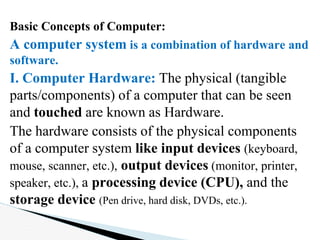
Basic Concepts of Computer:
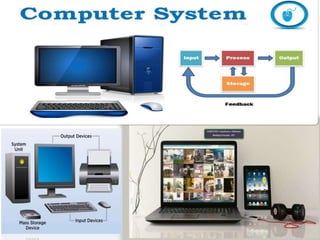
A computer system is a combination of hardware and
software.
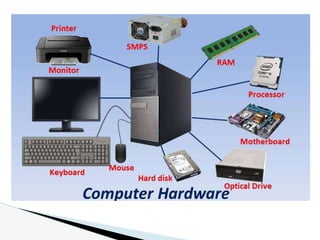
I. Computer Hardware: The physical (tangible
parts/components) of a computer that can be seen
and touched are known as Hardware.
The hardware consists of the physical components
of a computer system like input devices (keyboard,
mouse, scanner, etc.), output devices (monitor, printer,
speaker, etc.), a processing device (CPU), and the
storage device (Pen drive, hard disk, DVDs, etc.).
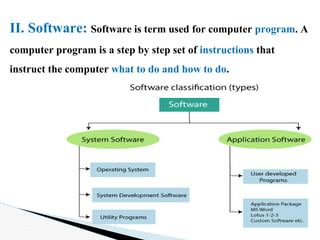
II. Software: Software is term used for computer program. A
computer program is a step by step set of instructions that
instruct the computer what to do and how to do.
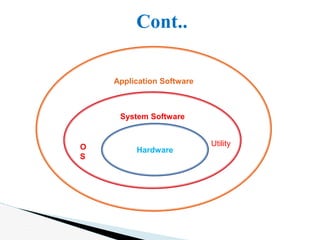
Cont..
Application Software
System Software
Hardware
O
S
Utility
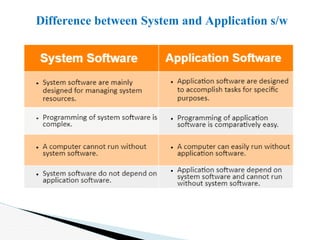
Difference between System and Application s/w
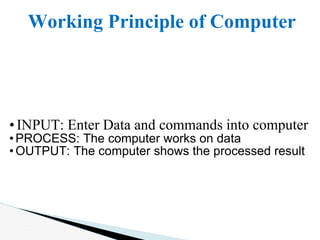
• INPUT: Enter Data and commands into computer
• PROCESS: The computer works on data
• OUTPUT: The computer shows the processed result
Working Principle of Computer
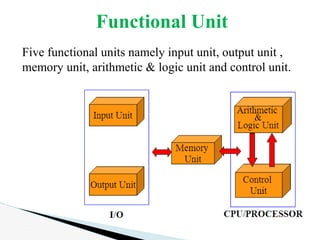
Functional Unit
Five functional units namely input unit, output unit ,
memory unit, arithmetic & logic unit and control unit.
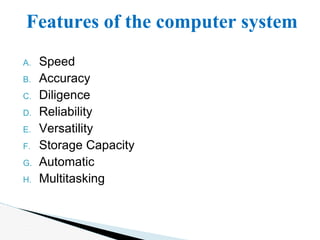
Features of the computer system
A. Speed
B. Accuracy
C. Diligence
D. Reliability
E. Versatility
F. Storage Capacity
G. Automatic
H. Multitasking
Cont..
� Speed
� A computer works with much higher speed and accuracy compared
to humans while performing mathematical calculations. Computers
can process millions (1,000,000) of instructions per second. The
time taken by computers for their operations is microseconds and
nanoseconds.
� Accuracy
� Computers perform calculations with 100% accuracy. Errors may
occur due to data inconsistency or inaccuracy.
� Diligence
� A computer can perform millions of tasks or calculations with the
same consistency and accuracy. It doesn’t feel any fatigue or lack
of concentration. Its memory also makes it superior to that of human
beings.
Cont..
� Versatility
� Versatility refers to the capability of a computer to perform different kinds
of works with same accuracy and efficiency.
� Reliability
� A computer is reliable as it gives consistent result for similar set of data
i.e., if we give same set of input any number of times, we will get the same
result.
� Automation
� Computer performs all the tasks automatically i.e. it performs tasks without
manual intervention.
� Memory
� A computer has built-in memory called primary memory where it stores
data. Secondary storage are removable devices such as CDs, pen drives,
etc., which are also used to store data.
Capabilities of Computer
It is self Directing. The user merely feeds all the
instructions to the computer at the start and later
processed without any need for human intervention.
Ability to store and retrieve information. The computer
has the ability to remember and recall data when finds
the need for them
Ability to perform mathematical operations and solve
complex formula at high speed and with great
precision.
Ability to perform logic operation.
Limitations of Computer
There are some main limitations of computer is
given below.
� Lack of common-sense
� Zero IQ
� No Feeling
� Computers can’t Decide
� Computers can’t Express their Ideas
� Computers can’t Implement
� Computers can’t Think
Name : Govinda Neupane
Email:
ictgovindaneupane@gmail.com

Computer system concepts, characteristics, capabilities and limitations (1) (1).pptx

  • 2.
    Computer system Concepts, Characteristics,Capabilities and Limitations Unit One 1.1
  • 3.
    �Concept of ComputerSystem �Parts of Computer System �Computer Characteristics �Limitations of computer system �Functional Units of Computer System
  • 5.
    Definition: Computer is anelectronic programmable device which takes input data from input devices, store and processed it according to given instructions to produce result is also known as information that helps us to take important decisions. Computer
  • 6.
    Basic Concepts ofComputer: A computer system is a combination of hardware and software. I. Computer Hardware: The physical (tangible parts/components) of a computer that can be seen and touched are known as Hardware. The hardware consists of the physical components of a computer system like input devices (keyboard, mouse, scanner, etc.), output devices (monitor, printer, speaker, etc.), a processing device (CPU), and the storage device (Pen drive, hard disk, DVDs, etc.).
  • 8.
    II. Software: Softwareis term used for computer program. A computer program is a step by step set of instructions that instruct the computer what to do and how to do.
  • 9.
  • 10.
    Difference between Systemand Application s/w
  • 11.
    • INPUT: EnterData and commands into computer • PROCESS: The computer works on data • OUTPUT: The computer shows the processed result Working Principle of Computer
  • 12.
    Functional Unit Five functionalunits namely input unit, output unit , memory unit, arithmetic & logic unit and control unit.
  • 13.
    Features of thecomputer system A. Speed B. Accuracy C. Diligence D. Reliability E. Versatility F. Storage Capacity G. Automatic H. Multitasking
  • 14.
    Cont.. � Speed � Acomputer works with much higher speed and accuracy compared to humans while performing mathematical calculations. Computers can process millions (1,000,000) of instructions per second. The time taken by computers for their operations is microseconds and nanoseconds. � Accuracy � Computers perform calculations with 100% accuracy. Errors may occur due to data inconsistency or inaccuracy. � Diligence � A computer can perform millions of tasks or calculations with the same consistency and accuracy. It doesn’t feel any fatigue or lack of concentration. Its memory also makes it superior to that of human beings.
  • 15.
    Cont.. � Versatility � Versatilityrefers to the capability of a computer to perform different kinds of works with same accuracy and efficiency. � Reliability � A computer is reliable as it gives consistent result for similar set of data i.e., if we give same set of input any number of times, we will get the same result. � Automation � Computer performs all the tasks automatically i.e. it performs tasks without manual intervention. � Memory � A computer has built-in memory called primary memory where it stores data. Secondary storage are removable devices such as CDs, pen drives, etc., which are also used to store data.
  • 16.
    Capabilities of Computer Itis self Directing. The user merely feeds all the instructions to the computer at the start and later processed without any need for human intervention. Ability to store and retrieve information. The computer has the ability to remember and recall data when finds the need for them Ability to perform mathematical operations and solve complex formula at high speed and with great precision. Ability to perform logic operation.
  • 17.
    Limitations of Computer Thereare some main limitations of computer is given below. � Lack of common-sense � Zero IQ � No Feeling � Computers can’t Decide � Computers can’t Express their Ideas � Computers can’t Implement � Computers can’t Think
  • 19.
    Name : GovindaNeupane Email: ictgovindaneupane@gmail.com