Computer Media-aided Communication and Language Learning The 80’s Lorena Padilla
The 80’s: The Age of Enlightenment The beginning of the 80s sealed the predominance of the microcomputer and made computing available to the masses for the first time. CAL(L) developments reached critical mass. The World Wide Web was invented. It was also in the 80s that major progress occurred in related areas of machine intelligence, including CALL.
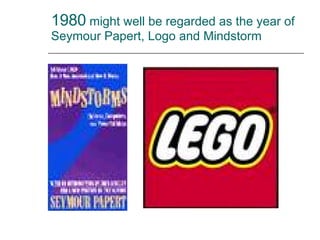
1980  might well be regarded as the year of Seymour Papert, Logo and Mindstorm
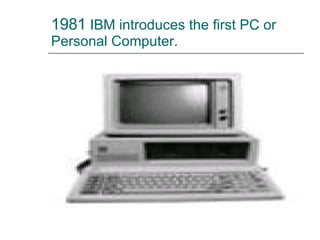
1981  IBM introduces the first PC or Personal Computer.
The 80s: Mindstorms, Commodores and laptops  “ Getting a computer to do something” Seymour Papert , author of  “Mindstorm: Children Computer and Powerful Ideas”,  invented the computer language to design mathematical figures.
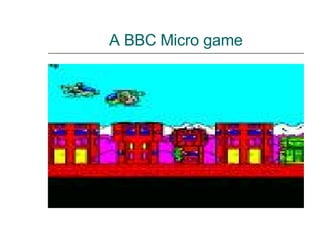
A BBC Micro game
Years later,  Jose Armando Valente  writes: Logo as a Window into the Mind. Logo made a big impact because it provided powerful computational facilities for children and a completely different way of talking about education. Logo was the only educational software that allowed students to develop educational computer activities.
M.I.T. Computing Process  Joseph Weizenbaum  has insisted that “giving children computers to play with…cannot touch…any real problem”.
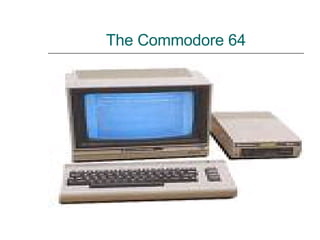
Epson brings out its  first laptop. Control Data Corporation, the new owners of PLATO release PLATO materials for several micros. The  Commodore 64  comes out. It uses a TV-set as monitor.
The Commodore 64
In 1983: Digital Equipment Corporation publishes a history of computer-based education. Also, in 1983,  Tim O’shea  and  John Self  publish their important book: “Learning and Teaching with Computers”.
The 80s: Digital Beginning and the British of the “British School” Bern Russchoff  was the first to have established the use of PCs rather than large mainframes in CALL in Germany.
Beginning of the development of  HYPERTIES  (Hypertex The Interactive Encyclopedia System) by  Ben Schneiderman  who was to be a Keynote Speaker at the first WorldCALL conference.
At the  US Air Force  Academic in 1987, the interactive  videodisc  language-learning center boasted 48 workstations delivering 100s of hours of instructions which constituted up to 50% of classroom instruction in several languages.
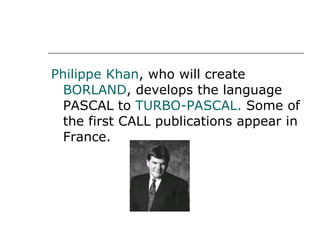
Philippe Khan , who will create  BORLAND , develops the language PASCAL to  TURBO-PASCAL.  Some of the first CALL publications appear in France.
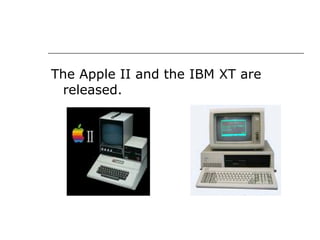
The Apple II and the IBM XT are released.
Microsoft Word  appears, the word processor in general makes a strong appearance in CALL.
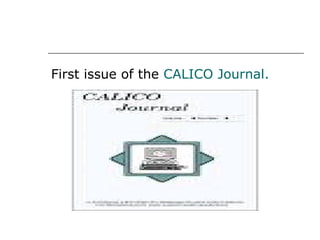
First issue of the  CALICO Journal.
References http://www.eurocall-languages.org/resources/history_of_call.pdf

Computer Media Aided Communication And Language Learning

  • 1.
    Computer Media-aided Communicationand Language Learning The 80’s Lorena Padilla
  • 2.
    The 80’s: TheAge of Enlightenment The beginning of the 80s sealed the predominance of the microcomputer and made computing available to the masses for the first time. CAL(L) developments reached critical mass. The World Wide Web was invented. It was also in the 80s that major progress occurred in related areas of machine intelligence, including CALL.
  • 3.
    1980 mightwell be regarded as the year of Seymour Papert, Logo and Mindstorm
  • 4.
    1981 IBMintroduces the first PC or Personal Computer.
  • 5.
    The 80s: Mindstorms,Commodores and laptops “ Getting a computer to do something” Seymour Papert , author of “Mindstorm: Children Computer and Powerful Ideas”, invented the computer language to design mathematical figures.
  • 6.
  • 7.
    Years later, Jose Armando Valente writes: Logo as a Window into the Mind. Logo made a big impact because it provided powerful computational facilities for children and a completely different way of talking about education. Logo was the only educational software that allowed students to develop educational computer activities.
  • 8.
    M.I.T. Computing Process Joseph Weizenbaum has insisted that “giving children computers to play with…cannot touch…any real problem”.
  • 9.
    Epson brings outits first laptop. Control Data Corporation, the new owners of PLATO release PLATO materials for several micros. The Commodore 64 comes out. It uses a TV-set as monitor.
  • 10.
  • 11.
    In 1983: DigitalEquipment Corporation publishes a history of computer-based education. Also, in 1983, Tim O’shea and John Self publish their important book: “Learning and Teaching with Computers”.
  • 12.
    The 80s: DigitalBeginning and the British of the “British School” Bern Russchoff was the first to have established the use of PCs rather than large mainframes in CALL in Germany.
  • 13.
    Beginning of thedevelopment of HYPERTIES (Hypertex The Interactive Encyclopedia System) by Ben Schneiderman who was to be a Keynote Speaker at the first WorldCALL conference.
  • 14.
    At the US Air Force Academic in 1987, the interactive videodisc language-learning center boasted 48 workstations delivering 100s of hours of instructions which constituted up to 50% of classroom instruction in several languages.
  • 15.
    Philippe Khan ,who will create BORLAND , develops the language PASCAL to TURBO-PASCAL. Some of the first CALL publications appear in France.
  • 16.
    The Apple IIand the IBM XT are released.
  • 17.
    Microsoft Word appears, the word processor in general makes a strong appearance in CALL.
  • 18.
    First issue ofthe CALICO Journal.
  • 19.