Welcome
to
Operating System (OS)
• Set of software that manages the hardware and
provides services to computer programs.
• Cycle Hardware<OS<Application<User.
• Real-time OS are for executing real-time applications
• It is predictable response to Events. Has two aspects:
a) Event Driven b) Time Sharing
• Distributed OS: Many appear as 1 computer
• Embedded OS: For embedded computer System.
Different Operating Systems
• Unix: All Console
• Linux: GUI of Linux
• Mac: As known
• Windows: As known
• Android: Mobile OS, Linux wrapped in Java
• AIX: Customized Unix by IBM
• HP-UX: Customized Unix by HP
• Solaris: Customized Unix by Sun Microsystems
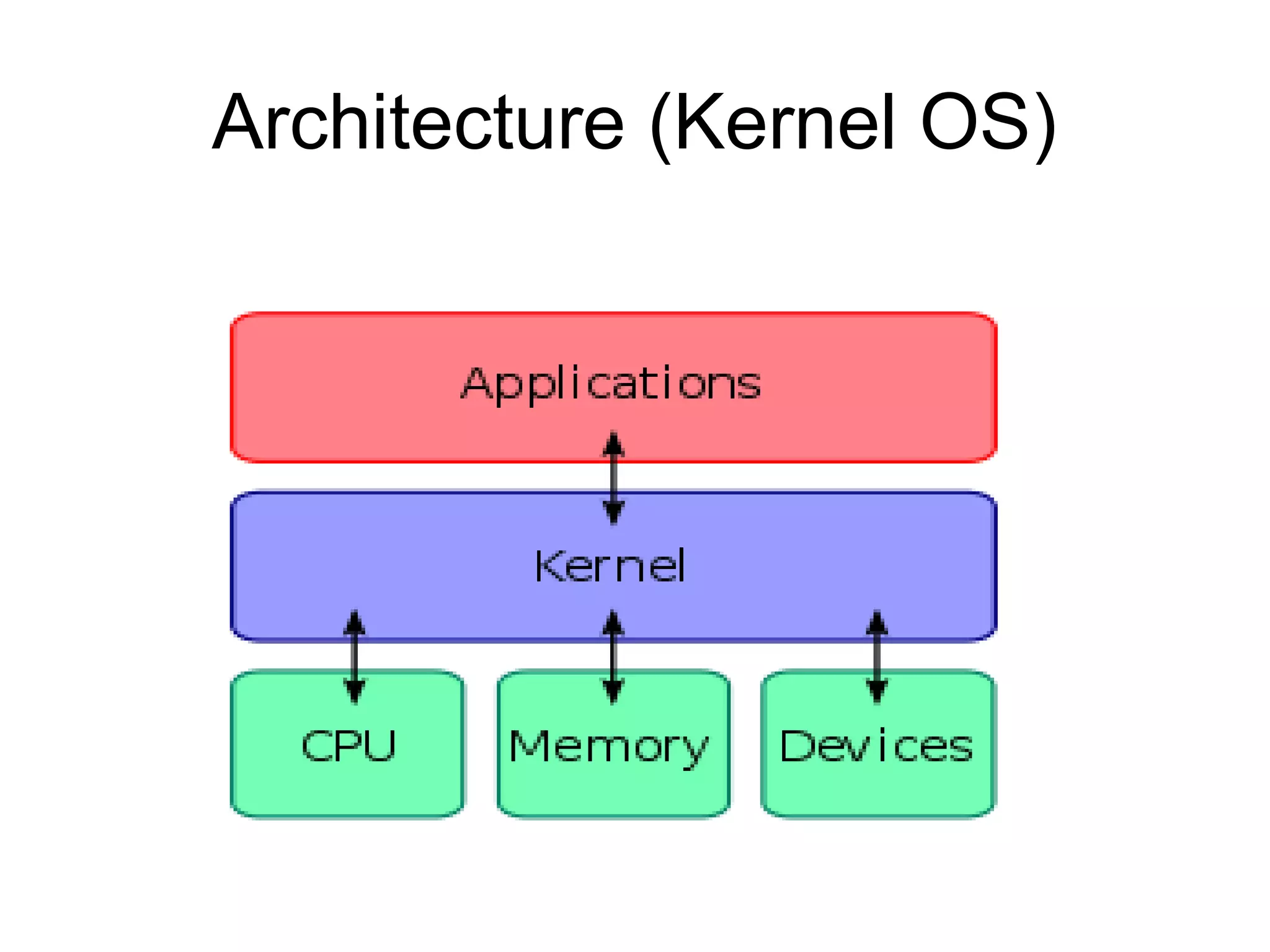
Architecture (Kernel OS)
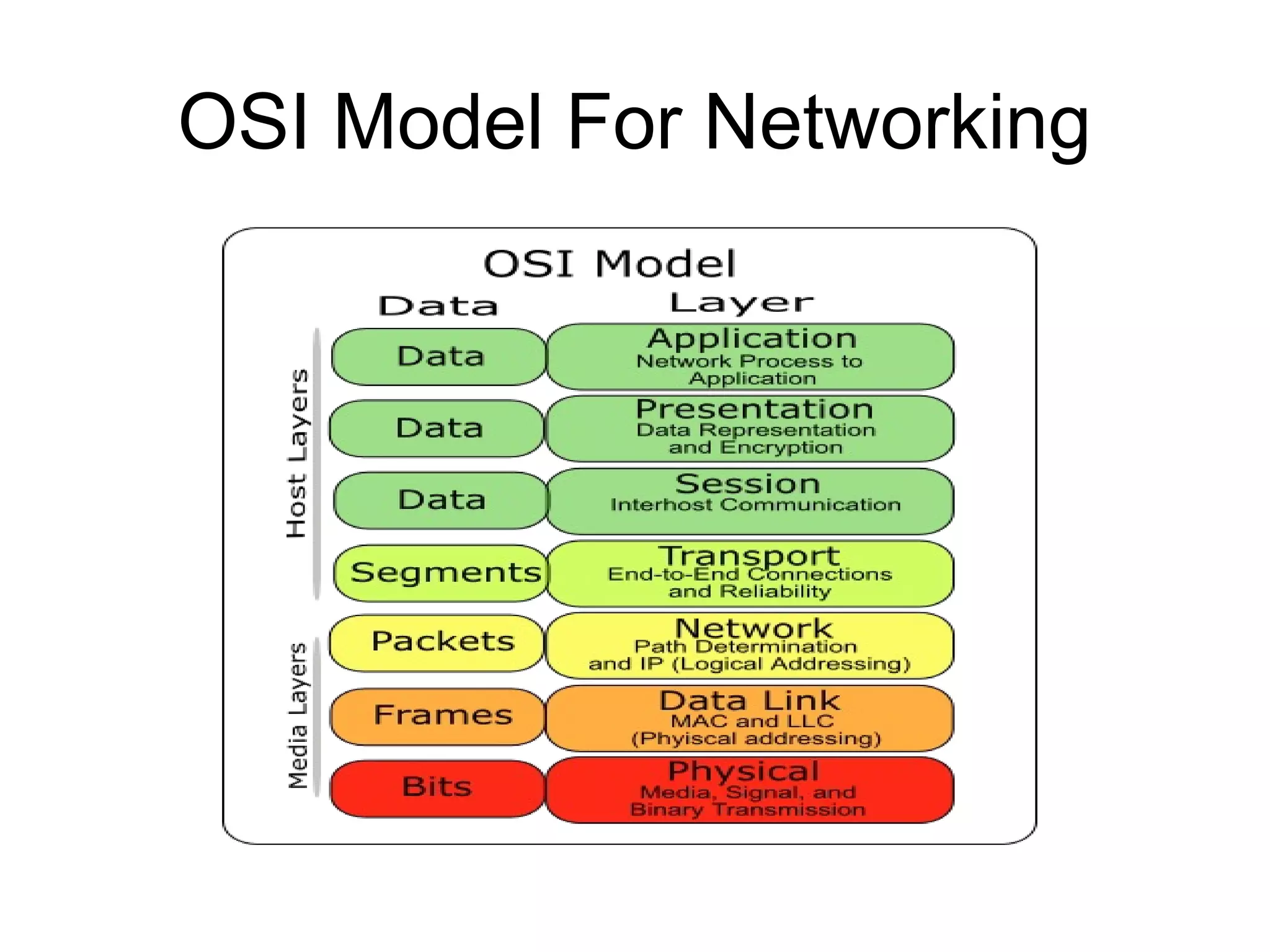
OSI Model For Networking
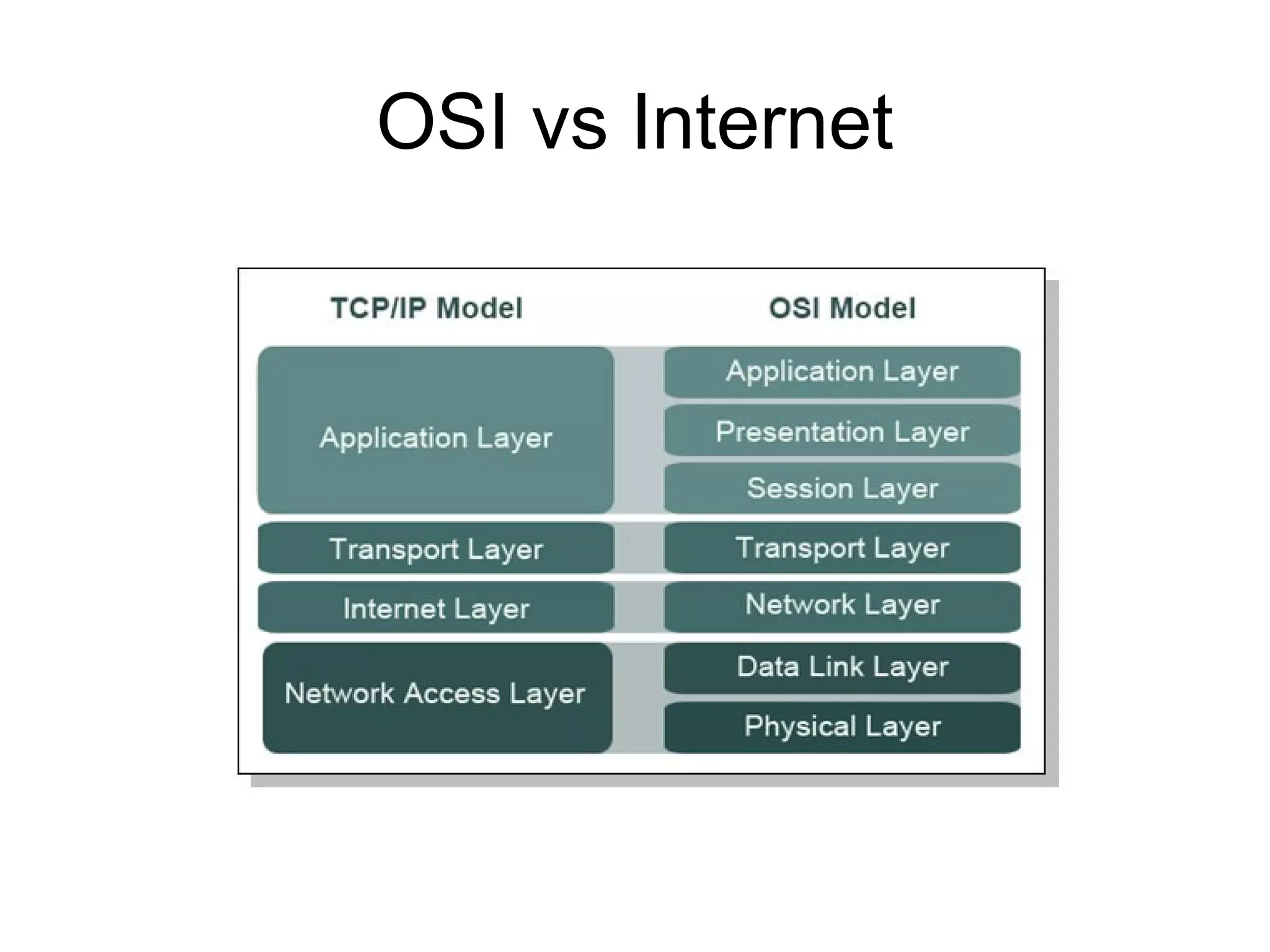
OSI vs Internet
Middleware
• Computer Software that provides services to
software applications beyond Operating System.
• It makes it easier for developer to perform
communication (I/O) so that they focus on
purpose of application.
• Communication & Mgmt of data ‘Dash in client-
server’
• Software layer that lies between OS &
Application.
Development Skills
• Languages: Assembly, C, C++, Java, .Net
• Difference between C & C++.
• OOPS
• Module Prog. & S/W architecture.
• Algorithm & its Optimization.
• Scripting: Perl, Shell, Tcl, Python.
Software Testing
• Black-Box Testing: Internal System design not considered but based on
Requirement and functionality. (Not so strong).
• White-Box Testing: Internal Logic, mainly codes (Strong).
• Unit Testing: Components & modules.
• Integration Testing: Bottom Up approach.
• Functional Testing: Output as per Req.
• System Testing: Entire system is tested as per requirement.
• End to End Testing: Similar to System, but involves real world testing
(database,network,hardware).
• Sanity Testing: Testing of Software versions.
• Regression Testing: Testing whole application if any change in module or
functionality.
• Acceptance Testing: System meeting customer requirements.
• Load Testing: Testing system under load.
• Stress Testing: System is stressed beyond its application.(data,query,connections).
• Performance Testing: How system performing under different loads.
• Usability Testing: Is customer understanding the system.
• Install/Uninstall testing: Recovery from
crash and hardware failure.
• Security Testing: Penetrating via hacking.
• Compatibility Testing: Working on all
platforms.
• Manual Testing: Strong/Values.
• Automation Testing: Test
cases,Scripting,Automation.
Security Concepts
• IPSec: Internet Security Protocol is a
protocol suite for securing IP by:
a) Authentication
b) Encrypting each IPv4 & v6 packet
• Works on Internet Layer or Upper Layer.
• SSL: Secure Socket Layer
• TLS: Transport Layer Security
• SSH: Secure Shell
IPSec Uses Following Protocols
• Authentication Header
• Encapsulating Security Payloads (ESP).
• Security Associations.
• Common Terms:
• Algorithm, Intergrity, Authentication, Keys,
Encapsulation,Encryption,Protocols.
Thanks
Any Questions?

Computer fundamental

  • 1.
  • 2.
    Operating System (OS) •Set of software that manages the hardware and provides services to computer programs. • Cycle Hardware<OS<Application<User. • Real-time OS are for executing real-time applications • It is predictable response to Events. Has two aspects: a) Event Driven b) Time Sharing • Distributed OS: Many appear as 1 computer • Embedded OS: For embedded computer System.
  • 3.
    Different Operating Systems •Unix: All Console • Linux: GUI of Linux • Mac: As known • Windows: As known • Android: Mobile OS, Linux wrapped in Java • AIX: Customized Unix by IBM • HP-UX: Customized Unix by HP • Solaris: Customized Unix by Sun Microsystems
  • 4.
  • 6.
    OSI Model ForNetworking
  • 7.
  • 8.
    Middleware • Computer Softwarethat provides services to software applications beyond Operating System. • It makes it easier for developer to perform communication (I/O) so that they focus on purpose of application. • Communication & Mgmt of data ‘Dash in client- server’ • Software layer that lies between OS & Application.
  • 9.
    Development Skills • Languages:Assembly, C, C++, Java, .Net • Difference between C & C++. • OOPS • Module Prog. & S/W architecture. • Algorithm & its Optimization. • Scripting: Perl, Shell, Tcl, Python.
  • 10.
    Software Testing • Black-BoxTesting: Internal System design not considered but based on Requirement and functionality. (Not so strong). • White-Box Testing: Internal Logic, mainly codes (Strong). • Unit Testing: Components & modules. • Integration Testing: Bottom Up approach. • Functional Testing: Output as per Req. • System Testing: Entire system is tested as per requirement. • End to End Testing: Similar to System, but involves real world testing (database,network,hardware). • Sanity Testing: Testing of Software versions. • Regression Testing: Testing whole application if any change in module or functionality. • Acceptance Testing: System meeting customer requirements. • Load Testing: Testing system under load. • Stress Testing: System is stressed beyond its application.(data,query,connections). • Performance Testing: How system performing under different loads. • Usability Testing: Is customer understanding the system.
  • 11.
    • Install/Uninstall testing:Recovery from crash and hardware failure. • Security Testing: Penetrating via hacking. • Compatibility Testing: Working on all platforms. • Manual Testing: Strong/Values. • Automation Testing: Test cases,Scripting,Automation.
  • 12.
    Security Concepts • IPSec:Internet Security Protocol is a protocol suite for securing IP by: a) Authentication b) Encrypting each IPv4 & v6 packet • Works on Internet Layer or Upper Layer. • SSL: Secure Socket Layer • TLS: Transport Layer Security • SSH: Secure Shell
  • 13.
    IPSec Uses FollowingProtocols • Authentication Header • Encapsulating Security Payloads (ESP). • Security Associations. • Common Terms: • Algorithm, Intergrity, Authentication, Keys, Encapsulation,Encryption,Protocols.
  • 14.