COMPUTER
     COMPONENTS
for the computer literate and the new user.
          By Chris Nicholson DA8
CPU (NEW USER)


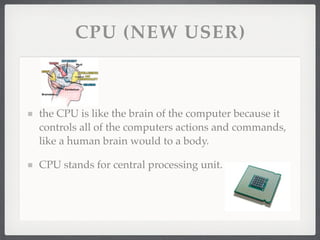
the CPU is like the brain of the computer because it
controls all of the computers actions and commands,
like a human brain would to a body.

CPU stands for central processing unit.
CPU (COMPUTER
       LITERATE USER)

CPU stands for central processing unit and can hav
multiple speeds in which it controls the computer,
these speeds are:

300Mhz and 550Mhz

CPU’s can have different cores, these are:

the multi core, dual core and single core.
RAM (NEW USER)


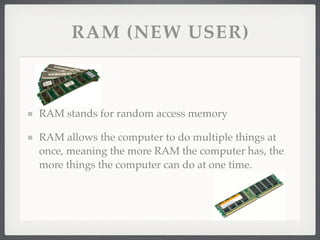
RAM stands for random access memory

RAM allows the computer to do multiple things at
once, meaning the more RAM the computer has, the
more things the computer can do at one time.
RAM (COMPUTER
      LITERATE USER)
RAM or random access memory comes in different
types such as:

SDRAM

DDR (double data rate SDRAM)

Rambus DRAM (RDRAM)

DRAM comes in two major for factors which are
DIMMs and RIMMs.
HARD DRIVE (NEW USER)


HDD stands for hard disk drive and is the memory
on the computer, this is where everything you save is
stored and is the largest amount of memory in the
computer.
HARD DRIVES

there are a few different types of storage devices:

solid state drive

SCSI

PATA

SATA

you can have either an internal or an external hard
drive.
HARD DRIVES
PATA hard drives are connected by PATA cables and
are now stating to be replaced by SATA.

SATA hard drives are 7200-RPM and are connected
using a thinner, SATA cable.

SCSI hard drives are connected with a SCSI cable
which can be either 50-pin, 68-pin or 80-pin and can
connect to a wider range of devices

solid state drives give a faster performance than
others and have no moving parts so are more reliable.
HARD DISK DRIVE
(COMPUTER LITERATE)
there are different types of hard drive, these include:

SATA

PATA

SSD

SCSI

hard drive’s are the solid memory of the computer, this
is where files can be saved, stored and re- accessed.
ADAPTER CARDS

the different types of adapter cards are:

graphics card

audio card

NIC

wireless NIC

TV tuner cards
ADAPTER CARDS

PCI adapters connect computers to other devices

PCIe do the same as PCI adapters but can connect
more updated versions of the devices and can usually
connect more devices overall, therefore PCIe adapters
should replace PCI.

an onboard graphics card is when the graphics card is
integrated to the motherboard.
ADAPTER CARDS


the main company that makes PC cards are PCMCIA,
these now make more compatible products as they
have expanded their standards a few times, allowing
them to connect to more devices.

the standard PC card PCMCIA develop is a 32-bit
card called a cardbus.
INPUT DEVICES
keyboard: allows you to type out letters and words
on the computer, can be used to send e-mails.

mouse: is used to navigate a pointer around the
computer monitor, to select things.

webcam: allows you to film or record yourself or
things around you using an either internal or external
webcam, can be used to video call.

microphone: allows you to record yourself talking or
singing etc, can be used for speech making/ phone
calls
OUTPUT DEVICES

printer: can be used to print out images or letters etc.
in colour or black and white.

monitor: used to view what you are doing on the
computer. (screen.)

projector: can be used to project images or what you
are viewing on the monitor in a larger form or to an
audience.

speakers: are used to listen to recordings or sounds
from your computer.

Computer components presentation cisco

  • 1.
    COMPUTER COMPONENTS for the computer literate and the new user. By Chris Nicholson DA8
  • 2.
    CPU (NEW USER) theCPU is like the brain of the computer because it controls all of the computers actions and commands, like a human brain would to a body. CPU stands for central processing unit.
  • 3.
    CPU (COMPUTER LITERATE USER) CPU stands for central processing unit and can hav multiple speeds in which it controls the computer, these speeds are: 300Mhz and 550Mhz CPU’s can have different cores, these are: the multi core, dual core and single core.
  • 4.
    RAM (NEW USER) RAMstands for random access memory RAM allows the computer to do multiple things at once, meaning the more RAM the computer has, the more things the computer can do at one time.
  • 5.
    RAM (COMPUTER LITERATE USER) RAM or random access memory comes in different types such as: SDRAM DDR (double data rate SDRAM) Rambus DRAM (RDRAM) DRAM comes in two major for factors which are DIMMs and RIMMs.
  • 6.
    HARD DRIVE (NEWUSER) HDD stands for hard disk drive and is the memory on the computer, this is where everything you save is stored and is the largest amount of memory in the computer.
  • 7.
    HARD DRIVES there area few different types of storage devices: solid state drive SCSI PATA SATA you can have either an internal or an external hard drive.
  • 8.
    HARD DRIVES PATA harddrives are connected by PATA cables and are now stating to be replaced by SATA. SATA hard drives are 7200-RPM and are connected using a thinner, SATA cable. SCSI hard drives are connected with a SCSI cable which can be either 50-pin, 68-pin or 80-pin and can connect to a wider range of devices solid state drives give a faster performance than others and have no moving parts so are more reliable.
  • 9.
    HARD DISK DRIVE (COMPUTERLITERATE) there are different types of hard drive, these include: SATA PATA SSD SCSI hard drive’s are the solid memory of the computer, this is where files can be saved, stored and re- accessed.
  • 10.
    ADAPTER CARDS the differenttypes of adapter cards are: graphics card audio card NIC wireless NIC TV tuner cards
  • 11.
    ADAPTER CARDS PCI adaptersconnect computers to other devices PCIe do the same as PCI adapters but can connect more updated versions of the devices and can usually connect more devices overall, therefore PCIe adapters should replace PCI. an onboard graphics card is when the graphics card is integrated to the motherboard.
  • 12.
    ADAPTER CARDS the maincompany that makes PC cards are PCMCIA, these now make more compatible products as they have expanded their standards a few times, allowing them to connect to more devices. the standard PC card PCMCIA develop is a 32-bit card called a cardbus.
  • 13.
    INPUT DEVICES keyboard: allowsyou to type out letters and words on the computer, can be used to send e-mails. mouse: is used to navigate a pointer around the computer monitor, to select things. webcam: allows you to film or record yourself or things around you using an either internal or external webcam, can be used to video call. microphone: allows you to record yourself talking or singing etc, can be used for speech making/ phone calls
  • 14.
    OUTPUT DEVICES printer: canbe used to print out images or letters etc. in colour or black and white. monitor: used to view what you are doing on the computer. (screen.) projector: can be used to project images or what you are viewing on the monitor in a larger form or to an audience. speakers: are used to listen to recordings or sounds from your computer.

Editor's Notes