Computer Access  Ergonomic & Assistive Technology Workshop 23 rd  November 2011
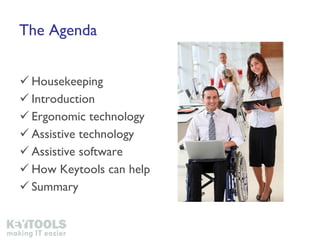
The Agenda Housekeeping Introduction Ergonomic technology Assistive technology Assistive software How Keytools can help Summary
Our Goals, Your Learning Outcomes Introductions Your role What is the key issue for you  and the best value you  could get from today?
What is ergonomics? Microsoft study found: 78% indicated they know what ergonomics is BUT … many thought this related to : economy, environment, energy or even egos! Source: Ergonomics and RSI - StrategyOne for Microsoft, April 2008
The perfect fit “ Ergonomic design considers options to ensure that people's capabilities and limitations are taken into account.” The Institute of Ergonomics & Human Factors
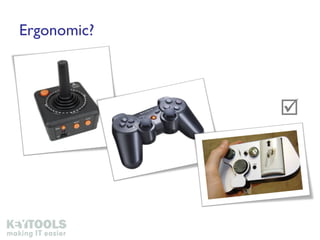
Ergonomic? 
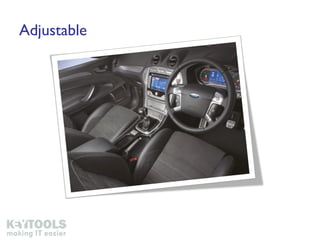
Adjustable
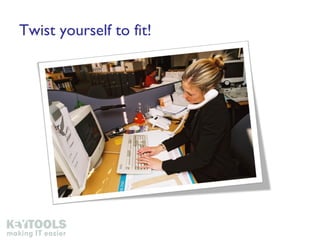
Twist yourself to fit!
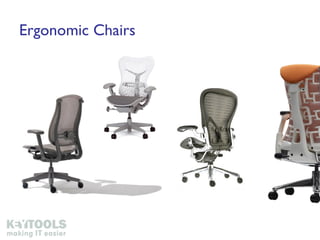
Ergonomic Chairs
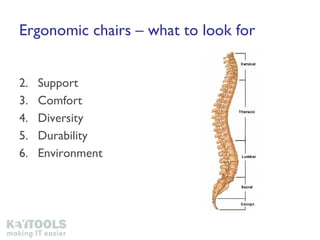
Ergonomic chairs – what to look for Support Comfort Diversity Durability Environment
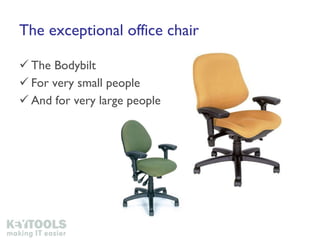
The exceptional office chair The Bodybilt For very small people  And for very large people
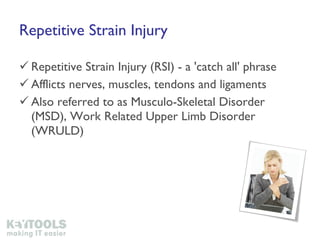
Repetitive Strain Injury Repetitive Strain Injury (RSI) - a 'catch all' phrase Afflicts nerves, muscles, tendons and ligaments  Also referred to as Musculo-Skeletal Disorder (MSD), Work Related Upper Limb Disorder (WRULD)
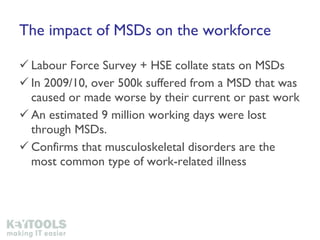
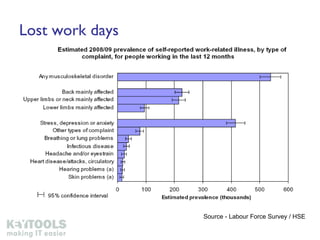
The impact of MSDs on the workforce Labour Force Survey + HSE collate stats on MSDs In 2009/10, over 500k suffered from a MSD that was caused or made worse by their current or past work An estimated 9 million working days were lost through MSDs. Confirms that musculoskeletal disorders are the most common type of work-related illness
Lost work days Source - Labour Force Survey / HSE
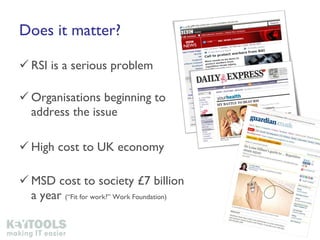
Does it matter? RSI is a serious problem  Organisations beginning to address the issue High cost to UK economy MSD cost to society £7 billion a year  (“Fit for work?” Work Foundation)
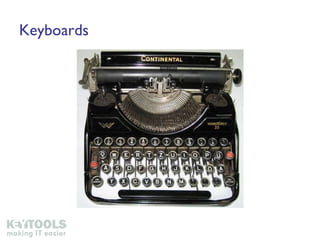
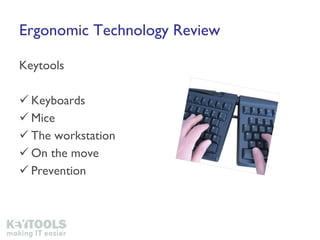
Keyboards
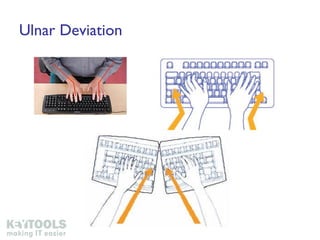
Ulnar Deviation
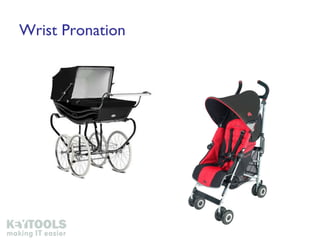
Wrist Pronation
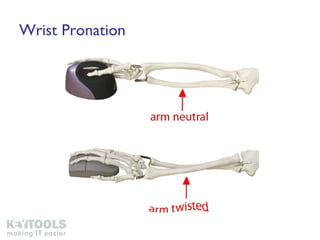
Wrist Pronation
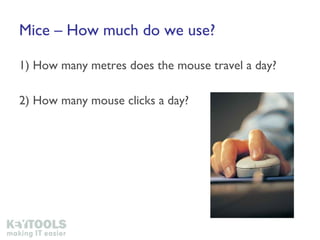
Mice – How much do we use? 1) How many metres does the mouse travel a day? 2) How many mouse clicks a day?
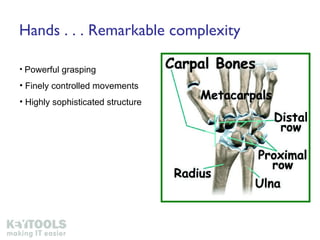
Hands . . . Remarkable complexity Powerful grasping Finely controlled movements Highly sophisticated structure
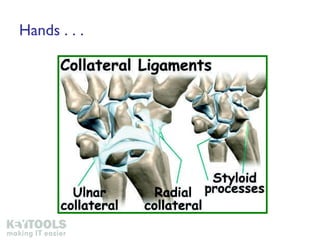
Hands . . .
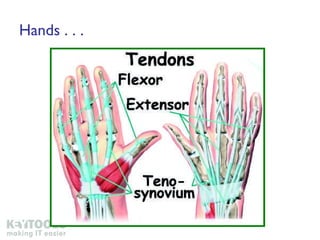
Hands . . .
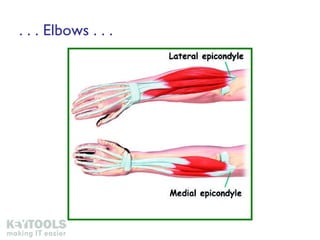
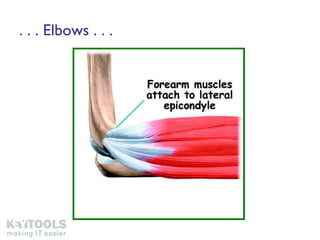
. . . Elbows . . .
. . . Elbows . . .
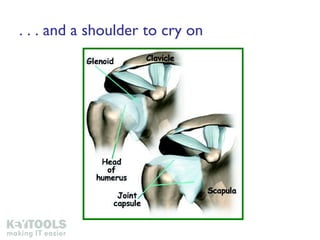
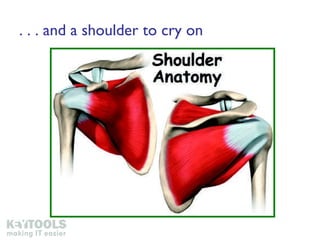
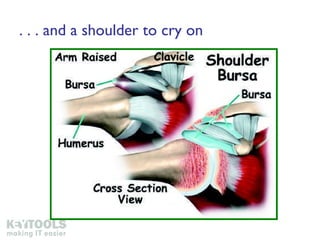
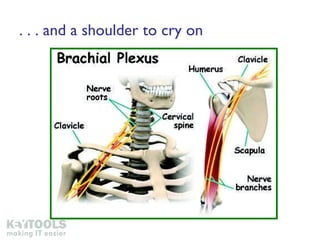
. . . and a shoulder to cry on
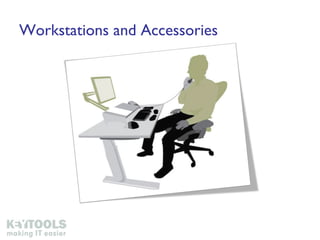
Workstations and Accessories
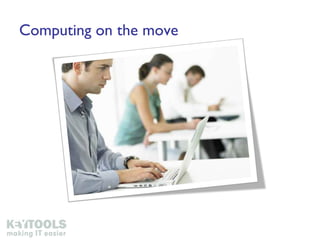
Computing on the move
RSIGuard Is it better to prevent work related illness? Does your DSE system prevent illness or used as a reactive measure? Or just stick with the remedial approach? Is there a choice? RSIGuard: Decreasing Discomfort and  Increasing Productivity
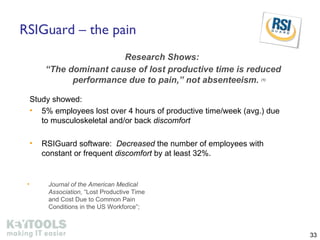
RSIGuard – the pain  Study showed: 5% employees lost over 4 hours of productive time/week (avg.) due to musculoskeletal and/or back  discomfort RSIGuard software:  Decreased  the number of employees with constant or frequent  discomfort  by at least 32%. Journal of the American Medical Association,  “Lost Productive Time and Cost Due to Common Pain Conditions in the US Workforce”;  Research Shows:  “ The dominant cause of lost productive time is reduced performance due to pain,” not absenteeism.  (1)  
RSIGuard - objective Decrease risk of injury and reduce absenteeism by: Reduce lost work days Comply with internal and external mandates Prevent discomfort-related drops in productivity RSIGuard helps you achieve this goal by: Decreasing risks by changing behavior and work patterns Fundamentally reducing exposure to strain Providing actionable insight into the causes of strain Being easy to implement, use, and maintain
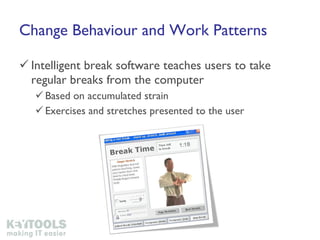
Change Behaviour and Work Patterns Intelligent break software teaches users to take regular breaks from the computer Based on accumulated strain Exercises and stretches presented to the user
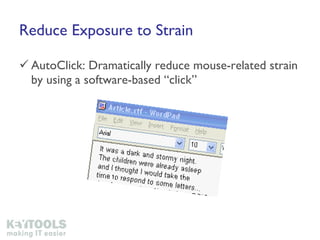
Reduce Exposure to Strain AutoClick: Dramatically reduce mouse-related strain by using a software-based “click”
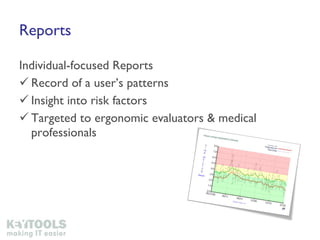
Reports Individual-focused Reports Record of a user’s patterns Insight into risk factors Targeted to ergonomic evaluators & medical professionals
RSIGuard - in use “ RSIGuard has encouraged our 2,000 employees to practice behaviours that follow sound ergonomic principles. There has been substantial take-up and it is proving popular overall .”  Mr David Cowell, Thomson Reuters
RSI Guard Summary RSIGuard Helps focus your efforts Reduces lower injuries + absenteeism Helps employees stay healthy and productive
Ergonomic Technology Review Keytools Keyboards Mice The workstation On the move Prevention
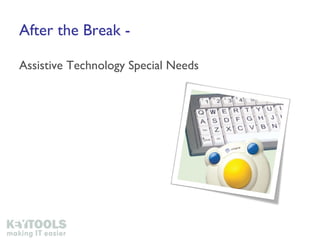
After the Break -  Assistive Technology Special Needs
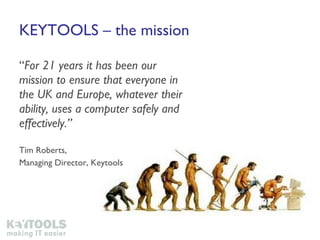
KEYTOOLS – the mission “ For 21 years it has been our mission to ensure that everyone in the UK and Europe, whatever their ability, uses a computer safely and effectively.” Tim Roberts,  Managing Director, Keytools
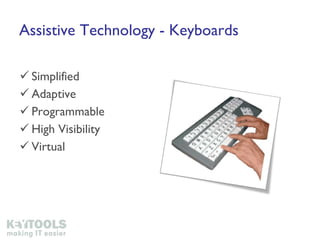
Assistive Technology - Keyboards Simplified Adaptive Programmable High Visibility Virtual
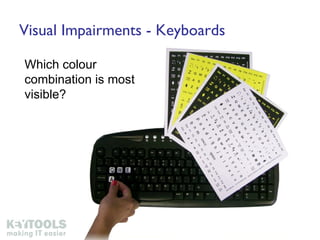
Visual Impairments - Keyboards Which colour combination is most visible?
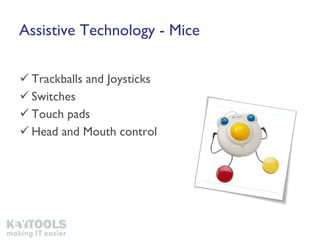
Assistive Technology - Mice Trackballs and Joysticks Switches Touch pads Head and Mouth control
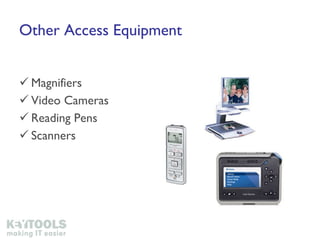
Other Access Equipment Magnifiers Video Cameras Reading Pens Scanners
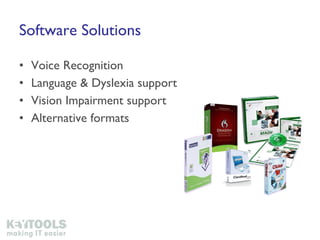
Software Solutions Voice Recognition Language & Dyslexia support Vision Impairment support Alternative formats
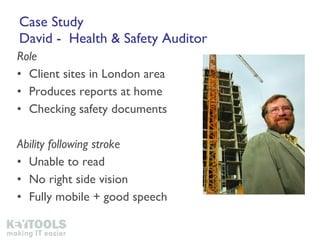
Case Study David -  Health & Safety Auditor Role Client sites in London area Produces reports at home Checking safety documents Ability following stroke Unable to read No right side vision Fully mobile + good speech
Our Goals, Your Learning Outcomes Improved your understanding of products Identify solutions more easily and effectively Understand what Keytools offers you as a support partner  Obtain resources for future use
Before you go... Certificates Feedback forms Account Manager Website – www.keytools.co.uk

Computer Access Workshop 23/11/11

  • 1.
    Computer Access Ergonomic & Assistive Technology Workshop 23 rd November 2011
  • 2.
    The Agenda HousekeepingIntroduction Ergonomic technology Assistive technology Assistive software How Keytools can help Summary
  • 3.
    Our Goals, YourLearning Outcomes Introductions Your role What is the key issue for you and the best value you could get from today?
  • 4.
    What is ergonomics?Microsoft study found: 78% indicated they know what ergonomics is BUT … many thought this related to : economy, environment, energy or even egos! Source: Ergonomics and RSI - StrategyOne for Microsoft, April 2008
  • 5.
    The perfect fit“ Ergonomic design considers options to ensure that people's capabilities and limitations are taken into account.” The Institute of Ergonomics & Human Factors
  • 6.
  • 7.
  • 8.
  • 9.
  • 10.
    Ergonomic chairs –what to look for Support Comfort Diversity Durability Environment
  • 11.
    The exceptional officechair The Bodybilt For very small people And for very large people
  • 12.
    Repetitive Strain InjuryRepetitive Strain Injury (RSI) - a 'catch all' phrase Afflicts nerves, muscles, tendons and ligaments Also referred to as Musculo-Skeletal Disorder (MSD), Work Related Upper Limb Disorder (WRULD)
  • 13.
    The impact ofMSDs on the workforce Labour Force Survey + HSE collate stats on MSDs In 2009/10, over 500k suffered from a MSD that was caused or made worse by their current or past work An estimated 9 million working days were lost through MSDs. Confirms that musculoskeletal disorders are the most common type of work-related illness
  • 14.
    Lost work daysSource - Labour Force Survey / HSE
  • 15.
    Does it matter?RSI is a serious problem Organisations beginning to address the issue High cost to UK economy MSD cost to society £7 billion a year (“Fit for work?” Work Foundation)
  • 16.
  • 17.
  • 18.
  • 19.
  • 20.
    Mice – Howmuch do we use? 1) How many metres does the mouse travel a day? 2) How many mouse clicks a day?
  • 21.
    Hands . .. Remarkable complexity Powerful grasping Finely controlled movements Highly sophisticated structure
  • 22.
  • 23.
  • 24.
    . . .Elbows . . .
  • 25.
    . . .Elbows . . .
  • 26.
    . . .and a shoulder to cry on
  • 27.
    . . .and a shoulder to cry on
  • 28.
    . . .and a shoulder to cry on
  • 29.
    . . .and a shoulder to cry on
  • 30.
  • 31.
  • 32.
    RSIGuard Is itbetter to prevent work related illness? Does your DSE system prevent illness or used as a reactive measure? Or just stick with the remedial approach? Is there a choice? RSIGuard: Decreasing Discomfort and Increasing Productivity
  • 33.
    RSIGuard – thepain Study showed: 5% employees lost over 4 hours of productive time/week (avg.) due to musculoskeletal and/or back discomfort RSIGuard software: Decreased the number of employees with constant or frequent discomfort by at least 32%. Journal of the American Medical Association, “Lost Productive Time and Cost Due to Common Pain Conditions in the US Workforce”; Research Shows: “ The dominant cause of lost productive time is reduced performance due to pain,” not absenteeism. (1)  
  • 34.
    RSIGuard - objectiveDecrease risk of injury and reduce absenteeism by: Reduce lost work days Comply with internal and external mandates Prevent discomfort-related drops in productivity RSIGuard helps you achieve this goal by: Decreasing risks by changing behavior and work patterns Fundamentally reducing exposure to strain Providing actionable insight into the causes of strain Being easy to implement, use, and maintain
  • 35.
    Change Behaviour andWork Patterns Intelligent break software teaches users to take regular breaks from the computer Based on accumulated strain Exercises and stretches presented to the user
  • 36.
    Reduce Exposure toStrain AutoClick: Dramatically reduce mouse-related strain by using a software-based “click”
  • 37.
    Reports Individual-focused ReportsRecord of a user’s patterns Insight into risk factors Targeted to ergonomic evaluators & medical professionals
  • 38.
    RSIGuard - inuse “ RSIGuard has encouraged our 2,000 employees to practice behaviours that follow sound ergonomic principles. There has been substantial take-up and it is proving popular overall .” Mr David Cowell, Thomson Reuters
  • 39.
    RSI Guard SummaryRSIGuard Helps focus your efforts Reduces lower injuries + absenteeism Helps employees stay healthy and productive
  • 40.
    Ergonomic Technology ReviewKeytools Keyboards Mice The workstation On the move Prevention
  • 41.
    After the Break- Assistive Technology Special Needs
  • 42.
    KEYTOOLS – themission “ For 21 years it has been our mission to ensure that everyone in the UK and Europe, whatever their ability, uses a computer safely and effectively.” Tim Roberts, Managing Director, Keytools
  • 43.
    Assistive Technology -Keyboards Simplified Adaptive Programmable High Visibility Virtual
  • 44.
    Visual Impairments -Keyboards Which colour combination is most visible?
  • 45.
    Assistive Technology -Mice Trackballs and Joysticks Switches Touch pads Head and Mouth control
  • 46.
    Other Access EquipmentMagnifiers Video Cameras Reading Pens Scanners
  • 47.
    Software Solutions VoiceRecognition Language & Dyslexia support Vision Impairment support Alternative formats
  • 48.
    Case Study David- Health & Safety Auditor Role Client sites in London area Produces reports at home Checking safety documents Ability following stroke Unable to read No right side vision Fully mobile + good speech
  • 49.
    Our Goals, YourLearning Outcomes Improved your understanding of products Identify solutions more easily and effectively Understand what Keytools offers you as a support partner Obtain resources for future use
  • 50.
    Before you go...Certificates Feedback forms Account Manager Website – www.keytools.co.uk

Editor's Notes

  • #14 Since 2005 a surveillance scheme has collected reports of new cases of work-related ill health from a sample of around 300 general practitioners (GPs). The data confirms that musculoskeletal disorders are the most common type of work-related illness, but that mental ill health gives rise to more working days lost. Initial estimates for 2007 suggest the incidence of work-related ill health is roughly 1500 cases per 100 000 workers.
  • #15 Since 2005 a surveillance scheme has collected reports of new cases of work-related ill health from a sample of around 300 general practitioners (GPs). The data confirms that musculoskeletal disorders are the most common type of work-related illness, but that mental ill health gives rise to more working days lost. Initial estimates for 2007 suggest the incidence of work-related ill health is roughly 1500 cases per 100 000 workers.