COMPUTATIONAL NARRATIVE AND NARRATIVE SYSTEMS
BIRS Workshop on Computational Modeling in Games, May 2016

Mirjam Palosaari Eladhari
ABOUT ME
➤ Game designer, researcher, and indie
developer.
➤ Research associate at Institute of Digital
Games in Malta, and at Dept. of
Computer and System Sciences at
Stockholm University
➤ Recently founded Otter Play - one person
indie studio
➤ Current interests: Story Making Games,
co-creation of believable agents, and
watercolour painting
➤ Past: Game Programmer 2000-02, Liquid
Media

Tech Lead, Zero Game Studio, Interactive
Institute 2002 - 04

Then: 10+ years of game research &
faculty work, mostly in Game AI &
Design.
computational narrative
Ruth Aylett, Mirjam Eladhari, Richard Evans, Paolo
Burelli, Ana Paiva, R. MichaelYoung
Dagstuhl 2012
techniques
• sandbox + human game master
• Improv and role play
• AI Director
• Planning: top-down, bottom-up and
heterogeneous
state of the art:
commercial games
• extremely limited use
of computational
narrative ideas
• when used, not
particularly significant
in scope, impact or
novelty
state of the art:
research systems
• correspondingly
fragmented
• few completed
systems (with one
remarkable
exception), mostly
frames used for
evaluation
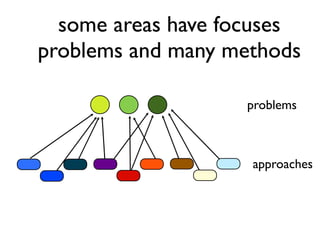
some areas have focuses
problems and many methods
problems
some areas have focuses
problems and many methods
approaches
some areas have core
techniques addressing many
problems
problems
approaches
computational narrative has many
challenges, many methods
problems
approaches
• an ideal visualizer/realization system
• ability for expressive model of unfolding story to
be influenced by player action -- the reconciliation
of narrative structure with interactivity
• the generation of narratives in which characters
evolve, grow or experience internal dynamics
• construction of stories from game play logs, in
particular MMO data
• computer-assisted role play for training
challenges
(in no particular order)
• ability for expressive model of unfolding
story to be influenced by player action
• character progression
• Camera control
• system where players can add narrative
content meaning for group in game world
challenges
(in no particular order)
the future
we discussed ideas for the longer-term
future of computational narrative.
the future: pervasive
narrative
• ARG-like games that blend augmented
reality with conventional game play and
narrative generation to create stories
embedded in the real world
the future: a library of
generative classics
• We have effectively one system that
provides an interactive story-like
experience
• One goal for the future is to develop a list
of classic such systems, that can be
experienced, described, reflected upon, etc,
much like lists of classic literature or classic
games are considered today
living stories
• long-lasting, never ending stories
• comparable to soap operas in the extended
nature of their plot lines
human-robot narrative
systems
systems that automatically create hybrid interaction, where
human players interact with robotic systems as NPCs
novels coming alive
• with the publishing of each new novel, a companion
interactive narrative experience is also released
• set in the same story world
• organized around the plot of the novel
• narrative content is created dynamically and adapts to
user interaction, exploration
• maintains both internal coherence and coherence with
the story of the novel
• Eliza effect: audience
expectations allow a system to
have additional virtual
complexity.
• Seems smarter than it is
• Tale Spin effect is the inverse of
Eliza effect – the system is more
complex than it looks.
• Smartness not visible
• Sim City Effect - being present
in “systems that shape their
surface experience to enable the
audience to build up an
understanding of a relatively
complex internal structure”
• so smart!
2009
RE-TELLING, NARRATIVE, (FAN-FICTION)
NARRATIVE POTENTIAL
Deep structure – the antecedent driving forces
of the different actants in the game.
NARRATIVE POTENTIAL
Deep structure – the antecedent driving forces
of the different actants in the game.
A story is a fixed temporal sequence of events
and the actors that take part in these.
Discourse: The ordering of the sequence - by
author, or by player/reader choosing how to
traverse.
NARRATIVE POTENTIAL
Deep structure – the antecedent driving forces
of the different actants in the game.
A narrative is a story the way it is told.
A story is a fixed temporal sequence of events
and the actors that take part in these.
Discourse: The ordering of the sequence - by
author, or by player/reader choosing how to
traverse.
RE-TELLING, NARRATIVE, (FAN-FICTION)
Deep structure - actants and driving forces
Story - a sequence of
events: ordered by author
or as traveled by player/
reader (discourse)
Narration - how the
story is told/realized
Retelling/narrative
Deep structure - actants and driving forces
Story - a sequence of
events: ordered by author
or as traveled by player/
reader (discourse)
Narrative Systems
allow manipulation
on a sliding scale on
deep-structure and
story + discourse
levels
Narration - how the
story is told/realized
Retelling/narrative
EXAMPLES
Successful applications
Facade
• InteractiveStory.net
TBSim
IDTension -> TBSim


Prom Week

promweek.soe.ucsc.edu

• http://www.aigameresearch.org/portfolio-item/versu/
HIGH QUALITY INTERACTIVE FICTION, HERE REPRESENTED BY EMILY SHORT
80 DAYS
LARP LATELY - JUST KEEPS GROWING IN SCANDINAVIA
➤ EDU LARPS common. 2 schools in Denmark who do their
whole curriculum via larping.
➤ LARP at the Swedish National Scene (Royal Dramatic
Theatre)
Story Making Games
Story Making Games
NOW
➤ Common for success:
➤ high quality authoring
➤ approaches for co-creation
that support high quality input
from players/readers through
➤ Design
➤ Skilled game mastering.
➤ Carefully designed
interfaces for making input
to systems with PCG
➤ Increased literacy and proficiency
in computational expression
Computational modeling in Games 2016 -
Computational Narrative and Narrative Systems
Identify
New Approaches
New Solutions
New Opportunities
New Challenges

Computational narrative and narrative systems

  • 1.
    COMPUTATIONAL NARRATIVE ANDNARRATIVE SYSTEMS BIRS Workshop on Computational Modeling in Games, May 2016
 Mirjam Palosaari Eladhari
  • 2.
    ABOUT ME ➤ Gamedesigner, researcher, and indie developer. ➤ Research associate at Institute of Digital Games in Malta, and at Dept. of Computer and System Sciences at Stockholm University ➤ Recently founded Otter Play - one person indie studio ➤ Current interests: Story Making Games, co-creation of believable agents, and watercolour painting ➤ Past: Game Programmer 2000-02, Liquid Media
 Tech Lead, Zero Game Studio, Interactive Institute 2002 - 04
 Then: 10+ years of game research & faculty work, mostly in Game AI & Design.
  • 3.
    computational narrative Ruth Aylett,Mirjam Eladhari, Richard Evans, Paolo Burelli, Ana Paiva, R. MichaelYoung Dagstuhl 2012
  • 4.
    techniques • sandbox +human game master • Improv and role play • AI Director • Planning: top-down, bottom-up and heterogeneous
  • 5.
    state of theart: commercial games • extremely limited use of computational narrative ideas • when used, not particularly significant in scope, impact or novelty state of the art: research systems • correspondingly fragmented • few completed systems (with one remarkable exception), mostly frames used for evaluation
  • 6.
    some areas havefocuses problems and many methods problems some areas have focuses problems and many methods approaches
  • 7.
    some areas havecore techniques addressing many problems problems approaches
  • 8.
    computational narrative hasmany challenges, many methods problems approaches
  • 9.
    • an idealvisualizer/realization system • ability for expressive model of unfolding story to be influenced by player action -- the reconciliation of narrative structure with interactivity • the generation of narratives in which characters evolve, grow or experience internal dynamics • construction of stories from game play logs, in particular MMO data • computer-assisted role play for training challenges (in no particular order)
  • 10.
    • ability forexpressive model of unfolding story to be influenced by player action • character progression • Camera control • system where players can add narrative content meaning for group in game world challenges (in no particular order)
  • 11.
    the future we discussedideas for the longer-term future of computational narrative.
  • 12.
    the future: pervasive narrative •ARG-like games that blend augmented reality with conventional game play and narrative generation to create stories embedded in the real world
  • 13.
    the future: alibrary of generative classics • We have effectively one system that provides an interactive story-like experience • One goal for the future is to develop a list of classic such systems, that can be experienced, described, reflected upon, etc, much like lists of classic literature or classic games are considered today
  • 14.
    living stories • long-lasting,never ending stories • comparable to soap operas in the extended nature of their plot lines
  • 15.
    human-robot narrative systems systems thatautomatically create hybrid interaction, where human players interact with robotic systems as NPCs
  • 16.
    novels coming alive •with the publishing of each new novel, a companion interactive narrative experience is also released • set in the same story world • organized around the plot of the novel • narrative content is created dynamically and adapts to user interaction, exploration • maintains both internal coherence and coherence with the story of the novel
  • 20.
    • Eliza effect:audience expectations allow a system to have additional virtual complexity. • Seems smarter than it is • Tale Spin effect is the inverse of Eliza effect – the system is more complex than it looks. • Smartness not visible • Sim City Effect - being present in “systems that shape their surface experience to enable the audience to build up an understanding of a relatively complex internal structure” • so smart! 2009
  • 21.
  • 22.
    NARRATIVE POTENTIAL Deep structure– the antecedent driving forces of the different actants in the game.
  • 23.
    NARRATIVE POTENTIAL Deep structure– the antecedent driving forces of the different actants in the game. A story is a fixed temporal sequence of events and the actors that take part in these. Discourse: The ordering of the sequence - by author, or by player/reader choosing how to traverse.
  • 24.
    NARRATIVE POTENTIAL Deep structure– the antecedent driving forces of the different actants in the game. A narrative is a story the way it is told. A story is a fixed temporal sequence of events and the actors that take part in these. Discourse: The ordering of the sequence - by author, or by player/reader choosing how to traverse.
  • 25.
  • 27.
    Deep structure -actants and driving forces Story - a sequence of events: ordered by author or as traveled by player/ reader (discourse) Narration - how the story is told/realized Retelling/narrative
  • 28.
    Deep structure -actants and driving forces Story - a sequence of events: ordered by author or as traveled by player/ reader (discourse) Narrative Systems allow manipulation on a sliding scale on deep-structure and story + discourse levels Narration - how the story is told/realized Retelling/narrative
  • 29.
  • 30.
  • 31.
  • 32.
  • 33.
  • 38.
  • 44.
    HIGH QUALITY INTERACTIVEFICTION, HERE REPRESENTED BY EMILY SHORT
  • 45.
  • 51.
    LARP LATELY -JUST KEEPS GROWING IN SCANDINAVIA ➤ EDU LARPS common. 2 schools in Denmark who do their whole curriculum via larping. ➤ LARP at the Swedish National Scene (Royal Dramatic Theatre)
  • 52.
  • 53.
  • 54.
    NOW ➤ Common forsuccess: ➤ high quality authoring ➤ approaches for co-creation that support high quality input from players/readers through ➤ Design ➤ Skilled game mastering. ➤ Carefully designed interfaces for making input to systems with PCG ➤ Increased literacy and proficiency in computational expression
  • 55.
    Computational modeling inGames 2016 - Computational Narrative and Narrative Systems Identify New Approaches New Solutions New Opportunities New Challenges