Storytelling YourWay to a BetterUser ExperienceWhitney QuesenberyKevin BrooksUPA BostonJune 2010
IntroductionsResearcher in new UI technologiesPerformance storytellerStorytelling as a pivotal part of the creation, performance, and design process.User researcherTheatre designerStorytelling as a way to understand user, culture, and context in UX design
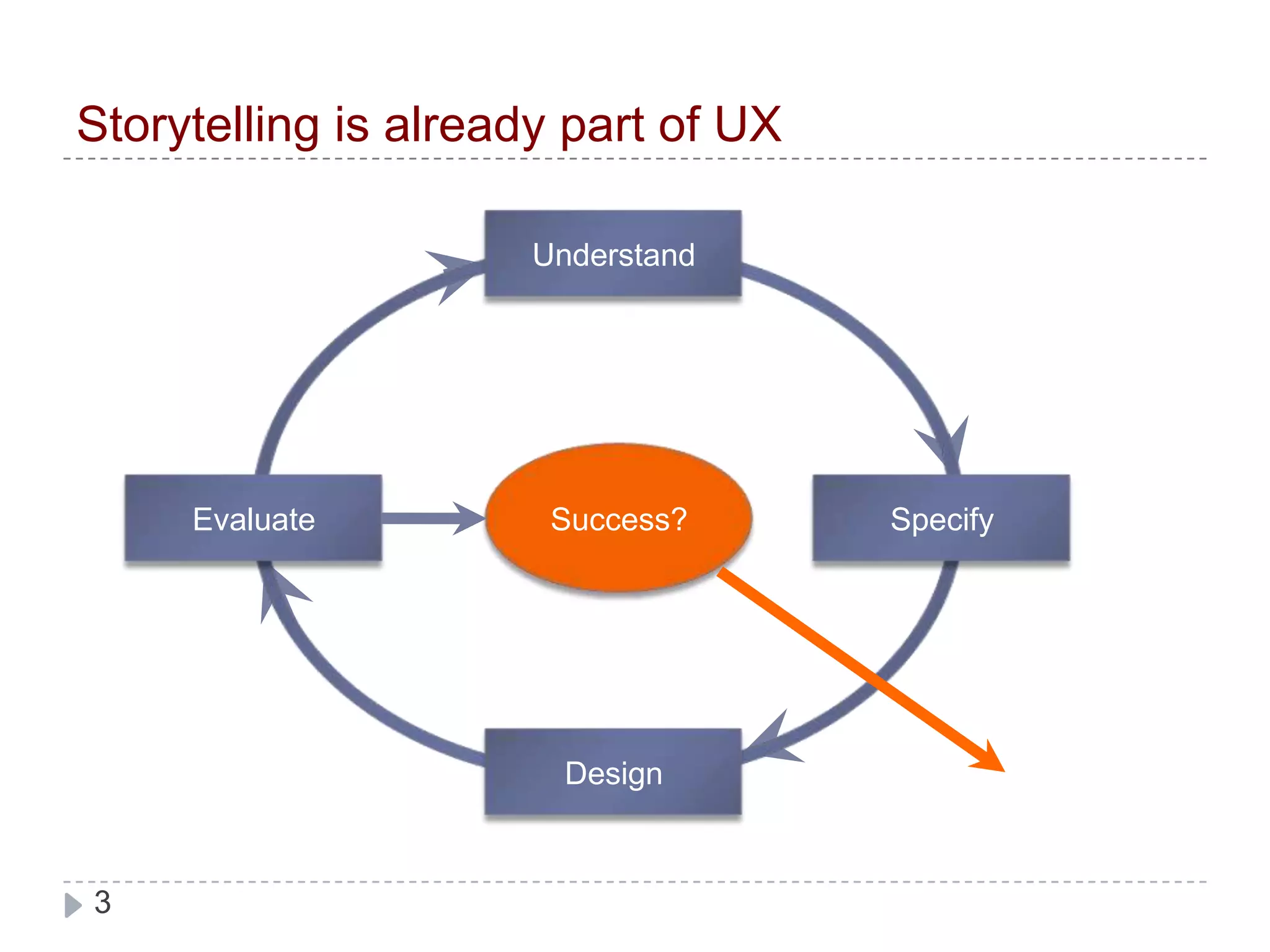
Storytelling is already part of UXUnderstandSuccess?SpecifyEvaluateDesign
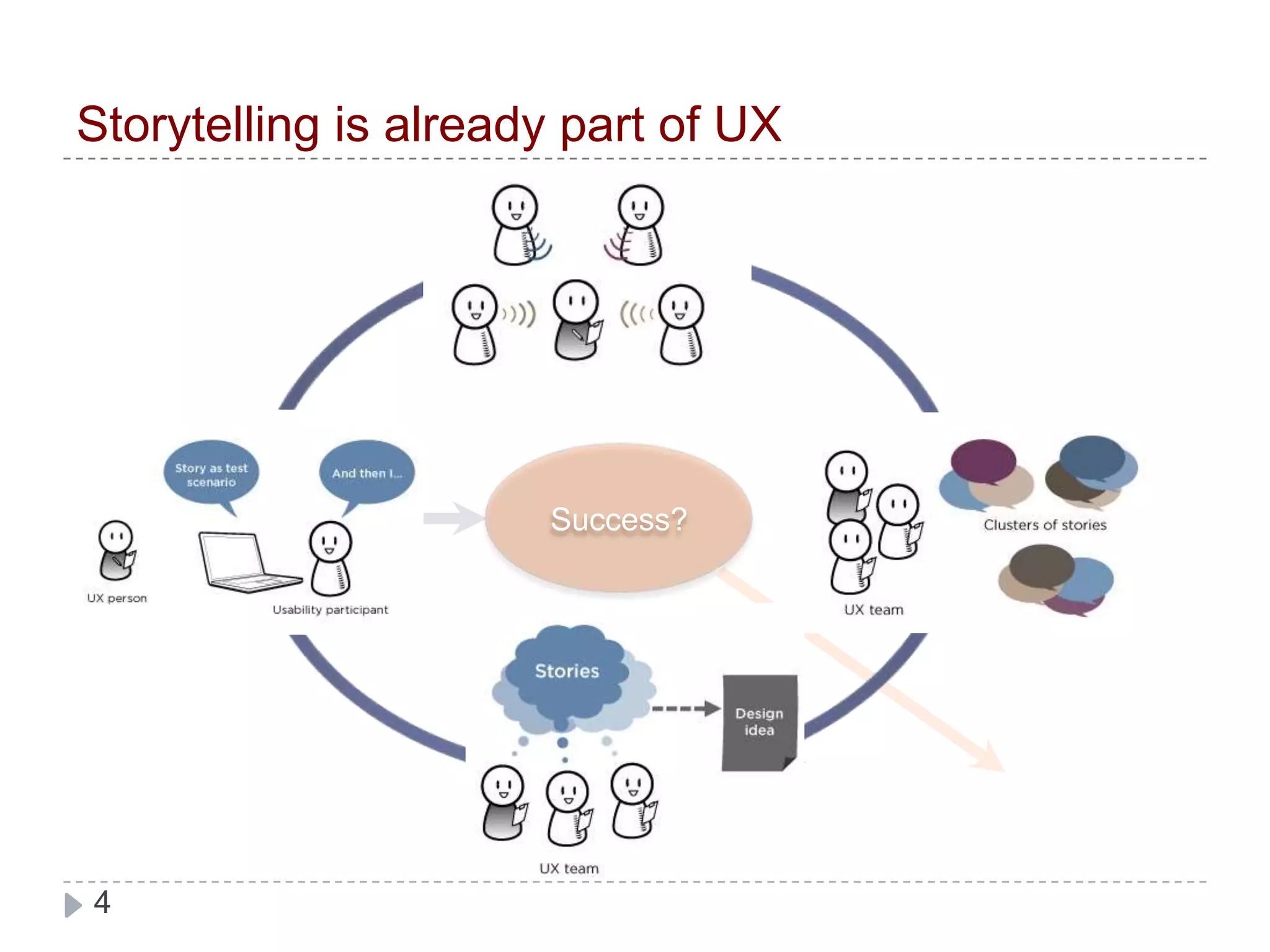
Success?Storytelling is already part of UXUnderstandSpecifyEvaluateDesign
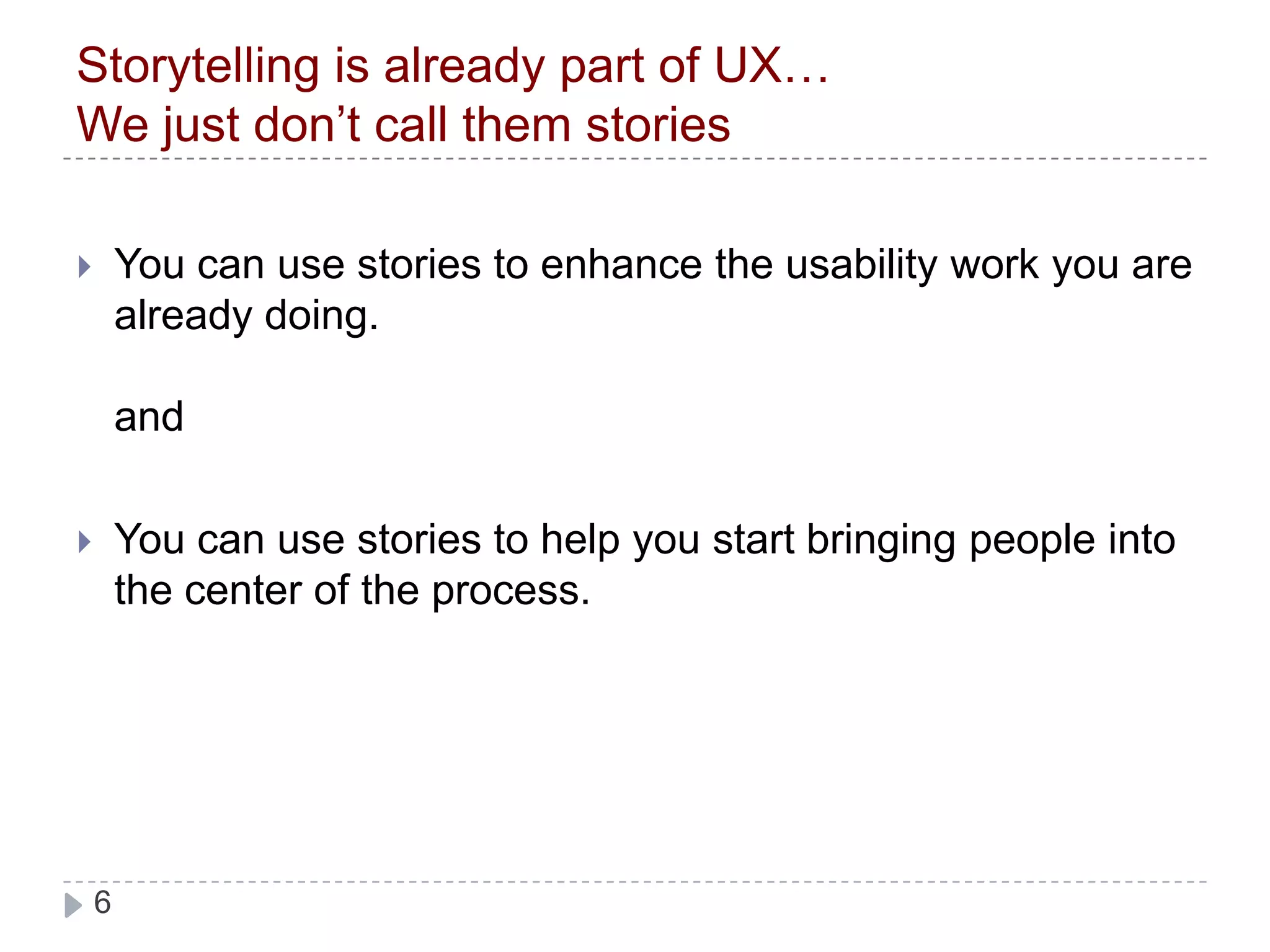
Storytelling is already part of UX…We just don’t call them storiesUserresearchAnalysisField studiesCard sortingSite visitsCluster sortingContent analysisEvaluationDesignUsability TestingScenariosWireframesPrototype walk-throughLog Analysis
Storytelling is already part of UX…We just don’t call them storiesYou can use stories to enhance the usability work you are already doing.andYou can use stories to help you start bringing people into the center of the process.
We all tell stories
Listening ExerciseWork in pairs - with someone you don’t know1 minutes to speak - then switchSpeaker’s job - speak about something relatively comfortableListener’s job - just listen.  Don’t have to talk, interrupt or fill silences.Talk aboutthe time on your way here thatyou were the most bored.
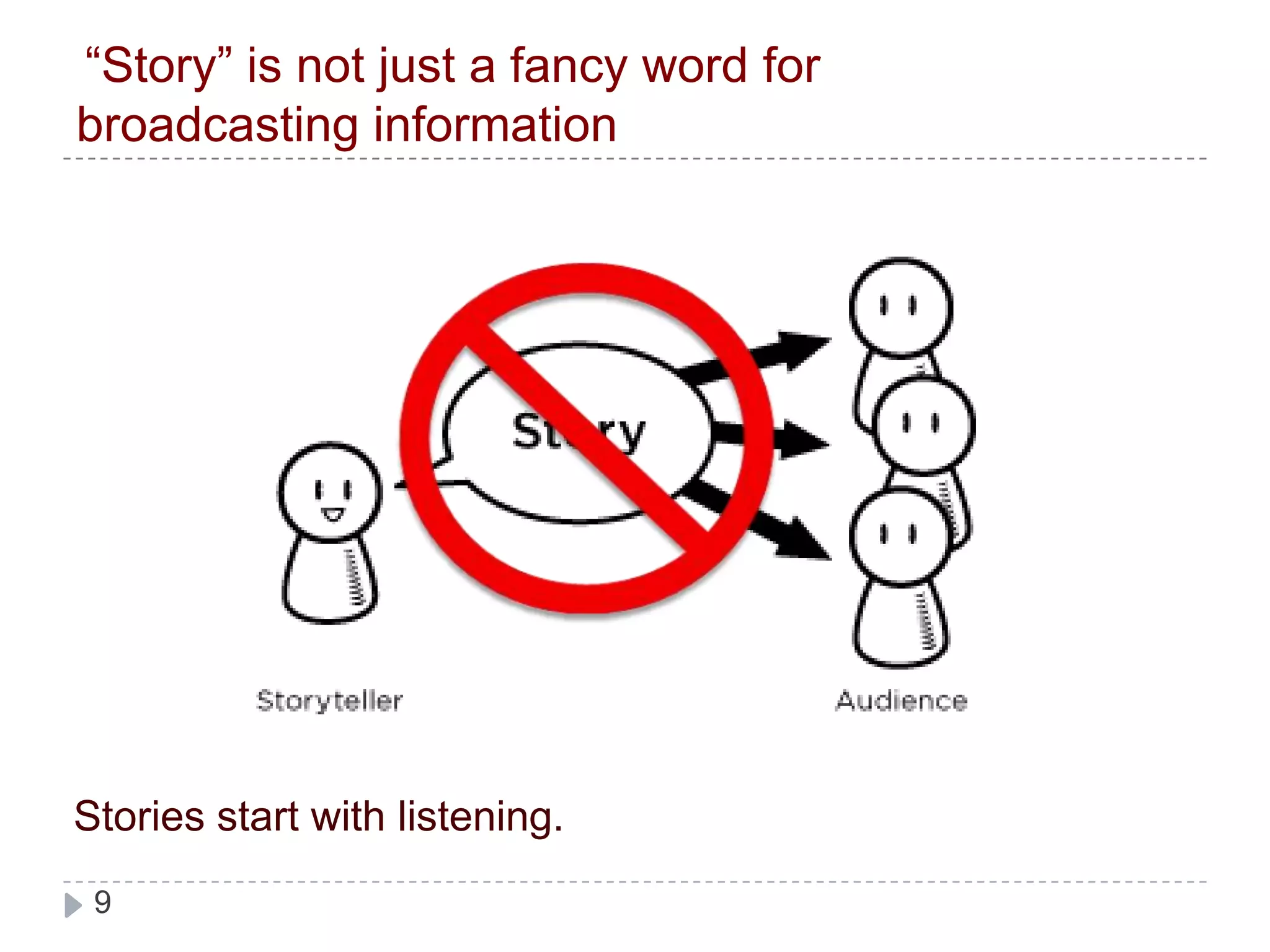
“Story” is not just a fancy word for broadcasting informationStories start with listening.
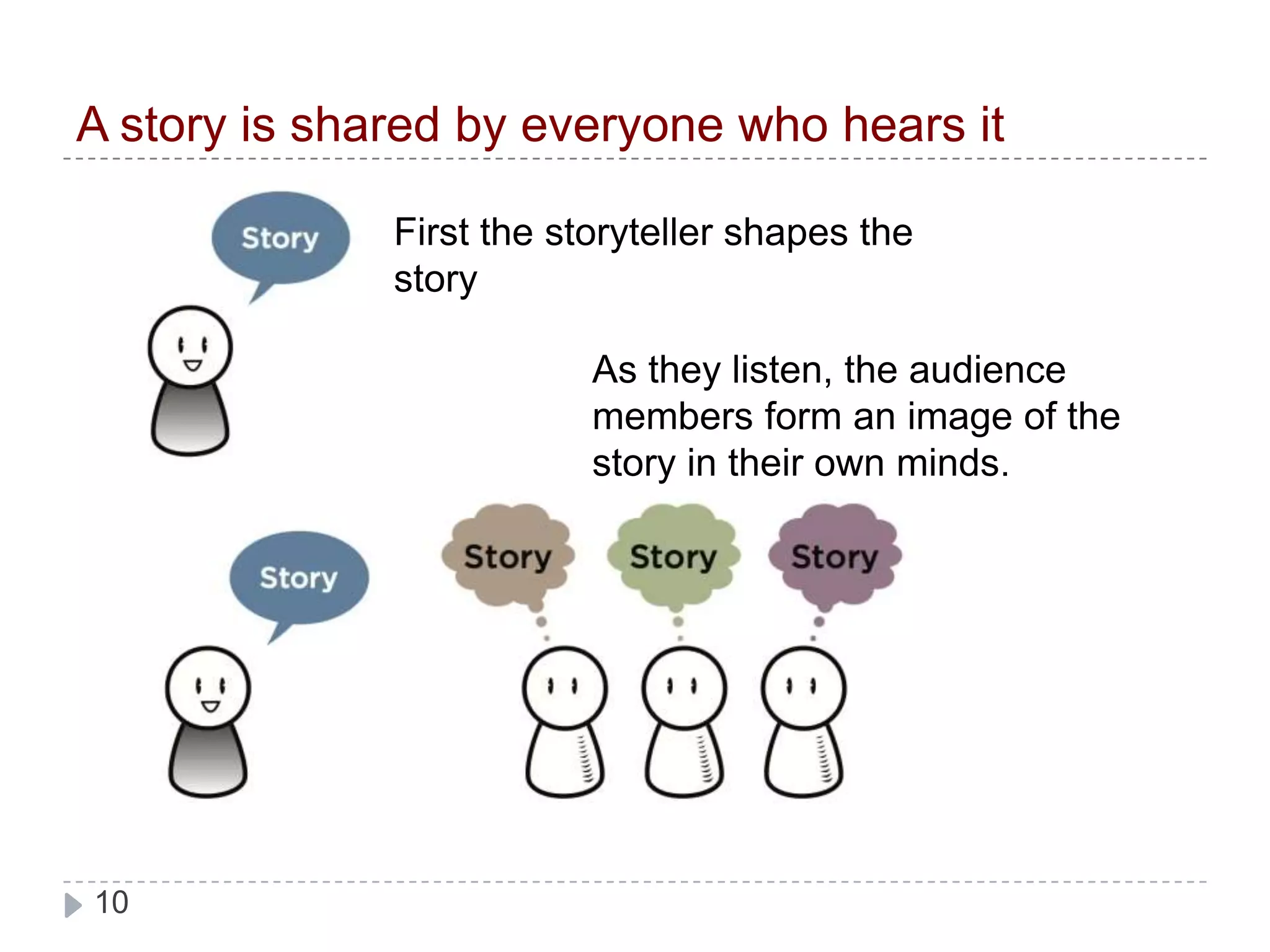
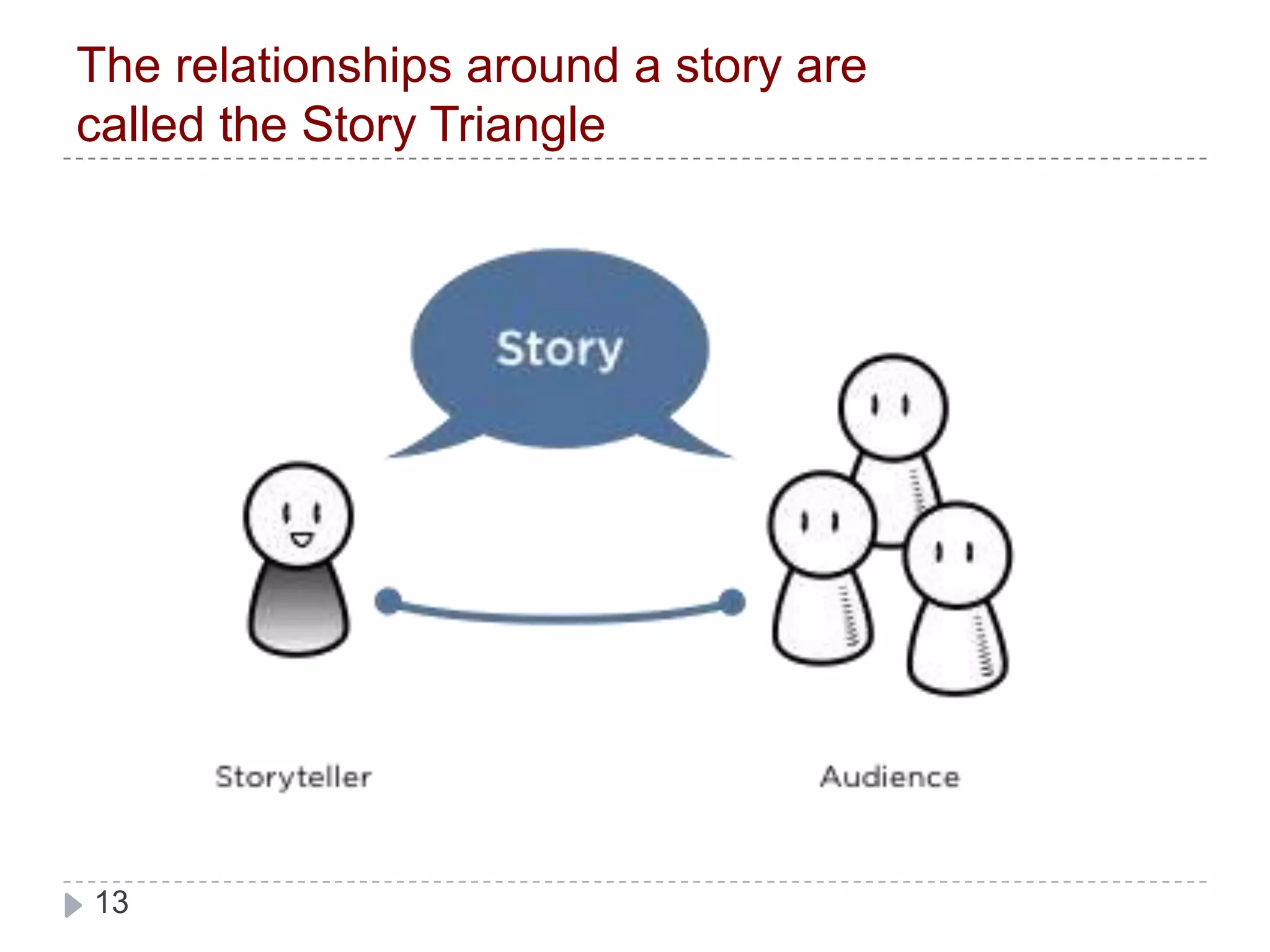
A story is shared by everyone who hears itFirst the storyteller shapes the storyAs they listen, the audience members form an image of the story in their own minds.
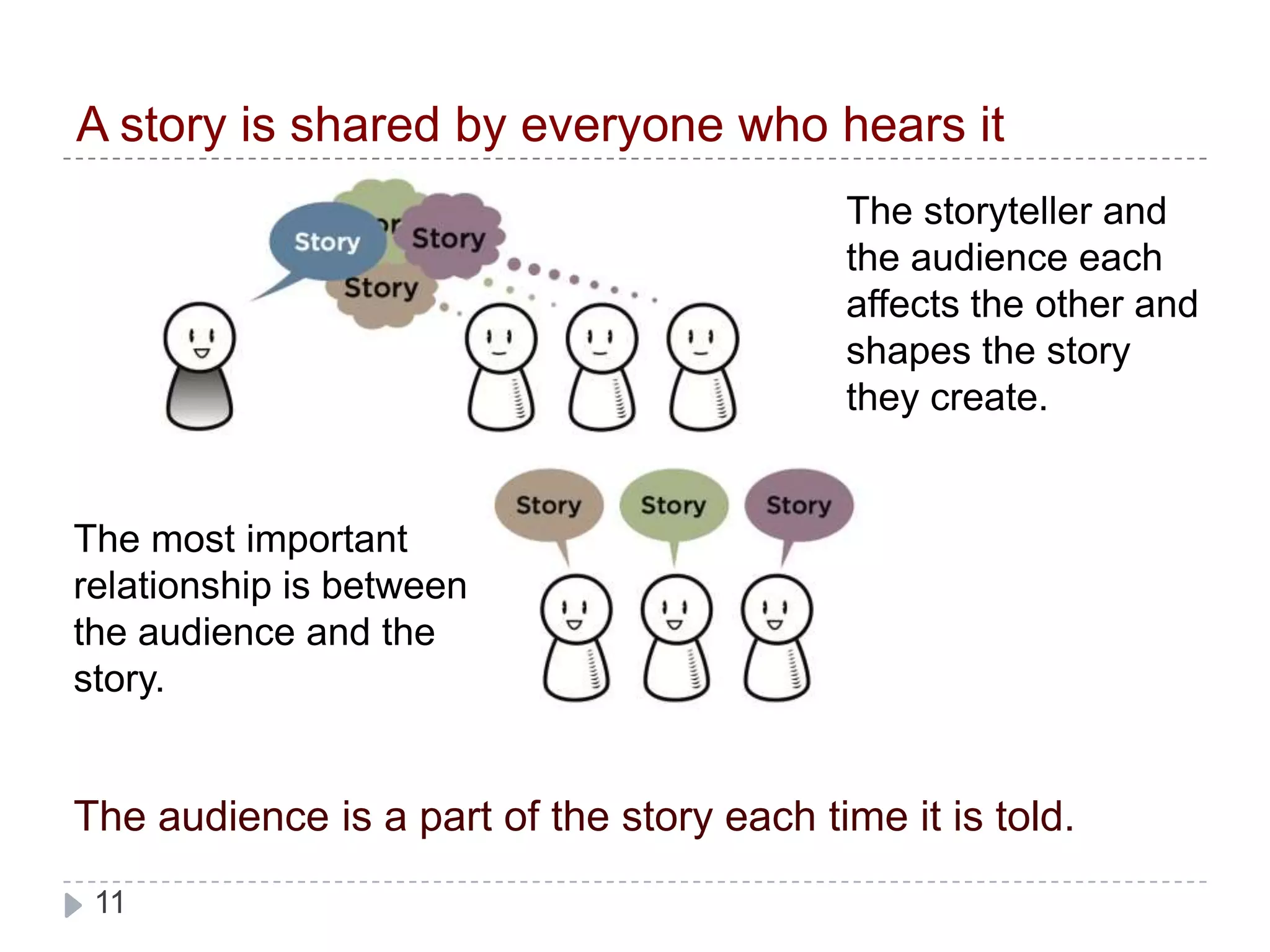
A story is shared by everyone who hears itThe storyteller and the audience each affects the other and shapes the story they create.The most important relationship is between the audience and the story.The audience is a part of the story each time it is told.
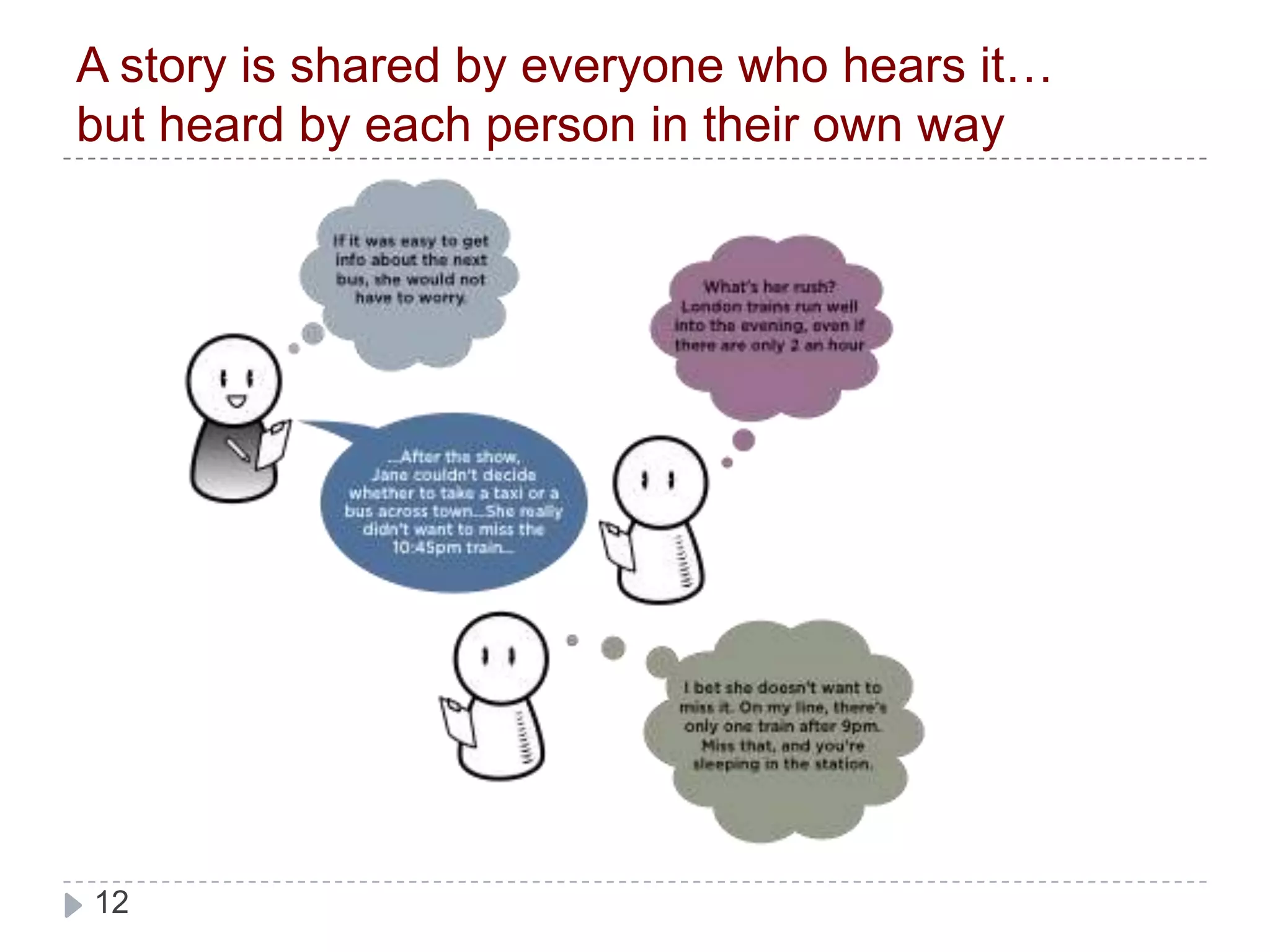
A story is shared by everyone who hears it…but heard by each person in their own way
The relationships around a story are called the Story Triangle
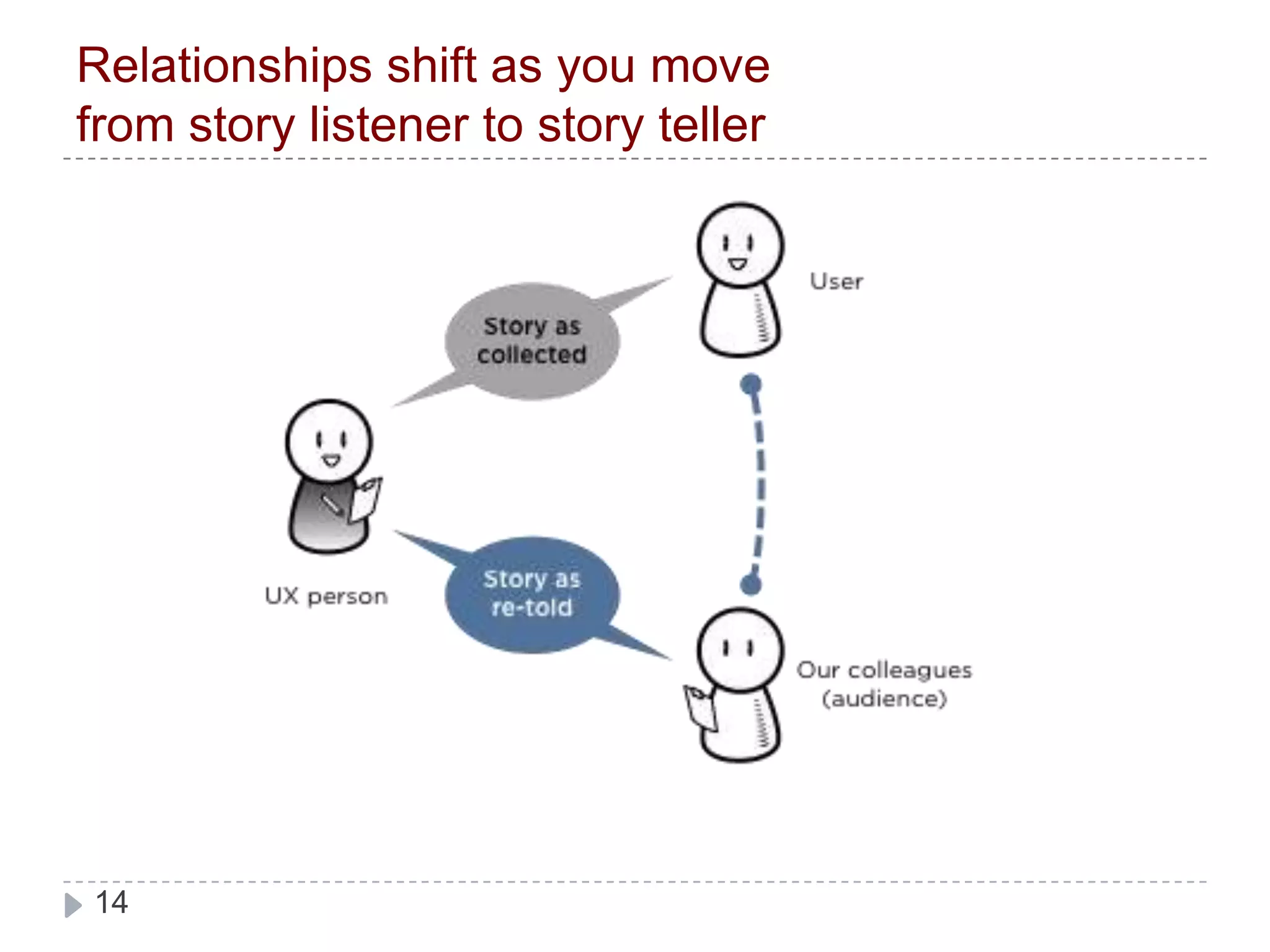
Relationships shift as you movefrom story listener to story teller
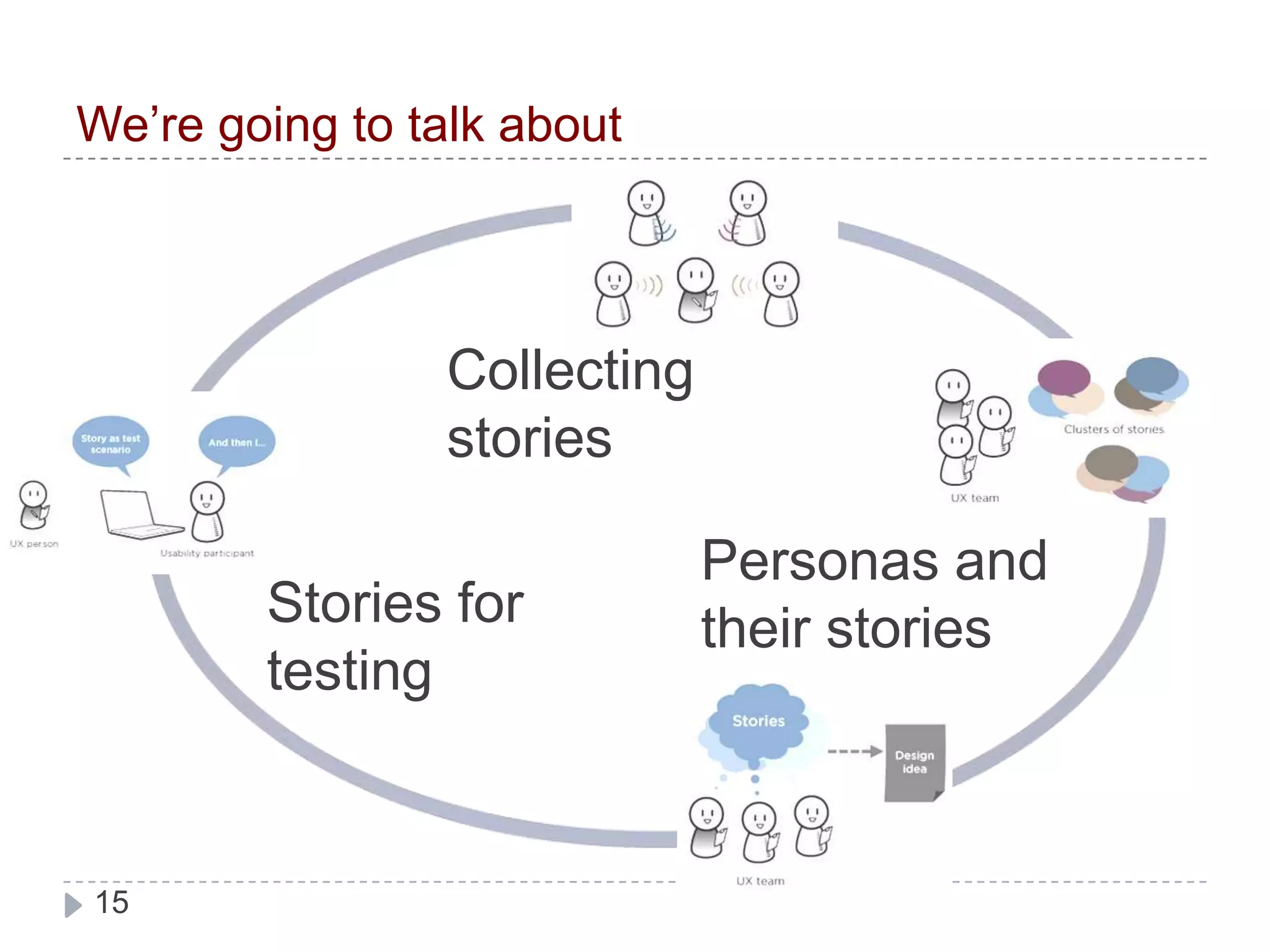
We’re going to talk aboutCollecting storiesPersonas and their storiesStories for testing
Collecting stories
While you are listening,turn on your juicy story filterYou are looking for stories that….You hear from more than one source.Have a lot of action detail. Have details that illuminate user dataSurprise or contradict common beliefsAnd are clear, simple, and compelling.
Structure the discussion to encourage stories“Have you ever [done something]?” “How often do you [do that thing]?”“What makes you decide to [do that thing]?”“Where do you [do that thing]?” “When was the last time you [did that thing]?” “Tell me about that.”
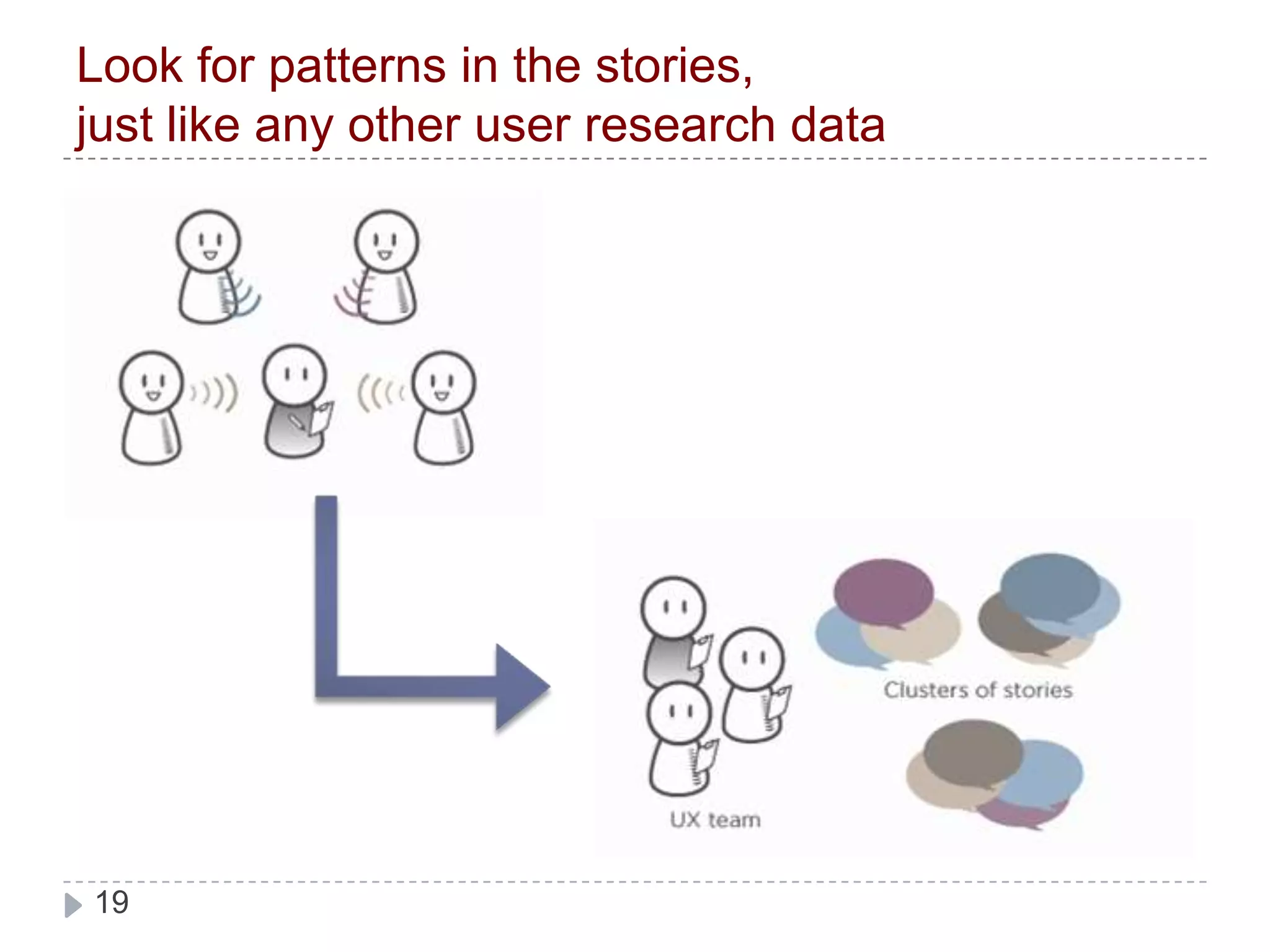
Look for patterns in the stories,just like any other user research data
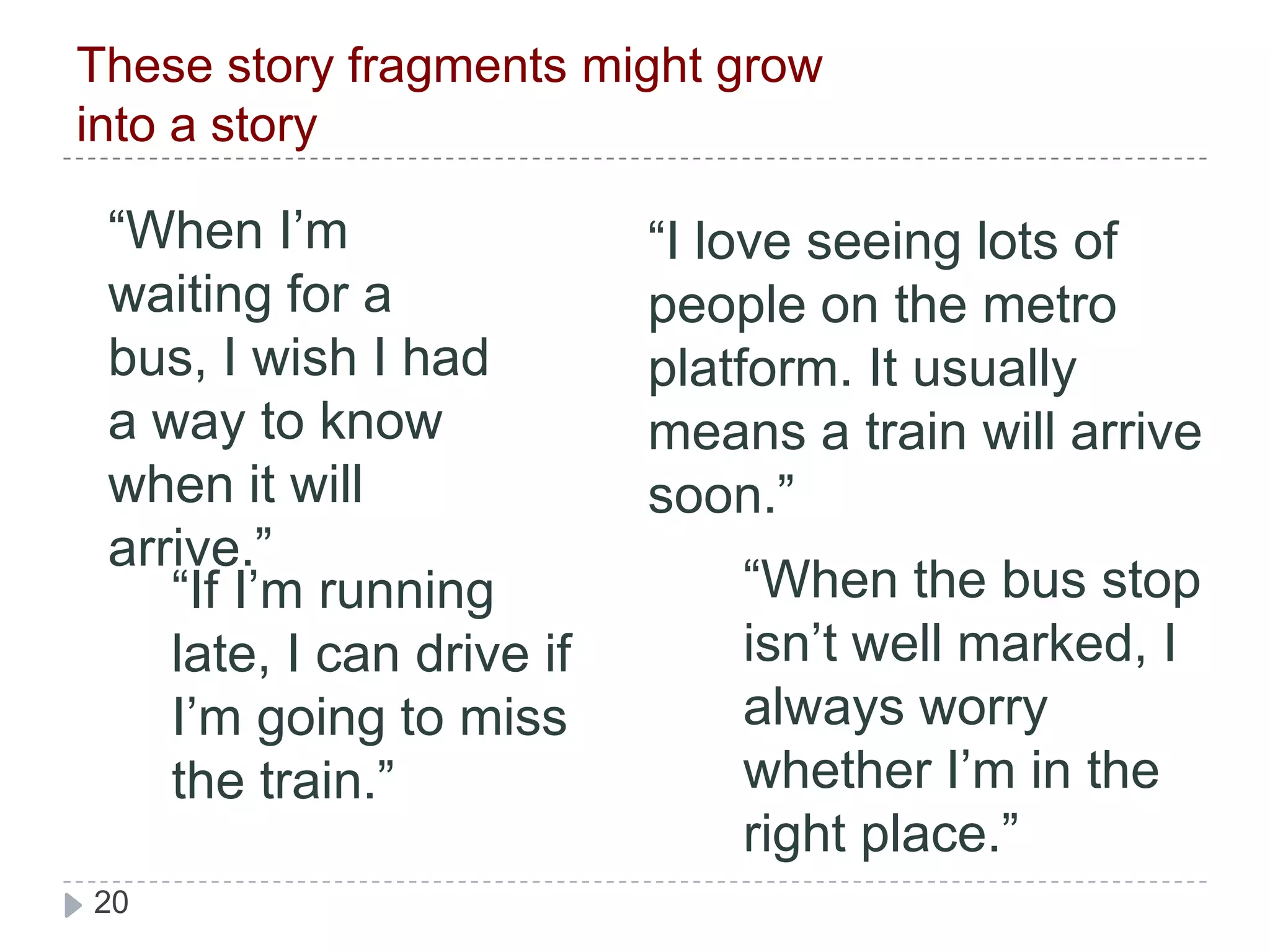
These story fragments might grow into a story“When I’m waiting for a bus, I wish I had a way to know when it will arrive.”“I love seeing lots of people on the metro platform. It usually means a train will arrive soon.”“When the bus stop isn’t well marked, I always worry whether I’m in the right place.”“If I’m running late, I can drive if I’m going to miss the train.”
Personas stories
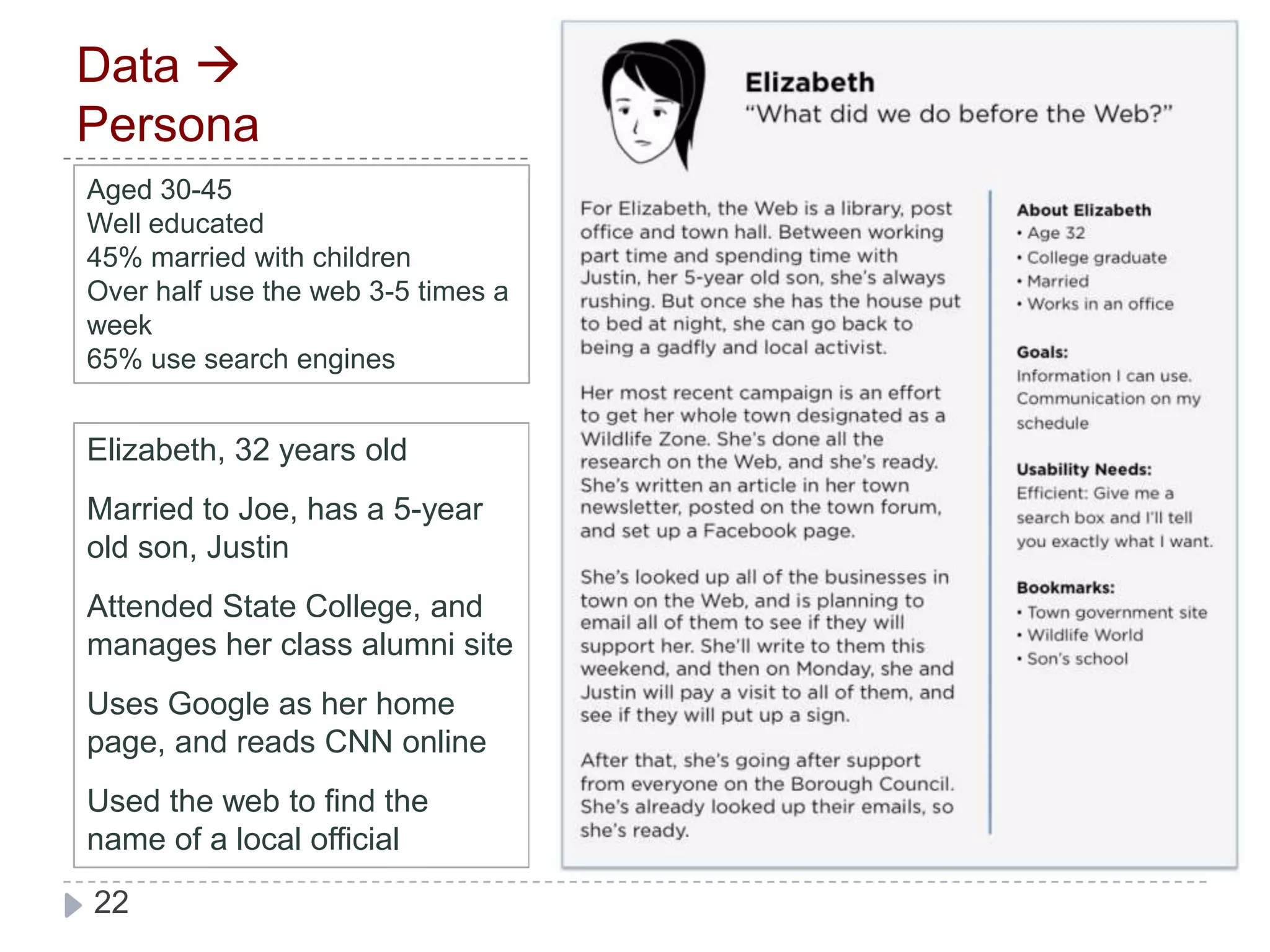
Data  PersonaAged 30-45Well educated45% married with childrenOver half use the web 3-5 times a week65% use search enginesElizabeth, 32 years oldMarried to Joe, has a 5-year old son, JustinAttended State College, and manages her class alumni siteUses Google as her home page, and reads CNN onlineUsed the web to find the name of a local official
Stories for your personas let you explore situations and ideasThe persona as a character provides perspectiveThe relationships create the contextThe imagery suggests emotional connectionsThe language can suggest the voice of the persona
There is nothing more frustrating than waiting for the bus in the snow when you’re already running late for work. Sandra didn’t like snow much anyway, but she liked standing at her bus stop even less. Had she missed it? Was it even running with all this snow?She ran over her options in her mind. None of them were going to get her to work on time.
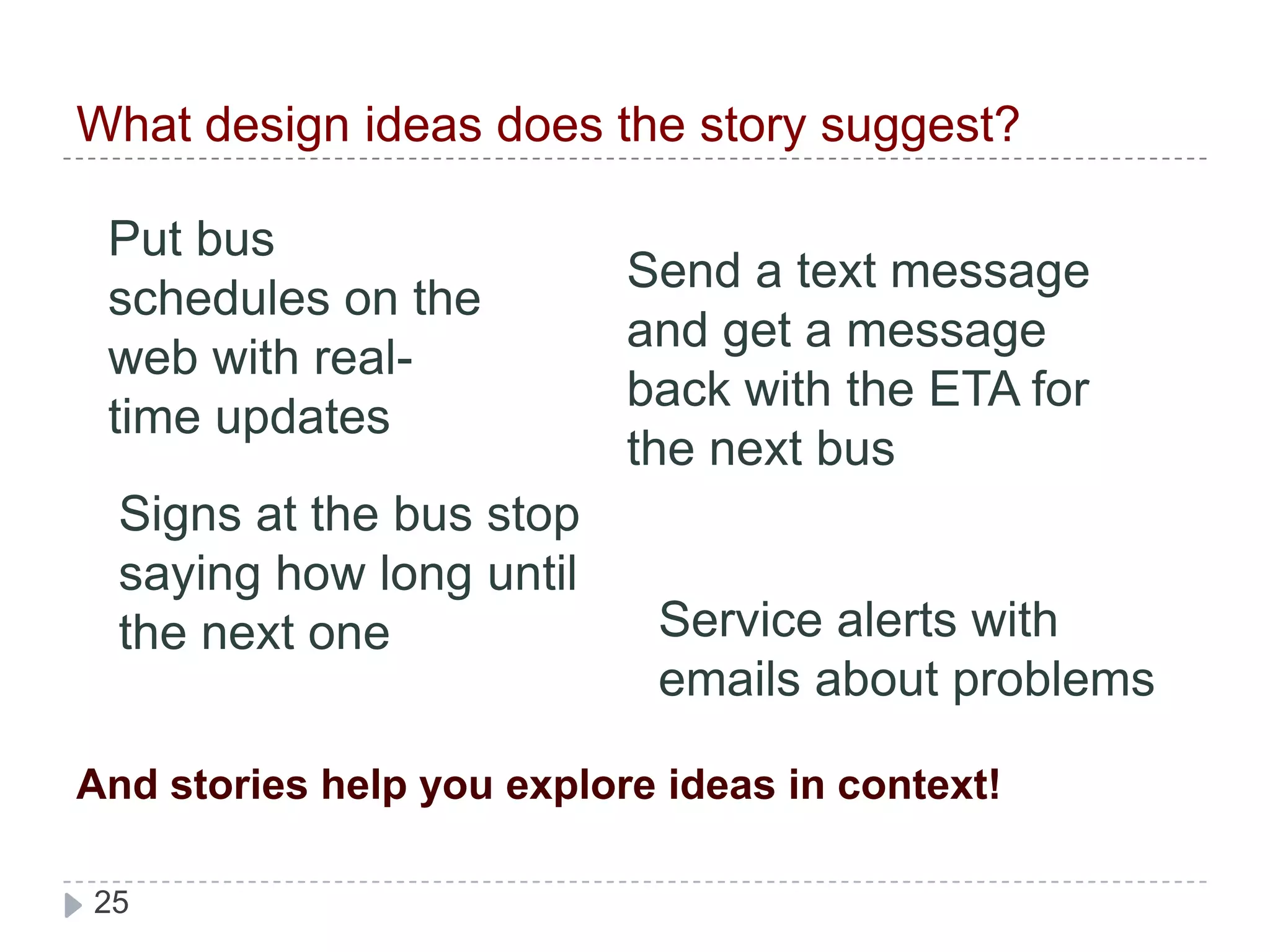
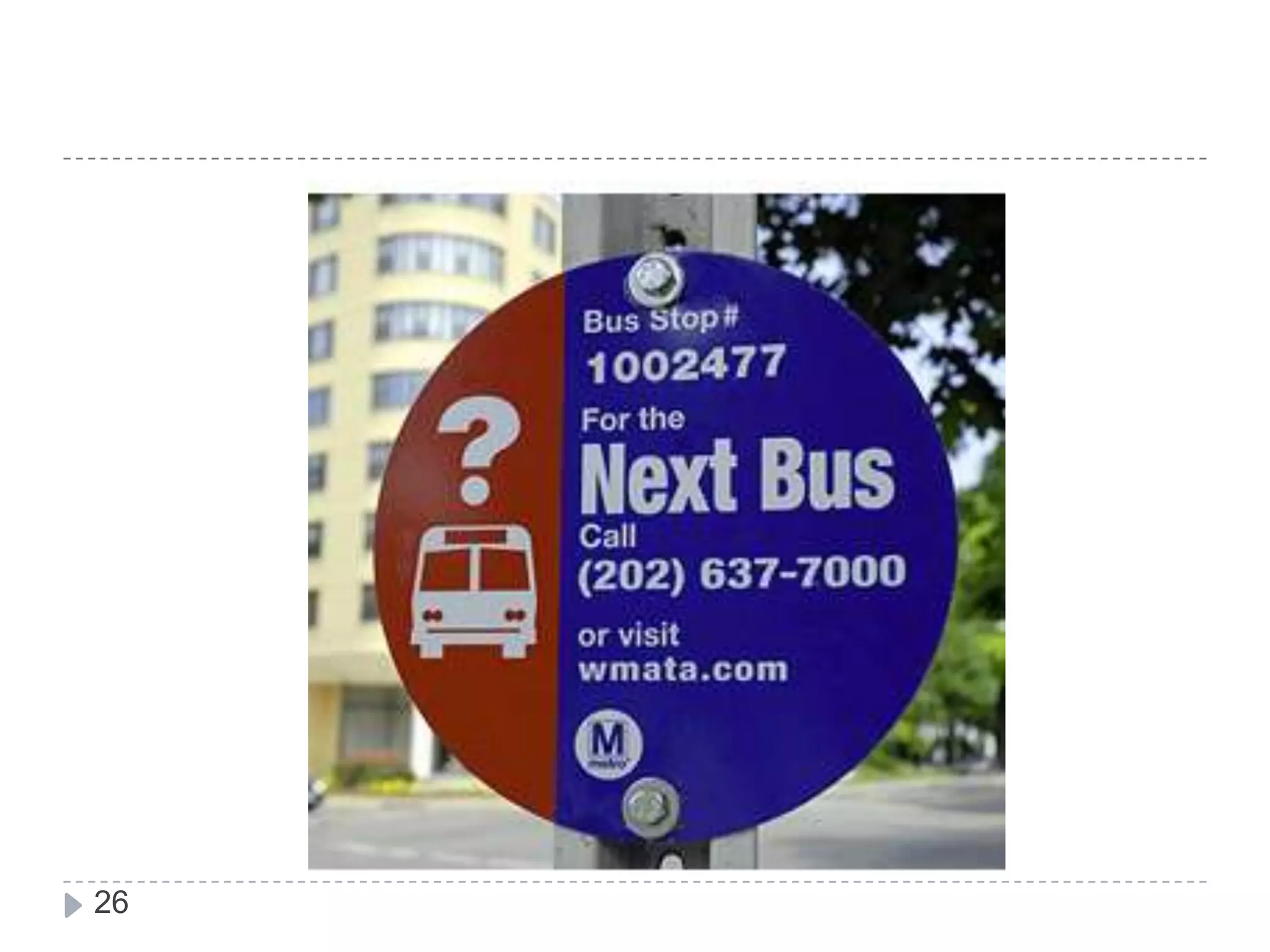
What design ideas does the story suggest?Put bus schedules on the web with real-time updatesSend a text message and get a message back with the ETA for the next busSigns at the bus stop saying how long until the next oneService alerts with emails about problems And stories help you explore ideas in context!
Evaluating with stories
Stories can be used to create scenarios for usability testingThey create a realistic context because they are based on real stories.They give you a range of stories and perspectives to draw on.
You commute to work on a suburban bus line.  You have a meeting in the morning, and don’t want to be late.But, as you eat breakfast you see that snow is piling up on the road. Find out if your bus is running on time this morning.Transforming a story to a test taskTurn the story to set up the situtation, then let the participant “finish the story” as the test task.
Stories can make your usability work more effective
Storytelling for User Experience:Crafting stories for better designWhitney Quesenbery & Kevin Brookswhitneyq@wqusability.combrooks@media.mit.eduBlog and book sitewww.rosenfeldmedia.com/books/storytelling/Ilustrations available under Creative Commons www.flickr.com/photos/rosenfeldmedia/

Storytelling your way to a better user experience - UPA Boston

  • 1.
    Storytelling YourWay toa BetterUser ExperienceWhitney QuesenberyKevin BrooksUPA BostonJune 2010
  • 2.
    IntroductionsResearcher in newUI technologiesPerformance storytellerStorytelling as a pivotal part of the creation, performance, and design process.User researcherTheatre designerStorytelling as a way to understand user, culture, and context in UX design
  • 3.
    Storytelling is alreadypart of UXUnderstandSuccess?SpecifyEvaluateDesign
  • 4.
    Success?Storytelling is alreadypart of UXUnderstandSpecifyEvaluateDesign
  • 5.
    Storytelling is alreadypart of UX…We just don’t call them storiesUserresearchAnalysisField studiesCard sortingSite visitsCluster sortingContent analysisEvaluationDesignUsability TestingScenariosWireframesPrototype walk-throughLog Analysis
  • 6.
    Storytelling is alreadypart of UX…We just don’t call them storiesYou can use stories to enhance the usability work you are already doing.andYou can use stories to help you start bringing people into the center of the process.
  • 7.
  • 8.
    Listening ExerciseWork inpairs - with someone you don’t know1 minutes to speak - then switchSpeaker’s job - speak about something relatively comfortableListener’s job - just listen. Don’t have to talk, interrupt or fill silences.Talk aboutthe time on your way here thatyou were the most bored.
  • 9.
    “Story” is notjust a fancy word for broadcasting informationStories start with listening.
  • 10.
    A story isshared by everyone who hears itFirst the storyteller shapes the storyAs they listen, the audience members form an image of the story in their own minds.
  • 11.
    A story isshared by everyone who hears itThe storyteller and the audience each affects the other and shapes the story they create.The most important relationship is between the audience and the story.The audience is a part of the story each time it is told.
  • 12.
    A story isshared by everyone who hears it…but heard by each person in their own way
  • 13.
    The relationships arounda story are called the Story Triangle
  • 14.
    Relationships shift asyou movefrom story listener to story teller
  • 15.
    We’re going totalk aboutCollecting storiesPersonas and their storiesStories for testing
  • 16.
  • 17.
    While you arelistening,turn on your juicy story filterYou are looking for stories that….You hear from more than one source.Have a lot of action detail. Have details that illuminate user dataSurprise or contradict common beliefsAnd are clear, simple, and compelling.
  • 18.
    Structure the discussionto encourage stories“Have you ever [done something]?” “How often do you [do that thing]?”“What makes you decide to [do that thing]?”“Where do you [do that thing]?” “When was the last time you [did that thing]?” “Tell me about that.”
  • 19.
    Look for patternsin the stories,just like any other user research data
  • 20.
    These story fragmentsmight grow into a story“When I’m waiting for a bus, I wish I had a way to know when it will arrive.”“I love seeing lots of people on the metro platform. It usually means a train will arrive soon.”“When the bus stop isn’t well marked, I always worry whether I’m in the right place.”“If I’m running late, I can drive if I’m going to miss the train.”
  • 21.
  • 22.
    Data  PersonaAged30-45Well educated45% married with childrenOver half use the web 3-5 times a week65% use search enginesElizabeth, 32 years oldMarried to Joe, has a 5-year old son, JustinAttended State College, and manages her class alumni siteUses Google as her home page, and reads CNN onlineUsed the web to find the name of a local official
  • 23.
    Stories for yourpersonas let you explore situations and ideasThe persona as a character provides perspectiveThe relationships create the contextThe imagery suggests emotional connectionsThe language can suggest the voice of the persona
  • 24.
    There is nothingmore frustrating than waiting for the bus in the snow when you’re already running late for work. Sandra didn’t like snow much anyway, but she liked standing at her bus stop even less. Had she missed it? Was it even running with all this snow?She ran over her options in her mind. None of them were going to get her to work on time.
  • 25.
    What design ideasdoes the story suggest?Put bus schedules on the web with real-time updatesSend a text message and get a message back with the ETA for the next busSigns at the bus stop saying how long until the next oneService alerts with emails about problems And stories help you explore ideas in context!
  • 27.
  • 28.
    Stories can beused to create scenarios for usability testingThey create a realistic context because they are based on real stories.They give you a range of stories and perspectives to draw on.
  • 29.
    You commute towork on a suburban bus line. You have a meeting in the morning, and don’t want to be late.But, as you eat breakfast you see that snow is piling up on the road. Find out if your bus is running on time this morning.Transforming a story to a test taskTurn the story to set up the situtation, then let the participant “finish the story” as the test task.
  • 30.
    Stories can makeyour usability work more effective
  • 31.
    Storytelling for UserExperience:Crafting stories for better designWhitney Quesenbery & Kevin Brookswhitneyq@wqusability.combrooks@media.mit.eduBlog and book sitewww.rosenfeldmedia.com/books/storytelling/Ilustrations available under Creative Commons www.flickr.com/photos/rosenfeldmedia/

Editor's Notes

  • #6 WQBy putting stories into this cycle, we’ve done something important… we’ve brought the people back into the process – perhaps explaining why it’s a “human” centered process.
  • #8 KBBefore we dive into UX, I’d like to take a short diversion into a little bit about what we mean by stories. Mention stories are good stuffAnyone here think that you aren’t a very good storyteller?
  • #13 WQ
  • #14 KBDescribe the story triangle.
  • #16 WQJust to give you a preview, let’s look at this diagram a different way.Builds around the circle, explain each one.You can see how the relationships shift, as we move around the phases: the central UX person starts as a listening, then moves into using the stories, sharing the stories and then back to an observer position.
  • #20 Either
  • #22 One of the most importatnt uses of stories are in personas.(Define, if needed – not They are based on dataBut, people are more than just data.Stories let you add context, perspective, and details.
  • #24 WQ
  • #26 WQ – Get AUDIENCE INPUT – then show all Each of these suggests a different technology solution.How to evaluate?Tell a story. Think about different stories that explores these or other solutions(Can a story make problems in the idea self-evident?)This can be an exercise in a longer workshop