For the user of this presentation:

This presentation has animation that can only be seen when you select
“View Show” from the “Slide Show” menu item.

Author uses this presentation for Compressed Gas Cylinder Training
During the “what is wrong with this picture” segment. Trainees have
rated this segment as the best part of the training.

If you have other photos you care to submit, send them directly to
rcoll@fnal.gov with a note as to what is wrong in the photo.
I will continue adding to this presentation and posting to the
Vermont SIRI.

Thanks,

Rafael Coll (630) 840-8518


                                                Compressed Gas
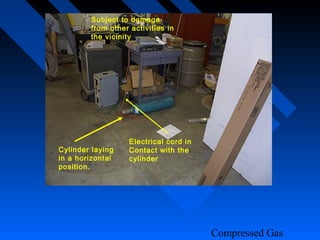
Subject to damage
        from other activities in
        the vicinity


                   Electrical cord in
Cylinder laying    Contact with the
in a horizontal    cylinder
position.


                                        Compressed Gas
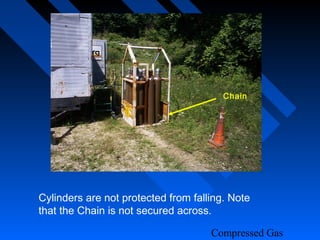
Chain


Cylinders are not protected from falling. Note
that the Chain is not secured across.

                                     Compressed Gas
Electrical
                                              Cord


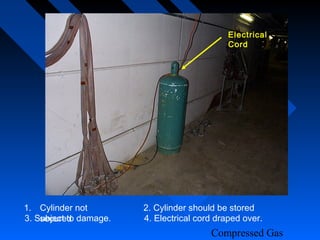
1. Cylinder not         2. Cylinder should be stored
3. Subject to damage.
    secured             4. Electrical cord draped over.
                                         Compressed Gas
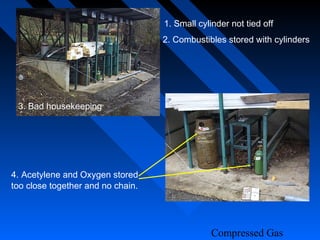
1. Small cylinder not tied off
                                   2. Combustibles stored with cylinders


 3. Bad housekeeping


4. Acetylene and Oxygen stored
too close together and no chain.


                                               Compressed Gas
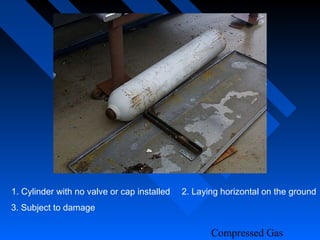
1. Cylinder with no valve or cap installed   2. Laying horizontal on the ground
3. Subject to damage

                                                    Compressed Gas
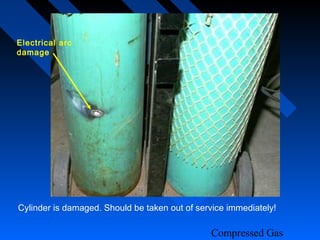
Electrical arc
damage


Cylinder is damaged. Should be taken out of service immediately!

                                               Compressed Gas
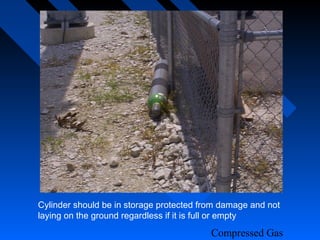
Cylinder should be in storage protected from damage and not
laying on the ground regardless if it is full or empty

                                          Compressed Gas
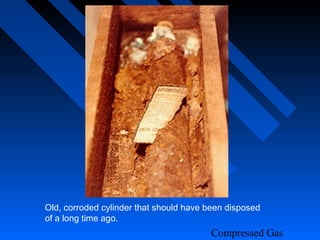
Old, corroded cylinder that should have been disposed
of a long time ago.
                                        Compressed Gas
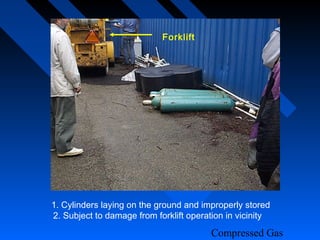
Forklift


1. Cylinders laying on the ground and improperly stored
2. Subject to damage from forklift operation in vicinity

                                        Compressed Gas
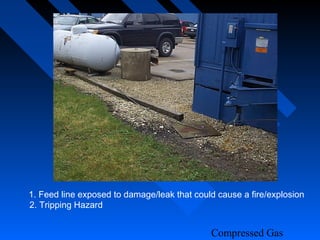
1. Feed line exposed to damage/leak that could cause a fire/explosion
2. Tripping Hazard


                                             Compressed Gas
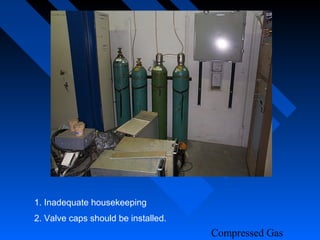
1. Inadequate housekeeping
2. Valve caps should be installed.
                                     Compressed Gas
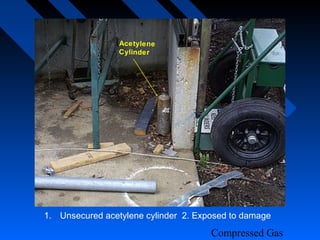
Acetylene
                 Cylinder


1. Unsecured acetylene cylinder 2. Exposed to damage

                                      Compressed Gas
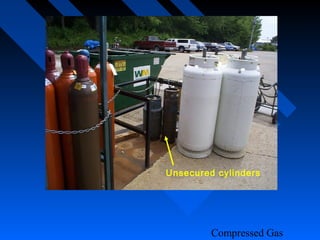
Unsecured cylinders


         Compressed Gas
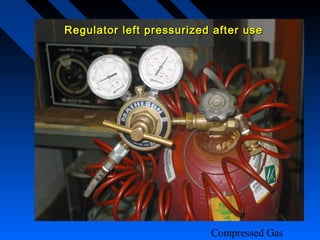
Regulator left pressurized after use


                          Compressed Gas
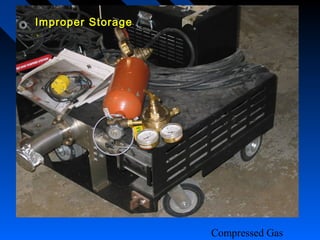
Improper Storage


                   Compressed Gas
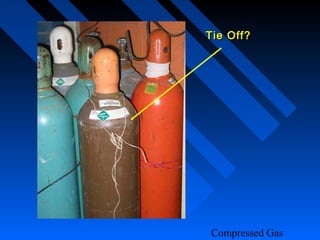
Tie Off?


Compressed Gas
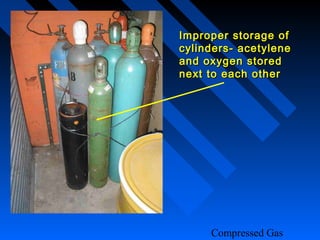
Improper storage of
cylinders- acetylene
and oxygen stored
next to each other


     Compressed Gas
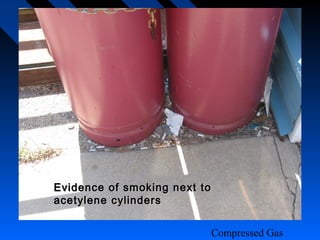
Evidence of smoking next to
acetylene cylinders


                          Compressed Gas
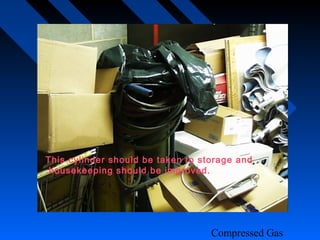
This cylinder should be taken to storage and
 housekeeping should be improved.


                                   Compressed Gas
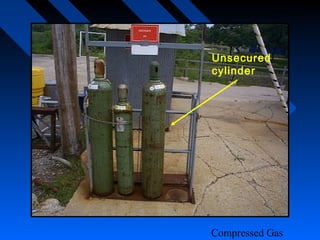
Unsecured
cylinder


Compressed Gas
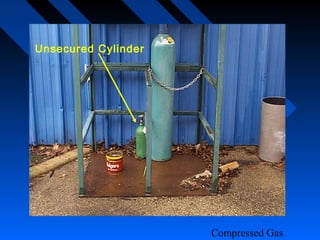
Unsecured Cylinder


                     Compressed Gas
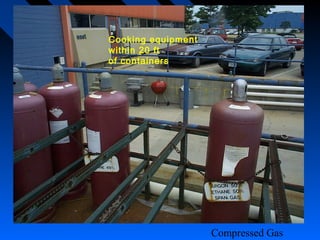
Cooking equipment
within 20 ft
of containers


                    Compressed Gas
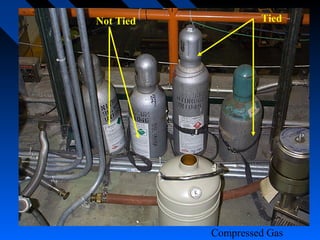
Not Tied            Tied


           Compressed Gas
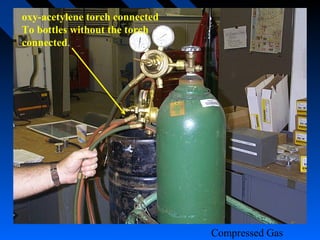
oxy-acetylene torch connected
To bottles without the torch
connected.


                                Compressed Gas
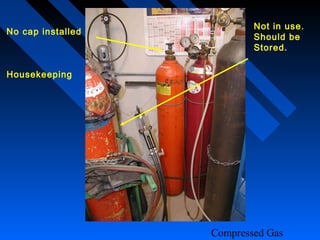
Not in use.
No cap installed
                           Should be
                           Stored.


Housekeeping


                   Compressed Gas
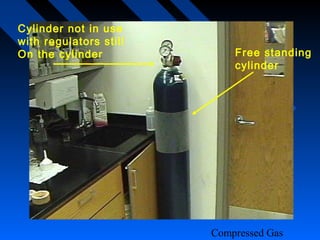
Cylinder not in use
with regulators still
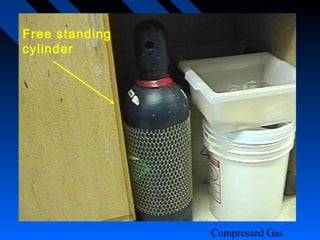
On the cylinder             Free standing
                            cylinder


                        Compressed Gas
Free standing
cylinder


                Compressed Gas
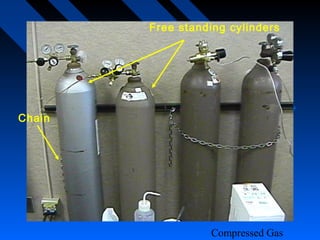
Free standing cylinders


Chain


                  Compressed Gas
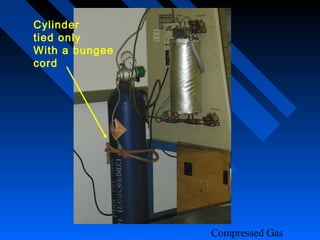
Cylinder
tied only
With a bungee
cord


                Compressed Gas
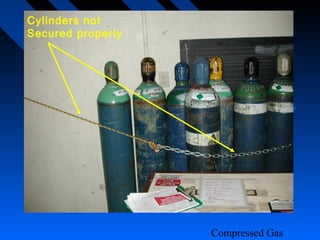
Cylinders not
Secured properly


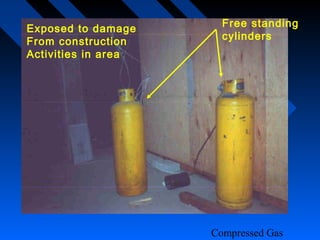
                   Compressed Gas
Free standing
Exposed to damage
                       cylinders
From construction
Activities in area


                     Compressed Gas
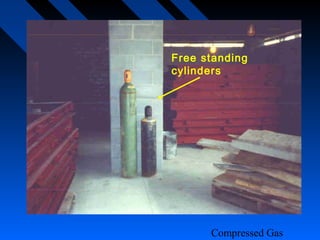
Free standing
cylinders


      Compressed Gas
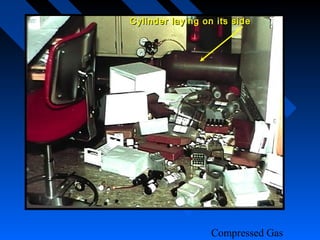
Cylinder laying on its side


                  Compressed Gas
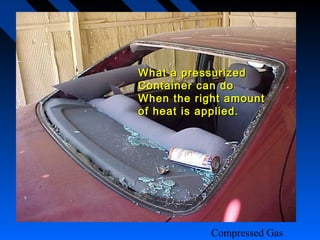
What a pressurized
Container can do
When the right amount
of heat is applied.


            Compressed Gas
How not to blow yourself up


Or, the importance of using
flashback
arrestors on oxy-acetylene carts
and
keeping spark producing activities
Away From You (min 35 ft.).
                         ft.)


                        Compressed Gas
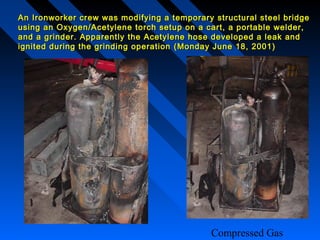
An Ironworker crew was modifying a temporary structural steel bridge
using an Oxygen/Acetylene torch setup on a cart, a portable welder,
and a grinder. Apparently the Acetylene hose developed a leak and
ignited during the grinding operation ( Monday June 18, 2001 )


                                             Compressed Gas
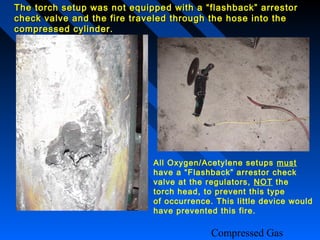
The torch setup was not    equipped with a “flashback” arrestor
check valve and the fire   traveled through the hose into the
compressed cylinder.


                                All Oxygen/Acetylene setups must
                                have a “Flashback” arrestor check
                                valve at the regulators, NOT the
                                torch head, to prevent this type
                                of occurrence. This little device would
                                have prevented this fire.

                                              Compressed Gas

Compressed gas cil safety

  • 1.
    For the userof this presentation: This presentation has animation that can only be seen when you select “View Show” from the “Slide Show” menu item. Author uses this presentation for Compressed Gas Cylinder Training During the “what is wrong with this picture” segment. Trainees have rated this segment as the best part of the training. If you have other photos you care to submit, send them directly to rcoll@fnal.gov with a note as to what is wrong in the photo. I will continue adding to this presentation and posting to the Vermont SIRI. Thanks, Rafael Coll (630) 840-8518 Compressed Gas
  • 2.
    Subject to damage from other activities in the vicinity Electrical cord in Cylinder laying Contact with the in a horizontal cylinder position. Compressed Gas
  • 3.
    Chain Cylinders are notprotected from falling. Note that the Chain is not secured across. Compressed Gas
  • 4.
    Electrical Cord 1. Cylinder not 2. Cylinder should be stored 3. Subject to damage. secured 4. Electrical cord draped over. Compressed Gas
  • 5.
    1. Small cylindernot tied off 2. Combustibles stored with cylinders 3. Bad housekeeping 4. Acetylene and Oxygen stored too close together and no chain. Compressed Gas
  • 6.
    1. Cylinder withno valve or cap installed 2. Laying horizontal on the ground 3. Subject to damage Compressed Gas
  • 7.
    Electrical arc damage Cylinder isdamaged. Should be taken out of service immediately! Compressed Gas
  • 8.
    Cylinder should bein storage protected from damage and not laying on the ground regardless if it is full or empty Compressed Gas
  • 9.
    Old, corroded cylinderthat should have been disposed of a long time ago. Compressed Gas
  • 10.
    Forklift 1. Cylinders layingon the ground and improperly stored 2. Subject to damage from forklift operation in vicinity Compressed Gas
  • 11.
    1. Feed lineexposed to damage/leak that could cause a fire/explosion 2. Tripping Hazard Compressed Gas
  • 12.
    1. Inadequate housekeeping 2.Valve caps should be installed. Compressed Gas
  • 13.
    Acetylene Cylinder 1. Unsecured acetylene cylinder 2. Exposed to damage Compressed Gas
  • 14.
    Unsecured cylinders Compressed Gas
  • 15.
    Regulator left pressurizedafter use Compressed Gas
  • 16.
    Improper Storage Compressed Gas
  • 17.
  • 18.
    Improper storage of cylinders-acetylene and oxygen stored next to each other Compressed Gas
  • 19.
    Evidence of smokingnext to acetylene cylinders Compressed Gas
  • 20.
    This cylinder shouldbe taken to storage and housekeeping should be improved. Compressed Gas
  • 21.
  • 22.
    Unsecured Cylinder Compressed Gas
  • 23.
    Cooking equipment within 20ft of containers Compressed Gas
  • 24.
    Not Tied Tied Compressed Gas
  • 25.
    oxy-acetylene torch connected Tobottles without the torch connected. Compressed Gas
  • 26.
    Not in use. Nocap installed Should be Stored. Housekeeping Compressed Gas
  • 27.
    Cylinder not inuse with regulators still On the cylinder Free standing cylinder Compressed Gas
  • 28.
  • 29.
  • 30.
    Cylinder tied only With abungee cord Compressed Gas
  • 31.
  • 32.
    Free standing Exposed todamage cylinders From construction Activities in area Compressed Gas
  • 33.
  • 34.
    Cylinder laying onits side Compressed Gas
  • 35.
    What a pressurized Containercan do When the right amount of heat is applied. Compressed Gas
  • 36.
    How not toblow yourself up Or, the importance of using flashback arrestors on oxy-acetylene carts and keeping spark producing activities Away From You (min 35 ft.). ft.) Compressed Gas
  • 37.
    An Ironworker crewwas modifying a temporary structural steel bridge using an Oxygen/Acetylene torch setup on a cart, a portable welder, and a grinder. Apparently the Acetylene hose developed a leak and ignited during the grinding operation ( Monday June 18, 2001 ) Compressed Gas
  • 38.
    The torch setupwas not equipped with a “flashback” arrestor check valve and the fire traveled through the hose into the compressed cylinder. All Oxygen/Acetylene setups must have a “Flashback” arrestor check valve at the regulators, NOT the torch head, to prevent this type of occurrence. This little device would have prevented this fire. Compressed Gas