A Compost Teach-In: Informing Palo Alto’s Future Organics Strategy Lucie Stern Community Center January 10, 2009 2 PM to 4:30 PM
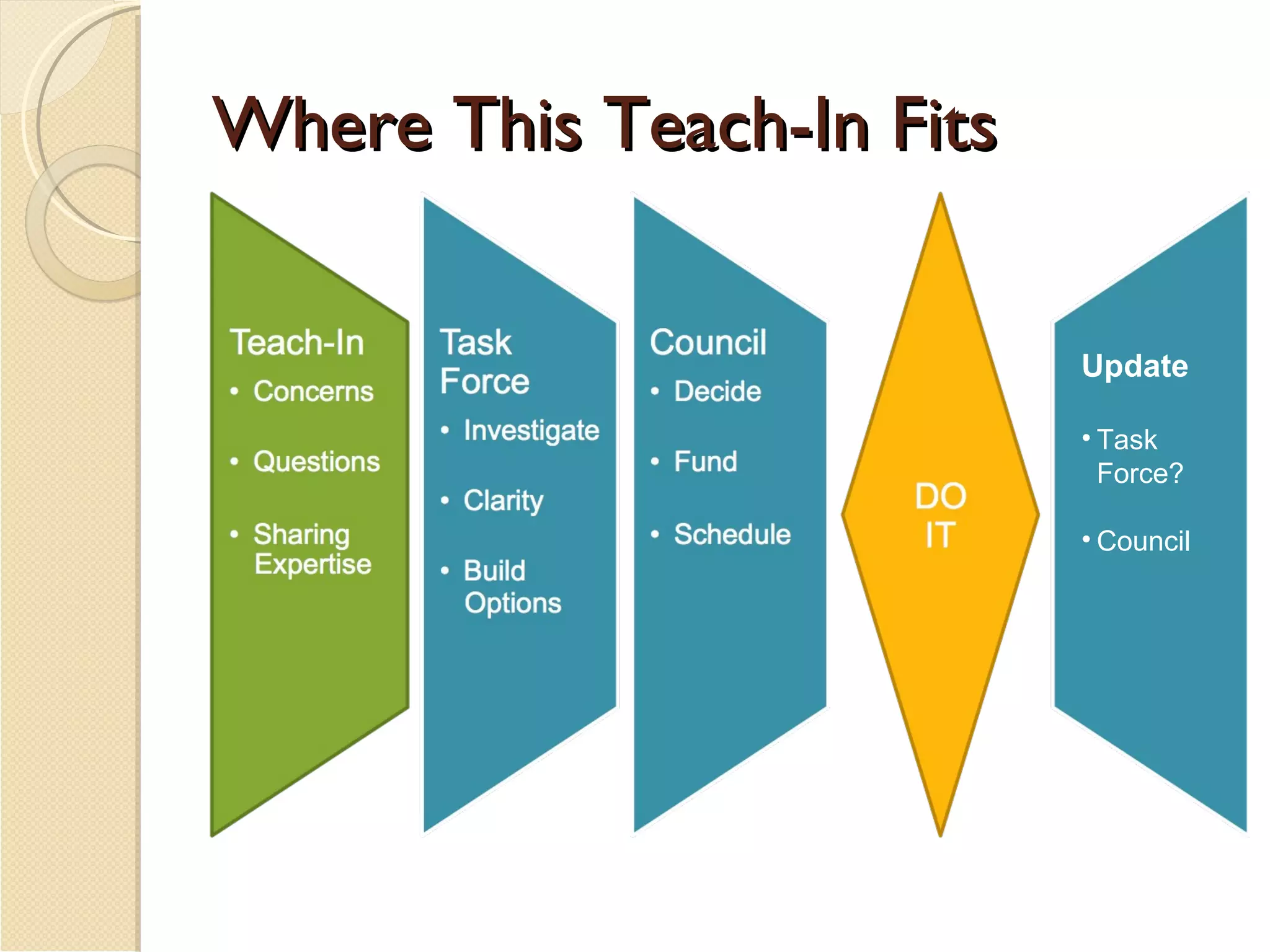
Where This Teach-In Fits Update Task Force? Council
Agenda Welcome – 2:00 PM  Introduction --- 2:05 PM   Framing the Organics Challenge   2:10 PM   Technology Options 2:30 PM Composting Windrow Aerobic Static Pile In-vessel Anaerobic Digestion of Food Waste -- 3:00 PM Bay Area Composting Experiences -- 3:20 Biochar Technology -- 3:40 PM Where Does Global Warming Fit -- 4:00 PM Technologies  Transportation Discussion  -- 4:15 PM
Today’s Approach What Is “Taught” The Problem Some Technologies Global Warming Considerations What Is Avoided Not Discussing Locations Not Attempting to Solve the Problem A Facilitator’s Role Mind the Clock Moderate Discourse Record Comments 20 Minutes Per Topic 15 Minutes Presenting 5 Minutes Questions Logistics Bathrooms + Breaks Web Cast
Brought to You by… Teachers Hilary Gans Ann Schneider, Sierra Club Sophia Skoda, EBMUD Steven Sherman, Steven Sherman Consulting Bob Niederman  Bob Wenzlau, Terradex Bryan Long David Coale Facilitator and Recorder (Palo Alto Mediation Program) Elaine El-Bizri Elisabeth Seaman Support Jeb Eddy Susan Stansbury
THE CHALLENGE Bob Wenzlau, Terradex
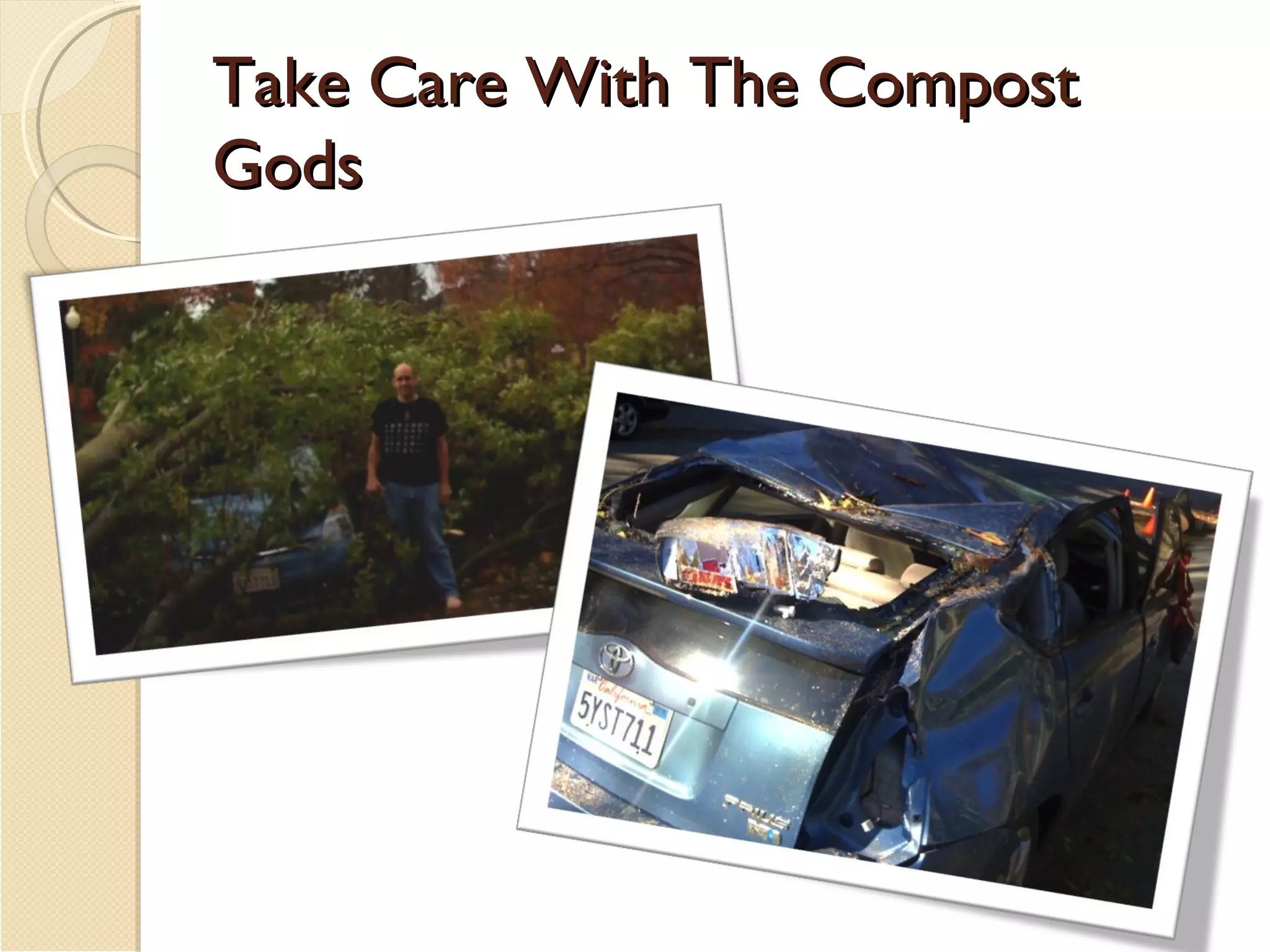
Take Care With The Compost Gods
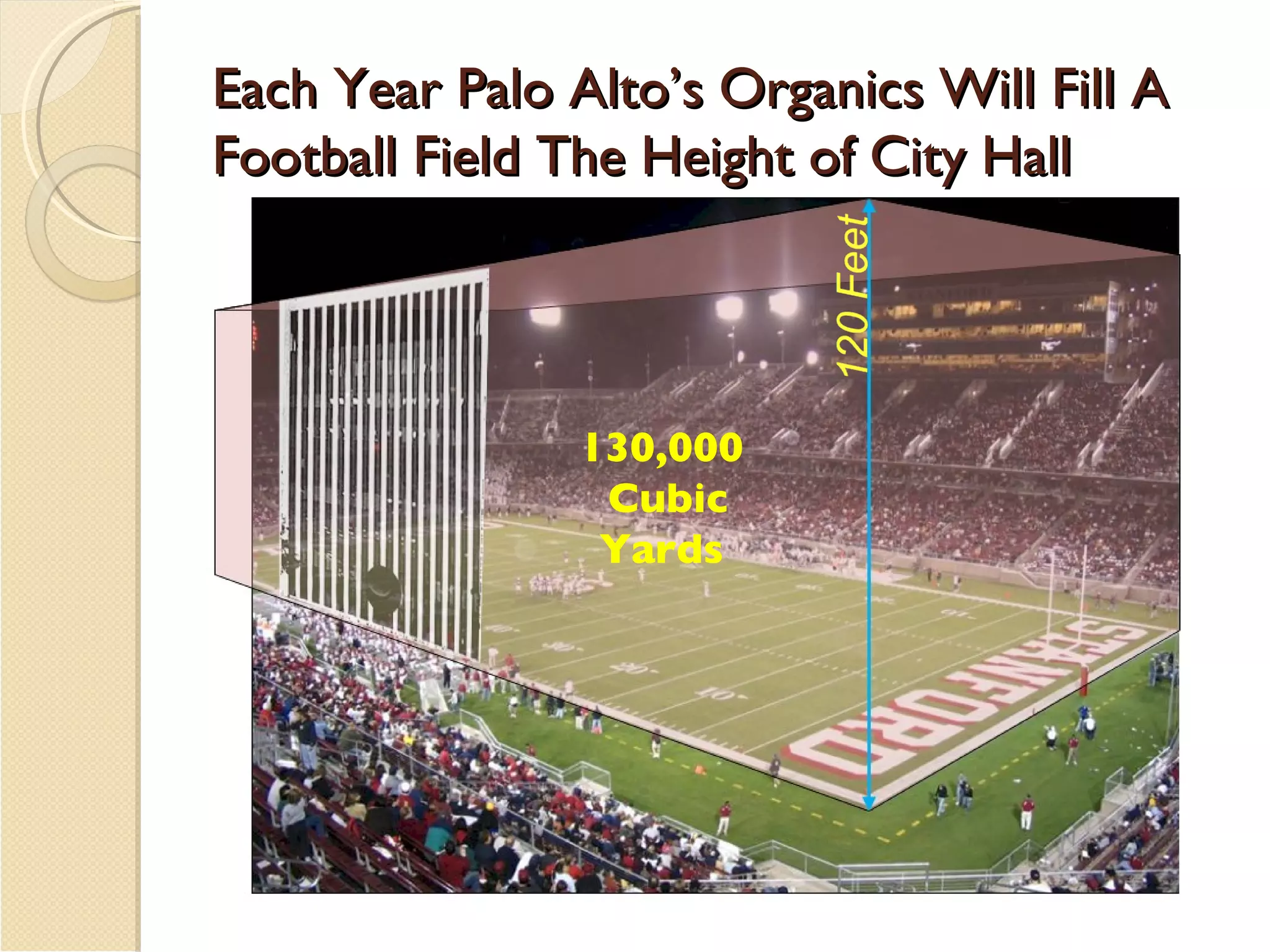
Each Year Palo Alto’s Organics Will Fill A Football Field The Height of City Hall 130,000 Cubic Yards
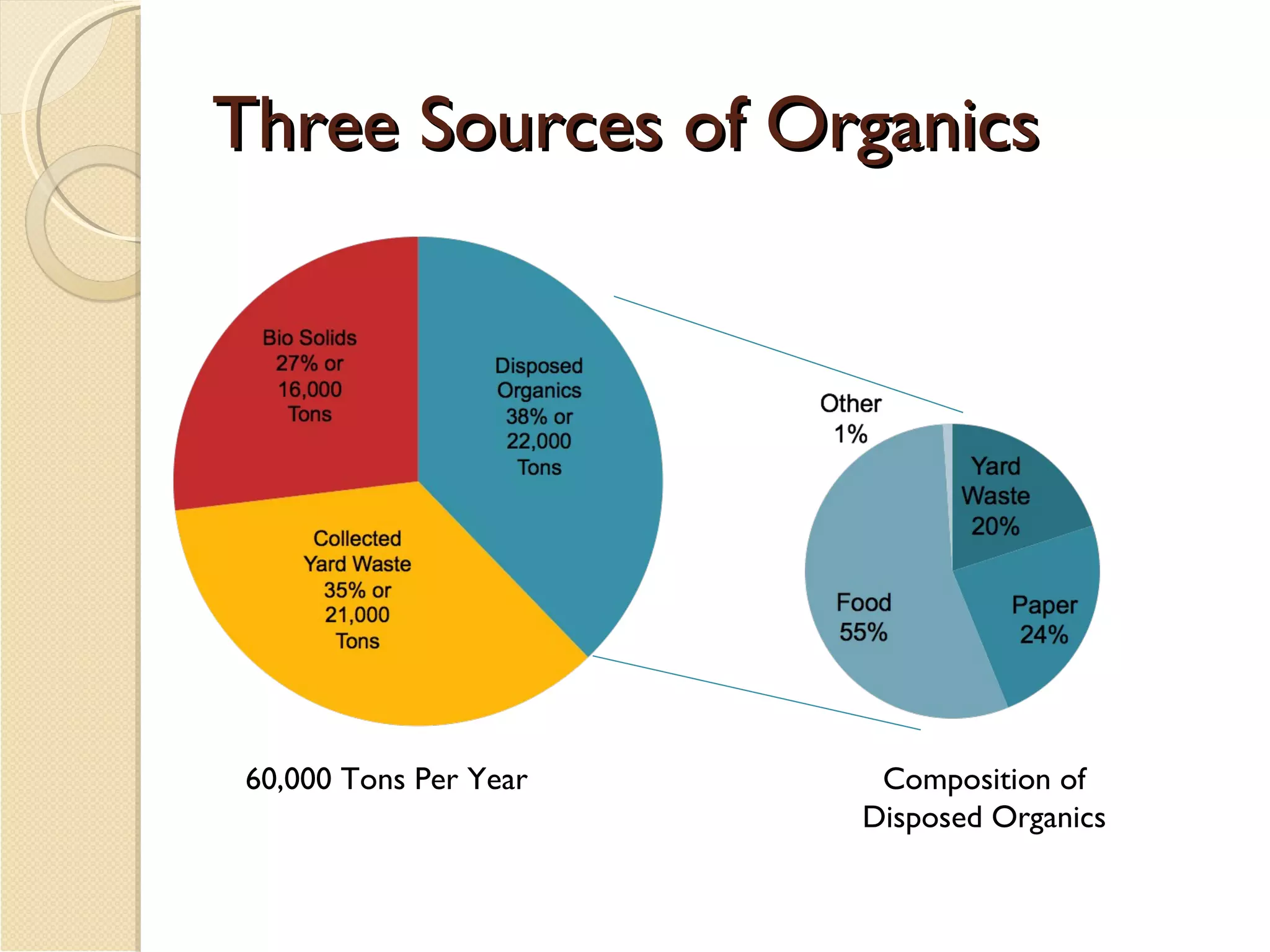
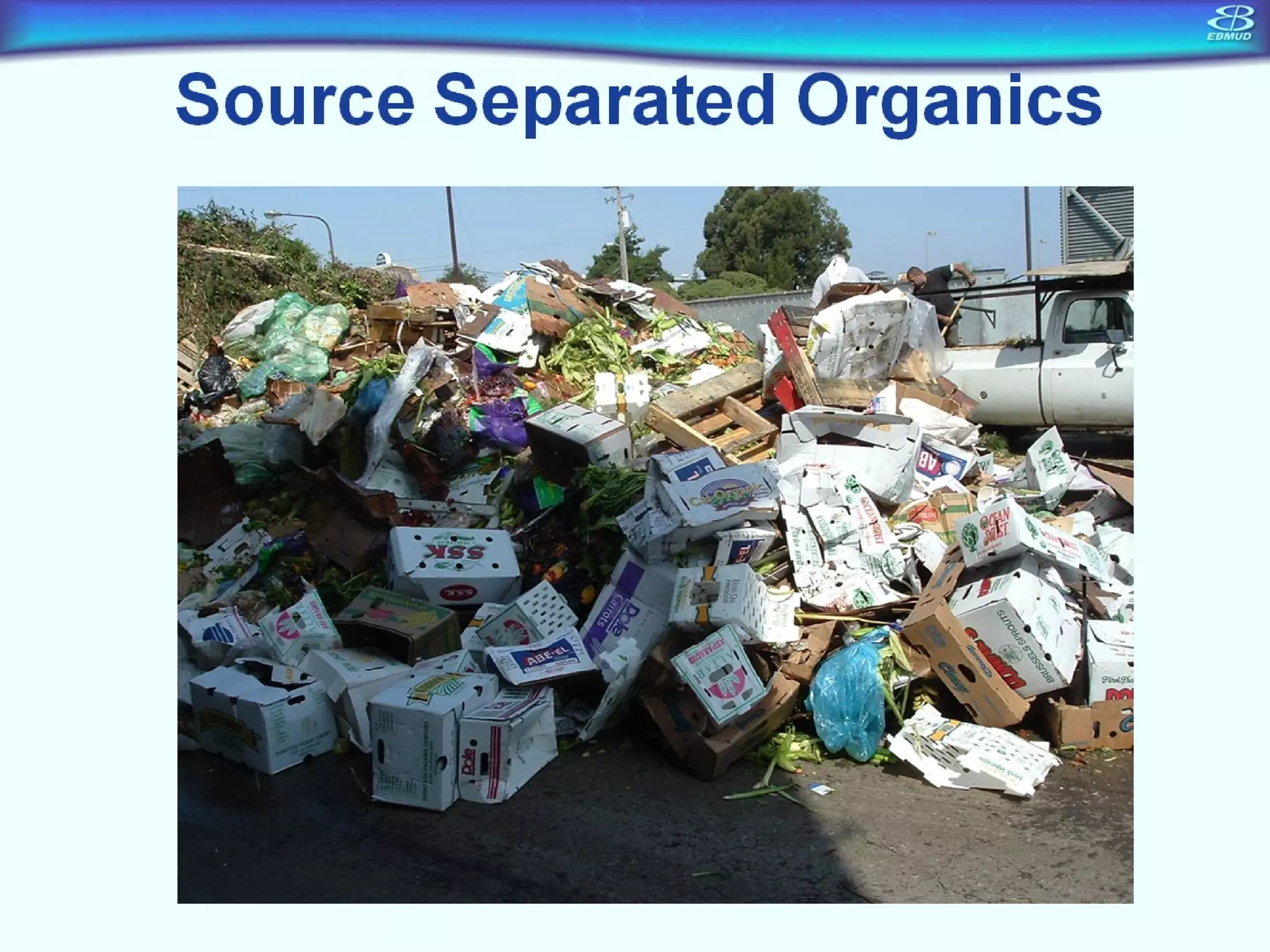
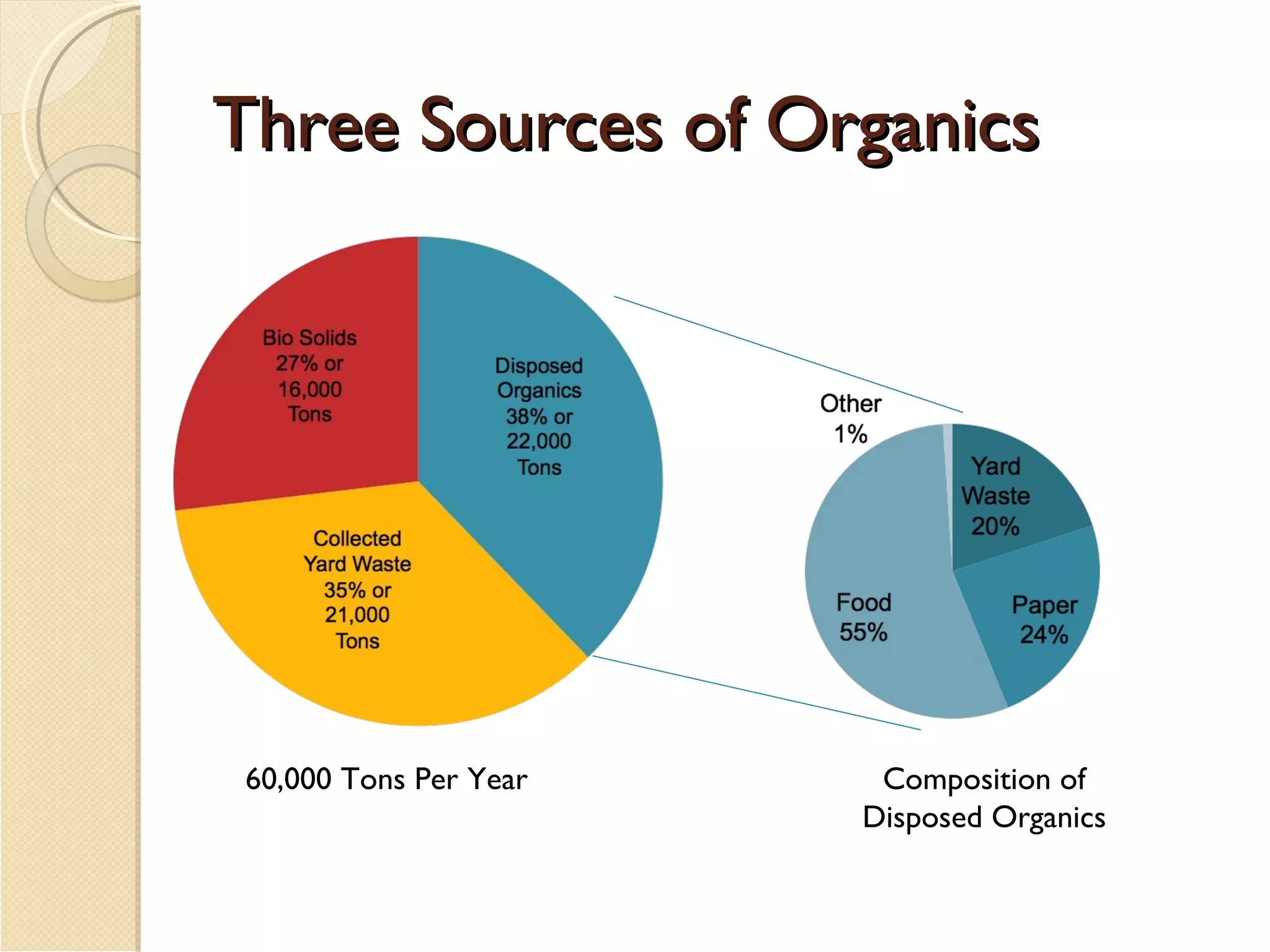
Three Sources of Organics 60,000 Tons Per Year Composition of Disposed Organics
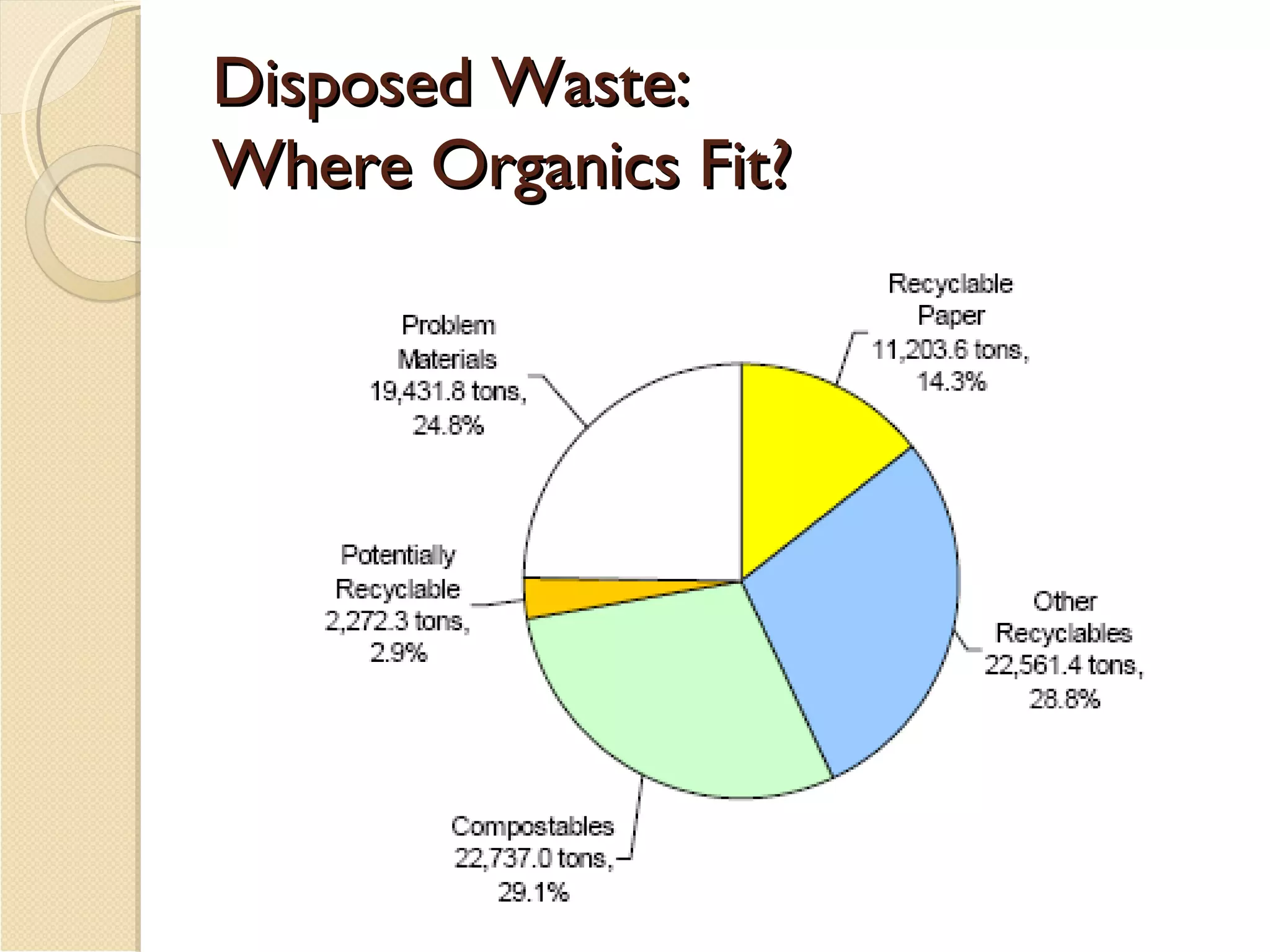
Disposed Waste:  Where Organics Fit?
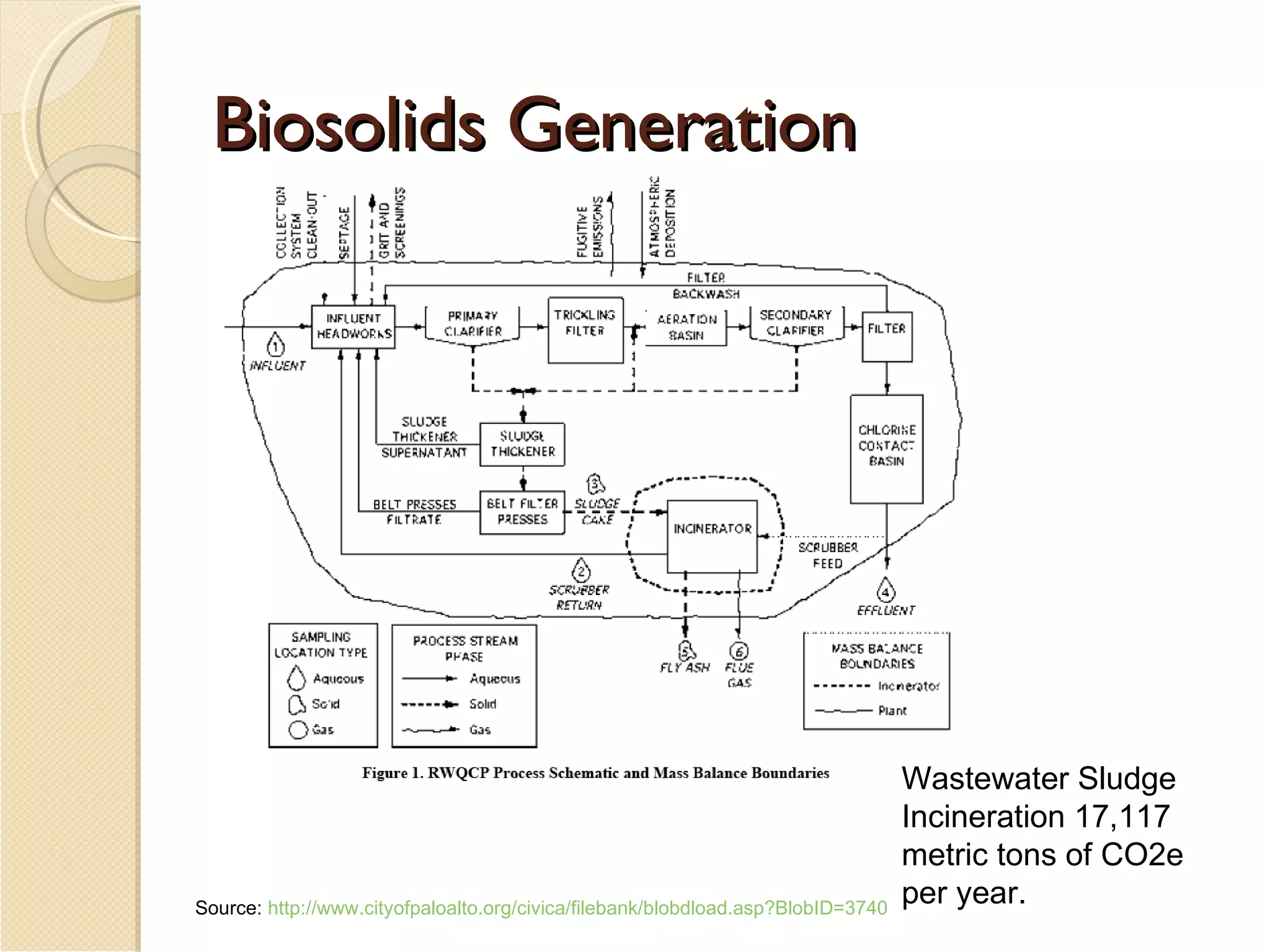
Biosolids Generation Source:  http://www.cityofpaloalto.org/civica/filebank/blobdload.asp?BlobID=3740   Wastewater Sludge Incineration 17,117 metric tons of CO2e per year.
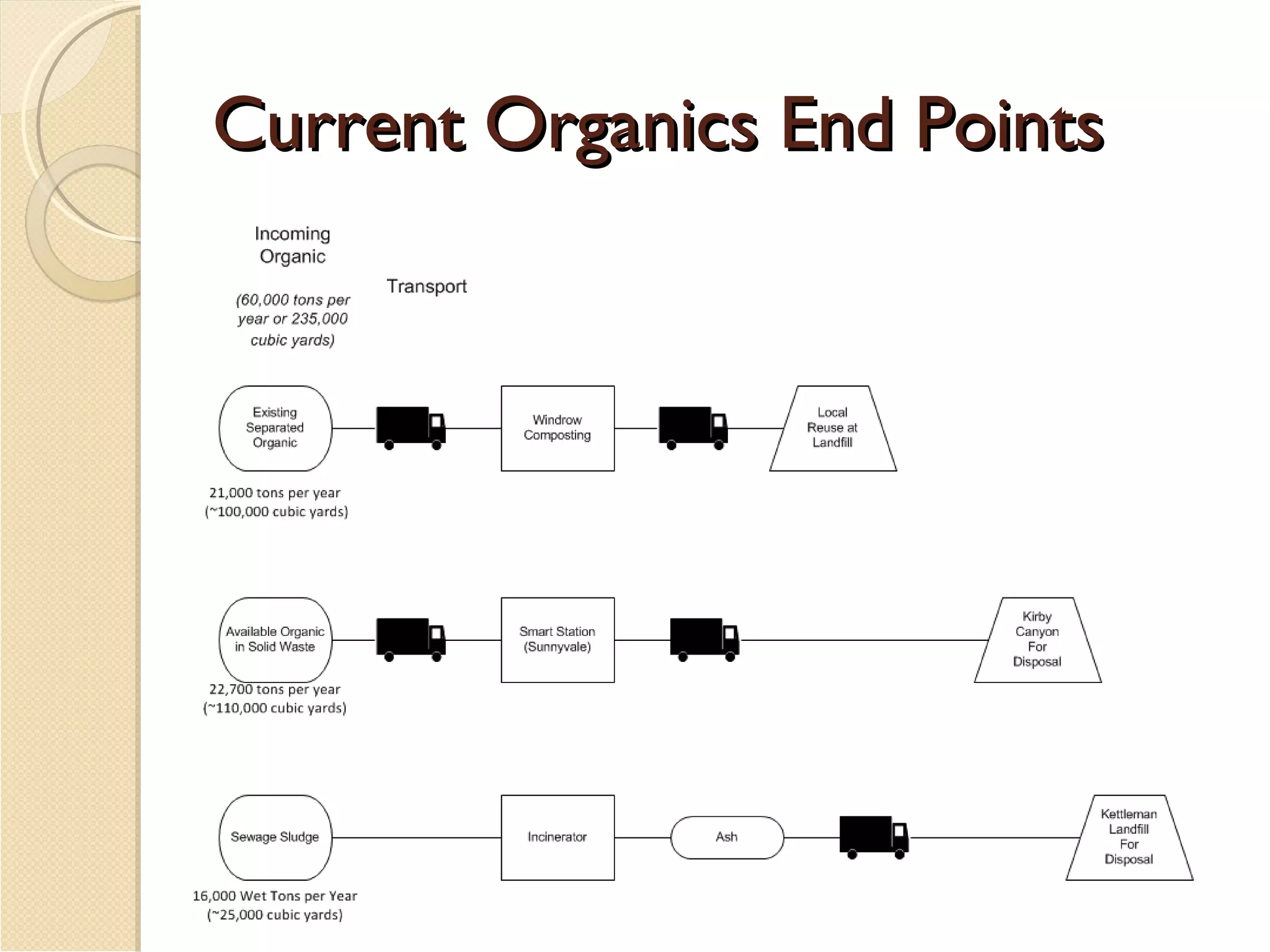
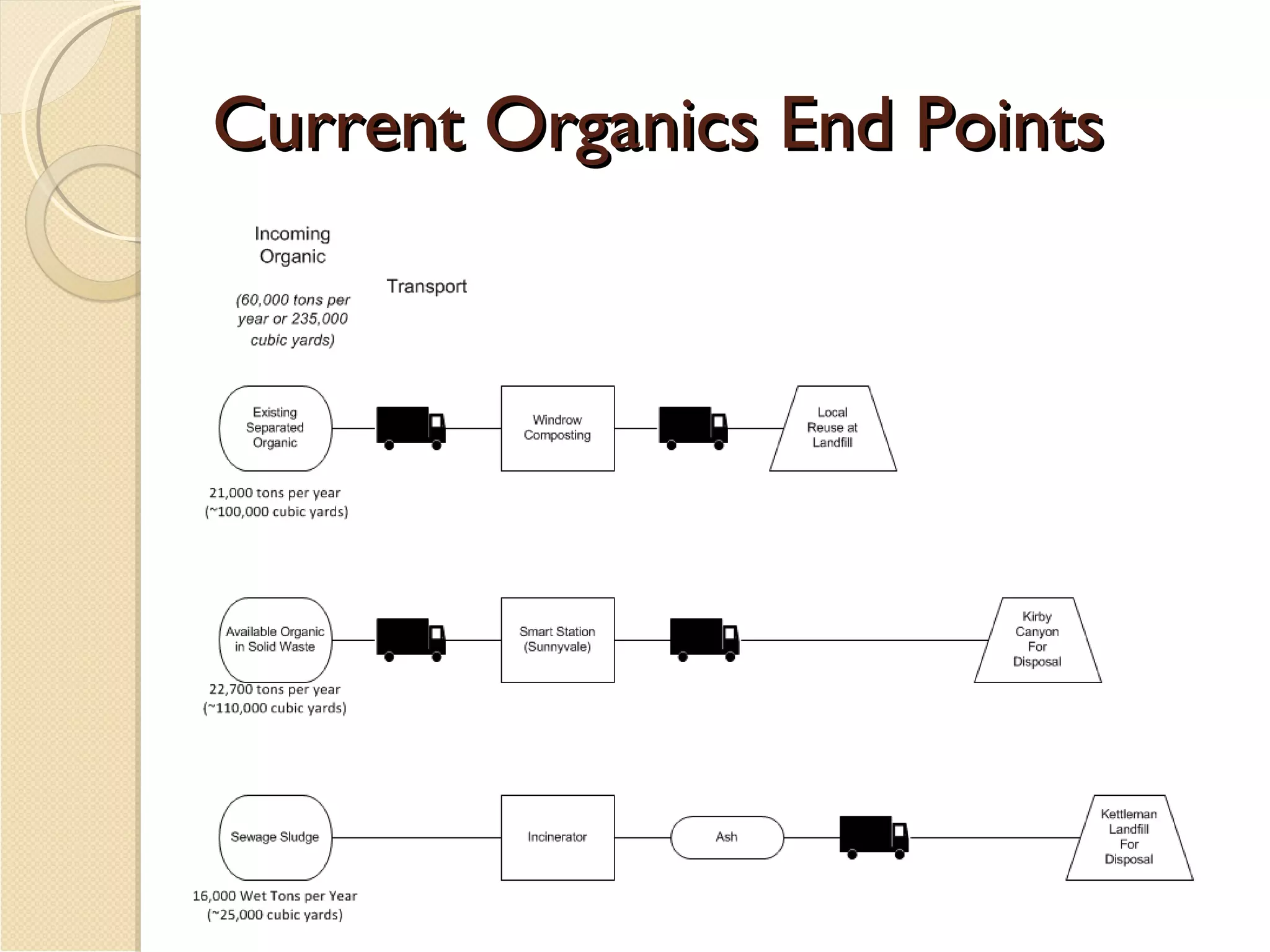
Current Organics End Points
TECHNOLOGY Hilary Gans Ann Schneider Sophia Skoda, EBMUD Steven Sherman, Steven Sherman Consulting Bob Niederman
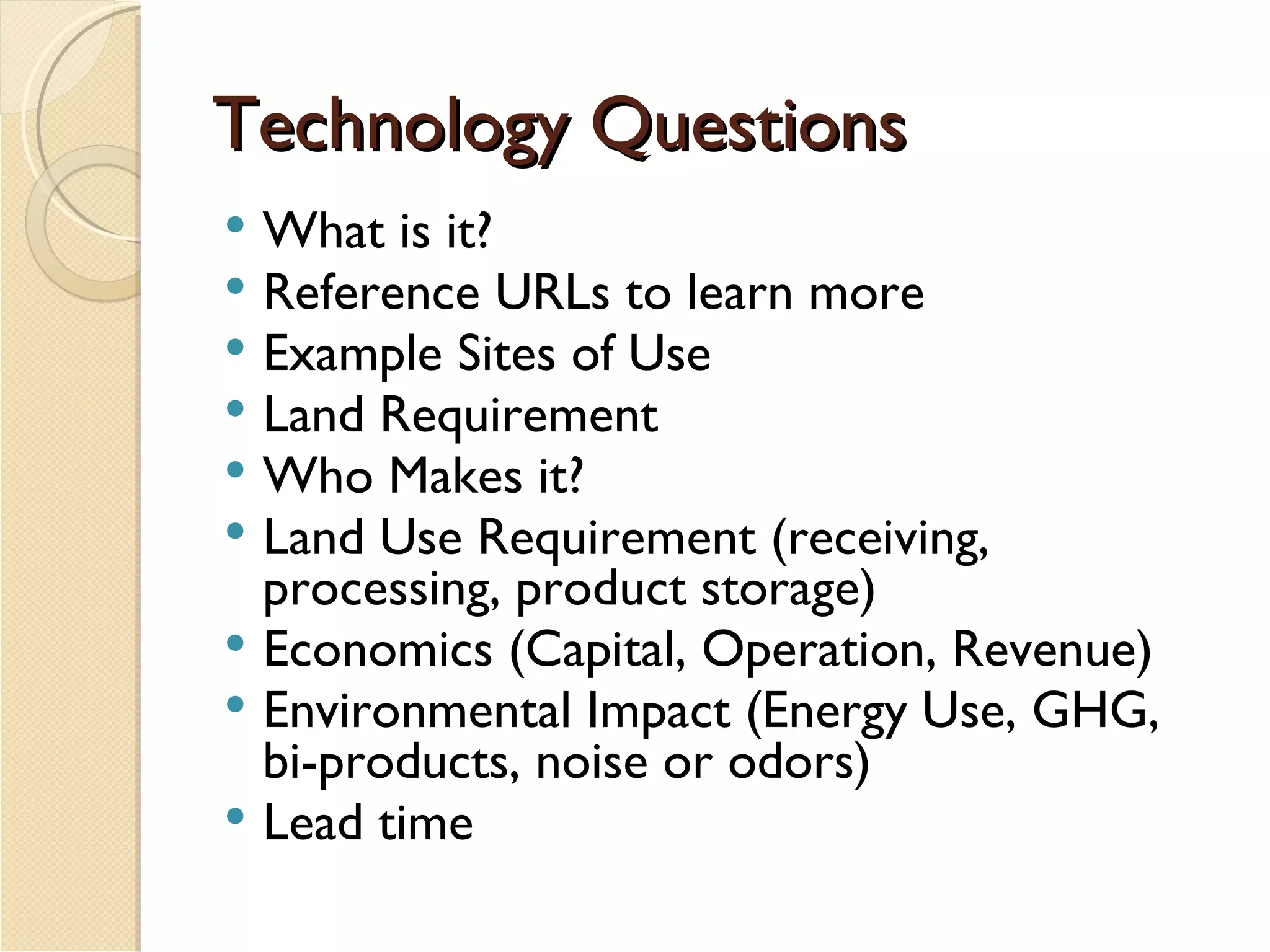
Technology Questions What is it? Reference URLs to learn more Example Sites of Use Land Requirement Who Makes it? Land Use Requirement (receiving, processing, product storage) Economics (Capital, Operation, Revenue) Environmental Impact (Energy Use, GHG, bi-products, noise or odors) Lead time
TECHNOLOGY:  COMPOSTING Hilary Gans Ann Schneider
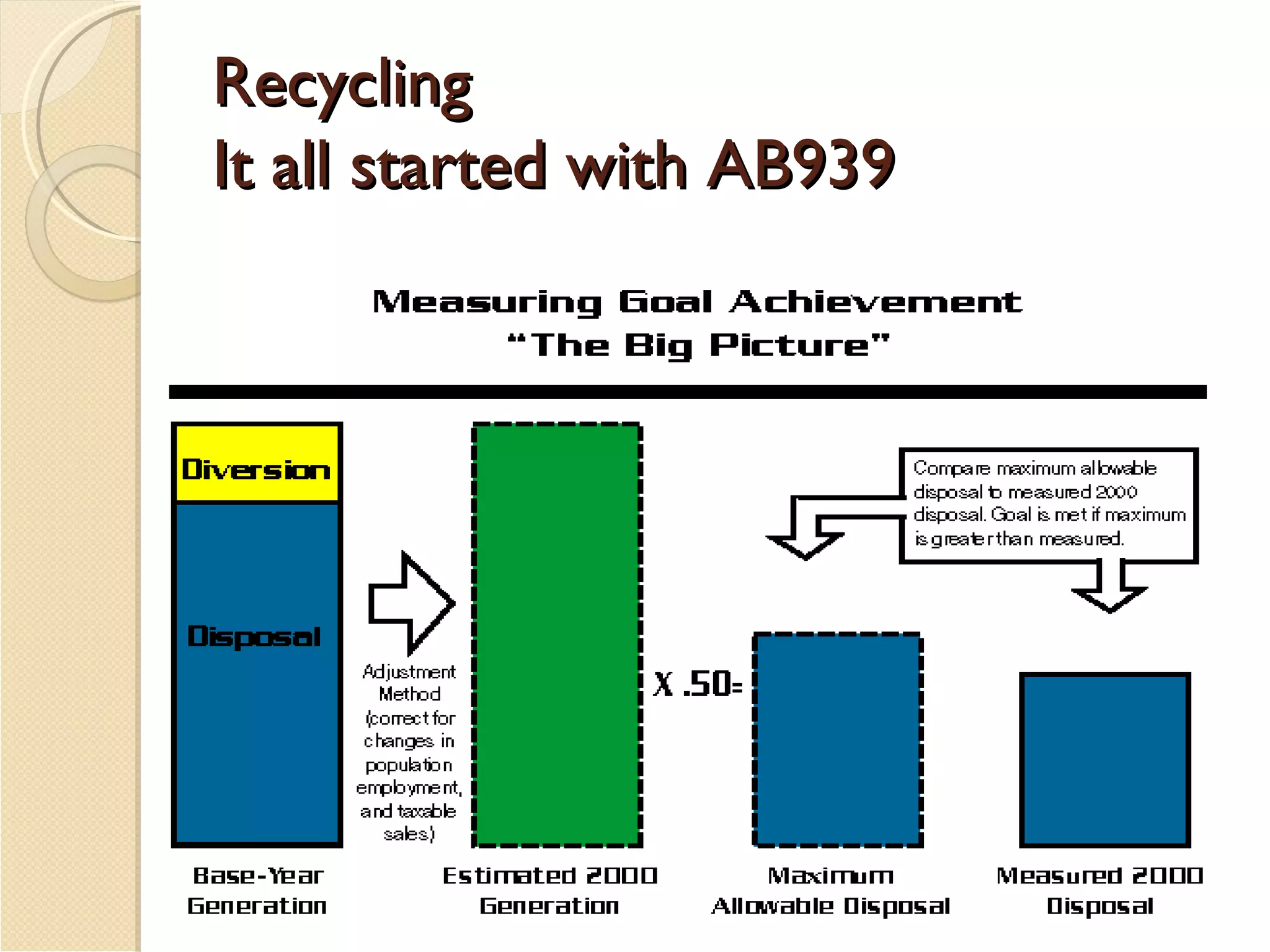
Recycling It all started with AB939
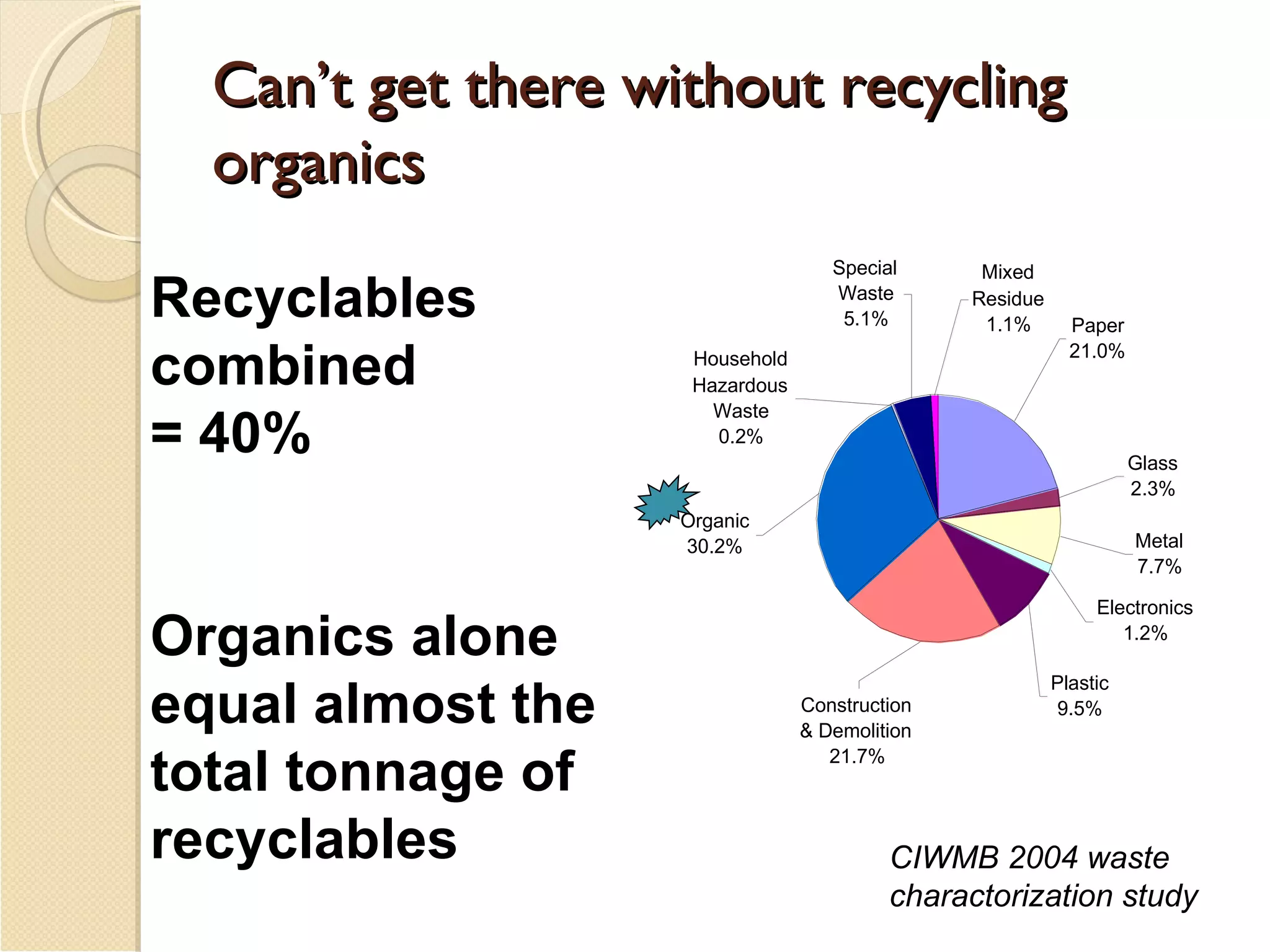
Can’t get there without recycling organics Recyclables  combined  = 40% Organics alone equal almost the total tonnage of recyclables CIWMB 2004 waste  charactorization study
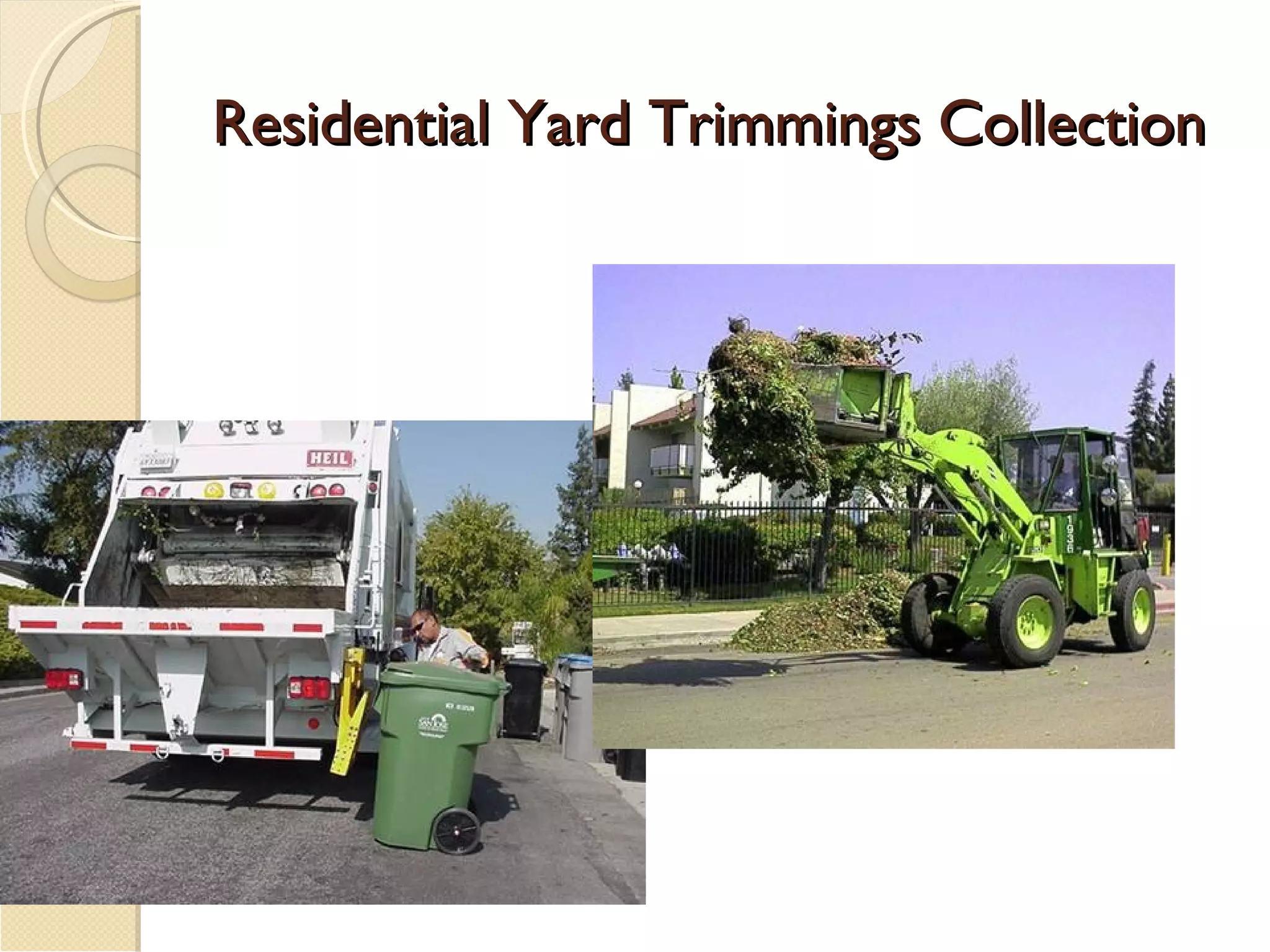
Residential Yard Trimmings Collection
 
 
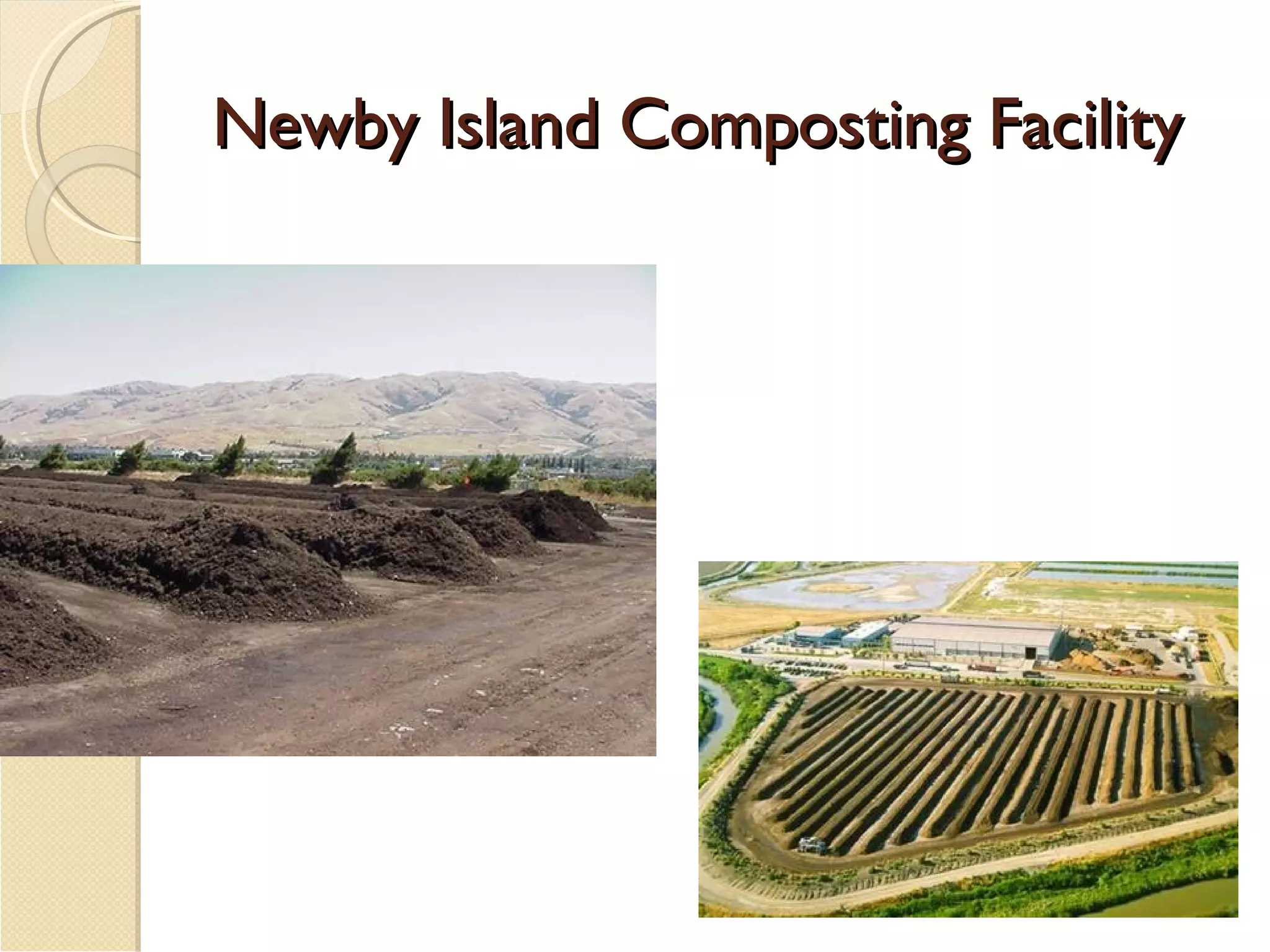
Newby Island Composting Facility
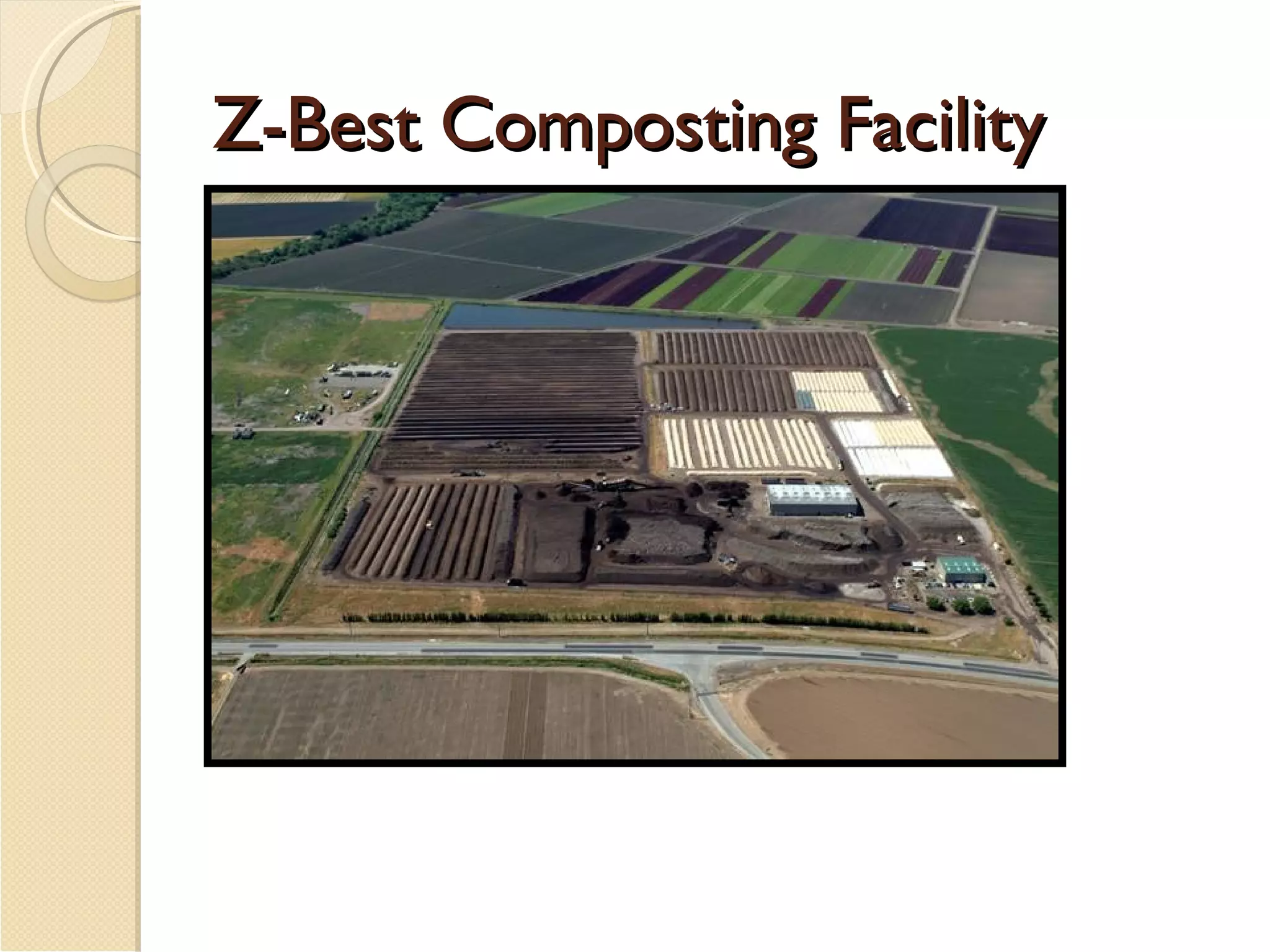
Z-Best Composting Facility
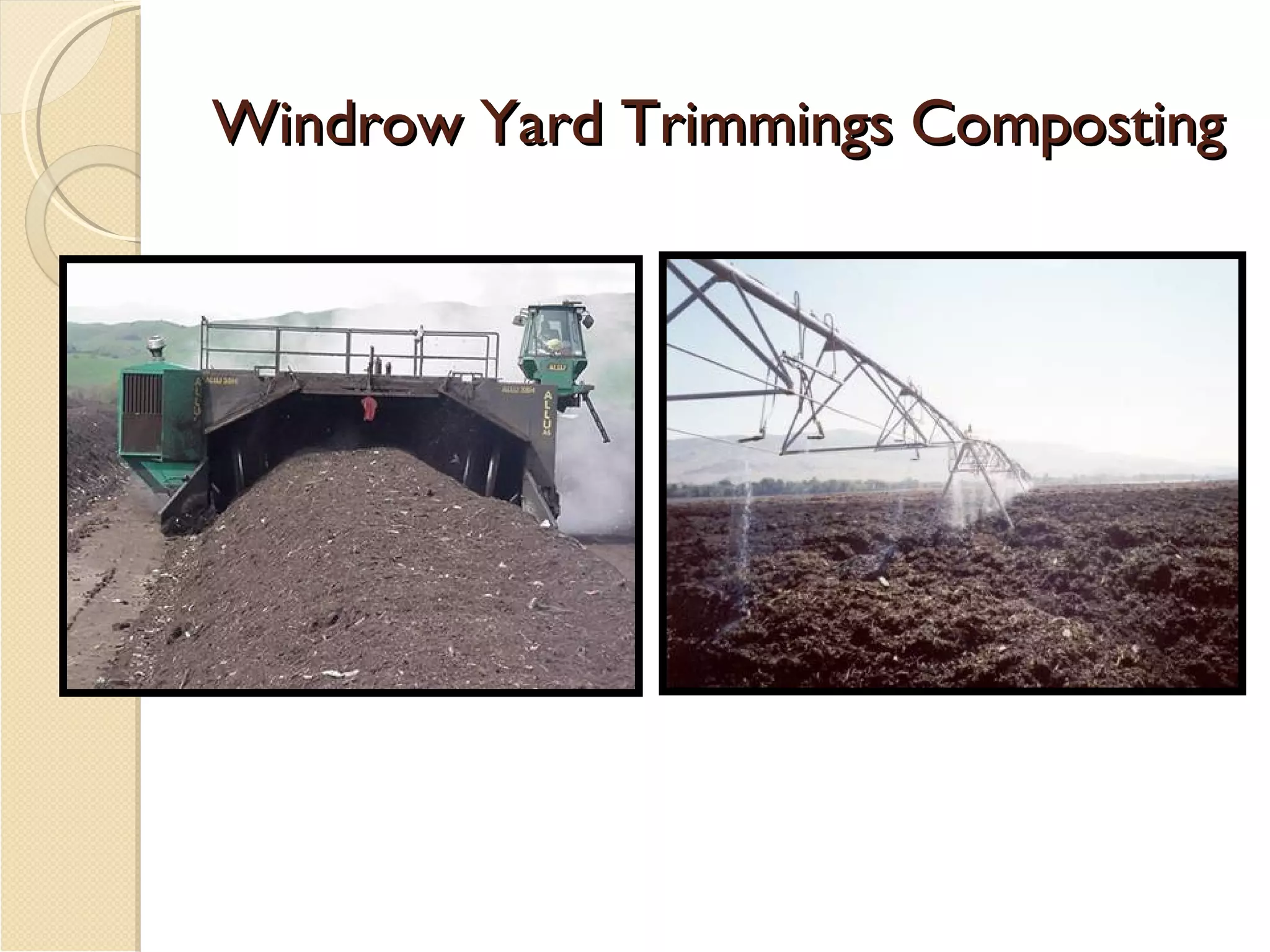
Windrow Yard Trimmings Composting
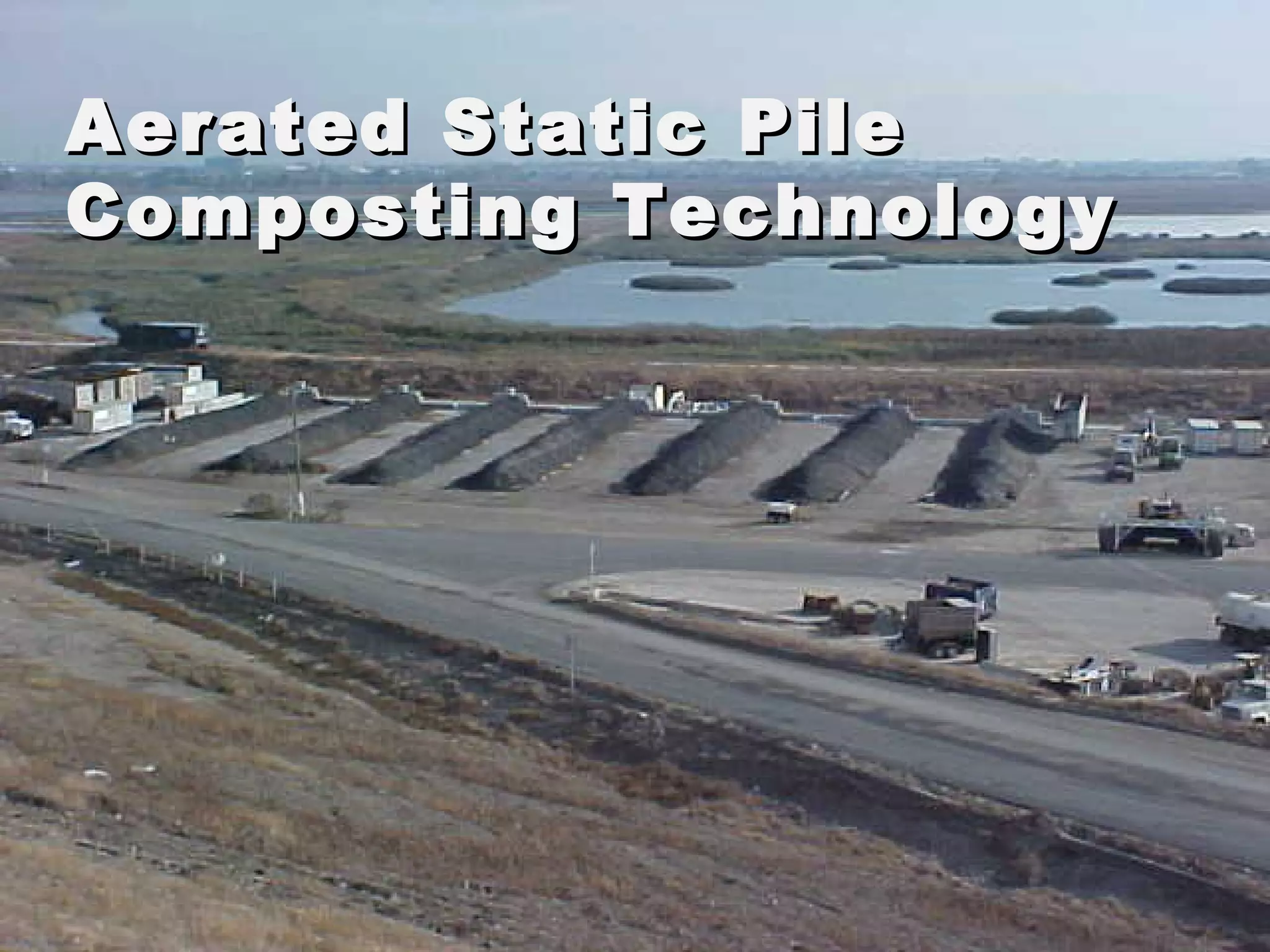
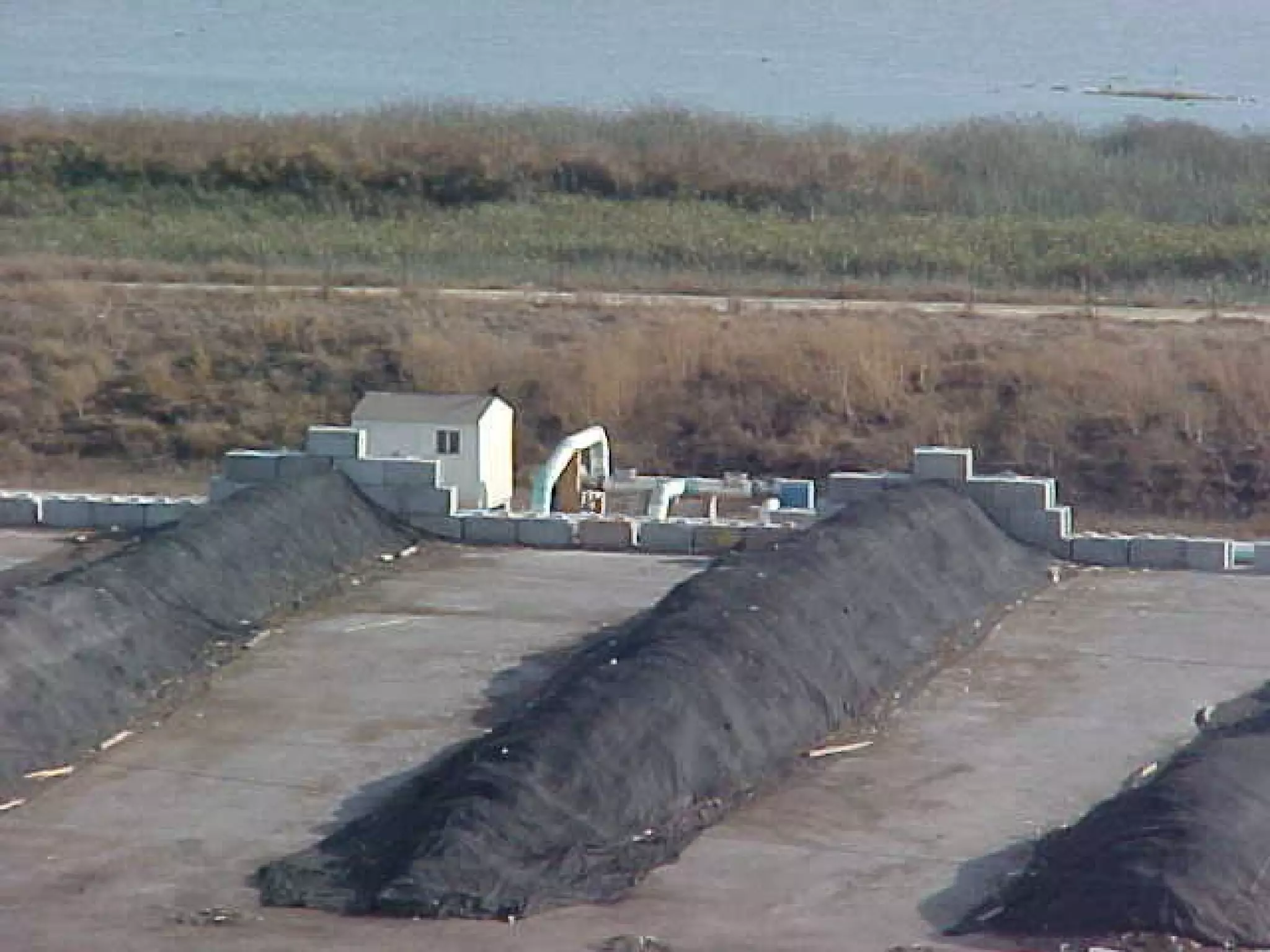
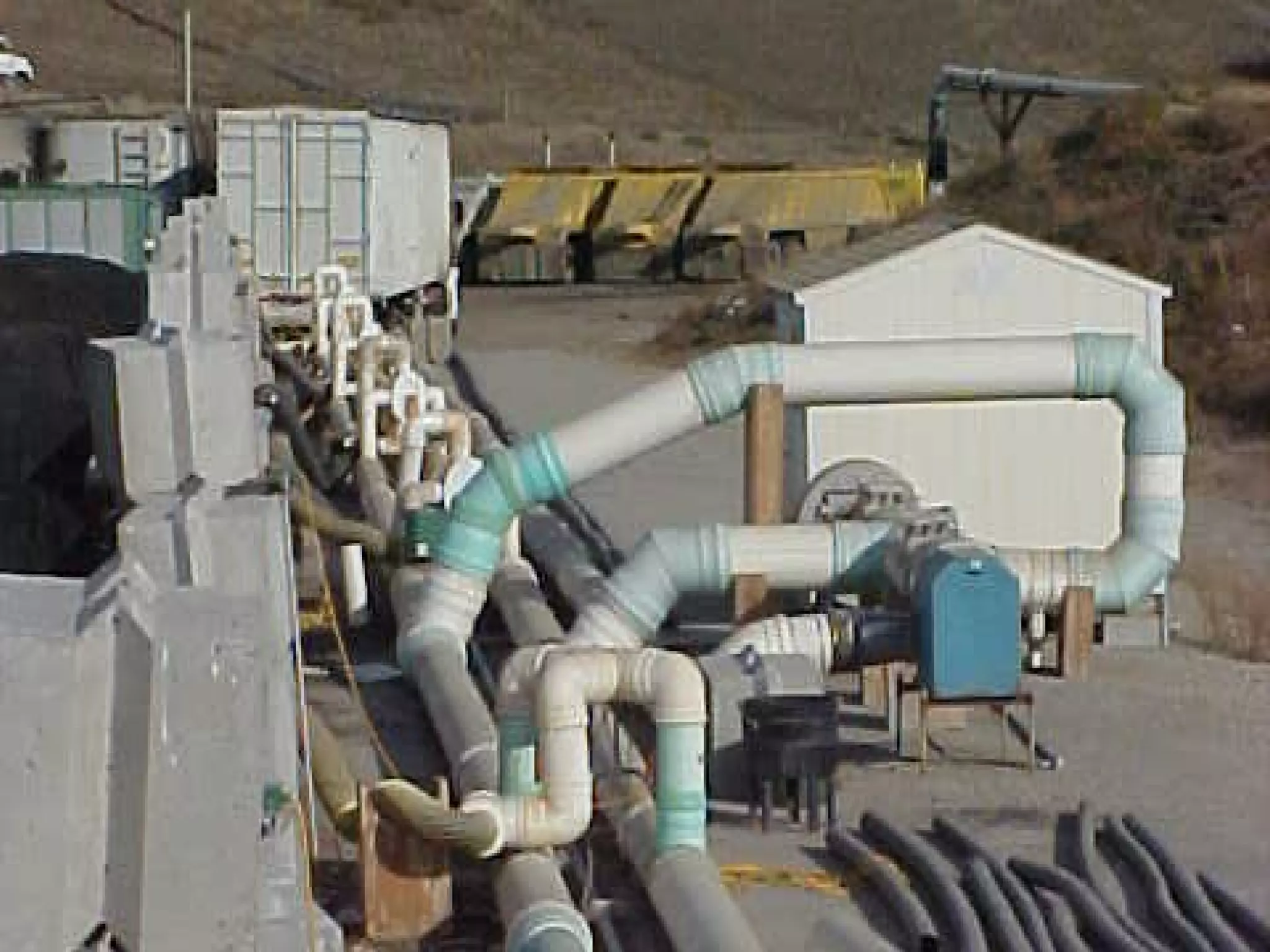
Aerated Static Pile Composting Technology
 
 
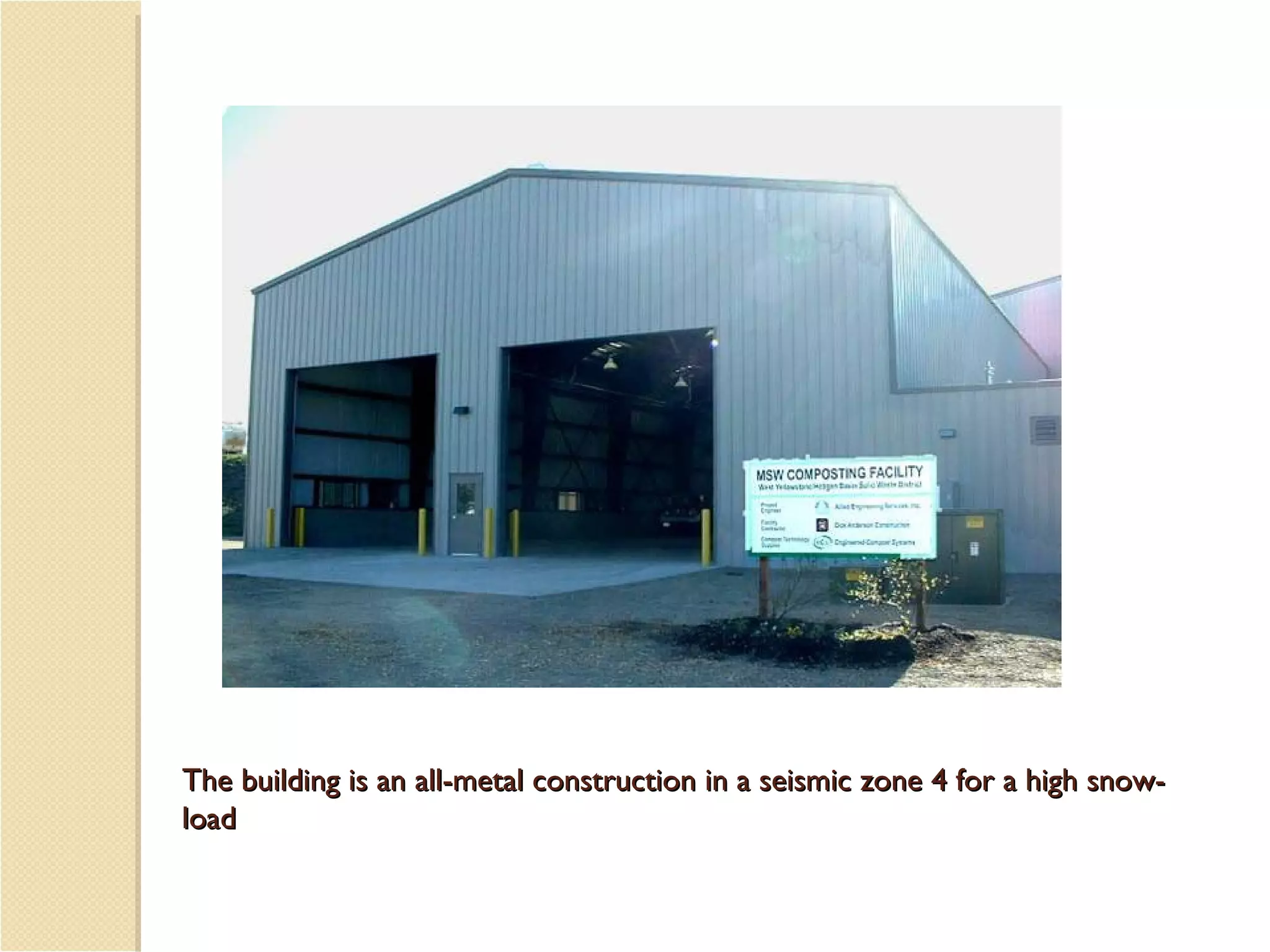
The building is an all-metal construction in a seismic zone 4 for a high snow-load
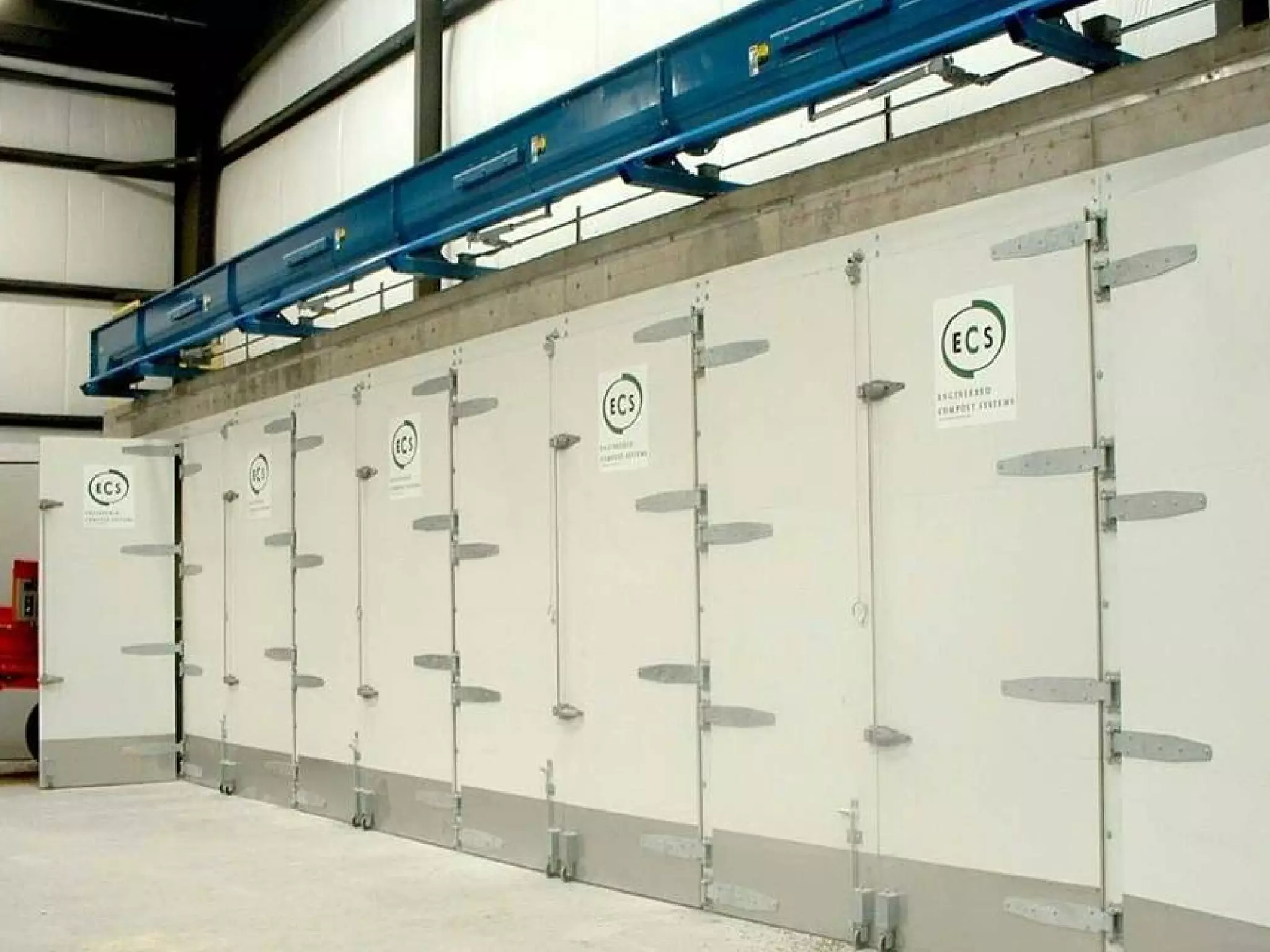
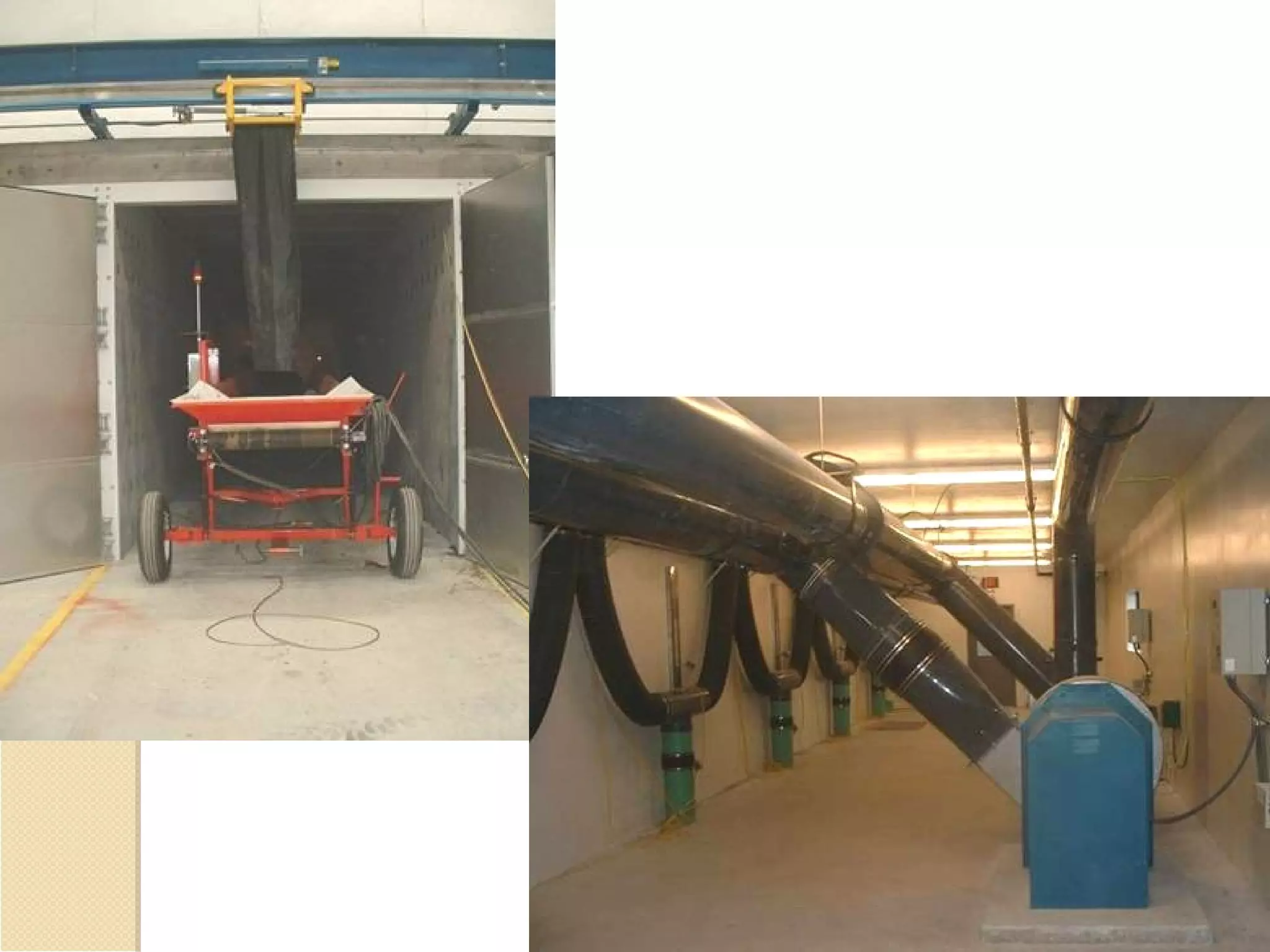
The facility is designed to process 45 tons/day of mixed organic waste. All process functions (pre-processing, composting, curing and product refining) are conducted within this building.
 
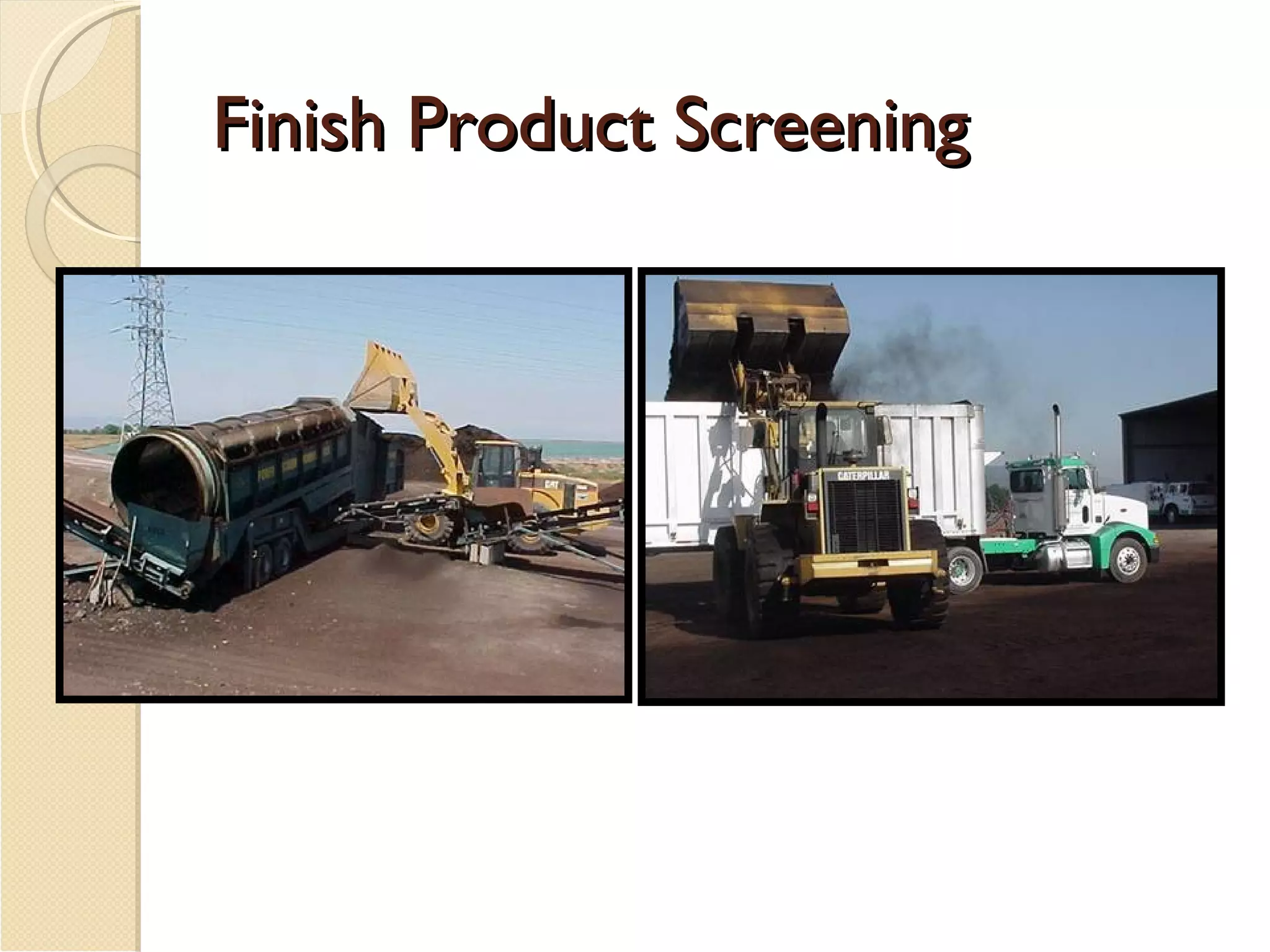
Finish Product Screening
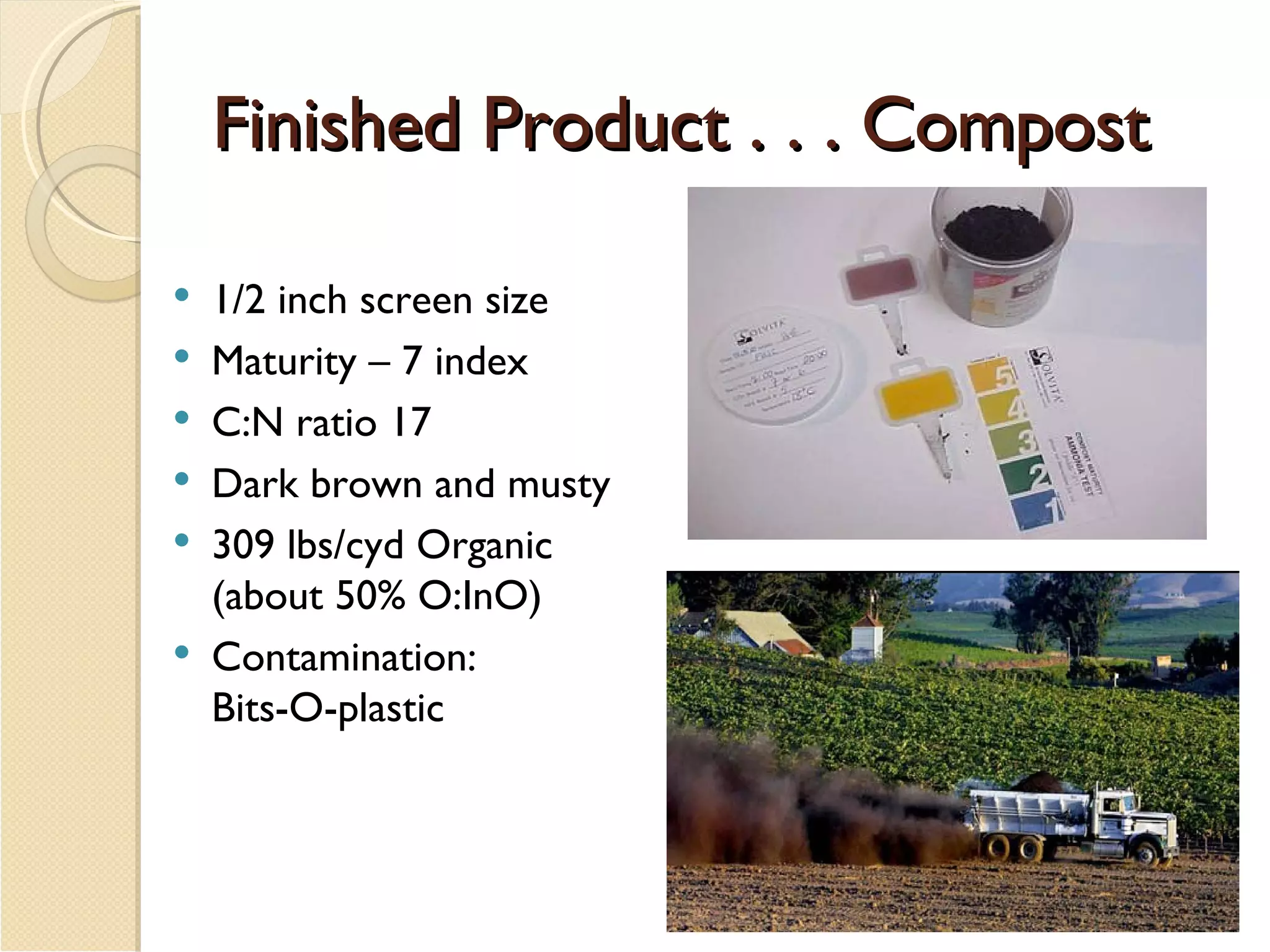
Finished Product . . . Compost  1/2 inch screen size Maturity – 7 index C:N ratio 17 Dark brown and musty 309 lbs/cyd Organic (about 50% O:InO) Contamination:  Bits-O-plastic
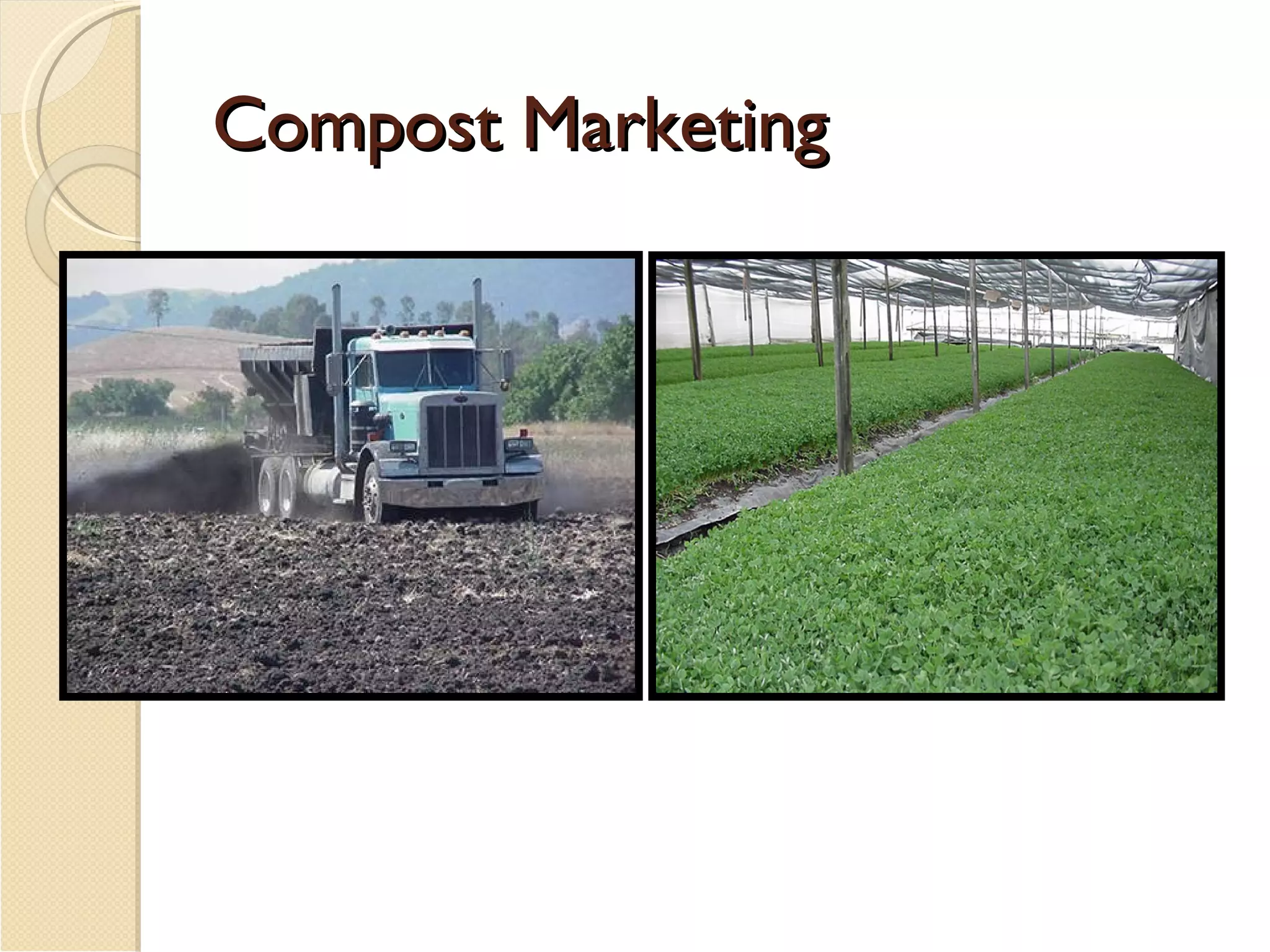
Compost Marketing
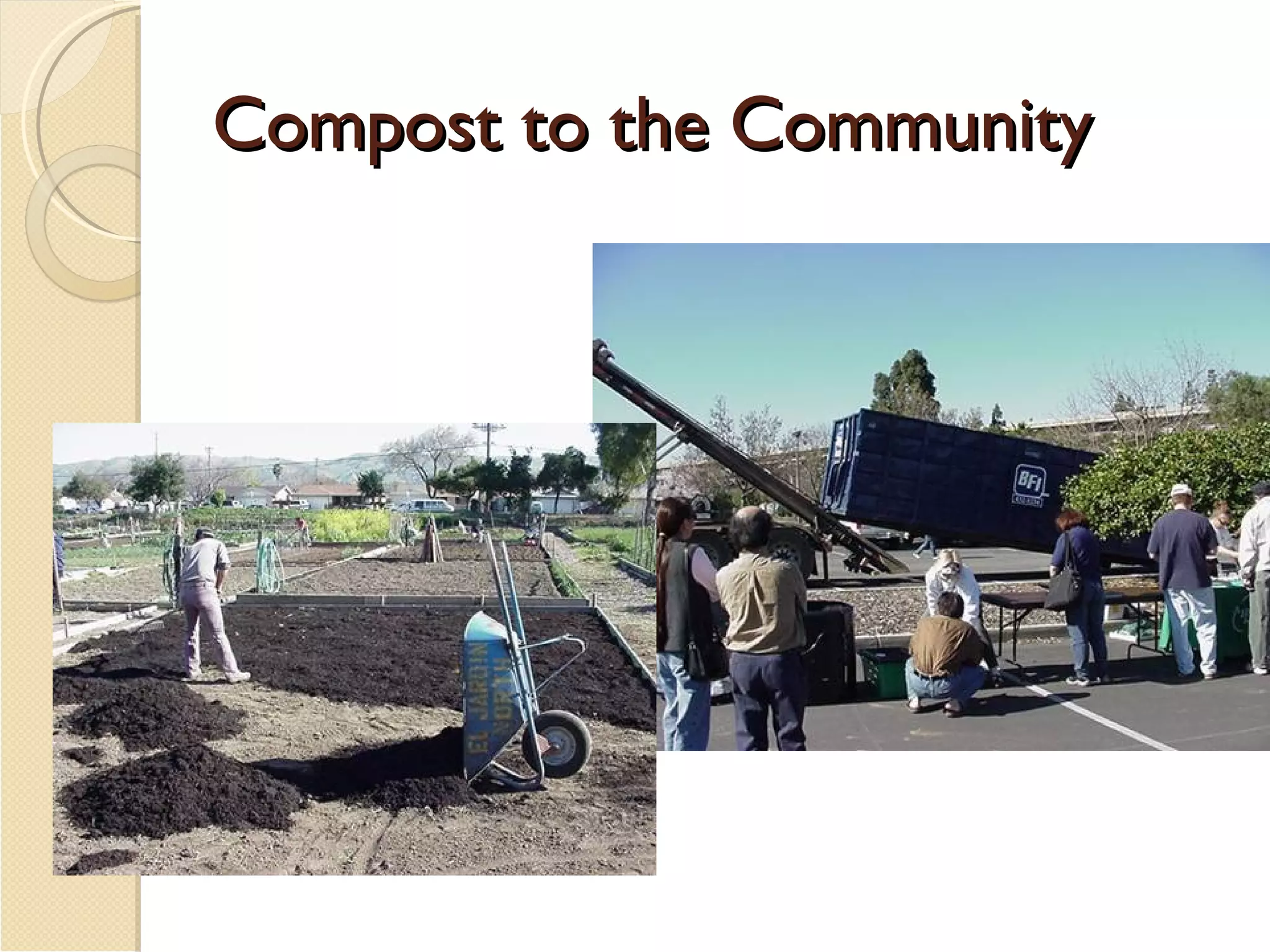
Compost to the Community
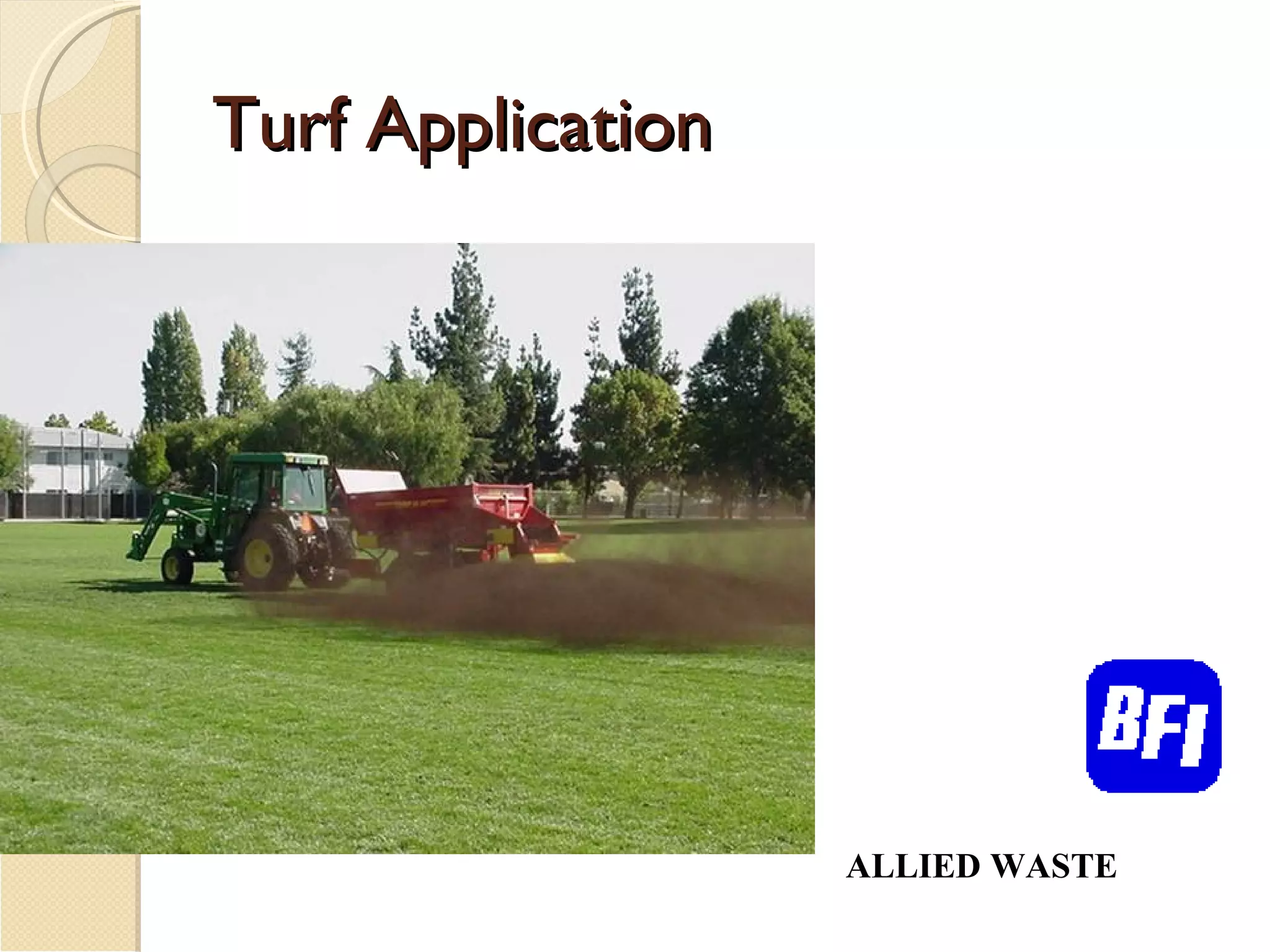
Turf Application ALLIED WASTE
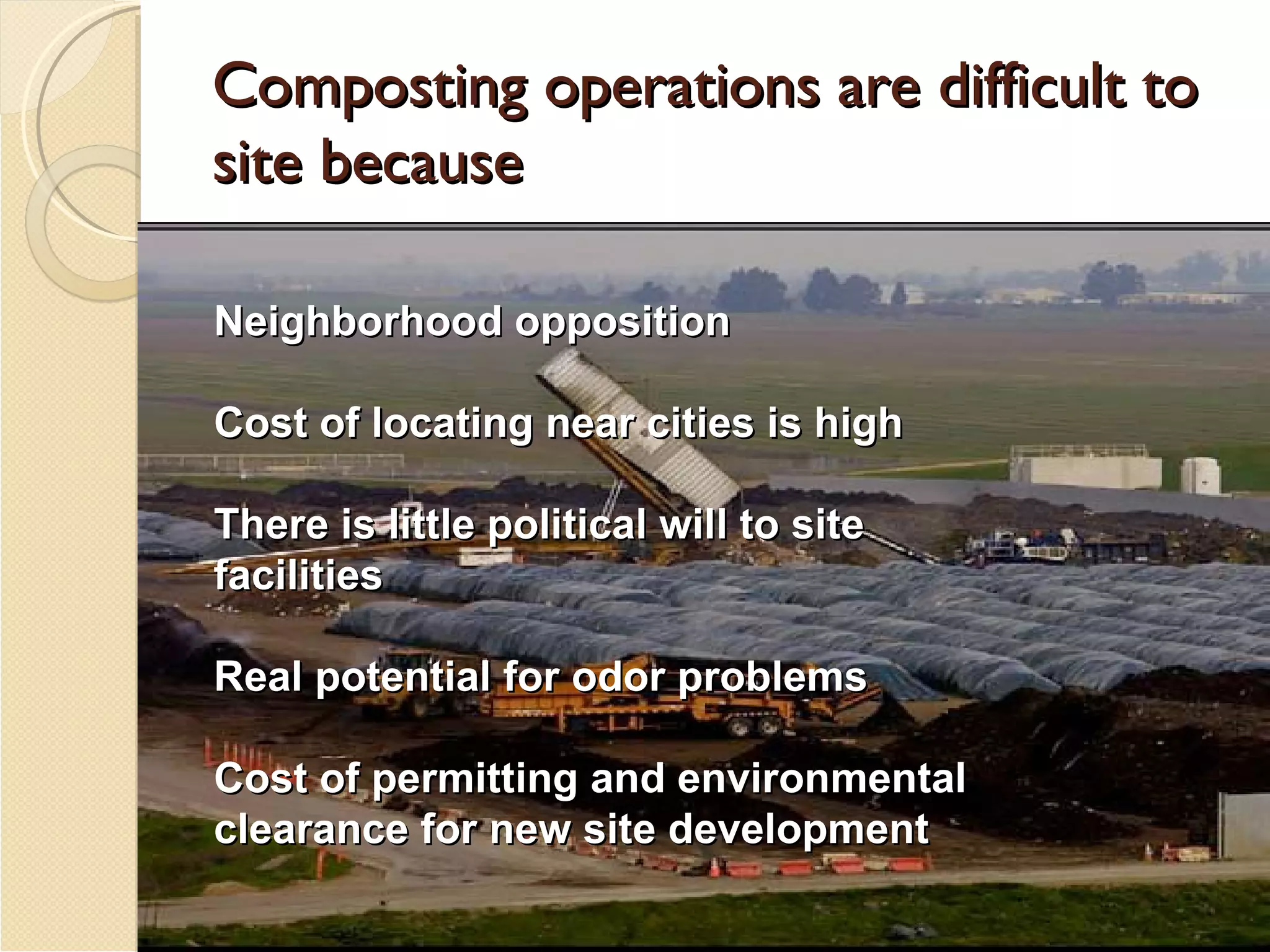
Composting operations are difficult to site because Neighborhood opposition Cost of locating near cities is high There is little political will to site facilities Real potential for odor problems Cost of permitting and environmental  clearance for new site development
 
 
Questions
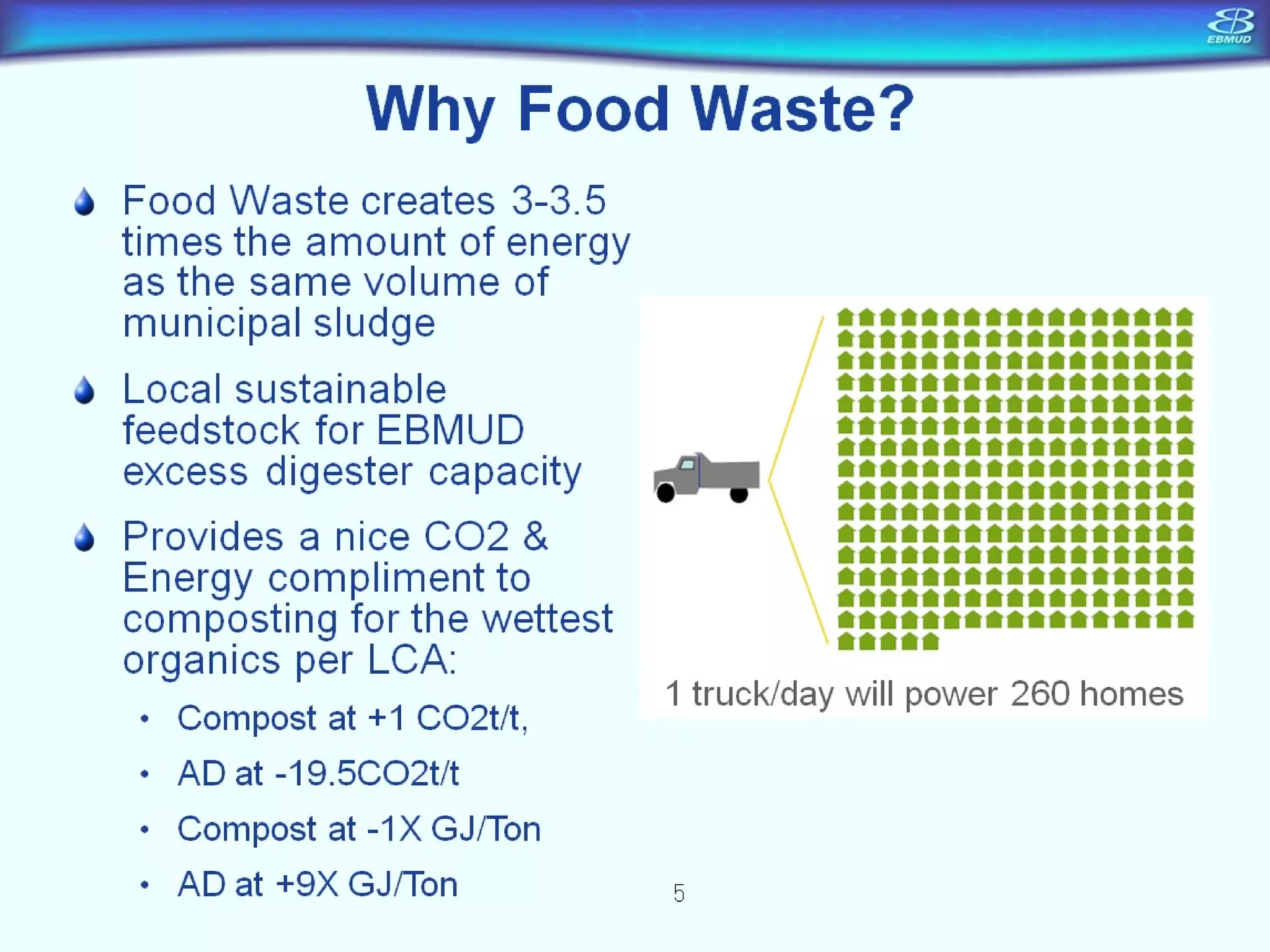
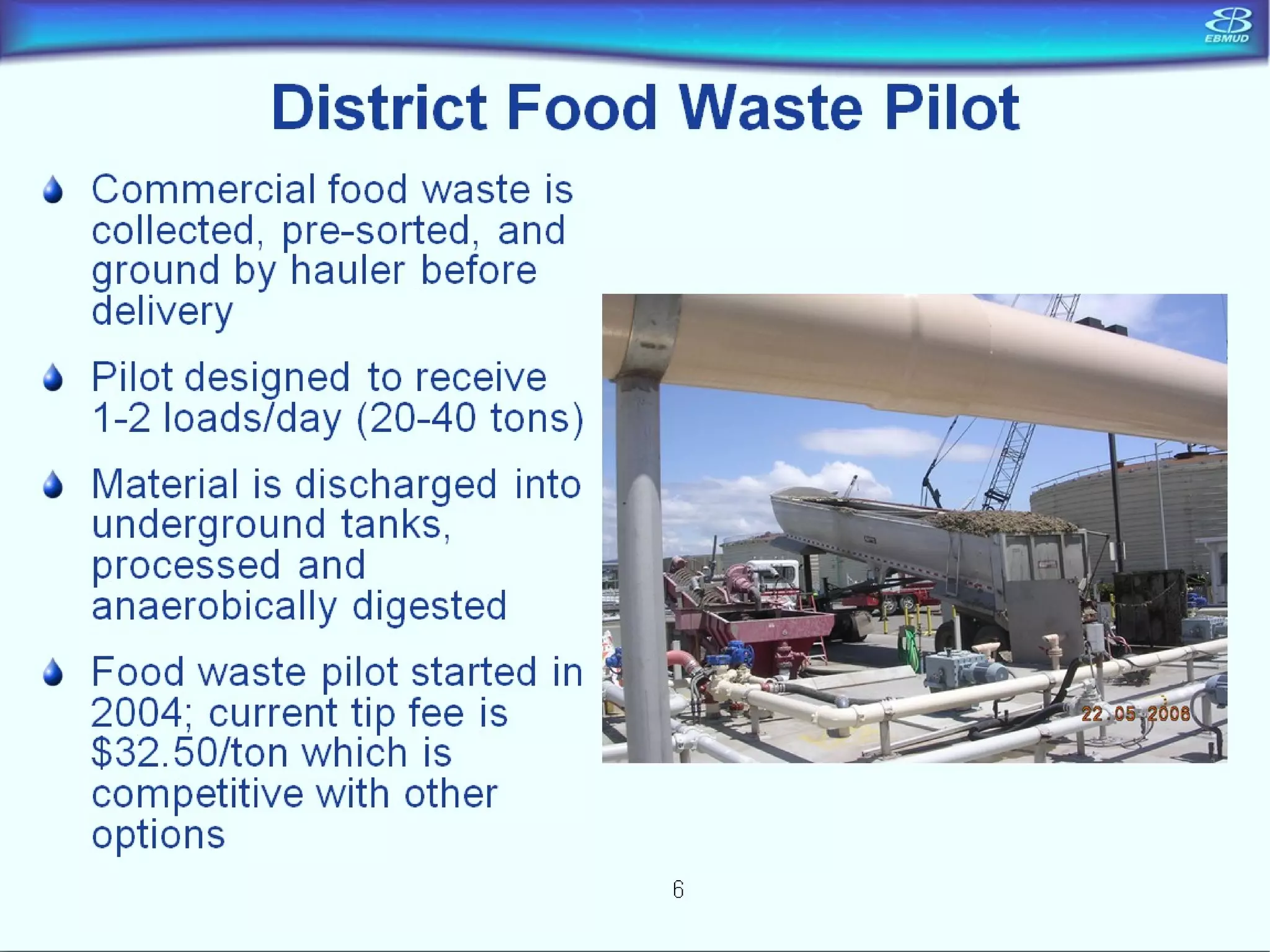
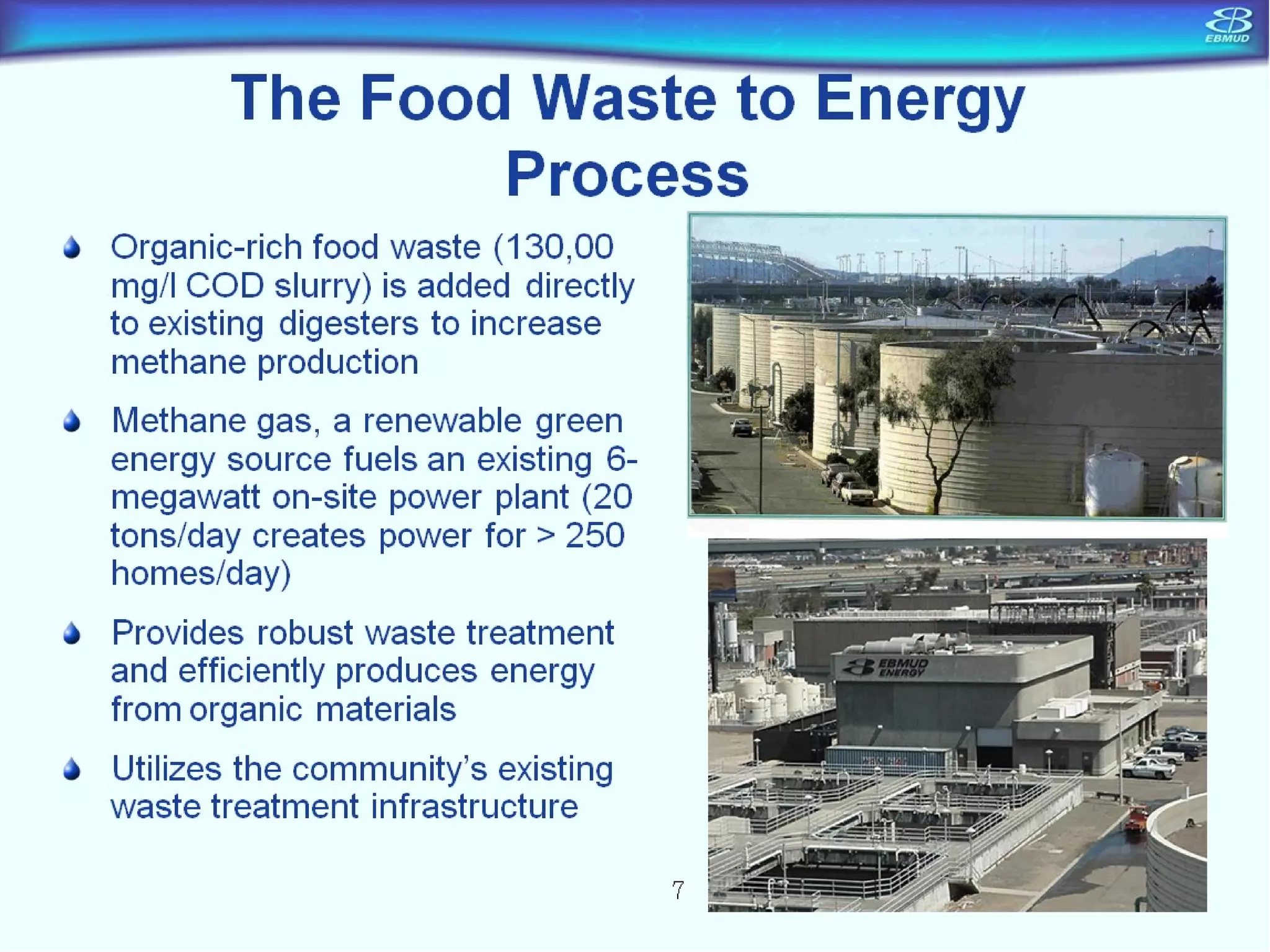
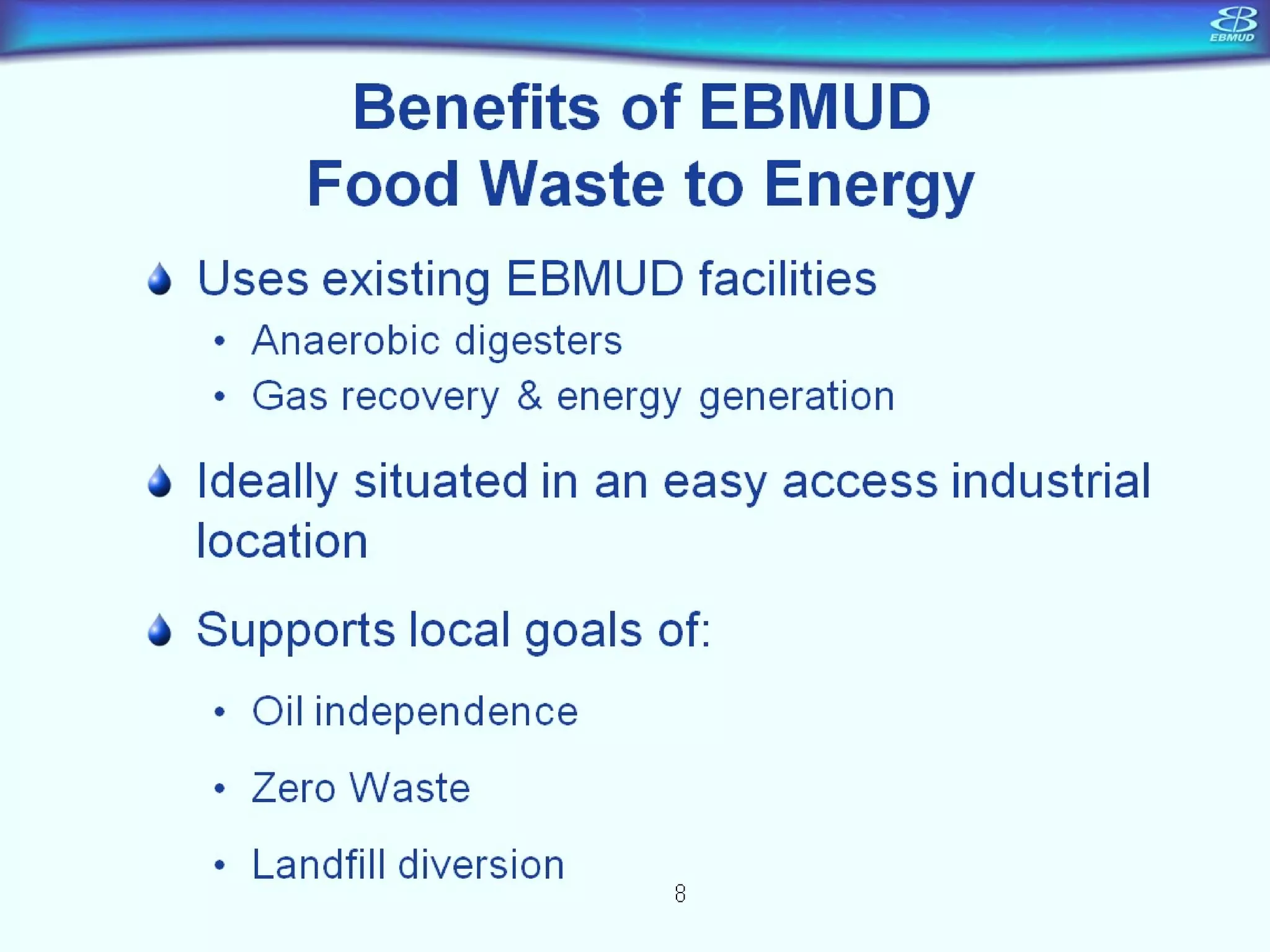
TECHNOLOGY:  ANAEROBIC DIGESTION Sophia Skoda, EBMUD


TECHNOLOGY: BAY AREA COMPOSTING EXPERIENCE Steven Sherman, Steven Sherman Consulting
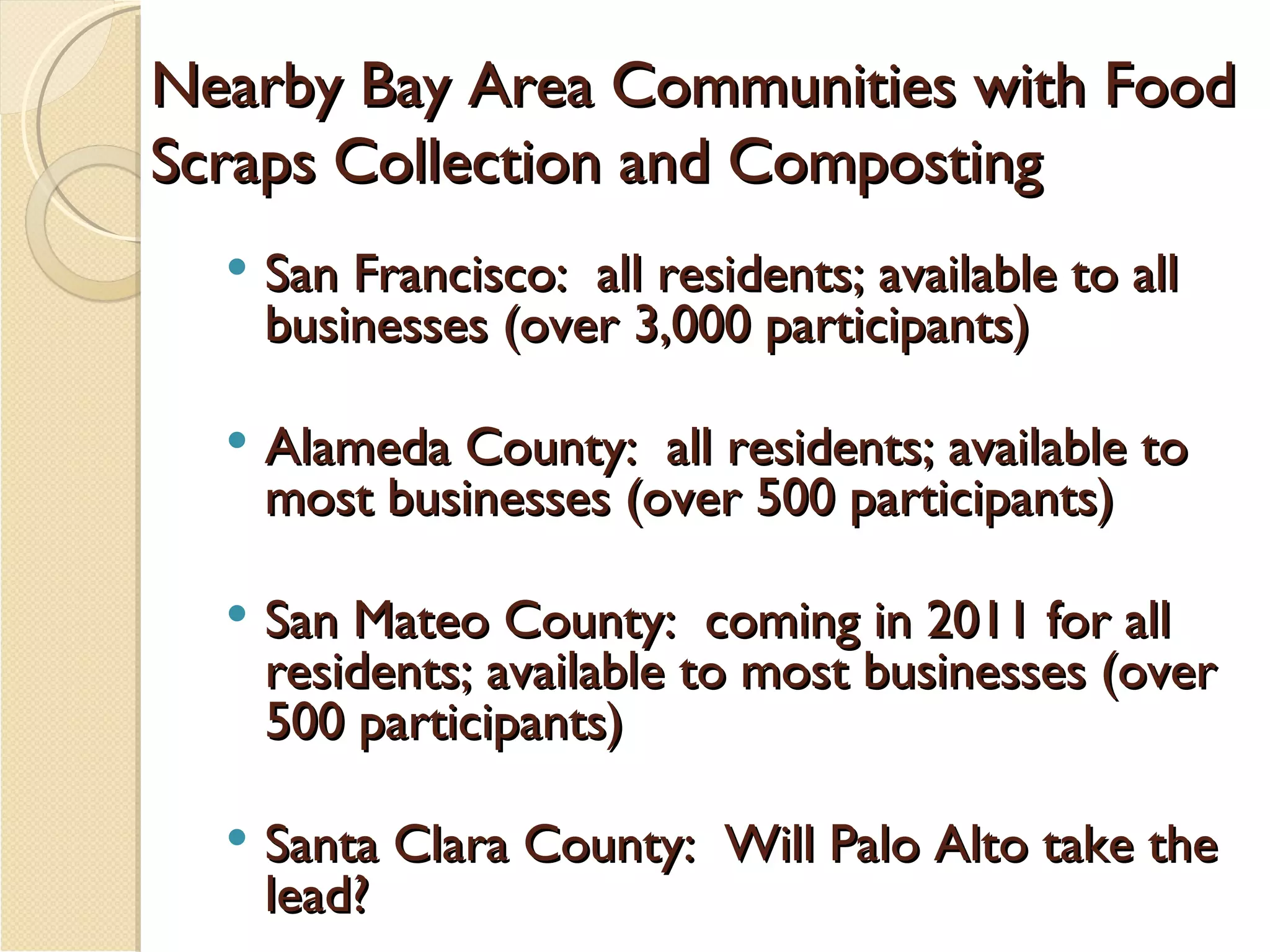
Nearby Bay Area Communities with Food Scraps Collection and Composting San Francisco:  all residents; available to all businesses (over 3,000 participants) Alameda County:  all residents; available to most businesses (over 500 participants) San Mateo County:  coming in 2011 for all residents; available to most businesses (over 500 participants) Santa Clara County:  Will Palo Alto take the lead?
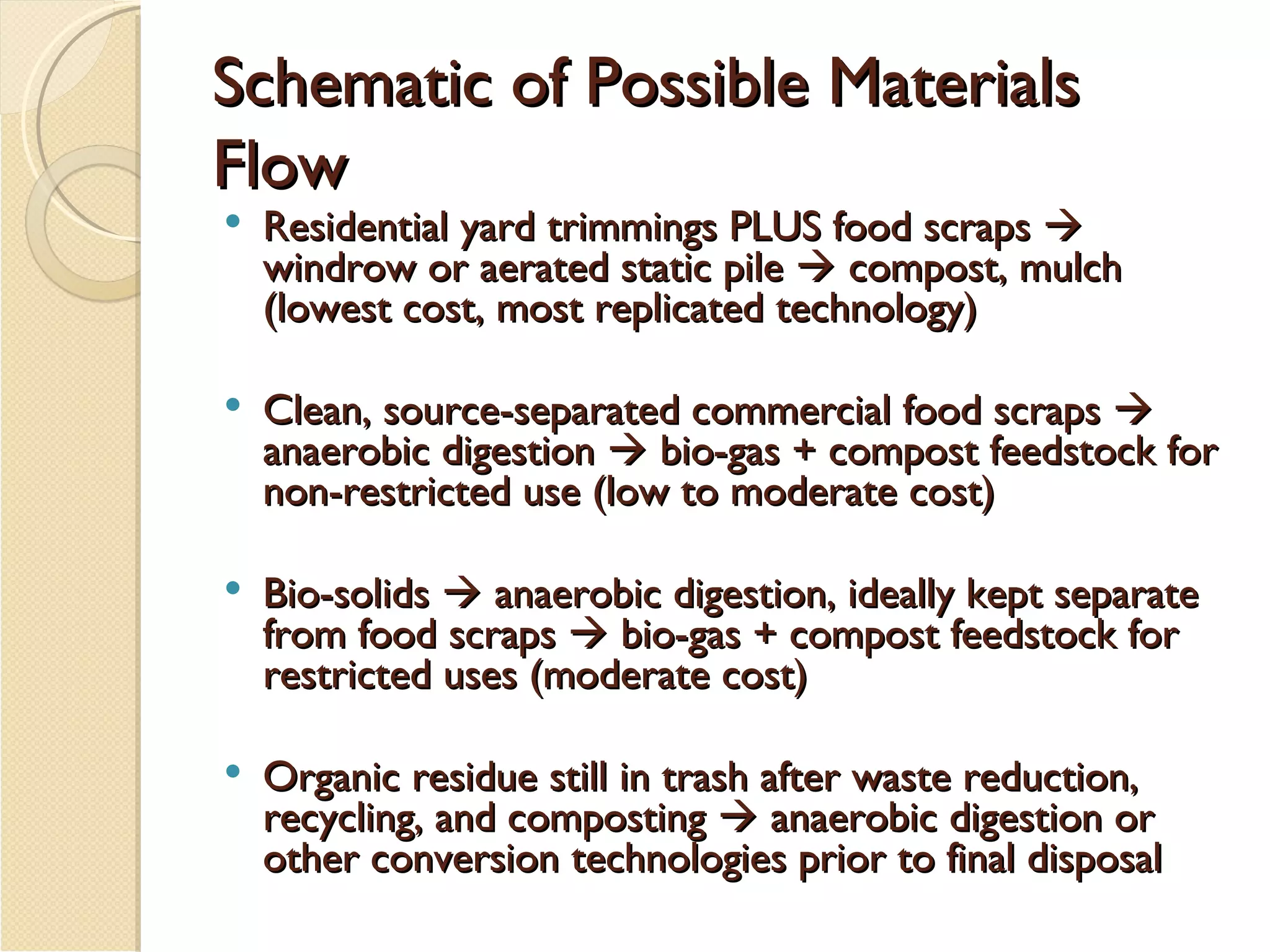
Schematic of Possible Materials Flow Residential yard trimmings PLUS food scraps    windrow or aerated static pile    compost, mulch (lowest cost, most replicated technology) Clean, source-separated commercial food scraps    anaerobic digestion    bio-gas + compost feedstock for non-restricted use (low to moderate cost) Bio-solids    anaerobic digestion, ideally kept separate from food scraps    bio-gas + compost feedstock for restricted uses (moderate cost) Organic residue still in trash after waste reduction, recycling, and composting    anaerobic digestion or other conversion technologies prior to final disposal
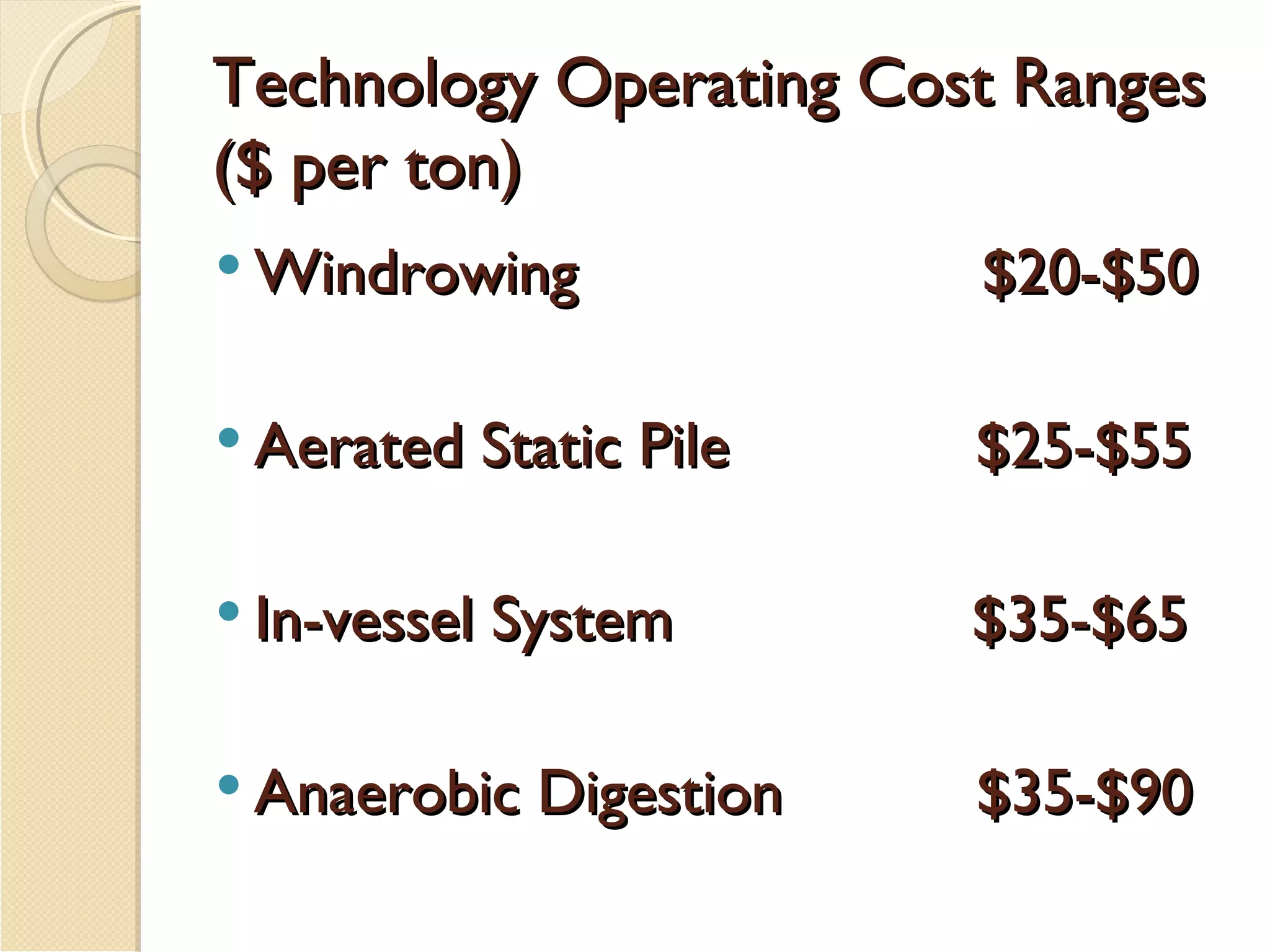
Technology Operating Cost Ranges ($ per ton) Windrowing                       $20-$50 Aerated Static Pile            $25-$55 In-vessel System               $35-$65 Anaerobic Digestion        $35-$90
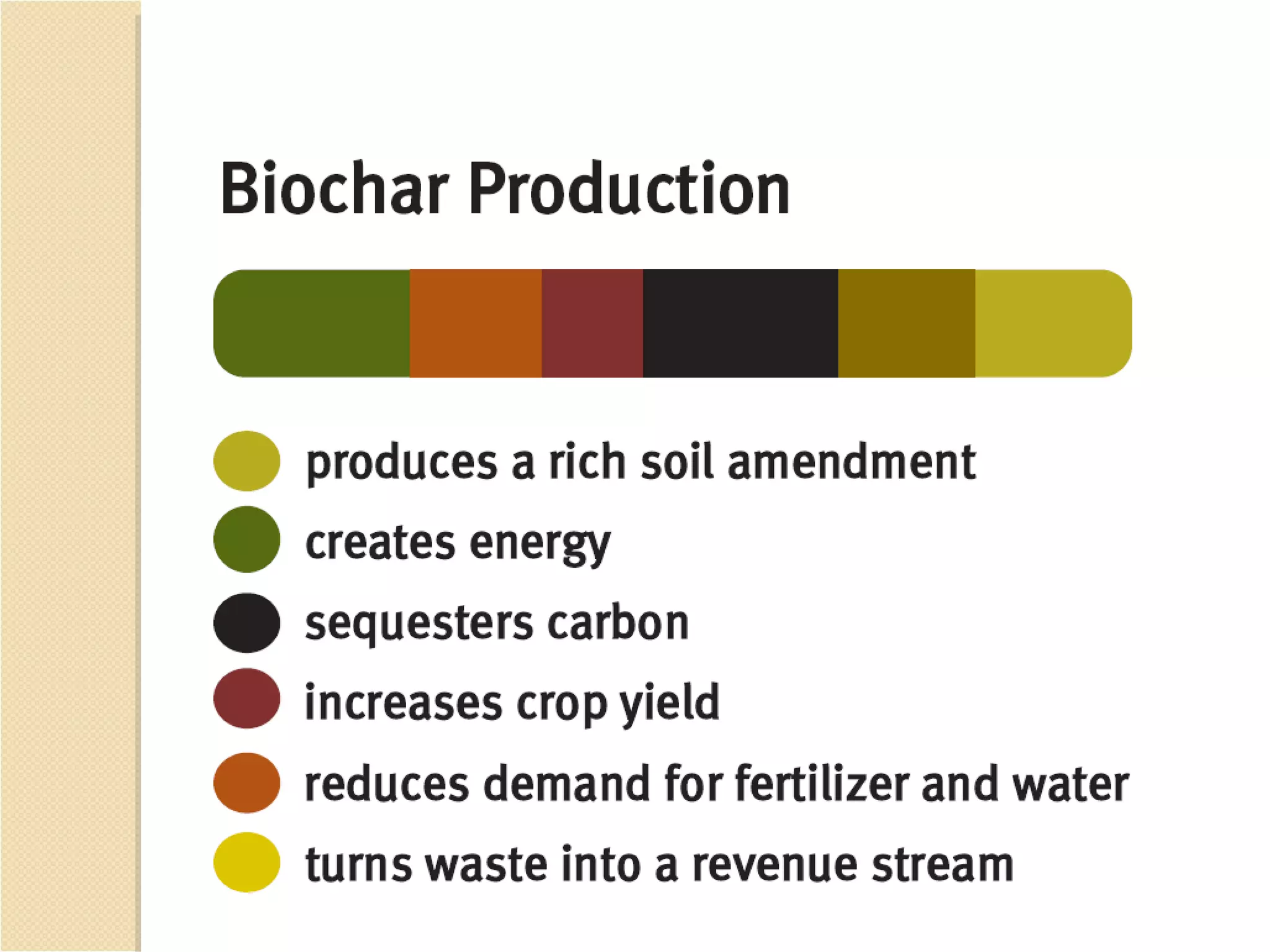
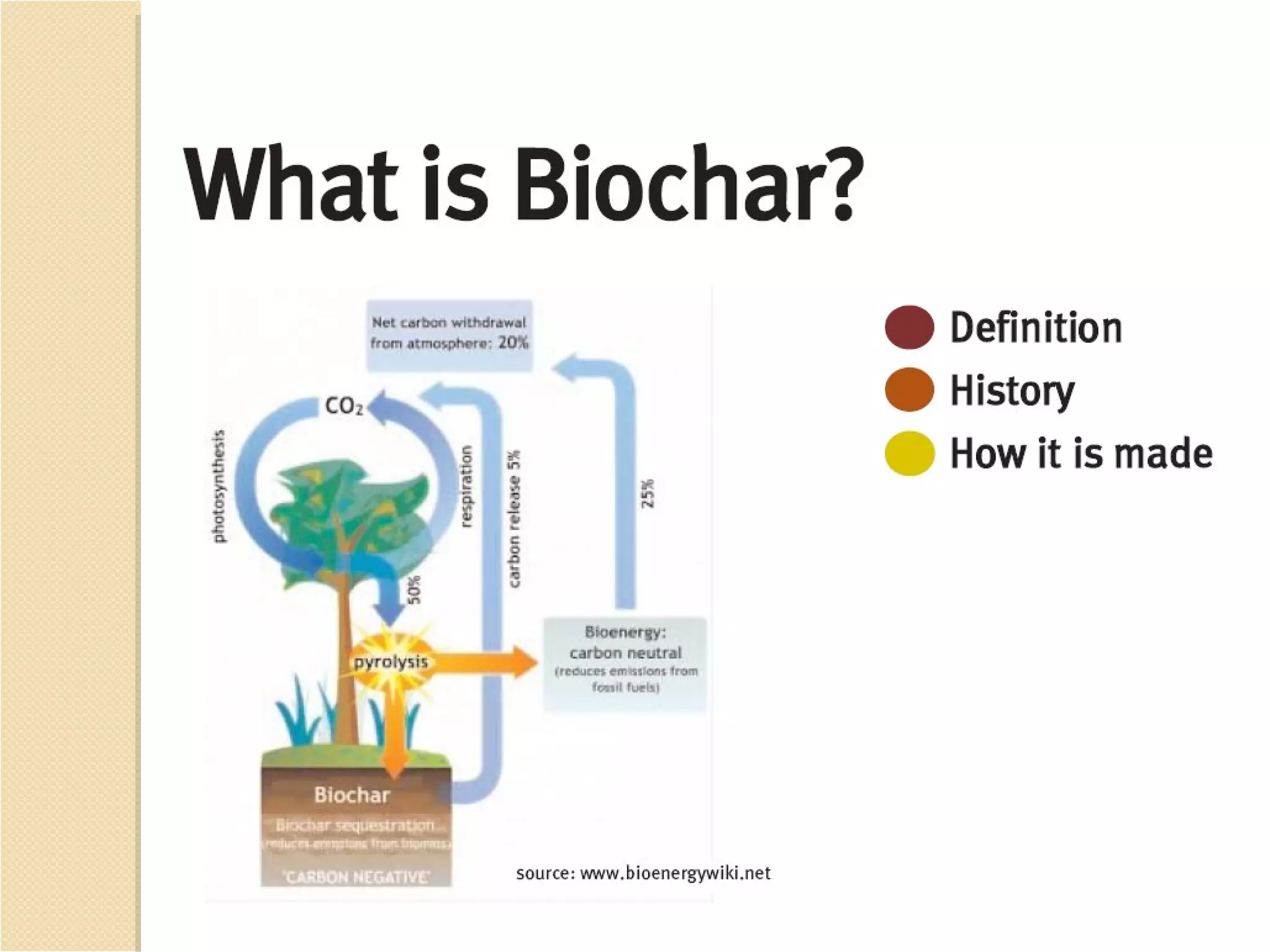
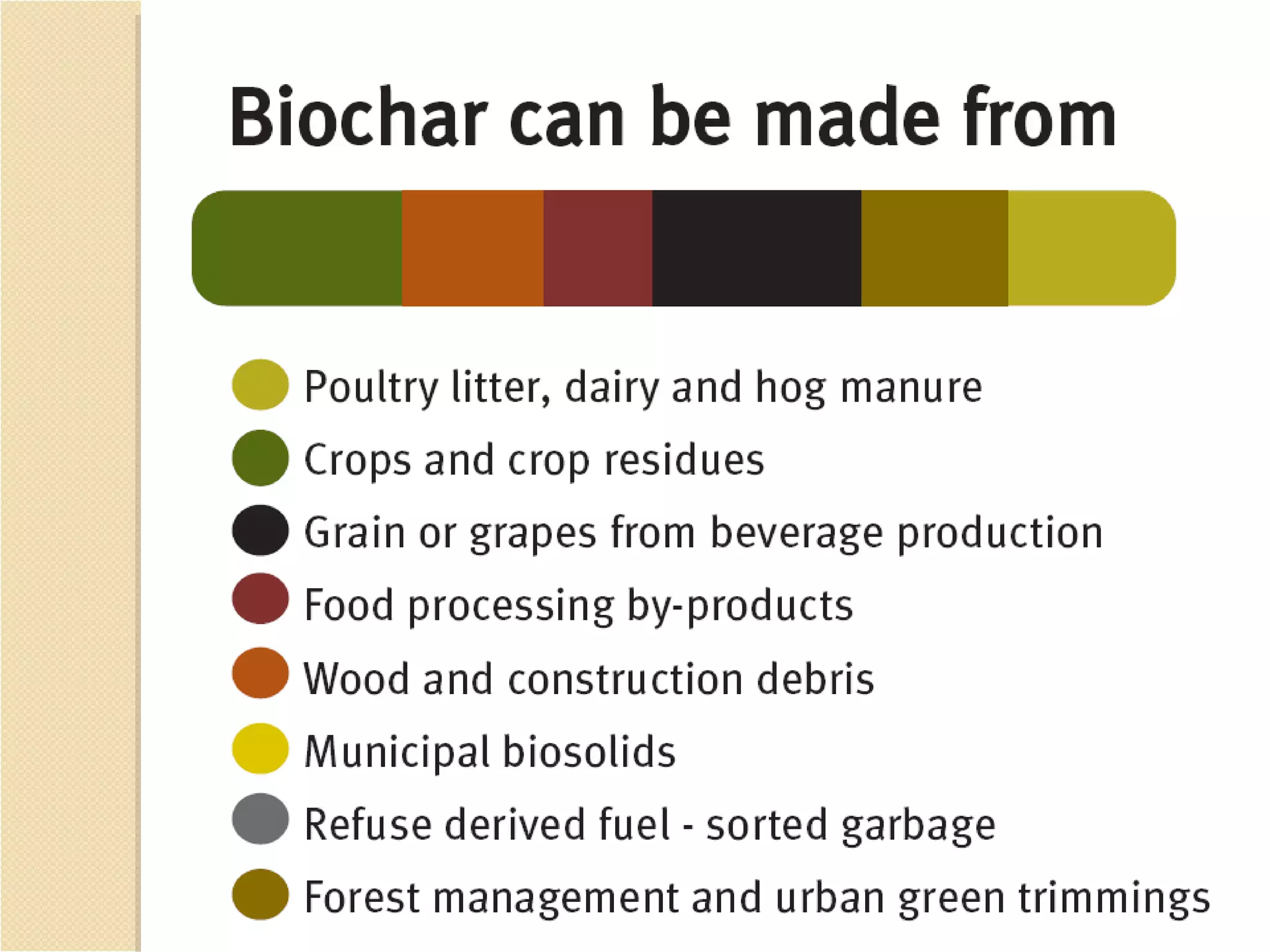
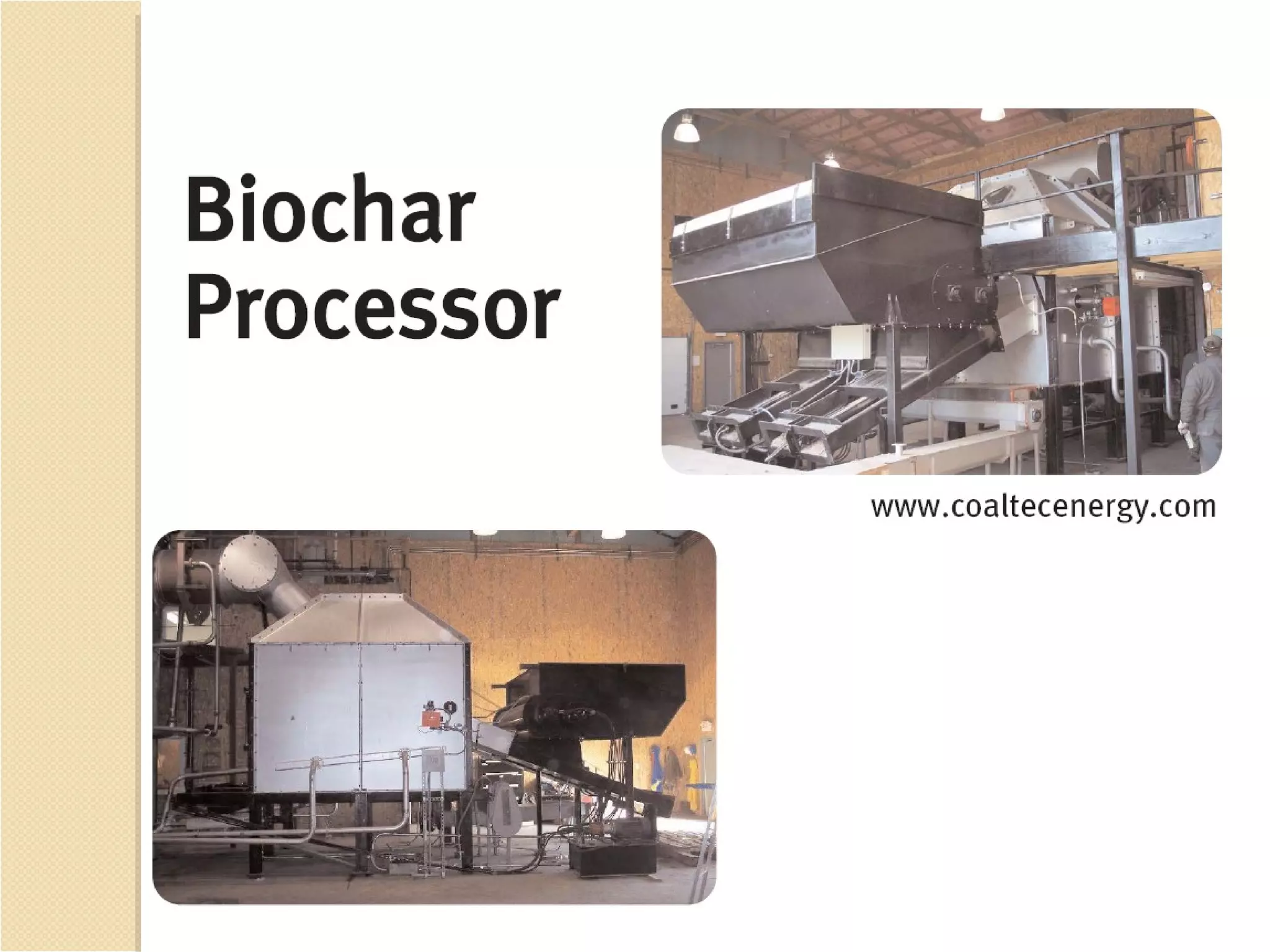
TECHNOLOGY:  BIOCHAR Bob Neiderman


GREENHOUSE GAS IMPACTS Bryan Long David Coale
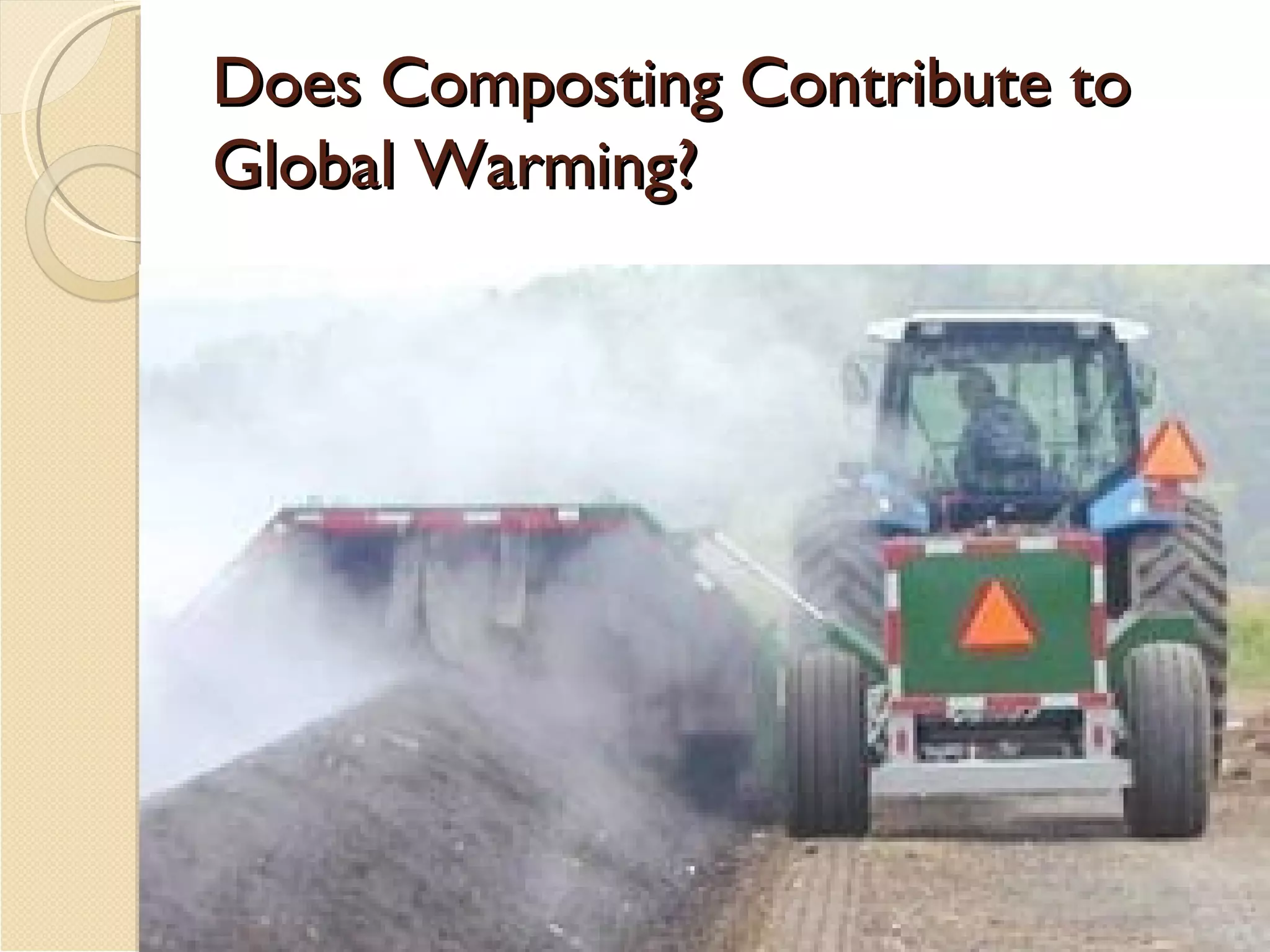
Does Composting Contribute to Global Warming?
Composting vs. What?
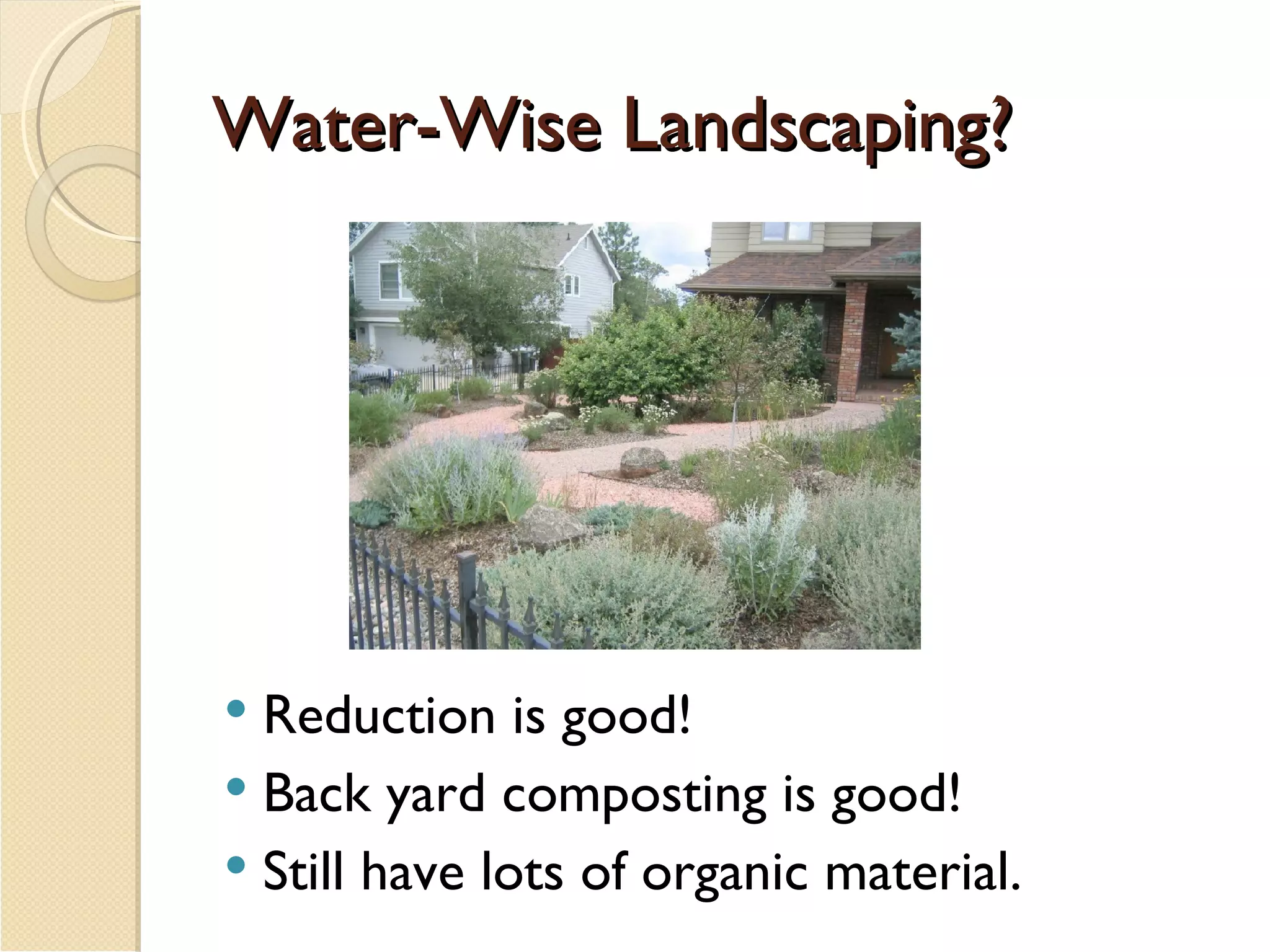
Water-Wise Landscaping? Reduction is good! Back yard composting is good! Still have lots of organic material.
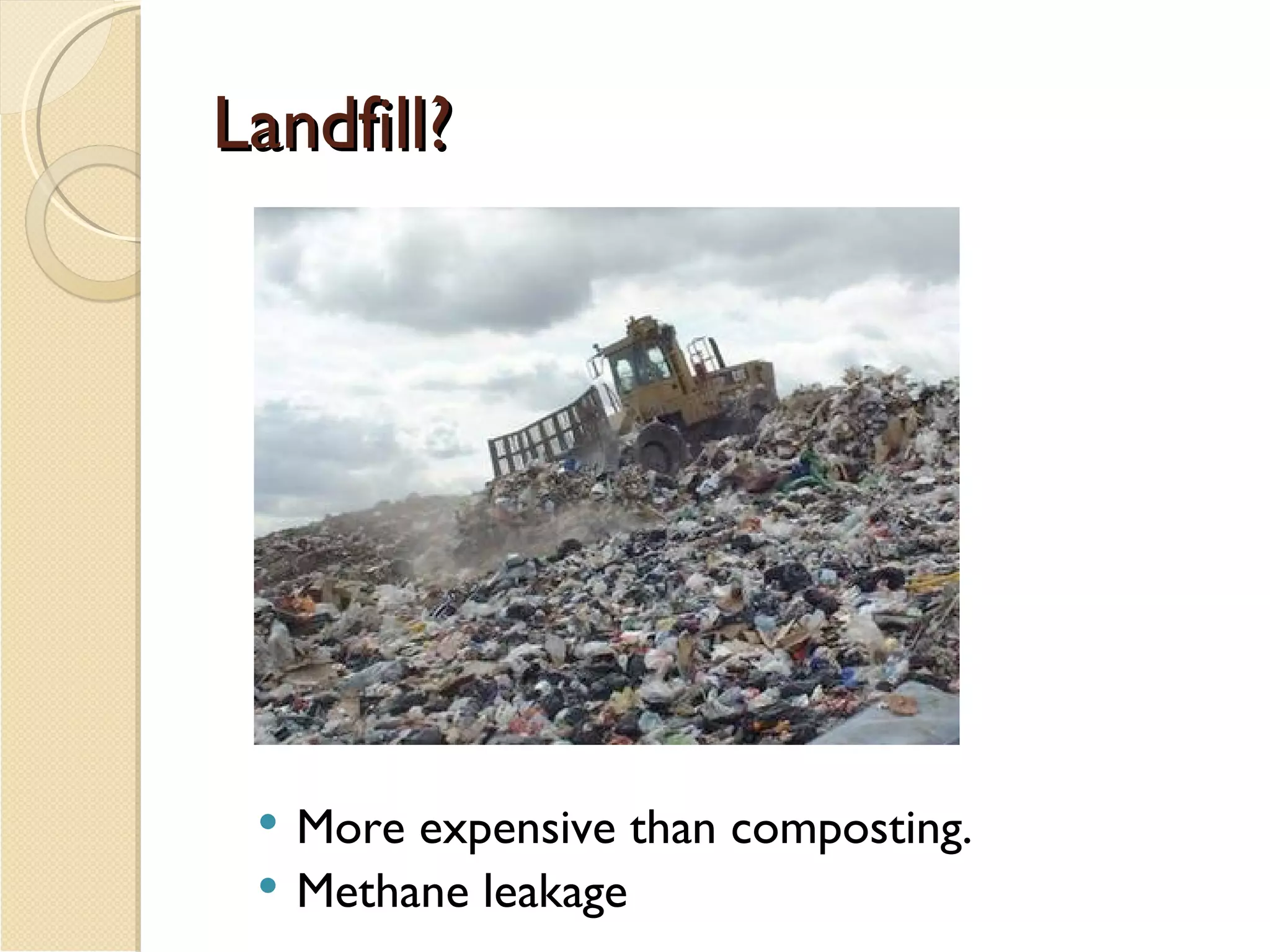
Landfill? More expensive than composting. Methane leakage
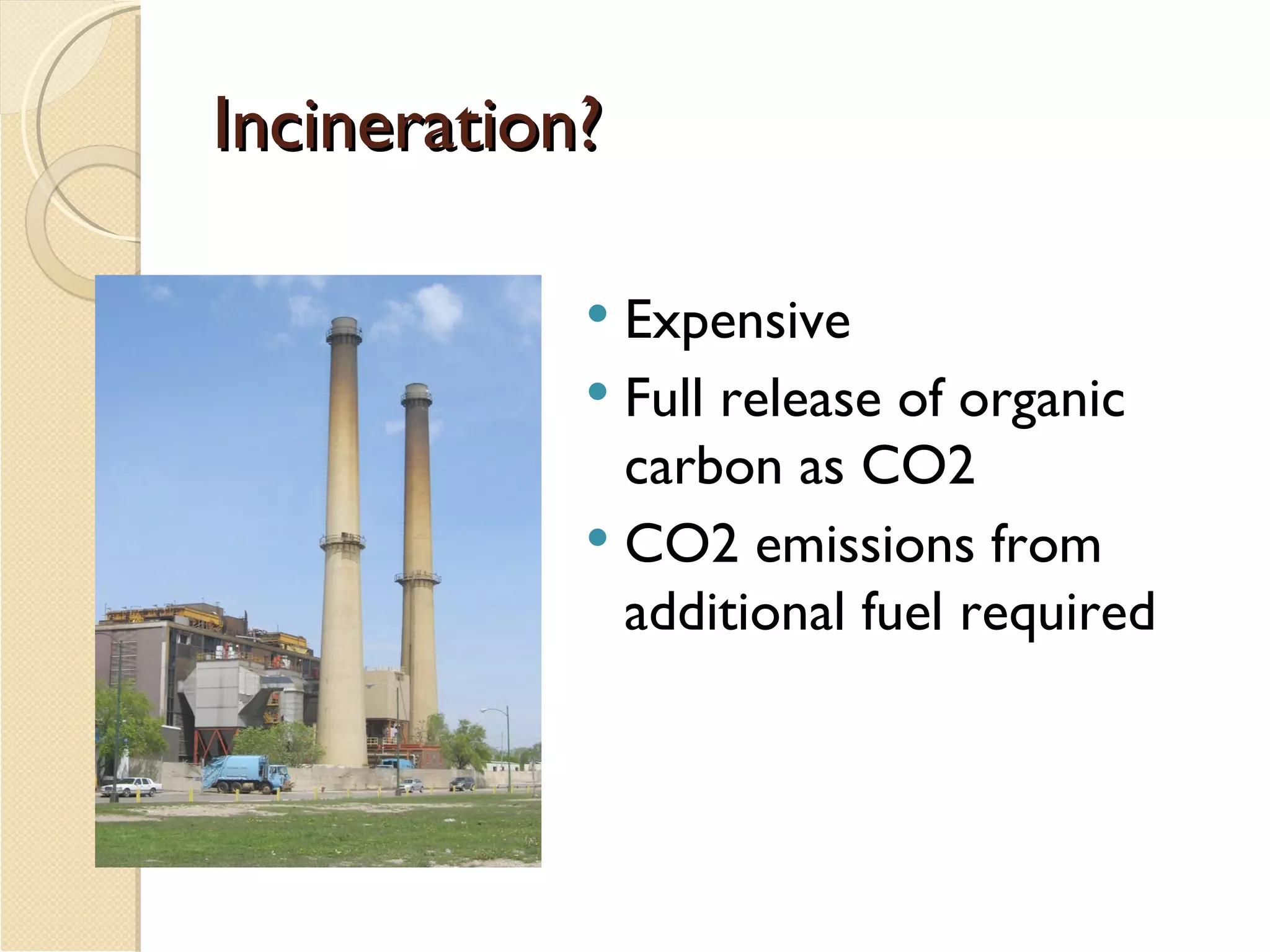
Incineration? Expensive Full release of organic carbon as CO2 CO2 emissions from additional fuel required
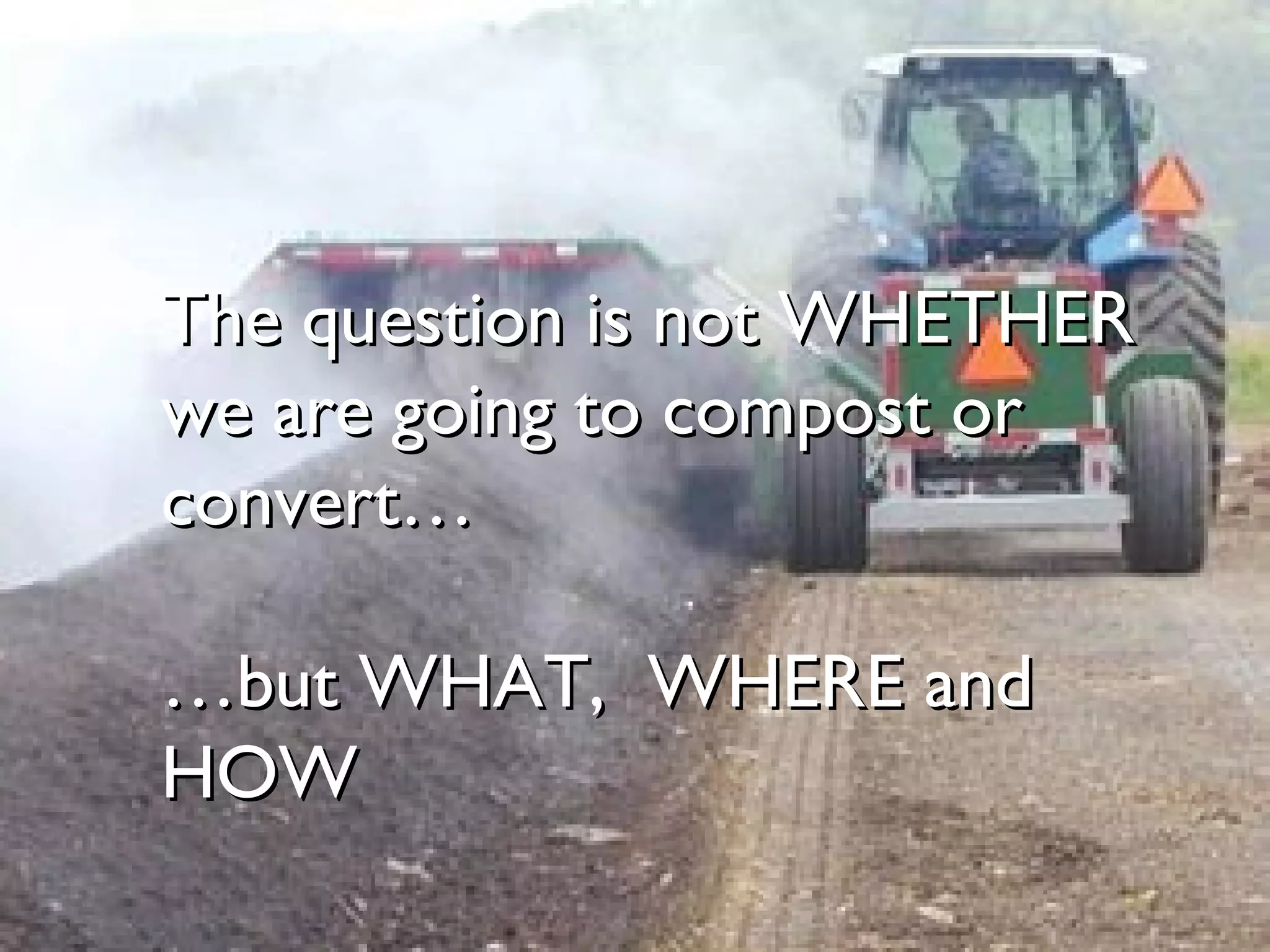
The question is not WHETHER we are going to compost or convert… …but WHAT,  WHERE and HOW
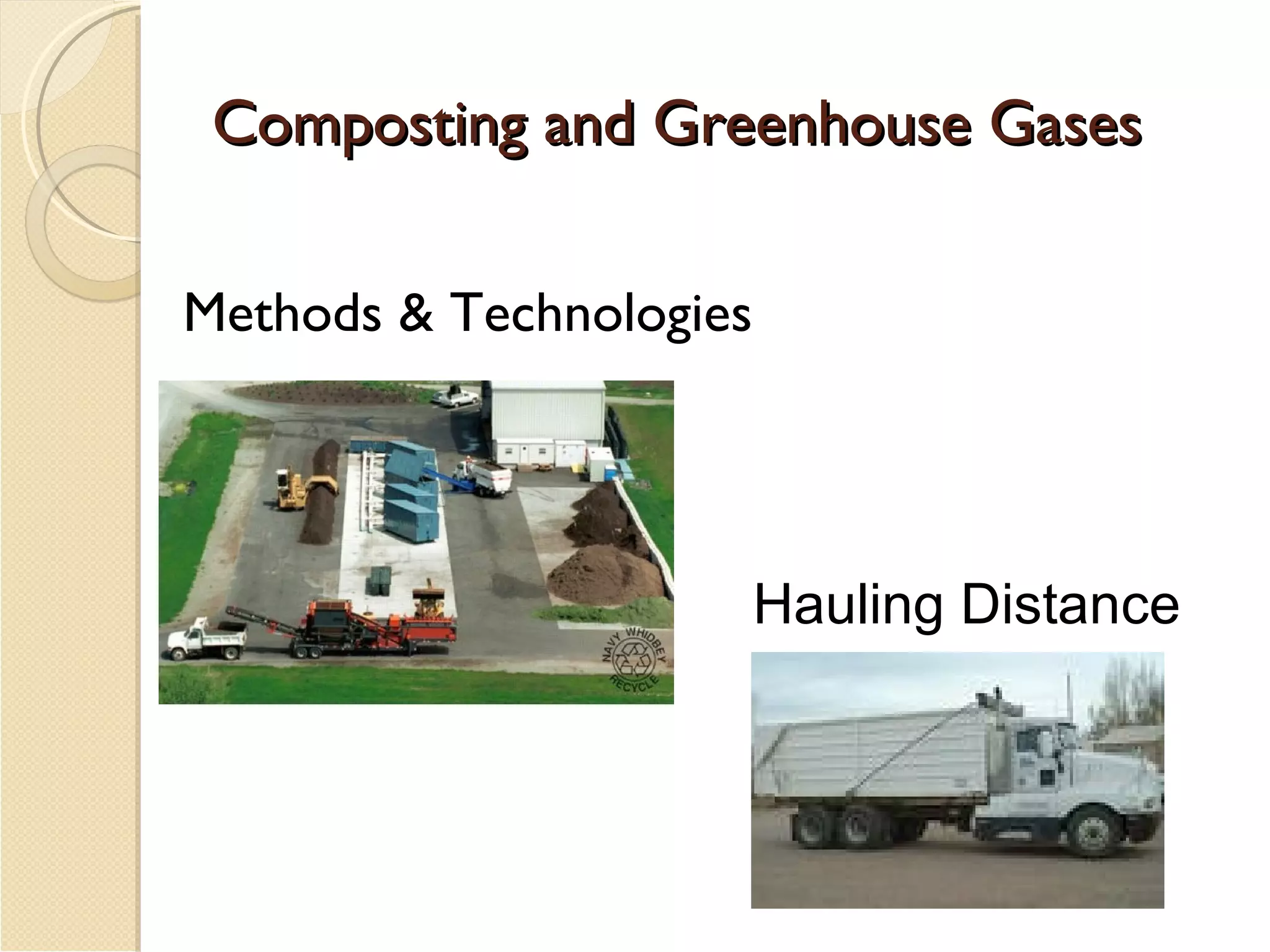
Composting and Greenhouse Gases Methods & Technologies Hauling Distance
Composting is  Net Negative  in GHG impacts.
Composting is  Net Negative  in GHG impacts. Composting releases negligible methane and nitrous oxide
Composting is  Net Negative  in GHG impacts. Compost application increases total carbon retained in soil
Composting is  Net Negative  in GHG impacts. Compost application reduces need for GHG intensive artificial fertilizers
Composting is  Net Negative  in GHG impacts. Compost application increases standing biomass.
Composting is  Net Negative  in GHG impacts. http://cli.gs/EPAreport   for EPA report
Does Method Matter? Range of inputs. vs. Potential for net carbon retention in soil  vs. Soil amendment quality of product. vs. Contaminant levels in product
Three Sources of Organics 60,000 Tons Per Year Composition of Disposed Organics
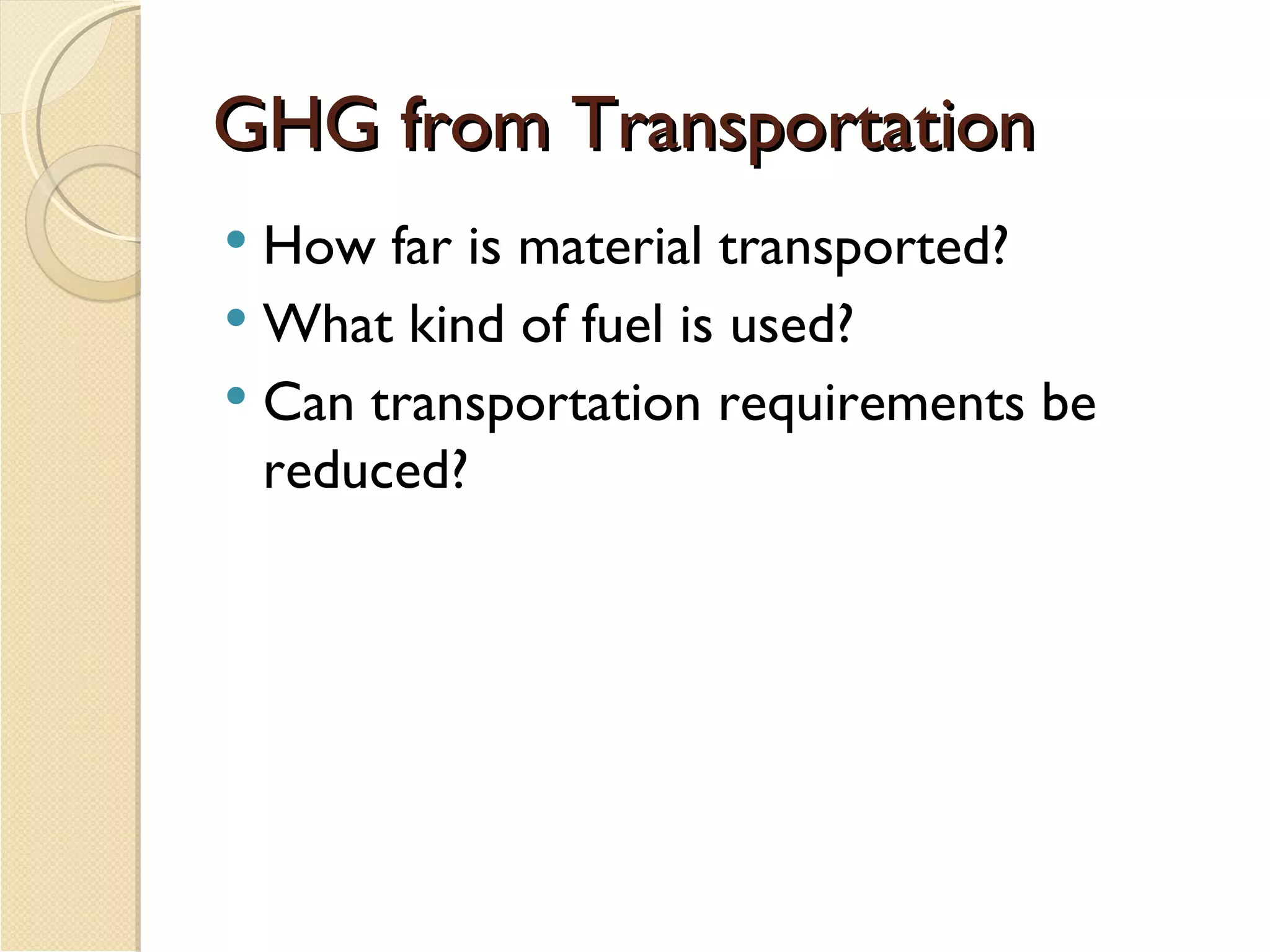
GHG from Transportation  How far is material transported? What kind of fuel is used? Can transportation requirements be reduced?
Current Organics End Points
DISCUSSION

Compost Teach In

  • 1.
    A Compost Teach-In:Informing Palo Alto’s Future Organics Strategy Lucie Stern Community Center January 10, 2009 2 PM to 4:30 PM
  • 2.
    Where This Teach-InFits Update Task Force? Council
  • 3.
    Agenda Welcome –2:00 PM Introduction --- 2:05 PM  Framing the Organics Challenge   2:10 PM  Technology Options 2:30 PM Composting Windrow Aerobic Static Pile In-vessel Anaerobic Digestion of Food Waste -- 3:00 PM Bay Area Composting Experiences -- 3:20 Biochar Technology -- 3:40 PM Where Does Global Warming Fit -- 4:00 PM Technologies Transportation Discussion -- 4:15 PM
  • 4.
    Today’s Approach WhatIs “Taught” The Problem Some Technologies Global Warming Considerations What Is Avoided Not Discussing Locations Not Attempting to Solve the Problem A Facilitator’s Role Mind the Clock Moderate Discourse Record Comments 20 Minutes Per Topic 15 Minutes Presenting 5 Minutes Questions Logistics Bathrooms + Breaks Web Cast
  • 5.
    Brought to Youby… Teachers Hilary Gans Ann Schneider, Sierra Club Sophia Skoda, EBMUD Steven Sherman, Steven Sherman Consulting Bob Niederman Bob Wenzlau, Terradex Bryan Long David Coale Facilitator and Recorder (Palo Alto Mediation Program) Elaine El-Bizri Elisabeth Seaman Support Jeb Eddy Susan Stansbury
  • 6.
    THE CHALLENGE BobWenzlau, Terradex
  • 7.
    Take Care WithThe Compost Gods
  • 8.
    Each Year PaloAlto’s Organics Will Fill A Football Field The Height of City Hall 130,000 Cubic Yards
  • 9.
    Three Sources ofOrganics 60,000 Tons Per Year Composition of Disposed Organics
  • 10.
    Disposed Waste: Where Organics Fit?
  • 11.
    Biosolids Generation Source: http://www.cityofpaloalto.org/civica/filebank/blobdload.asp?BlobID=3740 Wastewater Sludge Incineration 17,117 metric tons of CO2e per year.
  • 12.
  • 13.
    TECHNOLOGY Hilary GansAnn Schneider Sophia Skoda, EBMUD Steven Sherman, Steven Sherman Consulting Bob Niederman
  • 14.
    Technology Questions Whatis it? Reference URLs to learn more Example Sites of Use Land Requirement Who Makes it? Land Use Requirement (receiving, processing, product storage) Economics (Capital, Operation, Revenue) Environmental Impact (Energy Use, GHG, bi-products, noise or odors) Lead time
  • 15.
    TECHNOLOGY: COMPOSTINGHilary Gans Ann Schneider
  • 16.
    Recycling It allstarted with AB939
  • 17.
    Can’t get therewithout recycling organics Recyclables combined = 40% Organics alone equal almost the total tonnage of recyclables CIWMB 2004 waste charactorization study
  • 18.
  • 19.
  • 20.
  • 21.
  • 22.
  • 23.
  • 24.
    Aerated Static PileComposting Technology
  • 25.
  • 26.
  • 27.
    The building isan all-metal construction in a seismic zone 4 for a high snow-load
  • 28.
    The facility isdesigned to process 45 tons/day of mixed organic waste. All process functions (pre-processing, composting, curing and product refining) are conducted within this building.
  • 29.
  • 30.
  • 31.
    Finished Product .. . Compost 1/2 inch screen size Maturity – 7 index C:N ratio 17 Dark brown and musty 309 lbs/cyd Organic (about 50% O:InO) Contamination: Bits-O-plastic
  • 32.
  • 33.
    Compost to theCommunity
  • 34.
  • 35.
    Composting operations aredifficult to site because Neighborhood opposition Cost of locating near cities is high There is little political will to site facilities Real potential for odor problems Cost of permitting and environmental clearance for new site development
  • 36.
  • 37.
  • 38.
  • 39.
    TECHNOLOGY: ANAEROBICDIGESTION Sophia Skoda, EBMUD
  • 40.
  • 41.
  • 42.
  • 43.
  • 44.
  • 45.
  • 46.
  • 47.
  • 48.
  • 49.
  • 50.
  • 51.
  • 52.
  • 53.
  • 54.
  • 55.
  • 56.
  • 57.
  • 58.
    TECHNOLOGY: BAY AREACOMPOSTING EXPERIENCE Steven Sherman, Steven Sherman Consulting
  • 59.
    Nearby Bay AreaCommunities with Food Scraps Collection and Composting San Francisco: all residents; available to all businesses (over 3,000 participants) Alameda County: all residents; available to most businesses (over 500 participants) San Mateo County: coming in 2011 for all residents; available to most businesses (over 500 participants) Santa Clara County: Will Palo Alto take the lead?
  • 60.
    Schematic of PossibleMaterials Flow Residential yard trimmings PLUS food scraps  windrow or aerated static pile  compost, mulch (lowest cost, most replicated technology) Clean, source-separated commercial food scraps  anaerobic digestion  bio-gas + compost feedstock for non-restricted use (low to moderate cost) Bio-solids  anaerobic digestion, ideally kept separate from food scraps  bio-gas + compost feedstock for restricted uses (moderate cost) Organic residue still in trash after waste reduction, recycling, and composting  anaerobic digestion or other conversion technologies prior to final disposal
  • 61.
    Technology Operating CostRanges ($ per ton) Windrowing                       $20-$50 Aerated Static Pile           $25-$55 In-vessel System              $35-$65 Anaerobic Digestion       $35-$90
  • 62.
    TECHNOLOGY: BIOCHARBob Neiderman
  • 63.
  • 64.
  • 65.
  • 66.
  • 67.
  • 68.
  • 69.
    GREENHOUSE GAS IMPACTSBryan Long David Coale
  • 70.
    Does Composting Contributeto Global Warming?
  • 71.
  • 72.
    Water-Wise Landscaping? Reductionis good! Back yard composting is good! Still have lots of organic material.
  • 73.
    Landfill? More expensivethan composting. Methane leakage
  • 74.
    Incineration? Expensive Fullrelease of organic carbon as CO2 CO2 emissions from additional fuel required
  • 75.
    The question isnot WHETHER we are going to compost or convert… …but WHAT, WHERE and HOW
  • 76.
    Composting and GreenhouseGases Methods & Technologies Hauling Distance
  • 77.
    Composting is Net Negative in GHG impacts.
  • 78.
    Composting is Net Negative in GHG impacts. Composting releases negligible methane and nitrous oxide
  • 79.
    Composting is Net Negative in GHG impacts. Compost application increases total carbon retained in soil
  • 80.
    Composting is Net Negative in GHG impacts. Compost application reduces need for GHG intensive artificial fertilizers
  • 81.
    Composting is Net Negative in GHG impacts. Compost application increases standing biomass.
  • 82.
    Composting is Net Negative in GHG impacts. http://cli.gs/EPAreport for EPA report
  • 83.
    Does Method Matter?Range of inputs. vs. Potential for net carbon retention in soil vs. Soil amendment quality of product. vs. Contaminant levels in product
  • 84.
    Three Sources ofOrganics 60,000 Tons Per Year Composition of Disposed Organics
  • 85.
    GHG from Transportation How far is material transported? What kind of fuel is used? Can transportation requirements be reduced?
  • 86.
  • 87.