Downloaded 162 times
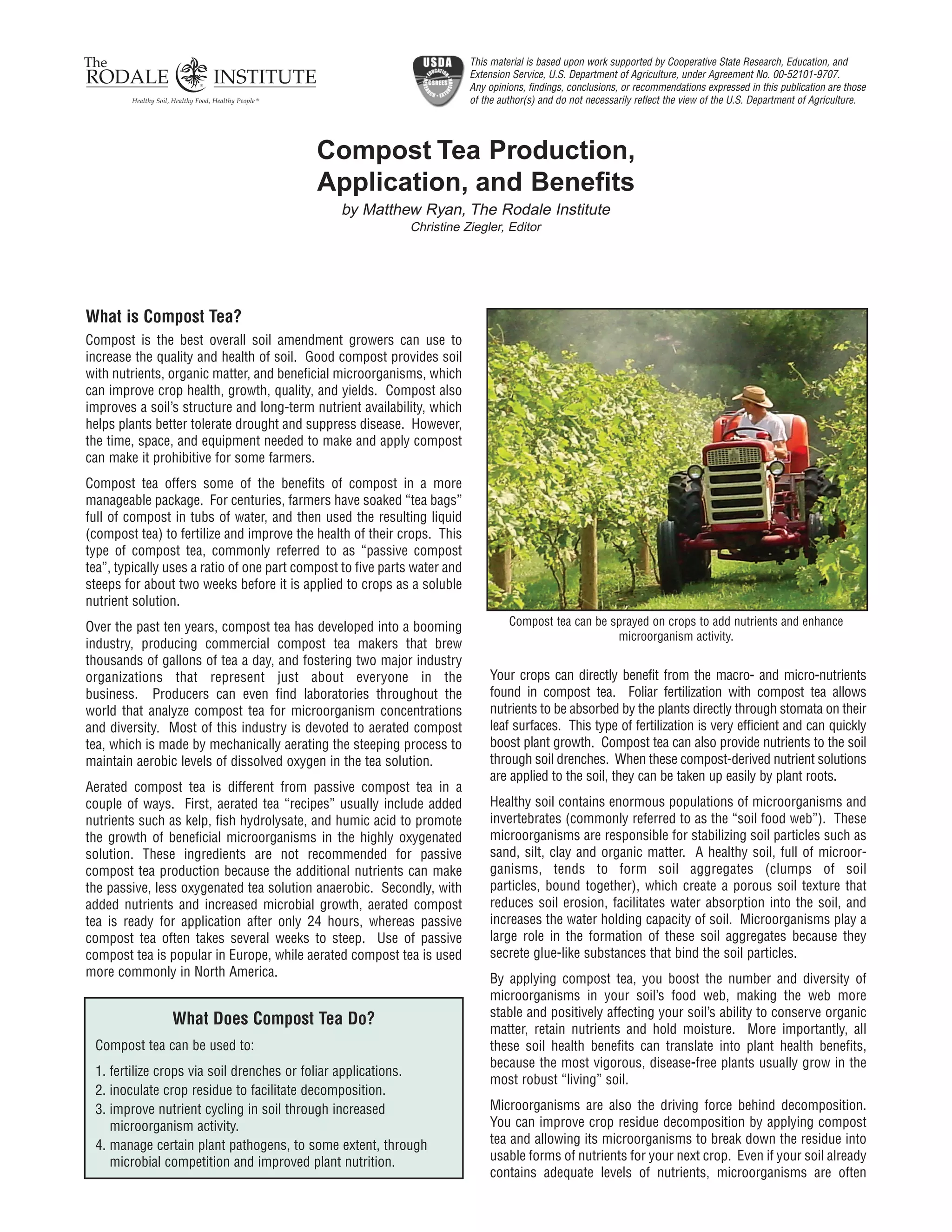
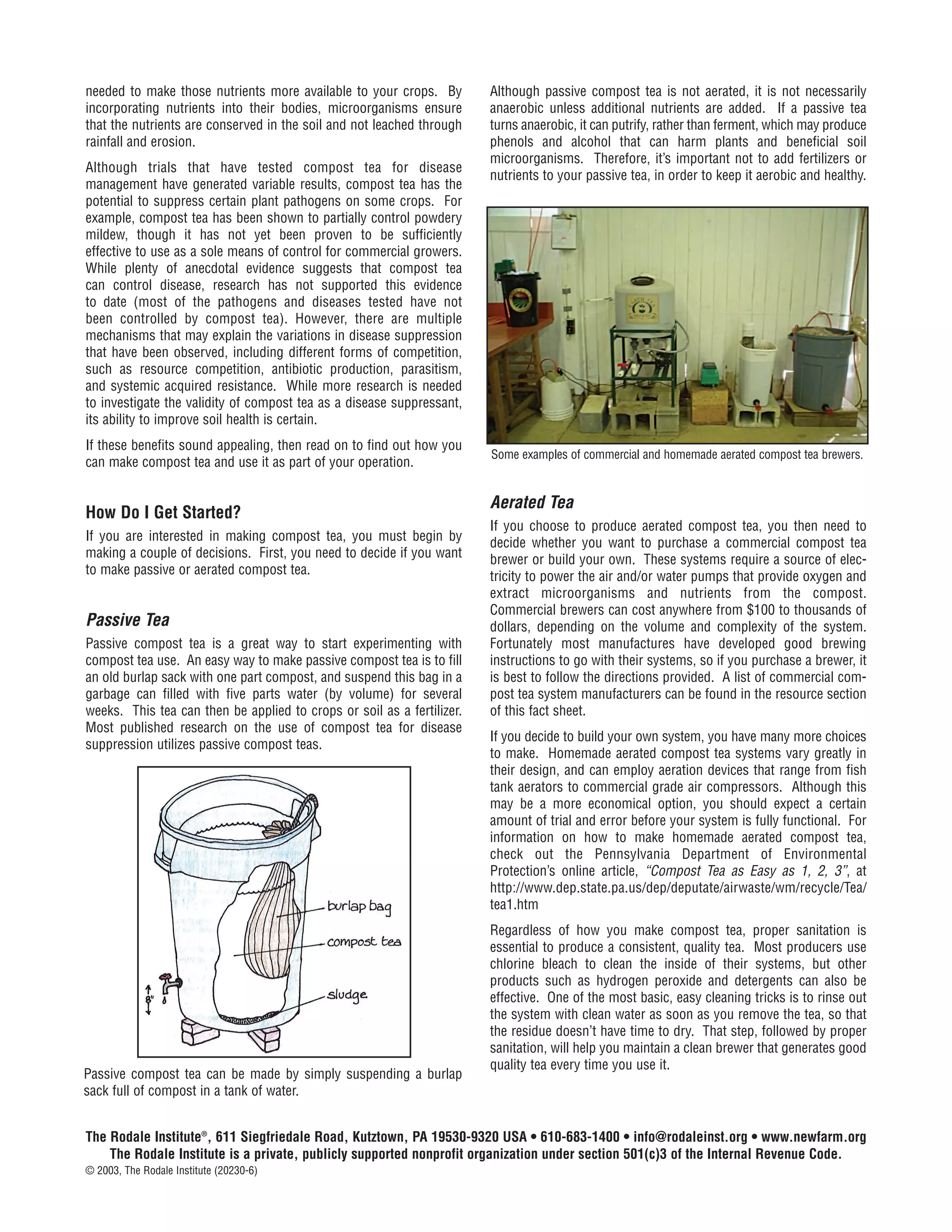
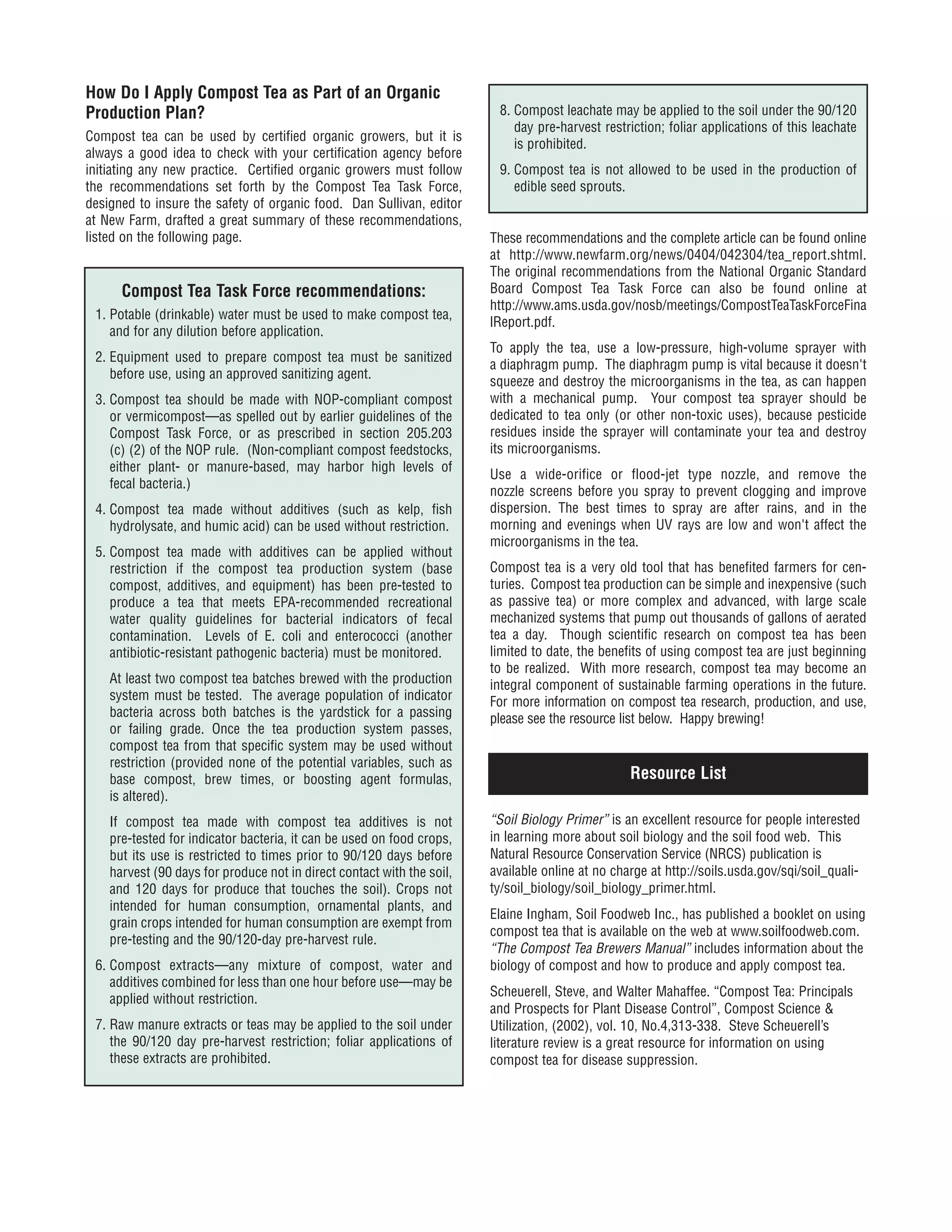


This document discusses compost tea, including what it is, how it is produced, and its potential benefits for crops. It provides information on both passive compost tea and aerated compost tea. Passive compost tea involves steeping compost in water for several weeks, while aerated tea uses mechanical aeration to maintain oxygen levels during the shorter 24-hour brewing process. The document suggests that compost tea can fertilize crops, improve soil nutrient cycling and microorganism activity, aid in crop residue decomposition, and possibly help suppress some plant pathogens, though more research is still needed on disease control. It provides guidance on deciding between passive or aerated tea production and getting started, including any necessary equipment.


