Awareness  Food is sacred! We have forgotten That it is our body's way of connecting with this Earth Eat & be Eaten
?
Recycling  organic food wastes
Worms Aerate & irrigate the soil Feeding Plant roots with there castings, Encourage  Beneficial Balance of bacteria & fungi in the soil. Worms Castings are mineral rich piles of excreta containing masticated digested decayed organic matter Buffered with calcium and mixed with soil particles  Neutral 7 pH  Will not burn the most sensitive of rootlets. Mixed with sand, peat moss or less fertile soil Sieve, use as mulch, in potting mix.
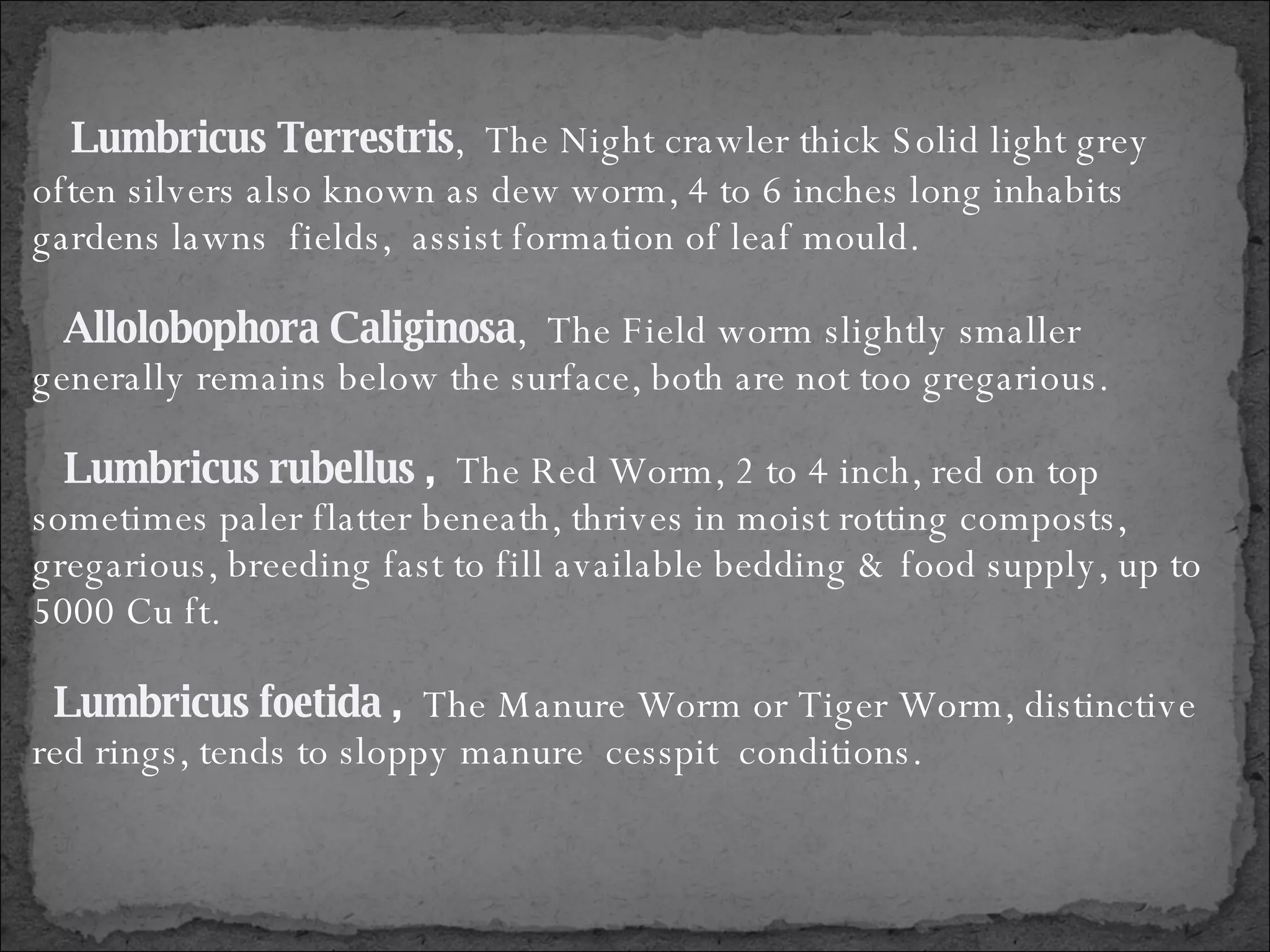
Lumbricus Terrestris ,  The Night crawler thick Solid light grey often silvers also known as dew worm, 4 to 6 inches long inhabits gardens lawns  fields,  assist formation of leaf mould. Allolobophora Caliginosa ,  The Field worm slightly smaller generally remains below the surface, both are not too gregarious. Lumbricus rubellus  ,  The Red Worm, 2 to 4 inch, red on top sometimes paler flatter beneath, thrives in moist rotting composts, gregarious, breeding fast to fill available bedding & food supply, up to 5000 Cu ft. Lumbricus foetida  ,  The Manure Worm or Tiger Worm, distinctive red rings, tends to sloppy manure  cesspit  conditions.
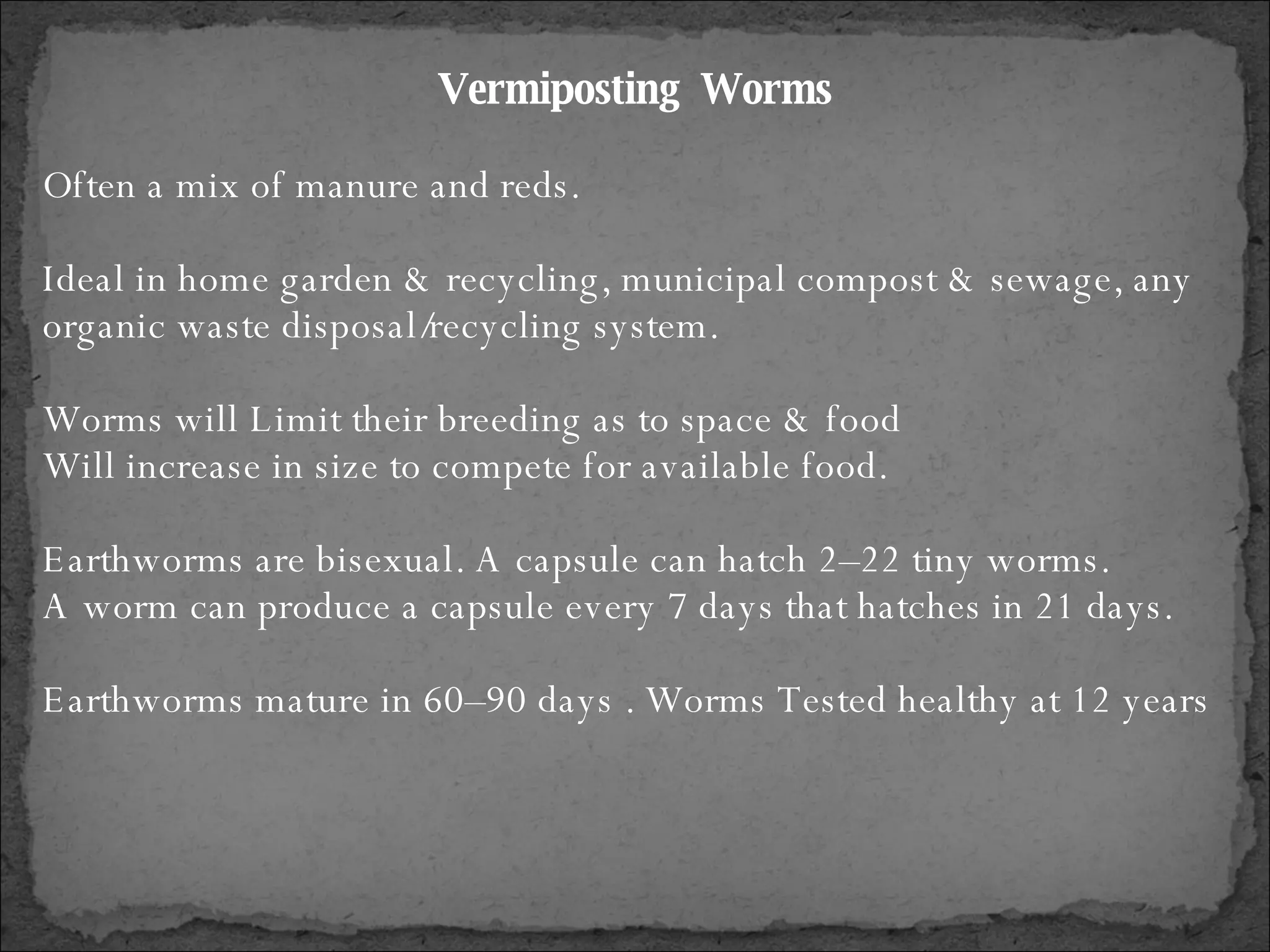
Vermiposting  Worms  Often a mix of manure and reds.  Ideal in home garden & recycling, municipal compost & sewage, any organic waste disposal/recycling system. Worms will Limit their breeding as to space & food Will increase in size to compete for available food. Earthworms are bisexual. A capsule can hatch 2–22 tiny worms. A worm can produce a capsule every 7 days that hatches in 21 days. Earthworms mature in 60–90 days  .  Worms Tested healthy at 12 years
 
Allolobophora -  Field Worms - Pastures, Orchards Encourage field worms in habitat of lawns, pasture. Correct pH. Trimmed Lucerne grass clover. Note casting on surface, seek when soil temp about  10 0 F,  grass air temp above  5 0 F  & after rainfall.  Stimulate by watering Collect from unsprayed lawns & playing fields Use red filter over flashlight Vibrations noise from machinery will discourage worms Pasture improvement - Cut sod turf 10 by 30cm 2  from  populous area, sit out at 10m intervals sprinkled around with limestone/dolomite as pH warrants. Orchard holes around drip line add compost & worms.
 
Living Conditions Temperature, Moisture, Bedding, Food, Protection, pH. All Organic Waste, they  will consume  their  own  body  weight  in food every 24 hours under  ideal  conditions:  Meat, bones, vegetables, fruit scraps, peels, tea coffee,  All food bad rotten, vacuum cleaner waste,  bird & animal droppings, egg shells, mouse,  mower slashed garden weeds, hair,  soaked shredded cardboard boxes, anything organic.  It should decay no faster than worms can eat it or it will turn the bed rancid/acid, may smell & kill worms.  Treat with ground limestone/dolomite watered in.
 
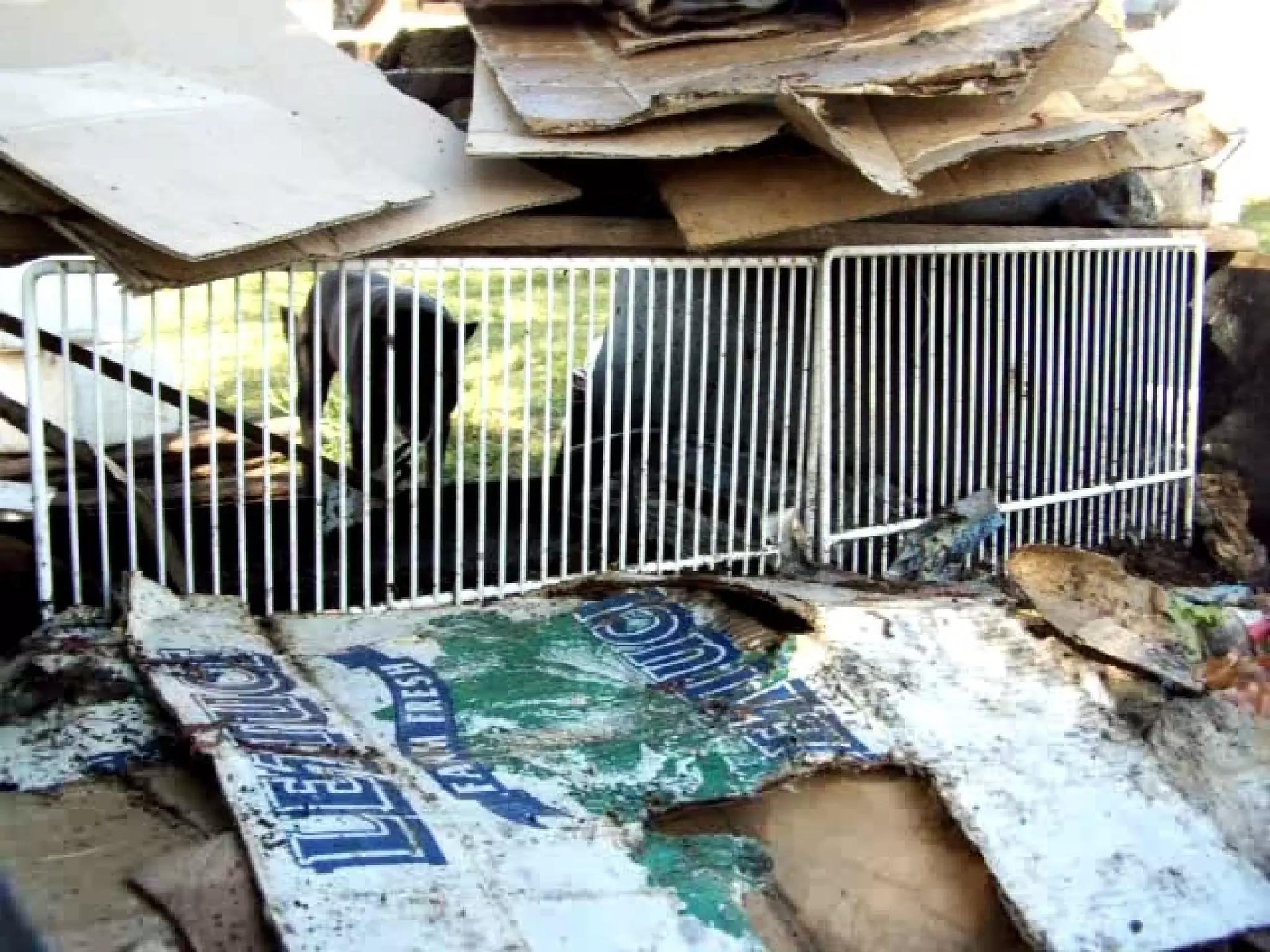
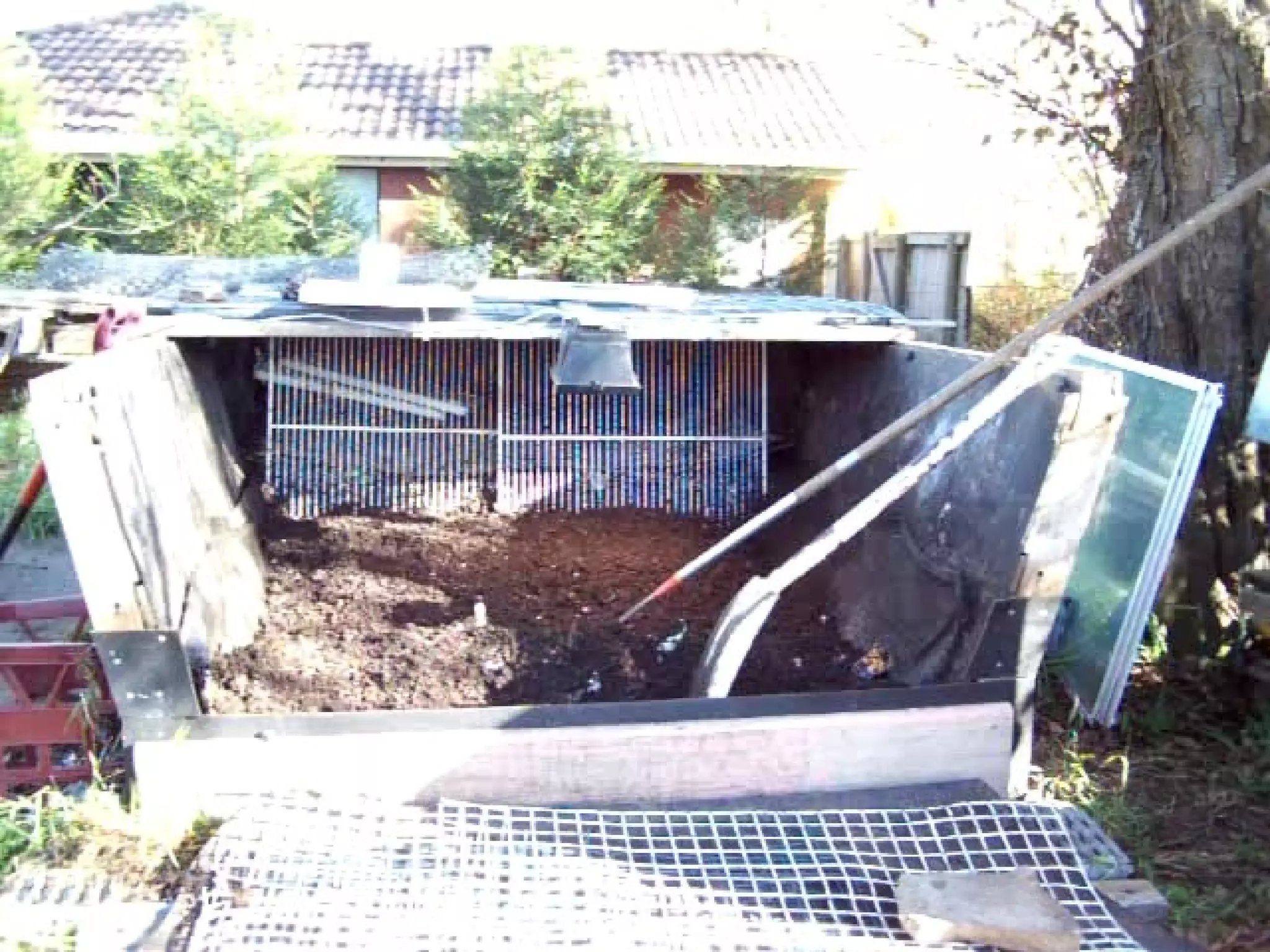
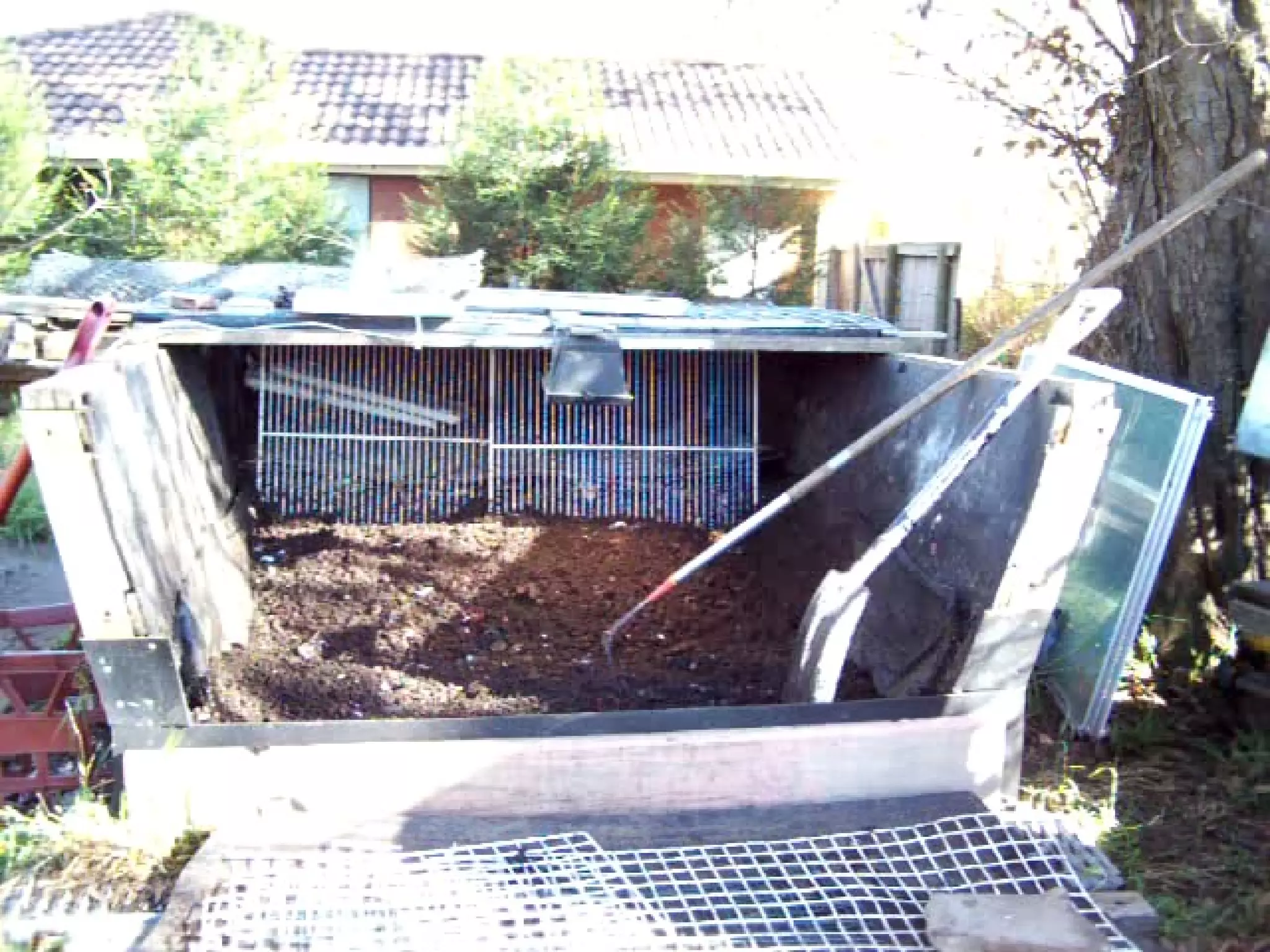
Home Worm Vermiposter Digester A bottomless wooden box 1200 by 1200 by 1200mm high. Remove 90mm soil from bottom of box.  Set in ground if rodents or animals are a trouble.  Collect household garbage in bin with tight fitting lid,  Include sparingly citrus & onions in beginning. Spread in bottom of box and cover with damp soil or bedding. Empty worms on top, they will burrow down. Start with 4000 worms, of mixed sizes, they breed up. Keep damp but not sodden, cover with old carpet,  hessian to retain moisture & muffle odours. Add wastes daily or weekly with occasional sprinkling of  powdered limestone; keep  damp, worms bacteria &  microorganisms will do the rest. When box is full feed in one corner, fork them out to  your next box location. Lift box over to new location.
FEED little and regularly particularly wet food.  Feed only part of the bed, put food on alternate ends  of the bed as worms consume it or in a furrow down one  side & covered 1” deep.  You will soon judge how much they need. WATERING  Through a rose, keep damp but still crumbly,  Allow drier/damper cycle to stimulate breeding  30-40% moisture. Wet or saturated surrounds encourage migration AERATING BEDS  Loosening top 3 “ with fine pitch fork, oxygenates beds,  prevents souring packing down.
pH  Worms  like it neutral,  most insects like acid conditions. To increase pH - ground limestone/dolomite, veg, fibrous, cellulose. To decrease pH - peat moss shredded newsprint, fruit, grains, sweets.
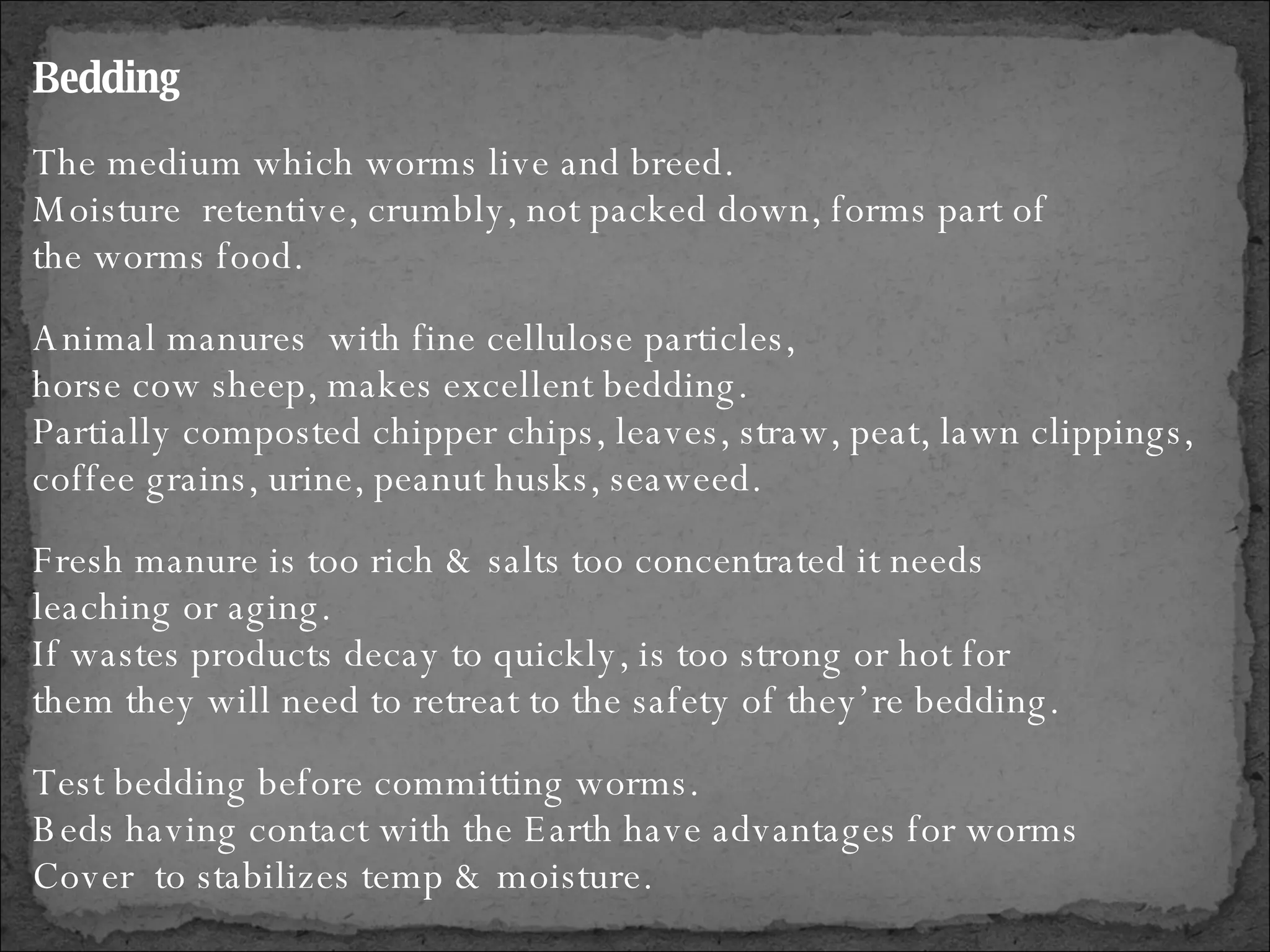
Bedding   The medium which worms live and breed.  Moisture  retentive, crumbly, not packed down, forms part of  the worms food.  Animal manures  with fine cellulose particles,  horse cow sheep, makes excellent bedding.  Partially composted chipper chips, leaves, straw, peat, lawn clippings, coffee grains, urine, peanut husks, seaweed.  Fresh manure is too rich & salts too concentrated it needs  leaching or aging. If wastes products decay to quickly, is too strong or hot for  them they will need to retreat to the safety of they’re bedding. Test bedding before committing worms. Beds having contact with the Earth have advantages for worms Cover  to stabilizes temp & moisture.
Harvesting & Separating Worms From Bedding Fork bedding including worms into wheelbarrow place  in sunlight, worms burrow away from light, gently skim off bedding down to where the worms are, Repeat every 15 minutes till only worms are left. Empty on table in sun or under lamp, pile into pyramid shape,  skim off every 15 minutes. Spread on Corse hessian or screen drive worms through with light into container or another box of bedding . Trap worms in graduated mesh sieves.  Encourage worms to migrate to yummy food, crumbled cow, layer pellets, sprinkling  of cornflower  in  a sieve placed on top of bed, remove after 4 days.
 
Enemies of Worms Spade Birds love worms: Mulch discourages them.  Mice attracted to grain feed, eat worms.  Damper beds discourage mice. Mites & ants are attracted to sweet food. feed below the surface,  change of food, Neutral pH,  damp beds, boiling water  on nest. Centipedes  are attracted to acid beds eat worms & can bite. squash. Spiders keep underfelt damper. Most insects prefer acid conditions - worms don’t. Alcohols from rancid sweet food sickens worms. Add limestone to correct pH, water well in, aerate beds, reduce feeding.
Pesticides  weedicide  poisons chemical fertilisers  are bad news for worms. Use less harmful alternatives for all situations.   Companion planting, pH adjustment, mulching, legume crops turned in, chisel ploughing, sheet composting, slashing, strip  cropping, strip grazing for root shock, ploughing by pigs,  Garlic  or rhubarb leaf sprays.  Encourage useful insects - lady birds, mantis, leopard slugs, cannibal snails.
A Day In The Life Of A Wormy
Organic Worm Food?
Feed it to the worms?  This is good food!


Integrating Vermicomposting  &  Aquaponics ?
A  semi closed organic food system  Integrating vermiculture and aquaponics  Using organic and Permaculture principles
The goal is to cycle nutrients solid and liquid through a  integrated vermiculture and aquaponics system . To grow food for the table.  Recycle organic food and organic matter. Possibly produce Vermicompost and liquid fertilizer for sale.
Musings Worms produce nitrogen rich liquid and solid products  suitable for growing plants, are a rich protein source. Fish eat worms and also produce nitrogen. Plants use nitrogen. I  Eat fish plants and (worms sometimes). Hydroponic gravel beds act as filters removing particles  and nutrients. What type of fish? Commercial home size aquaponic systems take about  the space of a double garage and are claimed to feed a family of four.
Parameters Can these separate systems be worked into an integrated  system to grow organic food and recycle organic food wastes with minimal commercial inputs? How efficient is such a system? What space is needed, horizontal vertical? Hydroponic area? Fish tank size, volume? Planting containers? Volume and surface area of casting in Vermicomposter?
Fish and humans don’t like high nitrogen levels, plants do. Relationships between speed of growth, volume, Tank size,  number and size of fish, size of hydroponic gravel beds,  working mediums nutrient concentrations. Liquid collected can be washed or recycled through  composter to stabilise adjust bed moisture and strength. What plants will grow in worm piss ph 7.4 <EC 1460  What is its NPK and mineral balance?  (I assume it is equivalent to what goes in) What nasties can be bio-accumulated and amplified? This is getting complicated
Inputs  – Organic waste from organic shop about kg?  one - two garbage cans a week  -  Scraps from table Selected composts Light from the sun Water from the roof top (do I eat this much food,  what gains and or losses occur)
Materials on hand  -  Recycled equipment on hand - 5 bathtubs as planting containers Split 1000lt drum = 2 500lt fish tanks Hydroponic tubes and bench top hydroponic trays  Large fibreglass tab umbrella – Growing tray Vertical space with trellising supporting hydroponic tubes Pump and fittings Vermicomposter ph meter, EC meter
Needs   Fish tanks of an appropriate size Knowledge of aquaponics Configured  & Managed ?
Will it work ?
 
What's  Next
http://www.ourvitalearth.com/vermi-converter.htm


“ What permaculture designers are doing is the most  important activity that any group is doing on the planet.   We don´t know what will be the details of a truly sustainable  future,  but we need options,   we need people experimenting all types of forms   and  permaculture designers are one of the crucial groups  who are doing this.&quot;   Dr David Suzuki
http:// ausearth.blogspot.com /

Vermiposting

  • 1.
  • 2.
    Awareness Foodis sacred! We have forgotten That it is our body's way of connecting with this Earth Eat & be Eaten
  • 3.
  • 4.
    Recycling organicfood wastes
  • 5.
    Worms Aerate &irrigate the soil Feeding Plant roots with there castings, Encourage Beneficial Balance of bacteria & fungi in the soil. Worms Castings are mineral rich piles of excreta containing masticated digested decayed organic matter Buffered with calcium and mixed with soil particles Neutral 7 pH Will not burn the most sensitive of rootlets. Mixed with sand, peat moss or less fertile soil Sieve, use as mulch, in potting mix.
  • 6.
    Lumbricus Terrestris , The Night crawler thick Solid light grey often silvers also known as dew worm, 4 to 6 inches long inhabits gardens lawns fields, assist formation of leaf mould. Allolobophora Caliginosa , The Field worm slightly smaller generally remains below the surface, both are not too gregarious. Lumbricus rubellus , The Red Worm, 2 to 4 inch, red on top sometimes paler flatter beneath, thrives in moist rotting composts, gregarious, breeding fast to fill available bedding & food supply, up to 5000 Cu ft. Lumbricus foetida , The Manure Worm or Tiger Worm, distinctive red rings, tends to sloppy manure cesspit conditions.
  • 7.
    Vermiposting Worms Often a mix of manure and reds. Ideal in home garden & recycling, municipal compost & sewage, any organic waste disposal/recycling system. Worms will Limit their breeding as to space & food Will increase in size to compete for available food. Earthworms are bisexual. A capsule can hatch 2–22 tiny worms. A worm can produce a capsule every 7 days that hatches in 21 days. Earthworms mature in 60–90 days . Worms Tested healthy at 12 years
  • 8.
  • 9.
    Allolobophora - Field Worms - Pastures, Orchards Encourage field worms in habitat of lawns, pasture. Correct pH. Trimmed Lucerne grass clover. Note casting on surface, seek when soil temp about 10 0 F, grass air temp above 5 0 F & after rainfall. Stimulate by watering Collect from unsprayed lawns & playing fields Use red filter over flashlight Vibrations noise from machinery will discourage worms Pasture improvement - Cut sod turf 10 by 30cm 2 from populous area, sit out at 10m intervals sprinkled around with limestone/dolomite as pH warrants. Orchard holes around drip line add compost & worms.
  • 10.
  • 11.
    Living Conditions Temperature,Moisture, Bedding, Food, Protection, pH. All Organic Waste, they will consume their own body weight in food every 24 hours under ideal conditions: Meat, bones, vegetables, fruit scraps, peels, tea coffee, All food bad rotten, vacuum cleaner waste, bird & animal droppings, egg shells, mouse, mower slashed garden weeds, hair, soaked shredded cardboard boxes, anything organic. It should decay no faster than worms can eat it or it will turn the bed rancid/acid, may smell & kill worms. Treat with ground limestone/dolomite watered in.
  • 12.
  • 13.
    Home Worm VermiposterDigester A bottomless wooden box 1200 by 1200 by 1200mm high. Remove 90mm soil from bottom of box. Set in ground if rodents or animals are a trouble. Collect household garbage in bin with tight fitting lid, Include sparingly citrus & onions in beginning. Spread in bottom of box and cover with damp soil or bedding. Empty worms on top, they will burrow down. Start with 4000 worms, of mixed sizes, they breed up. Keep damp but not sodden, cover with old carpet, hessian to retain moisture & muffle odours. Add wastes daily or weekly with occasional sprinkling of powdered limestone; keep damp, worms bacteria & microorganisms will do the rest. When box is full feed in one corner, fork them out to your next box location. Lift box over to new location.
  • 14.
    FEED little andregularly particularly wet food. Feed only part of the bed, put food on alternate ends of the bed as worms consume it or in a furrow down one side & covered 1” deep. You will soon judge how much they need. WATERING Through a rose, keep damp but still crumbly, Allow drier/damper cycle to stimulate breeding 30-40% moisture. Wet or saturated surrounds encourage migration AERATING BEDS Loosening top 3 “ with fine pitch fork, oxygenates beds, prevents souring packing down.
  • 15.
    pH Worms like it neutral, most insects like acid conditions. To increase pH - ground limestone/dolomite, veg, fibrous, cellulose. To decrease pH - peat moss shredded newsprint, fruit, grains, sweets.
  • 16.
    Bedding The medium which worms live and breed. Moisture retentive, crumbly, not packed down, forms part of the worms food. Animal manures with fine cellulose particles, horse cow sheep, makes excellent bedding. Partially composted chipper chips, leaves, straw, peat, lawn clippings, coffee grains, urine, peanut husks, seaweed. Fresh manure is too rich & salts too concentrated it needs leaching or aging. If wastes products decay to quickly, is too strong or hot for them they will need to retreat to the safety of they’re bedding. Test bedding before committing worms. Beds having contact with the Earth have advantages for worms Cover to stabilizes temp & moisture.
  • 17.
    Harvesting & SeparatingWorms From Bedding Fork bedding including worms into wheelbarrow place in sunlight, worms burrow away from light, gently skim off bedding down to where the worms are, Repeat every 15 minutes till only worms are left. Empty on table in sun or under lamp, pile into pyramid shape, skim off every 15 minutes. Spread on Corse hessian or screen drive worms through with light into container or another box of bedding . Trap worms in graduated mesh sieves. Encourage worms to migrate to yummy food, crumbled cow, layer pellets, sprinkling of cornflower in a sieve placed on top of bed, remove after 4 days.
  • 18.
  • 19.
    Enemies of WormsSpade Birds love worms: Mulch discourages them. Mice attracted to grain feed, eat worms. Damper beds discourage mice. Mites & ants are attracted to sweet food. feed below the surface, change of food, Neutral pH, damp beds, boiling water on nest. Centipedes are attracted to acid beds eat worms & can bite. squash. Spiders keep underfelt damper. Most insects prefer acid conditions - worms don’t. Alcohols from rancid sweet food sickens worms. Add limestone to correct pH, water well in, aerate beds, reduce feeding.
  • 20.
    Pesticides weedicide poisons chemical fertilisers are bad news for worms. Use less harmful alternatives for all situations. Companion planting, pH adjustment, mulching, legume crops turned in, chisel ploughing, sheet composting, slashing, strip cropping, strip grazing for root shock, ploughing by pigs, Garlic or rhubarb leaf sprays. Encourage useful insects - lady birds, mantis, leopard slugs, cannibal snails.
  • 21.
    A Day InThe Life Of A Wormy
  • 22.
  • 23.
    Feed it tothe worms? This is good food!
  • 24.
  • 25.
  • 26.
  • 27.
  • 28.
  • 29.
  • 30.
  • 31.
  • 32.
    A semiclosed organic food system Integrating vermiculture and aquaponics Using organic and Permaculture principles
  • 33.
    The goal isto cycle nutrients solid and liquid through a integrated vermiculture and aquaponics system . To grow food for the table. Recycle organic food and organic matter. Possibly produce Vermicompost and liquid fertilizer for sale.
  • 34.
    Musings Worms producenitrogen rich liquid and solid products suitable for growing plants, are a rich protein source. Fish eat worms and also produce nitrogen. Plants use nitrogen. I Eat fish plants and (worms sometimes). Hydroponic gravel beds act as filters removing particles and nutrients. What type of fish? Commercial home size aquaponic systems take about the space of a double garage and are claimed to feed a family of four.
  • 35.
    Parameters Can theseseparate systems be worked into an integrated system to grow organic food and recycle organic food wastes with minimal commercial inputs? How efficient is such a system? What space is needed, horizontal vertical? Hydroponic area? Fish tank size, volume? Planting containers? Volume and surface area of casting in Vermicomposter?
  • 36.
    Fish and humansdon’t like high nitrogen levels, plants do. Relationships between speed of growth, volume, Tank size, number and size of fish, size of hydroponic gravel beds, working mediums nutrient concentrations. Liquid collected can be washed or recycled through composter to stabilise adjust bed moisture and strength. What plants will grow in worm piss ph 7.4 <EC 1460 What is its NPK and mineral balance? (I assume it is equivalent to what goes in) What nasties can be bio-accumulated and amplified? This is getting complicated
  • 37.
    Inputs –Organic waste from organic shop about kg? one - two garbage cans a week - Scraps from table Selected composts Light from the sun Water from the roof top (do I eat this much food, what gains and or losses occur)
  • 38.
    Materials on hand - Recycled equipment on hand - 5 bathtubs as planting containers Split 1000lt drum = 2 500lt fish tanks Hydroponic tubes and bench top hydroponic trays Large fibreglass tab umbrella – Growing tray Vertical space with trellising supporting hydroponic tubes Pump and fittings Vermicomposter ph meter, EC meter
  • 39.
    Needs Fish tanks of an appropriate size Knowledge of aquaponics Configured & Managed ?
  • 40.
  • 41.
  • 42.
  • 43.
  • 44.
  • 45.
  • 46.
  • 47.
  • 48.
  • 49.
    “ What permaculturedesigners are doing is the most important activity that any group is doing on the planet. We don´t know what will be the details of a truly sustainable future, but we need options, we need people experimenting all types of forms and permaculture designers are one of the crucial groups who are doing this.&quot; Dr David Suzuki
  • 50.