Complete variant assessment in VSClinical
July 24, 2024
Presented by Darby Kammeraad, Director of Customer Success
2
Complete variant assessment in VSClinical
July 24, 2024
Presented by Darby Kammeraad, Director of Customer Success
NIH Grant Funding Acknowledgments
4
• Research reported in this publication was supported by the National Institute Of General Medical Sciences of the
National Institutes of Health under:
o Award Number R43GM128485-01
o Award Number R43GM128485-02
o Award Number 2R44 GM125432-01
o Award Number 2R44 GM125432-02
o Montana SMIR/STTR Matching Funds Program Grant Agreement Number 19-51-RCSBIR-005
o NIH SBIR Grant 1R43HG013456-01
• PI is Dr. Andreas Scherer, CEO of Golden Helix.
• The content is solely the responsibility of the authors and does not necessarily represent the official views of the National
Institutes of Health.
Golden Helix at-a-Glace
5
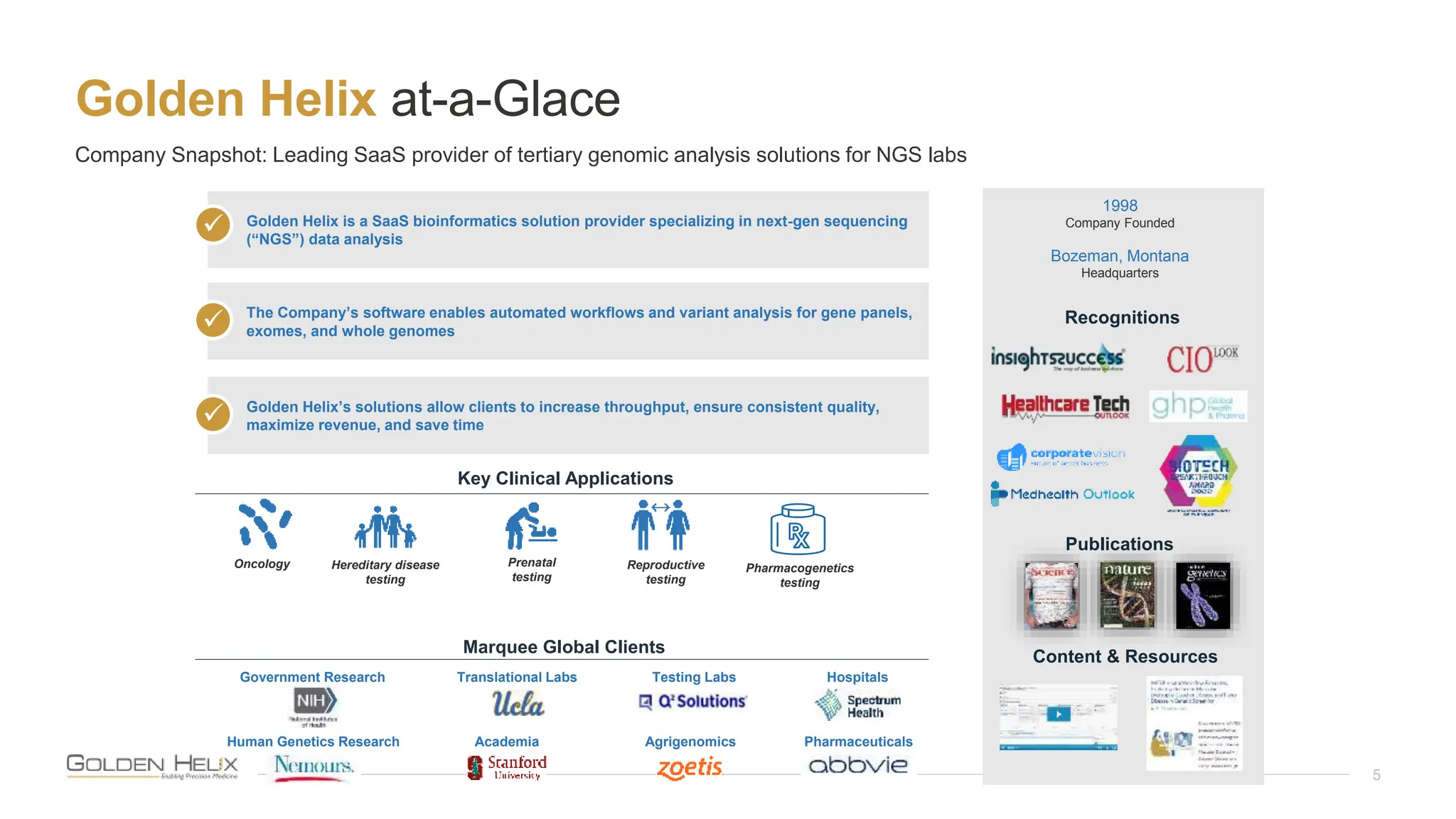
Company Snapshot: Leading SaaS provider of tertiary genomic analysis solutions for NGS labs
Golden Helix is a SaaS bioinformatics solution provider specializing in next-gen sequencing
(“NGS”) data analysis

The Company’s software enables automated workflows and variant analysis for gene panels,
exomes, and whole genomes

Key Clinical Applications
Prenatal
testing
Hereditary disease
testing
Reproductive
testing
Oncology
Marquee Global Clients
Golden Helix’s solutions allow clients to increase throughput, ensure consistent quality,
maximize revenue, and save time

1998
Company Founded
Bozeman, Montana
Headquarters
Recognitions
Government Research
Pharmaceuticals
Agrigenomics
Testing Labs
Translational Labs
Human Genetics Research
Hospitals
Academia
Publications
Content & Resources
Pharmacogenetics
testing
6
Confidential |
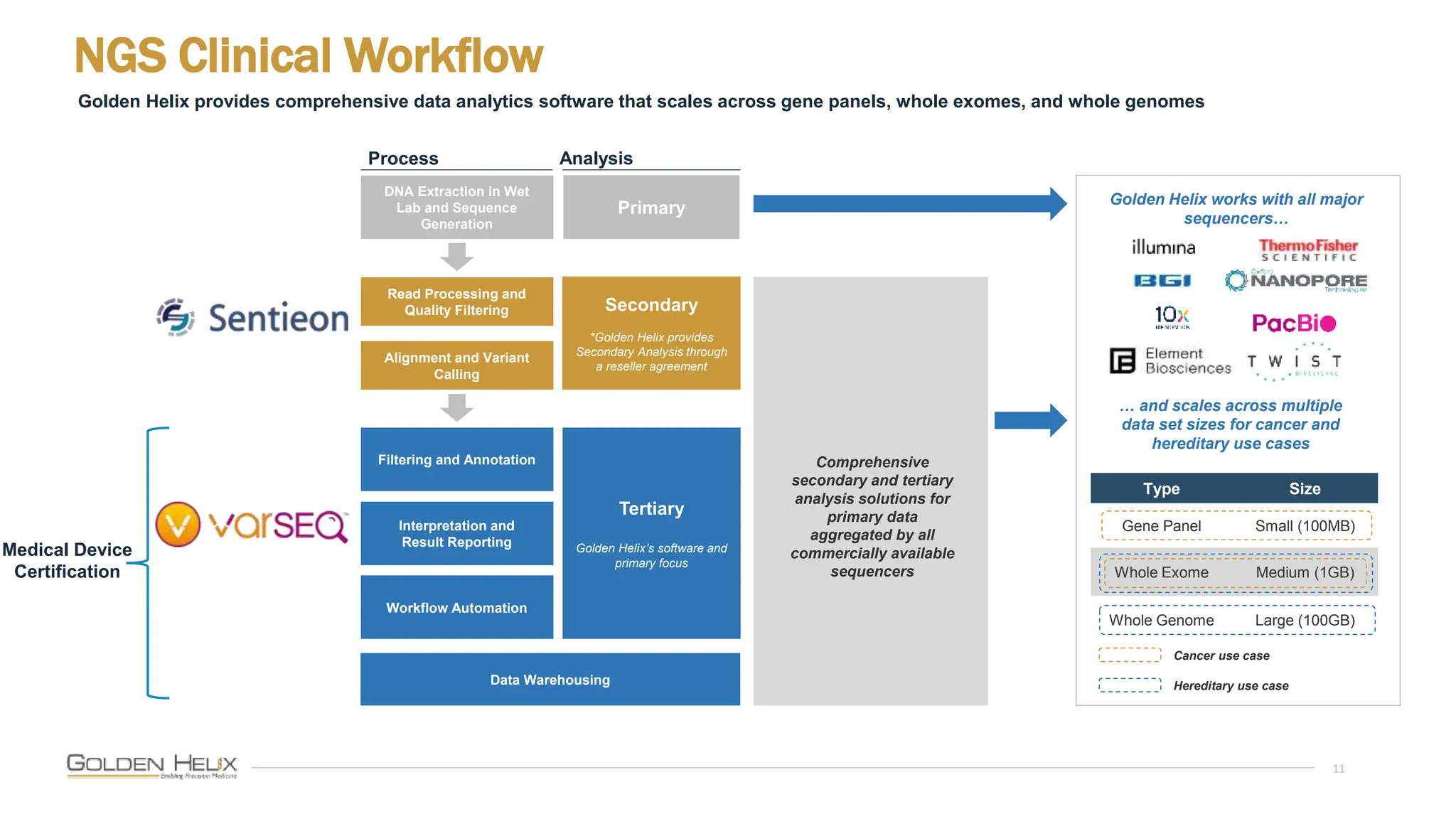
NGS Clinical Workflow
Golden Helix provides comprehensive data analytics software that scales across gene panels, whole exomes, and whole genomes
DNA Extraction in Wet
Lab and Sequence
Generation
Interpretation and
Result Reporting
Primary
Read Processing and
Quality Filtering
Alignment and Variant
Calling
Secondary
*Golden Helix provides
Secondary Analysis through
a reseller agreement
Tertiary
Golden Helix’s software and
primary focus
Comprehensive
secondary and tertiary
analysis solutions for
primary data
aggregated by all
commercially available
sequencers
Type Size
Gene Panel Small (100MB)
Whole Exome Medium (1GB)
Whole Genome Large (100GB)
Cancer use case
Hereditary use case
Process Analysis
… and scales across multiple
data set sizes for cancer and
hereditary use cases
Filtering and Annotation
Data Warehousing
Workflow Automation
Golden Helix works with all major
sequencers…
Medical Device
Certification
ISO Certification 13485:2016
7
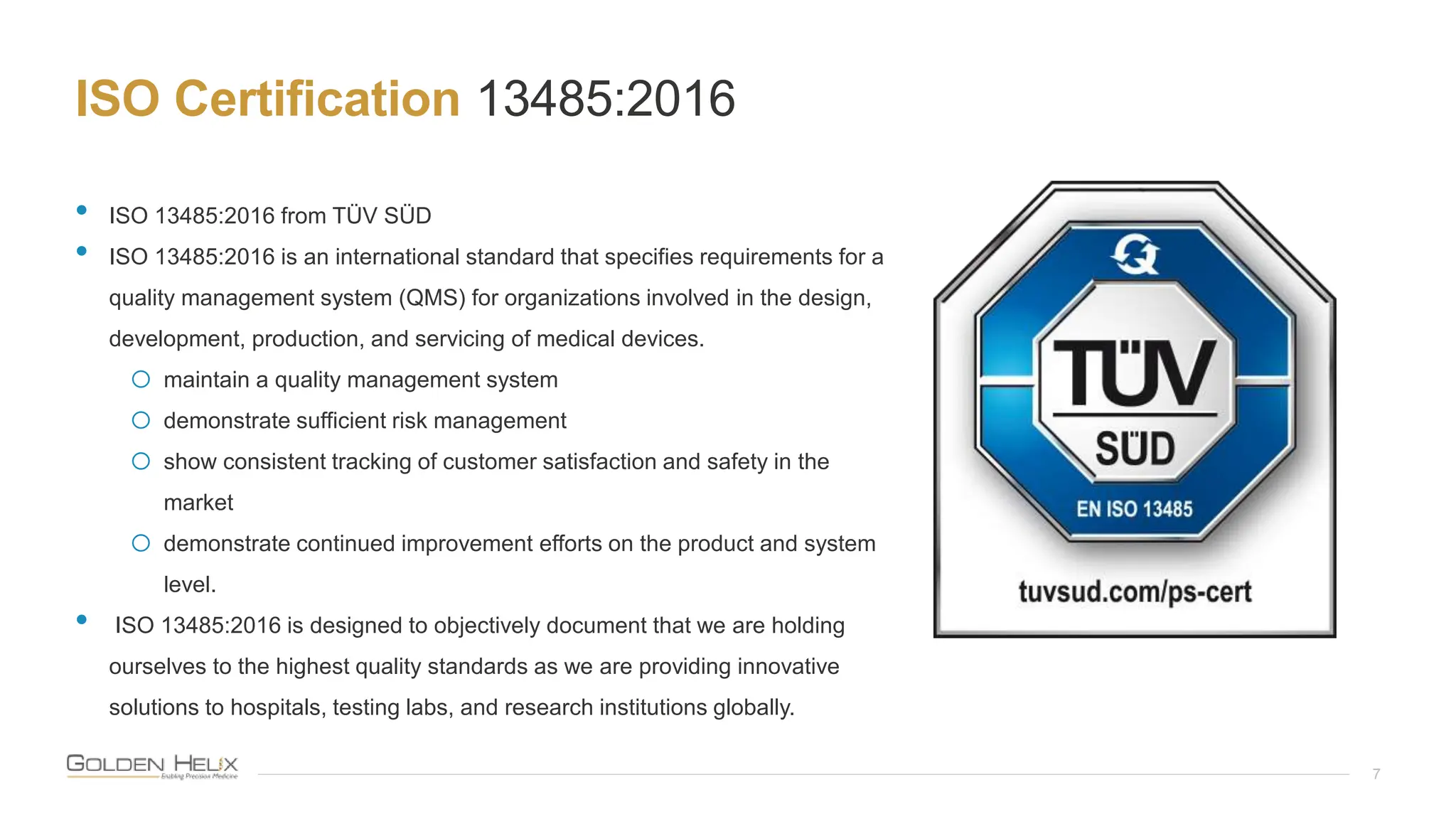
• ISO 13485:2016 from TÜV SÜD
• ISO 13485:2016 is an international standard that specifies requirements for a
quality management system (QMS) for organizations involved in the design,
development, production, and servicing of medical devices.
o maintain a quality management system
o demonstrate sufficient risk management
o show consistent tracking of customer satisfaction and safety in the
market
o demonstrate continued improvement efforts on the product and system
level.
• ISO 13485:2016 is designed to objectively document that we are holding
ourselves to the highest quality standards as we are providing innovative
solutions to hospitals, testing labs, and research institutions globally.
Recent webcasts
8
• Pharmacogenomics
https://www.goldenhelix.com/resources/webcasts/pgx-analysis-in-varseq-a-users-perspective/index.html
https://www.goldenhelix.com/resources/webcasts/introducing-vspgx-pharmacogenomics-testing-in-varseq/index.html
• VarSeq Dx – Medical device certification in Europe
https://www.goldenhelix.com/resources/webcasts/introducing-varseq-dx-as-a-medical-device-in-the-european-union/index.html
• TWIST Exome CNV calling with VarSeq
https://www.goldenhelix.com/resources/webcasts/analyzing-performanc-of-the-twist-exome-kit-leveraging-vs-cnv/index.html
Topics for today
• Fundamentals on variant analysis in VarSeq
o Searching for the variant: designing a filter strategy that is effective and concrete
o Evaluating the variant: comprehensive yet high-level impact assessment for reporting
9
Step 1: Searching for the variant
10
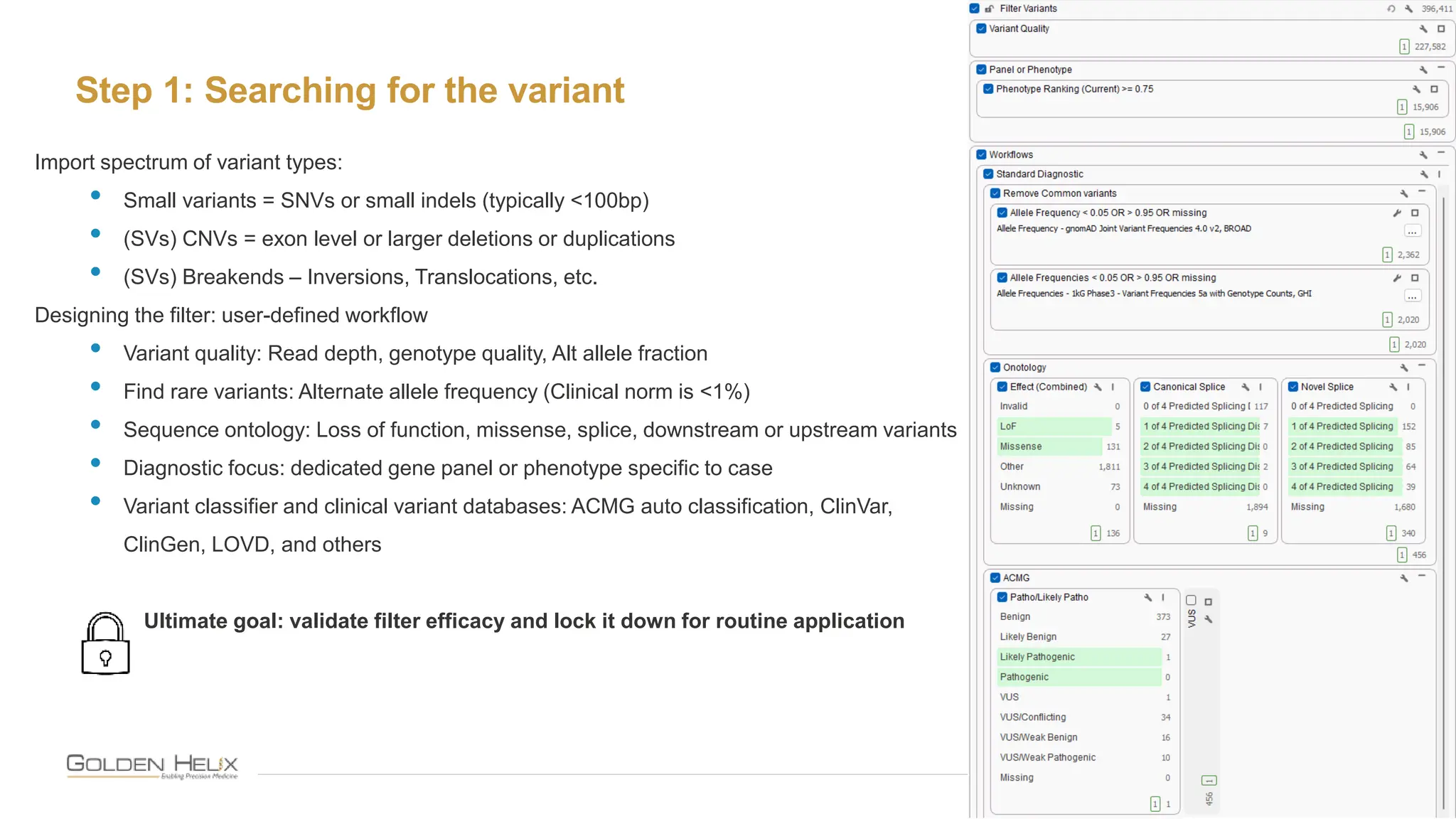
Import spectrum of variant types:
• Small variants = SNVs or small indels (typically <100bp)
• (SVs) CNVs = exon level or larger deletions or duplications
• (SVs) Breakends – Inversions, Translocations, etc.
Designing the filter: user-defined workflow
• Variant quality: Read depth, genotype quality, Alt allele fraction
• Find rare variants: Alternate allele frequency (Clinical norm is <1%)
• Sequence ontology: Loss of function, missense, splice, downstream or upstream variants
• Diagnostic focus: dedicated gene panel or phenotype specific to case
• Variant classifier and clinical variant databases: ACMG auto classification, ClinVar,
ClinGen, LOVD, and others
Ultimate goal: validate filter efficacy and lock it down for routine application
Filtering with Clinical Databases: ClinVar, ClinGen, LOVD, etc
11
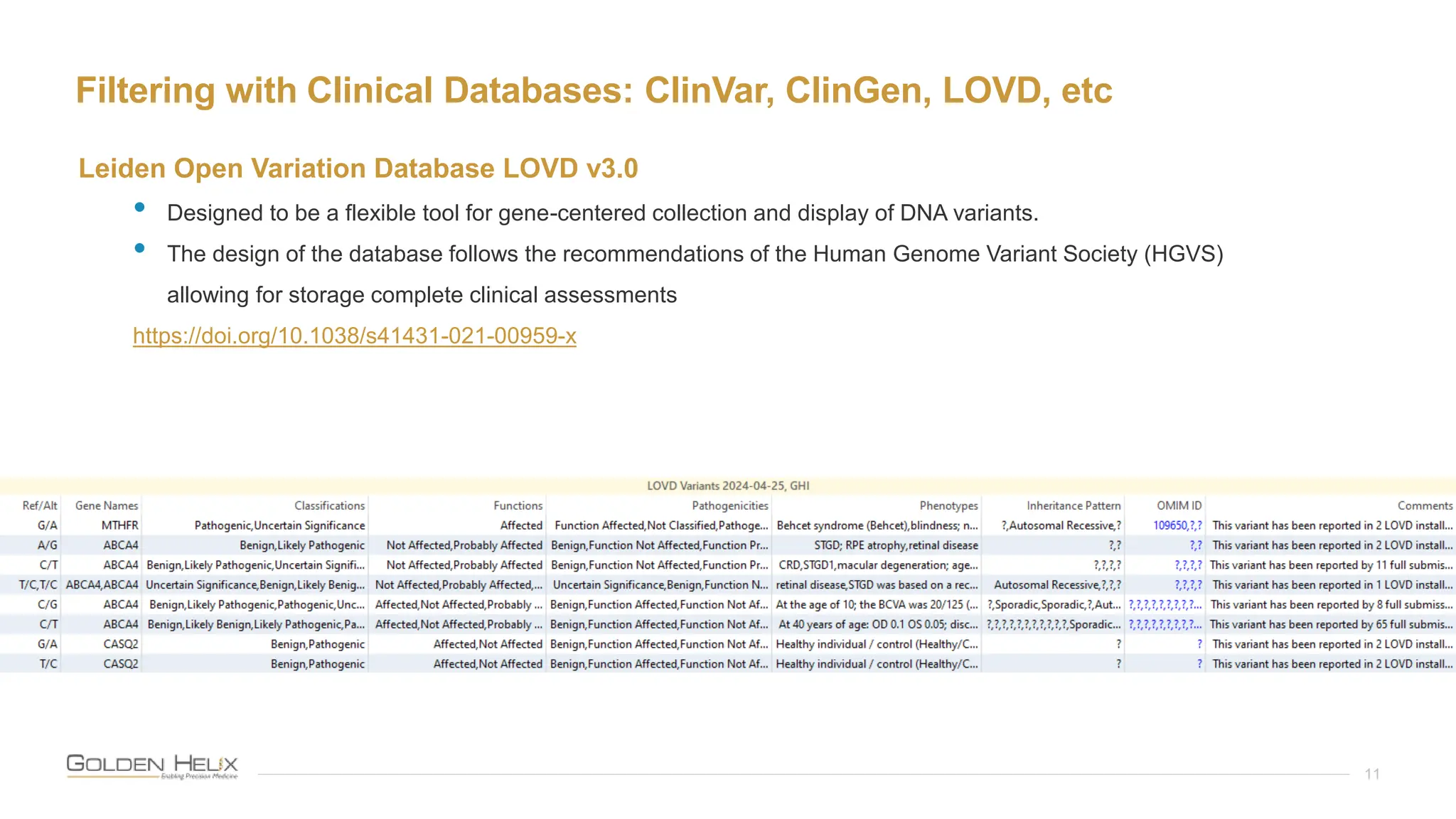
Leiden Open Variation Database LOVD v3.0
• Designed to be a flexible tool for gene-centered collection and display of DNA variants.
• The design of the database follows the recommendations of the Human Genome Variant Society (HGVS)
allowing for storage complete clinical assessments
https://doi.org/10.1038/s41431-021-00959-x
Transitioning to Step 2:
Evaluating a variant in VSClinical
12
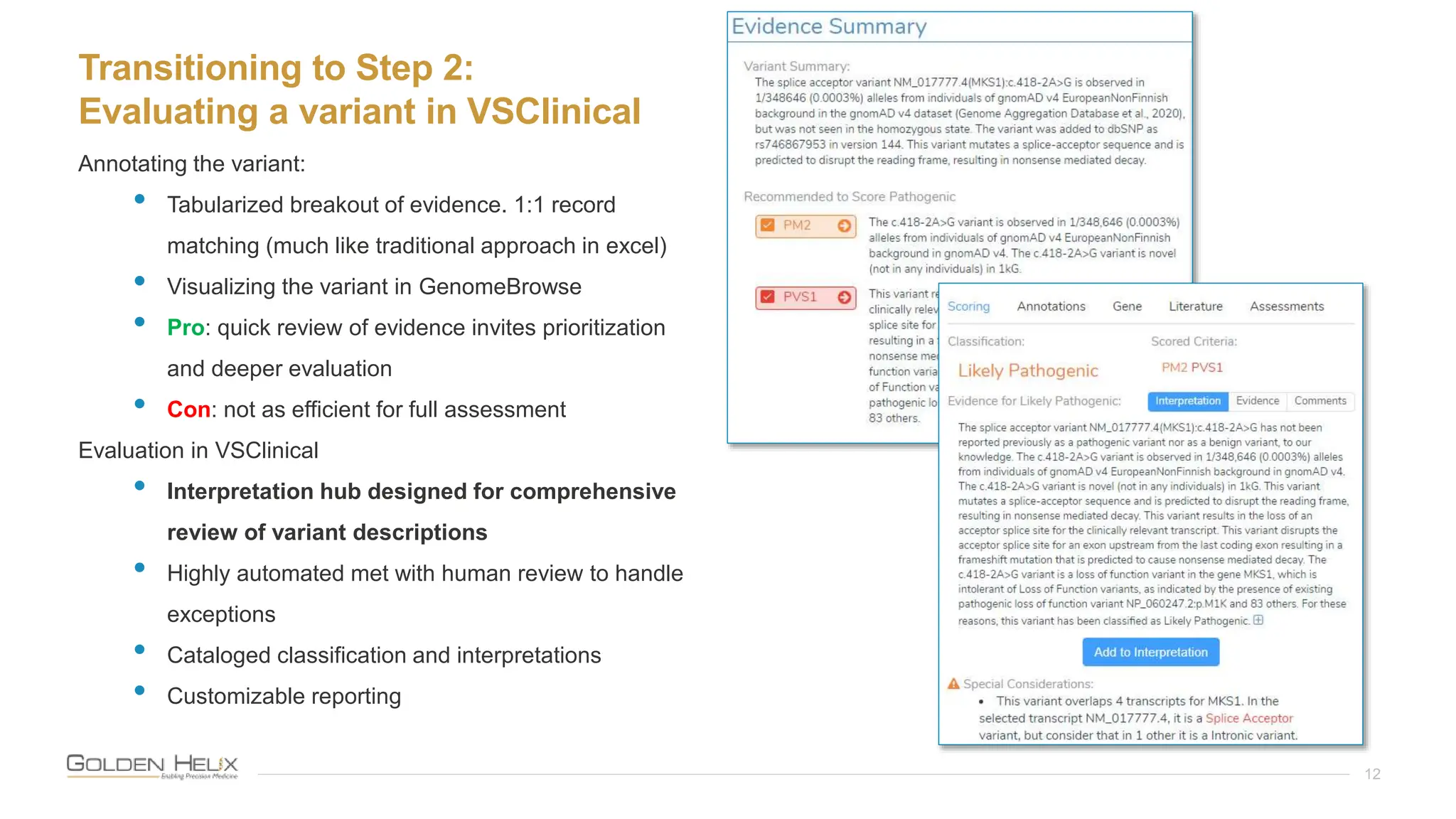
Annotating the variant:
• Tabularized breakout of evidence. 1:1 record
matching (much like traditional approach in excel)
• Visualizing the variant in GenomeBrowse
• Pro: quick review of evidence invites prioritization
and deeper evaluation
• Con: not as efficient for full assessment
Evaluation in VSClinical
• Interpretation hub designed for comprehensive
review of variant descriptions
• Highly automated met with human review to handle
exceptions
• Cataloged classification and interpretations
• Customizable reporting
Demo – Example variants
13
• Loss of Function Splice variant in MKS1
• Initial pathogenic assessment changed upon deeper review
• MET exon 14 skipping
• Multiple variant types lead to same high level assessment
14
Product Demo
NIH Grant Funding Acknowledgments
15
• Research reported in this publication was supported by the National Institute Of General Medical Sciences of the
National Institutes of Health under:
o Award Number R43GM128485-01
o Award Number R43GM128485-02
o Award Number 2R44 GM125432-01
o Award Number 2R44 GM125432-02
o Montana SMIR/STTR Matching Funds Program Grant Agreement Number 19-51-RCSBIR-005
o NIH SBIR Grant 1R43HG013456-01
• PI is Dr. Andreas Scherer, CEO of Golden Helix.
• The content is solely the responsibility of the authors and does not necessarily represent the official views of the National
Institutes of Health.
16
eBook Library
17
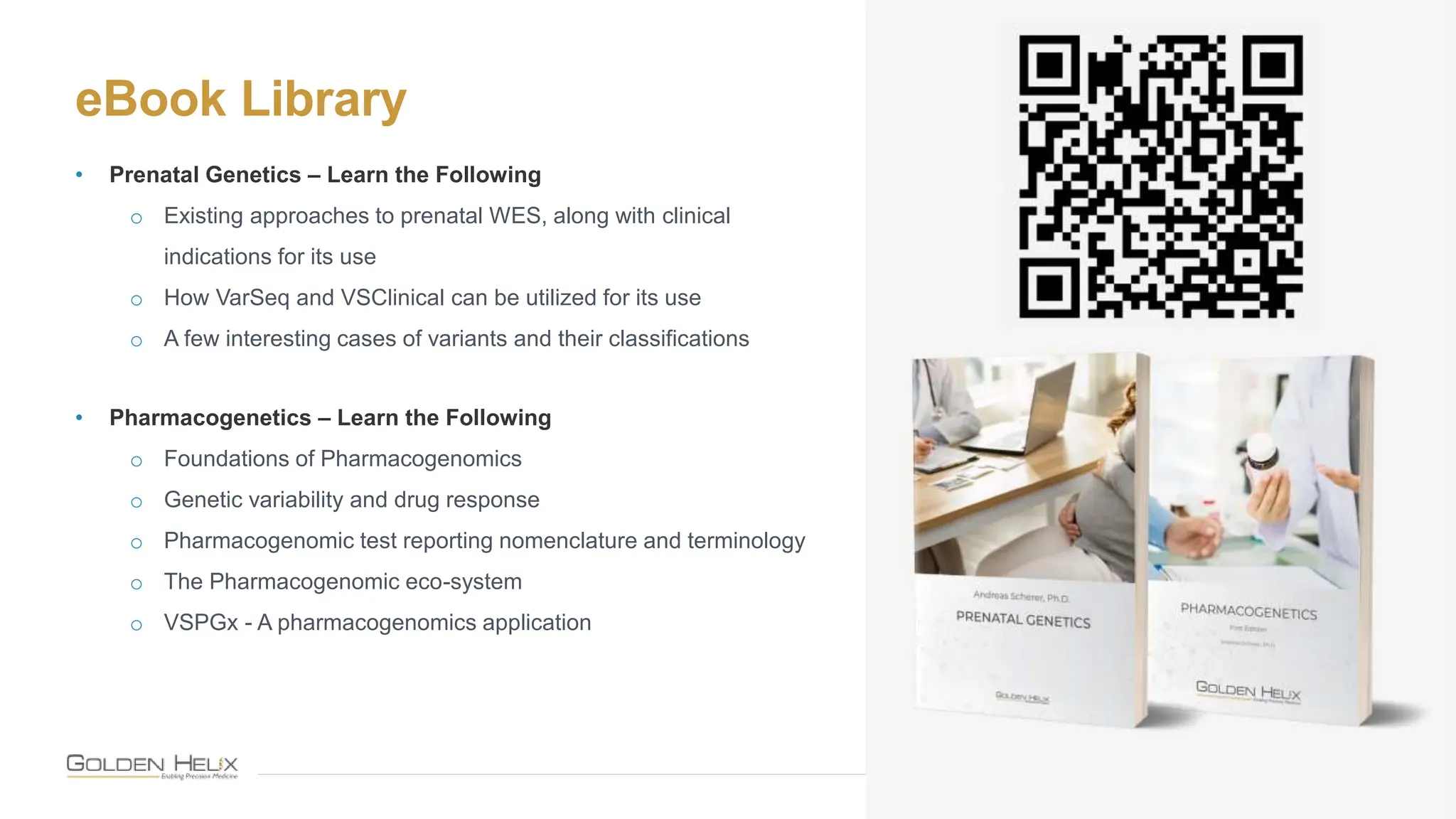
• Prenatal Genetics – Learn the Following
o Existing approaches to prenatal WES, along with clinical
indications for its use
o How VarSeq and VSClinical can be utilized for its use
o A few interesting cases of variants and their classifications
• Pharmacogenetics – Learn the Following
o Foundations of Pharmacogenomics
o Genetic variability and drug response
o Pharmacogenomic test reporting nomenclature and terminology
o The Pharmacogenomic eco-system
o VSPGx - A pharmacogenomics application
Secured CE Mark for EU
18
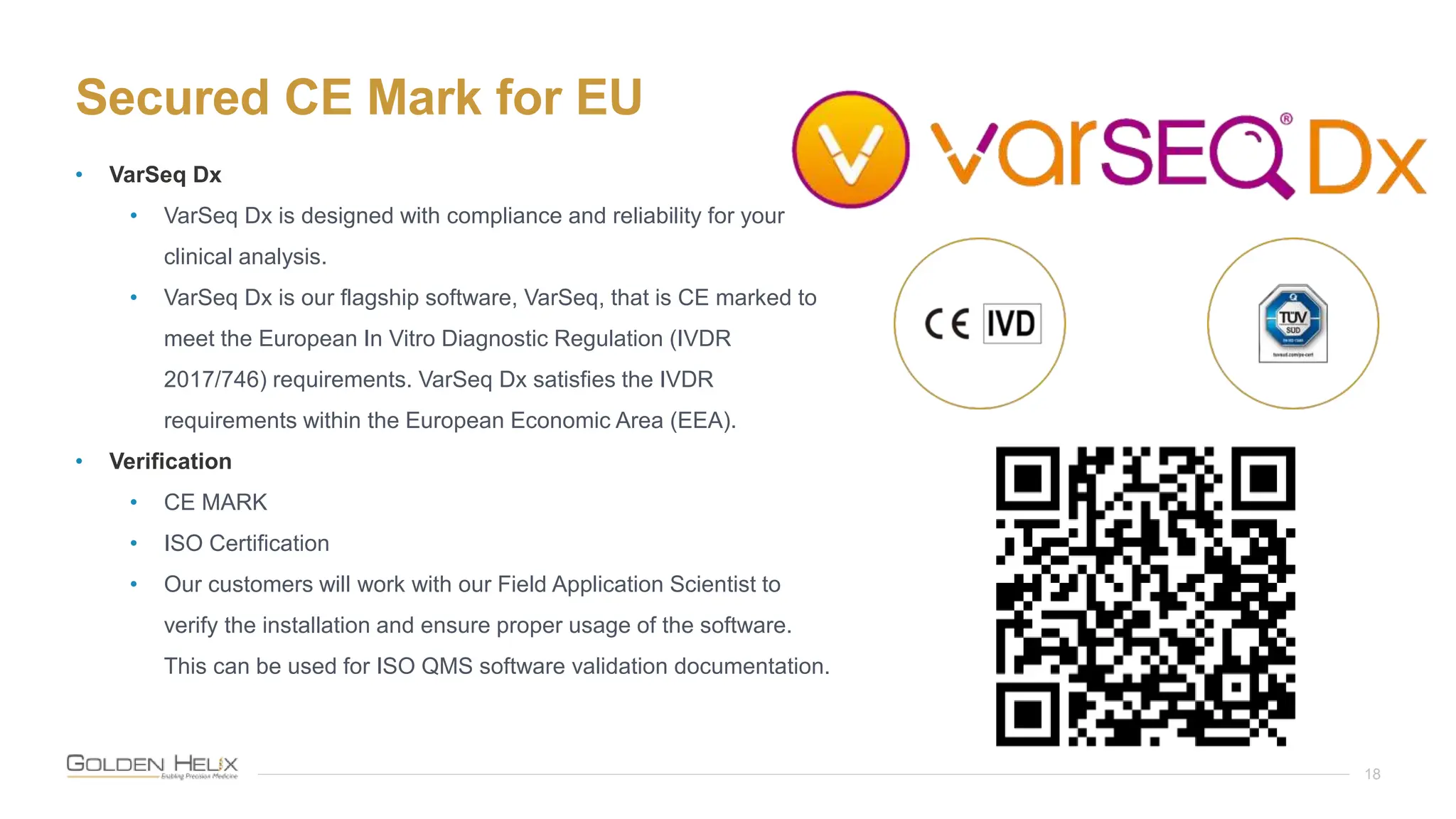
• VarSeq Dx
• VarSeq Dx is designed with compliance and reliability for your
clinical analysis.
• VarSeq Dx is our flagship software, VarSeq, that is CE marked to
meet the European In Vitro Diagnostic Regulation (IVDR
2017/746) requirements. VarSeq Dx satisfies the IVDR
requirements within the European Economic Area (EEA).
• Verification
• CE MARK
• ISO Certification
• Our customers will work with our Field Application Scientist to
verify the installation and ensure proper usage of the software.
This can be used for ISO QMS software validation documentation.
19

Complete Variant Assessment in VSClinical

  • 1.
    Complete variant assessmentin VSClinical July 24, 2024 Presented by Darby Kammeraad, Director of Customer Success
  • 2.
  • 3.
    Complete variant assessmentin VSClinical July 24, 2024 Presented by Darby Kammeraad, Director of Customer Success
  • 4.
    NIH Grant FundingAcknowledgments 4 • Research reported in this publication was supported by the National Institute Of General Medical Sciences of the National Institutes of Health under: o Award Number R43GM128485-01 o Award Number R43GM128485-02 o Award Number 2R44 GM125432-01 o Award Number 2R44 GM125432-02 o Montana SMIR/STTR Matching Funds Program Grant Agreement Number 19-51-RCSBIR-005 o NIH SBIR Grant 1R43HG013456-01 • PI is Dr. Andreas Scherer, CEO of Golden Helix. • The content is solely the responsibility of the authors and does not necessarily represent the official views of the National Institutes of Health.
  • 5.
    Golden Helix at-a-Glace 5 CompanySnapshot: Leading SaaS provider of tertiary genomic analysis solutions for NGS labs Golden Helix is a SaaS bioinformatics solution provider specializing in next-gen sequencing (“NGS”) data analysis  The Company’s software enables automated workflows and variant analysis for gene panels, exomes, and whole genomes  Key Clinical Applications Prenatal testing Hereditary disease testing Reproductive testing Oncology Marquee Global Clients Golden Helix’s solutions allow clients to increase throughput, ensure consistent quality, maximize revenue, and save time  1998 Company Founded Bozeman, Montana Headquarters Recognitions Government Research Pharmaceuticals Agrigenomics Testing Labs Translational Labs Human Genetics Research Hospitals Academia Publications Content & Resources Pharmacogenetics testing
  • 6.
    6 Confidential | NGS ClinicalWorkflow Golden Helix provides comprehensive data analytics software that scales across gene panels, whole exomes, and whole genomes DNA Extraction in Wet Lab and Sequence Generation Interpretation and Result Reporting Primary Read Processing and Quality Filtering Alignment and Variant Calling Secondary *Golden Helix provides Secondary Analysis through a reseller agreement Tertiary Golden Helix’s software and primary focus Comprehensive secondary and tertiary analysis solutions for primary data aggregated by all commercially available sequencers Type Size Gene Panel Small (100MB) Whole Exome Medium (1GB) Whole Genome Large (100GB) Cancer use case Hereditary use case Process Analysis … and scales across multiple data set sizes for cancer and hereditary use cases Filtering and Annotation Data Warehousing Workflow Automation Golden Helix works with all major sequencers… Medical Device Certification
  • 7.
    ISO Certification 13485:2016 7 •ISO 13485:2016 from TÜV SÜD • ISO 13485:2016 is an international standard that specifies requirements for a quality management system (QMS) for organizations involved in the design, development, production, and servicing of medical devices. o maintain a quality management system o demonstrate sufficient risk management o show consistent tracking of customer satisfaction and safety in the market o demonstrate continued improvement efforts on the product and system level. • ISO 13485:2016 is designed to objectively document that we are holding ourselves to the highest quality standards as we are providing innovative solutions to hospitals, testing labs, and research institutions globally.
  • 8.
    Recent webcasts 8 • Pharmacogenomics https://www.goldenhelix.com/resources/webcasts/pgx-analysis-in-varseq-a-users-perspective/index.html https://www.goldenhelix.com/resources/webcasts/introducing-vspgx-pharmacogenomics-testing-in-varseq/index.html •VarSeq Dx – Medical device certification in Europe https://www.goldenhelix.com/resources/webcasts/introducing-varseq-dx-as-a-medical-device-in-the-european-union/index.html • TWIST Exome CNV calling with VarSeq https://www.goldenhelix.com/resources/webcasts/analyzing-performanc-of-the-twist-exome-kit-leveraging-vs-cnv/index.html Topics for today • Fundamentals on variant analysis in VarSeq o Searching for the variant: designing a filter strategy that is effective and concrete o Evaluating the variant: comprehensive yet high-level impact assessment for reporting
  • 9.
  • 10.
    Step 1: Searchingfor the variant 10 Import spectrum of variant types: • Small variants = SNVs or small indels (typically <100bp) • (SVs) CNVs = exon level or larger deletions or duplications • (SVs) Breakends – Inversions, Translocations, etc. Designing the filter: user-defined workflow • Variant quality: Read depth, genotype quality, Alt allele fraction • Find rare variants: Alternate allele frequency (Clinical norm is <1%) • Sequence ontology: Loss of function, missense, splice, downstream or upstream variants • Diagnostic focus: dedicated gene panel or phenotype specific to case • Variant classifier and clinical variant databases: ACMG auto classification, ClinVar, ClinGen, LOVD, and others Ultimate goal: validate filter efficacy and lock it down for routine application
  • 11.
    Filtering with ClinicalDatabases: ClinVar, ClinGen, LOVD, etc 11 Leiden Open Variation Database LOVD v3.0 • Designed to be a flexible tool for gene-centered collection and display of DNA variants. • The design of the database follows the recommendations of the Human Genome Variant Society (HGVS) allowing for storage complete clinical assessments https://doi.org/10.1038/s41431-021-00959-x
  • 12.
    Transitioning to Step2: Evaluating a variant in VSClinical 12 Annotating the variant: • Tabularized breakout of evidence. 1:1 record matching (much like traditional approach in excel) • Visualizing the variant in GenomeBrowse • Pro: quick review of evidence invites prioritization and deeper evaluation • Con: not as efficient for full assessment Evaluation in VSClinical • Interpretation hub designed for comprehensive review of variant descriptions • Highly automated met with human review to handle exceptions • Cataloged classification and interpretations • Customizable reporting
  • 13.
    Demo – Examplevariants 13 • Loss of Function Splice variant in MKS1 • Initial pathogenic assessment changed upon deeper review • MET exon 14 skipping • Multiple variant types lead to same high level assessment
  • 14.
  • 15.
    NIH Grant FundingAcknowledgments 15 • Research reported in this publication was supported by the National Institute Of General Medical Sciences of the National Institutes of Health under: o Award Number R43GM128485-01 o Award Number R43GM128485-02 o Award Number 2R44 GM125432-01 o Award Number 2R44 GM125432-02 o Montana SMIR/STTR Matching Funds Program Grant Agreement Number 19-51-RCSBIR-005 o NIH SBIR Grant 1R43HG013456-01 • PI is Dr. Andreas Scherer, CEO of Golden Helix. • The content is solely the responsibility of the authors and does not necessarily represent the official views of the National Institutes of Health.
  • 16.
  • 17.
    eBook Library 17 • PrenatalGenetics – Learn the Following o Existing approaches to prenatal WES, along with clinical indications for its use o How VarSeq and VSClinical can be utilized for its use o A few interesting cases of variants and their classifications • Pharmacogenetics – Learn the Following o Foundations of Pharmacogenomics o Genetic variability and drug response o Pharmacogenomic test reporting nomenclature and terminology o The Pharmacogenomic eco-system o VSPGx - A pharmacogenomics application
  • 18.
    Secured CE Markfor EU 18 • VarSeq Dx • VarSeq Dx is designed with compliance and reliability for your clinical analysis. • VarSeq Dx is our flagship software, VarSeq, that is CE marked to meet the European In Vitro Diagnostic Regulation (IVDR 2017/746) requirements. VarSeq Dx satisfies the IVDR requirements within the European Economic Area (EEA). • Verification • CE MARK • ISO Certification • Our customers will work with our Field Application Scientist to verify the installation and ensure proper usage of the software. This can be used for ISO QMS software validation documentation.
  • 19.

Editor's Notes

  • #2 Casey’s intro
  • #4 Thank you Casey for the introduction and thank all of you for attending today’s presentation on comprehensive variant assessments in VSClinical
  • #5 Before we start diving into the main topic, I wanted mention our appreciation for our grant funding from the NIH. The research reported in this publication was supported by the National institute of general medical sciences of the national institutes of health under the listed awards. We are also grateful to have received local grant funding from the state of Montana. Our PI is Dr. Andreas Scherer who is also the CEO at Golden Helix and the content described today is the responsibility of the authors and does not officially represent the views of the NIH. Some of you attending today may be newcomers to the Golden Helix software stack so I’d like to take a moment to give you some background.
  • #6 Golden Helix is a bioinformatic company serving the globe for over 25 years. Coming from a background in research for array-based data, early on we shifted our focus and also serve as experts in the NGS space. Our primary mission is to develop high quality bioinformatic software with a key focus on facilitating routine clinical applications. Our tertiary software solutions are scalable for everything from panels to genomes and are highly automatable when processing a large number of samples in your lab. This combined with our subscription based business model, allows users to process as many samples as needed, without us chipping away at your revenue stream with most per sample applications on the market. The assays designed in our software are built by the user and span a wide spectrum of applications, including somatic workflow, hereditary cancer, rare diseases, prenatal testing and family based analysis, and of course our recent addition of Pharmacogenomics. Our customer base is also wide spread with users in government and testing labs, hospitals, universities, and many research and pharmaceutical labs.
  • #7 Lets review where our tools fit into the bigger picture of an NGS Workflow. The workflow consists of three main stages, primary to encompass everything from sample collection to sequencing, secondary for read alignment and variant calling, and the tertiary stage for variant evaluation and reporting. Our software platform VarSeq is a tertiary tool designed to be agnostic and accept NGS data from any sequencing and secondary technology. Just for awareness, we do have a partnership with Sentieon to provide labs a solution if need be, but again, our software is receptive to any data provider upholding standard VCF format. Not only is our software capable of handling data from short read and long read sequencers, but can handle everything from modest panels to complete genomes for germline and somatic pipelines. VarSeq is a GUI based software serving as the front end to variant analysis, but it is coupled with both a workflow automation tool VSPipeline, and a secure local variant databasing software VSWarehouse. As you can see there are multiple components to our software and I’d strongly encourage you to review the extensive lists of webcasts hosted on our site to learn more about automation and warehousing with Golden Helix.
  • #8 In reviewing our previous webcasts, you’ll see a recent update relevant to our European labs or any lab processing European samples. We’re excited to announce our recent ISO13485 certification as the result of our diligence in creating a thorough quality management system coupled with our manufacturing process. In the near future, labs developing in house tests will need to adhere to the IVD regulations, and can rely on streamlining integration of our software having the certification already in place. When implementing our tools, our support staff is also ready to guide you through our own user onboarding and certification process bringing your users up to speed as we move through the workflow validation process together.
  • #9 Here is a snap shot of some recent presentations we’ve given updating our users and viewers to some latest developments in the software. The first half of this year was a strong focus on developing our primary release of pharmacogenomics analysis in VarSeq for which we’ve had a number of webcasts. Also, as previously mentioned is a webcast highlighting the VarSeq Dx mode likely relevant for our customers who will fall under IVDR compliance. We also recently presented on a copublished article with TWIST Bioscience for a whole exome based CNV project showing 100% concordance with known MLPA events in a Corielle truth set. Stay tuned for more updates on our software stack throughout the year. However, for this presentation, I wanted to bring us all back to the basics of variant analysis in VarSeq to really demonstrate the power our software provides to our users when tackling evaluation and reporting
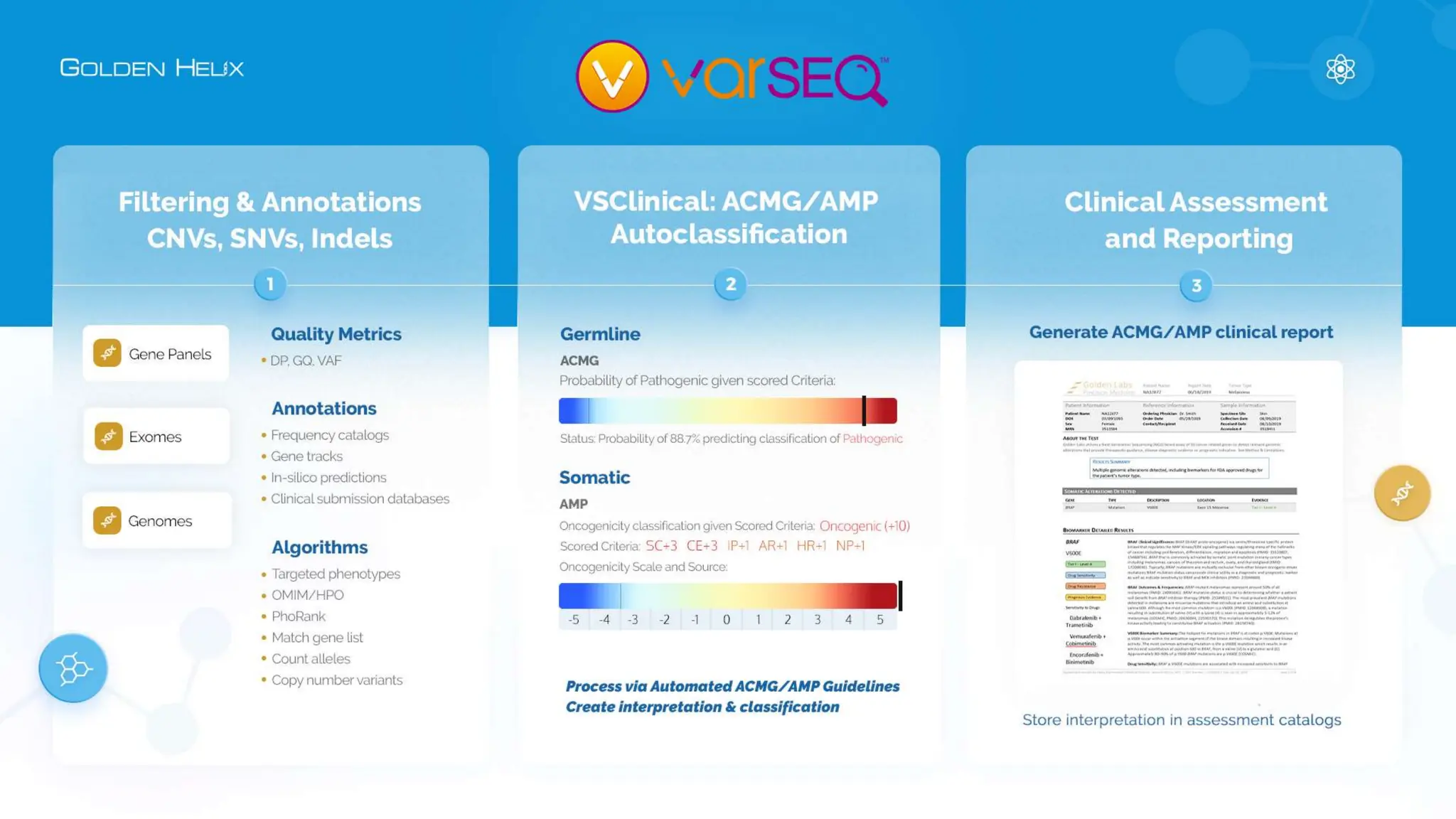
  • #10 Lets start things off by describing what exactly VarSeq is doing with our called variants. It is simplest to separate VarSeq into three steps. Step 1 is to import the full list of variants, annotate against the variant list and build a filtering strategy to isolate the clinically relevant variant. It is important to point out that, once defined, the filtering strategy, applied algorithms and annotations, and preferred layout of the software is then saved as a template for routine application. The goal is then at the end of step 1 results in a single or few selected variants that are carried into the VSClinical interpretation hub in Step 2. VSClinical houses the automated ACMG and AMP guidelines for evaluation of your germline and somatic variants. Here the user will assess every available layer of evidence for a variant, draft and catalog comprehensive interpretations and ultimately complete step 3 which is to render your customized clinical reports. We ship a number of example report template but know that users have a wide spectrum of report customization options that are rendered with a click of a button. For today’s presentation, I’d like to focus our attention to steps 1 and 2, building a reliable filtering strategy, and demonstrate the need for a comprehensive evaluation experience in VSClinical.
  • #11 So lets dig into building the workflow template in Step 1. First is import and VarSeq can handle importing all small variant types which includes SNVs and smaller indels not limited to but are typically at maximum around 100 or so base pairs. CNVs are in some cases as small as a single exon but up to a whole chromosome deletion or duplication event. Our third variant table handles the breakend notation for inversions, translocations, and other complex structural variants. Once imported, each of these variants need to pass through an effective filtering chain. Keep in mind, the user has full control of this filter design and may be as relaxed or stringent as you would need to accommodate what is reportable in your lab. For example, consider if your lab would report on secondary findings or limit reportable outcomes to a relevant diagnostic panel. Though each workflow is unique, there are some relatively routine filtering strategies you may consider. A great first filtering category is to remove low quality variants that may have a poor genotype quality score or low read depth. Next may be to remove variants commonly seen in the population. In most cases, we’d expect to look for alternates of very low frequency at perhaps a less than 1 percent threshold, but you can always remain more sensitive when accommodating for more common disorders or higher frequency alternates in founder populations. Next would be to utilize a gene track such as RefSeq to filter for the variants impact on the protein. Typical strategy here would be to capture Loss of function or missense variants, but ensure you catch variants with strong splice predictions or known upstream/downstream variants. Next is one of the most pivotal filtering categories which is the diagnostic focus. Is a targeted panel being applied for these samples variants or possibly the integration of Phenotypic terms to rank the variants in genes most relevant for the diagnosis. And last but not least, the auto classifiers used to either prioritize obvious pathogenic variants, or rule out benigns and include interesting variants of uncertain significance. You’ll see in the demo here shortly a method to not only use the classifiers, but also pair it with various clinical databases to add more power to your filter. Ultimately, once this filter is designed, it can be tested for validation, then locked down for routine application
  • #12 I wanted to also let our audience know that we are constantly exploring available databases that we can add to our list of hosted annotations and we’ve recently gained access to curating LOVD version 3.0. This database is a gene centered collection of DNA variants with complete clinical assessments and associated variant classifications that follows the recommendations of the Human Genome Variant Society or HGVS standards. Please reach out to our support team if you wish to gain access to this database in your VarSeq templates.
  • #13 So now that step 1 is complete and saved as a template, we can take the filtered variants and begin their evaluation in step 2. As you’ll see in the upcoming demo, the variant table is full of useful annotation information that can facilitate review of a variant. Users can define their preferred layout of the table to only show the most pertinent fields necessary for evaluation. There are many customers that are accustom to this kind of view as it is traditionally what they did in excel for maybe small panels without having established tertiary tools. Additionally, we’ve integrated our own plotting visualization software GenomeBrowse to provide even more power at assessing overlapping records for a specific variant. The variant table and GenomeBrowse are incredibly powerful tools to interface with a specific variant, but the user must do their due diligence of addressing all available evidence when defining the classification. For this, VSClinical is the best environment for variant assessment. VSClinical handles the most critical stages of variant evaluation, where the user is presented with all available criteria and evidence for a variant which may include some special considerations and exceptions which we will demonstrate today. Ultimately, the variant evaluation is carried out, classification defined and cataloged, and report ready with a click of a button.
  • #16 Before we start diving into the subject, I wanted mention our appreciation for our grant funding from NIH. The research reported in this publication was supported by the National institute of general medical sciences of the national institutes of health under the listed awards. We are also grateful to have received local grant funding from the state of Montana. Our PI is Dr. Andreas Scherer who is also the CEO at Golden Helix and the content described today is the responsibility of the authors and does not officially represent the views of the NIH. So with that covered, Before diving into today's topic, I'd like to offer some background and context on what Golden Helix brings to the table as a company