Compensation management
By Priyansh Dwivedi
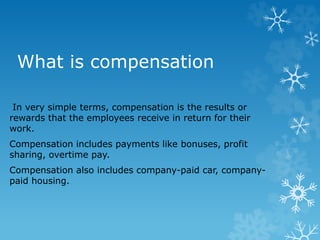
What is compensation
In very simple terms, compensation is the results or
rewards that the employees receive in return for their
work.
Compensation includes payments like bonuses, profit
sharing, overtime pay.
Compensation also includes company-paid car, company-
paid housing.
Objectives of Compensation
• Allure suitable staff.
• Keep qualified personnel.
• To develop and maintain motivation.
• Assure that rewards and salary costs handle changes
in market rates or organizational change.
• Appraise performance, duty, and loyalty, and provide
for progression.
• Abide with legal requirements.
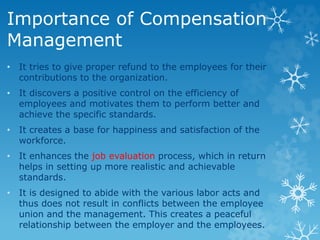
Importance of Compensation
Management
• It tries to give proper refund to the employees for their
contributions to the organization.
• It discovers a positive control on the efficiency of
employees and motivates them to perform better and
achieve the specific standards.
• It creates a base for happiness and satisfaction of the
workforce.
• It enhances the job evaluation process, which in return
helps in setting up more realistic and achievable
standards.
• It is designed to abide with the various labor acts and
thus does not result in conflicts between the employee
union and the management. This creates a peaceful
relationship between the employer and the employees.
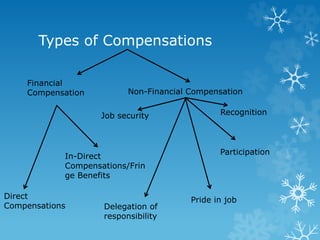
Types of Compensations
Direct
Compensations
In-Direct
Compensations/Frin
ge Benefits
Financial
Compensation Non-Financial Compensation
Delegation of
responsibility
Pride in job
Job security
Participation
Recognition
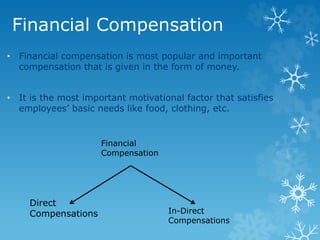
Financial Compensation
• Financial compensation is most popular and important
compensation that is given in the form of money.
• It is the most important motivational factor that satisfies
employees’ basic needs like food, clothing, etc.
Direct
Compensations In-Direct
Compensations
Financial
Compensation
Direct Compensations
• It is all about money. Plain old cash. It is given directly
given to the employee.
• Salary is the Compensations given to the employee in
return of the work he has done.
• Bonus is the extra money you get for the extra work
which the employee does.
In-Direct/Fringe Benefits
Compensations
• They are extra benefits given to employees in order
to keep them motivated.
• They are also used to make the life of the employee
easier especially when they re-locate to a new city.
• They are used a USP in order to standout from the
crowd. As the company can claim certain thing and
put a small T&C* applied.
• Some of the common Fringe Benefits are
• Paid Holidays
• Paid Vacations
Non-Financial Compensation
• As the name suggest in this other ways are used to
motivate and encourage the employees.
• It can be done via
1. Job security
2. Recognition
3. Participation
4. Pride in job
5. Delegation of responsibility
Factors affecting Compensation
• Economic condition
• Prevailing Wage Level
• Government Control - Government through various
legislative enactments such as Minimum Wages Act, 1948,
Payment of Wage Act, 1936, Equal Remuneration Act,
1976, Payment of Bonus Act, 1965, dealing with Provident
Funds, Gratuity, Companies Act.
• Union’s Influence.
• Employer’s Affordability.
• Worth of a Job.
• Ability to pay
Any Questions ?

Compensation management

  • 1.
  • 2.
    What is compensation Invery simple terms, compensation is the results or rewards that the employees receive in return for their work. Compensation includes payments like bonuses, profit sharing, overtime pay. Compensation also includes company-paid car, company- paid housing.
  • 3.
    Objectives of Compensation •Allure suitable staff. • Keep qualified personnel. • To develop and maintain motivation. • Assure that rewards and salary costs handle changes in market rates or organizational change. • Appraise performance, duty, and loyalty, and provide for progression. • Abide with legal requirements.
  • 4.
    Importance of Compensation Management •It tries to give proper refund to the employees for their contributions to the organization. • It discovers a positive control on the efficiency of employees and motivates them to perform better and achieve the specific standards. • It creates a base for happiness and satisfaction of the workforce. • It enhances the job evaluation process, which in return helps in setting up more realistic and achievable standards. • It is designed to abide with the various labor acts and thus does not result in conflicts between the employee union and the management. This creates a peaceful relationship between the employer and the employees.
  • 5.
    Types of Compensations Direct Compensations In-Direct Compensations/Frin geBenefits Financial Compensation Non-Financial Compensation Delegation of responsibility Pride in job Job security Participation Recognition
  • 6.
    Financial Compensation • Financialcompensation is most popular and important compensation that is given in the form of money. • It is the most important motivational factor that satisfies employees’ basic needs like food, clothing, etc. Direct Compensations In-Direct Compensations Financial Compensation
  • 7.
    Direct Compensations • Itis all about money. Plain old cash. It is given directly given to the employee. • Salary is the Compensations given to the employee in return of the work he has done. • Bonus is the extra money you get for the extra work which the employee does.
  • 8.
    In-Direct/Fringe Benefits Compensations • Theyare extra benefits given to employees in order to keep them motivated. • They are also used to make the life of the employee easier especially when they re-locate to a new city. • They are used a USP in order to standout from the crowd. As the company can claim certain thing and put a small T&C* applied. • Some of the common Fringe Benefits are • Paid Holidays • Paid Vacations
  • 9.
    Non-Financial Compensation • Asthe name suggest in this other ways are used to motivate and encourage the employees. • It can be done via 1. Job security 2. Recognition 3. Participation 4. Pride in job 5. Delegation of responsibility
  • 10.
    Factors affecting Compensation •Economic condition • Prevailing Wage Level • Government Control - Government through various legislative enactments such as Minimum Wages Act, 1948, Payment of Wage Act, 1936, Equal Remuneration Act, 1976, Payment of Bonus Act, 1965, dealing with Provident Funds, Gratuity, Companies Act. • Union’s Influence. • Employer’s Affordability. • Worth of a Job. • Ability to pay
  • 11.