BY : ANCY JOY
N
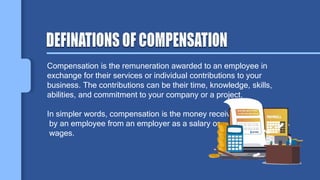
Compensation is the remuneration awarded to an employee in
exchange for their services or individual contributions to your
business. The contributions can be their time, knowledge, skills,
abilities, and commitment to your company or a project.
In simpler words, compensation is the money received
by an employee from an employer as a salary or
wages.
Compensation is the remuneration awarded to an employee in
exchange for their services or individual contributions to your
business. The contributions can be their time, knowledge, skills,
abilities, and commitment to your company or a project.
In simpler words, compensation is the money received
by an employee from an employer as a salary or
wages.
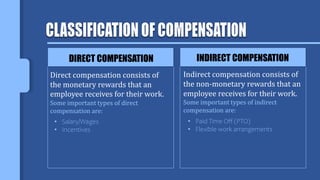
DIRECT COMPENSATION
Direct compensation consists of
the monetary rewards that an
employee receives for their work.
Some important types of direct
compensation are:
INDIRECT COMPENSATION
Indirect compensation consists of
the non-monetary rewards that an
employee receives for their work.
Some important types of indirect
compensation are:
• Salary/Wages
• Incentives
• Paid Time Off (PTO)
• Flexible work arrangements
Introduction to Compensation and its classification

Introduction to Compensation and its classification

  • 1.
    BY : ANCYJOY N
  • 2.
    Compensation is theremuneration awarded to an employee in exchange for their services or individual contributions to your business. The contributions can be their time, knowledge, skills, abilities, and commitment to your company or a project. In simpler words, compensation is the money received by an employee from an employer as a salary or wages.
  • 3.
    Compensation is theremuneration awarded to an employee in exchange for their services or individual contributions to your business. The contributions can be their time, knowledge, skills, abilities, and commitment to your company or a project. In simpler words, compensation is the money received by an employee from an employer as a salary or wages.
  • 4.
    DIRECT COMPENSATION Direct compensationconsists of the monetary rewards that an employee receives for their work. Some important types of direct compensation are: INDIRECT COMPENSATION Indirect compensation consists of the non-monetary rewards that an employee receives for their work. Some important types of indirect compensation are: • Salary/Wages • Incentives • Paid Time Off (PTO) • Flexible work arrangements