Compelling leads
Source: Compiled by Dr. Sherry Ricchiardi,
associate professor, Indiana University School of
Journalism (Indianapolis). Adapted with
permission.
Compelling leads
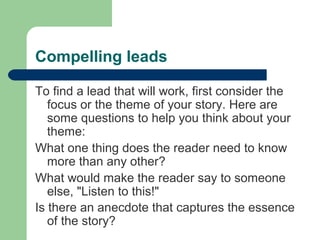
To find a lead that will work, first consider the
focus or the theme of your story. Here are
some questions to help you think about your
theme:
What one thing does the reader need to know
more than any other?
What would make the reader say to someone
else, "Listen to this!"
Is there an anecdote that captures the essence
of the story?
Compelling leads
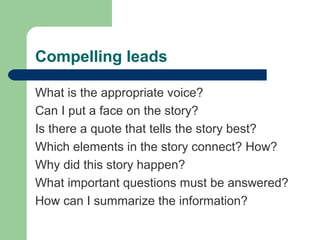
What is the appropriate voice?
Can I put a face on the story?
Is there a quote that tells the story best?
Which elements in the story connect? How?
Why did this story happen?
What important questions must be answered?
How can I summarize the information?
Compelling leads
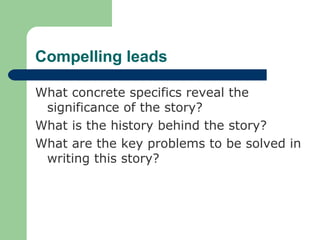
What concrete specifics reveal the
significance of the story?
What is the history behind the story?
What are the key problems to be solved in
writing this story?
Compelling leads
Does any one image reveal the meaning of the
story?
Where is the conflict or the tension?
How will this news impact the reader?
Why should anyone read this story?
What point of view should the story be told
from?
Is there a metaphor to capture the story?
Ways to focus your lead
 Reader interest. What did you find most interesting about this
subject? What do you think the reader will find most interesting?
 Memorable information. What was the most memorable piece of
information or fact that you discovered?
 Focus on a person. Is there someone who illustrates the problem
or the issue? If you tell a story about this person or show this
person in action, will it lead to the main focus of the story? Will it
help the reader understand?
 Descriptive approach. Can you describe a scene that relates to
the focus or the theme of the story?
Ways to focus a lead
 Build on a quote. Is there a great quote to back up the lead? If
so, write the lead so it refers to the quote without repeating it.
 Contrast. Would a "then-and-now" or "good versus evil" approach
work? This type of lead can be used to set up stories about
conflicts or unusual circumstances.
 Question. Can you set up a question so the readers want to
discover the solution? This type of lead can be effective if the
reader is interested in finding the answer to the question you
pose.
 Narrative storytelling. If you were just telling a good story, how
would it start? Can you reconstruct events to put the reader on the
scene?

Compelling leads

  • 1.
    Compelling leads Source: Compiledby Dr. Sherry Ricchiardi, associate professor, Indiana University School of Journalism (Indianapolis). Adapted with permission.
  • 2.
    Compelling leads To finda lead that will work, first consider the focus or the theme of your story. Here are some questions to help you think about your theme: What one thing does the reader need to know more than any other? What would make the reader say to someone else, "Listen to this!" Is there an anecdote that captures the essence of the story?
  • 3.
    Compelling leads What isthe appropriate voice? Can I put a face on the story? Is there a quote that tells the story best? Which elements in the story connect? How? Why did this story happen? What important questions must be answered? How can I summarize the information?
  • 4.
    Compelling leads What concretespecifics reveal the significance of the story? What is the history behind the story? What are the key problems to be solved in writing this story?
  • 5.
    Compelling leads Does anyone image reveal the meaning of the story? Where is the conflict or the tension? How will this news impact the reader? Why should anyone read this story? What point of view should the story be told from? Is there a metaphor to capture the story?
  • 6.
    Ways to focusyour lead  Reader interest. What did you find most interesting about this subject? What do you think the reader will find most interesting?  Memorable information. What was the most memorable piece of information or fact that you discovered?  Focus on a person. Is there someone who illustrates the problem or the issue? If you tell a story about this person or show this person in action, will it lead to the main focus of the story? Will it help the reader understand?  Descriptive approach. Can you describe a scene that relates to the focus or the theme of the story?
  • 7.
    Ways to focusa lead  Build on a quote. Is there a great quote to back up the lead? If so, write the lead so it refers to the quote without repeating it.  Contrast. Would a "then-and-now" or "good versus evil" approach work? This type of lead can be used to set up stories about conflicts or unusual circumstances.  Question. Can you set up a question so the readers want to discover the solution? This type of lead can be effective if the reader is interested in finding the answer to the question you pose.  Narrative storytelling. If you were just telling a good story, how would it start? Can you reconstruct events to put the reader on the scene?