
Journalism and Community
“Tapping Civic Life”
Pew Center For Civic Journalism
Mapping a Community
“Journalists must know how to place stories
into a context, based on what matters in the
communities they serve.”
Getting the Whole Story, p. 70
“The difference between doing an interview and
tapping into civic conversations is the difference
between knocking on a family’s front door to ask a
few questions and seeking to sit in their living
room to understand their lives.”
Pew Center Workbook, p. 6
Two Layers of Civic Life
Official Layer
Administrative officials
Bureaucrats
Private Layer
Neighborhood leaders
Residents
More Specific Layers
1. Official
2. Quasi-official
3. Third places
4. Incidental
5. Private
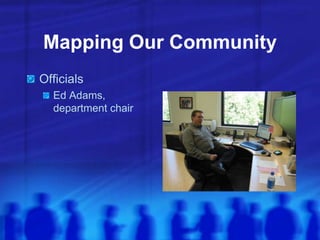
Mapping Our Community
Officials
Ed Adams,
department chair
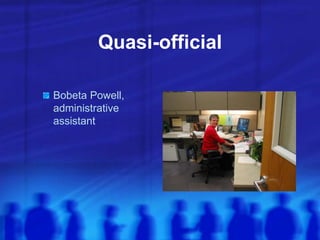
Quasi-official
Bobeta Powell,
administrative
assistant
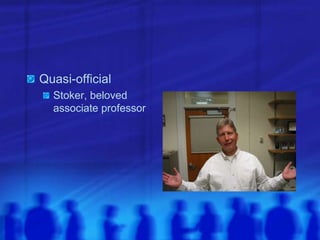
Quasi-official
Stoker, beloved
associate professor
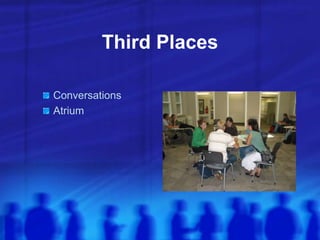
Third Places
Conversations
Atrium
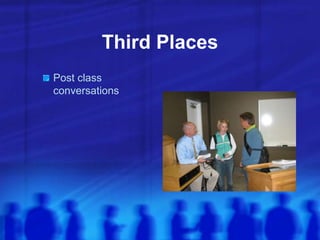
Third Places
Post class
conversations
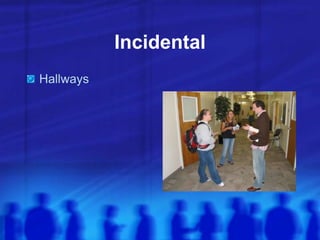
Incidental
Hallways
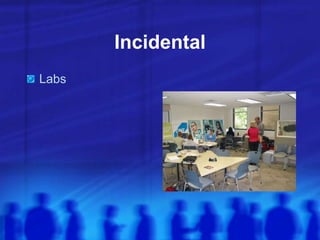
Incidental
Labs
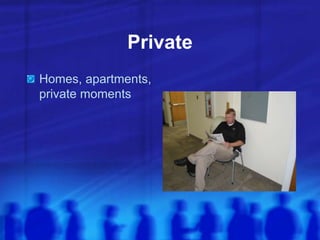
Private
Homes, apartments,
private moments
What You Will Find
1. People are attracted to different layers
2. The purpose and nature of civic
conversations differ from layer to layer
3. “Unspoken Rules” shape civic places
What You Will Evaluate
There can be weaknesses within a layer
There can be gaps between layers
Types of Community
Leaders
Official
Civic
Connectors
Catalysts
Experts
Seven Knowledge Keys
Civic places
Sources
Sense of place
People
Issues of concern
Aspirations
Stereotypes to watch
Civic Conversation Tips
Take nothing at face value
Ask people to share their contradictions
Piece together what people are saying
and test it with them
Keep in mind the “unspoken” rules
Watch out for your preconceived views
Official
Quasi-official
Third places
Incidental
Private
Types of Community Leaders
Official
Civic
Connectors
Catalysts
Experts
Seven Knowledge Keys
Civic places
Sources
Sense of place
People
Issues of concern
Aspirations
Stereotypes to watch

Civic Journalism