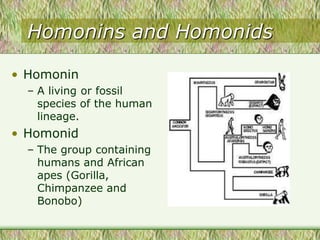
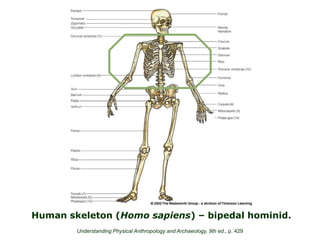
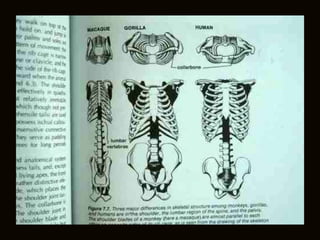
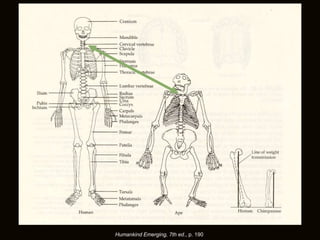
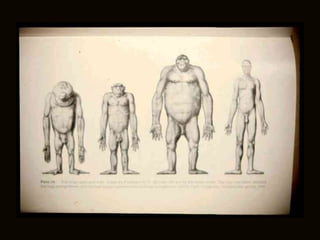
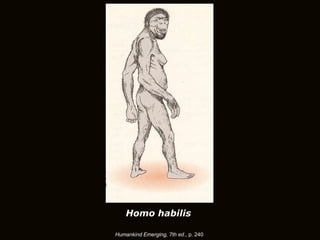
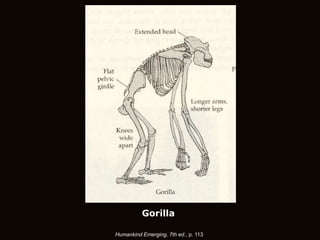
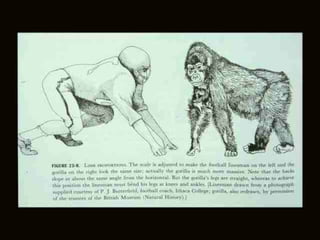
1) Humans diverged from chimpanzees around 6-8 million years ago. While chimps are our closest living relatives, sharing 95% of our DNA, structural differences evolved between humans and apes that allowed humans to walk upright.
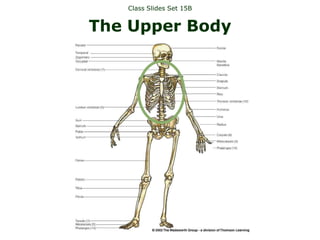
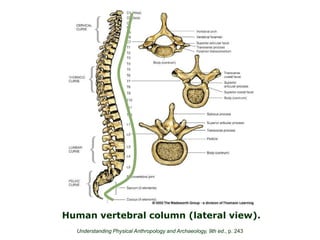
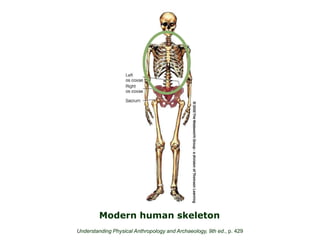
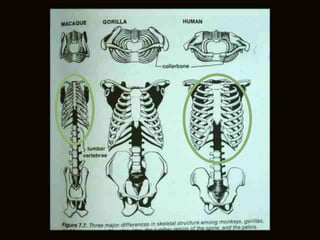
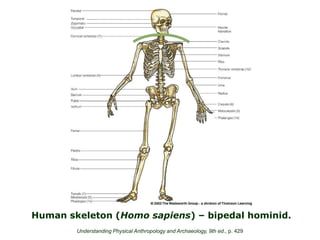
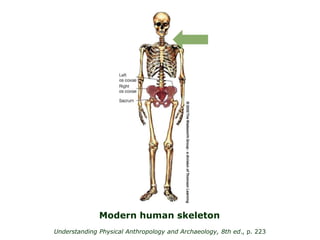
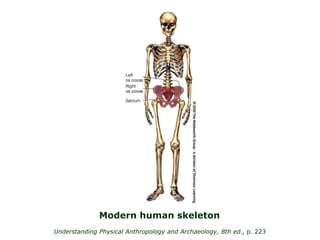
2) As humans evolved, our skeletons developed features adapted for bipedalism, such as a more rigid, S-shaped backbone for support and balance, broader chests, and longer necks. Our shoulders also broadened and the shoulder blades moved to the back.
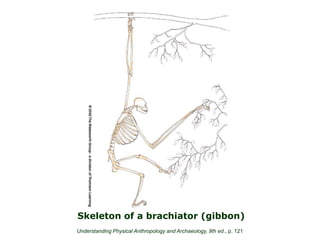
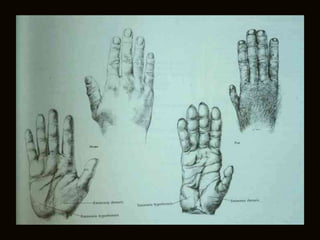
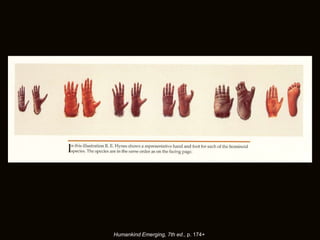
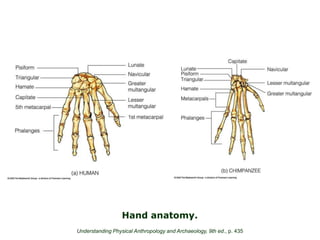
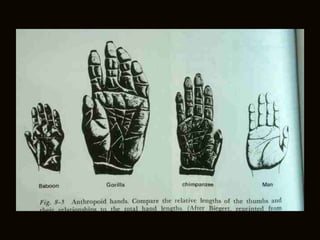
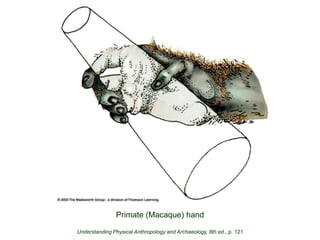
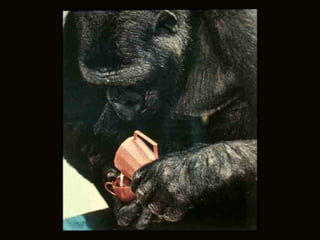
3) The hands of humans became more refined for grasping tools, with an opposable thumb and precision grip, whereas ape hands are adapted for climbing and brachiation with longer