
WELCOME


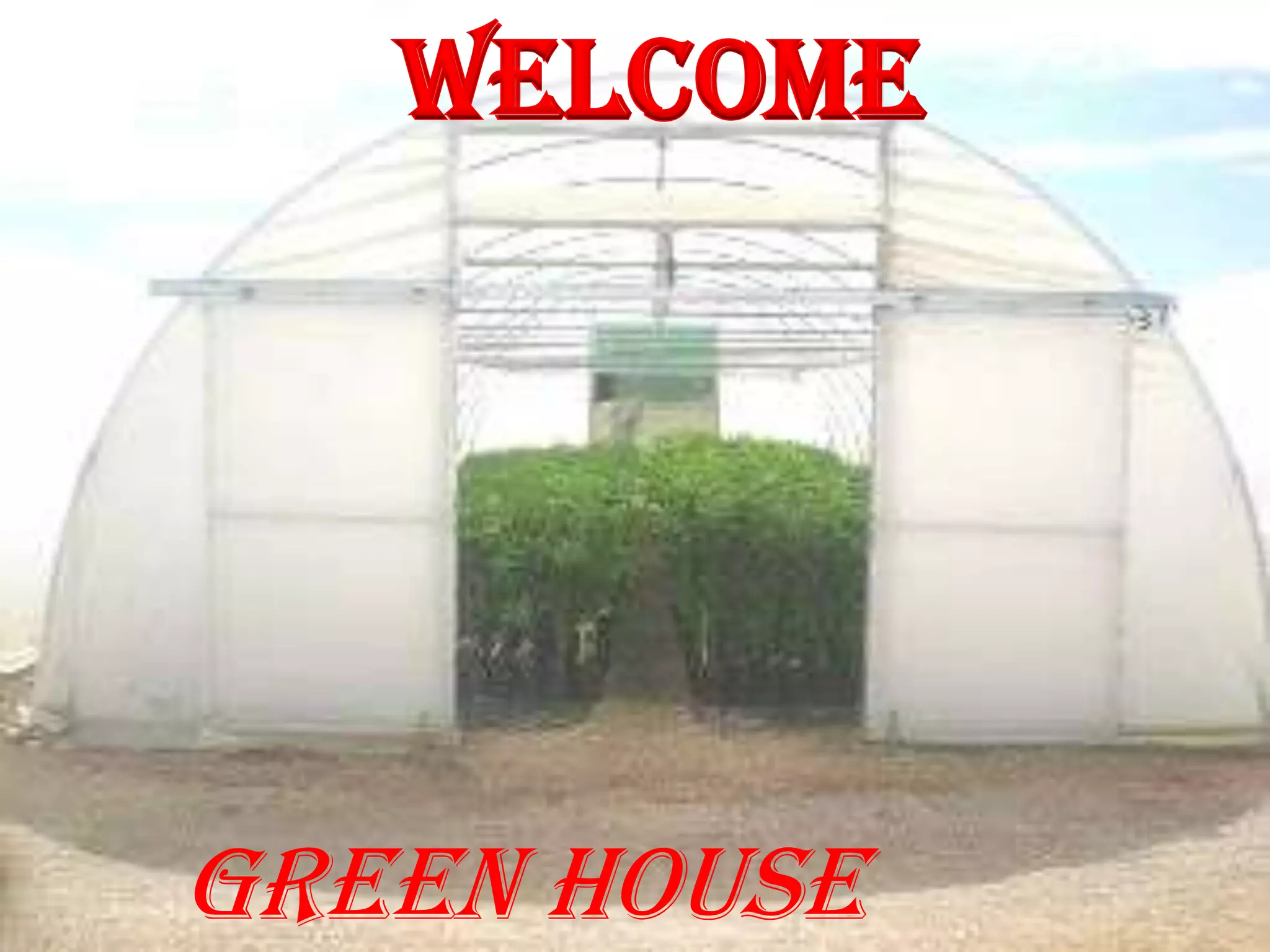
Green house
 Presented   by :-
          ArjunSharma        101
          Vikram Shedge      102
          Janhavi Shinde     103
          Vikram Shinde      104
          Yogesh Shirole     105
          Vaishali Shirsat   106
          Durgesh Shivade    107
          Jaypal Sirsat      108
          Mahesh Solase      109
          Pradip Thomre      110
 Any framed or covered structure with controlled
 environmental condition used for the production of
 fruits, vegetables, flowers or growing plants and it
 allows to operate by man
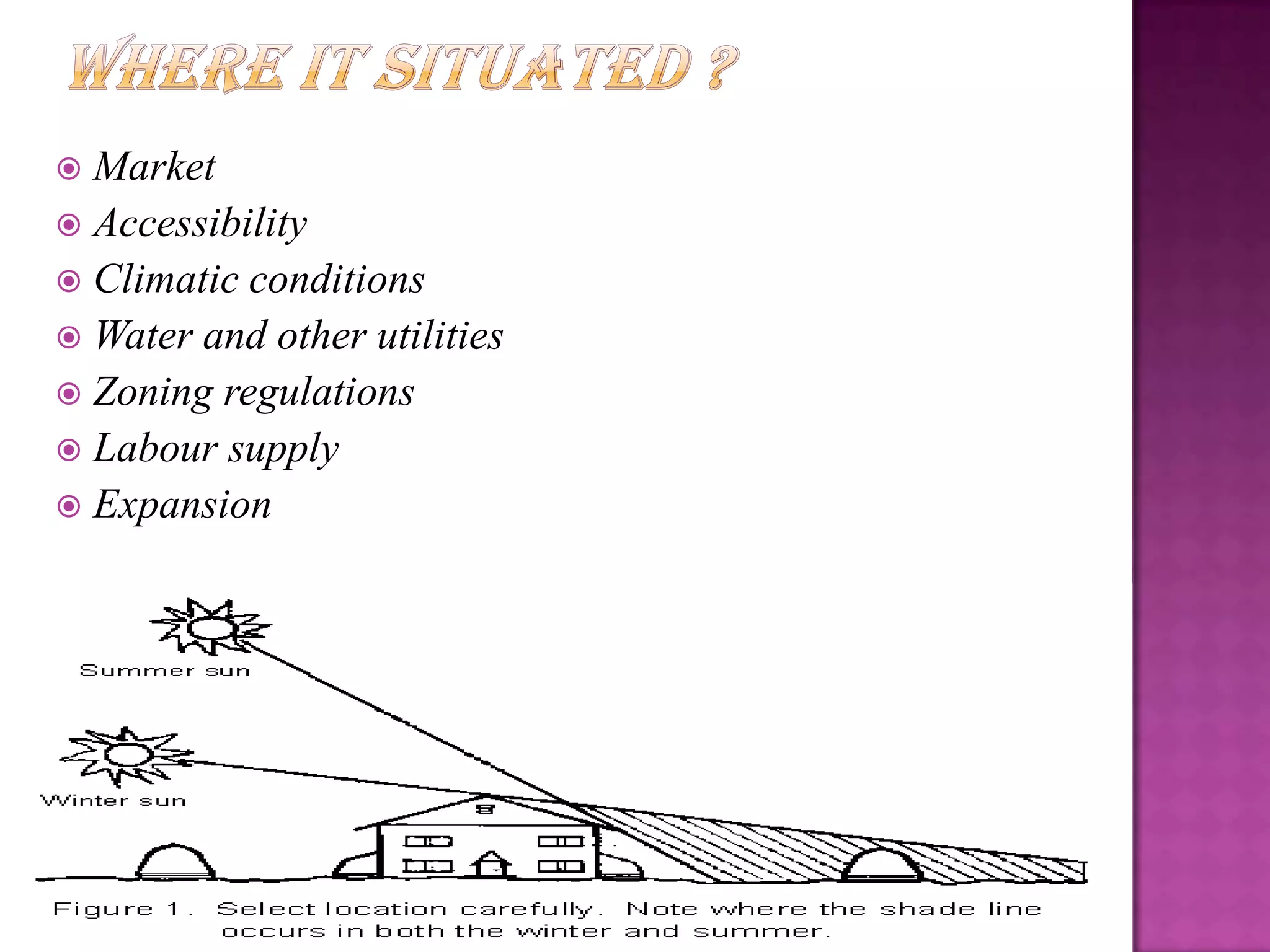
 Market
 Accessibility
 Climatic conditions
 Water and other utilities
 Zoning regulations
 Labour supply
 Expansion
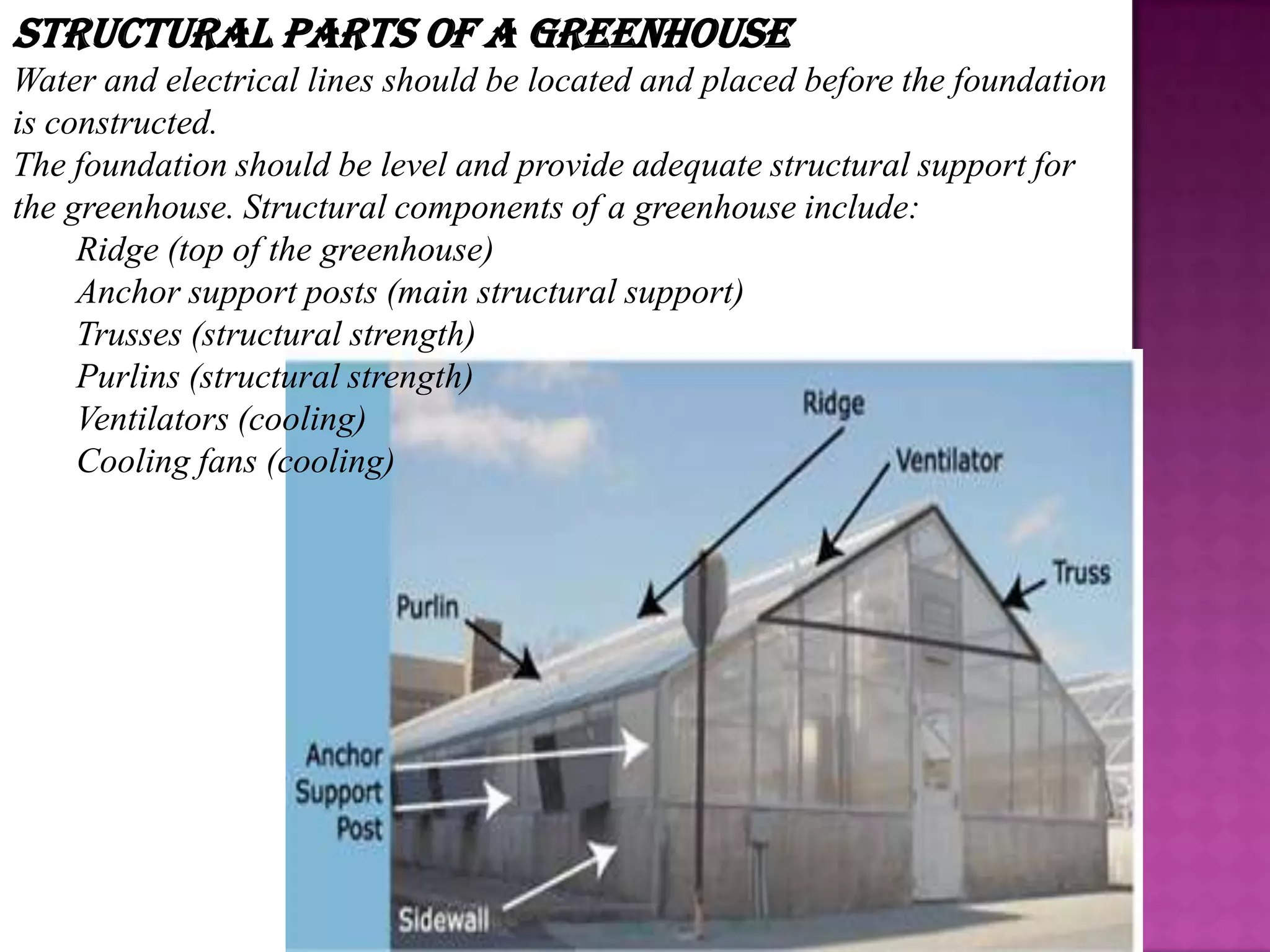
Structural Parts of a Greenhouse
Water and electrical lines should be located and placed before the foundation
is constructed.
The foundation should be level and provide adequate structural support for
the greenhouse. Structural components of a greenhouse include:
     Ridge (top of the greenhouse)
     Anchor support posts (main structural support)
     Trusses (structural strength)
     Purlins (structural strength)
     Ventilators (cooling)
     Cooling fans (cooling)
 Attached Greenhouses
 Freestanding Structures
 Connected greengouses
 Polyethylene
   glass
   Corrugated Fiberglass-Reinforced Plastic
   Polycarbonate
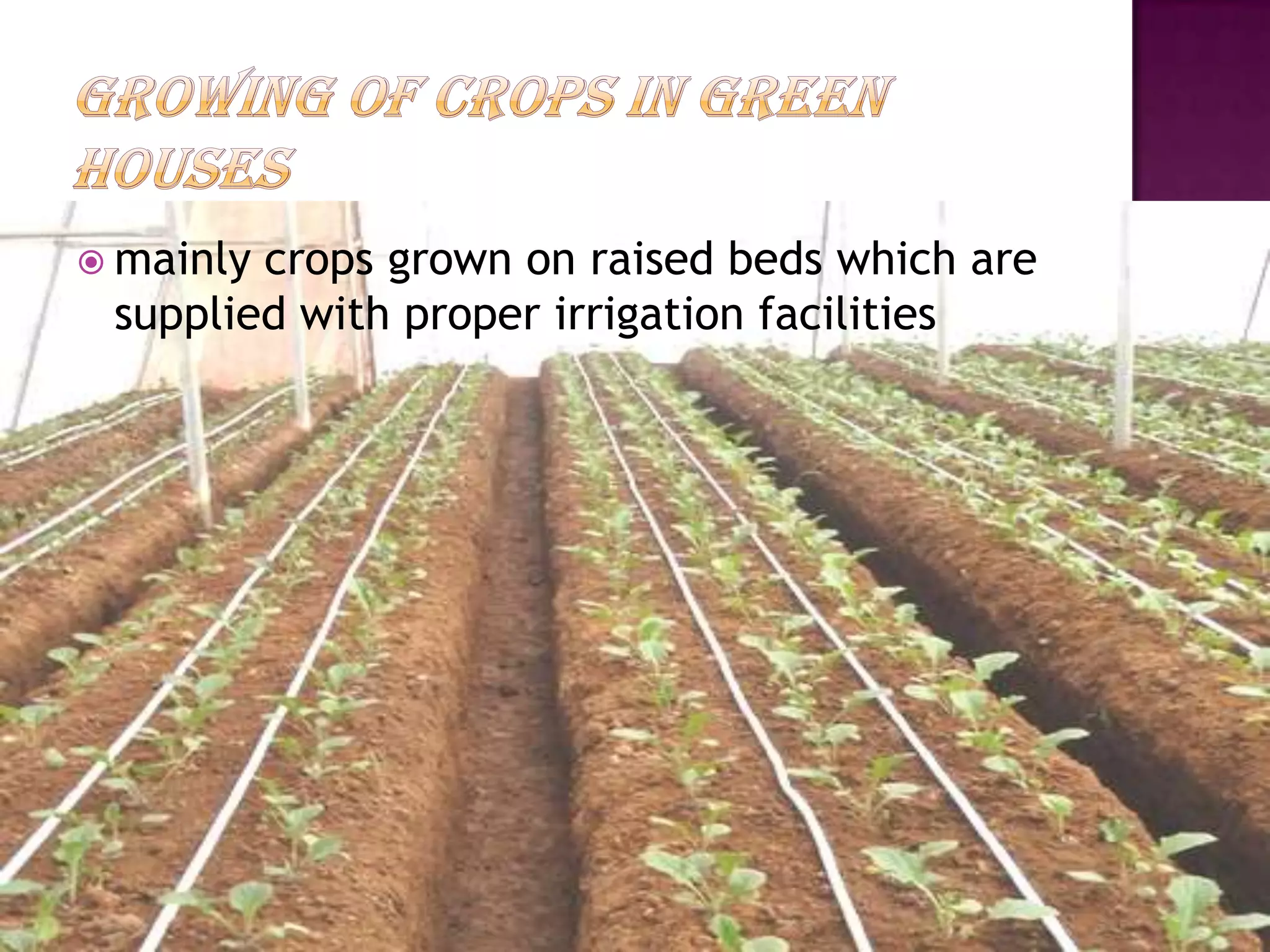
 mainlycrops grown on raised beds which are
 supplied with proper irrigation facilities
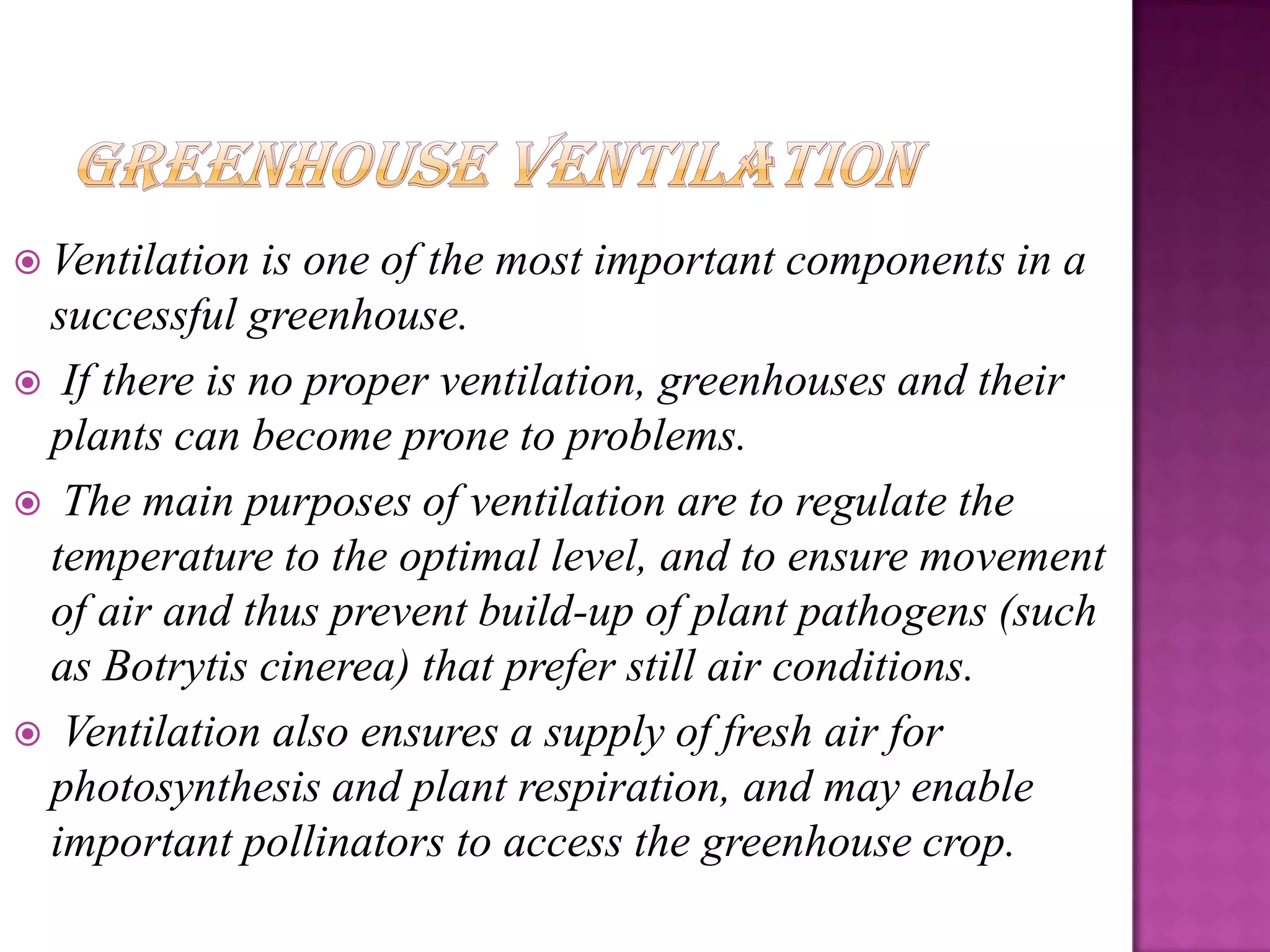
 Ventilation  is one of the most important components in a
 successful greenhouse.
 If there is no proper ventilation, greenhouses and their
 plants can become prone to problems.
 The main purposes of ventilation are to regulate the
 temperature to the optimal level, and to ensure movement
 of air and thus prevent build-up of plant pathogens (such
 as Botrytis cinerea) that prefer still air conditions.
 Ventilation also ensures a supply of fresh air for
 photosynthesis and plant respiration, and may enable
 important pollinators to access the greenhouse crop.
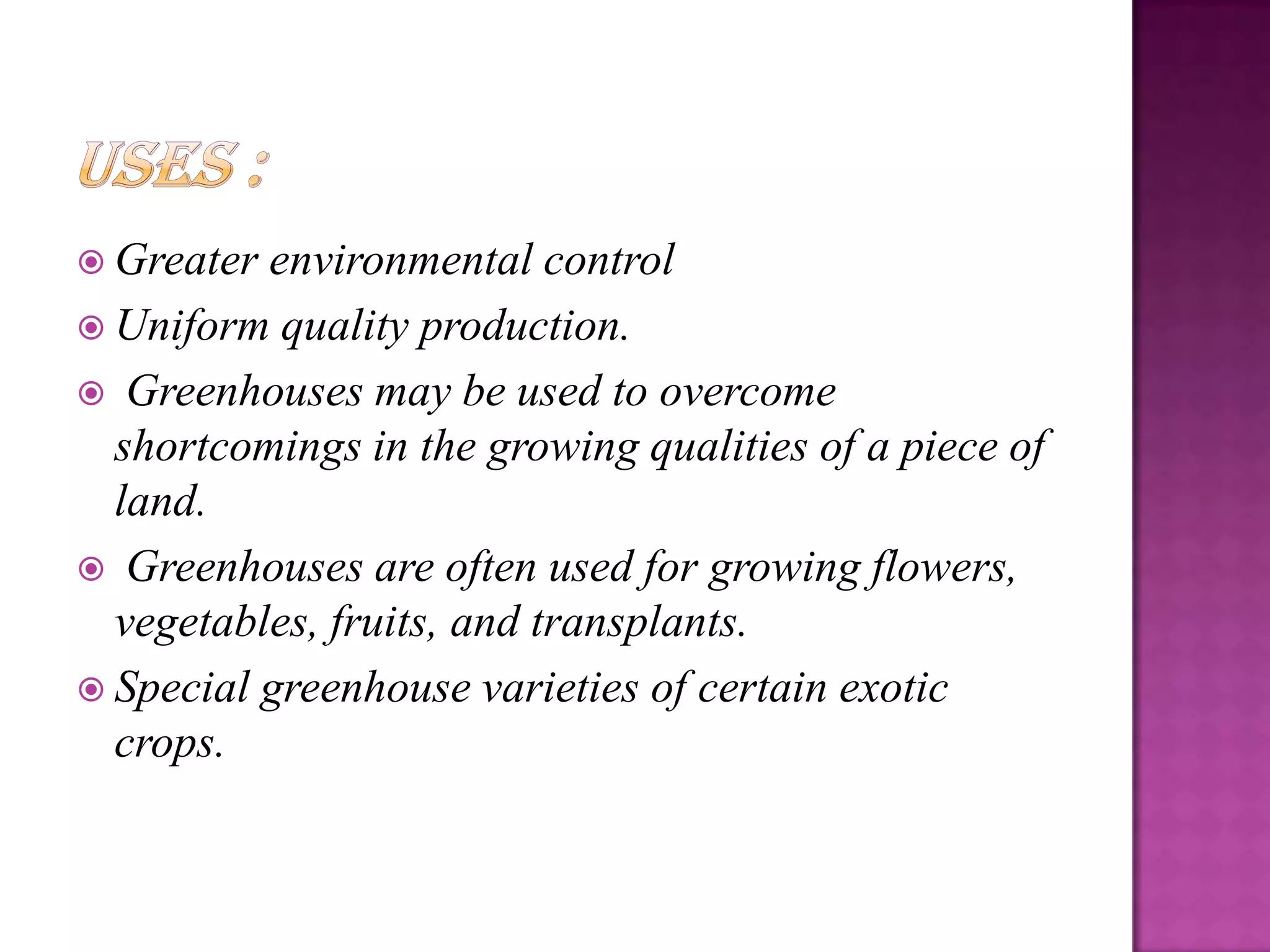
 Greater environmental control
 Uniform quality production.
 Greenhouses may be used to overcome
  shortcomings in the growing qualities of a piece of
  land.
 Greenhouses are often used for growing flowers,
  vegetables, fruits, and transplants.
 Special greenhouse varieties of certain exotic
  crops.
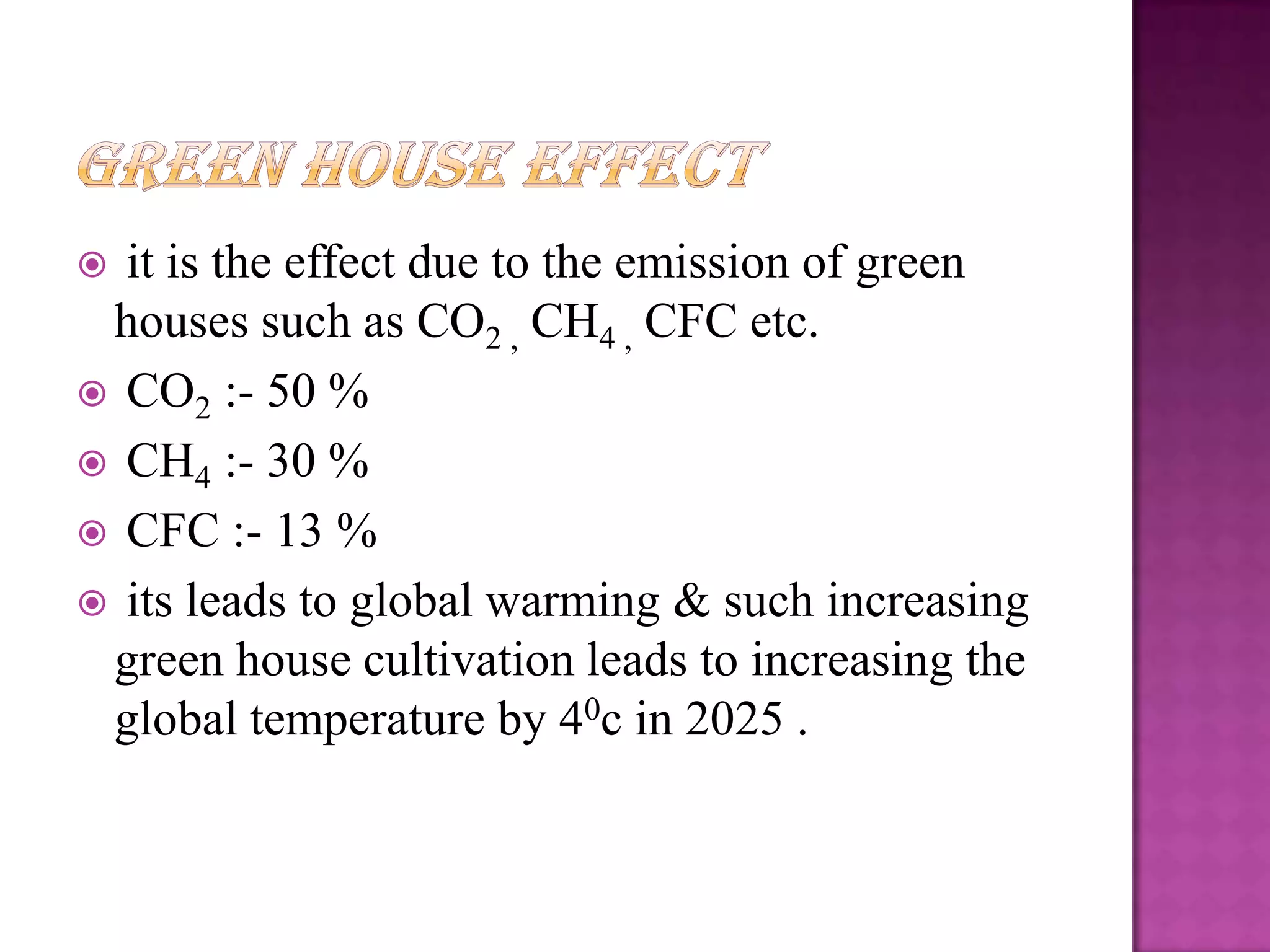
 it is the effect due to the emission of green
 houses such as CO2 , CH4 , CFC etc.
 CO2 :- 50 %
 CH4 :- 30 %
 CFC :- 13 %
 its leads to global warming & such increasing
 green house cultivation leads to increasing the
 global temperature by 40c in 2025 .
Thank you

greenhouse

  • 1.
  • 2.
     Presented by :-  ArjunSharma 101  Vikram Shedge 102  Janhavi Shinde 103  Vikram Shinde 104  Yogesh Shirole 105  Vaishali Shirsat 106  Durgesh Shivade 107  Jaypal Sirsat 108  Mahesh Solase 109  Pradip Thomre 110
  • 3.
     Any framedor covered structure with controlled environmental condition used for the production of fruits, vegetables, flowers or growing plants and it allows to operate by man
  • 4.
     Market  Accessibility Climatic conditions  Water and other utilities  Zoning regulations  Labour supply  Expansion
  • 5.
    Structural Parts ofa Greenhouse Water and electrical lines should be located and placed before the foundation is constructed. The foundation should be level and provide adequate structural support for the greenhouse. Structural components of a greenhouse include: Ridge (top of the greenhouse) Anchor support posts (main structural support) Trusses (structural strength) Purlins (structural strength) Ventilators (cooling) Cooling fans (cooling)
  • 6.
     Attached Greenhouses Freestanding Structures  Connected greengouses
  • 7.
     Polyethylene  glass  Corrugated Fiberglass-Reinforced Plastic  Polycarbonate
  • 8.
     mainlycrops grownon raised beds which are supplied with proper irrigation facilities
  • 9.
     Ventilation is one of the most important components in a successful greenhouse.  If there is no proper ventilation, greenhouses and their plants can become prone to problems.  The main purposes of ventilation are to regulate the temperature to the optimal level, and to ensure movement of air and thus prevent build-up of plant pathogens (such as Botrytis cinerea) that prefer still air conditions.  Ventilation also ensures a supply of fresh air for photosynthesis and plant respiration, and may enable important pollinators to access the greenhouse crop.
  • 10.
     Greater environmentalcontrol  Uniform quality production.  Greenhouses may be used to overcome shortcomings in the growing qualities of a piece of land.  Greenhouses are often used for growing flowers, vegetables, fruits, and transplants.  Special greenhouse varieties of certain exotic crops.
  • 11.
     it isthe effect due to the emission of green houses such as CO2 , CH4 , CFC etc.  CO2 :- 50 %  CH4 :- 30 %  CFC :- 13 %  its leads to global warming & such increasing green house cultivation leads to increasing the global temperature by 40c in 2025 .
  • 12.