IIAM
PRESENTATION ON
METHODS OF
COMMUNICATION
Communication may be classified into several
categories on the following basis :-
1. On basis of organisational structure :
(a)Formal communication
(b)Informal communication
2. On bases of direction :
(a)Downwards communication
(b)Upwards communication
(c)Horizontal communication
(d)Diagonal communication
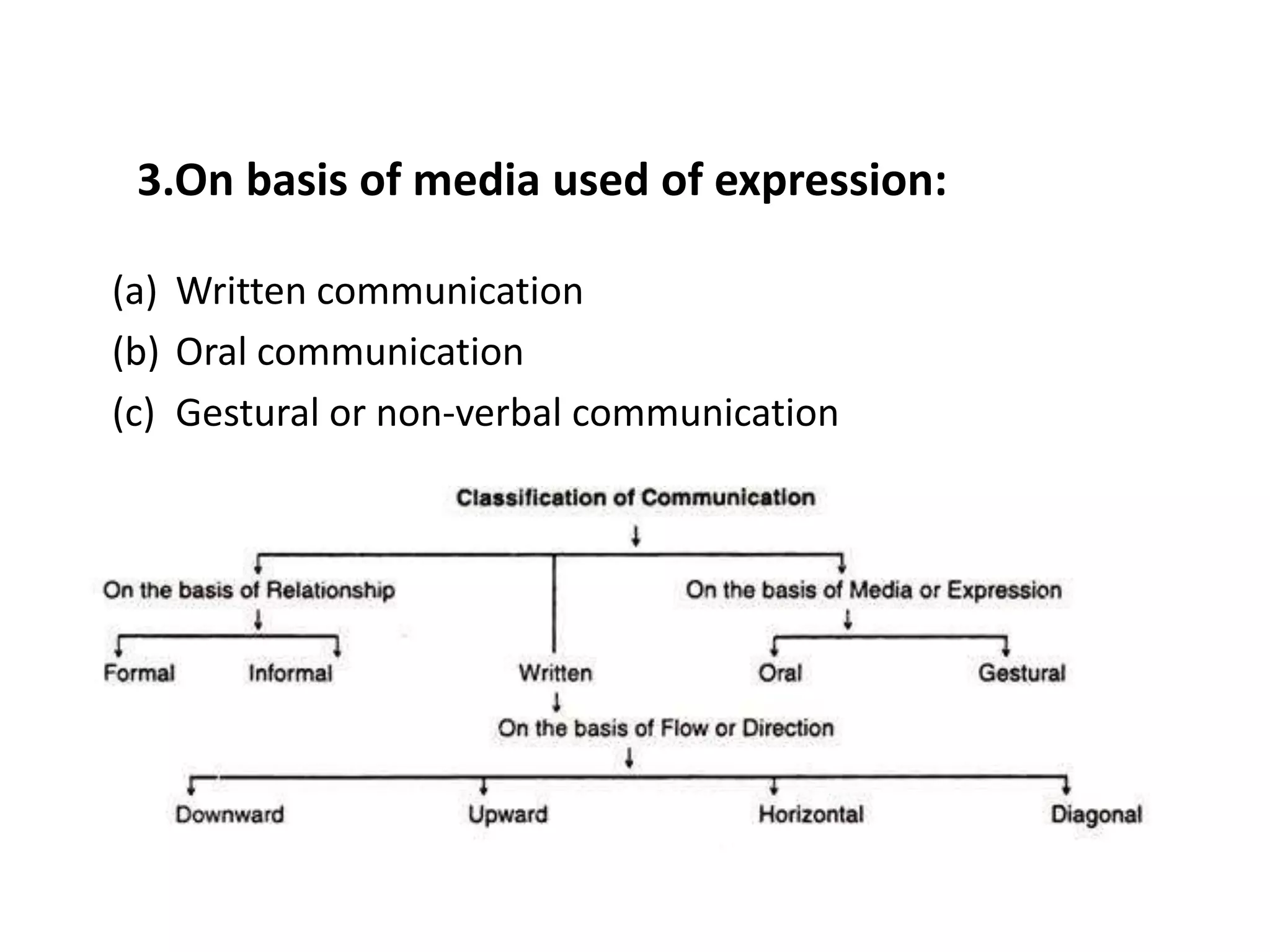
3.On basis of media used of expression:
(a) Written communication
(b) Oral communication
(c) Gestural or non-verbal communication
BASED ON THE ORGANISATIONAL
STRUCTURE
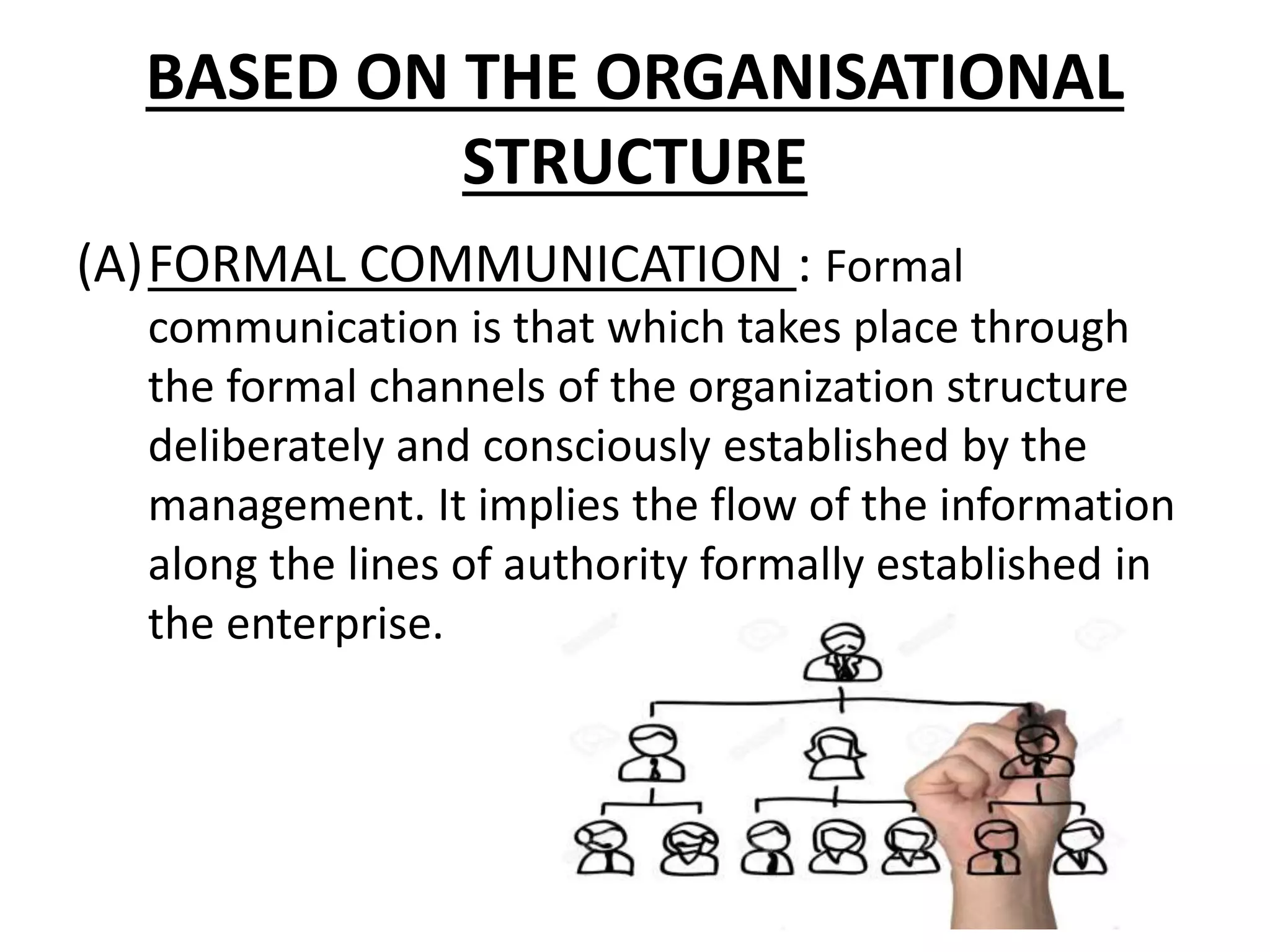
(A)FORMAL COMMUNICATION : Formal
communication is that which takes place through
the formal channels of the organization structure
deliberately and consciously established by the
management. It implies the flow of the information
along the lines of authority formally established in
the enterprise.
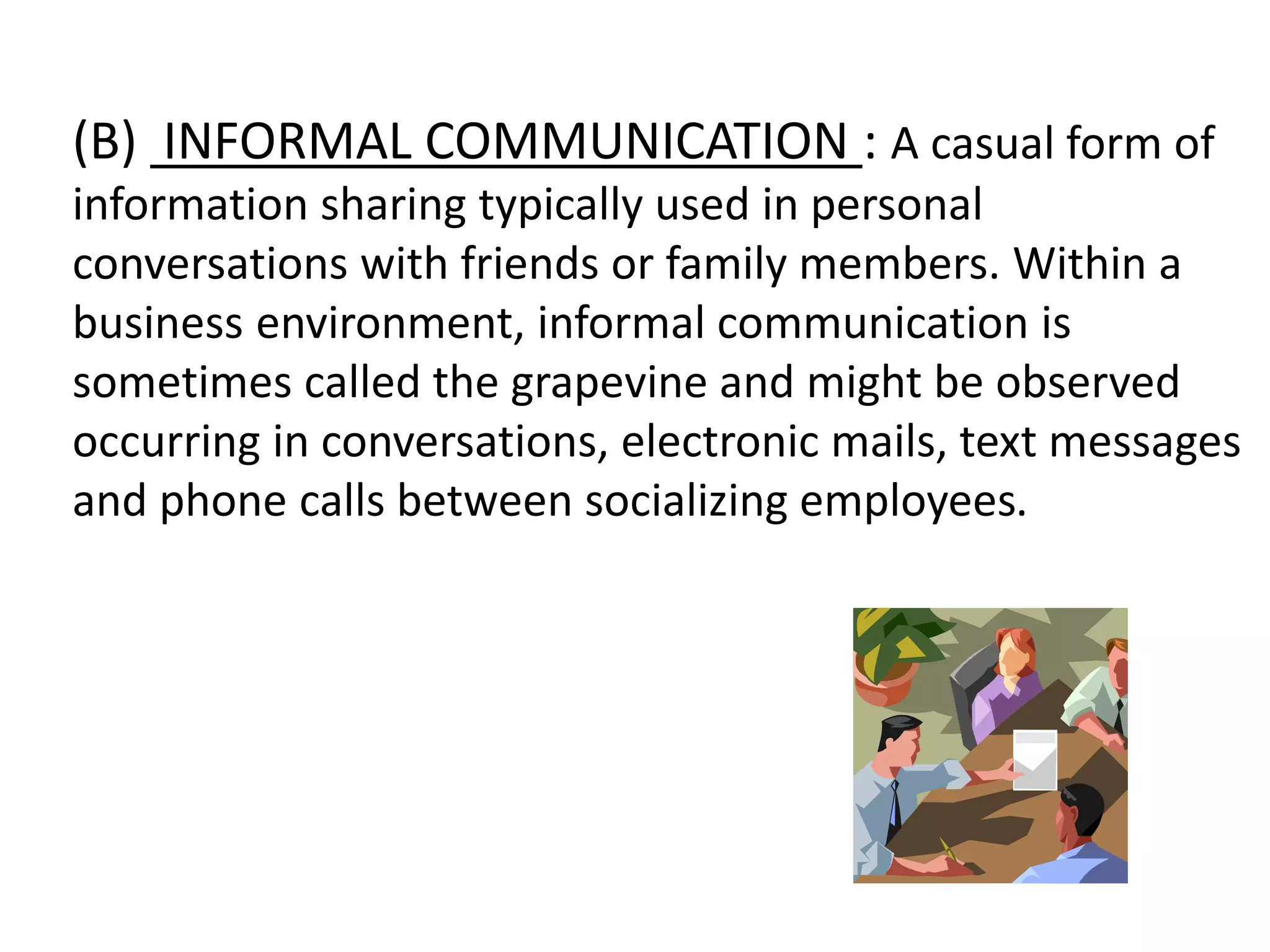
(B) INFORMAL COMMUNICATION : A casual form of
information sharing typically used in personal
conversations with friends or family members. Within a
business environment, informal communication is
sometimes called the grapevine and might be observed
occurring in conversations, electronic mails, text messages
and phone calls between socializing employees.
BASED ON THE DIRECTION
(A) DOWNWARDS COMMUNICATION :
Communication between a superior and subordinate
is known as downward vertical communication.
Downward communication means communication
which flows from a superior to a subordinate.
(A) UPWARDS COMMUNICATION:
Upward communication means the flow of information
from the lower levels of the organization to the higher
levels of authority.
(C) HORIZONTAL COMMUNICATION :
The transmission of information and understanding
between people on the same level of organization
hierarchy is called the horizontal communication.
(D) DIAGONAL COMMUNICATION :
The transfer of information between people who are
neither in the same department nor on the same level
of organization hierarchy is called diagonal
communication.
BASED ON MEDIA USED OF
EXPRESSION
(A)WRITTEN COMMUNICATION : Written
communication implies transmission of message in
black and white. Written communication ensures
that every one concerned has the same
information.
(B) ORAL COMMUNICATION : Oral or verbal
communication implies the conveying of message
through spoken words. It is face to face
communication between two individuals.
(C) GESTURAL OR NON VERBAL
COMMUNICATION : Communication does not
mean merely written or oral messages. It includes
everything that may be used to convey meanings
from one person to another, e.g., movement of lips
or the wink of an eye or the wave of hands may
convey more meaning than written or oral words.
Thank You
Done By –
Dheeraj

communication methods

  • 1.
  • 2.
    Communication may beclassified into several categories on the following basis :- 1. On basis of organisational structure : (a)Formal communication (b)Informal communication 2. On bases of direction : (a)Downwards communication (b)Upwards communication (c)Horizontal communication (d)Diagonal communication
  • 3.
    3.On basis ofmedia used of expression: (a) Written communication (b) Oral communication (c) Gestural or non-verbal communication
  • 4.
    BASED ON THEORGANISATIONAL STRUCTURE (A)FORMAL COMMUNICATION : Formal communication is that which takes place through the formal channels of the organization structure deliberately and consciously established by the management. It implies the flow of the information along the lines of authority formally established in the enterprise.
  • 5.
    (B) INFORMAL COMMUNICATION: A casual form of information sharing typically used in personal conversations with friends or family members. Within a business environment, informal communication is sometimes called the grapevine and might be observed occurring in conversations, electronic mails, text messages and phone calls between socializing employees.
  • 6.
    BASED ON THEDIRECTION (A) DOWNWARDS COMMUNICATION : Communication between a superior and subordinate is known as downward vertical communication. Downward communication means communication which flows from a superior to a subordinate. (A) UPWARDS COMMUNICATION: Upward communication means the flow of information from the lower levels of the organization to the higher levels of authority.
  • 7.
    (C) HORIZONTAL COMMUNICATION: The transmission of information and understanding between people on the same level of organization hierarchy is called the horizontal communication. (D) DIAGONAL COMMUNICATION : The transfer of information between people who are neither in the same department nor on the same level of organization hierarchy is called diagonal communication.
  • 8.
    BASED ON MEDIAUSED OF EXPRESSION (A)WRITTEN COMMUNICATION : Written communication implies transmission of message in black and white. Written communication ensures that every one concerned has the same information. (B) ORAL COMMUNICATION : Oral or verbal communication implies the conveying of message through spoken words. It is face to face communication between two individuals.
  • 9.
    (C) GESTURAL ORNON VERBAL COMMUNICATION : Communication does not mean merely written or oral messages. It includes everything that may be used to convey meanings from one person to another, e.g., movement of lips or the wink of an eye or the wave of hands may convey more meaning than written or oral words.
  • 10.
    Thank You Done By– Dheeraj