COMMUNICATION
•Comes   from the word “communis”, means to
share.
•Is the activity of conveying information

through the exchange of thoughts or
information as y speech, visuals, signals,
writing or behavior.
•a process by which information is exchanged

between individuals through a common
system of symbols, signs, or behavior
•Is the flow or exchange of information within

people or group of people.
Process of Communication
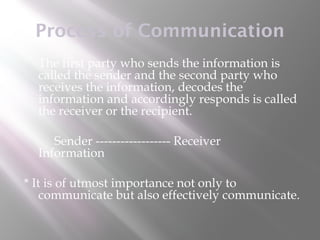
   The first party who sends the information is
    called the sender and the second party who
    receives the information, decodes the
    information and accordingly responds is called
    the receiver or the recipient.

       Sender ------------------ Receiver
    Information

* It is of utmost importance not only to
    communicate but also effectively communicate.
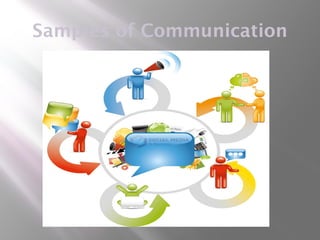
Samples of Communication
HUMAN COMMUNICATION

   Language learning normally occurs most
    intensively during human childhood. Most of
    the thousands of human languages used
    pattern of sounds gestures for symbol which
    enable communication with others around
    them.
2 Types of Communication:

   - VERBAL COMMUNICATION

   - NON-VERBAL COMMUNICATION
ORAL COMMUNICATION
- the sender shares his/her thoughts in the form
   of words
- a type of communication where the information
   flows through verbal medium like
   speeches,presentation,discussions and aspects
   of Interpersonal communication
- the tone of the speaker, the pitch and the quality
   of words play a crucial role
- an individual must understand the importance
   of words and how to put them across.
NON-VERBAL COMMUNICATION:

   Describes the process of conveying meaning in the
    form of non-word messages.
   Any communication made between two people
    without words and simply through facial movements,
    gestures or hand movements
   a speechless communication where content is not put
    into words but simply expressed through expressions
   Study shows that 63-93% of communication is non-
    verbal.
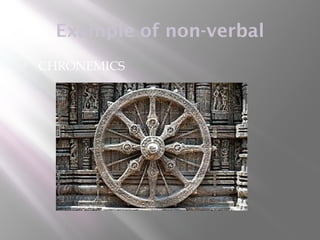
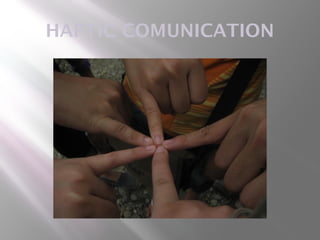
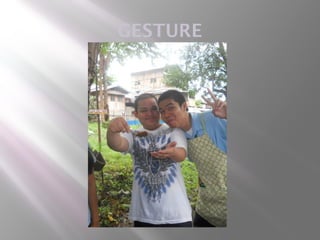
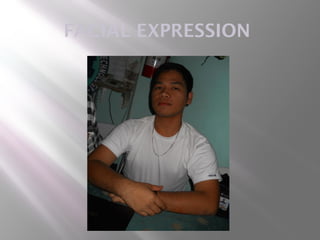
Example of non-verbal
   CHRONEMICS
HAPTIC COMUNICATION
GESTURE
BODY LANGUAGE
FACIAL EXPRESSION
Visual communication
   the recipient receives information from
    signboards, displays, hoardings, banners, maps
    etc.
   Vision plays a very important role in visual
    communication and it depends on the recipient
    how to interpret the message.
   examples of visual communication includes:
       * the sign board of Mc Donald’s or KFC
    indicates eating joints
       * the sign board of “No Parking Zone”
    communicates to the individuals that any
    vehicle must not be parked in the vicinity
MANIPULATIVE
           COMMUNICATIONS


   These are intentional and unintentional ways
    of manipulating words, gestures, etc. “to get
    what we want”, by demeaning, discounting,
    attacking or ignoring of respectful interaction.
EFFECTIVE COMMUNICATION

   This occurs when a desire effect is the result of
    intentional or unintentional information
    sharing. The message is not distorted during
    the communication process.
BARRIES TO EFFECT
            COMMUNICATION
   Physical barrier
   System design
   Attitudinal barrier
   Ambiguity of words
   Individual linguistic ability
   Physiological barriers
   Presentation of information
COMMUNICATION NOISE
   Environmental noise
   Physiological-impairment noise
   Semantic noise
   Syntactical noise
   Organizational noise
   Cultural noise
   Psychological noise

Communication

  • 1.
    COMMUNICATION •Comes from the word “communis”, means to share. •Is the activity of conveying information through the exchange of thoughts or information as y speech, visuals, signals, writing or behavior. •a process by which information is exchanged between individuals through a common system of symbols, signs, or behavior •Is the flow or exchange of information within people or group of people.
  • 2.
    Process of Communication  The first party who sends the information is called the sender and the second party who receives the information, decodes the information and accordingly responds is called the receiver or the recipient. Sender ------------------ Receiver Information * It is of utmost importance not only to communicate but also effectively communicate.
  • 3.
  • 4.
    HUMAN COMMUNICATION  Language learning normally occurs most intensively during human childhood. Most of the thousands of human languages used pattern of sounds gestures for symbol which enable communication with others around them.
  • 5.
    2 Types ofCommunication:  - VERBAL COMMUNICATION  - NON-VERBAL COMMUNICATION
  • 6.
    ORAL COMMUNICATION - thesender shares his/her thoughts in the form of words - a type of communication where the information flows through verbal medium like speeches,presentation,discussions and aspects of Interpersonal communication - the tone of the speaker, the pitch and the quality of words play a crucial role - an individual must understand the importance of words and how to put them across.
  • 7.
    NON-VERBAL COMMUNICATION:  Describes the process of conveying meaning in the form of non-word messages.  Any communication made between two people without words and simply through facial movements, gestures or hand movements  a speechless communication where content is not put into words but simply expressed through expressions  Study shows that 63-93% of communication is non- verbal.
  • 8.
  • 9.
  • 10.
  • 11.
  • 12.
  • 13.
    Visual communication  the recipient receives information from signboards, displays, hoardings, banners, maps etc.  Vision plays a very important role in visual communication and it depends on the recipient how to interpret the message.  examples of visual communication includes: * the sign board of Mc Donald’s or KFC indicates eating joints * the sign board of “No Parking Zone” communicates to the individuals that any vehicle must not be parked in the vicinity
  • 14.
    MANIPULATIVE COMMUNICATIONS  These are intentional and unintentional ways of manipulating words, gestures, etc. “to get what we want”, by demeaning, discounting, attacking or ignoring of respectful interaction.
  • 15.
    EFFECTIVE COMMUNICATION  This occurs when a desire effect is the result of intentional or unintentional information sharing. The message is not distorted during the communication process.
  • 16.
    BARRIES TO EFFECT COMMUNICATION  Physical barrier  System design  Attitudinal barrier  Ambiguity of words  Individual linguistic ability  Physiological barriers  Presentation of information
  • 17.
    COMMUNICATION NOISE  Environmental noise  Physiological-impairment noise  Semantic noise  Syntactical noise  Organizational noise  Cultural noise  Psychological noise