

Comma to separate multiple
       adjectives
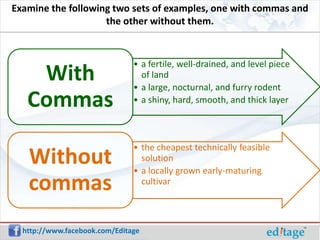
Examine the following two sets of examples, one with commas and
                    the other without them.


                               • a fertile, well-drained, and level piece
    With                         of land
                               • a large, nocturnal, and furry rodent
   Commas                      • a shiny, hard, smooth, and thick layer


                               • the cheapest technically feasible
   Without                       solution
                               • a locally grown early-maturing
   commas                        cultivar


  http://www.facebook.com/Editage
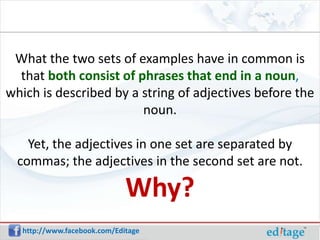
What the two sets of examples have in common is
  that both consist of phrases that end in a noun,
which is described by a string of adjectives before the
                        noun.

    Yet, the adjectives in one set are separated by
  commas; the adjectives in the second set are not.

                             Why?
  http://www.facebook.com/Editage
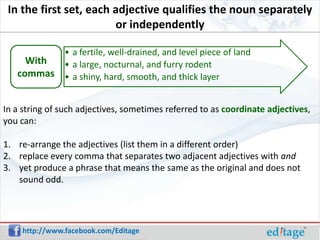
In the first set, each adjective qualifies the noun separately
                        or independently

               • a fertile, well-drained, and level piece of land
     With      • a large, nocturnal, and furry rodent
   commas      • a shiny, hard, smooth, and thick layer


In a string of such adjectives, sometimes referred to as coordinate adjectives,
you can:

1. re-arrange the adjectives (list them in a different order)
2. replace every comma that separates two adjacent adjectives with and
3. yet produce a phrase that means the same as the original and does not
   sound odd.


    http://www.facebook.com/Editage
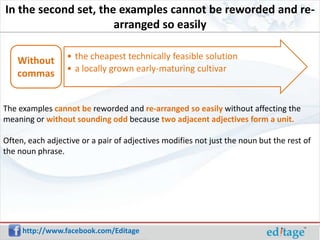
In the second set, the examples cannot be reworded and re-
                      arranged so easily

    Without       • the cheapest technically feasible solution
                  • a locally grown early-maturing cultivar
    commas


The examples cannot be reworded and re-arranged so easily without affecting the
meaning or without sounding odd because two adjacent adjectives form a unit.

Often, each adjective or a pair of adjectives modifies not just the noun but the rest of
the noun phrase.


     http://www.facebook.com/Editage
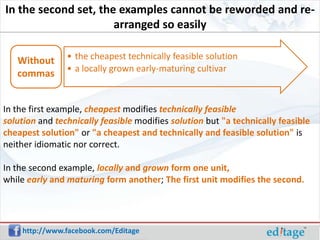
In the second set, the examples cannot be reworded and re-
                      arranged so easily

   Without      • the cheapest technically feasible solution
                • a locally grown early-maturing cultivar
   commas


In the first example, cheapest modifies technically feasible
solution and technically feasible modifies solution but "a technically feasible
cheapest solution" or "a cheapest and technically and feasible solution" is
neither idiomatic nor correct.

In the second example, locally and grown form one unit,
while early and maturing form another; The first unit modifies the second.


    http://www.facebook.com/Editage
Connect

Connect with us on:


     http://www.facebook.com/Editage

     http://www.twitter.com/Editage

     http://www.linkedin.com/company/cactus-communications


     http://blog.editage.com


 http://www.facebook.com/Editage

Comma to separate multiple adjectives

  • 1.
    Comma to separatemultiple adjectives
  • 2.
    Examine the followingtwo sets of examples, one with commas and the other without them. • a fertile, well-drained, and level piece With of land • a large, nocturnal, and furry rodent Commas • a shiny, hard, smooth, and thick layer • the cheapest technically feasible Without solution • a locally grown early-maturing commas cultivar http://www.facebook.com/Editage
  • 3.
    What the twosets of examples have in common is that both consist of phrases that end in a noun, which is described by a string of adjectives before the noun. Yet, the adjectives in one set are separated by commas; the adjectives in the second set are not. Why? http://www.facebook.com/Editage
  • 4.
    In the firstset, each adjective qualifies the noun separately or independently • a fertile, well-drained, and level piece of land With • a large, nocturnal, and furry rodent commas • a shiny, hard, smooth, and thick layer In a string of such adjectives, sometimes referred to as coordinate adjectives, you can: 1. re-arrange the adjectives (list them in a different order) 2. replace every comma that separates two adjacent adjectives with and 3. yet produce a phrase that means the same as the original and does not sound odd. http://www.facebook.com/Editage
  • 5.
    In the secondset, the examples cannot be reworded and re- arranged so easily Without • the cheapest technically feasible solution • a locally grown early-maturing cultivar commas The examples cannot be reworded and re-arranged so easily without affecting the meaning or without sounding odd because two adjacent adjectives form a unit. Often, each adjective or a pair of adjectives modifies not just the noun but the rest of the noun phrase. http://www.facebook.com/Editage
  • 6.
    In the secondset, the examples cannot be reworded and re- arranged so easily Without • the cheapest technically feasible solution • a locally grown early-maturing cultivar commas In the first example, cheapest modifies technically feasible solution and technically feasible modifies solution but "a technically feasible cheapest solution" or "a cheapest and technically and feasible solution" is neither idiomatic nor correct. In the second example, locally and grown form one unit, while early and maturing form another; The first unit modifies the second. http://www.facebook.com/Editage
  • 7.
    Connect Connect with uson: http://www.facebook.com/Editage http://www.twitter.com/Editage http://www.linkedin.com/company/cactus-communications http://blog.editage.com http://www.facebook.com/Editage