Peer review in 2030
What do you think it will look like?
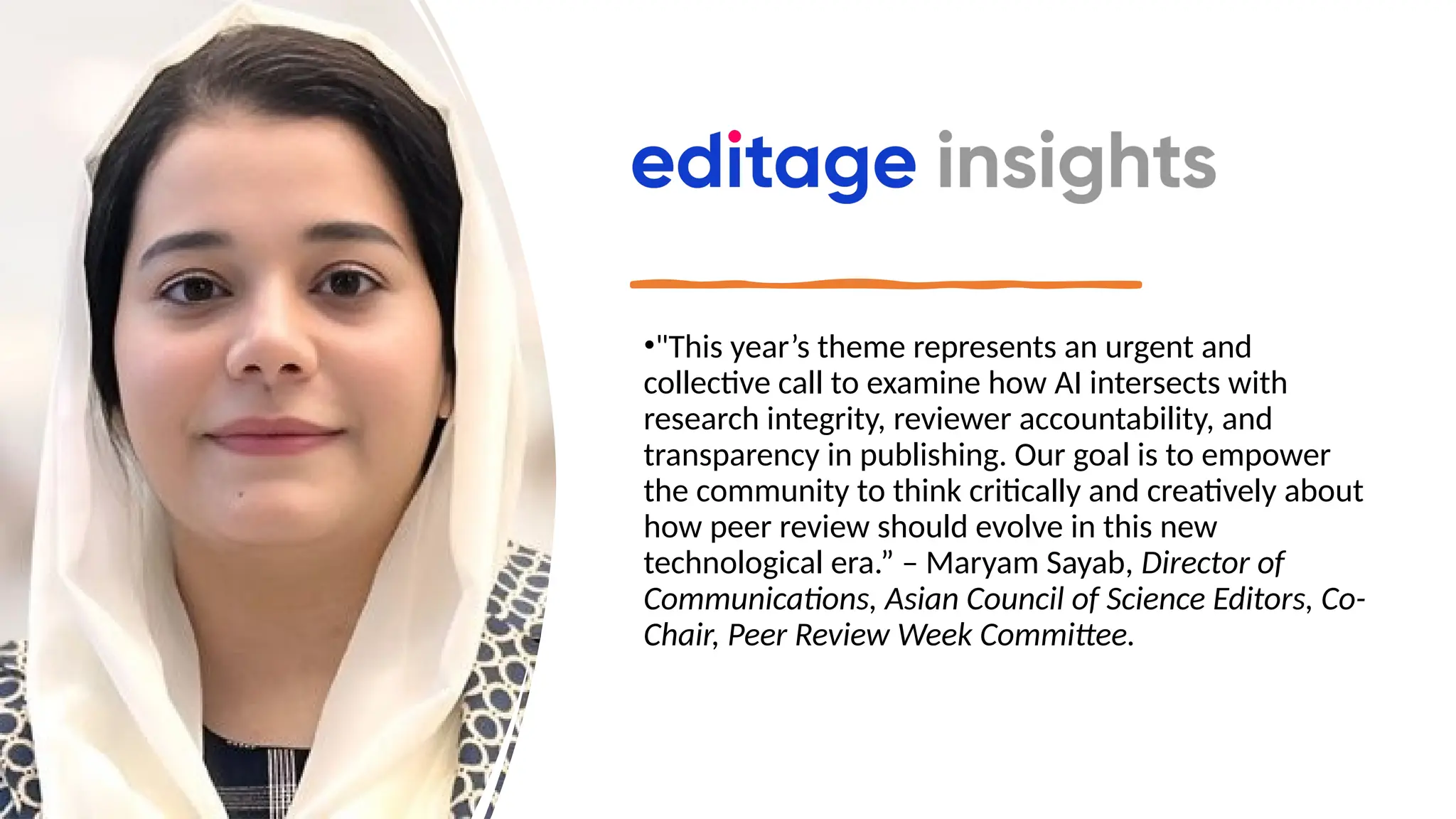
•"This year’s theme represents an urgent and
collective call to examine how AI intersects with
research integrity, reviewer accountability, and
transparency in publishing. Our goal is to empower
the community to think critically and creatively about
how peer review should evolve in this new
technological era.” – Maryam Sayab, Director of
Communications, Asian Council of Science Editors, Co-
Chair, Peer Review Week Committee.
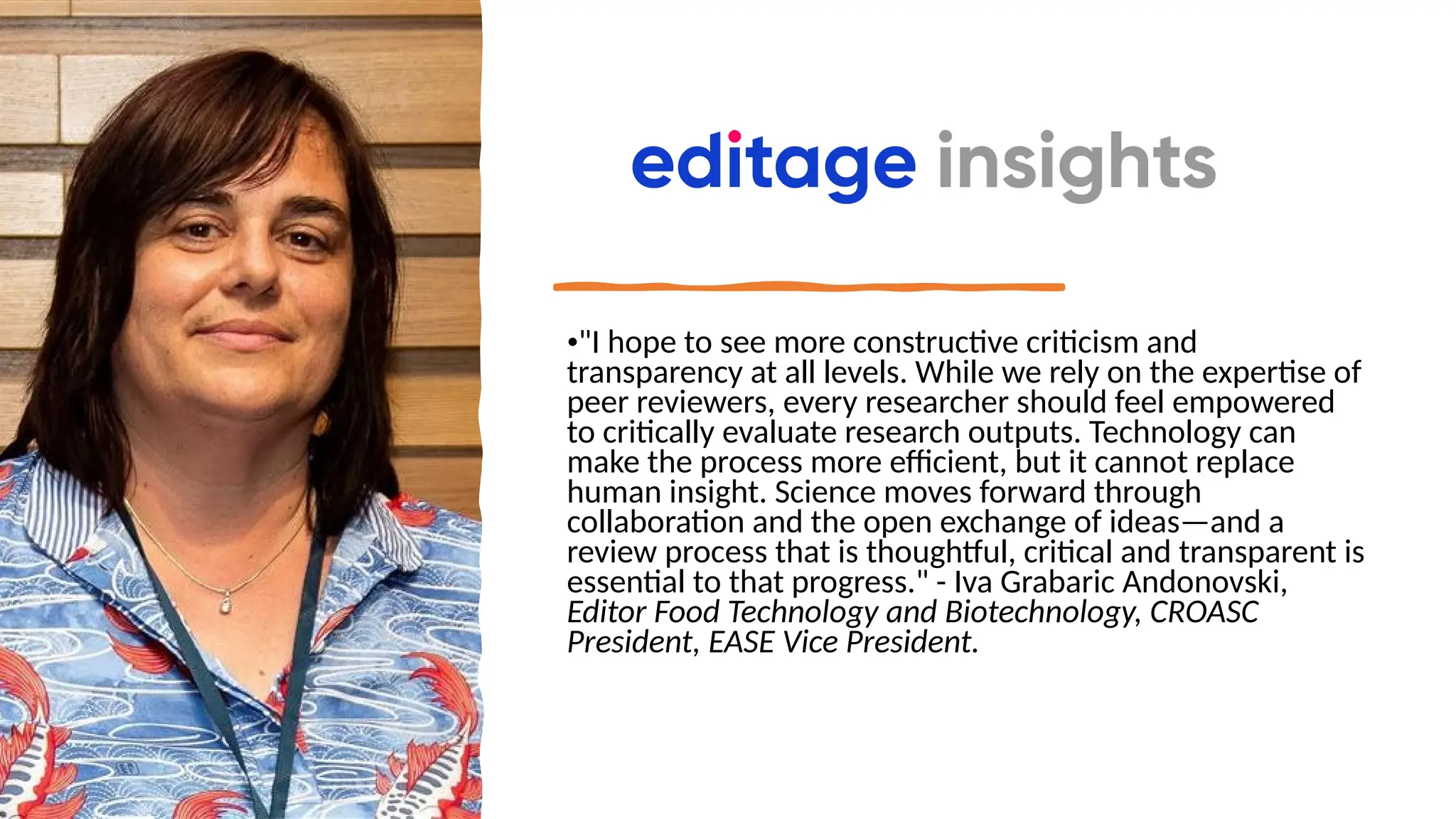
•"I hope to see more constructive criticism and
transparency at all levels. While we rely on the expertise of
peer reviewers, every researcher should feel empowered
to critically evaluate research outputs. Technology can
make the process more efficient, but it cannot replace
human insight. Science moves forward through
collaboration and the open exchange of ideas—and a
review process that is thoughtful, critical and transparent is
essential to that progress." - Iva Grabaric Andonovski,
Editor Food Technology and Biotechnology, CROASC
President, EASE Vice President.
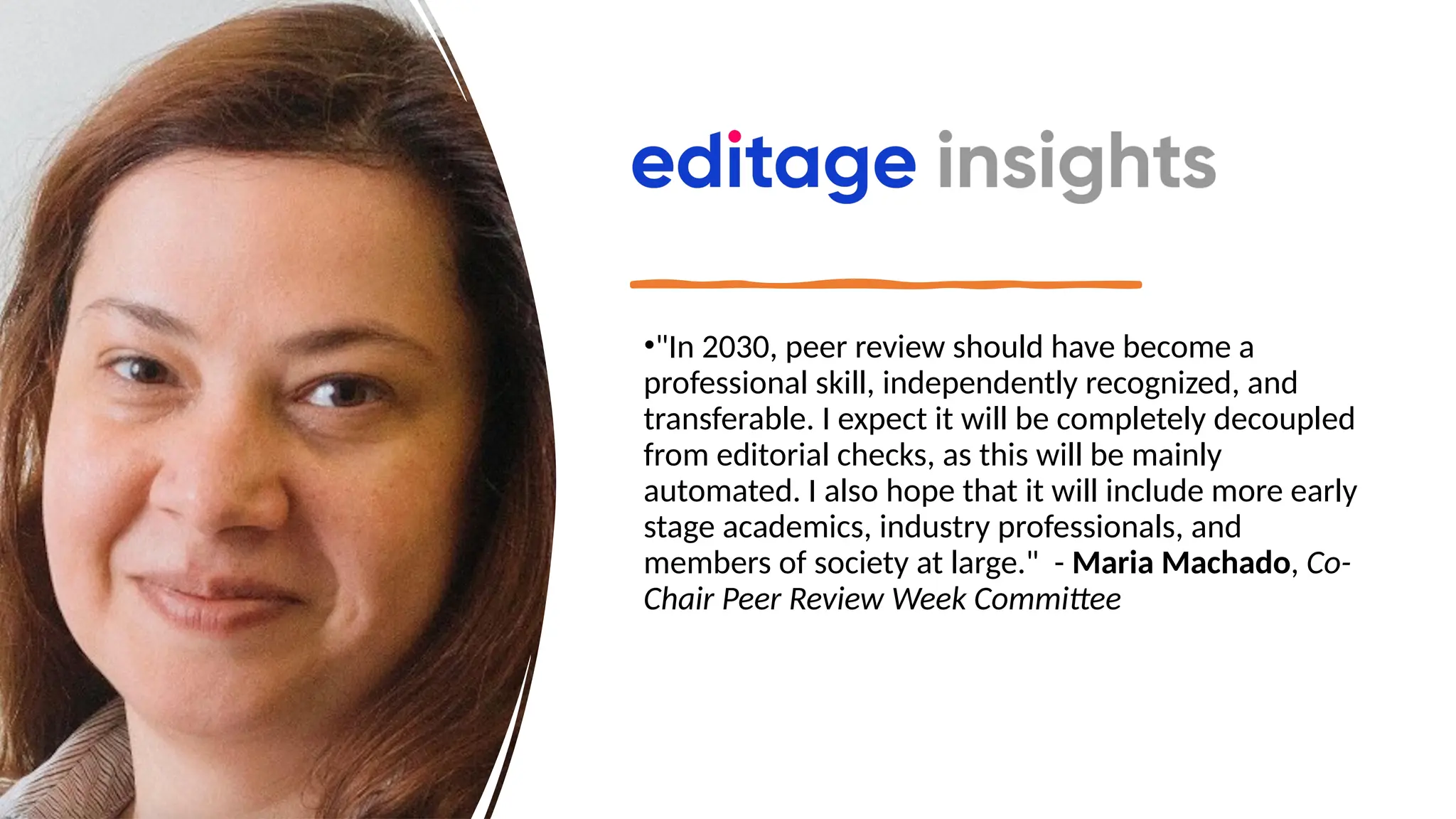
•"In 2030, peer review should have become a
professional skill, independently recognized, and
transferable. I expect it will be completely decoupled
from editorial checks, as this will be mainly
automated. I also hope that it will include more early
stage academics, industry professionals, and
members of society at large." - Maria Machado, Co-
Chair Peer Review Week Committee
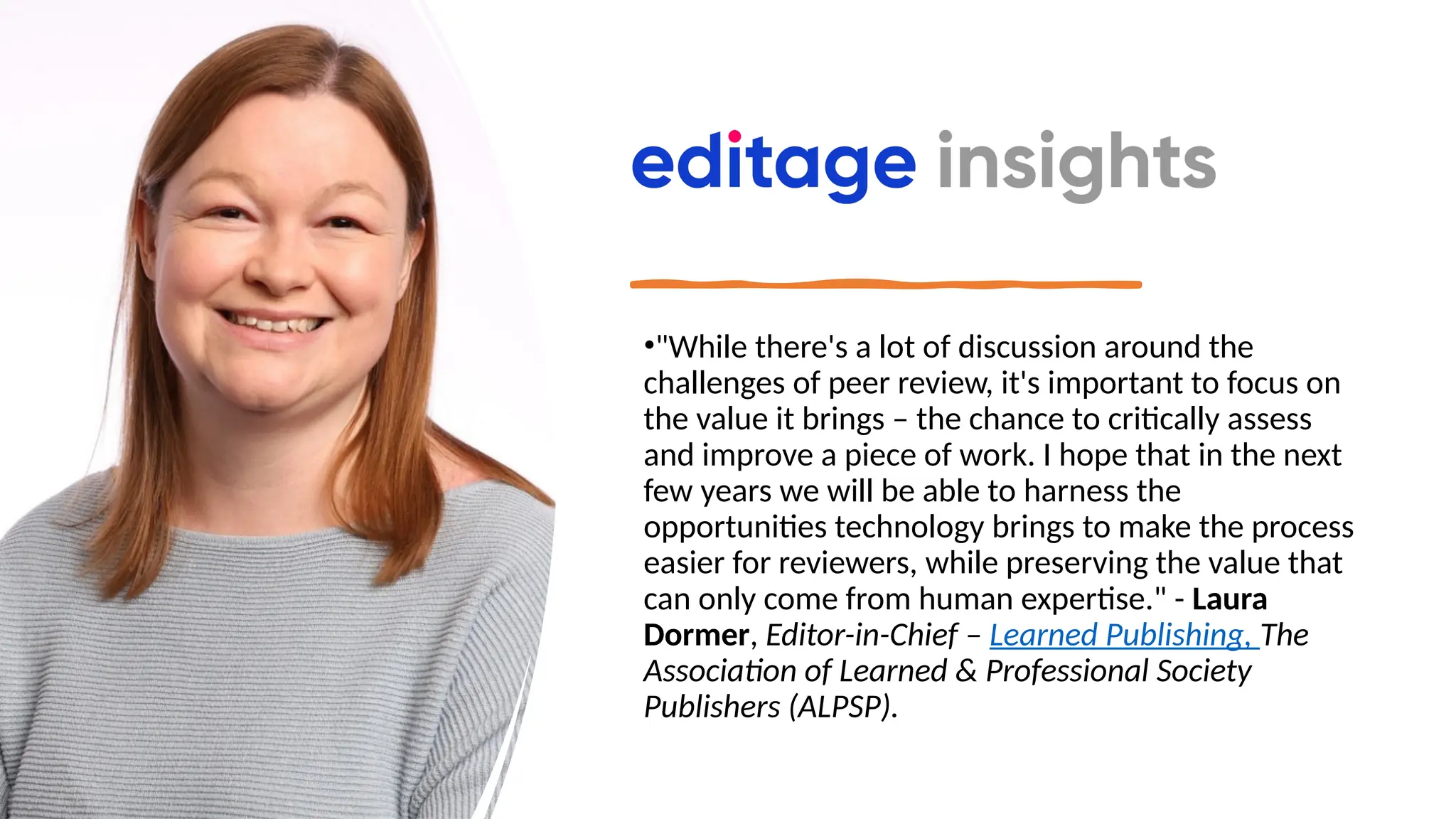
•"While there's a lot of discussion around the
challenges of peer review, it's important to focus on
the value it brings – the chance to critically assess
and improve a piece of work. I hope that in the next
few years we will be able to harness the
opportunities technology brings to make the process
easier for reviewers, while preserving the value that
can only come from human expertise." - Laura
Dormer, Editor-in-Chief – Learned Publishing, The
Association of Learned & Professional Society
Publishers (ALPSP).
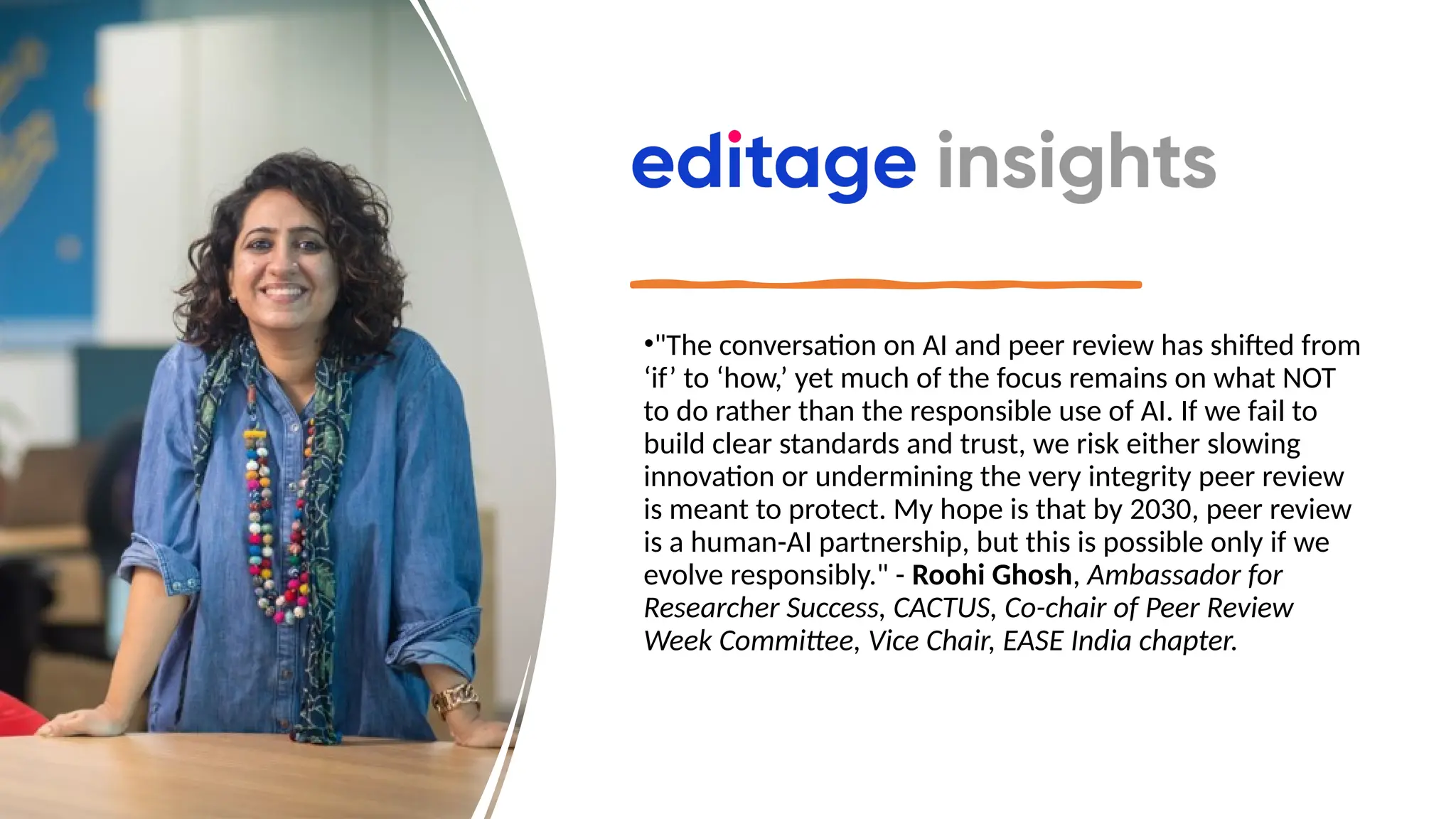
•"The conversation on AI and peer review has shifted from
‘if’ to ‘how,’ yet much of the focus remains on what NOT
to do rather than the responsible use of AI. If we fail to
build clear standards and trust, we risk either slowing
innovation or undermining the very integrity peer review
is meant to protect. My hope is that by 2030, peer review
is a human-AI partnership, but this is possible only if we
evolve responsibly." - Roohi Ghosh, Ambassador for
Researcher Success, CACTUS, Co-chair of Peer Review
Week Committee, Vice Chair, EASE India chapter.

Peer review in 2030 - what will it look like?

  • 1.
    Peer review in2030 What do you think it will look like?
  • 2.
    •"This year’s themerepresents an urgent and collective call to examine how AI intersects with research integrity, reviewer accountability, and transparency in publishing. Our goal is to empower the community to think critically and creatively about how peer review should evolve in this new technological era.” – Maryam Sayab, Director of Communications, Asian Council of Science Editors, Co- Chair, Peer Review Week Committee.
  • 3.
    •"I hope tosee more constructive criticism and transparency at all levels. While we rely on the expertise of peer reviewers, every researcher should feel empowered to critically evaluate research outputs. Technology can make the process more efficient, but it cannot replace human insight. Science moves forward through collaboration and the open exchange of ideas—and a review process that is thoughtful, critical and transparent is essential to that progress." - Iva Grabaric Andonovski, Editor Food Technology and Biotechnology, CROASC President, EASE Vice President.
  • 4.
    •"In 2030, peerreview should have become a professional skill, independently recognized, and transferable. I expect it will be completely decoupled from editorial checks, as this will be mainly automated. I also hope that it will include more early stage academics, industry professionals, and members of society at large." - Maria Machado, Co- Chair Peer Review Week Committee
  • 5.
    •"While there's alot of discussion around the challenges of peer review, it's important to focus on the value it brings – the chance to critically assess and improve a piece of work. I hope that in the next few years we will be able to harness the opportunities technology brings to make the process easier for reviewers, while preserving the value that can only come from human expertise." - Laura Dormer, Editor-in-Chief – Learned Publishing, The Association of Learned & Professional Society Publishers (ALPSP).
  • 6.
    •"The conversation onAI and peer review has shifted from ‘if’ to ‘how,’ yet much of the focus remains on what NOT to do rather than the responsible use of AI. If we fail to build clear standards and trust, we risk either slowing innovation or undermining the very integrity peer review is meant to protect. My hope is that by 2030, peer review is a human-AI partnership, but this is possible only if we evolve responsibly." - Roohi Ghosh, Ambassador for Researcher Success, CACTUS, Co-chair of Peer Review Week Committee, Vice Chair, EASE India chapter.