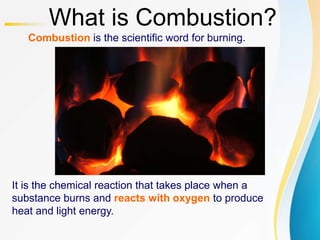
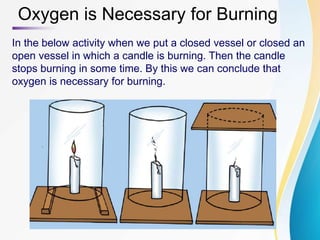
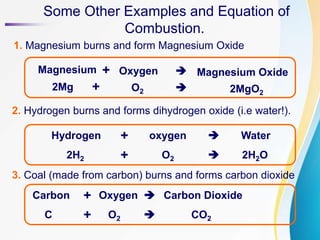
Combustion is the chemical reaction that takes place when a substance burns and reacts with oxygen to produce heat and light energy. Examples of combustible substances that undergo this reaction include paper, wood, coal, and magnesium ribbon. Non-combustible substances like nails and water do not burn. The combustion reaction requires oxygen - when oxygen is removed, a burning candle will go out. Common combustion reactions include magnesium burning to form magnesium oxide, hydrogen burning to form water, and carbon in coal burning to form carbon dioxide.



![Chemistry Unit 2 pp.pptx [repaired]](https://cdn.slidesharecdn.com/ss_thumbnails/u5m0qrlhtyunybctqodv-signature-4ca31617d7c53f84db7a921f2694796abd46667df45f044d5c7aa1671a8924a0-poli-150407020147-conversion-gate01-thumbnail.jpg?width=640&height=640&fit=bounds)


