Collection and Handling
of Specimens for
Laboratory Diagnosis
Dr. Milagros R. Mananggit
Chief, Regional Animal Disease Diagnostic Laboratory
Department of Agriculture, Regional Field Unit 3
Purpose of collecting samples
1. Direct examination thru microscopy
Blood parasite examination
Fecalysis
Impression smears for Fluorescent Antibody Test
eg. Rabies and Hog choleSra
2. Isolation of causative microorganisms
Bacterial Isolation and identification
Tissue culture
Egg inoculation
Mice Inoculation
Purpose of collecting samples
3. Serological Investigation
 ELISA Test
 AGPT
 HA-HI Test
 Rapid plate test
4. Molecular Test
 LAMP
 Polymerase Chain Reaction (PCR)
 Conventional PCR
 Real Time PCR (quantitative PCR)
5. Diagnosis of the disease
Purpose of testing samples
1. Confirmatory diagnosis of suspect or
clinical case
2. Demonstration of freedom from
infection in a defined population
3. Eradication of disease or elimination of
infection from a defined population
4. Estimation of prevalence of infection or
exposure to facilitate risk analysis
Purpose of testing samples
5. Certification of freedom from infection
or presence of the agent in
individual animals or their products
for trade or shipment.
6. Determination of immune status of
individual animals or populations
7. For specific therapeutic medication
Basics in collecting samples
1. Always protect yourself, other people and
the environment
2. Use clean, preferably sterilized implements
3. Collect samples before treatment is initiated
4. Sample volume or quantity must be sufficient
for all necessary tests with enough residual
specimen for archival purposes
5. Practice proper restraint of animals during
sample collection
Basics in collecting samples
6. Packaging containers for specimens should
be leak-proof and sterile
7. Label all specimen containers and account
for all of them in a sample information sheet
8. Maintain cold chain during transport of
samples
9. Provide sufficient epidemiological information
on the case
10. Notify the receiving laboratory
Checklist for Field Sample Collection
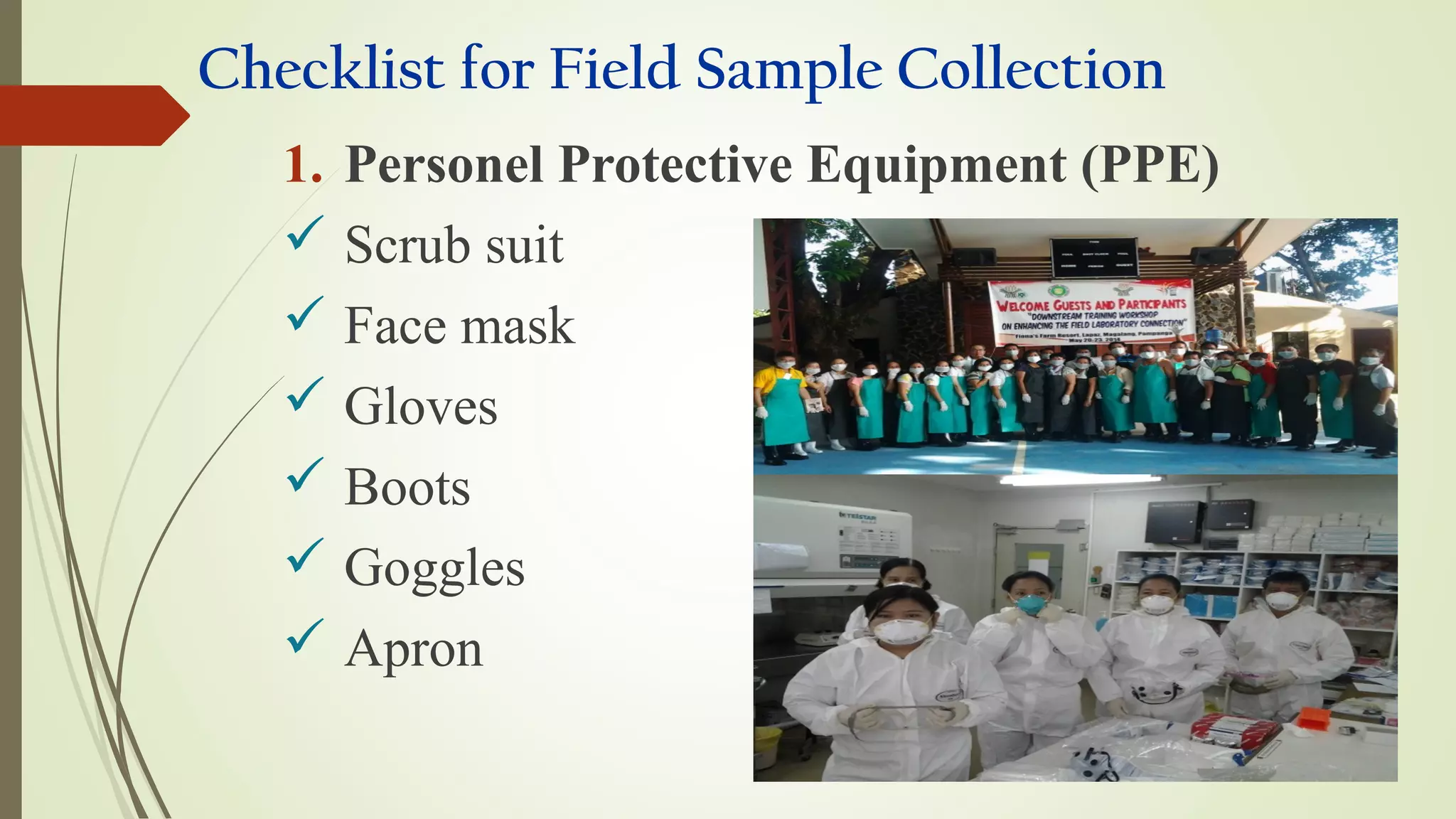
1. Personel Protective Equipment (PPE)
 Scrub suit
 Face mask
 Gloves
 Boots
 Goggles
 Apron
Checklist for Field Sample Collection
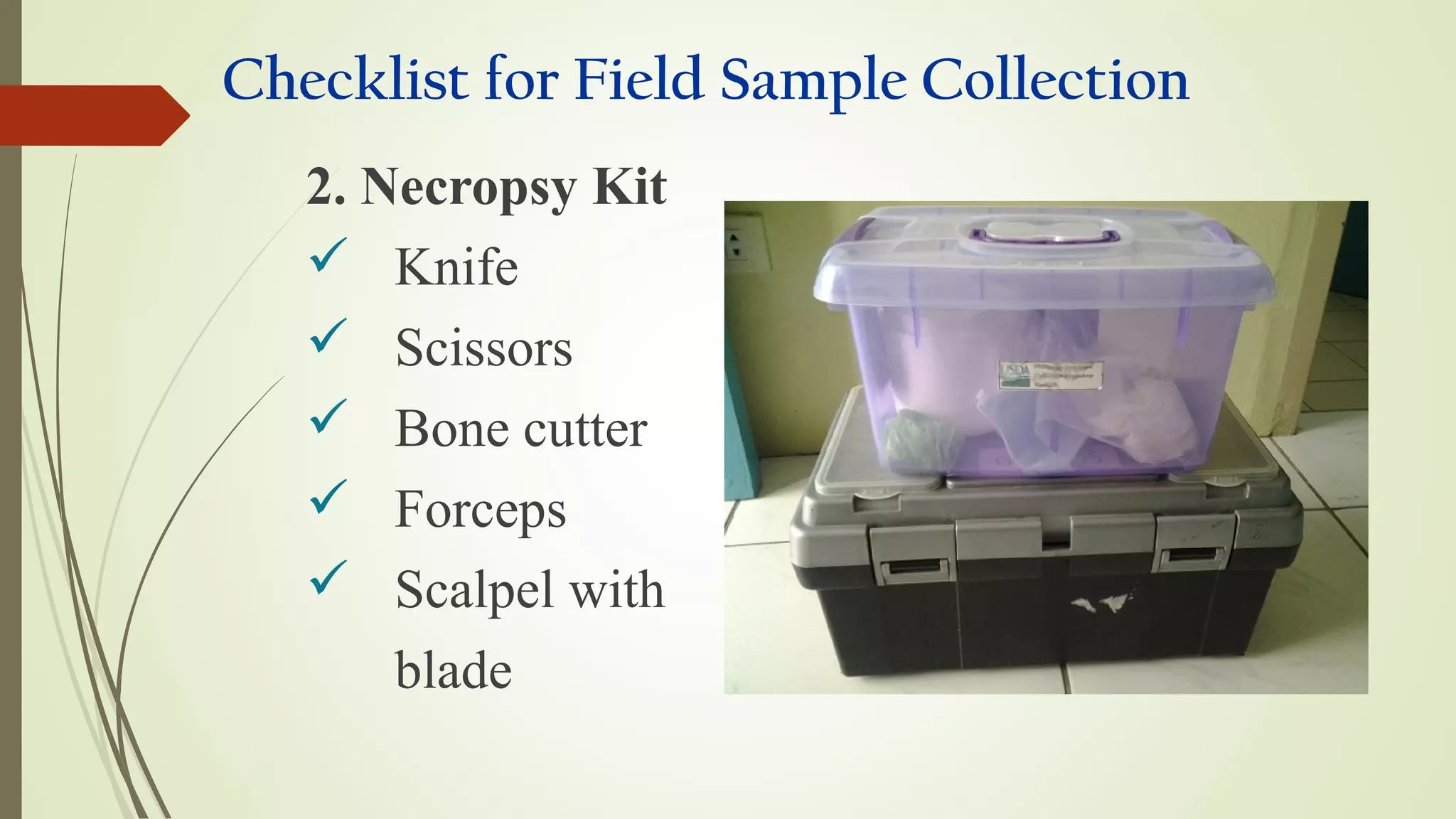
2. Necropsy Kit
 Knife
 Scissors
 Bone cutter
 Forceps
 Scalpel with
blade
Checklist for Field Sample Collection
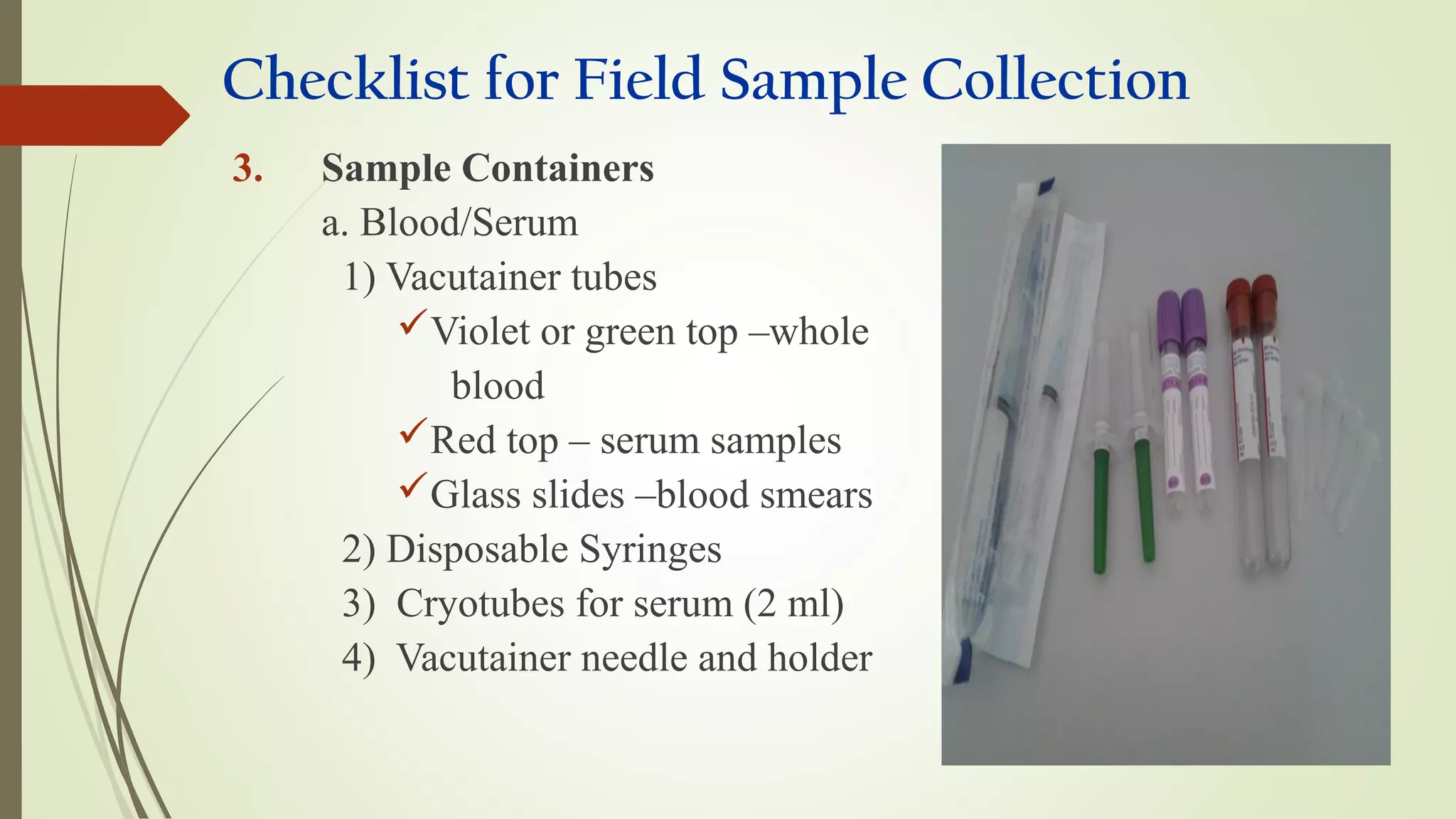
3. Sample Containers
a. Blood/Serum
1) Vacutainer tubes
Violet or green top –whole
blood
Red top – serum samples
Glass slides –blood smears
2) Disposable Syringes
3) Cryotubes for serum (2 ml)
4) Vacutainer needle and holder
Checklist for Field Sample Collection
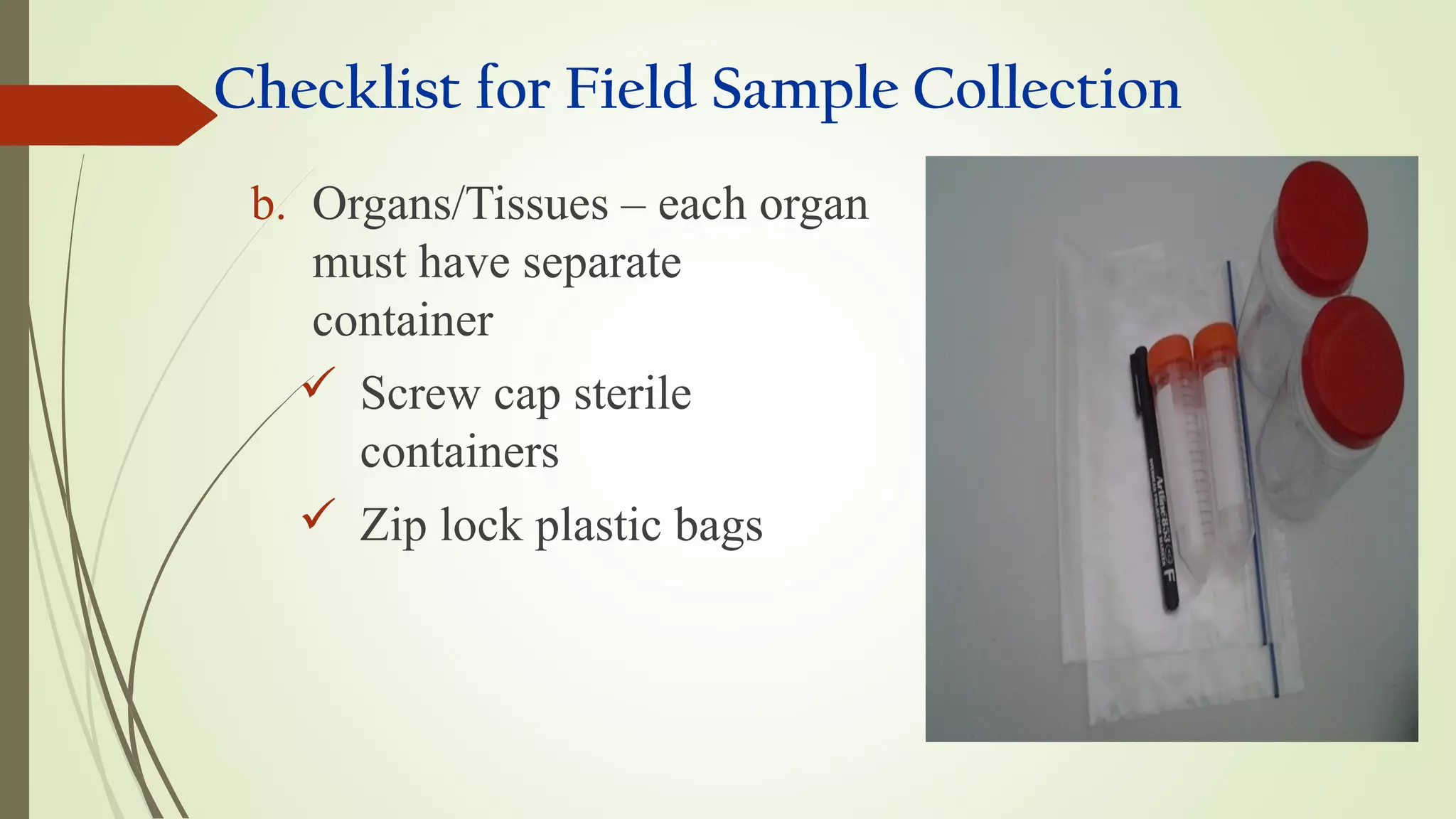
b. Organs/Tissues – each organ
must have separate
container
 Screw cap sterile
containers
 Zip lock plastic bags
Checklist for Field Sample Collection
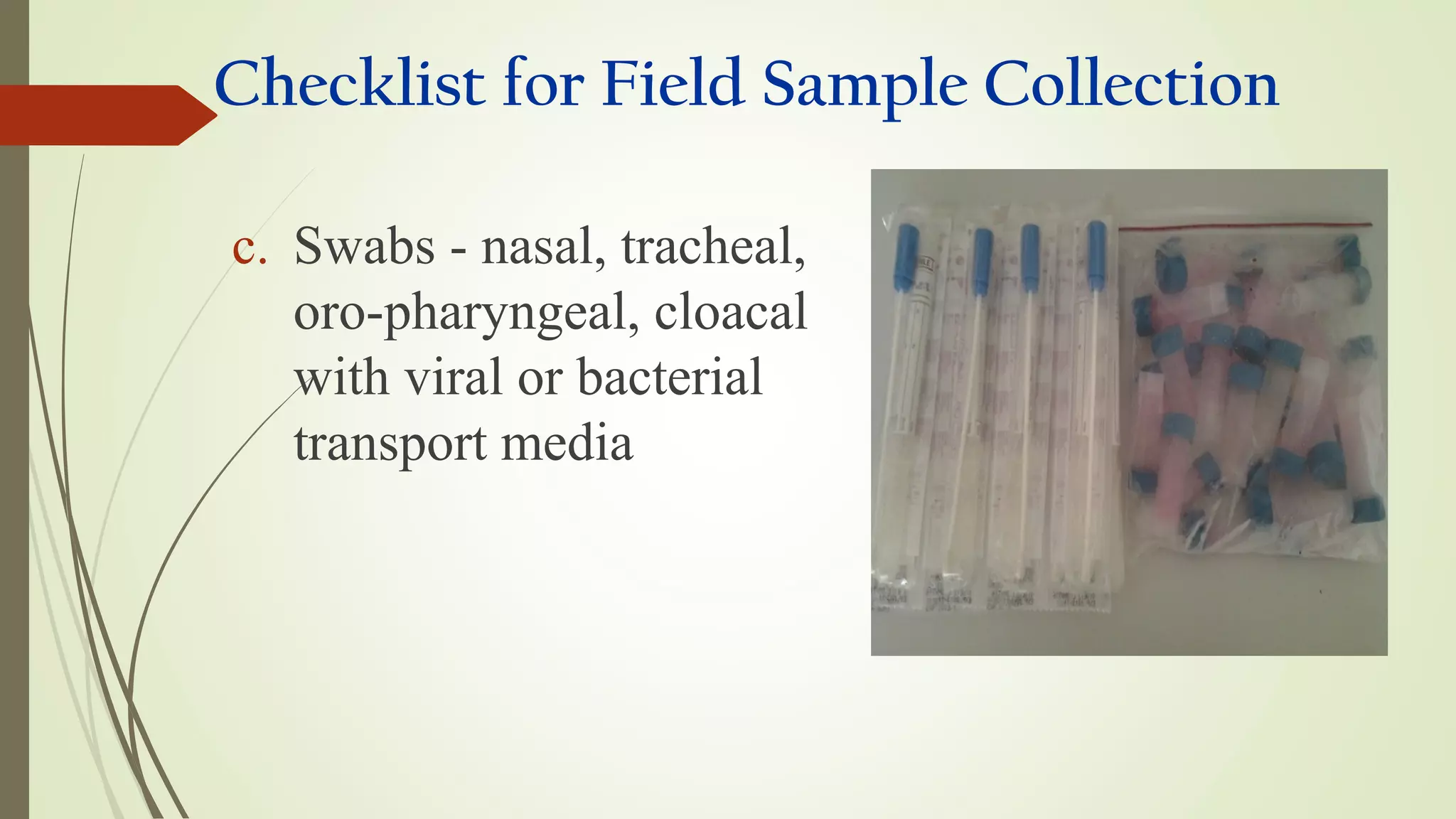
c. Swabs - nasal, tracheal,
oro-pharyngeal, cloacal
with viral or bacterial
transport media
Checklist for Field Sample Collection
4. Labelling of Samples
 Permanent water proof pen
 Masking tape
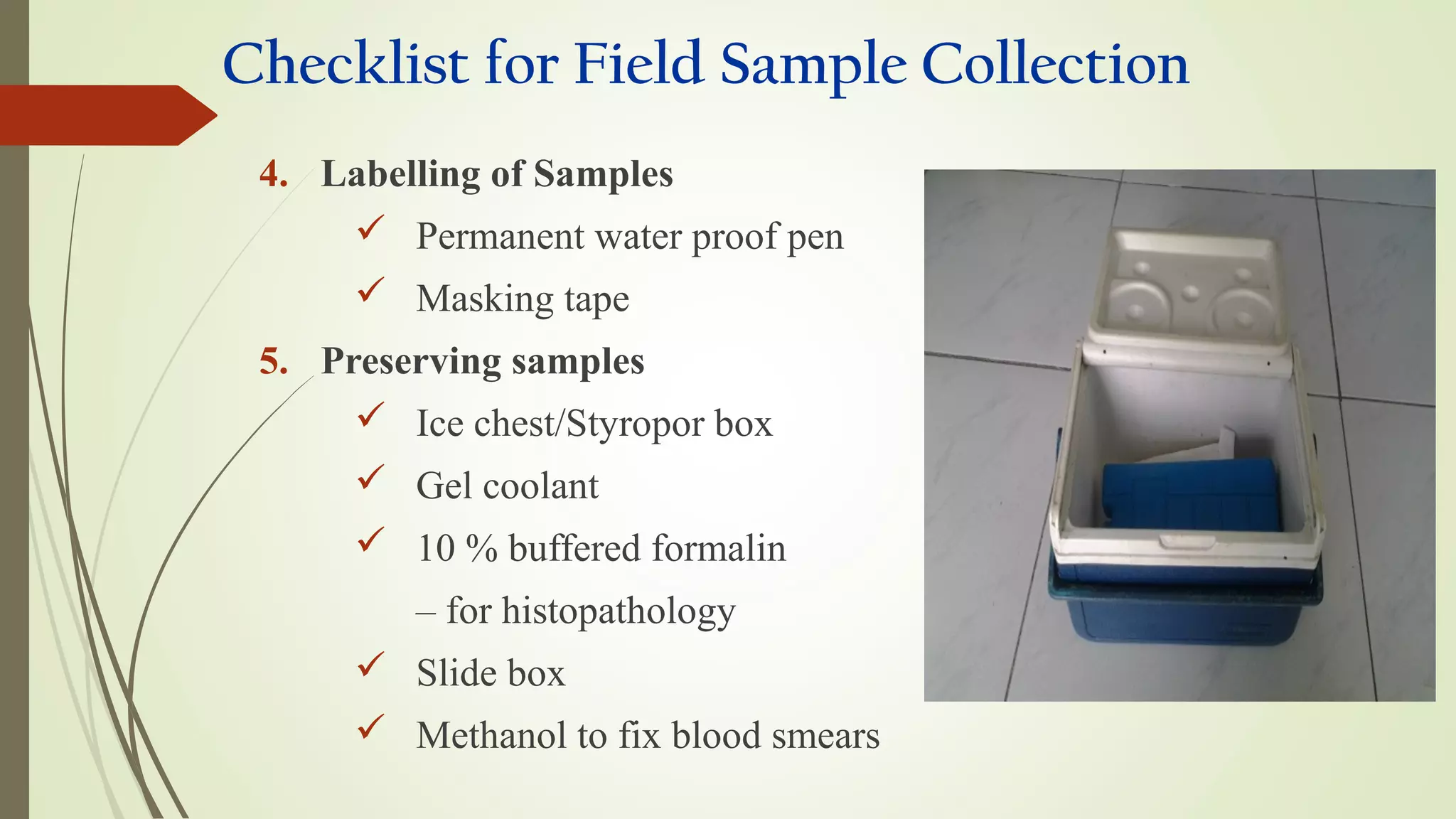
5. Preserving samples
 Ice chest/Styropor box
 Gel coolant
 10 % buffered formalin
– for histopathology
 Slide box
 Methanol to fix blood smears
Checklist for Field Sample Collection
6. Recording Forms
 Surveillance or disease investigation forms
 Sample submission forms
7. Restrainer – rope, nose grip, pig restrainer
8. Disinfectant (hand sprayer)
 70 % alcohol
 10 % lysol or bleaching agent
9. Documentation –camera, tablet, cell phone
10. Garbage bag
Sample Collection During Necropsy
 Tissue samples should be collected
aseptically using rat tooth forceps and
scalpel blade dip in a container with
alcohol.
 Cut tissue samples with demarcation
between normal and abnormal with enough
quantity to perform differential diagnosis.
 Each tissue must have a separate sterile
container. Intestines should be tied with yarn
at both ends.
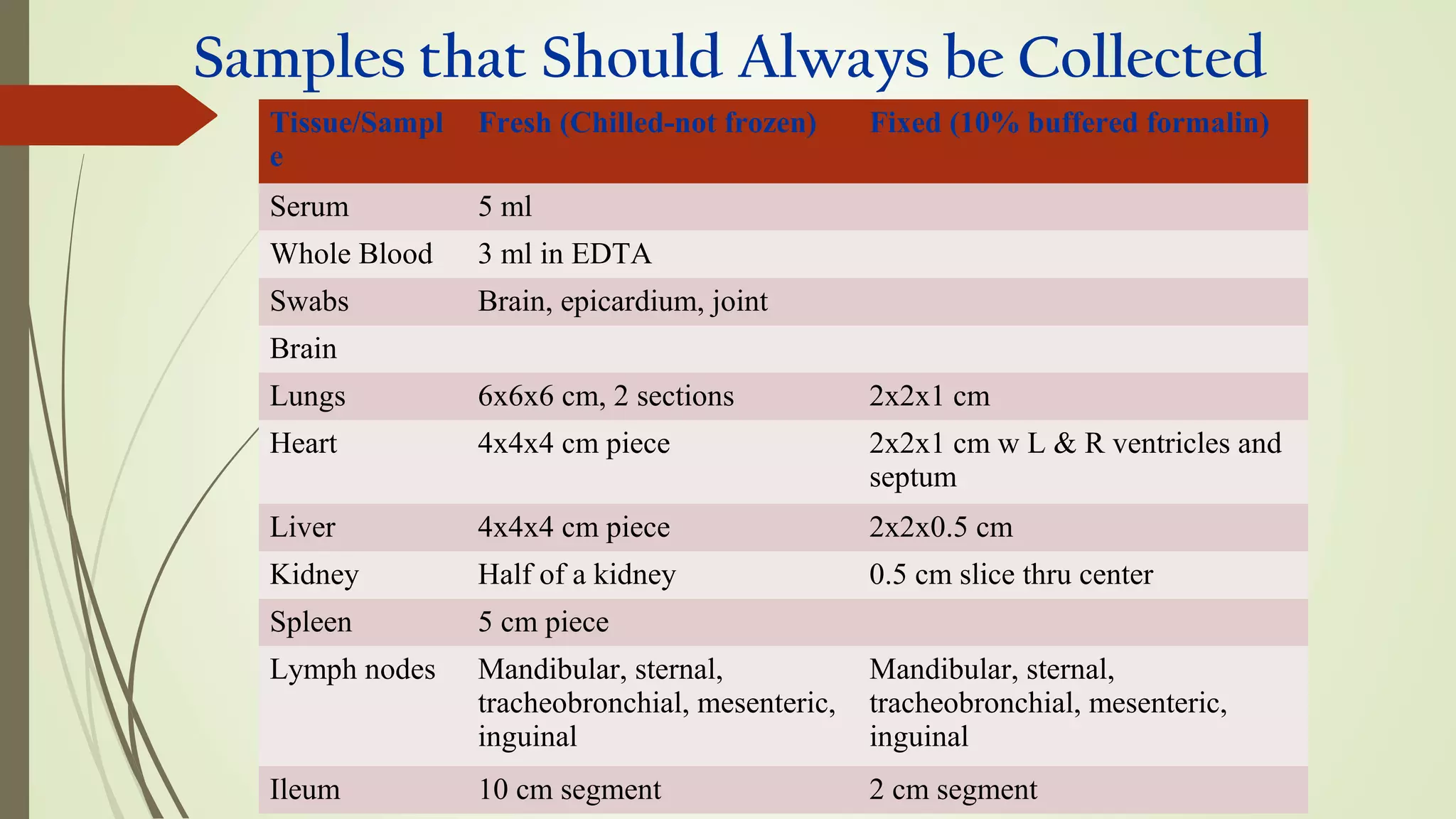
Samples that Should Always be Collected
Tissue/Sampl
e
Fresh (Chilled-not frozen) Fixed (10% buffered formalin)
Serum 5 ml
Whole Blood 3 ml in EDTA
Swabs Brain, epicardium, joint
Brain
Lungs 6x6x6 cm, 2 sections 2x2x1 cm
Heart 4x4x4 cm piece 2x2x1 cm w L & R ventricles and
septum
Liver 4x4x4 cm piece 2x2x0.5 cm
Kidney Half of a kidney 0.5 cm slice thru center
Spleen 5 cm piece
Lymph nodes Mandibular, sternal,
tracheobronchial, mesenteric,
inguinal
Mandibular, sternal,
tracheobronchial, mesenteric,
inguinal
Ileum 10 cm segment 2 cm segment
Sample Collection in Live Animals
1. Blood:
 jugular vein - horses, and small ruminants
 tail vein - big ruminants,
 wing vein - avian species
 lateral saphenous or middle cephalic in dog/cat
Serum: Let stand at room temperature for 12 to 24 hours
then transfer into cryotubes.
BPE: Use violet or green top cryotubes, blood smears
can be prepared, air dry and fix in methanol for 3
minutes.
Sample Collection in Live Animals
2. Swabs – collect exudates from abscess and
lesions, oropharyngeal, tracheal and cloacal
swabs for avian influenza
3. Feces – take directly from rectum or just
after defecation
4. Urine collection thru catheterization
Sample Collection in Live Animals
5. External parasites
 large parasites can be picked off and place in
container with 70% alcohol for identification
 smaller parasites such as mites can be scraped
with blade and placed in slide with mineral oil
6. Tissue impression smears in slide
7. Milk – 5 to 10 ml in sterile container
Sample Collection for Toxicology
1. Body fluids –blood and urine
2. Tissues to collect at necropsy – stomach or
rumen contents, feces, brain, liver, kidney,
body fat, skin, and urine
3. Suspected source – feeds and water,
poisonous plants, soil
4. Test for nitrates – best sample is aqueous
fluid from the eye of dead animal
Samples for Specific Diseases
Abortion
mid portion of kidney, placenta, adrenal gland,
liver, spleen, tied-off stomach, brain and serum
 Store at 2-4 °C and submit under refrigeration
Abscesses
Purulent exudates on a sterile swab or in a sterile
tube collected from the margin of the abscesses
 Store and submit under refrigeration
Samples for Specific Diseases
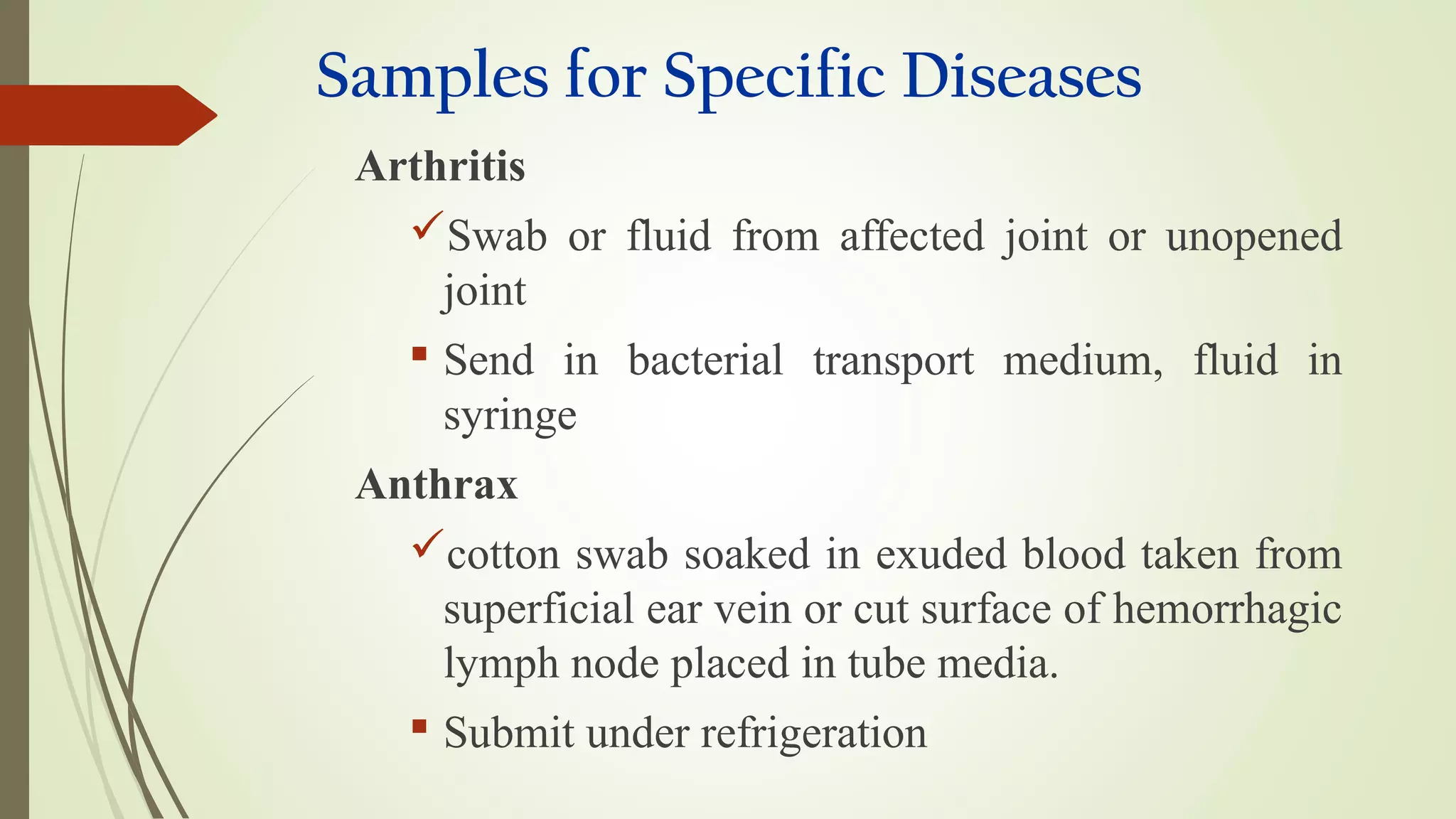
Arthritis
Swab or fluid from affected joint or unopened
joint
 Send in bacterial transport medium, fluid in
syringe
Anthrax
cotton swab soaked in exuded blood taken from
superficial ear vein or cut surface of hemorrhagic
lymph node placed in tube media.
 Submit under refrigeration
Samples for Specific Diseases
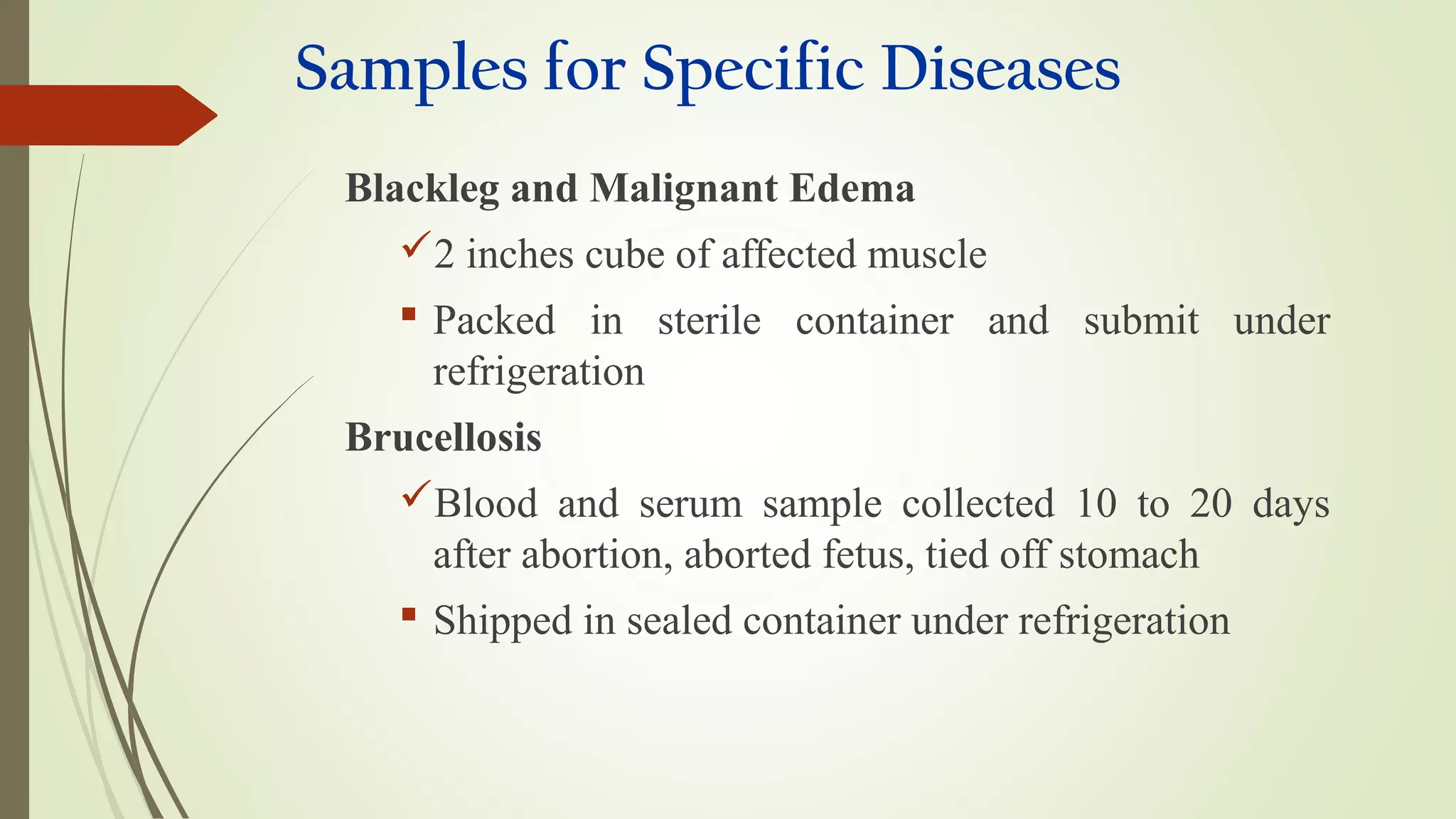
Blackleg and Malignant Edema
2 inches cube of affected muscle
 Packed in sterile container and submit under
refrigeration
Brucellosis
Blood and serum sample collected 10 to 20 days
after abortion, aborted fetus, tied off stomach
 Shipped in sealed container under refrigeration
Samples for Specific Diseases
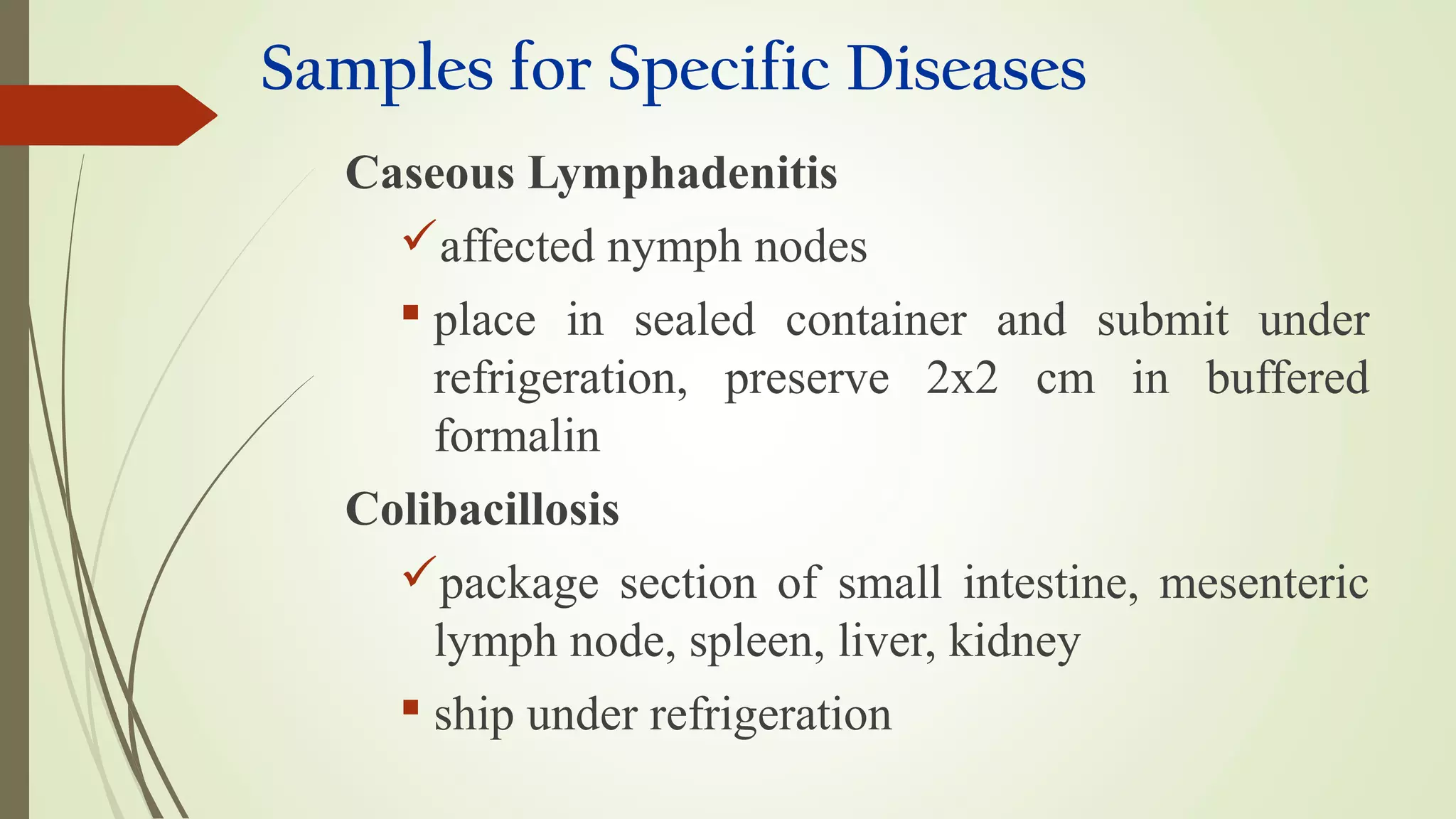
Caseous Lymphadenitis
affected nymph nodes
 place in sealed container and submit under
refrigeration, preserve 2x2 cm in buffered
formalin
Colibacillosis
package section of small intestine, mesenteric
lymph node, spleen, liver, kidney
 ship under refrigeration
Samples for Specific Diseases
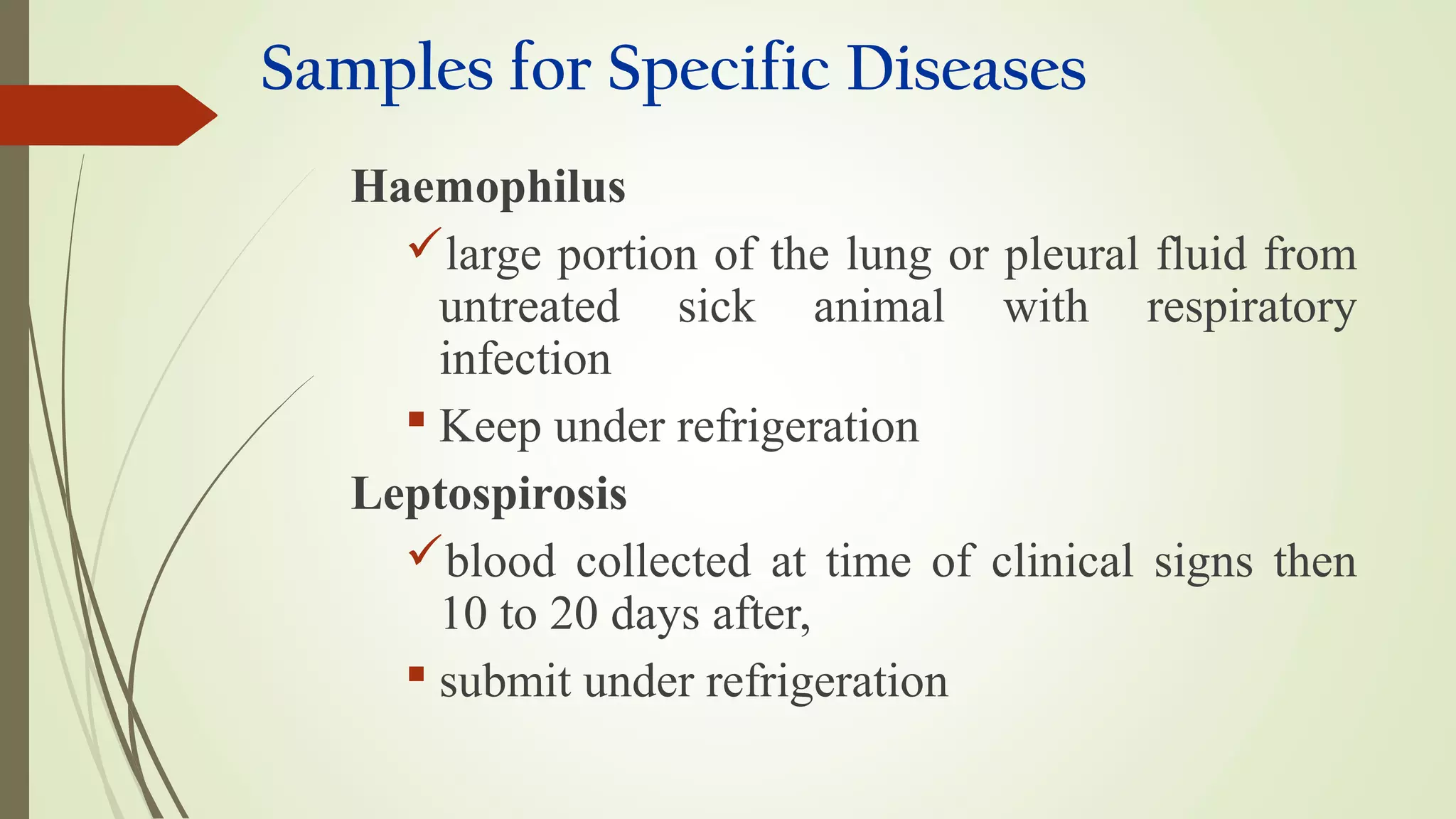
Haemophilus
large portion of the lung or pleural fluid from
untreated sick animal with respiratory
infection
 Keep under refrigeration
Leptospirosis
blood collected at time of clinical signs then
10 to 20 days after,
 submit under refrigeration
Samples for Specific Diseases
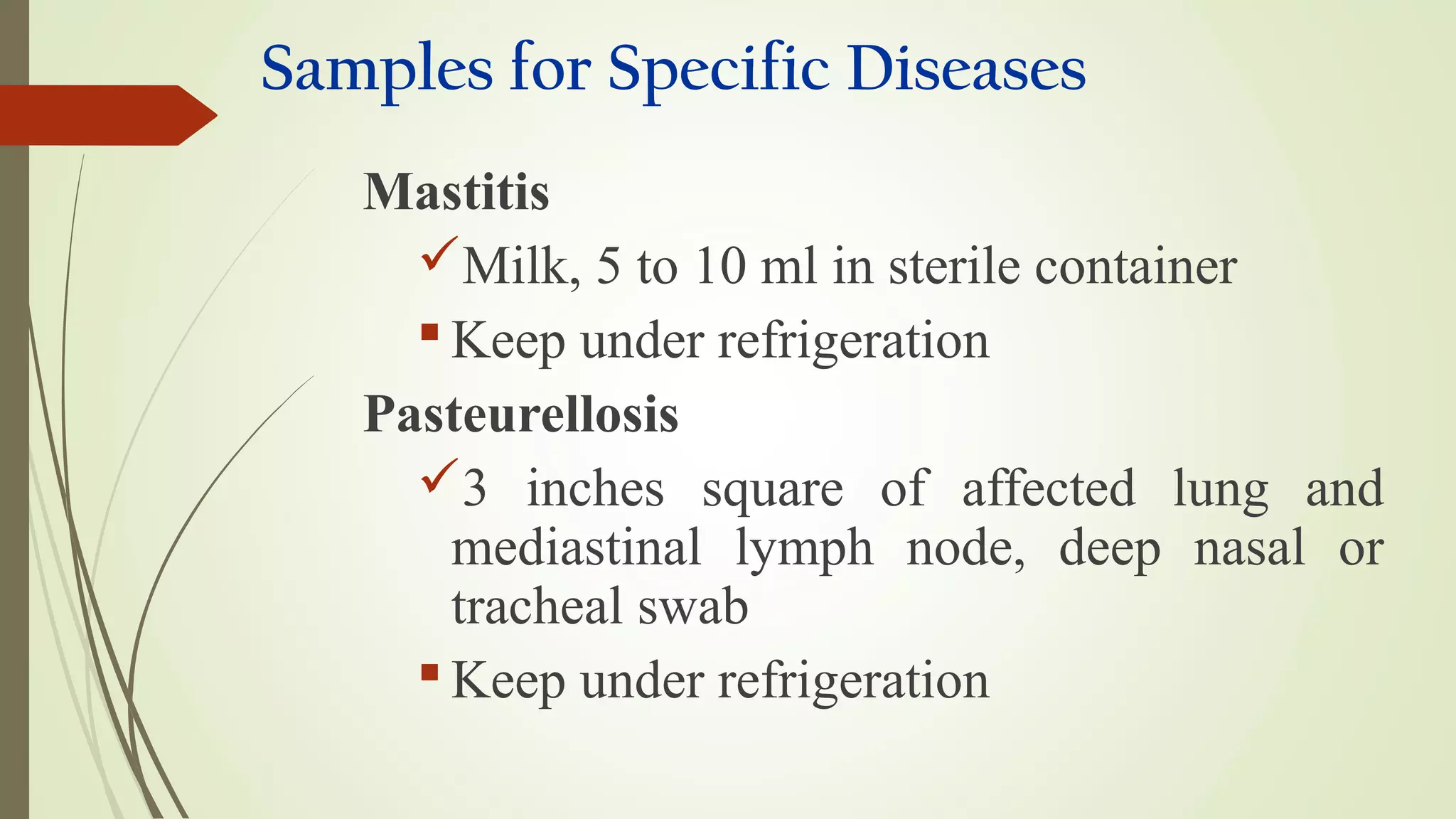
Mastitis
Milk, 5 to 10 ml in sterile container
 Keep under refrigeration
Pasteurellosis
3 inches square of affected lung and
mediastinal lymph node, deep nasal or
tracheal swab
 Keep under refrigeration
Samples for Specific Diseases
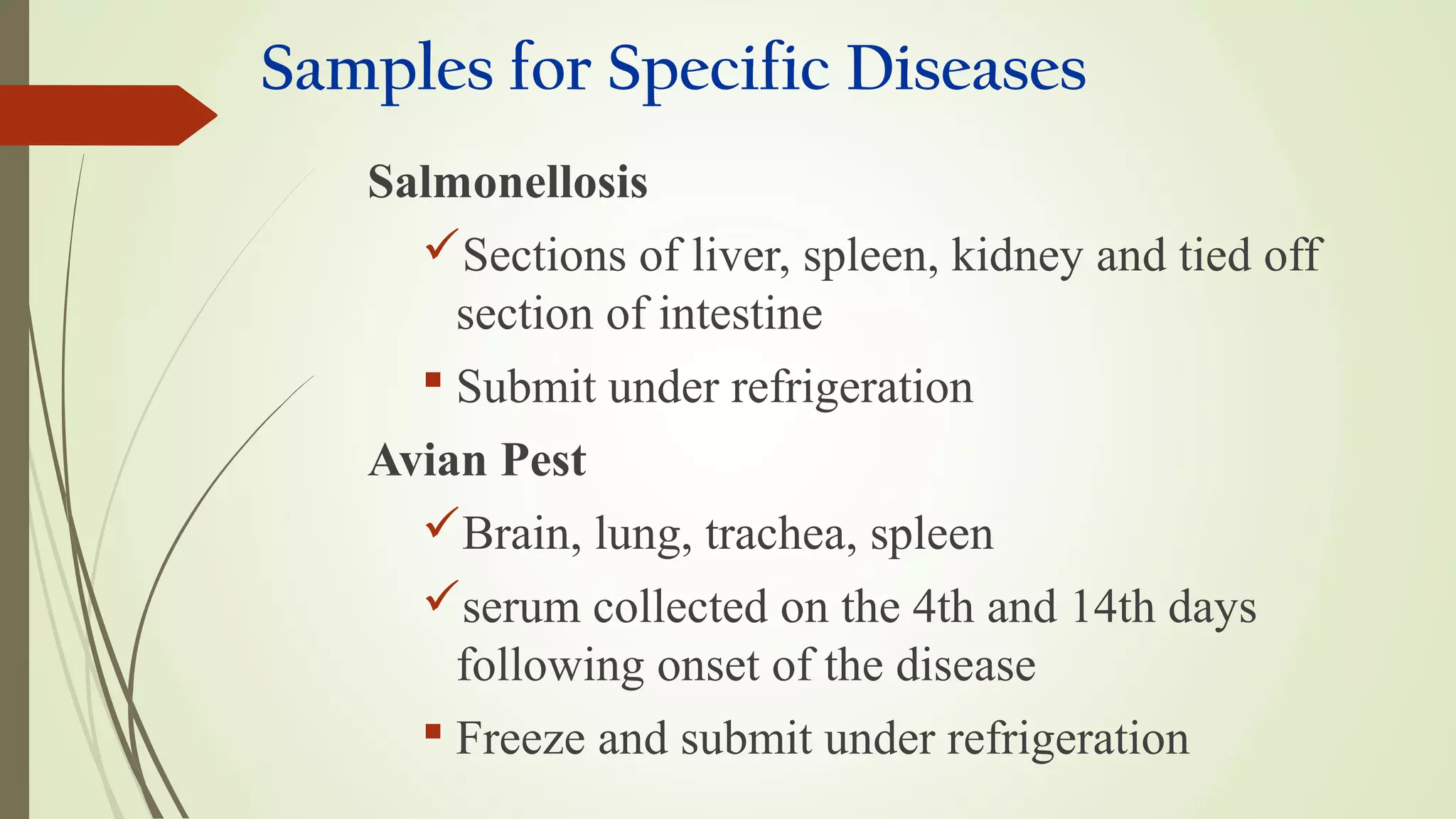
Salmonellosis
Sections of liver, spleen, kidney and tied off
section of intestine
 Submit under refrigeration
Avian Pest
Brain, lung, trachea, spleen
serum collected on the 4th and 14th days
following onset of the disease
 Freeze and submit under refrigeration
Samples for Specific Diseases
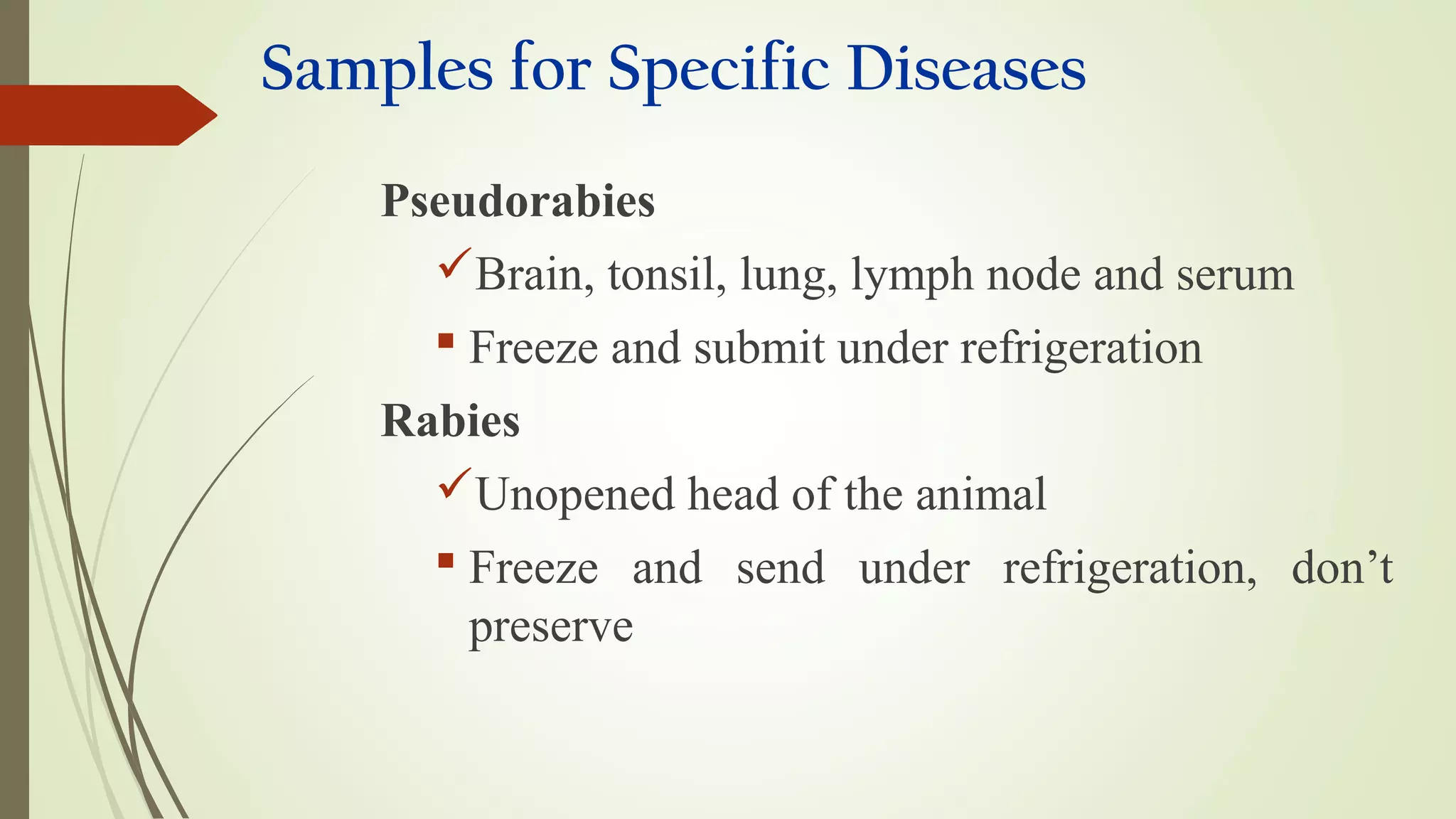
Pseudorabies
Brain, tonsil, lung, lymph node and serum
 Freeze and submit under refrigeration
Rabies
Unopened head of the animal
 Freeze and send under refrigeration, don’t
preserve
Samples for Specific Diseases
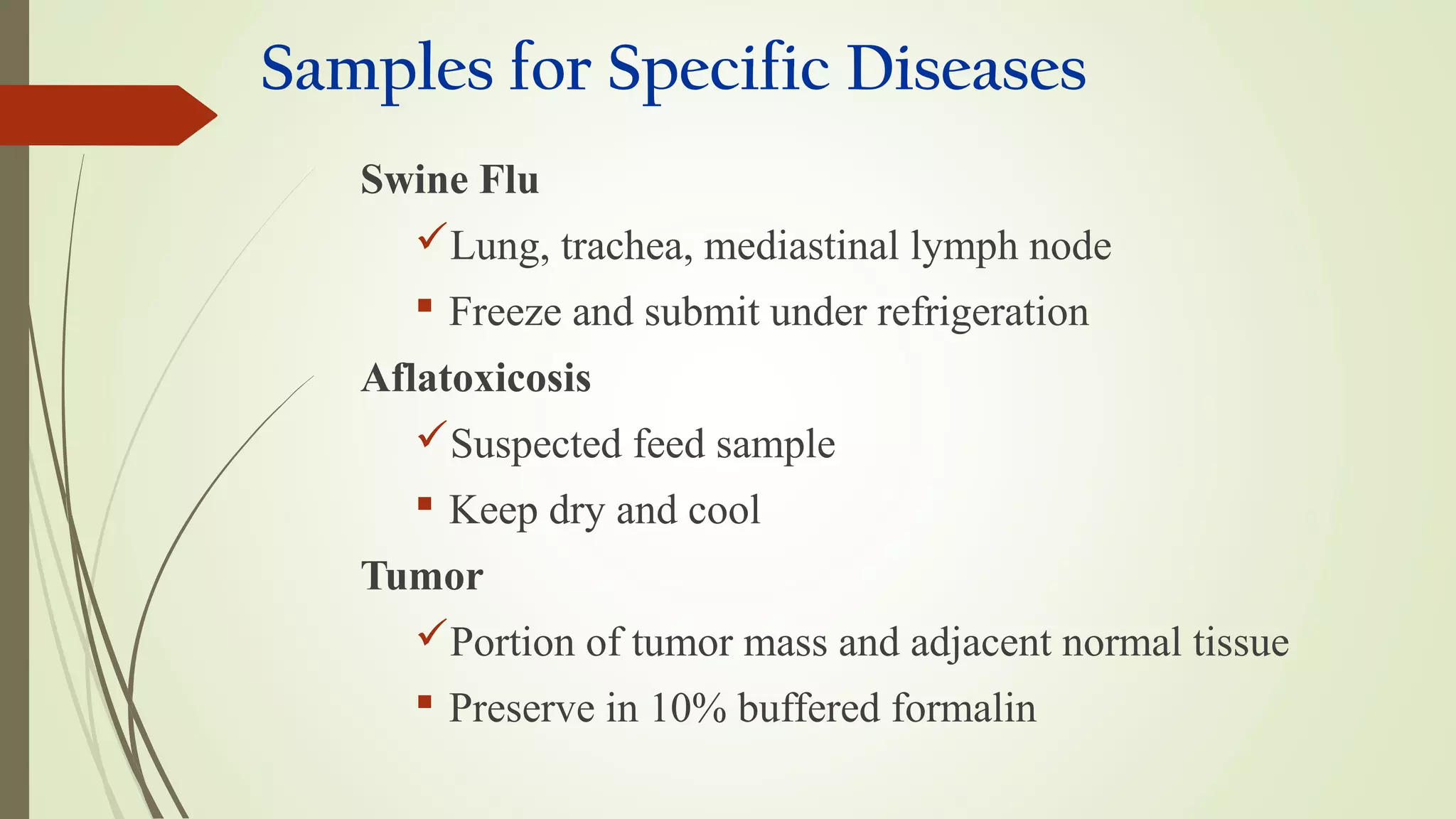
Swine Flu
Lung, trachea, mediastinal lymph node
 Freeze and submit under refrigeration
Aflatoxicosis
Suspected feed sample
 Keep dry and cool
Tumor
Portion of tumor mass and adjacent normal tissue
 Preserve in 10% buffered formalin
Write the Report
No necropsy is complete until all findings have
been recorded in written form. The report should
include the following information:
1. Owner’s name, address and contact number
2. Description of the animal: species, breed, age,
sex
3. Duration and condition of the outbreak
4. Mortality and morbidity rate
5. Animal population and nearby farms
Write the Report
6. Clinical signs observed
7. Treatment given and vaccination
8. Feeds and water given
9. Possible contact with other animals
10.Tentative diagnosis
11.Necropsy report
12.Samples collected and submitted
13.Veterinarian’s name, address and contact
number
Handling and Transport of Samples
1. Keep tissue samples cool to prevent
decomposition and growth of nonspecific
bacteria
2. Keep various tissues separated from one
another using ziplock or whirlpack bags, or
sterile screw cap containers.
3. Swabs should be kept moist by using sterile
saline/water or transport media and keep at 4
degrees Centigrade till reach the lab.
Handling and Transport of Samples
4. Blood samples should be kept at room
temperature for 12 to 24 hours before
separating the serum to avoid hemolysis.
Freeze if can’t reach the lab for a week.
5. Fecal samples should be kept cool but don’t
freeze.
6. Samples for bacteriology should be kept
under 2-4 degrees Centigrade. Those for
virology can be frozen.
Key Concepts in Sending Specimens to
the Laboratory
1. Speed in getting the materials to the
laboratory.
2. Keep the samples cool on the way to the
laboratory.
3. Use packaging that will prevent leakage
and crushing.
Key Concepts in Sending Specimens to
the Laboratory
4. Be sure that all your samples are well-
labeled.
5. Be sure that appropriate paperwork is
included with all of the samples such as
necropsy report, sample submission form,
disease investigation form.
6. Alert the laboratory on the arrival of your
samples.
Storage and Archives
 Future research and development efforts
 Retrospective studies
 Epidemiological studies
 Providing critical reference materials
used in assay standardization, validation
and proficiency testing programs
Storage and Archives
 System of documentation and storage
conditions
 Biosecurity measures
 Back-up plan in case of compromises
to the storage environment
Thank You and
God Bless…
RADDL3 (045)961 2934

Collection and Handling of Specimens for Laboratory Diagnosis

  • 1.
    Collection and Handling ofSpecimens for Laboratory Diagnosis Dr. Milagros R. Mananggit Chief, Regional Animal Disease Diagnostic Laboratory Department of Agriculture, Regional Field Unit 3
  • 2.
    Purpose of collectingsamples 1. Direct examination thru microscopy Blood parasite examination Fecalysis Impression smears for Fluorescent Antibody Test eg. Rabies and Hog choleSra 2. Isolation of causative microorganisms Bacterial Isolation and identification Tissue culture Egg inoculation Mice Inoculation
  • 3.
    Purpose of collectingsamples 3. Serological Investigation  ELISA Test  AGPT  HA-HI Test  Rapid plate test 4. Molecular Test  LAMP  Polymerase Chain Reaction (PCR)  Conventional PCR  Real Time PCR (quantitative PCR) 5. Diagnosis of the disease
  • 4.
    Purpose of testingsamples 1. Confirmatory diagnosis of suspect or clinical case 2. Demonstration of freedom from infection in a defined population 3. Eradication of disease or elimination of infection from a defined population 4. Estimation of prevalence of infection or exposure to facilitate risk analysis
  • 5.
    Purpose of testingsamples 5. Certification of freedom from infection or presence of the agent in individual animals or their products for trade or shipment. 6. Determination of immune status of individual animals or populations 7. For specific therapeutic medication
  • 6.
    Basics in collectingsamples 1. Always protect yourself, other people and the environment 2. Use clean, preferably sterilized implements 3. Collect samples before treatment is initiated 4. Sample volume or quantity must be sufficient for all necessary tests with enough residual specimen for archival purposes 5. Practice proper restraint of animals during sample collection
  • 7.
    Basics in collectingsamples 6. Packaging containers for specimens should be leak-proof and sterile 7. Label all specimen containers and account for all of them in a sample information sheet 8. Maintain cold chain during transport of samples 9. Provide sufficient epidemiological information on the case 10. Notify the receiving laboratory
  • 8.
    Checklist for FieldSample Collection 1. Personel Protective Equipment (PPE)  Scrub suit  Face mask  Gloves  Boots  Goggles  Apron
  • 9.
    Checklist for FieldSample Collection 2. Necropsy Kit  Knife  Scissors  Bone cutter  Forceps  Scalpel with blade
  • 10.
    Checklist for FieldSample Collection 3. Sample Containers a. Blood/Serum 1) Vacutainer tubes Violet or green top –whole blood Red top – serum samples Glass slides –blood smears 2) Disposable Syringes 3) Cryotubes for serum (2 ml) 4) Vacutainer needle and holder
  • 11.
    Checklist for FieldSample Collection b. Organs/Tissues – each organ must have separate container  Screw cap sterile containers  Zip lock plastic bags
  • 12.
    Checklist for FieldSample Collection c. Swabs - nasal, tracheal, oro-pharyngeal, cloacal with viral or bacterial transport media
  • 13.
    Checklist for FieldSample Collection 4. Labelling of Samples  Permanent water proof pen  Masking tape 5. Preserving samples  Ice chest/Styropor box  Gel coolant  10 % buffered formalin – for histopathology  Slide box  Methanol to fix blood smears
  • 14.
    Checklist for FieldSample Collection 6. Recording Forms  Surveillance or disease investigation forms  Sample submission forms 7. Restrainer – rope, nose grip, pig restrainer 8. Disinfectant (hand sprayer)  70 % alcohol  10 % lysol or bleaching agent 9. Documentation –camera, tablet, cell phone 10. Garbage bag
  • 15.
    Sample Collection DuringNecropsy  Tissue samples should be collected aseptically using rat tooth forceps and scalpel blade dip in a container with alcohol.  Cut tissue samples with demarcation between normal and abnormal with enough quantity to perform differential diagnosis.  Each tissue must have a separate sterile container. Intestines should be tied with yarn at both ends.
  • 16.
    Samples that ShouldAlways be Collected Tissue/Sampl e Fresh (Chilled-not frozen) Fixed (10% buffered formalin) Serum 5 ml Whole Blood 3 ml in EDTA Swabs Brain, epicardium, joint Brain Lungs 6x6x6 cm, 2 sections 2x2x1 cm Heart 4x4x4 cm piece 2x2x1 cm w L & R ventricles and septum Liver 4x4x4 cm piece 2x2x0.5 cm Kidney Half of a kidney 0.5 cm slice thru center Spleen 5 cm piece Lymph nodes Mandibular, sternal, tracheobronchial, mesenteric, inguinal Mandibular, sternal, tracheobronchial, mesenteric, inguinal Ileum 10 cm segment 2 cm segment
  • 17.
    Sample Collection inLive Animals 1. Blood:  jugular vein - horses, and small ruminants  tail vein - big ruminants,  wing vein - avian species  lateral saphenous or middle cephalic in dog/cat Serum: Let stand at room temperature for 12 to 24 hours then transfer into cryotubes. BPE: Use violet or green top cryotubes, blood smears can be prepared, air dry and fix in methanol for 3 minutes.
  • 18.
    Sample Collection inLive Animals 2. Swabs – collect exudates from abscess and lesions, oropharyngeal, tracheal and cloacal swabs for avian influenza 3. Feces – take directly from rectum or just after defecation 4. Urine collection thru catheterization
  • 19.
    Sample Collection inLive Animals 5. External parasites  large parasites can be picked off and place in container with 70% alcohol for identification  smaller parasites such as mites can be scraped with blade and placed in slide with mineral oil 6. Tissue impression smears in slide 7. Milk – 5 to 10 ml in sterile container
  • 20.
    Sample Collection forToxicology 1. Body fluids –blood and urine 2. Tissues to collect at necropsy – stomach or rumen contents, feces, brain, liver, kidney, body fat, skin, and urine 3. Suspected source – feeds and water, poisonous plants, soil 4. Test for nitrates – best sample is aqueous fluid from the eye of dead animal
  • 21.
    Samples for SpecificDiseases Abortion mid portion of kidney, placenta, adrenal gland, liver, spleen, tied-off stomach, brain and serum  Store at 2-4 °C and submit under refrigeration Abscesses Purulent exudates on a sterile swab or in a sterile tube collected from the margin of the abscesses  Store and submit under refrigeration
  • 22.
    Samples for SpecificDiseases Arthritis Swab or fluid from affected joint or unopened joint  Send in bacterial transport medium, fluid in syringe Anthrax cotton swab soaked in exuded blood taken from superficial ear vein or cut surface of hemorrhagic lymph node placed in tube media.  Submit under refrigeration
  • 23.
    Samples for SpecificDiseases Blackleg and Malignant Edema 2 inches cube of affected muscle  Packed in sterile container and submit under refrigeration Brucellosis Blood and serum sample collected 10 to 20 days after abortion, aborted fetus, tied off stomach  Shipped in sealed container under refrigeration
  • 24.
    Samples for SpecificDiseases Caseous Lymphadenitis affected nymph nodes  place in sealed container and submit under refrigeration, preserve 2x2 cm in buffered formalin Colibacillosis package section of small intestine, mesenteric lymph node, spleen, liver, kidney  ship under refrigeration
  • 25.
    Samples for SpecificDiseases Haemophilus large portion of the lung or pleural fluid from untreated sick animal with respiratory infection  Keep under refrigeration Leptospirosis blood collected at time of clinical signs then 10 to 20 days after,  submit under refrigeration
  • 26.
    Samples for SpecificDiseases Mastitis Milk, 5 to 10 ml in sterile container  Keep under refrigeration Pasteurellosis 3 inches square of affected lung and mediastinal lymph node, deep nasal or tracheal swab  Keep under refrigeration
  • 27.
    Samples for SpecificDiseases Salmonellosis Sections of liver, spleen, kidney and tied off section of intestine  Submit under refrigeration Avian Pest Brain, lung, trachea, spleen serum collected on the 4th and 14th days following onset of the disease  Freeze and submit under refrigeration
  • 28.
    Samples for SpecificDiseases Pseudorabies Brain, tonsil, lung, lymph node and serum  Freeze and submit under refrigeration Rabies Unopened head of the animal  Freeze and send under refrigeration, don’t preserve
  • 29.
    Samples for SpecificDiseases Swine Flu Lung, trachea, mediastinal lymph node  Freeze and submit under refrigeration Aflatoxicosis Suspected feed sample  Keep dry and cool Tumor Portion of tumor mass and adjacent normal tissue  Preserve in 10% buffered formalin
  • 30.
    Write the Report Nonecropsy is complete until all findings have been recorded in written form. The report should include the following information: 1. Owner’s name, address and contact number 2. Description of the animal: species, breed, age, sex 3. Duration and condition of the outbreak 4. Mortality and morbidity rate 5. Animal population and nearby farms
  • 31.
    Write the Report 6.Clinical signs observed 7. Treatment given and vaccination 8. Feeds and water given 9. Possible contact with other animals 10.Tentative diagnosis 11.Necropsy report 12.Samples collected and submitted 13.Veterinarian’s name, address and contact number
  • 32.
    Handling and Transportof Samples 1. Keep tissue samples cool to prevent decomposition and growth of nonspecific bacteria 2. Keep various tissues separated from one another using ziplock or whirlpack bags, or sterile screw cap containers. 3. Swabs should be kept moist by using sterile saline/water or transport media and keep at 4 degrees Centigrade till reach the lab.
  • 33.
    Handling and Transportof Samples 4. Blood samples should be kept at room temperature for 12 to 24 hours before separating the serum to avoid hemolysis. Freeze if can’t reach the lab for a week. 5. Fecal samples should be kept cool but don’t freeze. 6. Samples for bacteriology should be kept under 2-4 degrees Centigrade. Those for virology can be frozen.
  • 34.
    Key Concepts inSending Specimens to the Laboratory 1. Speed in getting the materials to the laboratory. 2. Keep the samples cool on the way to the laboratory. 3. Use packaging that will prevent leakage and crushing.
  • 35.
    Key Concepts inSending Specimens to the Laboratory 4. Be sure that all your samples are well- labeled. 5. Be sure that appropriate paperwork is included with all of the samples such as necropsy report, sample submission form, disease investigation form. 6. Alert the laboratory on the arrival of your samples.

  • 36.
    Storage and Archives Future research and development efforts  Retrospective studies  Epidemiological studies  Providing critical reference materials used in assay standardization, validation and proficiency testing programs
  • 37.
    Storage and Archives System of documentation and storage conditions  Biosecurity measures  Back-up plan in case of compromises to the storage environment
  • 38.
    Thank You and GodBless… RADDL3 (045)961 2934