The Cold War
1945-1989
Events during
and before the
Cuban Crisis
The Cuban Missile Crisis
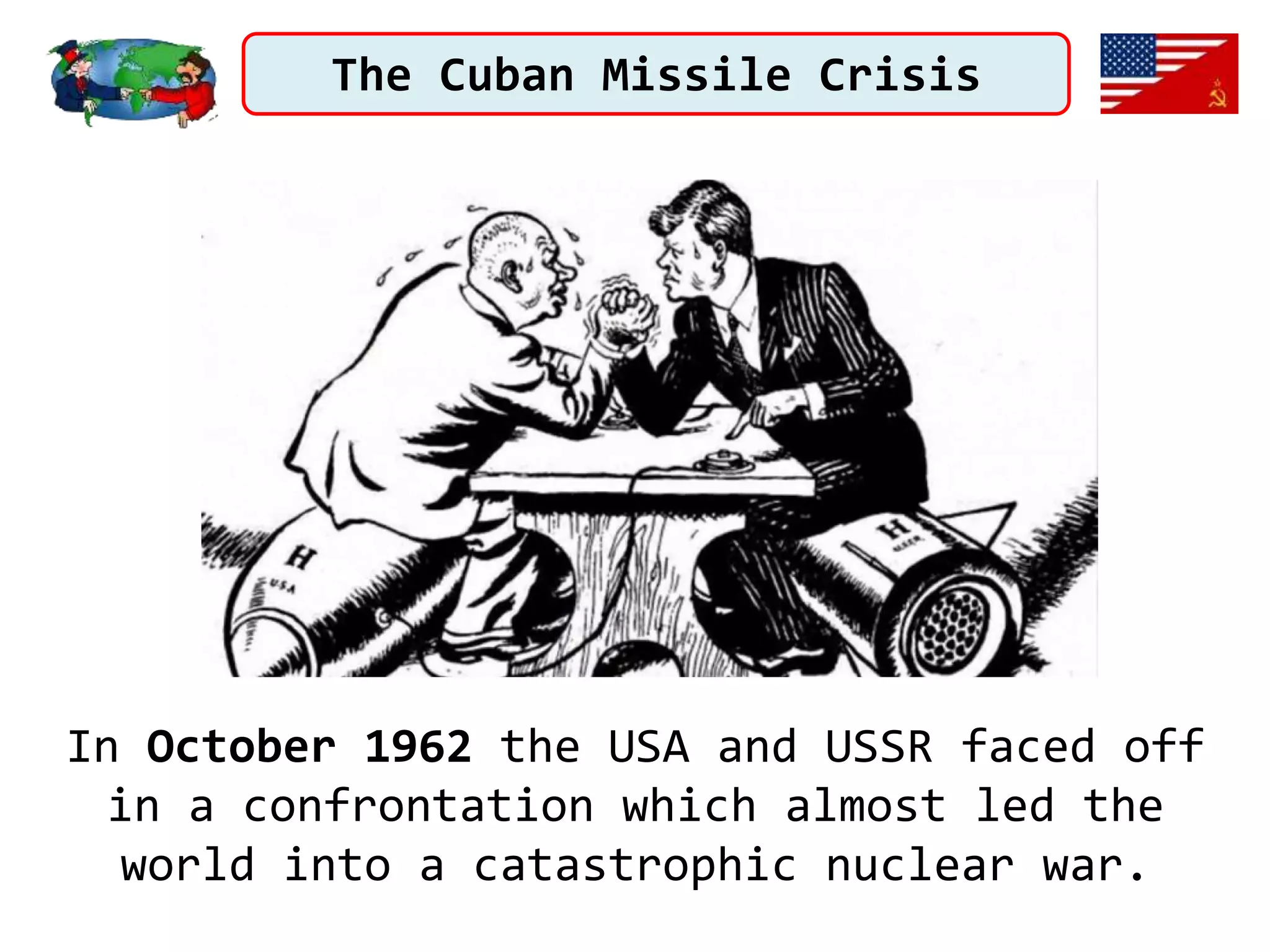
In October 1962 the USA and USSR faced off
in a confrontation which almost led the
world into a catastrophic nuclear war.
The Cuban Missile Crisis
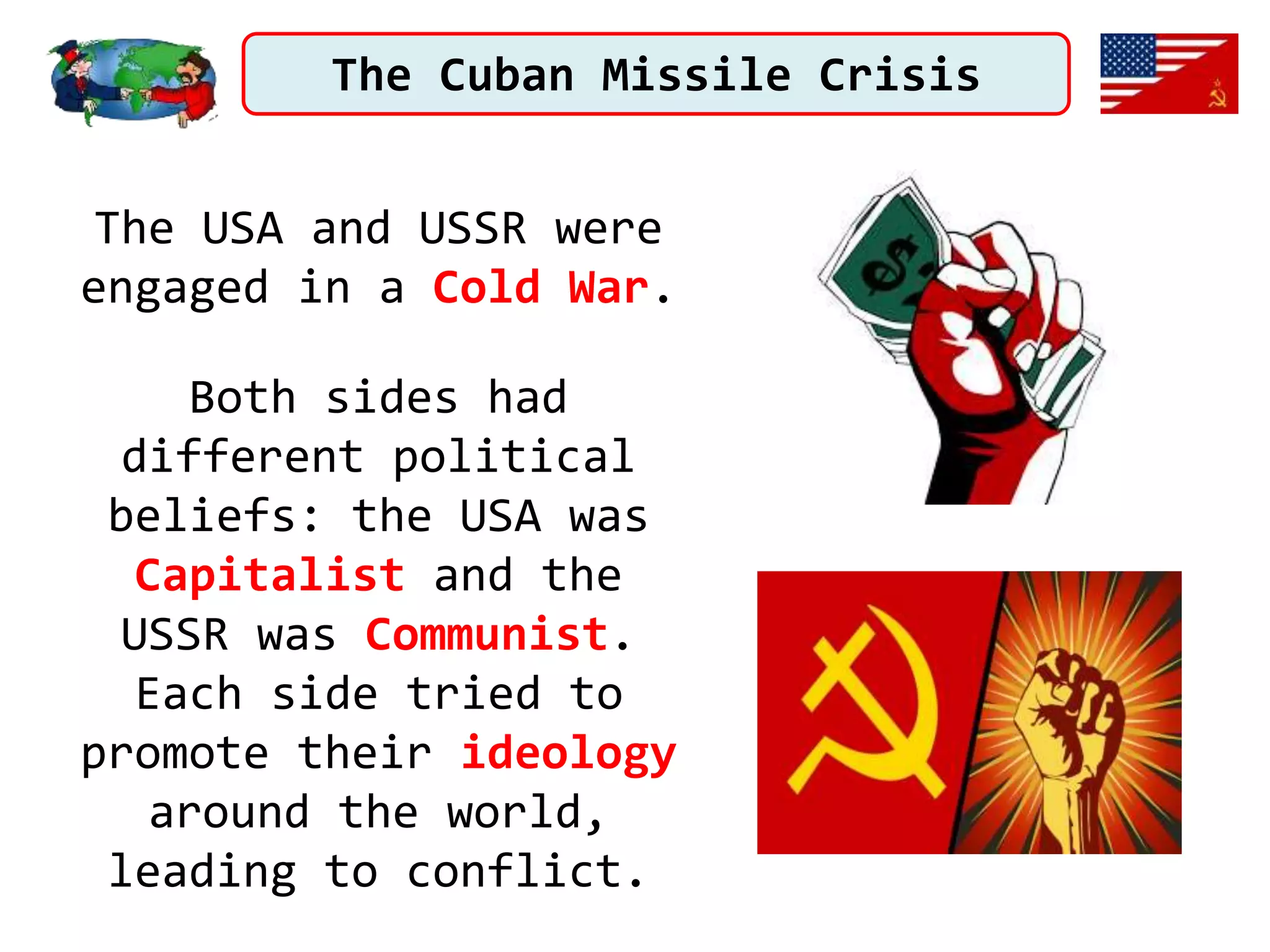
The USA and USSR were
engaged in a Cold War.
Both sides had
different political
beliefs: the USA was
Capitalist and the
USSR was Communist.
Each side tried to
promote their ideology
around the world,
leading to conflict.
The Cuban Missile Crisis
The USA and USSR had
major arguments about
actions and controls
around the world.
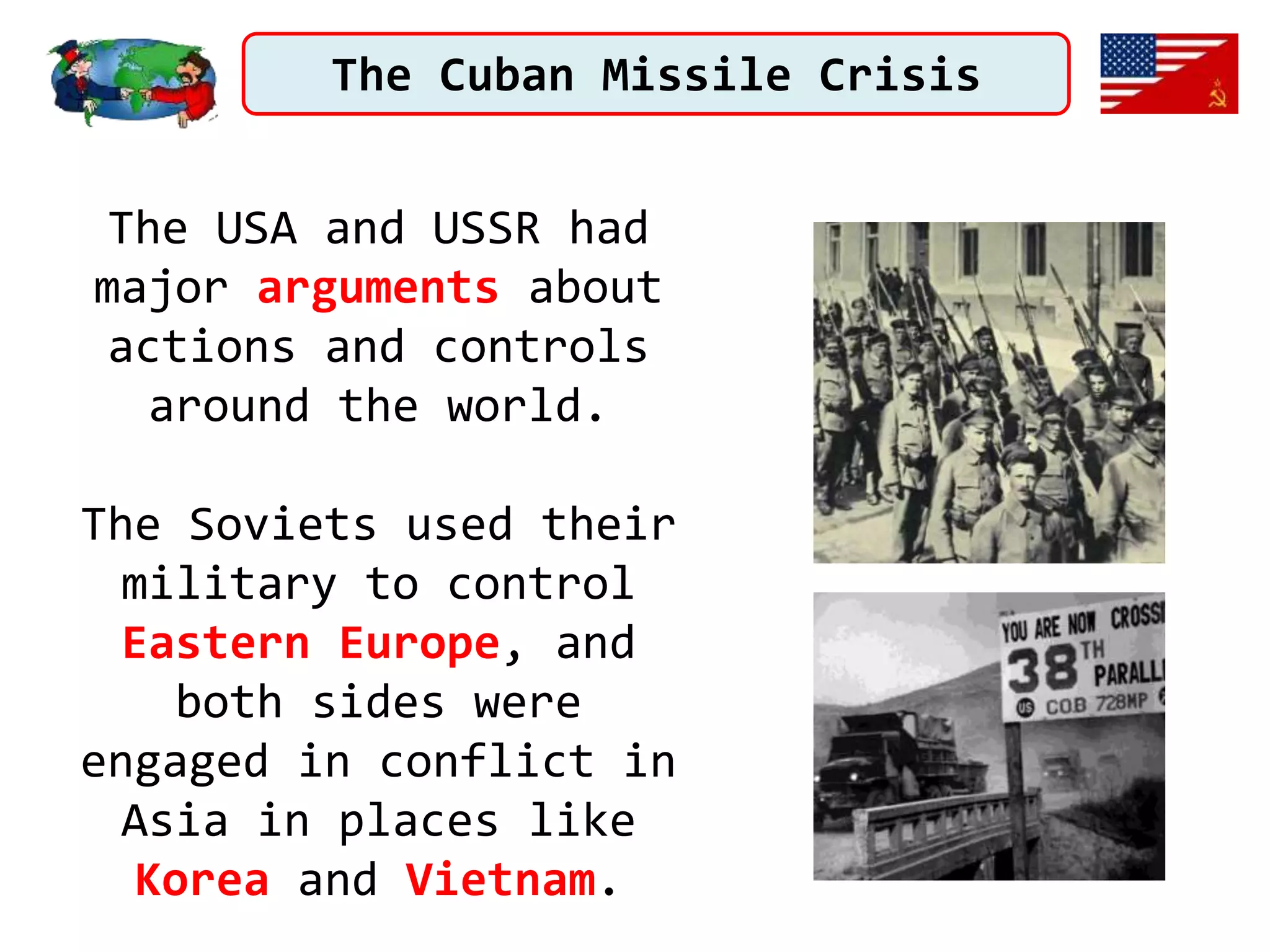
The Soviets used their
military to control
Eastern Europe, and
both sides were
engaged in conflict in
Asia in places like
Korea and Vietnam.
The Cuban Missile Crisis
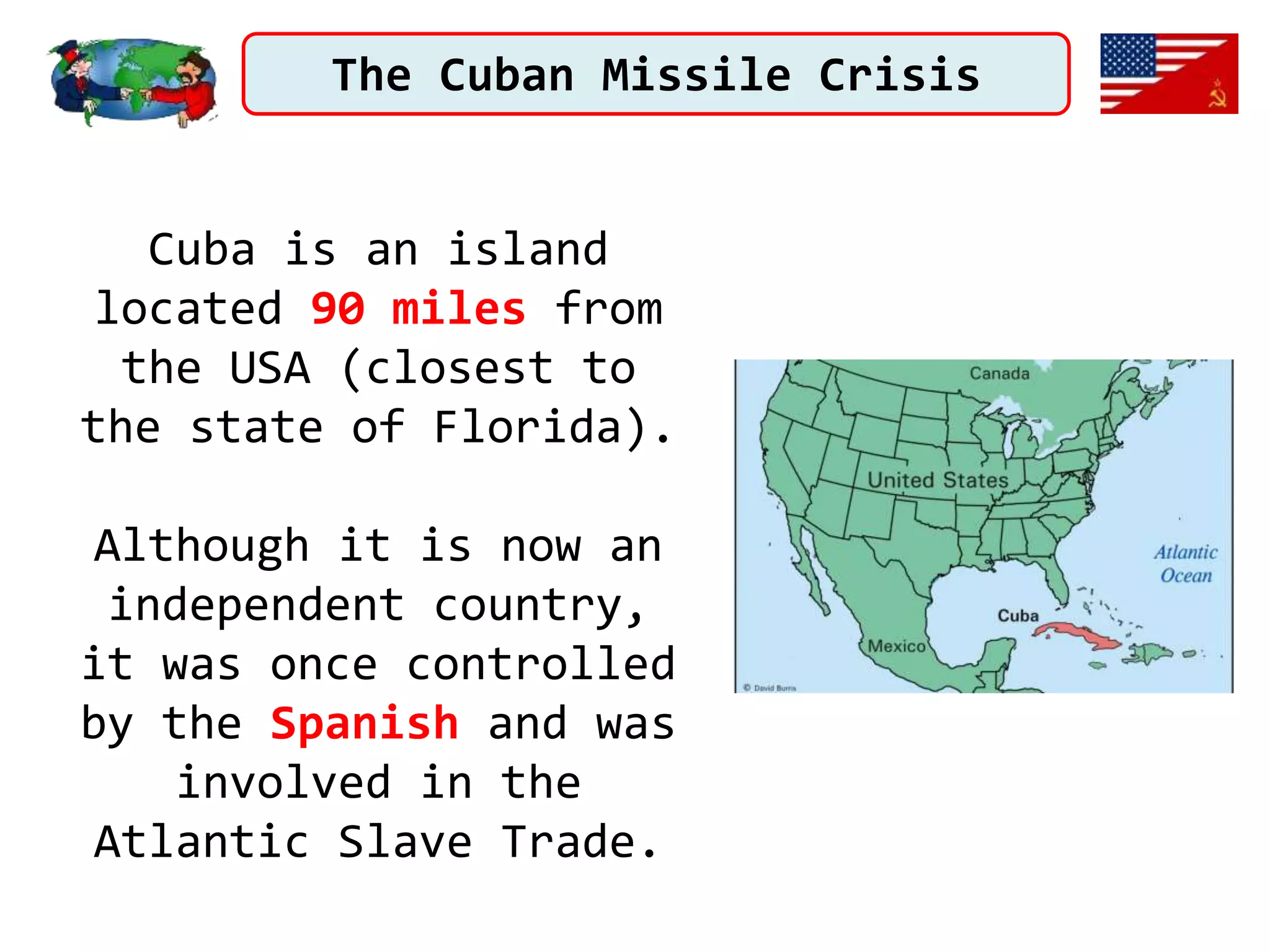
Cuba is an island
located 90 miles from
the USA (closest to
the state of Florida).
Although it is now an
independent country,
it was once controlled
by the Spanish and was
involved in the
Atlantic Slave Trade.
The Cuban Missile Crisis
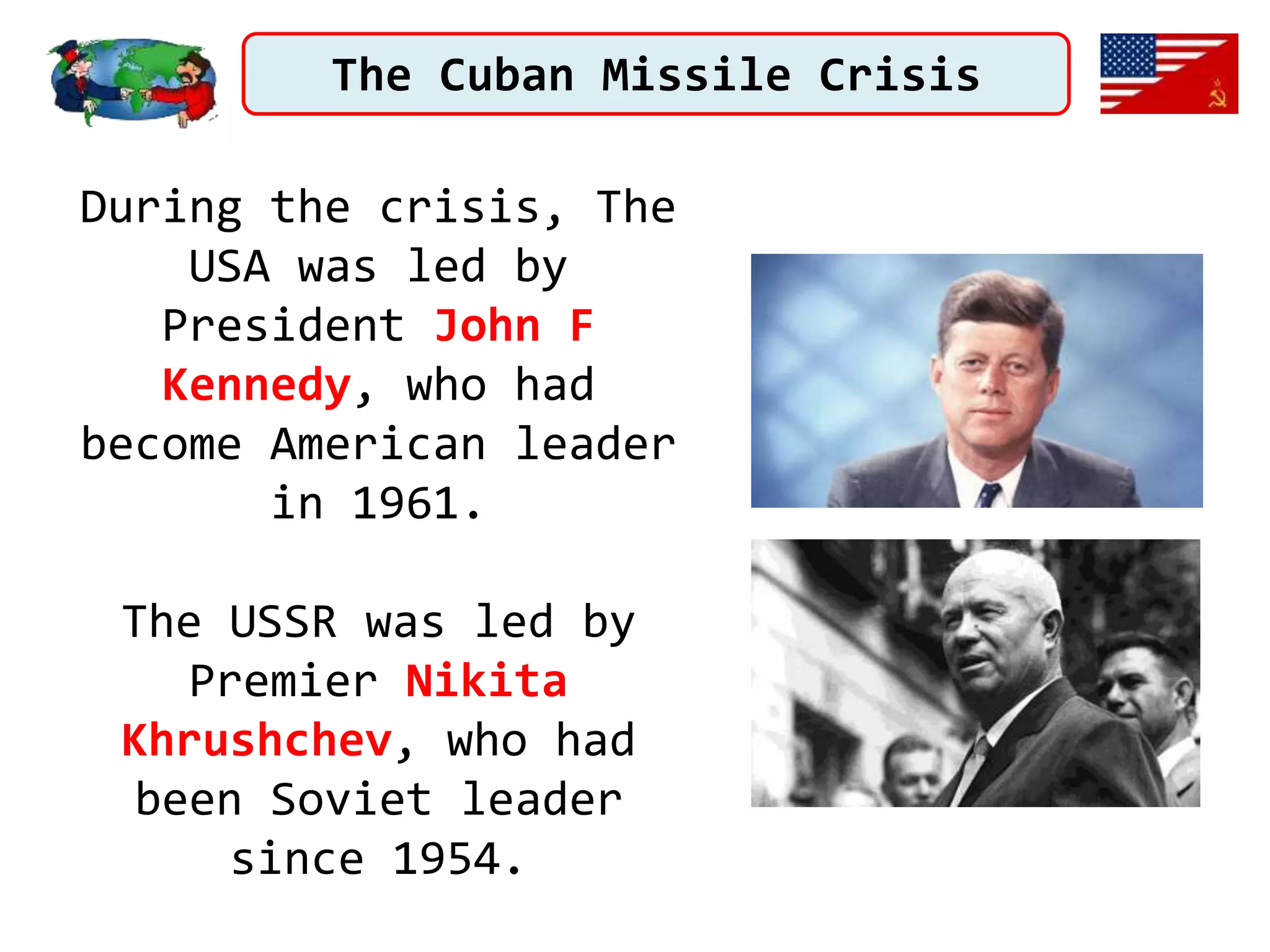
During the crisis, The
USA was led by
President John F
Kennedy, who had
become American leader
in 1961.
The USSR was led by
Premier Nikita
Khrushchev, who had
been Soviet leader
since 1954.
The Cuban Missile Crisis
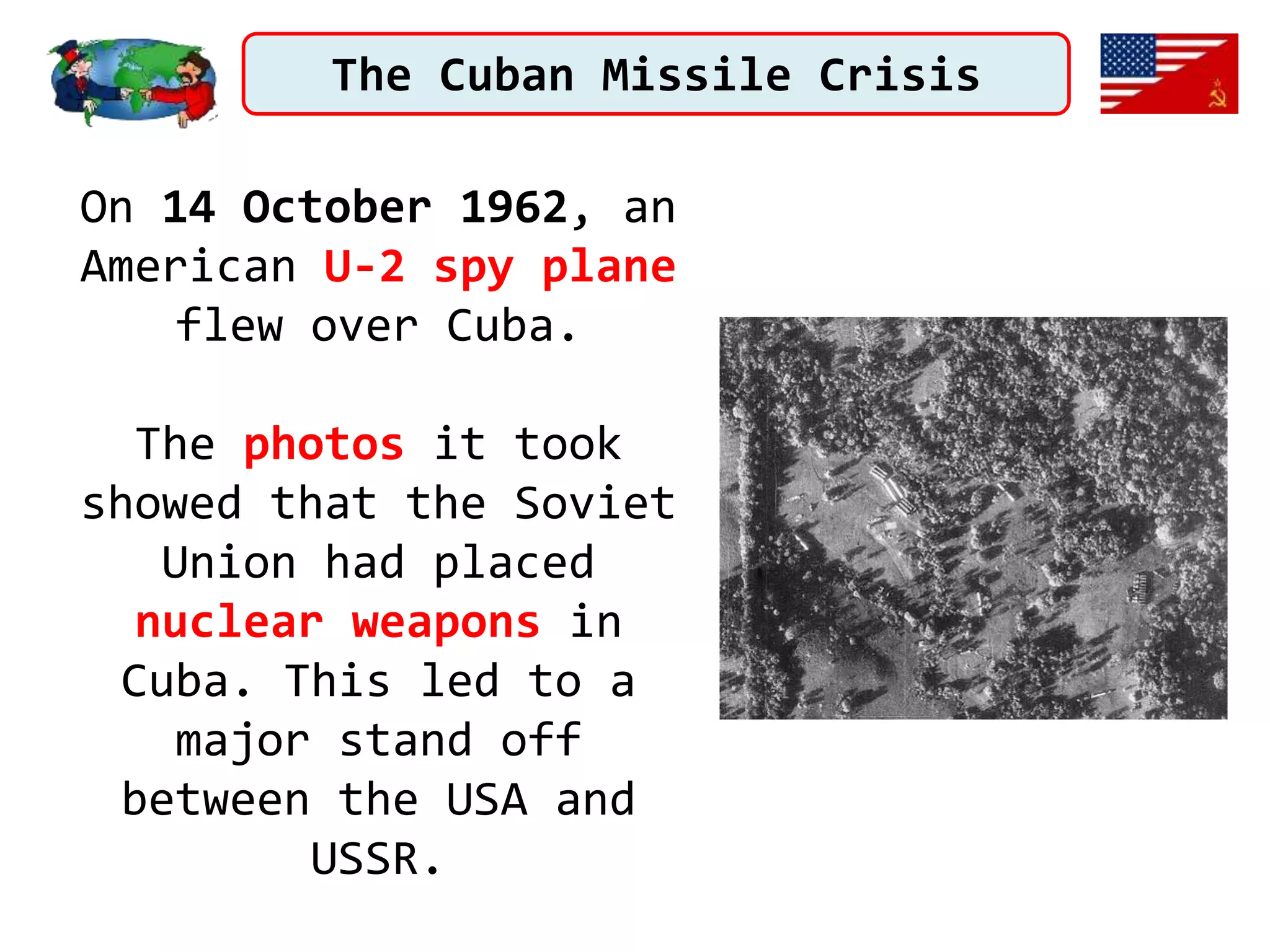
On 14 October 1962, an
American U-2 spy plane
flew over Cuba.
The photos it took
showed that the Soviet
Union had placed
nuclear weapons in
Cuba. This led to a
major stand off
between the USA and
USSR.
The Cuban Missile Crisis
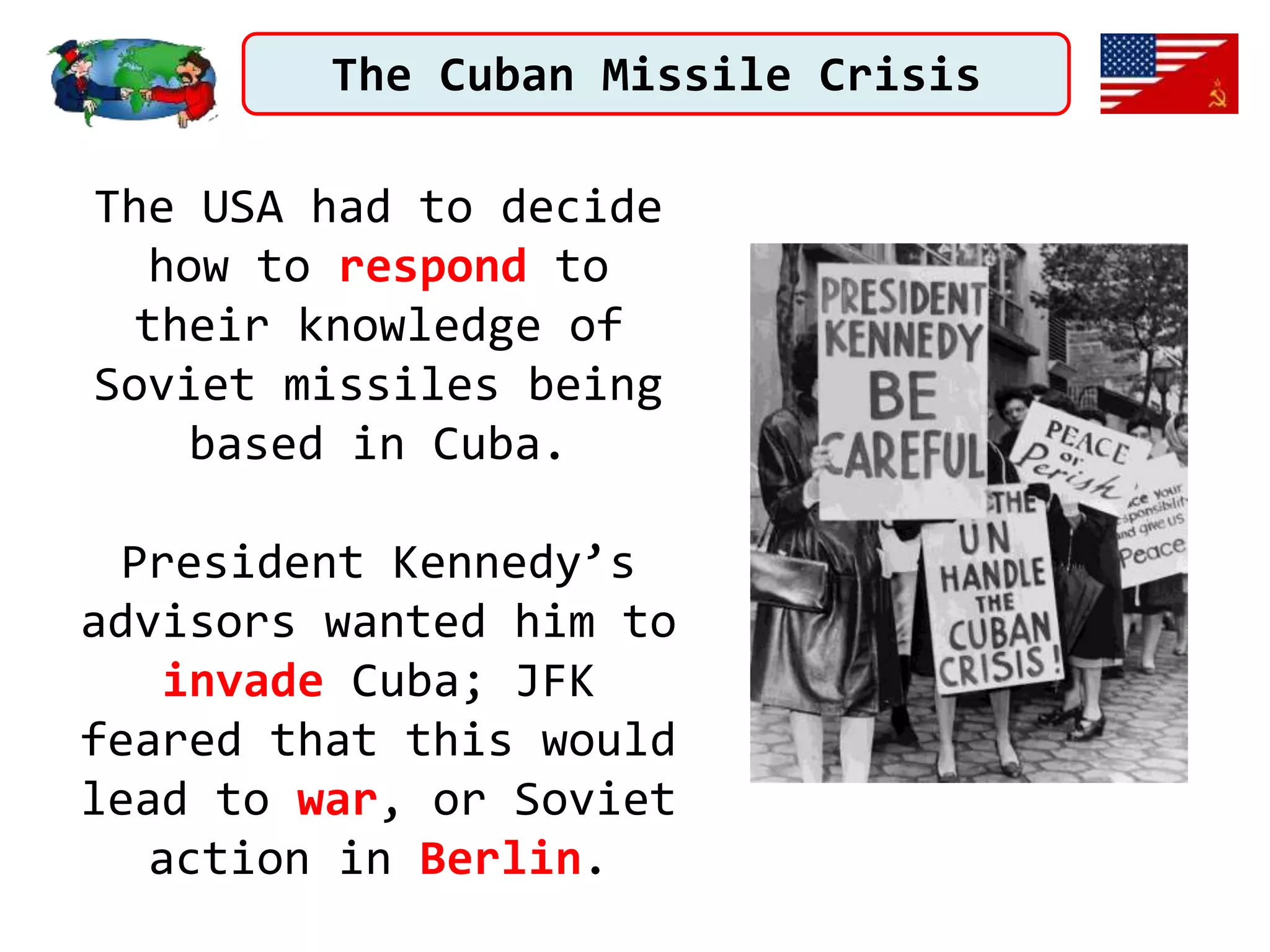
The USA had to decide
how to respond to
their knowledge of
Soviet missiles being
based in Cuba.
President Kennedy’s
advisors wanted him to
invade Cuba; JFK
feared that this would
lead to war, or Soviet
action in Berlin.
The Cuban Missile Crisis
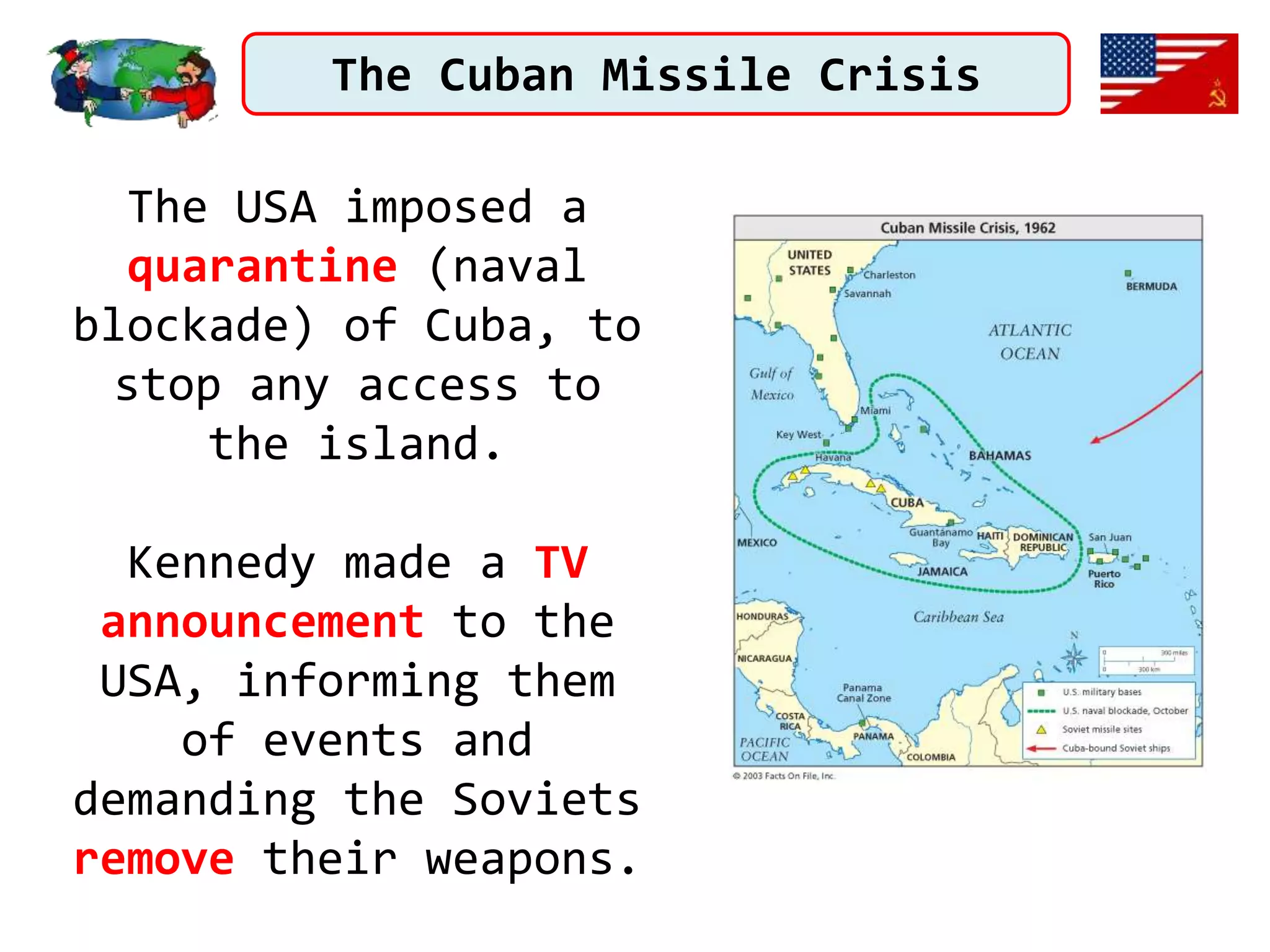
The USA imposed a
quarantine (naval
blockade) of Cuba, to
stop any access to
the island.
Kennedy made a TV
announcement to the
USA, informing them
of events and
demanding the Soviets
remove their weapons.
The Cuban Missile Crisis
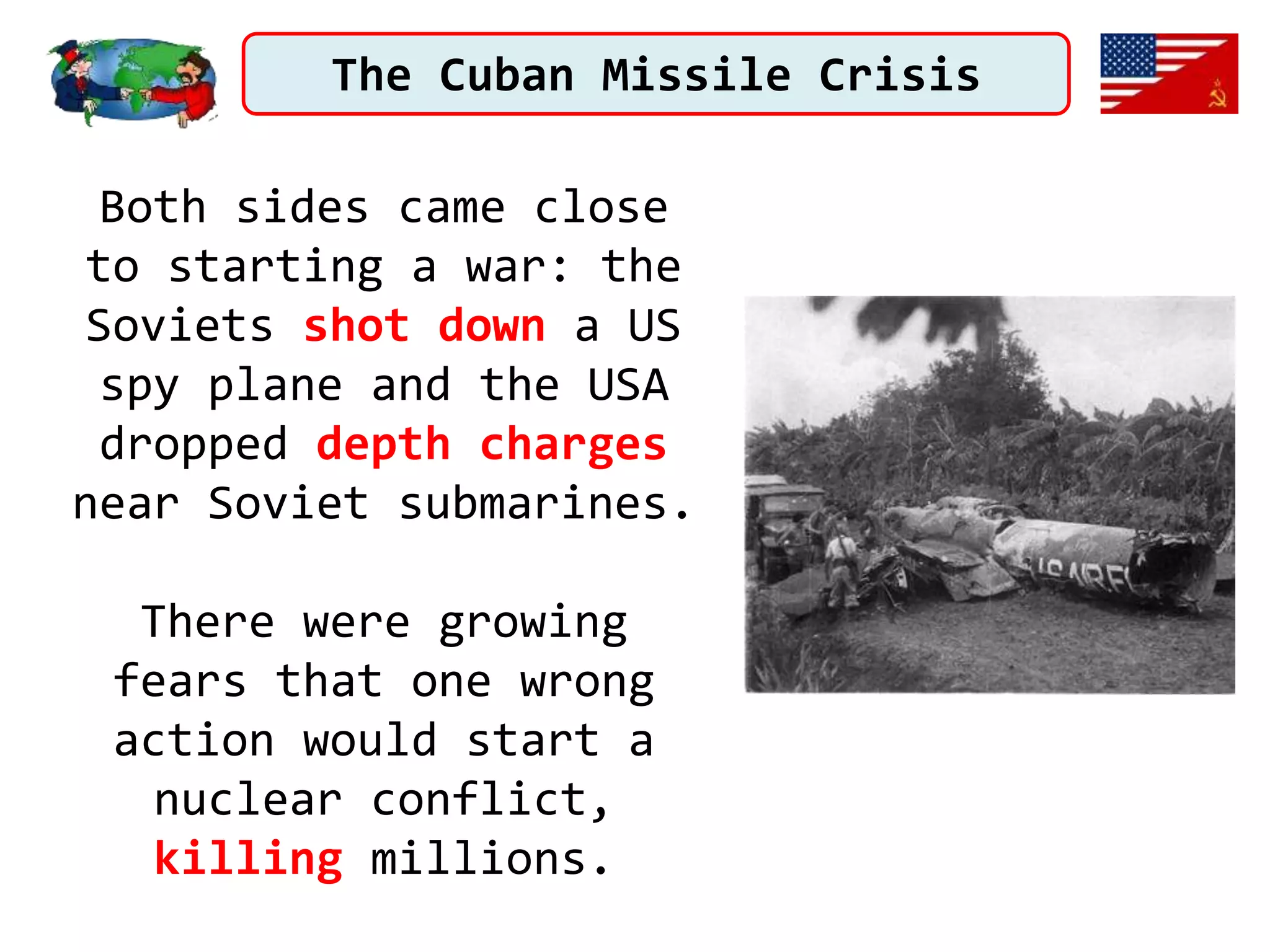
Both sides came close
to starting a war: the
Soviets shot down a US
spy plane and the USA
dropped depth charges
near Soviet submarines.
There were growing
fears that one wrong
action would start a
nuclear conflict,
killing millions.
The Cuban Missile Crisis
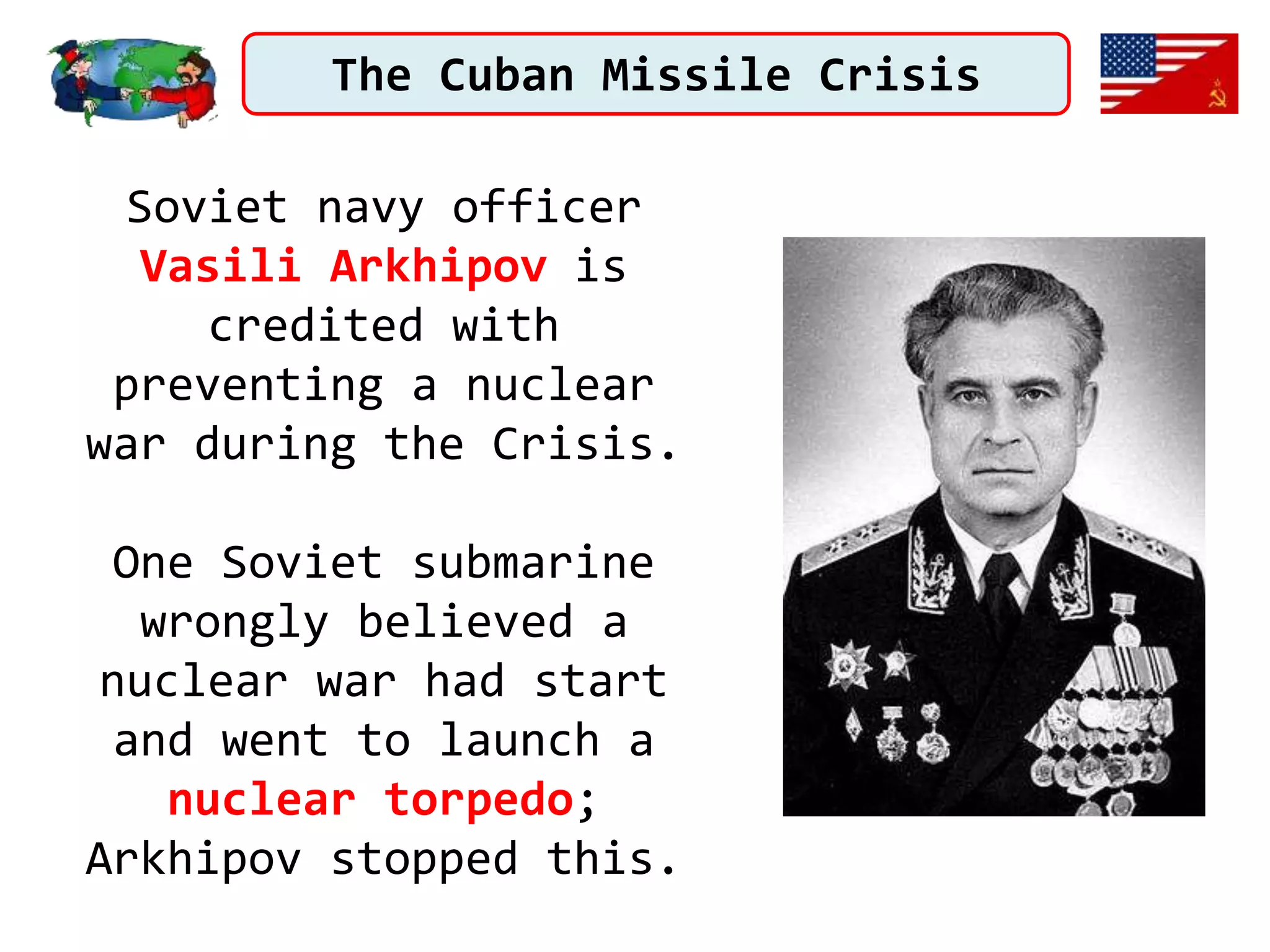
Soviet navy officer
Vasili Arkhipov is
credited with
preventing a nuclear
war during the Crisis.
One Soviet submarine
wrongly believed a
nuclear war had start
and went to launch a
nuclear torpedo;
Arkhipov stopped this.
The Cuban Missile Crisis
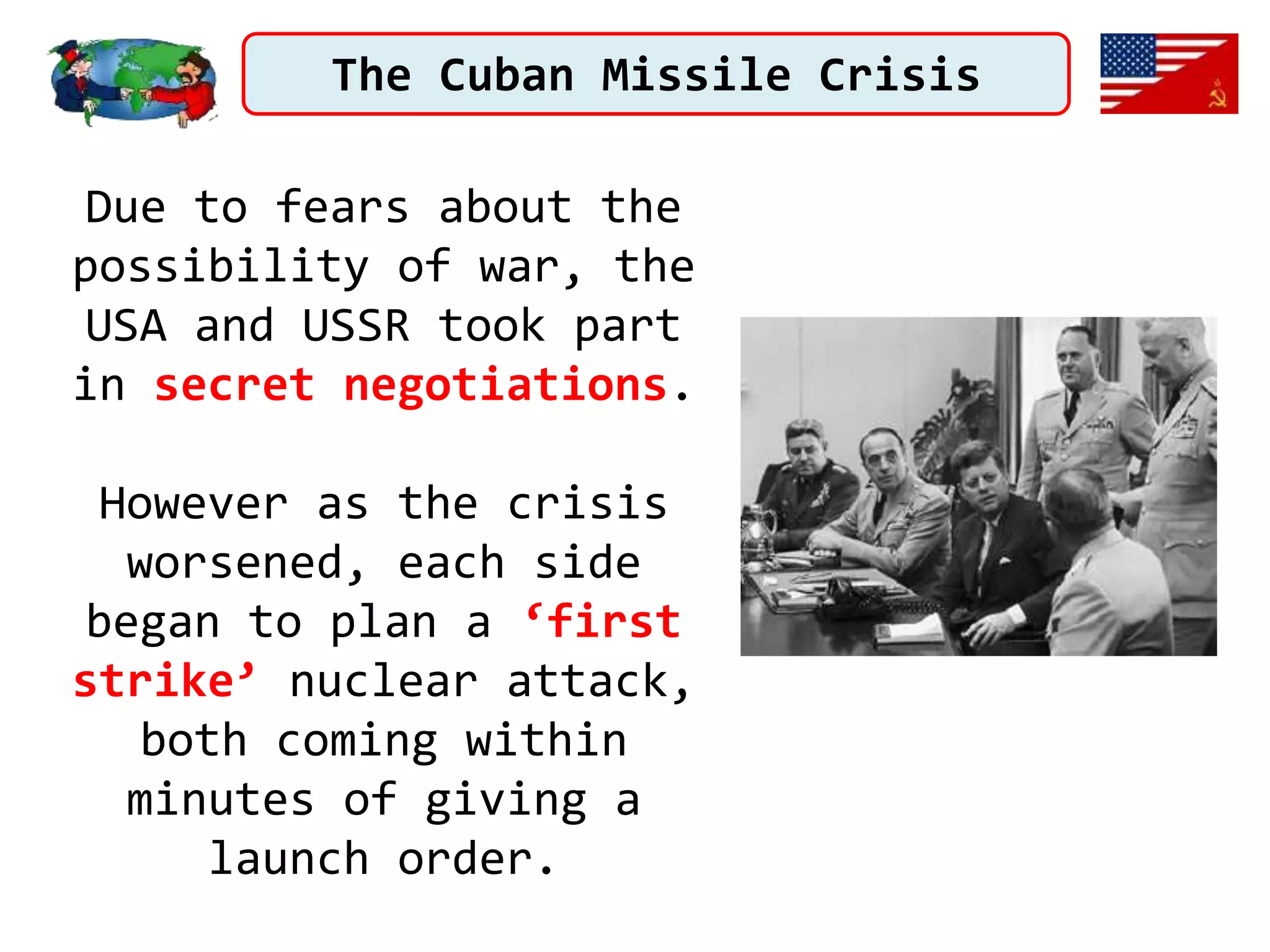
Due to fears about the
possibility of war, the
USA and USSR took part
in secret negotiations.
However as the crisis
worsened, each side
began to plan a ‘first
strike’ nuclear attack,
both coming within
minutes of giving a
launch order.
The Cuban Missile Crisis
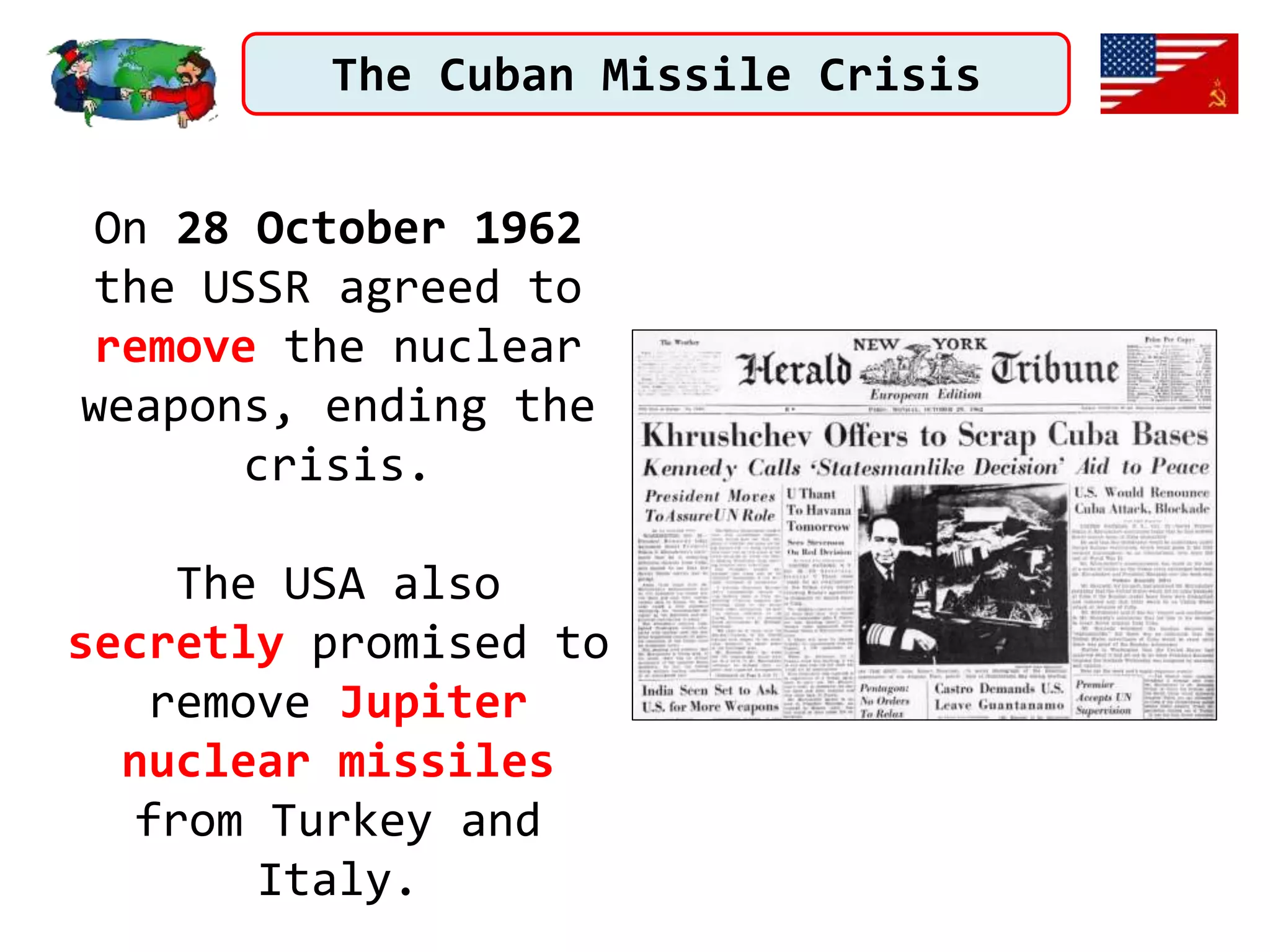
On 28 October 1962
the USSR agreed to
remove the nuclear
weapons, ending the
crisis.
The USA also
secretly promised to
remove Jupiter
nuclear missiles
from Turkey and
Italy.
The Cuban Missile Crisis
Aware of how close to
war they came, the two
sides made other
agreements.
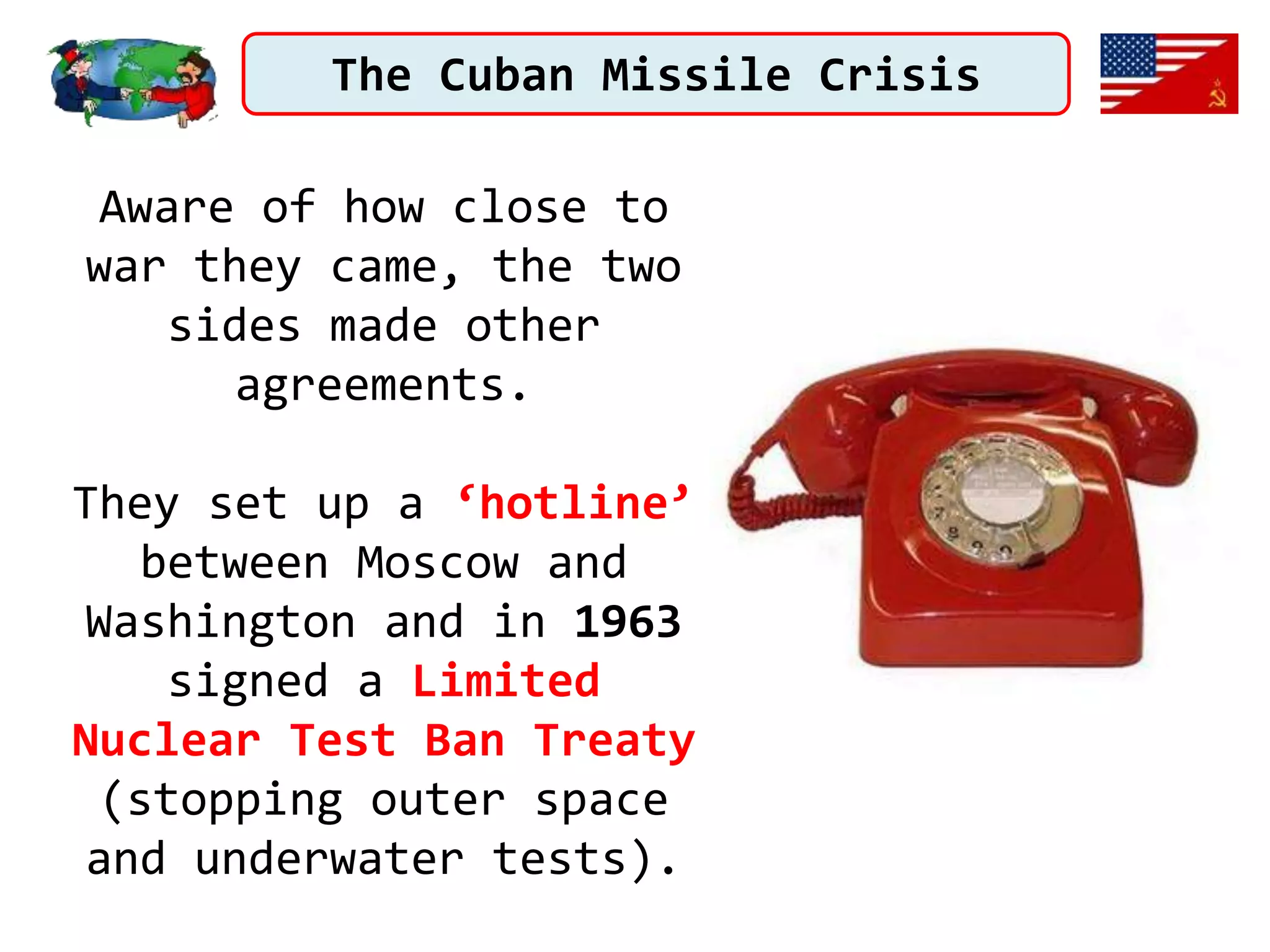
They set up a ‘hotline’
between Moscow and
Washington and in 1963
signed a Limited
Nuclear Test Ban Treaty
(stopping outer space
and underwater tests).
The Cuban Missile Crisis
There were different issues that led to
the 1962 Cuban Missile Crisis, including:
• Fidel Castro’s victory in Cuba
• US foreign policy
• Nikita Khrushchev's domestic position
• Nikita Khrushchev’s view of Kennedy
• The Arms Race
• Ideological differences

Cold War - events before and during the cuban missile crisis

  • 1.
    The Cold War 1945-1989 Eventsduring and before the Cuban Crisis
  • 2.
    The Cuban MissileCrisis In October 1962 the USA and USSR faced off in a confrontation which almost led the world into a catastrophic nuclear war.
  • 3.
    The Cuban MissileCrisis The USA and USSR were engaged in a Cold War. Both sides had different political beliefs: the USA was Capitalist and the USSR was Communist. Each side tried to promote their ideology around the world, leading to conflict.
  • 4.
    The Cuban MissileCrisis The USA and USSR had major arguments about actions and controls around the world. The Soviets used their military to control Eastern Europe, and both sides were engaged in conflict in Asia in places like Korea and Vietnam.
  • 5.
    The Cuban MissileCrisis Cuba is an island located 90 miles from the USA (closest to the state of Florida). Although it is now an independent country, it was once controlled by the Spanish and was involved in the Atlantic Slave Trade.
  • 6.
    The Cuban MissileCrisis During the crisis, The USA was led by President John F Kennedy, who had become American leader in 1961. The USSR was led by Premier Nikita Khrushchev, who had been Soviet leader since 1954.
  • 7.
    The Cuban MissileCrisis On 14 October 1962, an American U-2 spy plane flew over Cuba. The photos it took showed that the Soviet Union had placed nuclear weapons in Cuba. This led to a major stand off between the USA and USSR.
  • 8.
    The Cuban MissileCrisis The USA had to decide how to respond to their knowledge of Soviet missiles being based in Cuba. President Kennedy’s advisors wanted him to invade Cuba; JFK feared that this would lead to war, or Soviet action in Berlin.
  • 9.
    The Cuban MissileCrisis The USA imposed a quarantine (naval blockade) of Cuba, to stop any access to the island. Kennedy made a TV announcement to the USA, informing them of events and demanding the Soviets remove their weapons.
  • 10.
    The Cuban MissileCrisis Both sides came close to starting a war: the Soviets shot down a US spy plane and the USA dropped depth charges near Soviet submarines. There were growing fears that one wrong action would start a nuclear conflict, killing millions.
  • 11.
    The Cuban MissileCrisis Soviet navy officer Vasili Arkhipov is credited with preventing a nuclear war during the Crisis. One Soviet submarine wrongly believed a nuclear war had start and went to launch a nuclear torpedo; Arkhipov stopped this.
  • 12.
    The Cuban MissileCrisis Due to fears about the possibility of war, the USA and USSR took part in secret negotiations. However as the crisis worsened, each side began to plan a ‘first strike’ nuclear attack, both coming within minutes of giving a launch order.
  • 13.
    The Cuban MissileCrisis On 28 October 1962 the USSR agreed to remove the nuclear weapons, ending the crisis. The USA also secretly promised to remove Jupiter nuclear missiles from Turkey and Italy.
  • 14.
    The Cuban MissileCrisis Aware of how close to war they came, the two sides made other agreements. They set up a ‘hotline’ between Moscow and Washington and in 1963 signed a Limited Nuclear Test Ban Treaty (stopping outer space and underwater tests).
  • 15.
    The Cuban MissileCrisis There were different issues that led to the 1962 Cuban Missile Crisis, including: • Fidel Castro’s victory in Cuba • US foreign policy • Nikita Khrushchev's domestic position • Nikita Khrushchev’s view of Kennedy • The Arms Race • Ideological differences