COFFEE
COFFEE PRODUCTION
1.PLANTING
After sprouting, the seedlings
are removed from the seed bed
to be planted in
individual pots. Planting often
takes place during the wet
season, so that the soil around
the young trees remains moist
while the roots become firmly
established.
2.HARVESTING
Depending on the variety, it
will take approximately 3 or 4
years for the newly
planted coffee trees to begin
to bear fruit. The fruit, called
the coffee cherry, turns a
bright, deep red when it is ripe
and ready to be harvested. All
coffee is harvested in one of
two ways:
• Strip picked
• Selectively picked
HARVESTING
Strip picked
the entire crop is harvested at one time. This can
either be done by machine or by hand. In either
case, all of the cherries are stripped off of the
branch at one time.
Selectively picked
Only the ripe cherries are harvested and they are
picked individually by hand. Pickers rotate
among the trees every 8 - 10 days,
choosing only the cherries which are at the
peak of ripeness. Because this kind of harvest
is labor intensive, and thus more costly, it is
used primarily to harvest the finer
Arabica beans.
COFFEE CHERRY
3.PROCESSING
Coffee is processed in two
ways
• The Dry method
• The Wet method
PROCESSING
The Dry Method
The freshly picked cherries are simply spread out
on huge surfaces to dry in the sun. In order to
prevent the cherries from spoiling, they are raked
and turned throughout the day. When the
moisture content of the cherries drops to 11
percent, the dried cherries are moved
to warehouses where they are stored.
The Wet Method
the freshly harvested cherries are
passed through a pulping machine where the
skin and pulp is separated from the bean. The
pulp is washed away with water, usually to be
dried. The beans are separated by weight as
they are conveyed through water channels,
the lighter beans floating to the top, while the
heavier, ripe beans sink to the bottom.
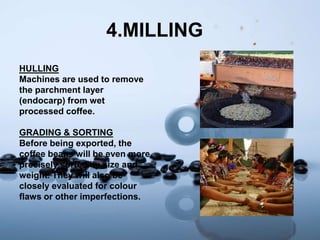
4.MILLING
HULLING
Machines are used to remove
the parchment layer
(endocarp) from wet
processed coffee.
GRADING & SORTING
Before being exported, the
coffee beans will be even more
precisely sorted by size and
weight. They will also be
closely evaluated for colour
flaws or other imperfections.
6. ROASTING
Roasting transforms green coffee
into the aromatic brown beans that
we purchase, either whole or already
ground, in our favorite stores. Most
roasting machines maintain a
temperature of about 550 degrees
Fahrenheit. The beans are
kept moving throughout the entire
process to keep them from burning
and when they reach an internal
temperature of about 400 degrees,
they begin to turn brown and the
caffeol, or oil, locked inside the
beans begins to emerge.
6. GRINDING
The objective of a proper grind
is to get the most flavor in a
cup of coffee. How coarse or
fine the coffee is ground
depends on the method by
which the coffee is to be
brewed. Generally, the finer
the grind the more quickly the
coffee should be prepared.
That is why coffee ground for
use in an espresso machine is
much finer than coffee which
will be brewed in a drip
system.
TYPES OF COFFEE
Espresso
Made by forcing very hot water
under high pressure through finely ground,
compacted coffee. This process produces an almost
syrupy beverage by extracting both solid and
dissolved components.
TYPES OF COFFEE
Cafe Americano
Coffee prepared by adding hot water to espresso,
giving a similar strength to but different flavour from
regular drip coffee. The strength of an Americano varies
with the number of shots of espresso added
TYPES OF COFFEE
Café latte
Italian name for coffee ("cafe") with milk ("latte"). It is a
coffee beverage consisting of strong or bold coffee
(sometimes espresso) mixed with scalded milk in
approximately a 1:1 ratio
TYPES OF COFFEE
Cafe mocha
A café mocha is a variant of a cafe latte. Like a latte,
but a portion of chocolate is added, typically in the
form of a chocolate syrup, although other vending
systems use instant chocolate powder. Mochas can
contain dark or milk chocolate.
TYPES OF COFFEE
Frappe
A big favourite in parts of Europe and Latin America,
especially during the summer months. Originally a
cold espresso, it has more recently been prepared
putting 1-2 teaspoons of instant coffee with sugar, water
and ice
TYPES OF COFFEE
Cappuccino
Cappuccino is a coffee-based drink prepared with
espresso, hot milk, and steamed milk foam.
TYPES OF COFFEE
Irish coffee
Cocktail consisting of hot coffee, Irish whiskey, and brown
sugar, stirred, and topped with thick cream. The coffee is drunk
through the cream. The original recipe explicitly uses cream that
has not been whipped, although whipped cream is often used.
TYPES OF COFFEE
Turkish coffee
Turkish coffee is a method of preparing coffee where finely
powdered roast coffee beans are boiled in a pot (cezve), with
added sugar (depending on taste), before being served into a cup
where the grounds settle. This method of serving coffee is
common throughout the Middle East & North Africa.
TYPES OF COFFEE
Macchiato
Macchiato, means 'stained', is an Espresso with a
dash of foamed milk. At first sight it resembles a
small Cappuccino.
TYPES OF COFFEE
Madras filter coffee
Filter Coffee is a sweet milky coffee
made from dark roasted coffee beans and chicory
It is served with coffee to milk ratio of usually 3:1.
TYPES OF COFFEE
Cafe Latte Freddo
It is a type of cold coffee. Cafe Latte Freddo is
an espresso mixed with cold milk in similar
proportions as a Cafe Latte that is usually shaken
well with ice in a cocktail shaker
TYPES OF COFFEE MACHINE
TYPES OF COFFEE CUPS
Thank you

Coffee ppt .

  • 1.
  • 2.
  • 3.
    1.PLANTING After sprouting, theseedlings are removed from the seed bed to be planted in individual pots. Planting often takes place during the wet season, so that the soil around the young trees remains moist while the roots become firmly established.
  • 4.
    2.HARVESTING Depending on thevariety, it will take approximately 3 or 4 years for the newly planted coffee trees to begin to bear fruit. The fruit, called the coffee cherry, turns a bright, deep red when it is ripe and ready to be harvested. All coffee is harvested in one of two ways: • Strip picked • Selectively picked
  • 5.
    HARVESTING Strip picked the entirecrop is harvested at one time. This can either be done by machine or by hand. In either case, all of the cherries are stripped off of the branch at one time. Selectively picked Only the ripe cherries are harvested and they are picked individually by hand. Pickers rotate among the trees every 8 - 10 days, choosing only the cherries which are at the peak of ripeness. Because this kind of harvest is labor intensive, and thus more costly, it is used primarily to harvest the finer Arabica beans.
  • 6.
  • 7.
    3.PROCESSING Coffee is processedin two ways • The Dry method • The Wet method
  • 8.
    PROCESSING The Dry Method Thefreshly picked cherries are simply spread out on huge surfaces to dry in the sun. In order to prevent the cherries from spoiling, they are raked and turned throughout the day. When the moisture content of the cherries drops to 11 percent, the dried cherries are moved to warehouses where they are stored. The Wet Method the freshly harvested cherries are passed through a pulping machine where the skin and pulp is separated from the bean. The pulp is washed away with water, usually to be dried. The beans are separated by weight as they are conveyed through water channels, the lighter beans floating to the top, while the heavier, ripe beans sink to the bottom.
  • 9.
    4.MILLING HULLING Machines are usedto remove the parchment layer (endocarp) from wet processed coffee. GRADING & SORTING Before being exported, the coffee beans will be even more precisely sorted by size and weight. They will also be closely evaluated for colour flaws or other imperfections.
  • 10.
    6. ROASTING Roasting transformsgreen coffee into the aromatic brown beans that we purchase, either whole or already ground, in our favorite stores. Most roasting machines maintain a temperature of about 550 degrees Fahrenheit. The beans are kept moving throughout the entire process to keep them from burning and when they reach an internal temperature of about 400 degrees, they begin to turn brown and the caffeol, or oil, locked inside the beans begins to emerge.
  • 11.
    6. GRINDING The objectiveof a proper grind is to get the most flavor in a cup of coffee. How coarse or fine the coffee is ground depends on the method by which the coffee is to be brewed. Generally, the finer the grind the more quickly the coffee should be prepared. That is why coffee ground for use in an espresso machine is much finer than coffee which will be brewed in a drip system.
  • 12.
    TYPES OF COFFEE Espresso Madeby forcing very hot water under high pressure through finely ground, compacted coffee. This process produces an almost syrupy beverage by extracting both solid and dissolved components.
  • 13.
    TYPES OF COFFEE CafeAmericano Coffee prepared by adding hot water to espresso, giving a similar strength to but different flavour from regular drip coffee. The strength of an Americano varies with the number of shots of espresso added
  • 14.
    TYPES OF COFFEE Cafélatte Italian name for coffee ("cafe") with milk ("latte"). It is a coffee beverage consisting of strong or bold coffee (sometimes espresso) mixed with scalded milk in approximately a 1:1 ratio
  • 15.
    TYPES OF COFFEE Cafemocha A café mocha is a variant of a cafe latte. Like a latte, but a portion of chocolate is added, typically in the form of a chocolate syrup, although other vending systems use instant chocolate powder. Mochas can contain dark or milk chocolate.
  • 16.
    TYPES OF COFFEE Frappe Abig favourite in parts of Europe and Latin America, especially during the summer months. Originally a cold espresso, it has more recently been prepared putting 1-2 teaspoons of instant coffee with sugar, water and ice
  • 17.
    TYPES OF COFFEE Cappuccino Cappuccinois a coffee-based drink prepared with espresso, hot milk, and steamed milk foam.
  • 18.
    TYPES OF COFFEE Irishcoffee Cocktail consisting of hot coffee, Irish whiskey, and brown sugar, stirred, and topped with thick cream. The coffee is drunk through the cream. The original recipe explicitly uses cream that has not been whipped, although whipped cream is often used.
  • 19.
    TYPES OF COFFEE Turkishcoffee Turkish coffee is a method of preparing coffee where finely powdered roast coffee beans are boiled in a pot (cezve), with added sugar (depending on taste), before being served into a cup where the grounds settle. This method of serving coffee is common throughout the Middle East & North Africa.
  • 20.
    TYPES OF COFFEE Macchiato Macchiato,means 'stained', is an Espresso with a dash of foamed milk. At first sight it resembles a small Cappuccino.
  • 21.
    TYPES OF COFFEE Madrasfilter coffee Filter Coffee is a sweet milky coffee made from dark roasted coffee beans and chicory It is served with coffee to milk ratio of usually 3:1.
  • 22.
    TYPES OF COFFEE CafeLatte Freddo It is a type of cold coffee. Cafe Latte Freddo is an espresso mixed with cold milk in similar proportions as a Cafe Latte that is usually shaken well with ice in a cocktail shaker
  • 23.
  • 24.
  • 25.