1
By: Ms.Eunice G. Parco
Certified Barista
WORLD OF
COFFEE
2
“Coffeeis thecommonman’sgold,andlike
gold,
It bringsto everymanthefeelingof luxury
andnobility.
Abd-al-Kadir(1527)
COFFEE
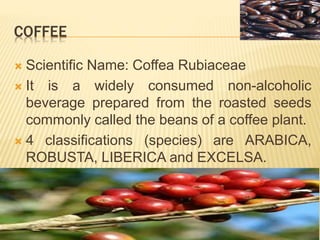
 Scientific Name: Coffea Rubiaceae
 It is a widely consumed non-alcoholic
beverage prepared from the roasted seeds
commonly called the beans of a coffee plant.
 4 classifications (species) are ARABICA,
ROBUSTA, LIBERICA and EXCELSA.
3
HISTORY
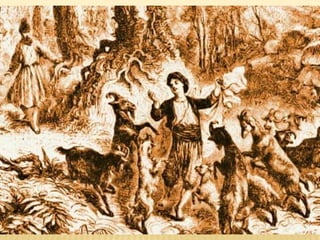
•800 AD: Ethiopia, Kaldi the goatherd
•1000 AD: Arab traders brought coffee back to their homeland and
cultivated the plant for the first time on plantations. They also began
to boil the “beans” creating a drink they called “qahwa”.
•1457: Kiva Han, the world’s first coffee shop opened in
Constantinople . The Ottoman Turks introduced coffee to
Constantinople.
•1600: Coffee was introduced to the west by Italian traders. In Italy,
Pope Clement VIII baptized the “devil’s brew” making it an
acceptable Christian beverage.
•1607 : Capt. John Smith brought coffee to North America.
•1901: The first soluble instant coffee was invented by Japanese-
American chemist Satori Kato of Chicago.
4
HISTORY CONTINUED:
•1938: Nestle’ developed Nescafe’ and introduced it to Switzerland.
•1940: The US imported 70% of the world’s coffee.
•1946: Achilles Gaggia perfected his espresso machine in Italy.
The term cappuccino started.
•1971 : Starbucks opened its first store in Seattle’s Pike Place
public market , creating a frenzy over fresh-roasted whole bean
coffee.
5
6
7
8
9
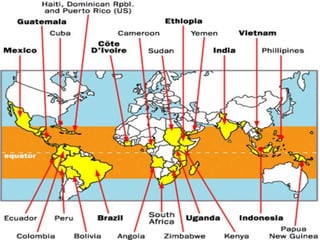
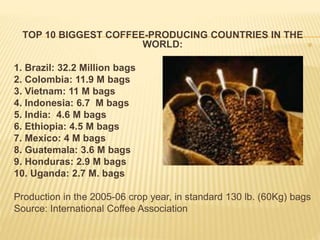
TOP 10 BIGGEST COFFEE-PRODUCING COUNTRIES IN THE
WORLD:
1. Brazil: 32.2 Million bags
2. Colombia: 11.9 M bags
3. Vietnam: 11 M bags
4. Indonesia: 6.7 M bags
5. India: 4.6 M bags
6. Ethiopia: 4.5 M bags
7. Mexico: 4 M bags
8. Guatemala: 3.6 M bags
9. Honduras: 2.9 M bags
10. Uganda: 2.7 M. bags
Production in the 2005-06 crop year, in standard 130 lb. (60Kg) bags
Source: International Coffee Association
10
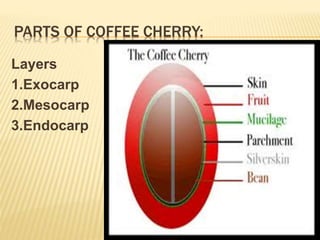
PARTS OF COFFEE CHERRY:
11
Layers
1.Exocarp
2.Mesocarp
3.Endocarp
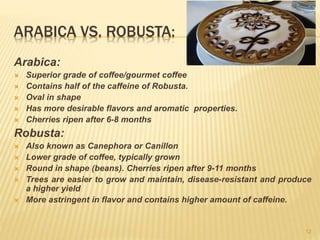
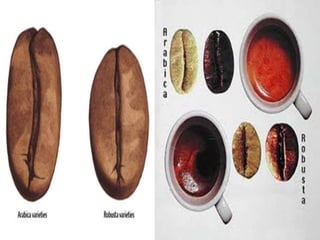
ARABICA VS. ROBUSTA:
Arabica:
 Superior grade of coffee/gourmet coffee
 Contains half of the caffeine of Robusta.
 Oval in shape
 Has more desirable flavors and aromatic properties.
 Cherries ripen after 6-8 months
Robusta:
 Also known as Canephora or Canillon
 Lower grade of coffee, typically grown
 Round in shape (beans). Cherries ripen after 9-11 months
 Trees are easier to grow and maintain, disease-resistant and produce
a higher yield
 More astringent in flavor and contains higher amount of caffeine.
12
13
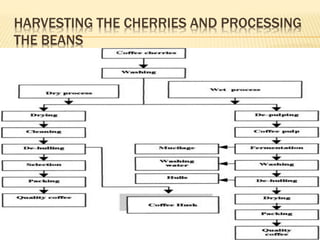
HARVESTING THE CHERRIES AND PROCESSING
THE BEANS
14
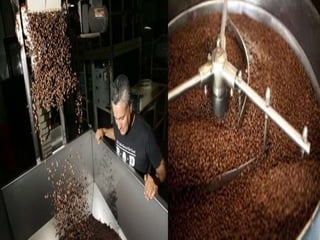
 The heat causes a series of chemical reaction to take place.
Starches are converted into sugars, which caramelize. Some types
of acids are created, and others are broken down.
 CAFFEOL-Coffee essence or coffee oil.
 Art and Science of roasting the green beans at approximately 400
degrees. The process creates flavor and aroma.
 Oxygen-The great enemy of roasted coffee beans
 464 degrees F.(240 degrees Celsius)-necessary temperature, for the
correct amount of time oils will start to come out.
 Burnt coffee results from roasting beans at too high temperature
and the beans will taste thin and burnt. Burnt coffee is unpleasant.
 Most coffee machines are gas-fired. They work at temperatures of
around 550 degrees F (90 degrees C). 2 common types: Drum type
and hot air roasters.
15
ROASTING
16
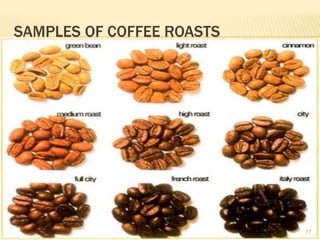
SAMPLES OF COFFEE ROASTS
17
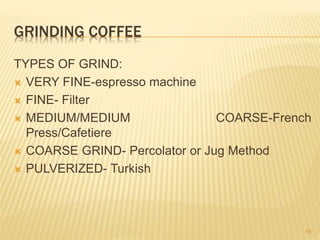
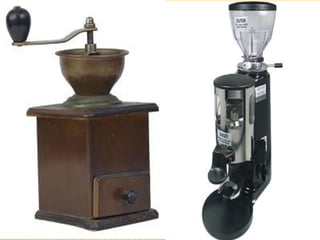
GRINDING COFFEE
TYPES OF GRIND:
 VERY FINE-espresso machine
 FINE- Filter
 MEDIUM/MEDIUM COARSE-French
Press/Cafetiere
 COARSE GRIND- Percolator or Jug Method
 PULVERIZED- Turkish
18
19
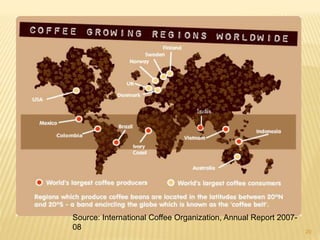
Source: International Coffee Organization, Annual Report 2007-
08 20
21
Proper Storage of Coffee:
• Well ventilated storeroom.
• Airtight container for ground coffee
to ensure that the oils do not
evaporate, causing loss of flavor and
strength.
• Away from excess moisture.
• Must not be stored in any strong
smelling food, as coffee will absorb
their odors.
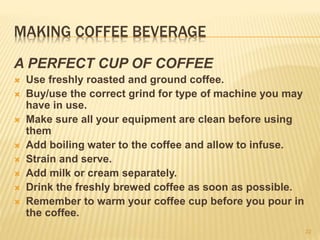
MAKING COFFEE BEVERAGE
A PERFECT CUP OF COFFEE
 Use freshly roasted and ground coffee.
 Buy/use the correct grind for type of machine you may
have in use.
 Make sure all your equipment are clean before using
them
 Add boiling water to the coffee and allow to infuse.
 Strain and serve.
 Add milk or cream separately.
 Drink the freshly brewed coffee as soon as possible.
 Remember to warm your coffee cup before you pour in
the coffee.
22
23
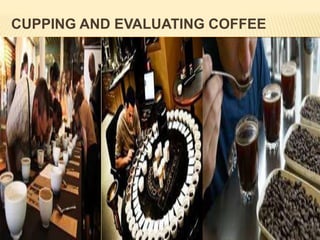
CUPPING AND EVALUATING COFFEE
COFFEE MACHINES/METHODS
24
FRENCH PRESS
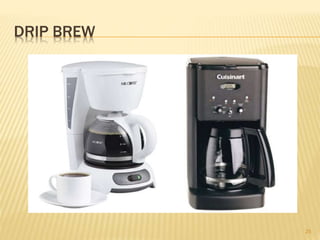
DRIP BREW
25
26
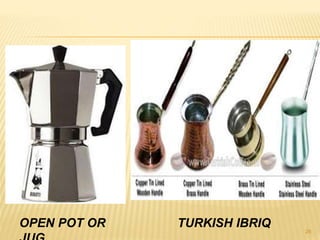
OPEN POT OR TURKISH IBRIQ
27
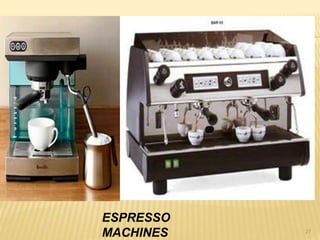
ESPRESSO
MACHINES
DECAFFEINATION
28
 Caffeine- is odorless and tasteless stimulant
found in coffee, tea, sodas and energy drinks
and other caffeinated beverages.
 Beans are decaffeinated (decaffeination plants)
first prior to roasting.
 Solvent Method
 SWD (Swiss Water Decaffeination)-patented by
Coffex SA in 1979 uses only carbon filters and
water.
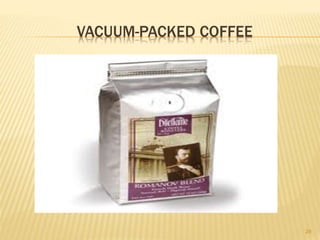
VACUUM-PACKED COFFEE
29
30
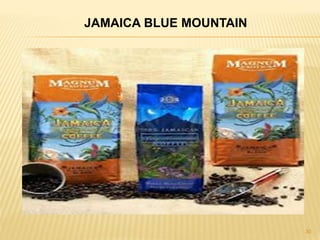
JAMAICA BLUE MOUNTAIN
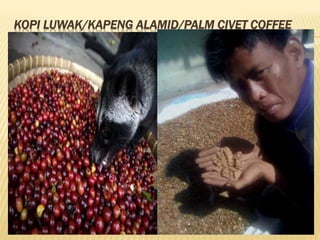
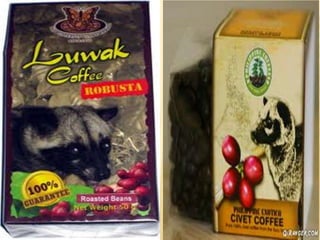
KOPI LUWAK/KAPENG ALAMID/PALM CIVET COFFEE
31
32
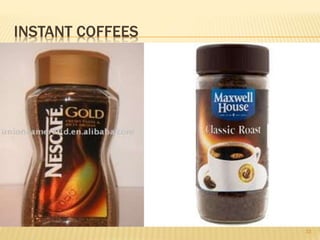
INSTANT COFFEES
33
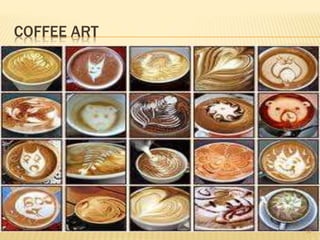
COFFEE ART
34
COFFEE BEVERAGES:
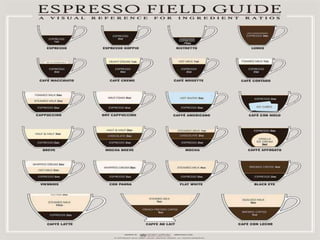
 ESPRESSO- means “express”. Italian Roast coffee
Variations:
1. Ristretto- “ristricted”. This is a short shot that is stopped at ¾ an ounce.
2. Single- Shot extracted to 1 ounce.
3. Lungo- “Long”. Extracted to 1. 5 ounce.
4. Double-2 ounce shot using twice as much coffee in the portafilter.
 Americano- espresso shot/s with hot water (about 6-8 oz)
 Macchiato-”Marked”. Espresso with a small amount of steamed milk and foam
dabbed with a poon and served in a demitasse.
 Espresso Con Panna- “with cream”. Same as Macchiato but uses whipped
cream instead of foamed milk.
 Cappuccino- shot of espresso with steamed milk in without holding back the
foam.
 Café Latte- espresso shot/s 6-8 oz steamed milk and a dollop of foam.
 Flavored Coffee Beverages- brew/espresso-based coffees, milk, flavored
syrups and or powders such as chocolate, vanilla, hazelnut, cinnamon, Irish
cream caramel etc.
35
36
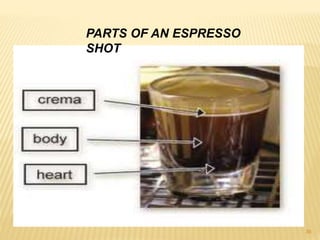
PARTS OF AN ESPRESSO
SHOT
37
DEFINITION OF TERMS:
 Acidity-refers to the sensation of dryness in the back and under the edges
of the tongue.
 Aroma- odor derived from coffee.
 Barista- Italian word for Bartender
 Body- refers to the way the coffee feels in the tongue, its viscosity or
heaviness.
 Brewing- refers to the process of adding water with coffee.
 Cinnamon Roast- the lightest roast of coffee beans, the color is light
brown.
 Coffee Blending-refers to the mixing of multiple varieties of coffee to come
up with a balance aroma and flavor of coffee.
 Cupping- method used to evaluate the coffee’s characteristics.
 Dark Roast- French Roast or Italian Roast (Espresso Roast)
 Flavor- over-all perception of the acidity, aroma and body f the coffee.
 Gahwa- a term literally means to prevent sleep.
 Peaberry- Coffee cherry containing one bean.
 Roasting- Process of caramelizing the sugars and carbohydrates of the
coffee seeds.
38
HOT COFFEE BEVERAGES:
39
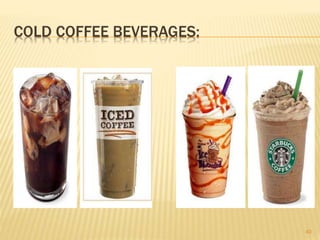
COLD COFFEE BEVERAGES:
40
THANK YOU  41
A lot can happen over a cup of
coffee.

My coffee presentation

  • 1.
    1 By: Ms.Eunice G.Parco Certified Barista WORLD OF COFFEE
  • 2.
    2 “Coffeeis thecommonman’sgold,andlike gold, It bringstoeverymanthefeelingof luxury andnobility. Abd-al-Kadir(1527)
  • 3.
    COFFEE  Scientific Name:Coffea Rubiaceae  It is a widely consumed non-alcoholic beverage prepared from the roasted seeds commonly called the beans of a coffee plant.  4 classifications (species) are ARABICA, ROBUSTA, LIBERICA and EXCELSA. 3
  • 4.
    HISTORY •800 AD: Ethiopia,Kaldi the goatherd •1000 AD: Arab traders brought coffee back to their homeland and cultivated the plant for the first time on plantations. They also began to boil the “beans” creating a drink they called “qahwa”. •1457: Kiva Han, the world’s first coffee shop opened in Constantinople . The Ottoman Turks introduced coffee to Constantinople. •1600: Coffee was introduced to the west by Italian traders. In Italy, Pope Clement VIII baptized the “devil’s brew” making it an acceptable Christian beverage. •1607 : Capt. John Smith brought coffee to North America. •1901: The first soluble instant coffee was invented by Japanese- American chemist Satori Kato of Chicago. 4
  • 5.
    HISTORY CONTINUED: •1938: Nestle’developed Nescafe’ and introduced it to Switzerland. •1940: The US imported 70% of the world’s coffee. •1946: Achilles Gaggia perfected his espresso machine in Italy. The term cappuccino started. •1971 : Starbucks opened its first store in Seattle’s Pike Place public market , creating a frenzy over fresh-roasted whole bean coffee. 5
  • 6.
  • 7.
  • 8.
  • 9.
    9 TOP 10 BIGGESTCOFFEE-PRODUCING COUNTRIES IN THE WORLD: 1. Brazil: 32.2 Million bags 2. Colombia: 11.9 M bags 3. Vietnam: 11 M bags 4. Indonesia: 6.7 M bags 5. India: 4.6 M bags 6. Ethiopia: 4.5 M bags 7. Mexico: 4 M bags 8. Guatemala: 3.6 M bags 9. Honduras: 2.9 M bags 10. Uganda: 2.7 M. bags Production in the 2005-06 crop year, in standard 130 lb. (60Kg) bags Source: International Coffee Association
  • 10.
  • 11.
    PARTS OF COFFEECHERRY: 11 Layers 1.Exocarp 2.Mesocarp 3.Endocarp
  • 12.
    ARABICA VS. ROBUSTA: Arabica: Superior grade of coffee/gourmet coffee  Contains half of the caffeine of Robusta.  Oval in shape  Has more desirable flavors and aromatic properties.  Cherries ripen after 6-8 months Robusta:  Also known as Canephora or Canillon  Lower grade of coffee, typically grown  Round in shape (beans). Cherries ripen after 9-11 months  Trees are easier to grow and maintain, disease-resistant and produce a higher yield  More astringent in flavor and contains higher amount of caffeine. 12
  • 13.
  • 14.
    HARVESTING THE CHERRIESAND PROCESSING THE BEANS 14
  • 15.
     The heatcauses a series of chemical reaction to take place. Starches are converted into sugars, which caramelize. Some types of acids are created, and others are broken down.  CAFFEOL-Coffee essence or coffee oil.  Art and Science of roasting the green beans at approximately 400 degrees. The process creates flavor and aroma.  Oxygen-The great enemy of roasted coffee beans  464 degrees F.(240 degrees Celsius)-necessary temperature, for the correct amount of time oils will start to come out.  Burnt coffee results from roasting beans at too high temperature and the beans will taste thin and burnt. Burnt coffee is unpleasant.  Most coffee machines are gas-fired. They work at temperatures of around 550 degrees F (90 degrees C). 2 common types: Drum type and hot air roasters. 15 ROASTING
  • 16.
  • 17.
  • 18.
    GRINDING COFFEE TYPES OFGRIND:  VERY FINE-espresso machine  FINE- Filter  MEDIUM/MEDIUM COARSE-French Press/Cafetiere  COARSE GRIND- Percolator or Jug Method  PULVERIZED- Turkish 18
  • 19.
  • 20.
    Source: International CoffeeOrganization, Annual Report 2007- 08 20
  • 21.
    21 Proper Storage ofCoffee: • Well ventilated storeroom. • Airtight container for ground coffee to ensure that the oils do not evaporate, causing loss of flavor and strength. • Away from excess moisture. • Must not be stored in any strong smelling food, as coffee will absorb their odors.
  • 22.
    MAKING COFFEE BEVERAGE APERFECT CUP OF COFFEE  Use freshly roasted and ground coffee.  Buy/use the correct grind for type of machine you may have in use.  Make sure all your equipment are clean before using them  Add boiling water to the coffee and allow to infuse.  Strain and serve.  Add milk or cream separately.  Drink the freshly brewed coffee as soon as possible.  Remember to warm your coffee cup before you pour in the coffee. 22
  • 23.
  • 24.
  • 25.
  • 26.
    26 OPEN POT ORTURKISH IBRIQ
  • 27.
  • 28.
    DECAFFEINATION 28  Caffeine- isodorless and tasteless stimulant found in coffee, tea, sodas and energy drinks and other caffeinated beverages.  Beans are decaffeinated (decaffeination plants) first prior to roasting.  Solvent Method  SWD (Swiss Water Decaffeination)-patented by Coffex SA in 1979 uses only carbon filters and water.
  • 29.
  • 30.
  • 31.
  • 32.
  • 33.
  • 34.
  • 35.
    COFFEE BEVERAGES:  ESPRESSO-means “express”. Italian Roast coffee Variations: 1. Ristretto- “ristricted”. This is a short shot that is stopped at ¾ an ounce. 2. Single- Shot extracted to 1 ounce. 3. Lungo- “Long”. Extracted to 1. 5 ounce. 4. Double-2 ounce shot using twice as much coffee in the portafilter.  Americano- espresso shot/s with hot water (about 6-8 oz)  Macchiato-”Marked”. Espresso with a small amount of steamed milk and foam dabbed with a poon and served in a demitasse.  Espresso Con Panna- “with cream”. Same as Macchiato but uses whipped cream instead of foamed milk.  Cappuccino- shot of espresso with steamed milk in without holding back the foam.  Café Latte- espresso shot/s 6-8 oz steamed milk and a dollop of foam.  Flavored Coffee Beverages- brew/espresso-based coffees, milk, flavored syrups and or powders such as chocolate, vanilla, hazelnut, cinnamon, Irish cream caramel etc. 35
  • 36.
    36 PARTS OF ANESPRESSO SHOT
  • 37.
  • 38.
    DEFINITION OF TERMS: Acidity-refers to the sensation of dryness in the back and under the edges of the tongue.  Aroma- odor derived from coffee.  Barista- Italian word for Bartender  Body- refers to the way the coffee feels in the tongue, its viscosity or heaviness.  Brewing- refers to the process of adding water with coffee.  Cinnamon Roast- the lightest roast of coffee beans, the color is light brown.  Coffee Blending-refers to the mixing of multiple varieties of coffee to come up with a balance aroma and flavor of coffee.  Cupping- method used to evaluate the coffee’s characteristics.  Dark Roast- French Roast or Italian Roast (Espresso Roast)  Flavor- over-all perception of the acidity, aroma and body f the coffee.  Gahwa- a term literally means to prevent sleep.  Peaberry- Coffee cherry containing one bean.  Roasting- Process of caramelizing the sugars and carbohydrates of the coffee seeds. 38
  • 39.
  • 40.
  • 41.
    THANK YOU 41 A lot can happen over a cup of coffee.