Codes and Conventions
Learning Outcomes:
1. To understand the codes and conventions of the Crime Drama
2. To understand the different sub-genres
3. To develop research skills
Text

Text

Text

Text

Text

Text

Text
Text

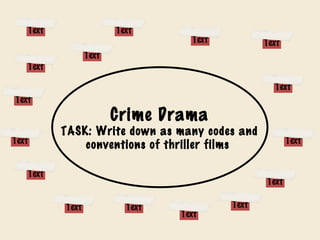
Crime Drama

TASK: Write down as many codes and
conventions of thriller films

Text
Text

Text

Text
Text

Text

Text

Text
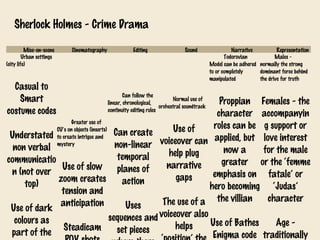
Sherlock Holmes - Crime Drama
Mise-en-scene
Urban settings
(city life)

Casual to
Smart
costume codes

Cinematography

Editing

Sound

Can follow the
Normal use of
linear, chronological,
orchestral soundtrack
continuity editing rules

Narrative
Representation
Todorovian
Males Model can be adhered normally the strong
to or completely
dominant force behind
manipulated
the drive for truth

Proppian Females - the
character accompanyin
Greater use of
roles can be g support or
CU’s on objects (inserts)
Use of
Understated to create intrigue and Can create
voiceover can applied, but love interest
mystery
non-linear
non verbal
now a
for the male
help plug
temporal
communicatio
greater or the ‘femme
narrative
Use of slow
planes of
n (not over
emphasis on fatale’ or
gaps
zoom creates
action
top)
hero becoming ‘Judas’
tension and
character
The use of a the villian
anticipation
Uses
Use of dark
sequences and voiceover also
colours as
Use of Bathes
Age helps
Steadicam
set pieces
part of the
Enigma code traditionally
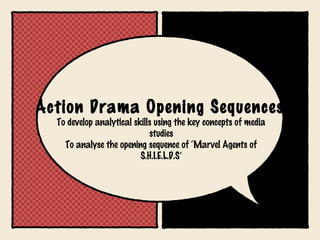
Action Drama Opening Sequences
To develop analytical skills using the key concepts of media
studies
To analyse the opening sequence of ‘Marvel Agents of
S.H.I.E.L.D.S’
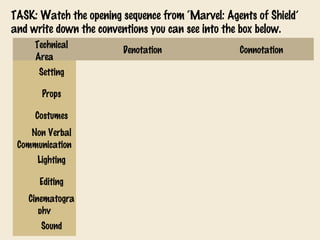
TASK: Watch the opening sequence from ‘Marvel: Agents of Shield’
and write down the conventions you can see into the box below.
Technical
Area
Setting
Props
Costumes
Non Verbal
Communication
Lighting
Editing
Cinematogra
phy
Sound

Denotation

Connotation
Task: Write down below how the
TV Drama uses media language
overall to engage and intrigue its
audience?
Task: Write down below how the
TV Drama uses media language
overall to engage and intrigue its
audience?

Codes and conventions student

  • 1.
    Codes and Conventions LearningOutcomes: 1. To understand the codes and conventions of the Crime Drama 2. To understand the different sub-genres 3. To develop research skills
  • 2.
    Text Text Text Text Text Text Text Text Crime Drama TASK: Writedown as many codes and conventions of thriller films Text Text Text Text Text Text Text Text
  • 3.
    Sherlock Holmes -Crime Drama Mise-en-scene Urban settings (city life) Casual to Smart costume codes Cinematography Editing Sound Can follow the Normal use of linear, chronological, orchestral soundtrack continuity editing rules Narrative Representation Todorovian Males Model can be adhered normally the strong to or completely dominant force behind manipulated the drive for truth Proppian Females - the character accompanyin Greater use of roles can be g support or CU’s on objects (inserts) Use of Understated to create intrigue and Can create voiceover can applied, but love interest mystery non-linear non verbal now a for the male help plug temporal communicatio greater or the ‘femme narrative Use of slow planes of n (not over emphasis on fatale’ or gaps zoom creates action top) hero becoming ‘Judas’ tension and character The use of a the villian anticipation Uses Use of dark sequences and voiceover also colours as Use of Bathes Age helps Steadicam set pieces part of the Enigma code traditionally
  • 4.
    Action Drama OpeningSequences To develop analytical skills using the key concepts of media studies To analyse the opening sequence of ‘Marvel Agents of S.H.I.E.L.D.S’
  • 5.
    TASK: Watch theopening sequence from ‘Marvel: Agents of Shield’ and write down the conventions you can see into the box below. Technical Area Setting Props Costumes Non Verbal Communication Lighting Editing Cinematogra phy Sound Denotation Connotation
  • 6.
    Task: Write downbelow how the TV Drama uses media language overall to engage and intrigue its audience?
  • 7.
    Task: Write downbelow how the TV Drama uses media language overall to engage and intrigue its audience?