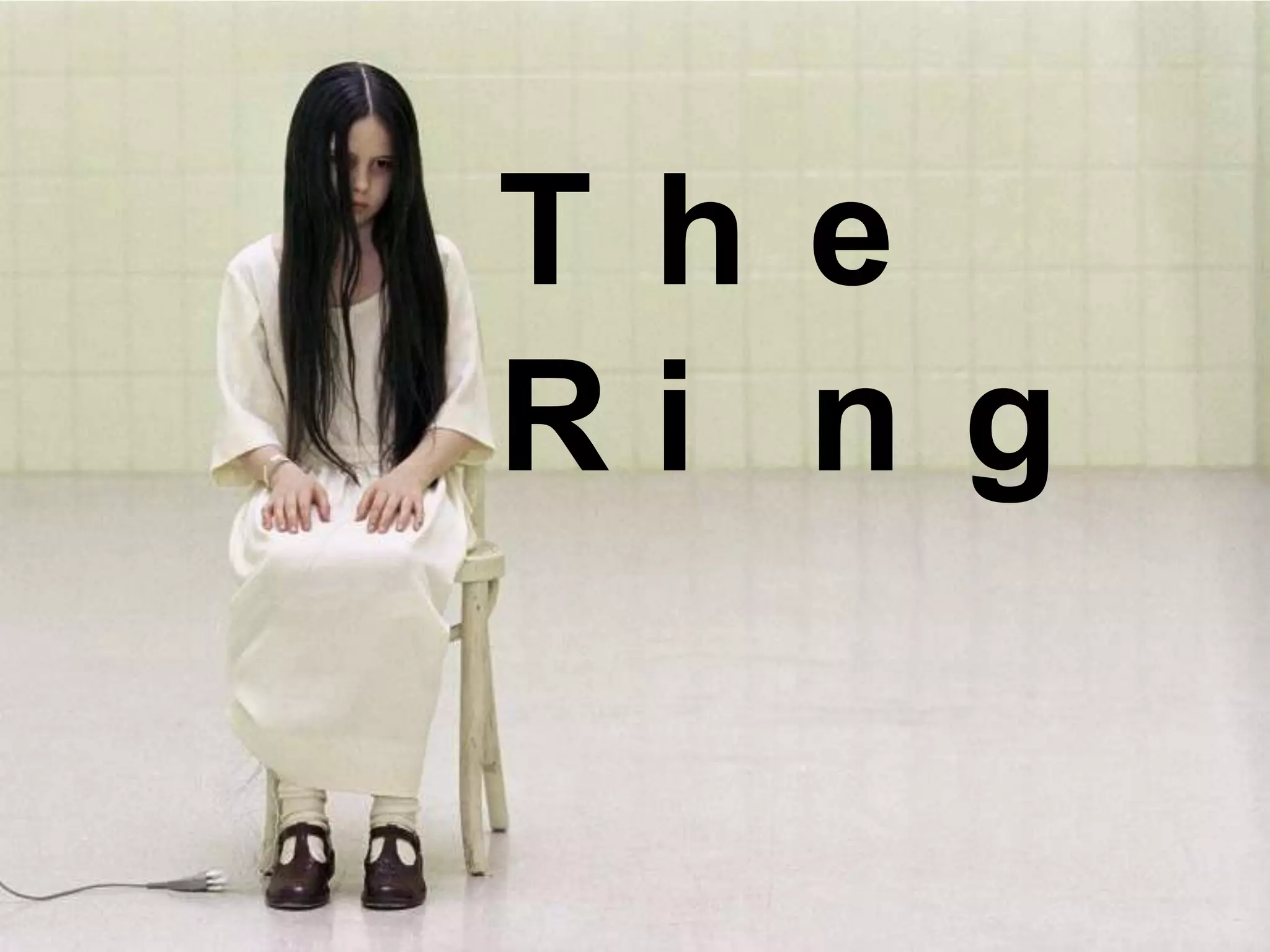
The
Ri n g
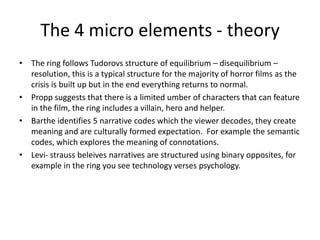
The 4 micro elements - theory
• The ring follows Tudorovs structure of equilibrium – disequilibrium –
  resolution, this is a typical structure for the majority of horror films as the
  crisis is built up but in the end everything returns to normal.
• Propp suggests that there is a limited umber of characters that can feature
  in the film, the ring includes a villain, hero and helper.
• Barthe identifies 5 narrative codes which the viewer decodes, they create
  meaning and are culturally formed expectation. For example the semantic
  codes, which explores the meaning of connotations.
• Levi- strauss beleives narratives are structured using binary opposites, for
  example in the ring you see technology verses psychology.
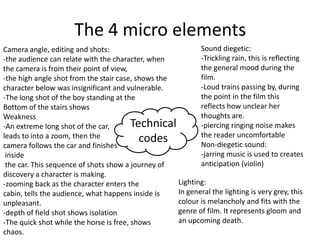
The 4 micro elements
Camera angle, editing and shots:                           Sound diegetic:
-the audience can relate with the character, when          -Trickling rain, this is reflecting
the camera is from their point of view,                    the general mood during the
-the high angle shot from the stair case, shows the        film.
character below was insignificant and vulnerable.          -Loud trains passing by, during
-The long shot of the boy standing at the                  the point in the film this
Bottom of the stairs shows                                 reflects how unclear her
Weakness                                                   thoughts are.
-An extreme long shot of the car,        Technical         -piercing ringing noise makes
leads to into a zoom, then the                             the reader uncomfortable
camera follows the car and finishes
                                           codes           Non-diegetic sound:
 inside                                                    -jarring music is used to creates
 the car. This sequence of shots show a journey of         anticipation (violin)
discovery a character is making.
-zooming back as the character enters the           Lighting:
cabin, tells the audience, what happens inside is   In general the lighting is very grey, this
unpleasant.                                         colour is melancholy and fits with the
-depth of field shot shows isolation                genre of film. It represents gloom and
-The quick shot while the horse is free, shows      an upcoming death.
chaos.
The 4 micro elements
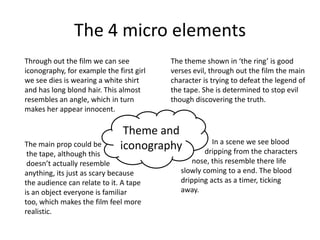
Through out the film we can see           The theme shown in ‘the ring’ is good
iconography, for example the first girl   verses evil, through out the film the main
we see dies is wearing a white shirt      character is trying to defeat the legend of
and has long blond hair. This almost      the tape. She is determined to stop evil
resembles an angle, which in turn         though discovering the truth.
makes her appear innocent.

                               Theme and
                                                       In a scene we see blood
The main prop could be        iconography            dripping from the characters
 the tape, although this
 doesn’t actually resemble                       nose, this resemble there life
anything, its just as scary because          slowly coming to a end. The blood
the audience can relate to it. A tape        dripping acts as a timer, ticking
is an object everyone is familiar            away.
too, which makes the film feel more
realistic.

The ring, 4 micro elements

  • 1.
  • 2.
    The 4 microelements - theory • The ring follows Tudorovs structure of equilibrium – disequilibrium – resolution, this is a typical structure for the majority of horror films as the crisis is built up but in the end everything returns to normal. • Propp suggests that there is a limited umber of characters that can feature in the film, the ring includes a villain, hero and helper. • Barthe identifies 5 narrative codes which the viewer decodes, they create meaning and are culturally formed expectation. For example the semantic codes, which explores the meaning of connotations. • Levi- strauss beleives narratives are structured using binary opposites, for example in the ring you see technology verses psychology.
  • 3.
    The 4 microelements Camera angle, editing and shots: Sound diegetic: -the audience can relate with the character, when -Trickling rain, this is reflecting the camera is from their point of view, the general mood during the -the high angle shot from the stair case, shows the film. character below was insignificant and vulnerable. -Loud trains passing by, during -The long shot of the boy standing at the the point in the film this Bottom of the stairs shows reflects how unclear her Weakness thoughts are. -An extreme long shot of the car, Technical -piercing ringing noise makes leads to into a zoom, then the the reader uncomfortable camera follows the car and finishes codes Non-diegetic sound: inside -jarring music is used to creates the car. This sequence of shots show a journey of anticipation (violin) discovery a character is making. -zooming back as the character enters the Lighting: cabin, tells the audience, what happens inside is In general the lighting is very grey, this unpleasant. colour is melancholy and fits with the -depth of field shot shows isolation genre of film. It represents gloom and -The quick shot while the horse is free, shows an upcoming death. chaos.
  • 4.
    The 4 microelements Through out the film we can see The theme shown in ‘the ring’ is good iconography, for example the first girl verses evil, through out the film the main we see dies is wearing a white shirt character is trying to defeat the legend of and has long blond hair. This almost the tape. She is determined to stop evil resembles an angle, which in turn though discovering the truth. makes her appear innocent. Theme and In a scene we see blood The main prop could be iconography dripping from the characters the tape, although this doesn’t actually resemble nose, this resemble there life anything, its just as scary because slowly coming to a end. The blood the audience can relate to it. A tape dripping acts as a timer, ticking is an object everyone is familiar away. too, which makes the film feel more realistic.