Codes and Conventions
Double-Page Spreads
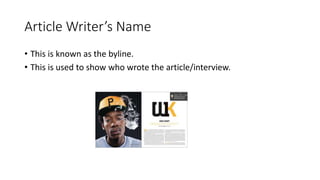
Article Writer’s Name
• This is known as the byline.
• This is used to show who wrote the article/interview.
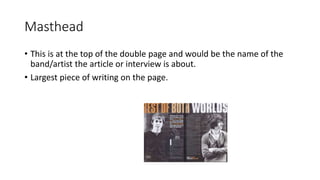
Masthead
• This is at the top of the double page and would be the name of the
band/artist the article or interview is about.
• Largest piece of writing on the page.
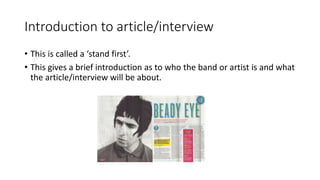
Introduction to article/interview
• This is called a ‘stand first’.
• This gives a brief introduction as to who the band or artist is and what
the article/interview will be about.
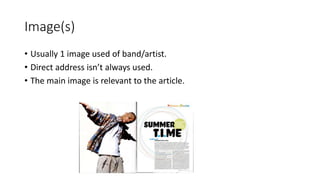
Image(s)
• Usually 1 image used of band/artist.
• Direct address isn’t always used.
• The main image is relevant to the article.
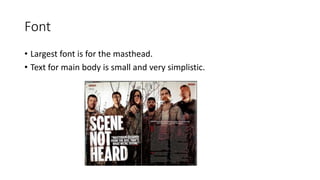
Font
• Largest font is for the masthead.
• Text for main body is small and very simplistic.
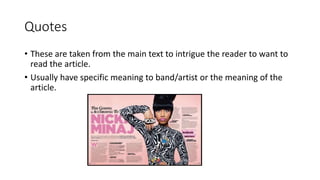
Quotes
• These are taken from the main text to intrigue the reader to want to
read the article.
• Usually have specific meaning to band/artist or the meaning of the
article.
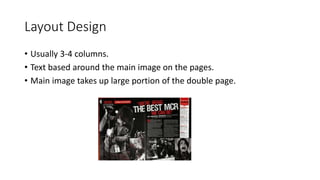
Layout Design
• Usually 3-4 columns.
• Text based around the main image on the pages.
• Main image takes up large portion of the double page.
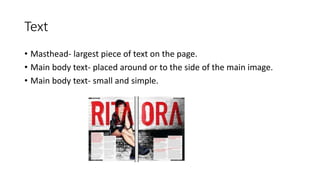
Text
• Masthead- largest piece of text on the page.
• Main body text- placed around or to the side of the main image.
• Main body text- small and simple.
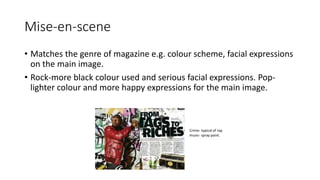
Mise-en-scene
• Matches the genre of magazine e.g. colour scheme, facial expressions
on the main image.
• Rock-more black colour used and serious facial expressions. Pop-
lighter colour and more happy expressions for the main image.
Crime- typical of rap
music- spray paint.
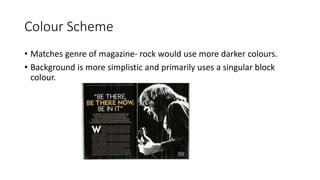
Colour Scheme
• Matches genre of magazine- rock would use more darker colours.
• Background is more simplistic and primarily uses a singular block
colour.
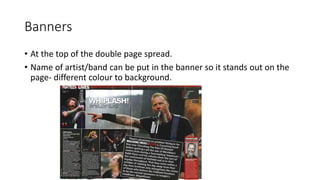
Banners
• At the top of the double page spread.
• Name of artist/band can be put in the banner so it stands out on the
page- different colour to background.

Codes and conventions double page spreads

  • 1.
  • 2.
    Article Writer’s Name •This is known as the byline. • This is used to show who wrote the article/interview.
  • 3.
    Masthead • This isat the top of the double page and would be the name of the band/artist the article or interview is about. • Largest piece of writing on the page.
  • 4.
    Introduction to article/interview •This is called a ‘stand first’. • This gives a brief introduction as to who the band or artist is and what the article/interview will be about.
  • 5.
    Image(s) • Usually 1image used of band/artist. • Direct address isn’t always used. • The main image is relevant to the article.
  • 6.
    Font • Largest fontis for the masthead. • Text for main body is small and very simplistic.
  • 7.
    Quotes • These aretaken from the main text to intrigue the reader to want to read the article. • Usually have specific meaning to band/artist or the meaning of the article.
  • 8.
    Layout Design • Usually3-4 columns. • Text based around the main image on the pages. • Main image takes up large portion of the double page.
  • 9.
    Text • Masthead- largestpiece of text on the page. • Main body text- placed around or to the side of the main image. • Main body text- small and simple.
  • 10.
    Mise-en-scene • Matches thegenre of magazine e.g. colour scheme, facial expressions on the main image. • Rock-more black colour used and serious facial expressions. Pop- lighter colour and more happy expressions for the main image. Crime- typical of rap music- spray paint.
  • 11.
    Colour Scheme • Matchesgenre of magazine- rock would use more darker colours. • Background is more simplistic and primarily uses a singular block colour.
  • 12.
    Banners • At thetop of the double page spread. • Name of artist/band can be put in the banner so it stands out on the page- different colour to background.