Code Dread
Keeping up with ASHRAE and LEED
Stormy Shanks | KJWW Engineering Consultants
Jeff Boldt | KJWW Engineering Consultants
Scott Bowman | KJWW Engineering Consultants
Learning Objectives
• Participants will be able to…
– identify the major changes in ASHRAE 90.1-2010 and why it is
important to begin preparing clients for these changes now.
– describe the changes made in ASHRAE 90.1 over the years making for
more stringent requirements and an increased need for creative and
innovative solutions.
– discuss how a LEED-certified building under one version of the
standard would not necessarily be certified under a newer version -and changes required to maintain the projected energy savings.
– identify how energy modeling can help design firms plan for and reach
a project’s energy savings goal with respect to ASHRAE 90.1-2010 and
LEED v4.
Agenda
• ASHRAE 90.1-2010
– What are the major changes? Where are we
going?

• THE PROJECT
– KJWW Engineering Consultants Expansion

• ENERGY MODELING
– Progression of modeling through advancing
standards

• LEED CERTIFICATION
– Effect of later LEED versions on project
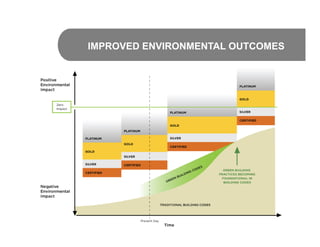
IMPROVED ENVIRONMENTAL OUTCOMES
Speakers…

Stormy Shanks, PE BEMP
Mechanical Engineer
Energy Modeling Task
Force Member
shankssl@kjww.com

Jeff Boldt, PE HBDP
LEED AP BD+C
Principal
Director of Engineering
boldtjg@kjww.com

Scott Bowman, PE
LEED AP BD+C
Principal
Corporate Sustainability
Leader
bowmansc@kjww.com
Speakers…
We would also like to give special thanks to:
Michael Rosenberg
Pacific Northwest National Laboratory
For his wonderful assistance , review, and advice while putting
this presentation together!
Brandon Schnier
KJWW Engineering Intern
Iowa State University
For all the energy modeling required for this project. Hopefully
you will decide to join us after graduation!
What are the major changes? Hints to 2013?

ASHRAE 90.1-2010
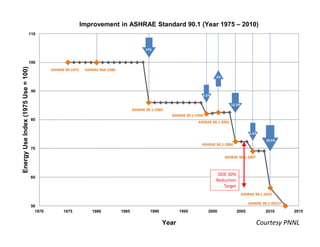
Improvement in ASHRAE Standard 90.1 (Year 1975 – 2010)
110

14%

Energy Use Index (1975 Use = 100)

100
ASHRAE 90-1975

ASHRAE 90A-1980
.5%

90
4.5%
12.3%

ASHRAE 90.1-1989
ASHRAE 90.1-1999
80

ASHRAE 90.1-2001
4.5%
18.5%

ASHRAE 90.1-2004
70
ASHRAE 90.1-2007

DOE 30%
Reduction
Target

60

ASHRAE 90.1-2010
50
1970

ASHRAE 90.1-2013?
1975

1980

1985

1990

1995

Year

2000

2005

2010

2015

Courtesy PNNL
ASHRAE 90.1-2010
• More equipment is being regulated
– Computer loads
– Elevators, escalators, and fast-walks
– Domestic water booster pumps
ASHRAE 90.1-2010
• Roofs:
– Cool roofs required in some climate zones

• Envelope:
– No major changes to R values or SHGFs
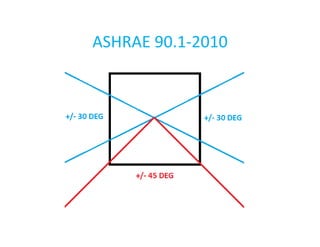
– Must have more south glazing than east or west
• Orientation? Land purchases? Campus planning?
• Exceptions for storefront, shaded buildings, shading
from adjacent buildings, alterations with no net change
in glazing
ASHRAE 90.1-2010
ASHRAE 90.1-2010
• Skylights (or Clerestories):
– Required in some large, tall, top-floor rooms
• Greater than 10,000 sf
• Directly under a roof with ceiling height over 15 ft
• And space type is office, lobby, atrium, concourse,
corridor, gymnasium, convention center, etc.

• Clerestories facing north save more energy
ASHRAE 90.1-2010
• Fan power
– Efficient fans required
– Low static systems needed
• Larger ductwork
• Larger air handling equipment
• Fewer and better fittings

– Incentive for energy recovery
• More static pressure allowed
• Linear equation☺
ASHRAE 90.1-2010
• Reheat
– Loopholes closed
• No more hospitals with constant volume reheat!

– No reheat allowed unless:
• Less than 30% of peak flow (or now 20%/50%), or
• Flow no more than required air changes
– Air changes required by codes or accreditation standards

– Exception if 75% of heat is recovered
– ORs only pressurized when unoccupied
– 2012 IECC is less restrictive, except big mistake
deleting the 30% exception
ASHRAE 90.1-2010
• Overhead Heating:
– Where return/exhaust are higher than 6 feet
• Limits the heating air temperature to no more than
20°F above space temperature

– Supplemental heat (radiant or convective) may be
needed
– Better envelope to reduce load may be a less
expensive and lower energy option
ASHRAE 90.1-2010
• Economizers:
– Required in more climate zones
– Required for smaller systems
• Capacity greater than 4.5 tons
• Was greater than 11.5 tons in 2007!

• Energy recovery required for more systems
– Greater than 70% outside air and 5,000 cfm in
2007
– Now greater than 30% OA and 5,500 cfm of EA
– Basically all commercial systems require ER
ASHRAE 90.1-2010
• Lighting Controls:
– Daylighting control required (first time)
• Defined zones of area around windows and skylights

– More occupancy types required
• Added training, lecture, storage, offices (< 250 sf),
restrooms, locker rooms
• Manual on required, except restrooms, public corridors,
and stairs
• Bi-level required for most spaces (not corridors)

– Parking garages
• Reduce power 30% if no activity in >3600 sf
ASHRAE 90.1-2010
• Lighting Controls:
– Exterior lighting MUST turn off
• When sufficient daylight is available
• Astronomical timer or daylight sensor

– Façade and landscape lighting
• Off from midnight or closing to 6 am or opening

– Higher LPD allowed with control (5-10%)
– Functional testing required!
– Whole-building off required (with exceptions)
ASHRAE 90.1-2010
• Receptacles:
– 50% of 120V receptacles require automatic
switching
• Offices and computer classrooms

– Options
• Time of day
• Occupancy sensor
• Another control or alarm system

– Some exceptions
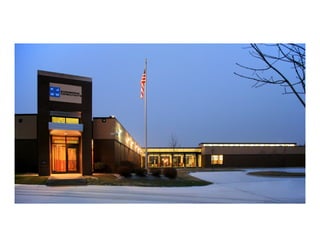
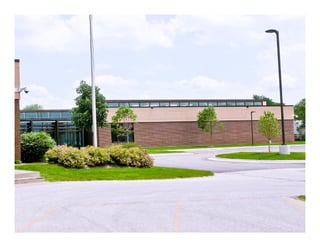
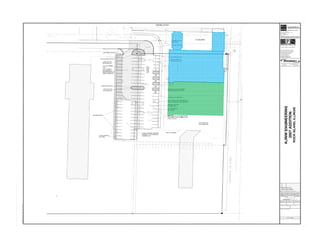
KJWW Engineering Consultants Expansion

THE PROJECT
Project Facts
•
•
•
•
•
•
•
•

Built in 2007
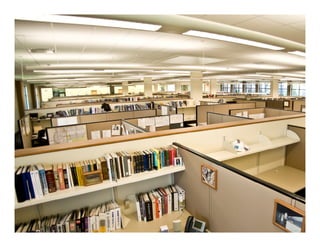
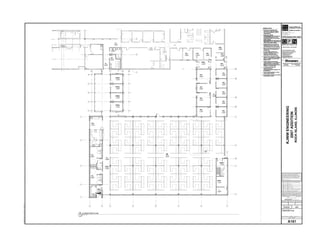
17,500 sf Addition with 2,500 sf remodel
75 workspaces added
8 private offices
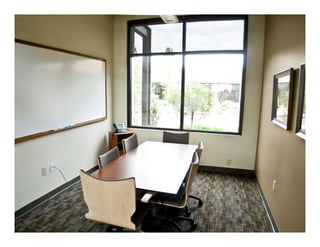
4 conference rooms
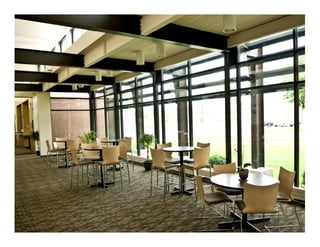
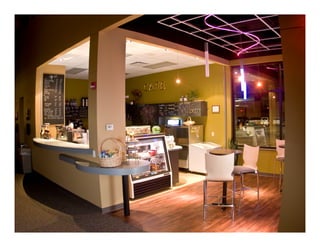
Café 623
Gathering space
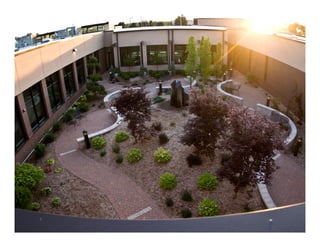
Interior courtyard
Project Facts
• Mechanical:
– High efficiency RTUs (DX/Gas)
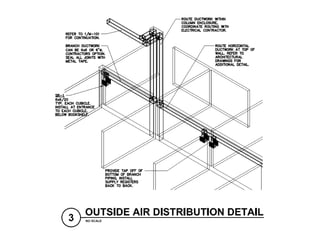
– Dedicated Outside Air System (tempered)
– Ventilation direct to stations
– Energy Recovery Ventilator
– Some radiation at windows

• Electrical:
– Indirect lighting with Task Lighting
– Occupancy control
– Top daylighting
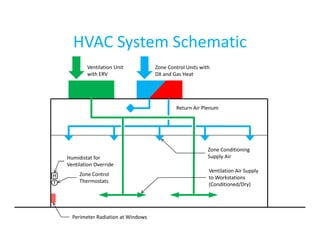
HVAC System Schematic
Ventilation Unit
with ERV

Zone Control Units with
DX and Gas Heat
Return Air Plenum

Humidistat for
Ventilation Override
H
T

Zone Control
Thermostats

Perimeter Radiation at Windows

Zone Conditioning
Supply Air
Ventilation Air Supply
to Workstations
(Conditioned/Dry)
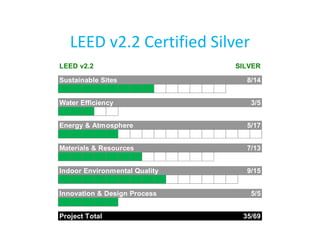
LEED v2.2 Certified Silver
LEED v2.2

SILVER

Sustainable Sites

8/14

Water Efficiency

3/5

Energy & Atmosphere

5/17

Materials & Resources

7/13

Indoor Environmental Quality

9/15

Innovation & Design Process

5/5

Project Total

35/69
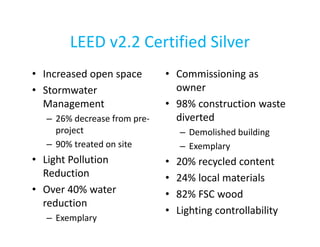
LEED v2.2 Certified Silver
• Increased open space
• Stormwater
Management
– 26% decrease from preproject
– 90% treated on site

• Light Pollution
Reduction
• Over 40% water
reduction
– Exemplary

• Commissioning as
owner
• 98% construction waste
diverted
– Demolished building
– Exemplary

•
•
•
•

20% recycled content
24% local materials
82% FSC wood
Lighting controllability
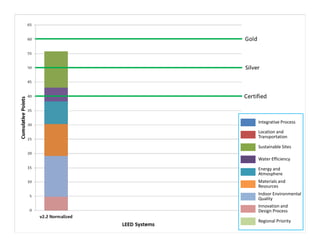
Integrative Process
Location and
Transportation
Sustainable Sites
Water Efficiency
Energy and
Atmosphere
Materials and
Resources
Indoor Environmental
Quality
Innovation and
Design Process
Regional Priority
Progression of modeling through advancing standards…

ENERGY MODELING
Background
• Software used at KJWW
– Trane Trace
– eQUEST
– Sefaira

• Energy Modeling Task Force
– Expertise within all teams
– Engineers doing models
– Building internal dedicated experts
– Now have dedicated modelers for whole firm
ASHRAE 90.1-2004
• Baseline HVAC System Type 3 – packaged rooftop
unit with DX cooling and natural gas heating
• Baseline fenestration modeled in uniformly
distributed horizontal bands
• Baseline fan power dependent only on system
type and supply CFM
• Building area method for lighting
• Seasonal energy rates with winter block rates
• Exceptional calculation for process load <25% of
baseline
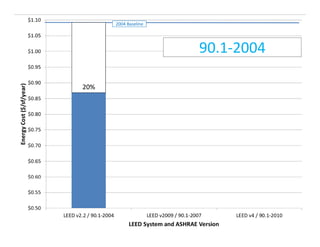
2004 Baseline

90.1-2004
20%
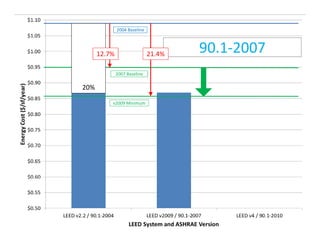
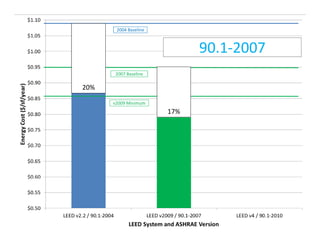
ASHRAE 90.1-2007
• Baseline HVAC System Type 3
• Baseline fenestration area and distribution
matches design
• Baseline fan power increased due to pressure
drop allowance for MERV 13 filtration
• No change to Building Area Method for
lighting power
• No change in process loads
2004 Baseline

12.7%

21.4%
2007 Baseline

20%
v2009 Minimum

90.1-2007
2004 Baseline

90.1-2007
2007 Baseline

20%
v2009 Minimum

17%
ASHRAE 90.1-2010
General

• Documentation
– Exceptional Calculation Documentation

• Exceptions added for baseline rotations
• Heating-only baseline system types added
• Requires modeling of shading from adjacent
structures in baseline
• Softened requirements on unmet load hours
• Purchased HW or CW treated like utility – no
trade-offs
ASHRAE 90.1-2010
General

• Modified baseline systems for DES
• Consistent with LEED DES requirements now
• Allows different level of ventilation in
proposed and baseline design
• New mandatory requirements for lighting
controls and exhaust air energy recovery must
be included in baseline models.
• How LEED v4 will handle Process Loads?
ASHRAE 90.1-2010
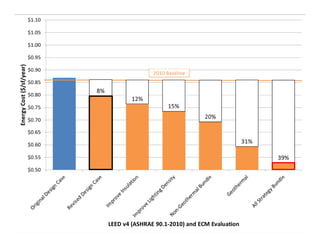
• Changes for this project to the baseline from
2007 (and 2004)…
– Lighting power density reduced from 1.0 to 0.9
– Baseline fan power calculations
– Envelope improvements
– Equipment efficiency improvements

• Minimum Mandatory Requirement
– Daylighting Control
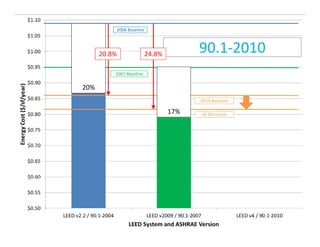
2004 Baseline

20.8%

90.1-2010

24.8%

2007 Baseline

20%
2010 Baseline

17%

v4 Minimum
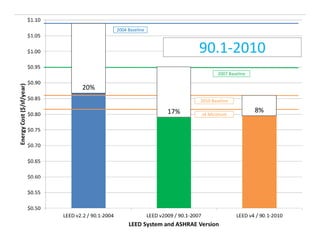
2004 Baseline

90.1-2010
2007 Baseline

20%
2010 Baseline

17%

v4 Minimum

8%
How does the project fare moving to later versions of LEED?

LEED CERTIFICATION
Methodology
•
•
•
•
•
•

Started from known project certification
Maintain original goal of LEED Silver
Change from v2.2 to v2009 more predictable
Reviewed original submittals to new credits
Looked for lost opportunities
Definitions;
– Projected = reasonable expectation
– Expanded = possible, with increased cost

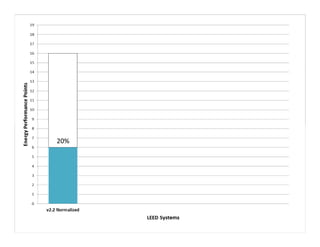
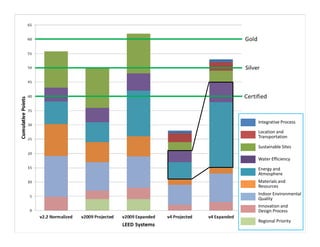
• Normalized v2.2 for 110 points
Energy First…
•
•
•
•
•
•

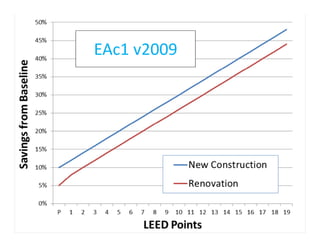
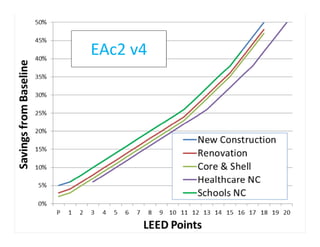
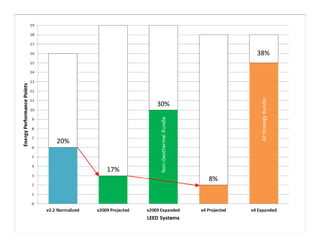
EAp2 and EAc1 (EAc2 for v4)
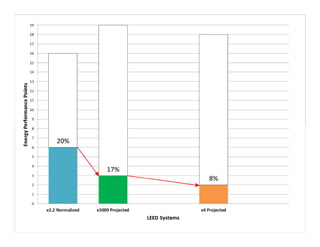
Changes in weighting between versions
Adjustment in v4 for advanced code
Lighting controls
Efficient selections
Probably does not extend to more complex
systems (particular to THIS project)
EAc1 v2009
EAc2 v4
20%
20%

17%
8%
38%

30%

20%

17%
8%
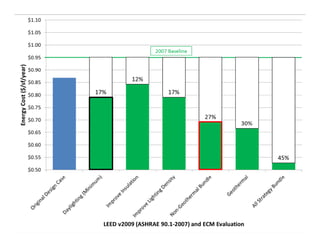
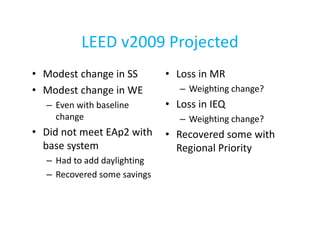
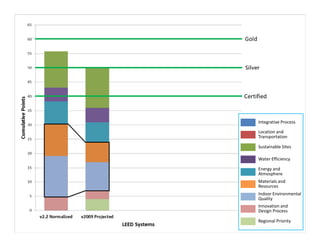
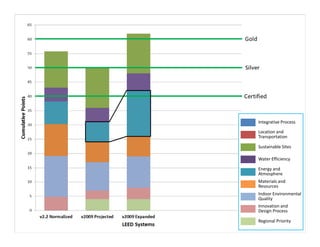
LEED v2009 Projected
• Modest change in SS
• Modest change in WE

• Loss in MR

– Even with baseline
change

• Loss in IEQ

• Did not meet EAp2 with
base system
– Had to add daylighting
– Recovered some savings

– Weighting change?
– Weighting change?

• Recovered some with
Regional Priority
Integrative Process
Location and
Transportation
Sustainable Sites
Water Efficiency
Energy and
Atmosphere
Materials and
Resources
Indoor Environmental
Quality
Innovation and
Design Process
Regional Priority
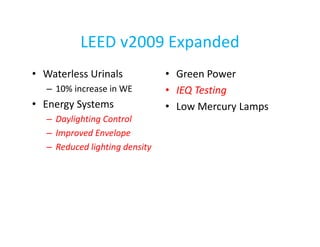
LEED v2009 Expanded
• Waterless Urinals
– 10% increase in WE

• Energy Systems
– Daylighting Control
– Improved Envelope
– Reduced lighting density

• Green Power
• IEQ Testing
• Low Mercury Lamps
Integrative Process
Location and
Transportation
Sustainable Sites
Water Efficiency
Energy and
Atmosphere
Materials and
Resources
Indoor Environmental
Quality
Innovation and
Design Process
Regional Priority
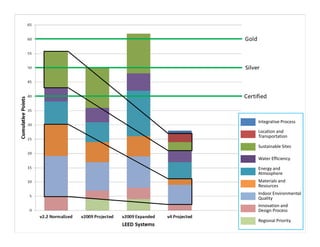
LEED v4 Projected
• Loss in LT/SS
–
–
–
–

Density
Green parking
Heat island
Open space

• Energy Systems
– Daylighting control
required for 90.1-2010

• Loss in MR
– Unsure of changes?

• Loss in IEQ
– Controllability
– Gain acoustic point

• Lost all Regional Priority
Credits!
– Change in Illinois focus
Integrative Process
Location and
Transportation
Sustainable Sites
Water Efficiency
Energy and
Atmosphere
Materials and
Resources
Indoor Environmental
Quality
Innovation and
Design Process
Regional Priority
LEED v4 Expanded
• Site Assessment
• Waterless Urinals
– 10% increase in WE
– Add meter

• Energy Systems
– Geothermal
– Improved envelope
– Reduced lighting density

• Commissioning
– Envelope commissioning

• Green Power
• IEQ Testing
• Low Mercury Lamps
Integrative Process
Location and
Transportation
Sustainable Sites
Water Efficiency
Energy and
Atmosphere
Materials and
Resources
Indoor Environmental
Quality
Innovation and
Design Process
Regional Priority
What did we learn?

SUMMARY
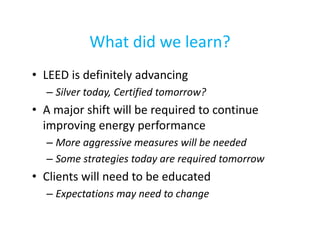
What did we learn?
• LEED is definitely advancing
– Silver today, Certified tomorrow?

• A major shift will be required to continue
improving energy performance
– More aggressive measures will be needed
– Some strategies today are required tomorrow

• Clients will need to be educated
– Expectations may need to change
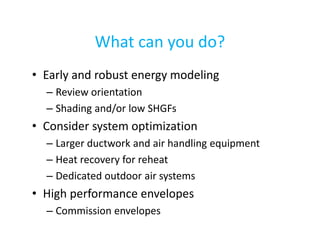
What can you do?
• Early and robust energy modeling
– Review orientation
– Shading and/or low SHGFs

• Consider system optimization
– Larger ductwork and air handling equipment
– Heat recovery for reheat
– Dedicated outdoor air systems

• High performance envelopes
– Commission envelopes
Speakers…

Stormy Shanks, PE BEMP
Mechanical Engineer
Energy Modeling Task
Force Member
shankssl@kjww.com

Jeff Boldt, PE HBDP
LEED AP BD+C
Principal
Director of Engineering
boldtjg@kjww.com

Scott Bowman, PE
LEED AP BD+C
Principal
Corporate Sustainability
Leader
bowmansc@kjww.com
What additional costs would be incurred?

COSTS
Project Costs
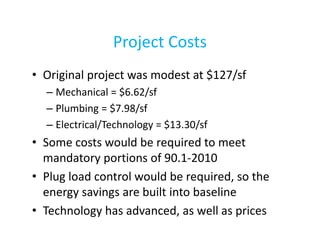
• Original project was modest at $127/sf
– Mechanical = $6.62/sf
– Plumbing = $7.98/sf
– Electrical/Technology = $13.30/sf

• Some costs would be required to meet
mandatory portions of 90.1-2010
• Plug load control would be required, so the
energy savings are built into baseline
• Technology has advanced, as well as prices
Minimum Additional Costs
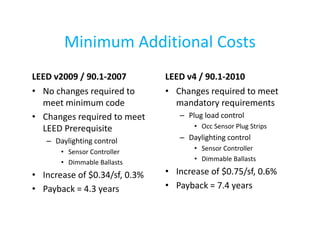
LEED v2009 / 90.1-2007
• No changes required to
meet minimum code
• Changes required to meet
LEED Prerequisite
– Daylighting control
• Sensor Controller
• Dimmable Ballasts

• Increase of $0.34/sf, 0.3%
• Payback = 4.3 years

LEED v4 / 90.1-2010
• Changes required to meet
mandatory requirements
– Plug load control
• Occ Sensor Plug Strips

– Daylighting control
• Sensor Controller
• Dimmable Ballasts

• Increase of $0.75/sf, 0.6%
• Payback = 7.4 years
Maximum Additional Costs
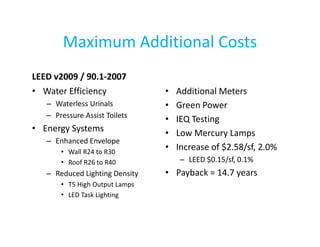
LEED v2009 / 90.1-2007
• Water Efficiency
– Waterless Urinals
– Pressure Assist Toilets

• Energy Systems
– Enhanced Envelope
• Wall R24 to R30
• Roof R26 to R40

– Reduced Lighting Density
• T5 High Output Lamps
• LED Task Lighting

•
•
•
•
•

Additional Meters
Green Power
IEQ Testing
Low Mercury Lamps
Increase of $2.58/sf, 2.0%
– LEED $0.15/sf, 0.1%

• Payback = 14.7 years
Maximum Additional Costs
LEED v4 / 90.1-2010
• Water Efficiency
– Waterless Urinals
– Pressure Assist Toilets

• Site Assessment
• Envelope Commissioning
• Additional Meters

• Energy Systems
– Enhanced Envelope
• Wall R24 to R30
• Roof R26 to R40

– Geothermal Heat Pumps
• 40 tons

– Reduced Lighting Density
• T5 High Output Lamps
• LED Task Lighting

– Water and Energy

•
•
•
•

Green Power
IEQ Testing
Low Mercury Lamps
Increase of $8.89/sf, 7.0%
– LEED $1.28/sf, 1.0%

• Payback = 26 years
Cost Summary
LEED v2009 / 90.1-2007
• Silver
– Increase of $0.34/sf, 0.3%
– Payback = 4.3 years

• Gold
– Increase of $2.58/sf, 2.0%
– Payback = 14.7 years

LEED v4 / 90.1-2010
• Not Certified
– Increase of $0.75/sf, 0.6%
– Payback = 7.4 years

• Silver
– Increase of $8.89/sf, 7.0%
– Payback = 26 years

Code Dread: Keeping up with ASHRAE and LEED

  • 1.
    Code Dread Keeping upwith ASHRAE and LEED Stormy Shanks | KJWW Engineering Consultants Jeff Boldt | KJWW Engineering Consultants Scott Bowman | KJWW Engineering Consultants
  • 2.
    Learning Objectives • Participantswill be able to… – identify the major changes in ASHRAE 90.1-2010 and why it is important to begin preparing clients for these changes now. – describe the changes made in ASHRAE 90.1 over the years making for more stringent requirements and an increased need for creative and innovative solutions. – discuss how a LEED-certified building under one version of the standard would not necessarily be certified under a newer version -and changes required to maintain the projected energy savings. – identify how energy modeling can help design firms plan for and reach a project’s energy savings goal with respect to ASHRAE 90.1-2010 and LEED v4.
  • 3.
    Agenda • ASHRAE 90.1-2010 –What are the major changes? Where are we going? • THE PROJECT – KJWW Engineering Consultants Expansion • ENERGY MODELING – Progression of modeling through advancing standards • LEED CERTIFICATION – Effect of later LEED versions on project
  • 4.
  • 5.
    Speakers… Stormy Shanks, PEBEMP Mechanical Engineer Energy Modeling Task Force Member shankssl@kjww.com Jeff Boldt, PE HBDP LEED AP BD+C Principal Director of Engineering boldtjg@kjww.com Scott Bowman, PE LEED AP BD+C Principal Corporate Sustainability Leader bowmansc@kjww.com
  • 6.
    Speakers… We would alsolike to give special thanks to: Michael Rosenberg Pacific Northwest National Laboratory For his wonderful assistance , review, and advice while putting this presentation together! Brandon Schnier KJWW Engineering Intern Iowa State University For all the energy modeling required for this project. Hopefully you will decide to join us after graduation!
  • 7.
    What are themajor changes? Hints to 2013? ASHRAE 90.1-2010
  • 8.
    Improvement in ASHRAEStandard 90.1 (Year 1975 – 2010) 110 14% Energy Use Index (1975 Use = 100) 100 ASHRAE 90-1975 ASHRAE 90A-1980 .5% 90 4.5% 12.3% ASHRAE 90.1-1989 ASHRAE 90.1-1999 80 ASHRAE 90.1-2001 4.5% 18.5% ASHRAE 90.1-2004 70 ASHRAE 90.1-2007 DOE 30% Reduction Target 60 ASHRAE 90.1-2010 50 1970 ASHRAE 90.1-2013? 1975 1980 1985 1990 1995 Year 2000 2005 2010 2015 Courtesy PNNL
  • 9.
    ASHRAE 90.1-2010 • Moreequipment is being regulated – Computer loads – Elevators, escalators, and fast-walks – Domestic water booster pumps
  • 10.
    ASHRAE 90.1-2010 • Roofs: –Cool roofs required in some climate zones • Envelope: – No major changes to R values or SHGFs – Must have more south glazing than east or west • Orientation? Land purchases? Campus planning? • Exceptions for storefront, shaded buildings, shading from adjacent buildings, alterations with no net change in glazing
  • 11.
  • 12.
    ASHRAE 90.1-2010 • Skylights(or Clerestories): – Required in some large, tall, top-floor rooms • Greater than 10,000 sf • Directly under a roof with ceiling height over 15 ft • And space type is office, lobby, atrium, concourse, corridor, gymnasium, convention center, etc. • Clerestories facing north save more energy
  • 13.
    ASHRAE 90.1-2010 • Fanpower – Efficient fans required – Low static systems needed • Larger ductwork • Larger air handling equipment • Fewer and better fittings – Incentive for energy recovery • More static pressure allowed • Linear equation☺
  • 14.
    ASHRAE 90.1-2010 • Reheat –Loopholes closed • No more hospitals with constant volume reheat! – No reheat allowed unless: • Less than 30% of peak flow (or now 20%/50%), or • Flow no more than required air changes – Air changes required by codes or accreditation standards – Exception if 75% of heat is recovered – ORs only pressurized when unoccupied – 2012 IECC is less restrictive, except big mistake deleting the 30% exception
  • 15.
    ASHRAE 90.1-2010 • OverheadHeating: – Where return/exhaust are higher than 6 feet • Limits the heating air temperature to no more than 20°F above space temperature – Supplemental heat (radiant or convective) may be needed – Better envelope to reduce load may be a less expensive and lower energy option
  • 16.
    ASHRAE 90.1-2010 • Economizers: –Required in more climate zones – Required for smaller systems • Capacity greater than 4.5 tons • Was greater than 11.5 tons in 2007! • Energy recovery required for more systems – Greater than 70% outside air and 5,000 cfm in 2007 – Now greater than 30% OA and 5,500 cfm of EA – Basically all commercial systems require ER
  • 17.
    ASHRAE 90.1-2010 • LightingControls: – Daylighting control required (first time) • Defined zones of area around windows and skylights – More occupancy types required • Added training, lecture, storage, offices (< 250 sf), restrooms, locker rooms • Manual on required, except restrooms, public corridors, and stairs • Bi-level required for most spaces (not corridors) – Parking garages • Reduce power 30% if no activity in >3600 sf
  • 18.
    ASHRAE 90.1-2010 • LightingControls: – Exterior lighting MUST turn off • When sufficient daylight is available • Astronomical timer or daylight sensor – Façade and landscape lighting • Off from midnight or closing to 6 am or opening – Higher LPD allowed with control (5-10%) – Functional testing required! – Whole-building off required (with exceptions)
  • 19.
    ASHRAE 90.1-2010 • Receptacles: –50% of 120V receptacles require automatic switching • Offices and computer classrooms – Options • Time of day • Occupancy sensor • Another control or alarm system – Some exceptions
  • 20.
    KJWW Engineering ConsultantsExpansion THE PROJECT
  • 21.
    Project Facts • • • • • • • • Built in2007 17,500 sf Addition with 2,500 sf remodel 75 workspaces added 8 private offices 4 conference rooms Café 623 Gathering space Interior courtyard
  • 31.
    Project Facts • Mechanical: –High efficiency RTUs (DX/Gas) – Dedicated Outside Air System (tempered) – Ventilation direct to stations – Energy Recovery Ventilator – Some radiation at windows • Electrical: – Indirect lighting with Task Lighting – Occupancy control – Top daylighting
  • 32.
    HVAC System Schematic VentilationUnit with ERV Zone Control Units with DX and Gas Heat Return Air Plenum Humidistat for Ventilation Override H T Zone Control Thermostats Perimeter Radiation at Windows Zone Conditioning Supply Air Ventilation Air Supply to Workstations (Conditioned/Dry)
  • 35.
    LEED v2.2 CertifiedSilver LEED v2.2 SILVER Sustainable Sites 8/14 Water Efficiency 3/5 Energy & Atmosphere 5/17 Materials & Resources 7/13 Indoor Environmental Quality 9/15 Innovation & Design Process 5/5 Project Total 35/69
  • 36.
    LEED v2.2 CertifiedSilver • Increased open space • Stormwater Management – 26% decrease from preproject – 90% treated on site • Light Pollution Reduction • Over 40% water reduction – Exemplary • Commissioning as owner • 98% construction waste diverted – Demolished building – Exemplary • • • • 20% recycled content 24% local materials 82% FSC wood Lighting controllability
  • 37.
    Integrative Process Location and Transportation SustainableSites Water Efficiency Energy and Atmosphere Materials and Resources Indoor Environmental Quality Innovation and Design Process Regional Priority
  • 38.
    Progression of modelingthrough advancing standards… ENERGY MODELING
  • 39.
    Background • Software usedat KJWW – Trane Trace – eQUEST – Sefaira • Energy Modeling Task Force – Expertise within all teams – Engineers doing models – Building internal dedicated experts – Now have dedicated modelers for whole firm
  • 40.
    ASHRAE 90.1-2004 • BaselineHVAC System Type 3 – packaged rooftop unit with DX cooling and natural gas heating • Baseline fenestration modeled in uniformly distributed horizontal bands • Baseline fan power dependent only on system type and supply CFM • Building area method for lighting • Seasonal energy rates with winter block rates • Exceptional calculation for process load <25% of baseline
  • 41.
  • 42.
    ASHRAE 90.1-2007 • BaselineHVAC System Type 3 • Baseline fenestration area and distribution matches design • Baseline fan power increased due to pressure drop allowance for MERV 13 filtration • No change to Building Area Method for lighting power • No change in process loads
  • 43.
  • 44.
  • 46.
    ASHRAE 90.1-2010 General • Documentation –Exceptional Calculation Documentation • Exceptions added for baseline rotations • Heating-only baseline system types added • Requires modeling of shading from adjacent structures in baseline • Softened requirements on unmet load hours • Purchased HW or CW treated like utility – no trade-offs
  • 47.
    ASHRAE 90.1-2010 General • Modifiedbaseline systems for DES • Consistent with LEED DES requirements now • Allows different level of ventilation in proposed and baseline design • New mandatory requirements for lighting controls and exhaust air energy recovery must be included in baseline models. • How LEED v4 will handle Process Loads?
  • 48.
    ASHRAE 90.1-2010 • Changesfor this project to the baseline from 2007 (and 2004)… – Lighting power density reduced from 1.0 to 0.9 – Baseline fan power calculations – Envelope improvements – Equipment efficiency improvements • Minimum Mandatory Requirement – Daylighting Control
  • 49.
  • 50.
  • 52.
    How does theproject fare moving to later versions of LEED? LEED CERTIFICATION
  • 53.
    Methodology • • • • • • Started from knownproject certification Maintain original goal of LEED Silver Change from v2.2 to v2009 more predictable Reviewed original submittals to new credits Looked for lost opportunities Definitions; – Projected = reasonable expectation – Expanded = possible, with increased cost • Normalized v2.2 for 110 points
  • 54.
    Energy First… • • • • • • EAp2 andEAc1 (EAc2 for v4) Changes in weighting between versions Adjustment in v4 for advanced code Lighting controls Efficient selections Probably does not extend to more complex systems (particular to THIS project)
  • 55.
  • 56.
  • 57.
  • 58.
  • 59.
  • 60.
    LEED v2009 Projected •Modest change in SS • Modest change in WE • Loss in MR – Even with baseline change • Loss in IEQ • Did not meet EAp2 with base system – Had to add daylighting – Recovered some savings – Weighting change? – Weighting change? • Recovered some with Regional Priority
  • 61.
    Integrative Process Location and Transportation SustainableSites Water Efficiency Energy and Atmosphere Materials and Resources Indoor Environmental Quality Innovation and Design Process Regional Priority
  • 62.
    LEED v2009 Expanded •Waterless Urinals – 10% increase in WE • Energy Systems – Daylighting Control – Improved Envelope – Reduced lighting density • Green Power • IEQ Testing • Low Mercury Lamps
  • 63.
    Integrative Process Location and Transportation SustainableSites Water Efficiency Energy and Atmosphere Materials and Resources Indoor Environmental Quality Innovation and Design Process Regional Priority
  • 64.
    LEED v4 Projected •Loss in LT/SS – – – – Density Green parking Heat island Open space • Energy Systems – Daylighting control required for 90.1-2010 • Loss in MR – Unsure of changes? • Loss in IEQ – Controllability – Gain acoustic point • Lost all Regional Priority Credits! – Change in Illinois focus
  • 65.
    Integrative Process Location and Transportation SustainableSites Water Efficiency Energy and Atmosphere Materials and Resources Indoor Environmental Quality Innovation and Design Process Regional Priority
  • 66.
    LEED v4 Expanded •Site Assessment • Waterless Urinals – 10% increase in WE – Add meter • Energy Systems – Geothermal – Improved envelope – Reduced lighting density • Commissioning – Envelope commissioning • Green Power • IEQ Testing • Low Mercury Lamps
  • 67.
    Integrative Process Location and Transportation SustainableSites Water Efficiency Energy and Atmosphere Materials and Resources Indoor Environmental Quality Innovation and Design Process Regional Priority
  • 68.
    What did welearn? SUMMARY
  • 69.
    What did welearn? • LEED is definitely advancing – Silver today, Certified tomorrow? • A major shift will be required to continue improving energy performance – More aggressive measures will be needed – Some strategies today are required tomorrow • Clients will need to be educated – Expectations may need to change
  • 70.
    What can youdo? • Early and robust energy modeling – Review orientation – Shading and/or low SHGFs • Consider system optimization – Larger ductwork and air handling equipment – Heat recovery for reheat – Dedicated outdoor air systems • High performance envelopes – Commission envelopes
  • 72.
    Speakers… Stormy Shanks, PEBEMP Mechanical Engineer Energy Modeling Task Force Member shankssl@kjww.com Jeff Boldt, PE HBDP LEED AP BD+C Principal Director of Engineering boldtjg@kjww.com Scott Bowman, PE LEED AP BD+C Principal Corporate Sustainability Leader bowmansc@kjww.com
  • 73.
    What additional costswould be incurred? COSTS
  • 74.
    Project Costs • Originalproject was modest at $127/sf – Mechanical = $6.62/sf – Plumbing = $7.98/sf – Electrical/Technology = $13.30/sf • Some costs would be required to meet mandatory portions of 90.1-2010 • Plug load control would be required, so the energy savings are built into baseline • Technology has advanced, as well as prices
  • 75.
    Minimum Additional Costs LEEDv2009 / 90.1-2007 • No changes required to meet minimum code • Changes required to meet LEED Prerequisite – Daylighting control • Sensor Controller • Dimmable Ballasts • Increase of $0.34/sf, 0.3% • Payback = 4.3 years LEED v4 / 90.1-2010 • Changes required to meet mandatory requirements – Plug load control • Occ Sensor Plug Strips – Daylighting control • Sensor Controller • Dimmable Ballasts • Increase of $0.75/sf, 0.6% • Payback = 7.4 years
  • 76.
    Maximum Additional Costs LEEDv2009 / 90.1-2007 • Water Efficiency – Waterless Urinals – Pressure Assist Toilets • Energy Systems – Enhanced Envelope • Wall R24 to R30 • Roof R26 to R40 – Reduced Lighting Density • T5 High Output Lamps • LED Task Lighting • • • • • Additional Meters Green Power IEQ Testing Low Mercury Lamps Increase of $2.58/sf, 2.0% – LEED $0.15/sf, 0.1% • Payback = 14.7 years
  • 77.
    Maximum Additional Costs LEEDv4 / 90.1-2010 • Water Efficiency – Waterless Urinals – Pressure Assist Toilets • Site Assessment • Envelope Commissioning • Additional Meters • Energy Systems – Enhanced Envelope • Wall R24 to R30 • Roof R26 to R40 – Geothermal Heat Pumps • 40 tons – Reduced Lighting Density • T5 High Output Lamps • LED Task Lighting – Water and Energy • • • • Green Power IEQ Testing Low Mercury Lamps Increase of $8.89/sf, 7.0% – LEED $1.28/sf, 1.0% • Payback = 26 years
  • 78.
    Cost Summary LEED v2009/ 90.1-2007 • Silver – Increase of $0.34/sf, 0.3% – Payback = 4.3 years • Gold – Increase of $2.58/sf, 2.0% – Payback = 14.7 years LEED v4 / 90.1-2010 • Not Certified – Increase of $0.75/sf, 0.6% – Payback = 7.4 years • Silver – Increase of $8.89/sf, 7.0% – Payback = 26 years