
Coconut water 
Salum Mkata 
CSEE,ACSEE,B.Pharm 4
Dedication to
Introduction 
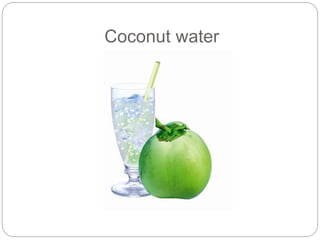
ď‚— Coconut water is the clear and sterile liquid found 
inside immature coconuts. 
ď‚— The water is actually obtained by opening a tender, 
green, healthy, and undamaged coconut. 
ď‚— In general, young and slightly immature coconuts 
gathered from the coconut tree after they reach about 
5-7 months of age for the purpose of reaping its drink. 
ď‚— Coconut water is sometimes referred to as green 
coconut water because the immature coconuts are 
green in color.
Coconut water
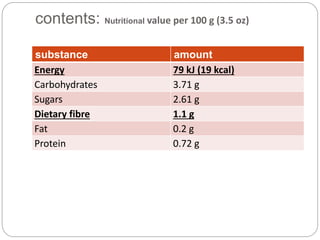
contents: Nutritional value per 100 g (3.5 oz) 
substance amount 
Energy 79 kJ (19 kcal) 
Carbohydrates 3.71 g 
Sugars 2.61 g 
Dietary fibre 1.1 g 
Fat 0.2 g 
Protein 0.72 g
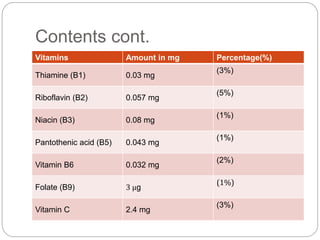
Contents cont. 
Vitamins Amount in mg Percentage(%) 
Thiamine (B1) 0.03 mg 
(3%) 
Riboflavin (B2) 0.057 mg 
(5%) 
Niacin (B3) 0.08 mg 
(1%) 
Pantothenic acid (B5) 0.043 mg 
(1%) 
Vitamin B6 0.032 mg 
(2%) 
Folate (B9) 3 ÎĽg 
(1%) 
Vitamin C 2.4 mg 
(3%)
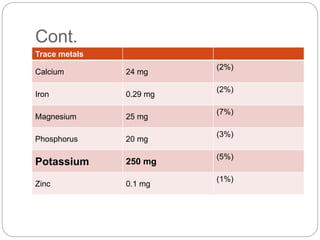
Cont. 
Trace metals 
Calcium 24 mg 
(2%) 
Iron 0.29 mg 
(2%) 
Magnesium 25 mg 
(7%) 
Phosphorus 20 mg 
(3%) 
Potassium 250 mg 
(5%) 
Zinc 0.1 mg 
(1%)
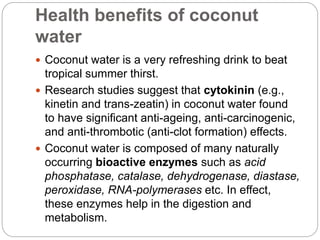
Health benefits of coconut 
water 
ď‚— Coconut water is a very refreshing drink to beat 
tropical summer thirst. 
ď‚— Research studies suggest that cytokinin (e.g., 
kinetin and trans-zeatin) in coconut water found 
to have significant anti-ageing, anti-carcinogenic, 
and anti-thrombotic (anti-clot formation) effects. 
ď‚— Coconut water is composed of many naturally 
occurring bioactive enzymes such as acid 
phosphatase, catalase, dehydrogenase, diastase, 
peroxidase, RNA-polymerases etc. In effect, 
these enzymes help in the digestion and 
metabolism.
Medical use 
• It is said, albeit quite incorrectly, that coconut 
water is identical to human plasma and can be 
injected directly into the human bloodstream. 
• The story has its origin from World War II where 
British and Japanese patients were given coconut 
water intravenously because saline solution was 
in short supply.[
Where it used? 
ď‚— Diarrhea-related dehydration 
ď‚— Exercise-related dehydration 
ď‚— High blood pressure
Any side effects? 
ď‚— Coconut water is LIKELY SAFE for most adults 
when consumed as a drink. There are no known 
serious side effects. 
Special Precautions & Warnings: 
ď‚— Pregnancy and breast-feeding: 
ď‚— High blood pressure: Coconut water might lower 
blood pressure. It can increase the effects of 
medications used to lower blood pressure. 
ď‚— Surgery: Coconut water might interfere with 
blood pressure control during and after surgery. 
Stop using coconut water at least two weeks 
before a scheduled surgery.
Any interaction? 
ď‚— currently no information for coconut water 
Interactions
Thank you!

Coconut water

  • 1.
    Coconut water SalumMkata CSEE,ACSEE,B.Pharm 4
  • 2.
  • 3.
    Introduction ď‚— Coconutwater is the clear and sterile liquid found inside immature coconuts. ď‚— The water is actually obtained by opening a tender, green, healthy, and undamaged coconut. ď‚— In general, young and slightly immature coconuts gathered from the coconut tree after they reach about 5-7 months of age for the purpose of reaping its drink. ď‚— Coconut water is sometimes referred to as green coconut water because the immature coconuts are green in color.
  • 4.
  • 5.
    contents: Nutritional valueper 100 g (3.5 oz) substance amount Energy 79 kJ (19 kcal) Carbohydrates 3.71 g Sugars 2.61 g Dietary fibre 1.1 g Fat 0.2 g Protein 0.72 g
  • 6.
    Contents cont. VitaminsAmount in mg Percentage(%) Thiamine (B1) 0.03 mg (3%) Riboflavin (B2) 0.057 mg (5%) Niacin (B3) 0.08 mg (1%) Pantothenic acid (B5) 0.043 mg (1%) Vitamin B6 0.032 mg (2%) Folate (B9) 3 ÎĽg (1%) Vitamin C 2.4 mg (3%)
  • 7.
    Cont. Trace metals Calcium 24 mg (2%) Iron 0.29 mg (2%) Magnesium 25 mg (7%) Phosphorus 20 mg (3%) Potassium 250 mg (5%) Zinc 0.1 mg (1%)
  • 8.
    Health benefits ofcoconut water ď‚— Coconut water is a very refreshing drink to beat tropical summer thirst. ď‚— Research studies suggest that cytokinin (e.g., kinetin and trans-zeatin) in coconut water found to have significant anti-ageing, anti-carcinogenic, and anti-thrombotic (anti-clot formation) effects. ď‚— Coconut water is composed of many naturally occurring bioactive enzymes such as acid phosphatase, catalase, dehydrogenase, diastase, peroxidase, RNA-polymerases etc. In effect, these enzymes help in the digestion and metabolism.
  • 9.
    Medical use •It is said, albeit quite incorrectly, that coconut water is identical to human plasma and can be injected directly into the human bloodstream. • The story has its origin from World War II where British and Japanese patients were given coconut water intravenously because saline solution was in short supply.[
  • 10.
    Where it used? ď‚— Diarrhea-related dehydration ď‚— Exercise-related dehydration ď‚— High blood pressure
  • 11.
    Any side effects? ď‚— Coconut water is LIKELY SAFE for most adults when consumed as a drink. There are no known serious side effects. Special Precautions & Warnings: ď‚— Pregnancy and breast-feeding: ď‚— High blood pressure: Coconut water might lower blood pressure. It can increase the effects of medications used to lower blood pressure. ď‚— Surgery: Coconut water might interfere with blood pressure control during and after surgery. Stop using coconut water at least two weeks before a scheduled surgery.
  • 12.
    Any interaction? ď‚—currently no information for coconut water Interactions
  • 13.

Editor's Notes

  • #4 Botanically, coconut plant belongs within the Arecaceae family of palm trees, and has the scientific name: Cocos nucifera.
  • #10 Doctors today say that they wouldn’t be inclined to set up a coconut water IV for dehydrated patients. It could cause elevated calcium and potassium, which could be dangerous.[
  • #12 coconut water in excess, which results in renal failure, high fever, fits, and death within a day or two. Renal failure is the principal outcome of untreated coconut water-induced hyperkalaemia.