International Workshop on Coastal and River
Zone Management:
Regulations and Development
Perspectives from Mumbai
Rishi Aggarwal
January 10-11th, 2013
IIT-Bombay
Organised by NEERI and IITB
How would things happen if the 74th amendment
was being implemented in spirit?
• Center would give guidelines
• State would incorporate specific points of interest from State context
• City or town Mayor final level of development of coastal, estuary or river
zone development rules, balancing local interests, requirements and
concerns, while incorporating the concerns in the Center and State
guidelines.
• All stakeholders would have been working together in some measure in
spite of differences.
How it happens in Mumbai
• Most people have no idea of who is finally taking a call and
influencing the decision.
• Economic interests, think (or are mislead) that environmentalists are
all powerful and stalling development.
• Environmentalists rue not having a seat on the table, gross neglect of
environmental interests from government and colluding with
economic interests.
Aspects of coastal ecology needing appreciation
• Role in providing a livable habitat, with moderation in temperature
being a key aspect. Hence preferred urban destinations.
• Comparable to fertile agricultural lands in terms of food output.
• Ports and trade. Provides employment opportunities.
• Disaster management role
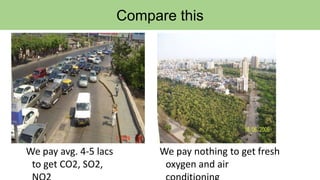
Compare this
We pay avg. 4-5 lacs
to get CO2, SO2,
We pay nothing to get fresh
oxygen and air
CRZ II – The bane and bone of contention in
Mumbai
• CRZ II and the arbitrariness in its use has created enormous heartburn
in Mumbai.
• Dominant view that rich and influential will get away while the poor
and those who cannot ‘pay up’ will suffer.
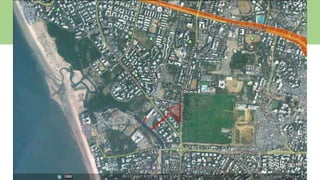
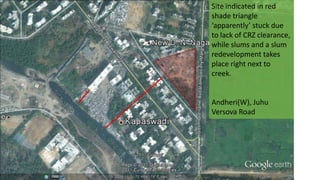
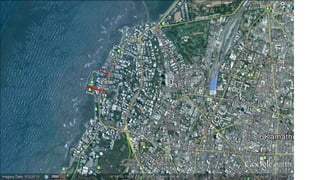
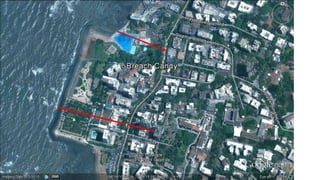
Site indicated in red
shade triangle
‘apparently’ stuck due
to lack of CRZ clearance,
while slums and a slum
redevelopment takes
place right next to
creek.
Andheri(W), Juhu
Versova Road
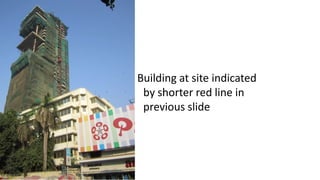
Building at site indicated
by shorter red line in
previous slide
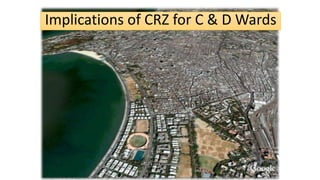
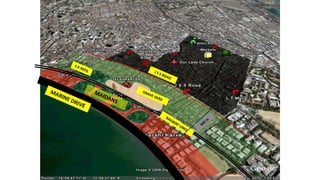
Implications of CRZ for C & D Wards
Are environmentalists stalling development?
• Or are they taking a long term view over a short term view?
• Or are they bringing out aspects which will damage the economy, being
suppressed by those ‘pro-development’?
• Opposing activities, which will yield short term high profits and possible
losses in long term loss.
• Opposing activities which cause economic gain for very few but loss
through negative externalities, which have to be borne by large number of
public.
Most important…
• CRZ cannot be looked at in isolation of policies in other sectors like
housing, transport and solid waste management.
• It is a web and only a holistic sense of planning with a lot of integrity
and commitment to the city and citizens can help avoid the conflicts
and deadlock we face.
• Some case studies follow on SWM, Housing and Transport
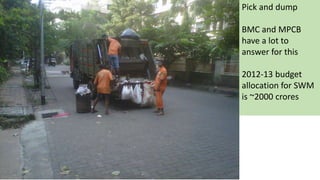
Solid Waste –Biggest threat to coast ecology in
Mumbai
• End of the pipe solution preferred going against all established wisdom
AND policy.
• MSW 2000 Rules and subsequent legislations clearly mandate support to
segregation at source and reduced transport to garbage dumps.
• Yet the sole focus of MCGM in past decade has been on pick and dump.
• Almost zero encouragement to entrepreneurs interested in decentralized
waste management.
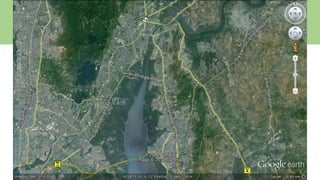
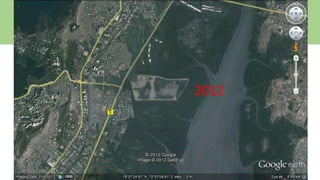
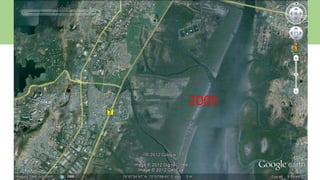
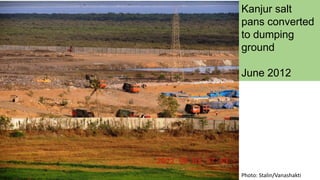
Kanjur dumping ground case study
• MCGM submitted affidavit in Bombay HC 2005/06, informing that the
site is free of CRZ(tidal) influence and free of habitation in the vicinity.
This is a lie.
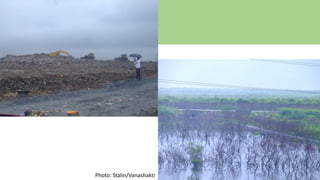
• Even today in 2013 the site sees heavy influx of tidal waters during
high tide.
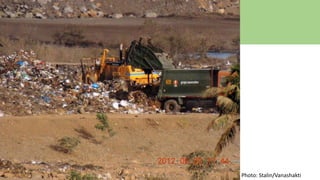
• Supposed to be a sanitary landfill. Past six months leachate being
released outside boundary wall into the estuary.
2012
2005
Pick and dump
BMC and MPCB
have a lot to
answer for this
2012-13 budget
allocation for SWM
is ~2000 crores
Kanjur salt
pans converted
to dumping
ground
June 2012
Photo: Stalin/Vanashakti
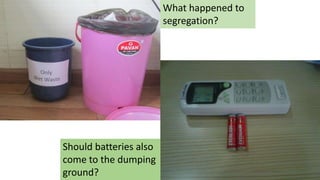
What happened to
segregation?
Should batteries also
come to the dumping
ground?
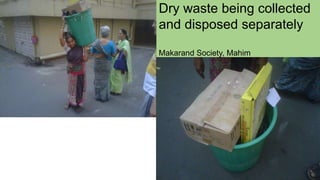
Dry waste being collected
and disposed separately
Makarand Society, Mahim
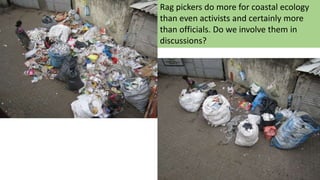
Rag pickers do more for coastal ecology
than even activists and certainly more
than officials. Do we involve them in
discussions?
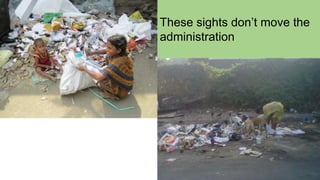
These sights don’t move the
administration
Transport
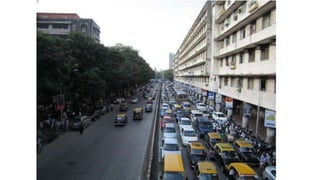
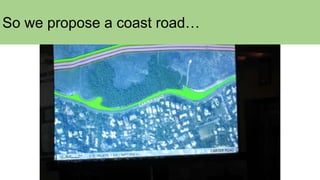
• Coast Road has been the latest coastal concern for Mumbai
• Being proposed by CM as the solution to our traffic congestion
problems.
• Transport analysts and activists continuously protesting that the city
has to improve public transport and retrain private cars. Still
investment only in car centric infrastructure like coast road.
So we propose a coast road…
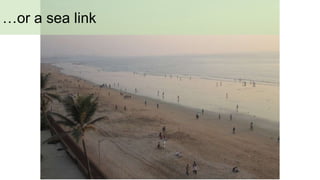
…or a sea link
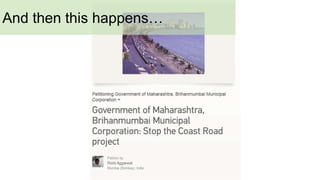
And then this happens…
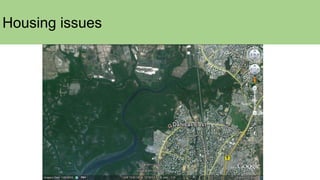
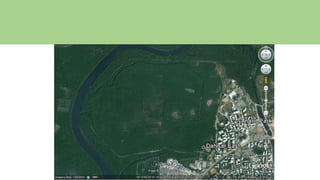
Housing issues
40
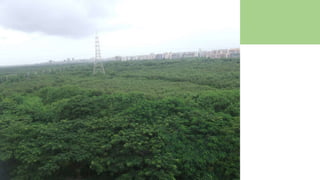
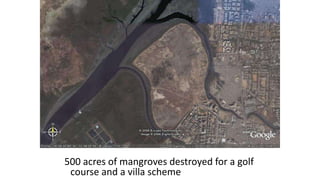
500 acres of mangroves destroyed for a golf
course and a villa scheme
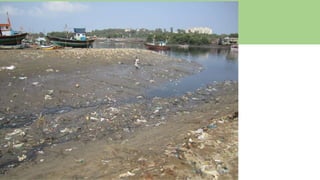
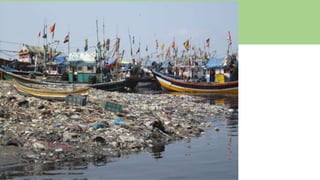
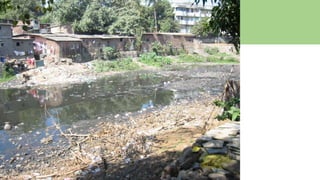
Poor interest in water quality and edge
management
Mumbai context
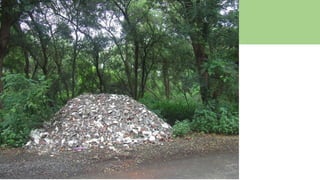
• No instance in last decade of ALL stakeholders spending time together
to understand each others viewpoints and evolving a well thought out
local plan
• Ready availability of resources for activities like mapping and planting
mangroves (almost useless activity), but no resources for protection
and prosecution units for protecting existing mangroves.
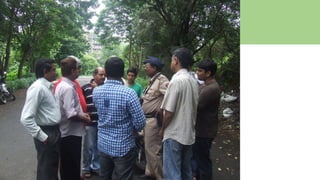
• First responders to threats to coastal ecology invariably activists.
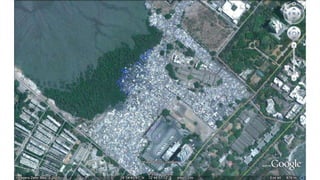
What can be called Rooftop Network.
Mumbai context
• Elected representatives, the mainstay of a democracy looked upon
with great suspicion by civil society. Substantial interaction only with
officials.
• No clear demarcation of HTL
• CRZ more a tool of extortion than conservation?
• Very important to have detailed interaction about CRZ, 2011 and its
significance for Mumbai.
Thank you

Coastal and River Zone Management: Perspectives from Mumbai. by-Rishi Aggarwal

  • 1.
    International Workshop onCoastal and River Zone Management: Regulations and Development Perspectives from Mumbai Rishi Aggarwal January 10-11th, 2013 IIT-Bombay Organised by NEERI and IITB
  • 2.
    How would thingshappen if the 74th amendment was being implemented in spirit? • Center would give guidelines • State would incorporate specific points of interest from State context • City or town Mayor final level of development of coastal, estuary or river zone development rules, balancing local interests, requirements and concerns, while incorporating the concerns in the Center and State guidelines. • All stakeholders would have been working together in some measure in spite of differences.
  • 3.
    How it happensin Mumbai • Most people have no idea of who is finally taking a call and influencing the decision. • Economic interests, think (or are mislead) that environmentalists are all powerful and stalling development. • Environmentalists rue not having a seat on the table, gross neglect of environmental interests from government and colluding with economic interests.
  • 4.
    Aspects of coastalecology needing appreciation • Role in providing a livable habitat, with moderation in temperature being a key aspect. Hence preferred urban destinations. • Comparable to fertile agricultural lands in terms of food output. • Ports and trade. Provides employment opportunities. • Disaster management role
  • 5.
    Compare this We payavg. 4-5 lacs to get CO2, SO2, We pay nothing to get fresh oxygen and air
  • 6.
    CRZ II –The bane and bone of contention in Mumbai • CRZ II and the arbitrariness in its use has created enormous heartburn in Mumbai. • Dominant view that rich and influential will get away while the poor and those who cannot ‘pay up’ will suffer.
  • 8.
    Site indicated inred shade triangle ‘apparently’ stuck due to lack of CRZ clearance, while slums and a slum redevelopment takes place right next to creek. Andheri(W), Juhu Versova Road
  • 11.
    Building at siteindicated by shorter red line in previous slide
  • 12.
    Implications of CRZfor C & D Wards
  • 14.
    Are environmentalists stallingdevelopment? • Or are they taking a long term view over a short term view? • Or are they bringing out aspects which will damage the economy, being suppressed by those ‘pro-development’? • Opposing activities, which will yield short term high profits and possible losses in long term loss. • Opposing activities which cause economic gain for very few but loss through negative externalities, which have to be borne by large number of public.
  • 15.
    Most important… • CRZcannot be looked at in isolation of policies in other sectors like housing, transport and solid waste management. • It is a web and only a holistic sense of planning with a lot of integrity and commitment to the city and citizens can help avoid the conflicts and deadlock we face. • Some case studies follow on SWM, Housing and Transport
  • 16.
    Solid Waste –Biggestthreat to coast ecology in Mumbai • End of the pipe solution preferred going against all established wisdom AND policy. • MSW 2000 Rules and subsequent legislations clearly mandate support to segregation at source and reduced transport to garbage dumps. • Yet the sole focus of MCGM in past decade has been on pick and dump. • Almost zero encouragement to entrepreneurs interested in decentralized waste management.
  • 17.
    Kanjur dumping groundcase study • MCGM submitted affidavit in Bombay HC 2005/06, informing that the site is free of CRZ(tidal) influence and free of habitation in the vicinity. This is a lie. • Even today in 2013 the site sees heavy influx of tidal waters during high tide. • Supposed to be a sanitary landfill. Past six months leachate being released outside boundary wall into the estuary.
  • 19.
  • 20.
  • 21.
    Pick and dump BMCand MPCB have a lot to answer for this 2012-13 budget allocation for SWM is ~2000 crores
  • 22.
    Kanjur salt pans converted todumping ground June 2012 Photo: Stalin/Vanashakti
  • 23.
  • 24.
  • 25.
    What happened to segregation? Shouldbatteries also come to the dumping ground?
  • 26.
    Dry waste beingcollected and disposed separately Makarand Society, Mahim
  • 27.
    Rag pickers domore for coastal ecology than even activists and certainly more than officials. Do we involve them in discussions?
  • 28.
    These sights don’tmove the administration
  • 29.
    Transport • Coast Roadhas been the latest coastal concern for Mumbai • Being proposed by CM as the solution to our traffic congestion problems. • Transport analysts and activists continuously protesting that the city has to improve public transport and retrain private cars. Still investment only in car centric infrastructure like coast road.
  • 31.
    So we proposea coast road…
  • 32.
  • 33.
    And then thishappens…
  • 34.
  • 40.
    40 500 acres ofmangroves destroyed for a golf course and a villa scheme
  • 41.
    Poor interest inwater quality and edge management
  • 45.
    Mumbai context • Noinstance in last decade of ALL stakeholders spending time together to understand each others viewpoints and evolving a well thought out local plan • Ready availability of resources for activities like mapping and planting mangroves (almost useless activity), but no resources for protection and prosecution units for protecting existing mangroves. • First responders to threats to coastal ecology invariably activists. What can be called Rooftop Network.
  • 46.
    Mumbai context • Electedrepresentatives, the mainstay of a democracy looked upon with great suspicion by civil society. Substantial interaction only with officials. • No clear demarcation of HTL • CRZ more a tool of extortion than conservation? • Very important to have detailed interaction about CRZ, 2011 and its significance for Mumbai.
  • 47.