Integrating CMMI and Agile
Integration – “to form,
coordinate, or blend into a
functioning or unified
whole.”
Glen B. Alleman
Niwot, Colorado
July 2004
glen.alleman@niwotridge.com
Integrated Product Development and Support Processes
Systems and Platform Engineering Processes
Mechanical and Structures
Electronic Hardware Processes
Systems to be Integrated
Software Engineering Processes
Design
And Verify
Software
Items
Develop
Software
Items
Integrate
and Test
Software
Items
Systems Engineering Management
DesignandVerify
IntegrateandValidate
Tooling
Processes
Manufacturing
Processes
Delivery
Processes
Service and
Support
Processes
Network Centric Architecture Lifecycle Management Processes
BusinessandProductLineStrategy
Enterprise Business Integration Processes
Product and Program Management Processes
EnterpriseInfrastructureSupportProcesses
What CMMI says about integration
o Organizational Process Definition
n Subpractice 6 of SP 1.1-1: “Ensure that there is
appropriate integration among the processes that
are included in the organization's set of standard
processes.”
n Subpractice 3 addresses identification of process
elements and their interfaces “among the process
elements” and “with external processes.”
o Organizational Process Focus
n The SG1 elaboration for IPPD says “Integrated
processes that emphasize parallel rather than
serial development are the cornerstone of IPD
development.”
Process Information
o Identifies rules of conduct for the enterprise
o Facilitates understanding and communicat8ion
of business and technical approaches
o Support program and process management
o Support process improvement
o Provides the basis for demonstrating
compliance with external benchmarks
o Provides basis for assessing effectiveness of
internal processes
Impacts of process variation
o Increased cost
o Introduction of delays
o Reduction in a group ability to learn and apply
knowledge
o Variation occurs
n Across business unit boundaries
n Between planning and execution
n Across design disciplines
n Across stakeholders
Integrating Business Elements
o Each organizational element has its own
priorities and plans
o This is usually a good idea except where plans
overlap or conflict
o Resolving these overlaps and conflicts becomes
an integration process
Integrating Schedules
o Agile contributes to all these processes in much the
same way as high ceremony
n But with a critically important difference
n The pace of activity is focused on parallel rather than serial
delivery
n Parallel delivery works ONLY if constant feedback and
verification of decisions takes place across an integrated
team.
o No matter the underlying process – agile or high
ceremony, processes must take place
n Product requirements
n Product definition and verification with the customer
n Developing the product concept
n Preliminary product definition
n Detailed product definition
n Building the product
Integrating Processes and Tools
o Architecture
n Process
n Tools
n Data
o Product development environment
n Data exchange
n Data access
n Workflow
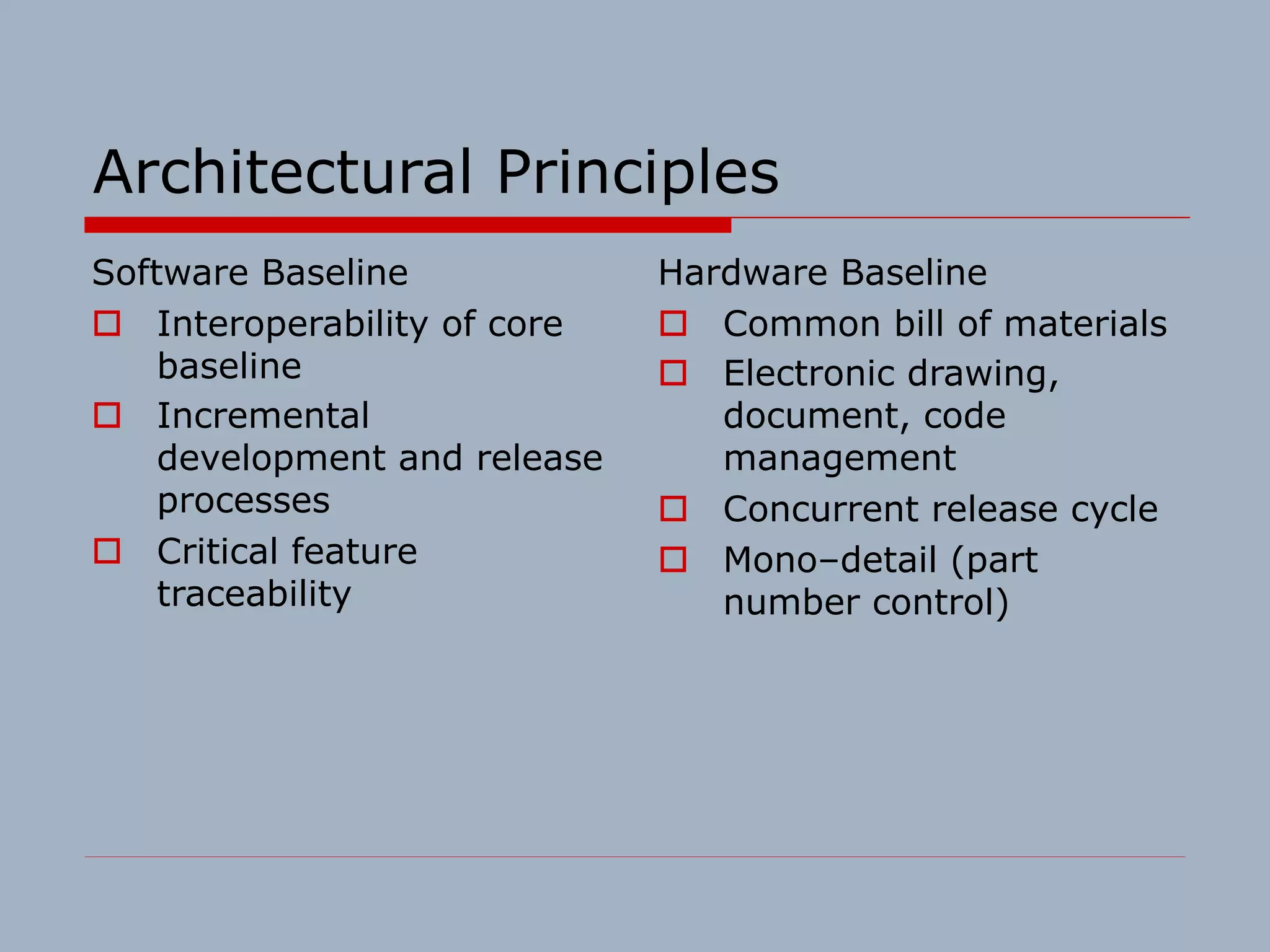
Architectural Principles
Software Baseline
o Interoperability of core
baseline
o Incremental
development and release
processes
o Critical feature
traceability
Hardware Baseline
o Common bill of materials
o Electronic drawing,
document, code
management
o Concurrent release cycle
o Mono–detail (part
number control)

CMMI and Agile

  • 1.
    Integrating CMMI andAgile Integration – “to form, coordinate, or blend into a functioning or unified whole.” Glen B. Alleman Niwot, Colorado July 2004 glen.alleman@niwotridge.com
  • 2.
    Integrated Product Developmentand Support Processes Systems and Platform Engineering Processes Mechanical and Structures Electronic Hardware Processes Systems to be Integrated Software Engineering Processes Design And Verify Software Items Develop Software Items Integrate and Test Software Items Systems Engineering Management DesignandVerify IntegrateandValidate Tooling Processes Manufacturing Processes Delivery Processes Service and Support Processes Network Centric Architecture Lifecycle Management Processes BusinessandProductLineStrategy Enterprise Business Integration Processes Product and Program Management Processes EnterpriseInfrastructureSupportProcesses
  • 3.
    What CMMI saysabout integration o Organizational Process Definition n Subpractice 6 of SP 1.1-1: “Ensure that there is appropriate integration among the processes that are included in the organization's set of standard processes.” n Subpractice 3 addresses identification of process elements and their interfaces “among the process elements” and “with external processes.” o Organizational Process Focus n The SG1 elaboration for IPPD says “Integrated processes that emphasize parallel rather than serial development are the cornerstone of IPD development.”
  • 4.
    Process Information o Identifiesrules of conduct for the enterprise o Facilitates understanding and communicat8ion of business and technical approaches o Support program and process management o Support process improvement o Provides the basis for demonstrating compliance with external benchmarks o Provides basis for assessing effectiveness of internal processes
  • 5.
    Impacts of processvariation o Increased cost o Introduction of delays o Reduction in a group ability to learn and apply knowledge o Variation occurs n Across business unit boundaries n Between planning and execution n Across design disciplines n Across stakeholders
  • 6.
    Integrating Business Elements oEach organizational element has its own priorities and plans o This is usually a good idea except where plans overlap or conflict o Resolving these overlaps and conflicts becomes an integration process
  • 7.
    Integrating Schedules o Agilecontributes to all these processes in much the same way as high ceremony n But with a critically important difference n The pace of activity is focused on parallel rather than serial delivery n Parallel delivery works ONLY if constant feedback and verification of decisions takes place across an integrated team. o No matter the underlying process – agile or high ceremony, processes must take place n Product requirements n Product definition and verification with the customer n Developing the product concept n Preliminary product definition n Detailed product definition n Building the product
  • 8.
    Integrating Processes andTools o Architecture n Process n Tools n Data o Product development environment n Data exchange n Data access n Workflow
  • 9.
    Architectural Principles Software Baseline oInteroperability of core baseline o Incremental development and release processes o Critical feature traceability Hardware Baseline o Common bill of materials o Electronic drawing, document, code management o Concurrent release cycle o Mono–detail (part number control)