Cluster-
         Cluster-Based
Industrial Development: A View
          from East Asia

             Keijiro Otsuka
 Foundation for Advanced Studies on
  International Development (FASID)
                                  1
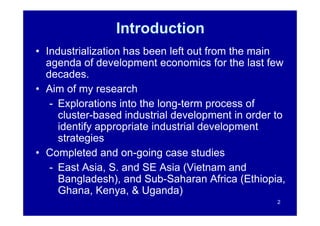
Introduction
• Industrialization has been left out from the main
  agenda of development economics for the last few
  decades.
• Aim of my research
   - Explorations into the long-term process of
     cluster-based industrial development in order to
     identify appropriate industrial development
     strategies
• Completed and on-going case studies
   - East Asia, S. and SE Asia (Vietnam and
     Bangladesh), and Sub-Saharan Africa (Ethiopia,
     Ghana, Kenya, & Uganda)
                                                   2
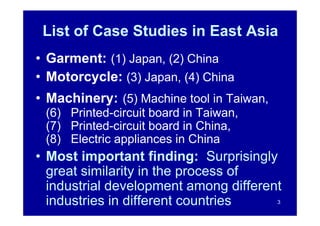
List of Case Studies in East Asia
• Garment: (1) Japan, (2) China
• Motorcycle: (3) Japan, (4) China
• Machinery: (5) Machine tool in Taiwan,
 (6) Printed-circuit board in Taiwan,
 (7) Printed-circuit board in China,
 (8) Electric appliances in China
• Most important finding: Surprisingly
  great similarity in the process of
  industrial development among different
  industries in different countries        3
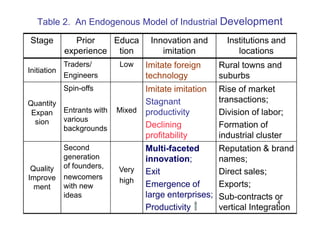
Table 2. An Endogenous Model of Industrial Development

Stage         Prior   Educa        Innovation and        Institutions and
           experience tion            imitation             locations
           Traders/       Low     Imitate foreign      Rural towns and
Initiation
           Engineers              technology           suburbs
           Spin-offs              Imitate imitation    Rise of market
Quantity                          Stagnant             transactions;
 Expan Entrants with      Mixed   productivity         Division of labor;
  sion   various
         backgrounds              Declining            Formation of
                                  profitability        industrial cluster
           Second                 Multi-faceted        Reputation & brand
           generation             innovation;          names;
 Quality   of founders,   Very    Exit                 Direct sales;
Improve    newcomers      high
  ment     with new               Emergence of         Exports;
           ideas                  large enterprises;   Sub-contracts or
                                                                        4
                                  Productivity         vertical Integration
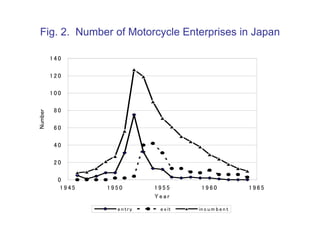
Fig. 2. Number of Motorcycle Enterprises in Japan

         140

         120

         100

          80
Number


          60

          40

          20

           0
            1945   1950        1955       1960              1965
                               Year
                                                                   5
                     e n try    e x it   in c u m b e n t
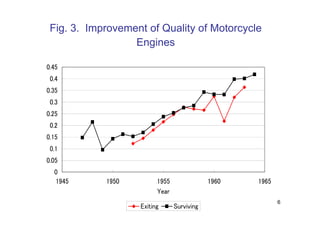
Fig. 3. Improvement of Quality of Motorcycle
                  Engines

0.45
 0.4
0.35
 0.3
0.25
 0.2
0.15
 0.1
0.05
  0
  1945      1950         1955               1960   1965
                         Year
                                                          6
                   Exiting      Surviving
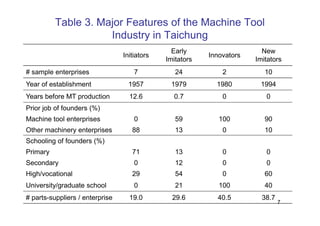
Table 3. Major Features of the Machine Tool
                     Industry in Taichung
                                                Early                    New
                                 Initiators               Innovators
                                              Imitators                Imitators
# sample enterprises                 7           24           2           10
Year of establishment              1957        1979         1980        1994
Years before MT production         12.6         0.7           0           0
Prior job of founders (%)
Machine tool enterprises             0           59          100          90
Other machinery enterprises         88           13           0           10
Schooling of founders (%)
Primary                             71           13           0           0
Secondary                            0           12           0           0
High/vocational                     29           54           0           60
University/graduate school           0           21          100          40
# parts-suppliers / enterprise     19.0         29.6        40.5         38.7
                                                                                7
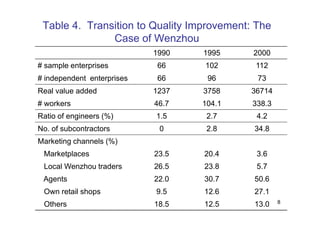
Table 4. Transition to Quality Improvement: The
               Case of Wenzhou
                            1990   1995     2000
# sample enterprises         66    102      112
# independent enterprises    66     96       73
Real value added            1237   3758    36714
# workers                   46.7   104.1    338.3
Ratio of engineers (%)      1.5     2.7      4.2
No. of subcontractors        0      2.8     34.8
Marketing channels (%)
 Marketplaces               23.5   20.4      3.6
 Local Wenzhou traders      26.5   23.8      5.7
 Agents                     22.0   30.7     50.6
 Own retail shops           9.5    12.6     27.1
                                                    8
 Others                     18.5   12.5     13.0
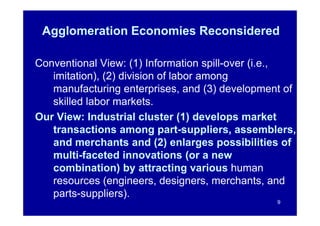
Agglomeration Economies Reconsidered

Conventional View: (1) Information spill-over (i.e.,
   imitation), (2) division of labor among
   manufacturing enterprises, and (3) development of
   skilled labor markets.
Our View: Industrial cluster (1) develops market
   transactions among part-suppliers, assemblers,
   and merchants and (2) enlarges possibilities of
   multi-faceted innovations (or a new
   combination) by attracting various human
   resources (engineers, designers, merchants, and
   parts-suppliers).
                                                9
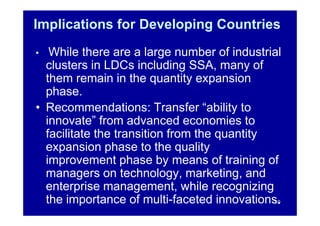
Implications for Developing Countries
•  While there are a large number of industrial
  clusters in LDCs including SSA, many of
  them remain in the quantity expansion
  phase.
• Recommendations: Transfer “ability to
  innovate” from advanced economies to
  facilitate the transition from the quantity
  expansion phase to the quality
  improvement phase by means of training of
  managers on technology, marketing, and
  enterprise management, while recognizing
  the importance of multi-faceted innovations.10
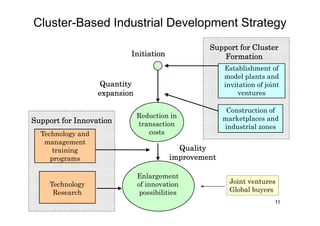
Cluster-Based Industrial Development Strategy
                                                  Support for Cluster
                           Initiation                Formation
                                                       Establishment of
                                                       model plants and
                   Quantity                            invitation of joint
                   expansion                                ventures

                                                        Construction of
                               Reduction in            marketplaces and
Support for Innovation         transaction             industrial zones
  Technology and                  costs
   management
      training                             Quality
     programs                            improvement

                               Enlargement
     Technology                of innovation             Joint ventures
      Research                  possibilities            Global buyers
                                                                        11
Shoe Industry in Addis Ababa
• Began in the 1930s by Armenians
• 1,000 shoe companies operating in Addis,
  indicating that the quantity expansion has
  taken place.
• Strong indications that the quality
  improvement has just begun, even though
  the industry suffered temporarily from
  imports from China.
• Is Ethiopia a part of East Asia?
                                           12
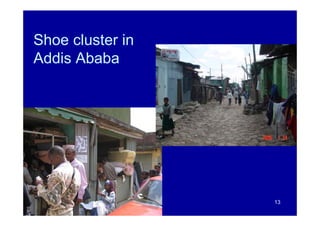
Shoe cluster in
Addis Ababa


                  13
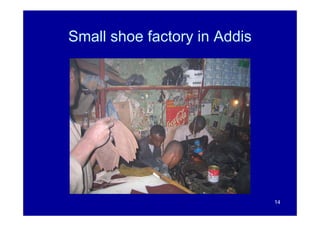
Small shoe factory in Addis


                              14
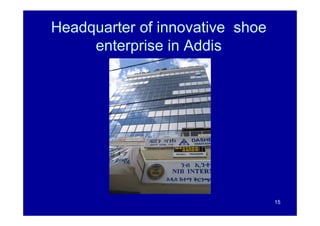
Headquarter of innovative shoe
     enterprise in Addis


                                 15
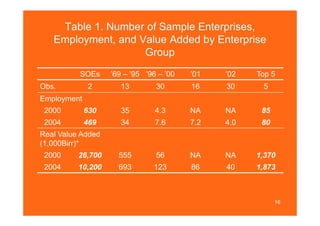
Table 1. Number of Sample Enterprises,
   Employment, and Value Added by Enterprise
                    Group
          SOEs     ’69 – ’95 ’96 – ’00   ’01   ’02   Top 5
Obs.          2       13        30       16    30     5
Employment
 2000        630     35         4.3      NA    NA     85
 2004        469     34         7.6      7.2   4.0    80
Real Value Added
(1,000Birr)*
 2000     26,700     555        56       NA    NA    1,370
 2004     10,200     693       123       86    40    1,873


                                                           16
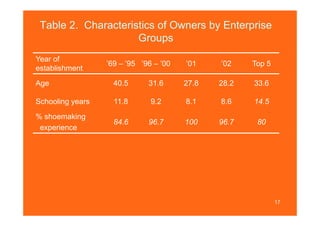
Table 2. Characteristics of Owners by Enterprise
                     Groups
Year of
                  ’69 – ’95 ’96 – ’00   ’01    ’02    Top 5
establishment
Age                 40.5      31.6      27.8   28.2   33.6

Schooling years     11.8       9.2      8.1    8.6    14.5
% shoemaking
                    84.6      96.7      100    96.7    80
 experience


                                                              17
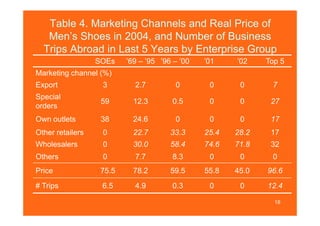
Table 4. Marketing Channels and Real Price of
   Men’s Shoes in 2004, and Number of Business
  Trips Abroad in Last 5 Years by Enterprise Group
                  SOEs    ’69 – ’95 ’96 – ’00   ’01    ’02    Top 5
Marketing channel (%)
Export             3        2.7         0        0      0      7
Special
                   59       12.3       0.5       0      0      27
orders
Own outlets        38       24.6        0        0      0      17
Other retailers    0        22.7       33.3     25.4   28.2    17
Wholesalers        0        30.0       58.4     74.6   71.8    32
Others             0        7.7        8.3       0      0      0
Price              75.5     78.2       59.5     55.8   45.0   96.6
# Trips            6.5      4.9        0.3       0      0     12.4

                                                                18

Cluster Based Industrial Development Fasid By Otsuka K

  • 1.
    Cluster- Cluster-Based Industrial Development: A View from East Asia Keijiro Otsuka Foundation for Advanced Studies on International Development (FASID) 1
  • 2.
    Introduction • Industrialization hasbeen left out from the main agenda of development economics for the last few decades. • Aim of my research - Explorations into the long-term process of cluster-based industrial development in order to identify appropriate industrial development strategies • Completed and on-going case studies - East Asia, S. and SE Asia (Vietnam and Bangladesh), and Sub-Saharan Africa (Ethiopia, Ghana, Kenya, & Uganda) 2
  • 3.
    List of CaseStudies in East Asia • Garment: (1) Japan, (2) China • Motorcycle: (3) Japan, (4) China • Machinery: (5) Machine tool in Taiwan, (6) Printed-circuit board in Taiwan, (7) Printed-circuit board in China, (8) Electric appliances in China • Most important finding: Surprisingly great similarity in the process of industrial development among different industries in different countries 3
  • 4.
    Table 2. AnEndogenous Model of Industrial Development Stage Prior Educa Innovation and Institutions and experience tion imitation locations Traders/ Low Imitate foreign Rural towns and Initiation Engineers technology suburbs Spin-offs Imitate imitation Rise of market Quantity Stagnant transactions; Expan Entrants with Mixed productivity Division of labor; sion various backgrounds Declining Formation of profitability industrial cluster Second Multi-faceted Reputation & brand generation innovation; names; Quality of founders, Very Exit Direct sales; Improve newcomers high ment with new Emergence of Exports; ideas large enterprises; Sub-contracts or 4 Productivity vertical Integration
  • 5.
    Fig. 2. Numberof Motorcycle Enterprises in Japan 140 120 100 80 Number 60 40 20 0 1945 1950 1955 1960 1965 Year 5 e n try e x it in c u m b e n t
  • 6.
    Fig. 3. Improvementof Quality of Motorcycle Engines 0.45 0.4 0.35 0.3 0.25 0.2 0.15 0.1 0.05 0 1945 1950 1955 1960 1965 Year 6 Exiting Surviving
  • 7.
    Table 3. MajorFeatures of the Machine Tool Industry in Taichung Early New Initiators Innovators Imitators Imitators # sample enterprises 7 24 2 10 Year of establishment 1957 1979 1980 1994 Years before MT production 12.6 0.7 0 0 Prior job of founders (%) Machine tool enterprises 0 59 100 90 Other machinery enterprises 88 13 0 10 Schooling of founders (%) Primary 71 13 0 0 Secondary 0 12 0 0 High/vocational 29 54 0 60 University/graduate school 0 21 100 40 # parts-suppliers / enterprise 19.0 29.6 40.5 38.7 7
  • 8.
    Table 4. Transitionto Quality Improvement: The Case of Wenzhou 1990 1995 2000 # sample enterprises 66 102 112 # independent enterprises 66 96 73 Real value added 1237 3758 36714 # workers 46.7 104.1 338.3 Ratio of engineers (%) 1.5 2.7 4.2 No. of subcontractors 0 2.8 34.8 Marketing channels (%) Marketplaces 23.5 20.4 3.6 Local Wenzhou traders 26.5 23.8 5.7 Agents 22.0 30.7 50.6 Own retail shops 9.5 12.6 27.1 8 Others 18.5 12.5 13.0
  • 9.
    Agglomeration Economies Reconsidered ConventionalView: (1) Information spill-over (i.e., imitation), (2) division of labor among manufacturing enterprises, and (3) development of skilled labor markets. Our View: Industrial cluster (1) develops market transactions among part-suppliers, assemblers, and merchants and (2) enlarges possibilities of multi-faceted innovations (or a new combination) by attracting various human resources (engineers, designers, merchants, and parts-suppliers). 9
  • 10.
    Implications for DevelopingCountries • While there are a large number of industrial clusters in LDCs including SSA, many of them remain in the quantity expansion phase. • Recommendations: Transfer “ability to innovate” from advanced economies to facilitate the transition from the quantity expansion phase to the quality improvement phase by means of training of managers on technology, marketing, and enterprise management, while recognizing the importance of multi-faceted innovations.10
  • 11.
    Cluster-Based Industrial DevelopmentStrategy Support for Cluster Initiation Formation Establishment of model plants and Quantity invitation of joint expansion ventures Construction of Reduction in marketplaces and Support for Innovation transaction industrial zones Technology and costs management training Quality programs improvement Enlargement Technology of innovation Joint ventures Research possibilities Global buyers 11
  • 12.
    Shoe Industry inAddis Ababa • Began in the 1930s by Armenians • 1,000 shoe companies operating in Addis, indicating that the quantity expansion has taken place. • Strong indications that the quality improvement has just begun, even though the industry suffered temporarily from imports from China. • Is Ethiopia a part of East Asia? 12
  • 13.
  • 14.
    Small shoe factoryin Addis 14
  • 15.
    Headquarter of innovativeshoe enterprise in Addis 15
  • 16.
    Table 1. Numberof Sample Enterprises, Employment, and Value Added by Enterprise Group SOEs ’69 – ’95 ’96 – ’00 ’01 ’02 Top 5 Obs. 2 13 30 16 30 5 Employment 2000 630 35 4.3 NA NA 85 2004 469 34 7.6 7.2 4.0 80 Real Value Added (1,000Birr)* 2000 26,700 555 56 NA NA 1,370 2004 10,200 693 123 86 40 1,873 16
  • 17.
    Table 2. Characteristicsof Owners by Enterprise Groups Year of ’69 – ’95 ’96 – ’00 ’01 ’02 Top 5 establishment Age 40.5 31.6 27.8 28.2 33.6 Schooling years 11.8 9.2 8.1 8.6 14.5 % shoemaking 84.6 96.7 100 96.7 80 experience 17
  • 18.
    Table 4. MarketingChannels and Real Price of Men’s Shoes in 2004, and Number of Business Trips Abroad in Last 5 Years by Enterprise Group SOEs ’69 – ’95 ’96 – ’00 ’01 ’02 Top 5 Marketing channel (%) Export 3 2.7 0 0 0 7 Special 59 12.3 0.5 0 0 27 orders Own outlets 38 24.6 0 0 0 17 Other retailers 0 22.7 33.3 25.4 28.2 17 Wholesalers 0 30.0 58.4 74.6 71.8 32 Others 0 7.7 8.3 0 0 0 Price 75.5 78.2 59.5 55.8 45.0 96.6 # Trips 6.5 4.9 0.3 0 0 12.4 18