Cloud-native Application Maturity Model
Microservices & Containers - Austin
Confidential 2August 14, 2016
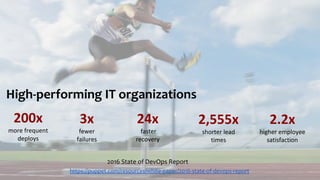
High-performing IT organizations
2016 State of DevOps Report
https://puppet.com/resources/white-paper/2016-state-of-devops-report
200x
more frequent
deploys
3x
fewer
failures
24x
faster
recovery
2,555x
shorter lead
times
2.2x
higher employee
satisfaction
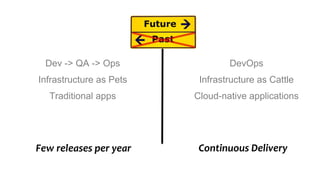
Dev -> QA -> Ops
Infrastructure as Pets
Traditional apps
DevOps
Infrastructure as Cattle
Cloud-native applications
Few releases per year Continuous Delivery
4
Topics
1. The Cloud-native Application Maturity Model
2. How containers and microservices help
3. Managing cloud-native applications
5
About me
1994
• Founder at Nirmata
• Developer (Java, Go, JavaScript, C++); learning Ops
• Centralized management of complex distributed systems
6
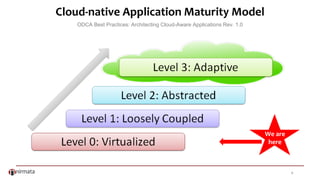
Cloud-native Application Maturity Model
We are
here
ODCA Best Practices: Architecting Cloud-Aware Applications Rev. 1.0
7
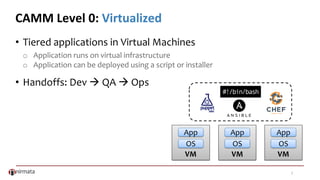
CAMM Level 0: Virtualized
• Tiered applications in Virtual Machines
o Application runs on virtual infrastructure
o Application can be deployed using a script or installer
• Handoffs: Dev  QA  Ops
OS
App
VM
OS
App
VM
OS
App
VM
8
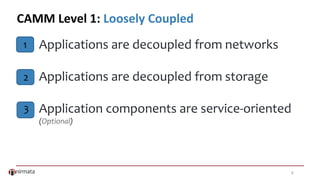
CAMM Level 1: Loosely Coupled
Applications are decoupled from networks
Applications are decoupled from storage
Application components are service-oriented
(Optional)
1
2
3
9
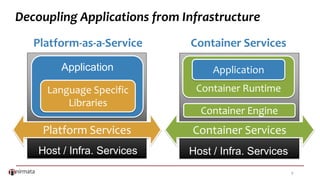
Platform Services
Language Specific
Libraries
Application
Host / Infra. Services
Platform-as-a-Service
Decoupling Applications from Infrastructure
Container Engine
Host / Infra. Services
Container Services
Container Runtime
Application
Container Services
10
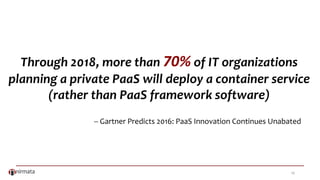
Through 2018, more than 70% of IT organizations
planning a private PaaS will deploy a container service
(rather than PaaS framework software)
-- Gartner Predicts 2016: PaaS Innovation Continues Unabated
11
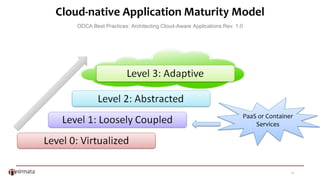
Cloud-native Application Maturity Model
ODCA Best Practices: Architecting Cloud-Aware Applications Rev. 1.0
PaaS or Container
Services
12
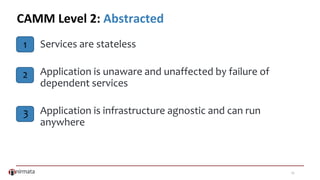
CAMM Level 2: Abstracted
Services are stateless
Application is unaware and unaffected by failure of
dependent services
Application is infrastructure agnostic and can run
anywhere
1
2
3
13
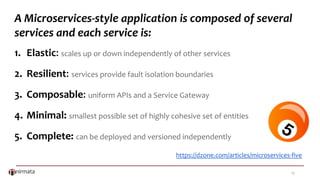
1. Elastic: scales up or down independently of other services
2. Resilient: services provide fault isolation boundaries
3. Composable: uniform APIs and a Service Gateway
4. Minimal: smallest possible set of highly cohesive set of entities
5. Complete: can be deployed and versioned independently
A Microservices-style application is composed of several
services and each service is:
https://dzone.com/articles/microservices-five
14
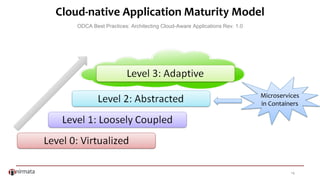
Cloud-native Application Maturity Model
ODCA Best Practices: Architecting Cloud-Aware Applications Rev. 1.0
Microservices
in Containers
15
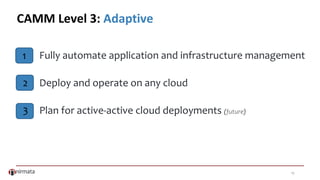
CAMM Level 3: Adaptive
Fully automate application and infrastructure management
Deploy and operate on any cloud
Plan for active-active cloud deployments (future)
1
2
3
16
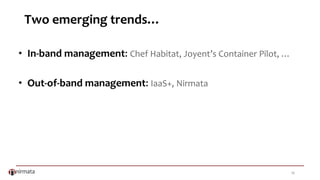
Two emerging trends…
• In-band management: Chef Habitat, Joyent’s Container Pilot, …
• Out-of-band management: IaaS+, Nirmata
17
Nirmata
18
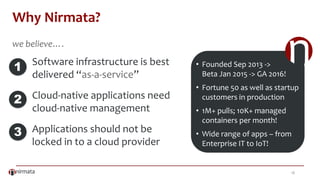
Why Nirmata?
Software infrastructure is best
delivered “as-a-service”
Cloud-native applications need
cloud-native management
Applications should not be
locked in to a cloud provider
1
2
3
• Founded Sep 2013 ->
Beta Jan 2015 -> GA 2016!
• Fortune 50 as well as startup
customers in production
• 1M+ pulls; 10K+ managed
containers per month!
• Wide range of apps – from
Enterprise IT to IoT!
we believe….
19
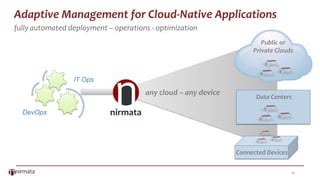
Public or
Private Clouds
Adaptive Management for Cloud-Native Applications
nirmata
any cloud – any device
Connected Devices
Data Centers
DevOps
IT Ops
fully automated deployment – operations - optimization
20
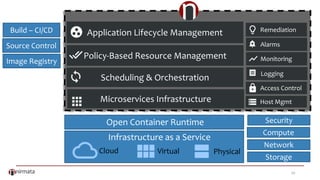
Network
Infrastructure as a Service
HostsOpen Container Runtime
Build – CI/CD
Source Control
Image Registry
Storage
Compute
Security
Host Mgmt
Scheduling & Orchestration
Policy-Based Resource Management
Application Lifecycle Management
Microservices Infrastructure
Monitoring
Logging
Remediation
Alarms
Cloud Virtual Physical
Access Control
Demo
22
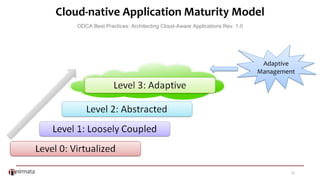
Cloud-native Application Maturity Model
ODCA Best Practices: Architecting Cloud-Aware Applications Rev. 1.0
Adaptive
Management
23Accelerating DevOps: Automating application lifecycle using containers | March 15, 2016
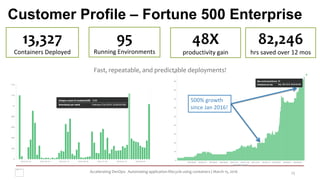
13,327
Containers Deployed
Customer Profile – Fortune 500 Enterprise
95
Running Environments
500% growth
since Jan 2016!
Fast, repeatable, and predictable deployments!
48X
productivity gain
82,246
hrs saved over 12 mos
Online Meetup – Thursday 10:00 AM Pacific
Containerizing Traditional Applications
www.meetup.com/microservices
15 day trial
signup for free with no credit card required!
try.nirmata.io
Thank you!
jim@nirmata.com - @JimBugwadia

Cloud Native Applications Maturity Model

  • 1.
    Cloud-native Application MaturityModel Microservices & Containers - Austin
  • 2.
    Confidential 2August 14,2016 High-performing IT organizations 2016 State of DevOps Report https://puppet.com/resources/white-paper/2016-state-of-devops-report 200x more frequent deploys 3x fewer failures 24x faster recovery 2,555x shorter lead times 2.2x higher employee satisfaction
  • 3.
    Dev -> QA-> Ops Infrastructure as Pets Traditional apps DevOps Infrastructure as Cattle Cloud-native applications Few releases per year Continuous Delivery
  • 4.
    4 Topics 1. The Cloud-nativeApplication Maturity Model 2. How containers and microservices help 3. Managing cloud-native applications
  • 5.
    5 About me 1994 • Founderat Nirmata • Developer (Java, Go, JavaScript, C++); learning Ops • Centralized management of complex distributed systems
  • 6.
    6 Cloud-native Application MaturityModel We are here ODCA Best Practices: Architecting Cloud-Aware Applications Rev. 1.0
  • 7.
    7 CAMM Level 0:Virtualized • Tiered applications in Virtual Machines o Application runs on virtual infrastructure o Application can be deployed using a script or installer • Handoffs: Dev  QA  Ops OS App VM OS App VM OS App VM
  • 8.
    8 CAMM Level 1:Loosely Coupled Applications are decoupled from networks Applications are decoupled from storage Application components are service-oriented (Optional) 1 2 3
  • 9.
    9 Platform Services Language Specific Libraries Application Host/ Infra. Services Platform-as-a-Service Decoupling Applications from Infrastructure Container Engine Host / Infra. Services Container Services Container Runtime Application Container Services
  • 10.
    10 Through 2018, morethan 70% of IT organizations planning a private PaaS will deploy a container service (rather than PaaS framework software) -- Gartner Predicts 2016: PaaS Innovation Continues Unabated
  • 11.
    11 Cloud-native Application MaturityModel ODCA Best Practices: Architecting Cloud-Aware Applications Rev. 1.0 PaaS or Container Services
  • 12.
    12 CAMM Level 2:Abstracted Services are stateless Application is unaware and unaffected by failure of dependent services Application is infrastructure agnostic and can run anywhere 1 2 3
  • 13.
    13 1. Elastic: scalesup or down independently of other services 2. Resilient: services provide fault isolation boundaries 3. Composable: uniform APIs and a Service Gateway 4. Minimal: smallest possible set of highly cohesive set of entities 5. Complete: can be deployed and versioned independently A Microservices-style application is composed of several services and each service is: https://dzone.com/articles/microservices-five
  • 14.
    14 Cloud-native Application MaturityModel ODCA Best Practices: Architecting Cloud-Aware Applications Rev. 1.0 Microservices in Containers
  • 15.
    15 CAMM Level 3:Adaptive Fully automate application and infrastructure management Deploy and operate on any cloud Plan for active-active cloud deployments (future) 1 2 3
  • 16.
    16 Two emerging trends… •In-band management: Chef Habitat, Joyent’s Container Pilot, … • Out-of-band management: IaaS+, Nirmata
  • 17.
  • 18.
    18 Why Nirmata? Software infrastructureis best delivered “as-a-service” Cloud-native applications need cloud-native management Applications should not be locked in to a cloud provider 1 2 3 • Founded Sep 2013 -> Beta Jan 2015 -> GA 2016! • Fortune 50 as well as startup customers in production • 1M+ pulls; 10K+ managed containers per month! • Wide range of apps – from Enterprise IT to IoT! we believe….
  • 19.
    19 Public or Private Clouds AdaptiveManagement for Cloud-Native Applications nirmata any cloud – any device Connected Devices Data Centers DevOps IT Ops fully automated deployment – operations - optimization
  • 20.
    20 Network Infrastructure as aService HostsOpen Container Runtime Build – CI/CD Source Control Image Registry Storage Compute Security Host Mgmt Scheduling & Orchestration Policy-Based Resource Management Application Lifecycle Management Microservices Infrastructure Monitoring Logging Remediation Alarms Cloud Virtual Physical Access Control
  • 21.
  • 22.
    22 Cloud-native Application MaturityModel ODCA Best Practices: Architecting Cloud-Aware Applications Rev. 1.0 Adaptive Management
  • 23.
    23Accelerating DevOps: Automatingapplication lifecycle using containers | March 15, 2016 13,327 Containers Deployed Customer Profile – Fortune 500 Enterprise 95 Running Environments 500% growth since Jan 2016! Fast, repeatable, and predictable deployments! 48X productivity gain 82,246 hrs saved over 12 mos
  • 24.
    Online Meetup –Thursday 10:00 AM Pacific Containerizing Traditional Applications www.meetup.com/microservices
  • 25.
    15 day trial signupfor free with no credit card required! try.nirmata.io
  • 26.