Training Plan
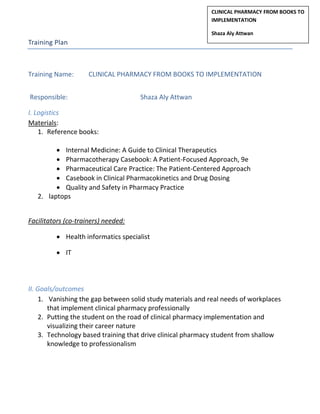
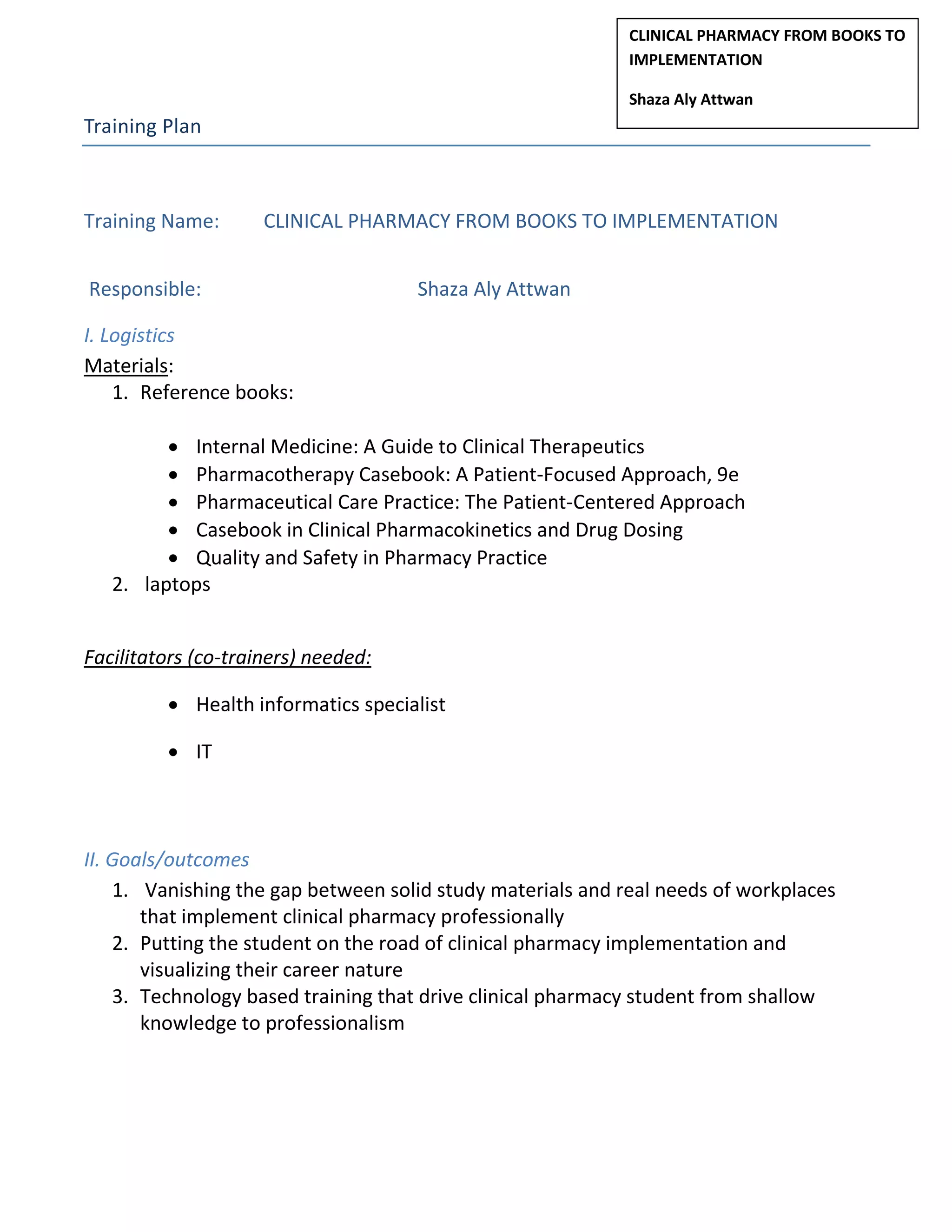
Training Name: CLINICAL PHARMACY FROM BOOKS TO IMPLEMENTATION
Responsible: Shaza Aly Attwan
I. Logistics
Materials:
1. Reference books:
 Internal Medicine: A Guide to Clinical Therapeutics
 Pharmacotherapy Casebook: A Patient-Focused Approach, 9e
 Pharmaceutical Care Practice: The Patient-Centered Approach
 Casebook in Clinical Pharmacokinetics and Drug Dosing
 Quality and Safety in Pharmacy Practice
2. laptops
Facilitators (co-trainers) needed:
 Health informatics specialist
 IT
II. Goals/outcomes
1. Vanishing the gap between solid study materials and real needs of workplaces
that implement clinical pharmacy professionally
2. Putting the student on the road of clinical pharmacy implementation and
visualizing their career nature
3. Technology based training that drive clinical pharmacy student from shallow
knowledge to professionalism
CLINICAL PHARMACY FROM BOOKS TO
IMPLEMENTATION
Shaza Aly Attwan
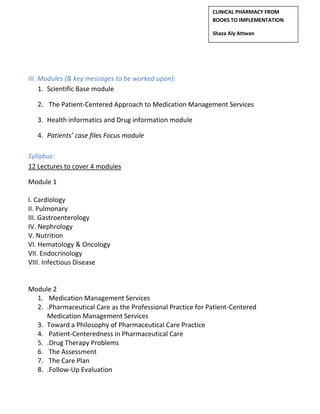
III. Modules (& key messages to be worked upon):
1. Scientific Base module
2. The Patient-Centered Approach to Medication Management Services
3. Health informatics and Drug information module
4. Patients’ case files Focus module
Syllabus:
12 Lectures to cover 4 modules
Module 1
I. Cardiology
II. Pulmonary
III. Gastroenterology
IV. Nephrology
V. Nutrition
VI. Hematology & Oncology
VII. Endocrinology
VIII. Infectious Disease
Module 2
1. Medication Management Services
2. .Pharmaceutical Care as the Professional Practice for Patient-Centered
Medication Management Services
3. Toward a Philosophy of Pharmaceutical Care Practice
4. Patient-Centeredness in Pharmaceutical Care
5. .Drug Therapy Problems
6. The Assessment
7. The Care Plan
8. .Follow-Up Evaluation
CLINICAL PHARMACY FROM
BOOKS TO IMPLEMENTATION
Shaza Aly Attwan
9. Documentation in Practice
10. Acquiring and Applying the Knowledge and Clinical Skills Required to Manage
Drug Therapy
11. Managing Medication Management Services
12..The Global Perspective
13.Standards of Practice for Pharmaceutical Care
14.Pharmacotherapy Workup Notes
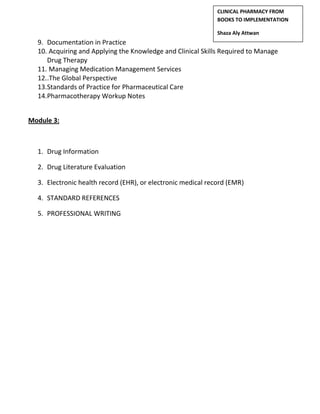
Module 3:
1. Drug Information
2. Drug Literature Evaluation
3. Electronic health record (EHR), or electronic medical record (EMR)
4. STANDARD REFERENCES
5. PROFESSIONAL WRITING
CLINICAL PHARMACY FROM
BOOKS TO IMPLEMENTATION
Shaza Aly Attwan

Clinical pharmacy from books to implementation

  • 1.
    Training Plan Training Name:CLINICAL PHARMACY FROM BOOKS TO IMPLEMENTATION Responsible: Shaza Aly Attwan I. Logistics Materials: 1. Reference books:  Internal Medicine: A Guide to Clinical Therapeutics  Pharmacotherapy Casebook: A Patient-Focused Approach, 9e  Pharmaceutical Care Practice: The Patient-Centered Approach  Casebook in Clinical Pharmacokinetics and Drug Dosing  Quality and Safety in Pharmacy Practice 2. laptops Facilitators (co-trainers) needed:  Health informatics specialist  IT II. Goals/outcomes 1. Vanishing the gap between solid study materials and real needs of workplaces that implement clinical pharmacy professionally 2. Putting the student on the road of clinical pharmacy implementation and visualizing their career nature 3. Technology based training that drive clinical pharmacy student from shallow knowledge to professionalism CLINICAL PHARMACY FROM BOOKS TO IMPLEMENTATION Shaza Aly Attwan
  • 2.
    III. Modules (&key messages to be worked upon): 1. Scientific Base module 2. The Patient-Centered Approach to Medication Management Services 3. Health informatics and Drug information module 4. Patients’ case files Focus module Syllabus: 12 Lectures to cover 4 modules Module 1 I. Cardiology II. Pulmonary III. Gastroenterology IV. Nephrology V. Nutrition VI. Hematology & Oncology VII. Endocrinology VIII. Infectious Disease Module 2 1. Medication Management Services 2. .Pharmaceutical Care as the Professional Practice for Patient-Centered Medication Management Services 3. Toward a Philosophy of Pharmaceutical Care Practice 4. Patient-Centeredness in Pharmaceutical Care 5. .Drug Therapy Problems 6. The Assessment 7. The Care Plan 8. .Follow-Up Evaluation CLINICAL PHARMACY FROM BOOKS TO IMPLEMENTATION Shaza Aly Attwan
  • 3.
    9. Documentation inPractice 10. Acquiring and Applying the Knowledge and Clinical Skills Required to Manage Drug Therapy 11. Managing Medication Management Services 12..The Global Perspective 13.Standards of Practice for Pharmaceutical Care 14.Pharmacotherapy Workup Notes Module 3: 1. Drug Information 2. Drug Literature Evaluation 3. Electronic health record (EHR), or electronic medical record (EMR) 4. STANDARD REFERENCES 5. PROFESSIONAL WRITING CLINICAL PHARMACY FROM BOOKS TO IMPLEMENTATION Shaza Aly Attwan