CLIMATE
AND
TOPOGRAPHY
Tropical Rainforest
Humid Subtropical
Mediterranean
Savanna
Steppe
Desert
Highland
Marine
Over 50% of Africa has inadequate
precipitation
92% of the continent of Africa
experiences climatic contrasts;
shortage of water where it is needed
most and oversupply of water where it
cannot be fully used
About 8% of Africa has a tropical
climate with 10 to 12 months of rainfall
Africa has about one-third of all the
arid lands in the world
Africa does not show excessive
variations of temperature
Great heat is experienced in the lower
plains and desert regions of North
Africa
The most important climatic
differences are due to
variations in the amount of
rainfall
Vegetation in February and
August
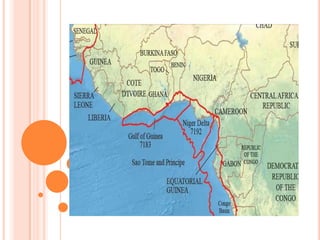
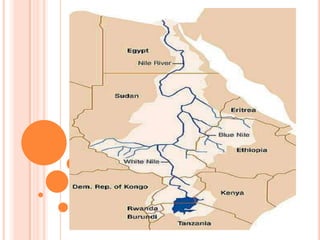
Intensified rainfall especially on
the shores of the Gulf of Guinea
and in the upper Nile basin
Did you Know?
The rainiest district in all Africa is a
strip of coastland west of Mount
Cameroon, where there is a mean
annual rainfall of about 390 in (9906
mm) as compared with a mean of 458
in (11600 mm) at Cherrapunji in
Meghalaya, India
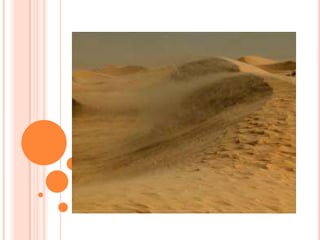
•The countries bordering the Sahara
desert are much exposed to a very dry
wind, full of fine particles of
sand, blowing from the desert towards
the sea.
Egypt = khasim
Mediterranean = sirocco
Guinea coast = harmattan
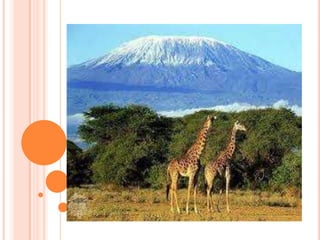
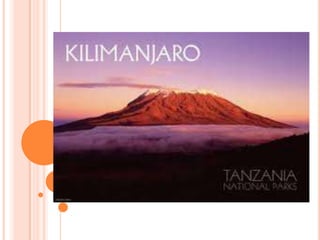
•THE HIGHEST POINT IN AFRICA IS
MOUNT KILIMANJARO, 5891.8
METERS (19330 FT) IN TANZANIA.
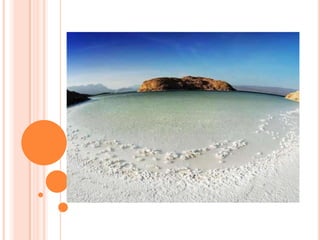
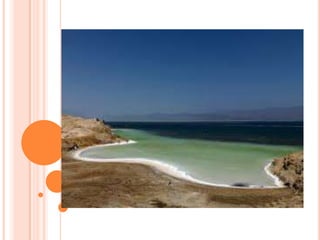
THE LOWEST POINT IS LAKE ASAL
153 METERS (502 FT) BELOW THE
SEA LEVEL, IN DJIBOUTI
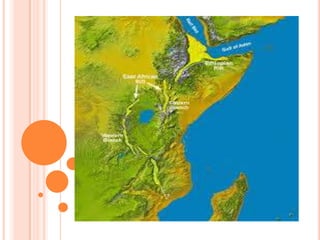
The Great Rift Valley
is one of the world's
longest earthquake
faults.
Climate powerpoint
Climate powerpoint

Climate powerpoint

  • 1.
  • 2.
  • 3.
    Over 50% ofAfrica has inadequate precipitation 92% of the continent of Africa experiences climatic contrasts; shortage of water where it is needed most and oversupply of water where it cannot be fully used About 8% of Africa has a tropical climate with 10 to 12 months of rainfall
  • 4.
    Africa has aboutone-third of all the arid lands in the world Africa does not show excessive variations of temperature Great heat is experienced in the lower plains and desert regions of North Africa
  • 5.
    The most importantclimatic differences are due to variations in the amount of rainfall
  • 6.
    Vegetation in Februaryand August Intensified rainfall especially on the shores of the Gulf of Guinea and in the upper Nile basin
  • 9.
    Did you Know? Therainiest district in all Africa is a strip of coastland west of Mount Cameroon, where there is a mean annual rainfall of about 390 in (9906 mm) as compared with a mean of 458 in (11600 mm) at Cherrapunji in Meghalaya, India
  • 10.
    •The countries borderingthe Sahara desert are much exposed to a very dry wind, full of fine particles of sand, blowing from the desert towards the sea. Egypt = khasim Mediterranean = sirocco Guinea coast = harmattan
  • 12.
    •THE HIGHEST POINTIN AFRICA IS MOUNT KILIMANJARO, 5891.8 METERS (19330 FT) IN TANZANIA. THE LOWEST POINT IS LAKE ASAL 153 METERS (502 FT) BELOW THE SEA LEVEL, IN DJIBOUTI
  • 17.
    The Great RiftValley is one of the world's longest earthquake faults.